Vent hood maintenance is the ongoing cleaning, inspection, and servicing of commercial range hood systems to remove grease, verify airflow, and prevent fire hazards. In All Over Ontario, restaurants rely on this routine to meet safety standards and pass fire and health inspections. It protects staff, equipment, and uptime—day after day.
By Robinhood Cleaners • Last updated: 2026-06-11
Overview: The complete vent hood maintenance guide
This guide explains what vent hood maintenance is, why it matters, and how to run a safe, inspection-ready program. You’ll get step-by-step tasks, prerequisites, troubleshooting, tools, and schedules tailored to high-, medium-, and low-volume kitchens across Ontario so you can pass checks and reduce fire risk.
Here’s what you’ll learn and be able to use right away:
- What it is: Plain-English definition of range/vent hood upkeep
- Why it matters: Fire prevention, airflow, compliance, and health
- How it works: From canopy and filters to ducts, fan, and discharge
- Prerequisites: Lockout, access, documentation, and safety prep
- Step-by-step: Repeatable maintenance checklist for your staff and vendors
- Troubleshooting: Fast diagnostics for noise, odor, smoke, and leaks
- Schedules: Frequency by kitchen type with a printable matrix
- Tools & parts: What professionals actually bring to the job
- Local context: Tips specific to operations in All Over Ontario
Local considerations for All Over Ontario
- Plan overnight or off-peak service windows so quick service restaurants can reopen for morning rush without delays or lingering odors.
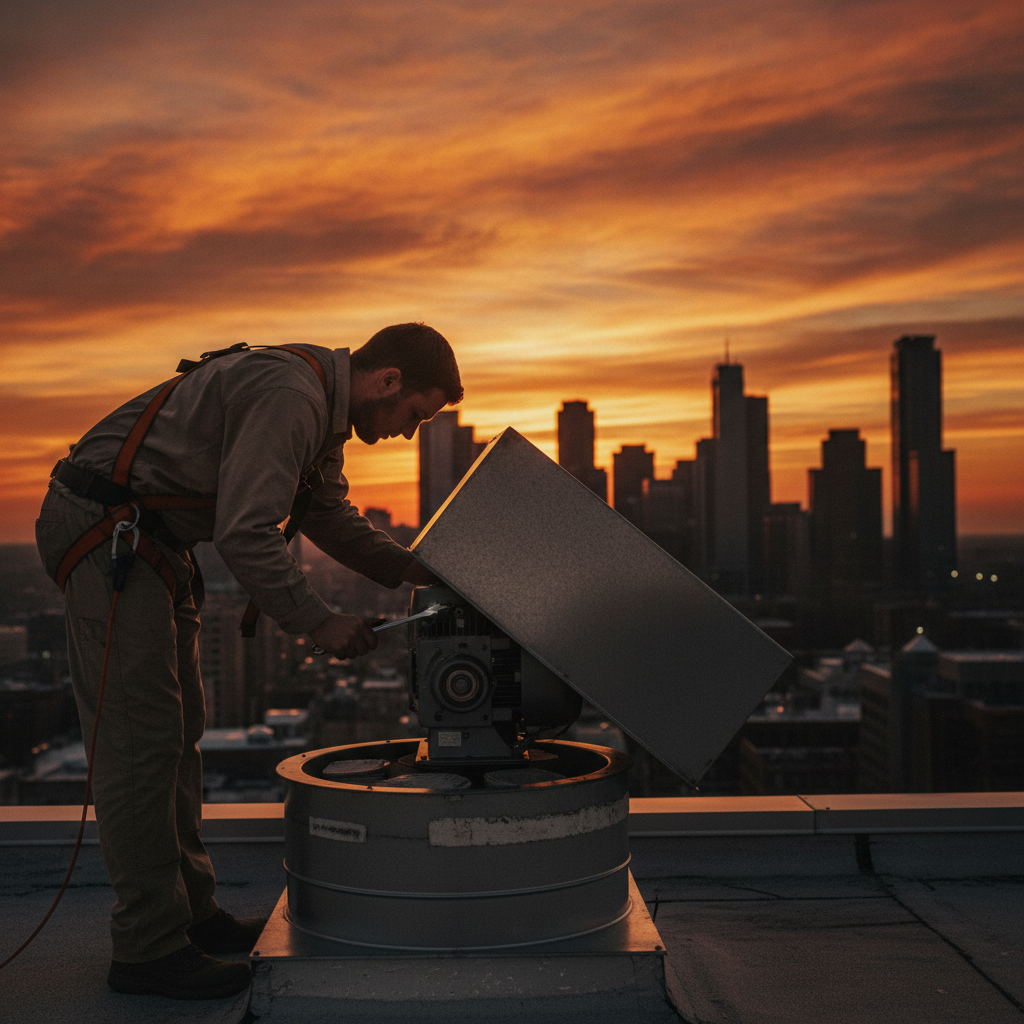
- Winterize rooftop access: snow, ice, and wind on Southern Ontario roofs call for hinge kits, safe tie-offs, and extra time to service exhaust fans.
- Align with regional inspections: keep NFPA 96 cleaning logs, filter exchanges, and fan belt checks documented to satisfy local fire and health officials.
For a broader program view, see our complete kitchen exhaust cleaning guide that complements the routine outlined here.
What is vent hood maintenance?
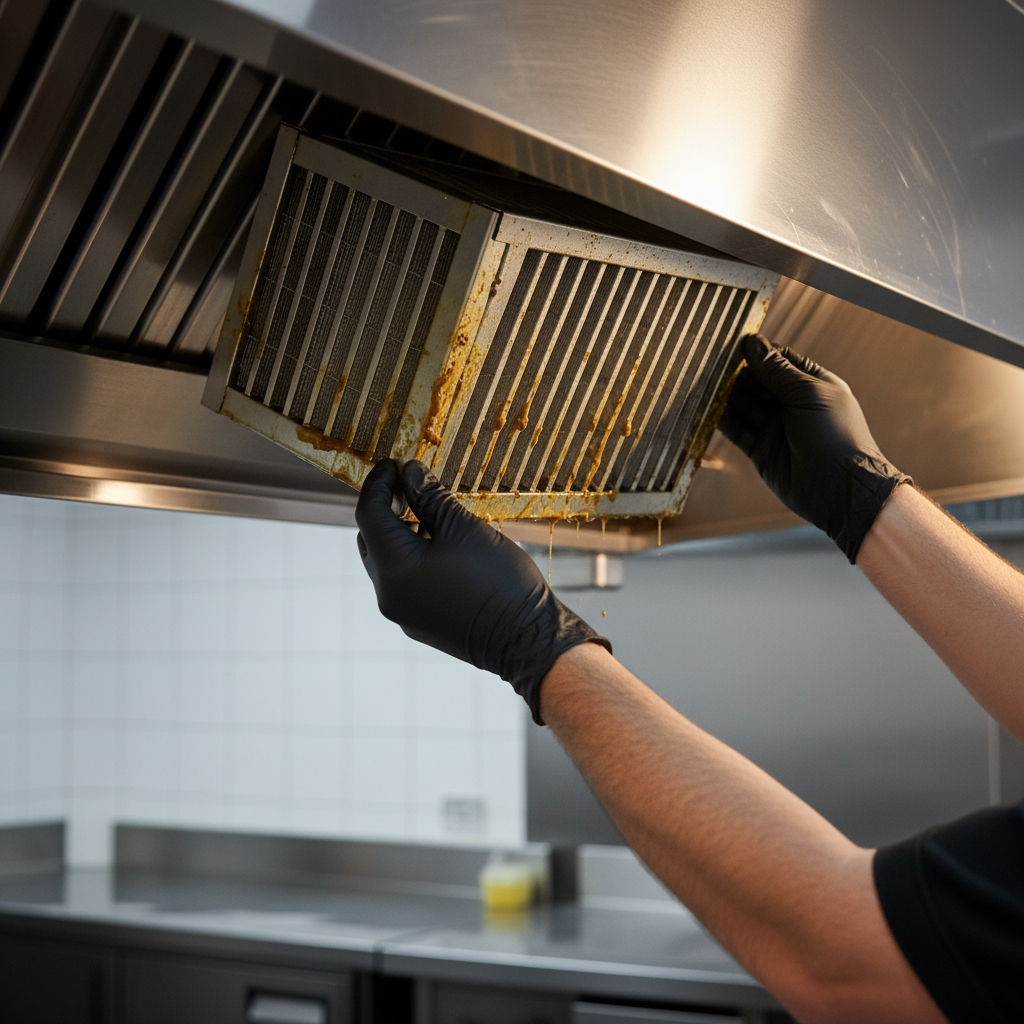
Vent hood maintenance is the planned cleaning and inspection of hoods, baffle filters, ducts, and exhaust fans to remove grease, confirm airflow, and document compliance. Done on a recurring schedule, it lowers fire risk, improves air quality, and keeps restaurants inspection-ready without disrupting service.
At Robinhood Cleaners, we use NFPA 96–aligned methods to keep commercial kitchens safe and productive. The scope covers canopy surfaces, grease cups, filters, plenum and ducts, fan blades and housings, and rooftop discharge. It includes visual checks, mechanical checks (like fan belt replacement), and photographic documentation of before/after conditions.
- Definition in practice: Clean-to-metal degreasing wherever grease can accumulate, plus parts checks that affect airflow.
- Core tasks: Hood degreasing, filter cleaning & exchange, exhaust fan cleaning, duct cleaning, and ventilation system maintenance.
- Documentation: Service stickers, logs, and inspection-ready photo records stored with your manager’s binder.
For Ontario teams running multiple venues or food courts, a uniform definition keeps expectations the same across sites and simplifies audits.
Why vent hood maintenance matters for commercial kitchens
Routine range hood care prevents grease fires, protects staff breathing, and avoids surprise shutdowns. Consistent cleaning and inspection support NFPA 96 alignment, keep insurers satisfied, and extend fan and duct life so kitchens can run hard without costly breakdowns.
The biggest risks we see in All Over Ontario kitchens are grease buildup in hidden duct runs and worn fan belts that silently cut airflow. When airflow drops, smoke and heat linger, creating comfort issues and potential violations. A written plan with defined frequencies dramatically reduces those problems.
- Fire hazard reduction: Removing combustible grease layers where ignition sources are present.
- Air quality and comfort: Adequate capture keeps smoke and odors out of front-of-house spaces.
- Regulatory confidence: Clear logs and stickers help you pass checks the first time.
- Equipment lifespan: Clean blades and correct belt tension save motors and bearings.
If you’re building your compliance binder, pair this program with our NFPA 96 compliance overview to align maintenance with inspections.
How range hood systems work (from hood to rooftop fan)
A commercial hood captures heat and aerosols above the cookline, filters out grease, and moves air through ducts to a rooftop exhaust fan. Proper fan belts, clean blades, and balanced make-up air maintain capture velocity and keep smoke contained at the source.
Think of your system as a chain: canopy and baffle filters catch grease, ducts convey contaminated air, and the exhaust fan discharges it outside. If any link fails—clogged filters, slipping belt, bent blades—capture suffers. Make-up air (supplied by the building) prevents negative pressure that can pull smoke into dining areas.
- Hood and filters: Stainless canopies and listed baffles sized to cookline heat load.
- Ductwork: Welded grease-rated ducts moving air to the roof with minimal elbows.
- Exhaust fan: Belt-driven or direct-drive units with grease containment and a hinge kit for safe service.
- Make-up air: Tempered supply balancing airflow so doors close and capture stays steady.
Want a deeper dive into fan care? Review our exhaust fan maintenance guide for Ontario operators.
Prerequisites: what to do before any hood service
Before cleaning or repairs, lock out equipment, cool the cookline, and secure roof access. Prep water containment, confirm power for tools, and clear a staging path. Collect last service records and note any persistent odors, smoke, or alarms to guide diagnostics.
Strong outcomes start with safe, predictable conditions. Our crews in All Over Ontario prepare the space to protect equipment and food-contact areas while speeding the job. Proper preparation also reduces slip hazards and keeps service windows tight for quick reopening.
- Lockout/tagout: Shut off appliances under the hood, verify breakers, and post signage.
- Cool-down and cover: Let hot surfaces cool; wrap sensitive equipment and cover nearby prep areas.
- Access and fall safety: Check roof ladder integrity, install fan hinge kits, and use tie-offs.
- Water & containment: Set up wash mats, plastic sheeting, and grease water capture.
- Documentation: Pull prior service logs, inspection notices, and warranty notes.
Compliance binders matter. See our Ontario-focused note on fire code requirements for kitchen exhaust to align your prep with local expectations.
Step-by-step vent hood maintenance checklist
Use this repeatable checklist: remove and degrease filters, clean hood and plenum to bare metal, inspect belts and blades, clean ducts to the roof, service the fan with a hinge kit, replace filters, test capture, and document. Schedule frequency by cooking volume and inspection history.
Daily and weekly quick wins
- Wipe canopy edges daily with a degreaser-rated towel to stop drip streaks.
- Empty grease cups and verify no overflow onto cooking surfaces.
- Check filter seating so gaps don’t let flame or vapor bypass baffles.
- Spot-check capture with a visible smoke test at peak volume.
Monthly professional routine (typical)
- Remove baffle filters for filter cleaning & exchange; swap in a clean, dry set immediately.
- Degrease hood and plenum to bare metal using foaming agents and hot water rinse.
- Open duct access and mechanically remove grease to clean metal surfaces.
- Inspect fan belt for cracks and glazing; perform fan belt replacement if worn.
- Clean fan blades and housing, verify grease containment and drain paths.
- Test and document airflow, noises, and vibration; sticker with service date.
Recommended frequency matrix
| Kitchen type | Daily | Weekly | Monthly | Quarterly | Semiannual |
|---|---|---|---|---|---|
| High-volume (QSR, fried) | Edge wipe, cups | Filter check | Full clean | Duct verify | Fan audit |
| Medium-volume (grill) | Edge wipe | Filter check | Partial clean | Full clean | Fan/duct audit |
| Low-volume (bake/boil) | Spot wipe | Filter check | — | Full clean | System audit |
Use the matrix as a starting point. Adjust based on your inspection history and food soils. If smoke escapes at peak load or odors persist, tighten the schedule.
For deep system cleaning that pairs with this checklist, explore our kitchen exhaust hood & vent service.
Troubleshooting common range hood issues
Diagnose quickly: if smoke lingers, check filters and belt tension; if the fan hums or rattles, inspect bearings and blades; if grease drips, verify cups and seams. Odors mean capture or duct issues. Fix root causes before they turn into shutdowns.
Fast diagnostics you can run
- Smoke not captured: Filters clogged, fan belt slipping, or make-up air imbalanced.
- Loud vibration: Loose set screws, bent blades, or failed motor bearings.
- Persistent odor: Hidden grease in ducts or poor filter seating letting aerosols bypass.
- Grease drips: Overfilled cups, leaky seams, or rooftop containment overflow.
- Hood lights flicker: Damage during cleaning or moisture in fixtures—inspect gaskets.
- Fan won’t start: Electrical disconnect, tripped breaker, seized motor, or broken belt.
- Whistling at hood: Air starvation—verify make-up air supply is open and set.
- Alarms during service: Proximity smoke detectors too close—coordinate with building management.
- Rust or pitting: Harsh cleaners or standing moisture—switch to hood-safe chemistries.
When issues stack up, bring in a certified crew. For background on inspection expectations in our region, review this primer on NFPA 96–aligned hood cleaning and what inspectors look for.
Types of maintenance programs and methods
Choose between time-based schedules (monthly/quarterly), usage-based triggers (hours of cooking), or condition-based service (inspection-driven). Pair filter exchange with periodic system cleaning, and add fan belt and bearing checks to prevent surprise downtime.
Program models that work
- Time-based: Simple cadence tied to volume (e.g., monthly for fryers, quarterly for grills).
- Usage-based: Track hours or batches; tighten cleaning during peak season.
- Condition-based: Visual inspections determine when a full clean is due.
- Hybrid: Filters on a strict exchange rhythm; ducts/fan on inspection results.
Service components to bundle
- Hood cleaning & degreasing to bare metal where accessible.
- Filter cleaning & exchange so a clean set is always ready.
- Duct cleaning with access doors added where needed.
- Exhaust fan cleaning plus fan belt replacement and balance checks.
- Grease trap cleaning on a separate plumbing schedule to prevent odors from recirculating to the line.
Our Ontario clients often start with a hybrid: monthly filter exchange, quarterly deep clean, and a semiannual fan audit. It balances safety and uptime across busy seasons.
Best practices our NFPA 96–trained techs follow
The best programs clean to metal, verify capture, and document work. Pros protect equipment, use hinge kits and containment on the roof, test belts and bearings, and leave you with photos and logs that stand up to insurance and regulatory review.
- Clean-to-metal standard: Degrease until surfaces are free of residue, not just shiny.
- Access-first mindset: Install listed access doors so ducts are maintainable end to end.
- Rooftop safety: Hinge kits for fans, containment for runoff, and secured tie-offs.
- Mechanical checks: Belt tension, sheave alignment, bearing play, and motor amperage.
- Final QA: Capture test at peak load and a walk-through with the manager on duty.
- Paper trail: Sticker, photos, and a maintenance log—ready for any inspection.
These are the same methods we detail in our Ontario hood safety overview, built for busy restaurant managers.
Tools, parts, and resources for reliable operation
Have the right kit: listed baffle filters, spare belts, belt gauges, degreasers rated for hoods, access-door hardware, hinge kits, grease containment, PPE, and documentation forms. A prepared cart turns a long night into a fast, predictable service window.
- Filters: UL-listed baffles sized to the hood; swap sets for exchange programs.
- Belts & hardware: Matched belts, alignment tools, and sheave keys.
- Degreasers & rinsing: Hood-safe chemicals, hot-water sprayers, and rinse recovery.
- Access & safety: Listed access doors, hinge kits, anchors, and fall protection.
- Containment: Roof-safe pads, grease boxes, and absorbents to protect membranes.
- Docs: Service stickers, photo logs, and checklists kept in your compliance binder.
Our hood cleaning guide expands on chemical selection and surface protection for stainless steel.
Case studies: All Over Ontario kitchens we’ve helped
Real examples show what works: a quick service site stabilized capture with belt and filter changes; a hotel kitchen eliminated odors with duct access and deep cleaning; a food court reduced grease drips by upgrading rooftop containment.
Quick service restaurant: smoke at lunch rush
- Problem: Smoke rolled into the dining area during peak fry cycles.
- Findings: Clogged filters and a glazed fan belt cut capture.
- Action: Filter exchange, fan belt replacement, and blade cleaning.
- Result: No visible smoke at peak; manager noted cooler line and quieter fan.
Hotel banquet kitchen: lingering odors at night
- Problem: Odors persisted after events, triggering guest complaints.
- Findings: Hidden grease in a long horizontal duct; limited access.
- Action: Installed listed access doors and performed duct cleaning to bare metal.
- Result: Odors resolved; inspection passed with compliment on documentation.
Food court line-up: rooftop containment overflow
- Problem: Grease drips appeared at the hood edge after rain.
- Findings: Rooftop box overflow and clogged drain path.
- Action: Cleaned and resized containment; added absorbent; verified slope.
- Result: No further drips; roof membrane protected.
If these scenarios feel familiar, align your routine with the grease buildup prevention steps we recommend for Ontario restaurants.
FAQ: Vent hood maintenance
Most kitchens need a written hood program with daily wipe-downs, frequent filter exchanges, and recurring deep cleaning for ducts and fans. If smoke escapes or odors linger, tighten the schedule and document each service for inspections.
How often should a commercial vent hood be cleaned?
Set frequency by volume and inspection history. High-volume fryers often need monthly full-service cleaning with weekly filter checks. Medium-volume grills trend quarterly deep cleaning. Low-volume bake/boil lines can extend to semiannual, but tighten if smoke or odors appear.
What’s included in professional hood maintenance?
A typical visit includes hood and plenum degreasing to bare metal, baffle filter exchange, duct cleaning via access doors, exhaust fan cleaning and belt checks, capture testing, and documentation. Many Ontario kitchens also bundle rooftop grease containment service.
How do I know if my fan belt needs replacement?
Look for cracking, glazing, or squeal on startup. If capture drops or the fan vibrates, check belt tension and sheave alignment. Replacing a worn belt is a fast, low-disruption fix that restores airflow and reduces motor strain.
Do grease traps affect hood odors?
Indirectly, yes. If a grease trap backs up, odors can spread through the kitchen and be mistaken for hood issues. Keep grease trap cleaning on its own schedule so odor diagnosis for the hood is accurate and faster.
Key takeaways and next steps
Build a simple, written hood program: daily wipe-downs, frequent filter exchanges, and recurring deep cleaning of ducts and fans. Document everything. When capture drops or odors persist, escalate frequency and call certified pros to keep your kitchen inspection-ready.
- Write it down: Capture your schedule, responsibilities, and vendor contacts.
- Keep spares: Extra filters and belts shorten downtime.
- Document each visit: Stickers, photos, and logs speed up inspections.
- Escalate by symptoms: Smoke, odor, or heat means tighten cleaning cadence.
- Partner with pros: NFPA 96–trained teams reduce risk and disruption.
Soft CTA: Want a quick assessment? Our Ontario team can align filter exchange, duct cleaning, and fan belt checks around your off-peak hours. Start with our kitchen exhaust service page.
For additional background and certification context, you may find these resources helpful: a primer on restaurant hood cleaning certification in Ontario, a checklist of kitchen hood fire risk warning signs, and a breakdown of how certification works.