Exhaust fan maintenance for Ontario restaurants is the scheduled inspection, cleaning, and repair of hoods, ducts, filters, belts, and rooftop fans to control grease, airflow, and fire risk. It aligns with NFPA 96 and local fire-safety expectations, combining hood cleaning, filter exchange, duct and fan service, roof grease containment, documentation, and follow-up verification.
By Robinhood Cleaners | Last updated: 2026-04-15
At a Glance
Restaurant exhaust fan care protects kitchens from fire, keeps airflow stable, and maintains compliance. The essentials are routine hood and duct degreasing, filter cleaning and exchange, belt inspection, grease containment on roofs, and accurate service logs. Done right, it reduces downtime, odors, and insurance risk while improving worker comfort.
- Who this is for: Independent restaurants, QSRs, food courts, hotels, and institutional kitchens across Ontario.
- What you will get: A 2026, step-by-step maintenance framework that matches real restaurant operations.
- Standards to note: NFPA 96 guidance for exhaust systems and inspection expectations from authorities and insurers.
- Core services used: Kitchen exhaust cleaning, hood cleaning, filter cleaning and exchange, duct cleaning, fan belt replacement, ventilation system maintenance, power washing, and grease trap service.
Quick Answer
Exhaust fan maintenance for Ontario restaurants prevents grease fires, stabilizes airflow, and helps you pass inspections. Robinhood Cleaners serves All Over Ontario with NFPA 96–aligned hood and duct cleaning, filter exchange, belt checks, and photo documentation, delivered 24/7 to fit busy Southern Ontario operations.
Local Tips
- Tip 1: Book rooftop fan service outside lunch and dinner rush to avoid traffic near major Southern Ontario corridors; we route crews to keep jobs on schedule and your line moving.
- Tip 2: Winter freeze-thaw cycles can loosen belts and saturate roof grease boxes. Add a quick post-storm check to your monthly routine so fans do not stall during peak hours.
- Tip 3: Malls and food courts often have long horizontal runs. Request access panel mapping at your next visit to speed inspections and limit disruption to neighbors.
IMPORTANT: These tips reflect Robinhood Cleaners’ day-to-day routes and priorities across All Over Ontario, designed to keep high-volume kitchens compliant without interrupting service.
Contents
- What Is Exhaust Fan Maintenance?
- Why It Matters in Ontario Kitchens
- How Commercial Exhaust Systems Work
- Fan Types and Maintenance Methods
- Best Practices Checklist (2026)
- Tools, Parts, and Resources We Use
- Southern Ontario Case Studies
- FAQ
- Conclusion and Next Steps
What Is Exhaust Fan Maintenance?
Exhaust fan maintenance is the recurring inspection, cleaning, and mechanical upkeep of hoods, filters, ducts, and rooftop fans that remove heat, smoke, and grease-laden vapors from kitchens. In practice, it means routine degreasing, filter exchange, belt checks, hinge and bearing care, grease containment, and service documentation aligned to NFPA 96.
Self-contained answer: In commercial kitchens, exhaust fan maintenance refers to a documented program that keeps the entire extraction path—hood, baffles, plenum, vertical ducts, horizontal runs, and the rooftop upblast fan—free of grease and in safe mechanical condition. For Ontario restaurants, this includes periodic hood and duct cleaning, filter cleaning and exchange, belt inspection or replacement, and grease capture on the roof. The goal is simple: control fire risk, protect staff comfort, and pass inspections without last-minute scrambles. This guide uses the phrase exhaust fan maintenance Ontario restaurants several times to match how managers search for practical, local answers.
- Scope: Hoods, baffle filters, plenum, ducts, fan housing, motor, pulleys, V-belt or direct-drive coupling, damper, and grease containment.
- Tasks: Degreasing, scraping, rinsing, polishing, belt tensioning or replacement, hinge checks, bearing care (as specified), and final verification.
- Cadence: High-volume fryers and grills often require quarterly hood/duct cleaning; moderate kitchens trend semiannual; low-volume and seasonal venues vary by inspection findings.
Why Exhaust Fan Maintenance Matters in Ontario Kitchens
Maintenance prevents grease-fueled fires, ensures airflow, and supports inspections and insurance requirements. Consistent, NFPA 96–aligned service lowers risk, reduces smoke and odors, and stabilizes make-up air balance—key for worker comfort and consistent cooking results in Ontario’s busiest restaurants.
- Fire risk reduction: Grease in hoods and ducts ignites easily. NFPA 96 directs regular cleaning based on volume. Our crews remove flammable residues before they accumulate near heat sources.
- Compliance confidence: Inspections expect clean hoods, ducts, and fans. See our NFPA 96 certified hood cleaning approach for alignment with recognized practices.
- Airflow and comfort: Stable exhaust prevents heat spikes, smoke, and back-drafting. Kitchens report steadier temps and fewer odor complaints after routine maintenance.
- Operational continuity: Proactive belt checks prevent sudden fan stoppages during rush. Hinge kits avert damaged wiring when fans are lifted for cleaning.
- Insurance readiness: Clean, photo-documented service histories help during renewals or claims. Inspectors look for dates, tags, and before/after imagery.
For additional background on hazards and control points, review this kitchen fire risks overview.
How Commercial Exhaust Systems Work
A kitchen hood captures heat and grease vapors, baffle filters separate grease, ducts convey air to the roof, and an upblast fan discharges it safely outside. Balanced make-up air replaces exhausted air, preventing negative pressure and keeping smoke from drifting into the dining room.
- Capture: Canopy hoods sit over appliances to catch plume rise at the source.
- Separation: Baffle filters force air to change direction; grease droplets impact and drain.
- Transport: Fire-rated ducts move the airstream upward or horizontally to the roof.
- Discharge: Rooftop upblast fans throw the airstream up and away from the building envelope.
- Balance: Make-up air units replenish exhausted air to maintain comfort and combustion safety.
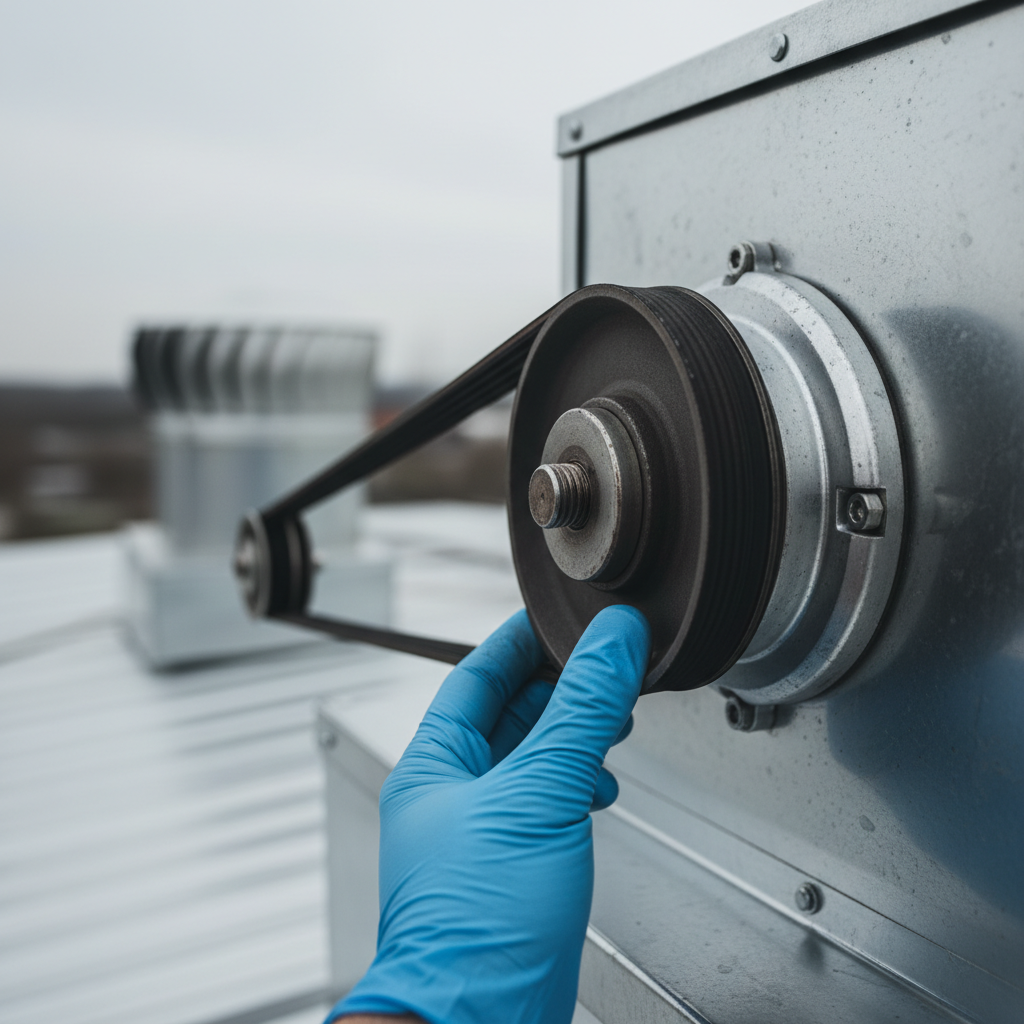
- Fan drive details: Many fans are belt-driven with a motor pulley and fan sheave. Correct belt tension prevents slippage, heat, and motor overload.
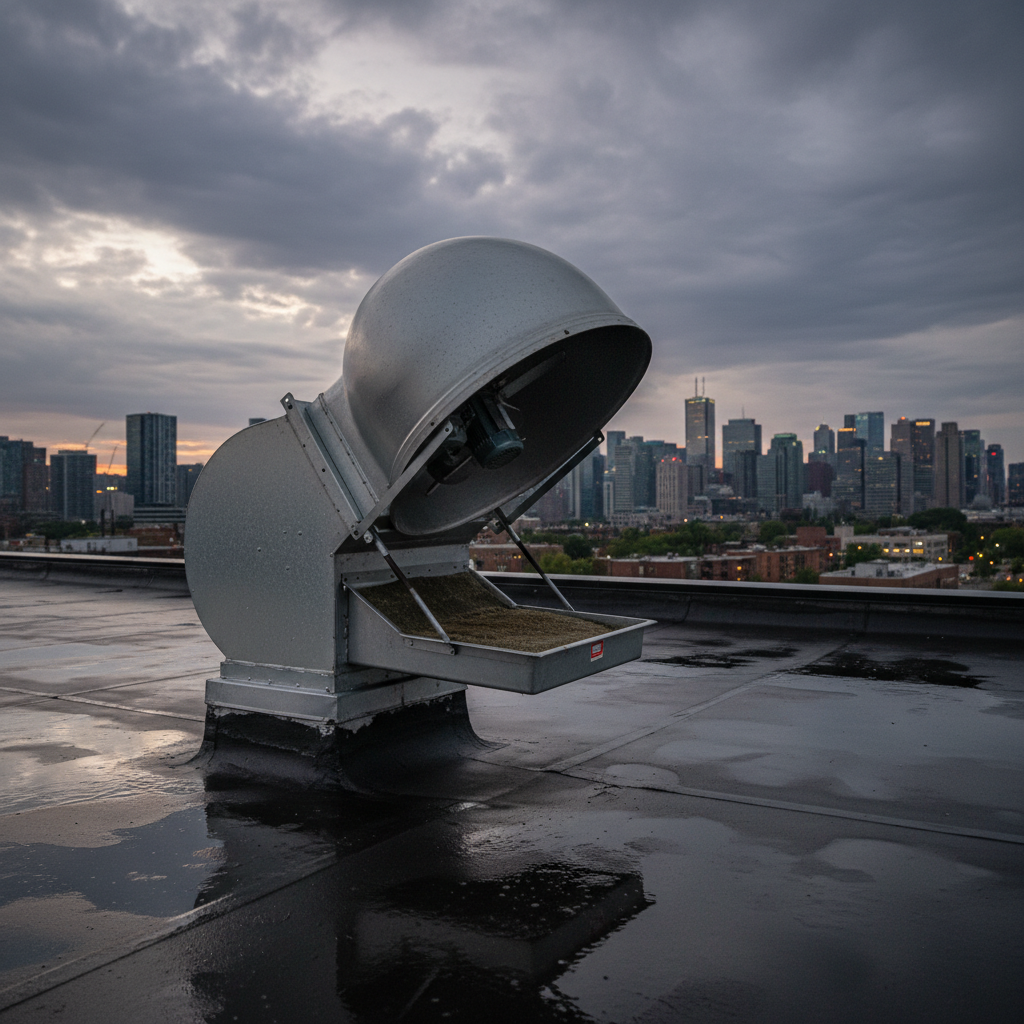
- Access for service: Hinged bases keep wiring intact and protect roofs. Grease boxes or absorbents prevent staining and drain clogs.
- Common faults: Loose belts, clogged filters, obstructed ducts, compromised bearings, and failed interlocks with make-up air.
Fan Types and Maintenance Methods
Upblast centrifugal fans dominate restaurant rooftops; inline and utility-set fans appear where space or noise demands it. Maintenance focuses on degreasing, belt care or direct-drive checks, hinge and wiring protection, and roof-level grease containment with scheduled filter and duct cleaning.
- Upblast centrifugal: Most common on Ontario rooftops. Benefits: throws discharge upward; easy to service with hinge kits.
- Inline fans: Used where roof placement is limited; require access panels along the duct path.
- Utility-set fans: Floor-mounted or on curbs; often serve larger air volumes.
- Belt-drive vs direct-drive: Belt systems need periodic tensioning and eventual belt replacement; direct-drive reduces belt maintenance but still requires cleaning and electrical checks.
- Grease containment: Use compatible catch systems and sorbents to keep roofs clean and prevent drains from clogging after storms.
| Kitchen Volume/Type | Hood and Duct Cleaning | Filter Cleaning/Exchange | Fan/Belt Check | Notes |
|---|---|---|---|---|
| High-volume fry/grill (QSR, food courts) | Every 3 months | Weekly to biweekly | Monthly | Grease accumulates fastest; plan after-hours service. |
| Moderate dine-in (casual/fine dining) | Every 6 months | Biweekly to monthly | Monthly | Adjust cadence after the first two cycles. |
| Low-volume or seasonal | Annually (as observed) | Monthly | Monthly | Document idle periods to reset schedule. |
For a planning template and reminders, see our exhaust fan maintenance schedule.
Best Practices Checklist (2026)
Follow a simple cadence: clean filters weekly, inspect belts monthly, degrease hoods and ducts quarterly to semiannually, and document every visit with photos and tags. Add roof grease containment and hinge kits to protect wiring and membranes. Keep records ready for inspections.
Daily to Weekly
- Wipe and inspect: Front edges of hoods, control panels, and hood lights.
- Filters: Hot-water rinse or swap per soil load; log date and staff initials.
- Listen for changes: Unusual fan noise or vibration often signals belt wear.
Monthly
- Belt check: Verify tension and alignment; look for glazing or cracks.
- Grease containment: Replace saturated pads; confirm drainage after rain.
- Make-up air: Confirm unit starts with the hood; correct interlock faults.
Quarterly to Semiannual
- Hood and duct degreasing: Full scrape, detergent, and hot-water rinse to bare metal as feasible.
- Fan service: Clean wheel and housing; check bearings and electrical whips; verify rotation.
- Documentation: Affix service tags with date, tech, and next due. Keep photo reports on file.
Annual
- System review: Assess access doors, hinge condition, roof protection, and any code changes.
- Training: Refresh staff on safe filter handling and shutdown procedures.
- Optimization: Consider direct-drive upgrades or variable frequency drives where appropriate.
Need a simple cadence? Our maintenance schedule aligns with NFPA 96 scheduling logic and our Southern Ontario service routes.
Free Planning Call
Want a site-specific plan that fits your rush periods and rooftop layout? Book a quick consult with Robinhood Cleaners. We will map tasks to your shifts and roof access so service is invisible to guests.
Tools, Parts, and Resources We Use
Professional degreasers, hot-water systems, scrapers, and power washing remove grease to bare metal. Hinge kits, grease boxes, fall protection, and photo documentation protect people and property. Belts, pulleys, and bearings are inspected and replaced as needed to keep airflow stable.
- Degreasing and rinse: Food-safe detergents, scrapers, and hot-water rinse to clear heavy soil.
- Mechanical parts: V-belts, matched pulleys, tensioning, and alignment checks; direct-drive coupling checks.
- Protection: Hinge kits for safe fan lifting; grease containment to protect membranes; roof-safe mats.
- Verification: Tagging, time-stamped photos, and service logs for inspections and insurers.
- Safety: WSIB-insured technicians with fall protection, lockout/tagout, and rooftop awareness.
For risk context and inspection expectations, skim our 24/7 kitchen exhaust cleaning guide and this summary of kitchen fire risks.
Case Studies: Southern Ontario Kitchens
Quarterly degreasing paired with monthly belt checks drastically cuts unplanned downtime. Real sites in Southern Ontario saw lower odors, steadier temperatures, and fewer after-hours callouts once filters, ducts, and fans were placed on a simple, documented cadence tailored to their menu and hours.
- QSR grill line, highway corridor: Persistent smoke at dinner rush. Findings: glazed belt and saturated filters. Actions: new V-belt, filter exchange, quarterly duct cleaning. Result: stabilized draw and clearer dining room.
- Food court, long horizontal run: Odor complaints on adjacent kiosks. Findings: heavy grease at elbows. Actions: access door additions and sectional scraping, then hot-water rinse. Result: cleaner airflows and faster end-of-night cool-downs.
- Hotel banquet kitchen: Belt failures before events. Findings: worn sheave and misalignment. Actions: pulley replacement, alignment, and hinge kit to protect conductors. Result: no rush-hour stoppages over the next season.
- Institutional kitchen: Inspection tag overdue. Findings: inconsistent records. Actions: photo-documented exhaust duct cleaning with log templates. Result: stress-free audit and easier renewals.
FAQ: Exhaust Fan Maintenance for Ontario Restaurants
Clean filters frequently, check belts monthly, and schedule hood and duct cleaning based on cooking volume. Document every service with photos and tags. Use hinge kits and grease boxes on rooftops to protect wiring and membranes, and keep logs handy for inspections.
How often should our fan and ducts be cleaned?
High-volume fry and grill lines benefit from quarterly hood and duct cleaning; moderate kitchens often do well semiannually. Filters are weekly to biweekly, and belts are monthly checks. We tune cadences after your first two cycles based on actual soil and airflow.
What are the signs our belt is failing?
Squeal at start-up, visible cracking or glazing, and reduced airflow are classic signs. A slipping belt can overheat motors and trigger nuisance shutdowns. We measure tension and alignment, replace worn belts, and verify rotation and amp draw after service.
Do hinge kits and grease boxes really matter?
Yes. Hinge kits prevent torn wiring and fan damage when lifting lids for cleaning. Grease boxes and absorbents protect roofs and drains, especially after storms. Both reduce repair bills and are favored by inspectors and insurers because they prevent repeat hazards.
What documentation do inspectors want to see?
Service tags with dates and tech names, before and after photos, and a clear next-due date. We provide digital reports that align with inspection expectations so managers can answer questions in minutes rather than chasing records.
Can you service overnight or before opening?
Yes. Robinhood Cleaners is available 24/7 across Southern Ontario. We coordinate around your rush windows and route crews to minimize travel delays and rooftop disturbance, keeping your front-of-house on schedule.
Conclusion and Next Steps
A simple, well-documented exhaust fan maintenance plan keeps Ontario kitchens safer, calmer, and inspection-ready. Pair frequent filter care with quarterly to semiannual hood and duct cleaning, monthly belt checks, and rooftop protections. Keep photos and tags current, and issues will stay small and predictable.
- Key Takeaways
- Filters weekly, belts monthly, hood and ducts quarterly to semiannually.
- Hinge kits and grease containment protect wiring and roofs.
- Photo reports and tags speed inspections and insurer reviews.
- Schedules tuned to your menu and hours work best.
- Next Steps
- Map your system: hood types, duct runs, access panels, and roof gear.
- Set a three-cycle trial schedule, then adjust by soil and airflow results.
- Adopt photo logging and tag replacement as standard procedure.
- Book a route-friendly service window outside peak traffic.
Ready to set a simple, reliable plan? Our team services All Over Ontario with NFPA 96–aligned hood and duct cleaning, filter exchange, certified hood cleaning, and scheduled fan belt checks—available 24/7 to fit your operations.