Grease doesn’t wait, and neither should your filters. If you run a restaurant or food service operation anywhere across Ontario, commercial kitchen exhaust filter cleaning Ontario is one of the fastest ways to reduce fire risk, protect your team, and stay inspection-ready. This complete guide shows how certified pros at Robinhood Cleaners set up a safe, NFPA 96–aligned program that fits your hours—24/7—with especially quick response in Southern Ontario.
Above the Fold: Why This Guide Matters + Table of Contents
- Learn exactly what exhaust filters do and why they’re your first fire barrier.
- See how professional, NFPA 96–aligned cleaning works step by step.
- Match your service schedule to your menu and volume (with practical ranges).
- Choose the right cleaning method for stainless baffles or aluminum mesh.
- Get documentation and tagging practices that speed up inspections.
- Use local tips for sites across Ontario, including rooftop safety and access.
- Apply checklists, best practices, and case insights from real Ontario kitchens.
Quick Summary
- Exhaust filters trap grease before it enters ducts and fans—your first fire defense.
- Commercial kitchen exhaust filter cleaning Ontario programs reduce hazards and improve airflow.
- Certified technicians use hot water, foam degreasers, and soak tanks without damaging metal.
- Tags, logs, and photo proof help you pass health and fire inspections faster.
- Robinhood Cleaners serves all of Ontario with 24/7 scheduling—fastest in Southern Ontario.
Quick Answer
For commercial kitchen exhaust filter cleaning in Ontario, book routine clean-and-exchange service with an NFPA 96–certified team like Robinhood Cleaners. Based in All Over Ontario at All Over Ontario, we rotate, deep-clean, and document filters 24/7 so you cut fire risk and stay inspection-ready—especially fast in Southern Ontario.
Local Tips
- Tip 1: Near the QEW, 401, or 403? Schedule off-peak service to avoid dock congestion and keep cleaning windows tight.
- Tip 2: Winter slush and spring rains make rooftops slick—ask for rooftop grease containment checks and fall protection prep before each visit.
- Tip 3: High-volume fryers common in Southern Ontario QSRs may need weekly filter exchanges; add this cadence to your written SOP so relief managers follow it.
IMPORTANT: Align frequency with cooking load and oil type—heavier frying requires more frequent filter service.
What Is Exhaust Filter Cleaning?
Short version: it’s removing grease from the baffle or mesh filters inside your range hood. Those filters are designed to capture grease and channel it to troughs—keeping flammable residue out of ducts and away from the roof fan.
- Primary purpose: Stop flames and grease from migrating into the duct system.
- Core tasks: Remove, degrease, rinse/neutralize, dry, inspect, reinstall, and tag.
- Outcomes: Better airflow, cooler lines, fewer smoke alarms, happier crews.
- Compliance: Work should align with NFPA 96 and local fire code guidance.
Here’s the thing: waiting until filters look shiny-black is too late. A consistent, documented cadence is what keeps your hood, ducts, and fan safer—and your inspections smooth.
Commercial Kitchen Exhaust Filter Cleaning Ontario: Why It Matters
- Fire hazard reduction: Grease is fuel. Clogged filters can flash in seconds.
- Air quality improvement: Clean filters move air; smoke and odor complaints drop.
- Equipment protection: Fans, belts, and motors last longer when air flows freely.
- Inspection readiness: Tags and photo reports cut review time dramatically.
- Staff morale: Cooler line, clearer sightlines, less slipping—better service.
Want a deeper dive on buildup control? Our team outlines proven grease buildup removal techniques that tie directly into filter care and fire prevention.
How Professional Cleaning Works (Step-by-Step)
Below is a typical Robinhood Cleaners workflow for filters—modeled on NFPA 96 and industry best practices, and timed to your slowest periods to avoid disruption.
- Pre-check and protect: Confirm fan shutoff; apply lockout/tagout as needed. Shield cookline with plastic sheeting and floor containment.
- Remove filters: Unseat baffles/mesh carefully to avoid frame dents and hand cuts (edges can be sharp).
- Select method:
- Heated soak tank with food-safe degreaser for heavy buildup.
- Foam degreaser + hot-water rinse for moderate soils.
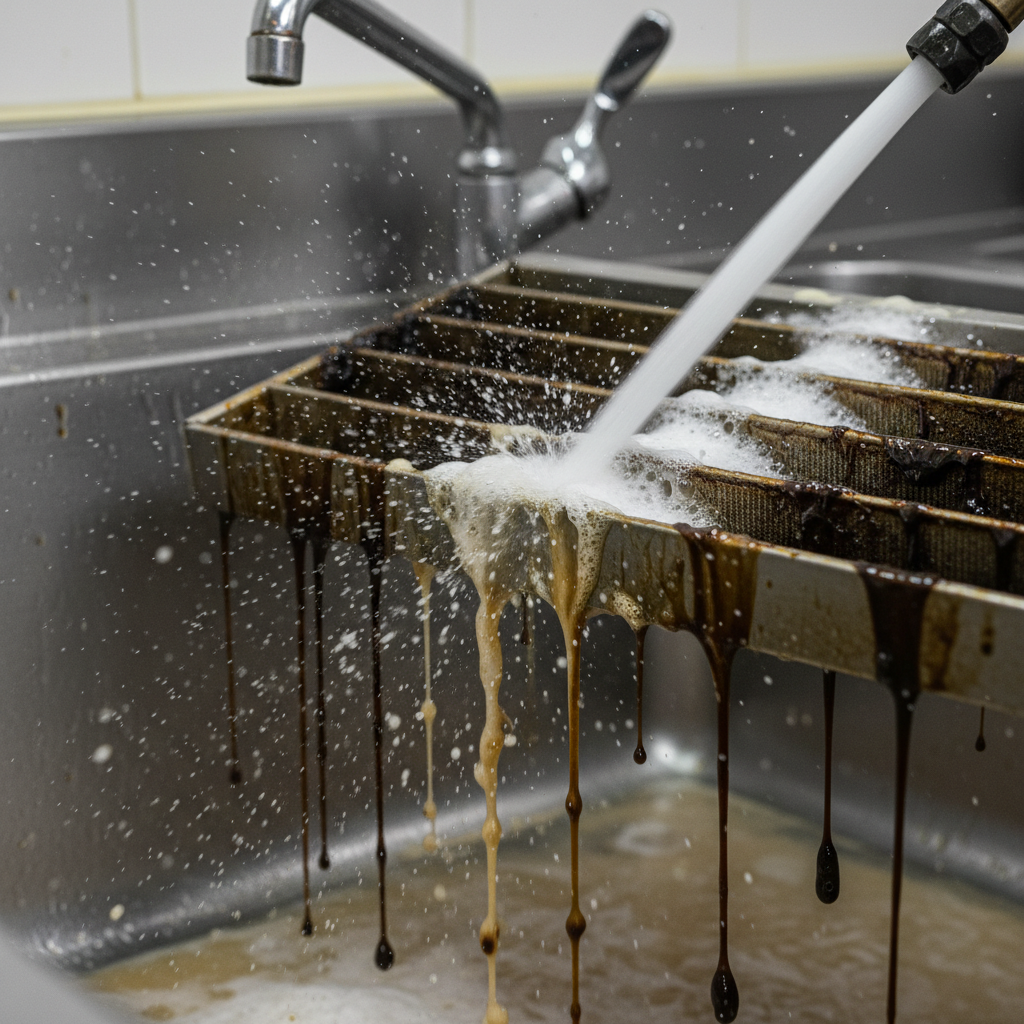
- Hot-water pressure wash for durable stainless baffles.
- Rinse and neutralize: Balance chemistry to protect stainless and reduce residue.
- Dry and inspect: Check welds, rivets, frames, and baffle orientation markers.
- Reinstall and tag: Ensure correct orientation (arrows up), then apply dated tags.
- Document: Capture before/after photos and service notes; update your digital logbook.
For high-volume sites, we often run a filter cleaning & exchange rotation—fresh, cleaned spares go in immediately while the dirty set heads to soak—zero downtime for your line.
Filter Types & Cleaning Methods
Common Exhaust Filter Types
- Stainless baffle filters: Most common; channel grease into troughs; withstand hot-water pressure when welds are sound.
- Aluminum mesh: Lightweight and easy to deform; better for light-duty sauté, not heavy frying.
- Spark arrestor baffles: For solid-fuel cooking; add spark suppression while capturing grease.
Choosing the Right Cleaning Approach
- Heated soak tank: Gentlest deep clean for baked-on grease; requires proper neutralization.
- Foam + hot rinse: Efficient, on-site, minimal disruption; careful rinsing prevents residue.
- Hot-water pressure: Fast and effective on stainless; avoid aggressive tips on aluminum.
- Ultrasonic (off-site): Precision for delicate mesh; less common in heavy QSR settings.
| Method | Best For | Pros | Watch Outs |
|---|---|---|---|
| Heated Soak Tank | Heavy, baked-on grease | Thorough, gentle on metal | Needs neutralization; transport space |
| Foam + Hot Rinse | Moderate soil; rapid turns | On-site, minimal downtime | Rinse fully to avoid residue |
| Hot-Water Pressure | Stainless baffles | Fast, effective removal | Risk on aluminum or weak welds |
If you’re unsure whether to deep clean or replace, compare notes with our internal guidance on clean vs. replace decisions and the complete replacement guide—both help you set a safe, practical policy.
Best Practices & Service Schedules
Scheduling by Cooking Volume
- Heavy frying (QSR, wings, burgers): Weekly exchange or biweekly deep clean.
- Mixed menu (casual dining): Biweekly to monthly—tighten cadence during peak seasons.
- Light sauté/baking (cafés, bakeries): Monthly to quarterly with interim inspections.
Operational Do’s and Don’ts
- Do keep a laminated schedule near the hood and inside your manager’s binder.
- Do capture and dispose of wastewater per local regulations.
- Do request photo documentation and dated tags every visit.
- Don’t use caustics that etch aluminum or discolor stainless.
- Don’t power-wash indoors without containment—overspray is a slip hazard.
- Don’t reinstall filters upside down—grease must drain into troughs.
Documentation to Keep On File
- Service reports with date, tech name, method used.
- Before/after photos stored in a shared folder.
- NFPA 96 compliance notes and any corrective actions.
- Updated SOPs showing exchange frequency and owner responsibilities.
Coordinating filter cadence with hood, duct, and fan cycles pays off. We break down system-wide timing in our internal post on filter replacement in Ontario so your team can plan holistically.
Tools, Safety & Resources
Core Tools We Bring
- Hot-water pressure washer with adjustable tips for stainless vs. aluminum.
- Foamers and soak tanks for tailored degreasing approaches.
- PPE and containment to keep the cookline protected and slip-free.
- Wet/dry vac and floor squeegees for safe, quick cleanup.
- Tagging and photo kits for inspection-ready documentation.
Detergents & Chemistry
- Alkaline, food-service degreasers with proper dilution for metal safety.
- Neutralization rinse to protect stainless finishes and staff skin contact areas.
- Non-slip floor treatments as needed after washdowns.
Safety Protocols We Follow
- Lockout/tagout for fans and electrical sources when required.
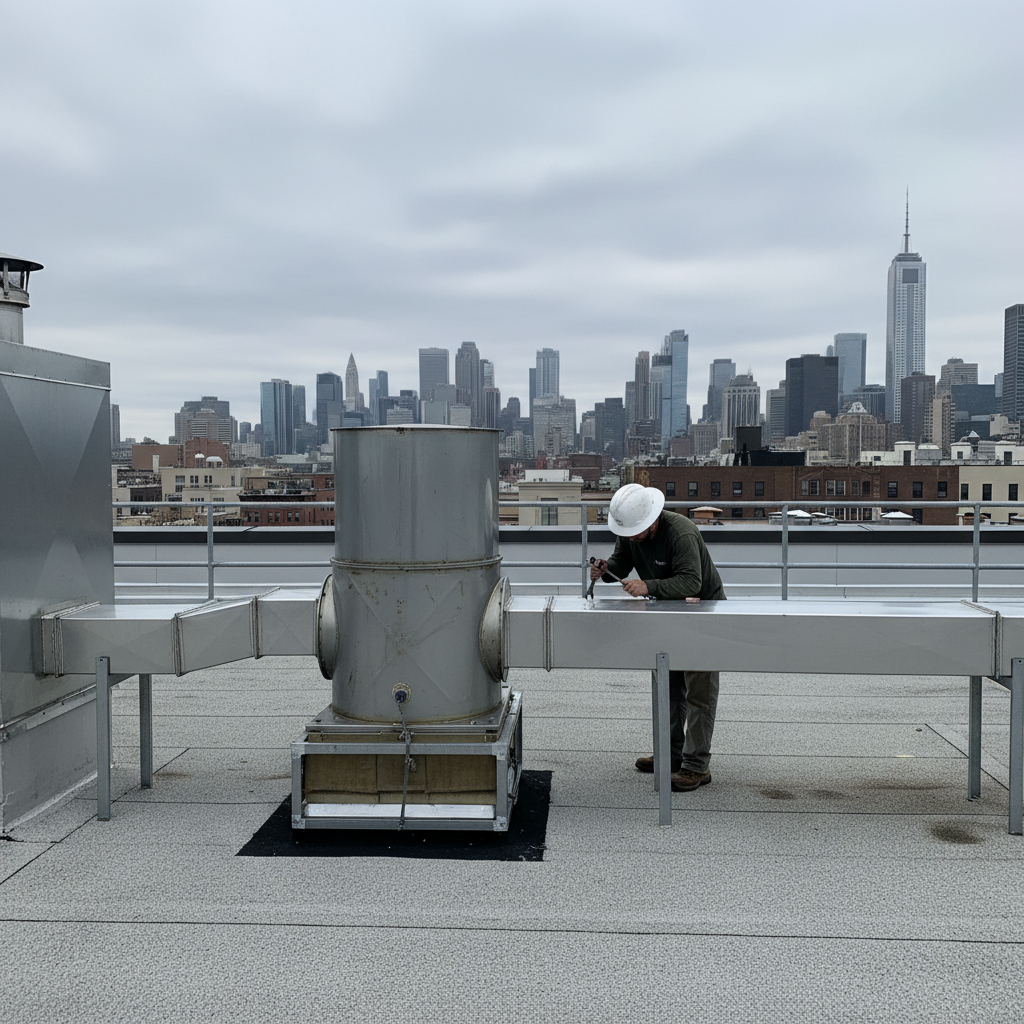
- Rooftop fall protection for fan access, including safe ladder use.
- Slip prevention with containment, mats, and immediate drying.
- WSIB-insured technicians for workplace safety and compliance.
For broader context on standards, review our page on NFPA 96 certified hood cleaning in Ontario—it clarifies expectations for hood, duct, and fan service alongside filter routines.
Building a Filter Cleaning & Exchange Program
You might be wondering, “What’s the simplest way to make this stick?” The answer is a predictable rotation with spare sets. Here’s how we set it up for Ontario kitchens.
Program Components
- Spare filter set: Sized to each hood bank; stored safely on-site.
- Exchange cadence: Weekly, biweekly, or monthly depending on volume.
- Deep-clean cycle: Every 2–4 exchanges to reset performance.
- Tagging protocol: Dated, signed tags on each bank; photos in digital log.
- Seasonal review: Tighten during patio season and holiday rush.
Team Roles
- GM/Kitchen manager: Approves cadence, reviews logs, and signs off.
- Line lead/Opener: Confirms post-service orientation and final checks.
- Vendor technician: Executes cleaning, tagging, and photo documentation.
Performance Metrics
- Airflow/smoke complaints: Target near-zero after exchange.
- Inspection notes: No deficiencies tied to filters or hood banks.
- Maintenance tickets: Fewer fan belt and motor heat issues.
- Service punctuality: On time, off-peak, with minimal disruption.
Need a documented, inspection-ready plan? Robinhood Cleaners builds filter cleaning & exchange programs that sync with hood, duct, and fan service—24/7, all over Ontario. We’ll tag, photo-log, and rotate spares so your line never stops.
Ontario Case Insights
- Busy QSR near Highway 401: Weekly exchanges cut smoke during dinner rush; next inspection recorded no filter-related notes.
- Downtown hotel kitchen: Swapped aluminum mesh for stainless baffles; airflow improved and rooftop grease spread stopped with containment installed.
- Institutional cafeteria: Biweekly filter exchange aligned with hood and duct cycles; fan maintenance tickets dropped the following quarter.
- Late-night emergency: After a small flare-up, overnight filter and hood service restored operations before lunch—no lost daypart.
- Franchise group (multiple sites): Standardized tagging and photos; managers now audit logs in 2 minutes during shift change.
- Seasonal patio concept: Cadence tightened May–September; winter schedule eased without triggering inspection findings.
If you’re comparing cleaning to replacement, our quick primer on clean vs. replace for filters pairs nicely with buildup removal best practices to shape policy across locations.
FAQ
How often should commercial exhaust filters be cleaned?
Match frequency to workload. Heavy fry lines often need weekly exchanges or biweekly deep cleans. Mixed menus can go biweekly to monthly. Document the plan, then adjust at seasonal peaks.
Can we clean filters in our dish machine?
Not recommended. Food soils contaminate the dish cycle, and chemicals can etch aluminum or stain stainless. Purpose-built degreasers, soak tanks, and hot-water rinses are safer and more effective.
What proof do inspectors look for?
Tagged filters with dates, a current service report, and clear before/after photos. Keeping this in a shared folder speeds reviews and shows NFPA 96 alignment.
When should we replace instead of clean?
Replace when welds fail, frames are bent, or baffles rattle and no longer channel grease to troughs. Repeated cleaning won’t fix damaged geometry.
Does filter service cover the whole hood system?
Filter cleaning protects the system, but hoods, ducts, and fans still need periodic degreasing under NFPA 96. Coordinate cycles so everything stays in step. For scope alignment, see our overview of a commercial kitchen hood cleaning service in Ontario.
Conclusion & Next Steps
- Filters are your first fire barrier: Don’t let them clog.
- Set a schedule tied to volume: Review seasonally and during promotions.
- Use certified providers: NFPA 96 alignment, WSIB-insured crews, and photos matter.
- Document everything: Tags, photos, and service logs make inspections easy.
Ready to standardize your program? Robinhood Cleaners serves all of Ontario with 24/7 availability and especially fast response in the south. Ask us to design a filter cleaning & exchange rotation that syncs with hood, duct, fan, and grease trap cycles—so your kitchen stays safe, compliant, and efficient.
Key Takeaways
- Commercial kitchen exhaust filter cleaning Ontario programs reduce fire hazards fast.
- Right method + right cadence = safer lines, better airflow, fewer maintenance calls.
- Tags and photo logs are your best inspection accelerators.
- 24/7 scheduling ensures zero disruption to service windows.