Your cooks can’t chase tickets in a haze of smoke. And inspectors won’t ignore greasy, warped baffles. Here’s the straightforward playbook for commercial kitchen exhaust filter replacement Ontario—when to clean, when to swap, and how to keep your hood, ducts, and fans working safely without interrupting service.
- Understand what baffle filters do, how they fail, and why they matter for NFPA 96 alignment.
- Use a clean-vs-replace decision framework your team can follow in under a minute.
- Adopt bulletproof SOPs, logs, and schedules based on menu, volume, and Ontario seasons.
- See real examples from Southern Ontario kitchens and get ready-to-use checklists.
- Know when to bring in NFPA 96–certified, WSIB-insured pros for ducts, fans, and documentation.
Quick Answer
For commercial kitchen exhaust filter replacement Ontario, inspect daily, clean frequently, and replace filters that are warped, cracked, or won’t degrease to bare metal. Robinhood Cleaners (serving All Over Ontario at All Over Ontario) provides 24/7 NFPA 96–aligned filter cleaning and exchange so restaurants stay compliant and fire-safe without downtime.
Table of Contents
- What Is Exhaust Filter Replacement?
- Why It Matters in Ontario Kitchens
- How Exhaust Filters Work (Baffles 101)
- Types of Hood Filters and Where They Fit
- Commercial Kitchen Exhaust Filter Replacement Ontario: Clean vs Replace Framework
- Step-by-Step SOPs: Inspect, Clean, Replace
- Best Practices That Stick
- Tools, Supplies, and Pro Resources
- Common Mistakes (and Easy Fixes)
- Troubleshooting Smoke, Odor, and Drip
- Maintenance Schedules by Menu and Volume
- Compliance, Records, and Proof for Inspectors
- Ontario Case Snapshots (Real-World Examples)
- FAQ
- Key Takeaways
What Is Exhaust Filter Replacement?
Exhaust filter replacement is the process of removing existing baffle filters, determining if they can be restored to bare metal, and either reinstalling the cleaned set or swapping in new filters that fit tightly and restore safe airflow. It’s a core control point in any commercial kitchen exhaust filter replacement Ontario program.
- Main job: Capture airborne grease before it reaches the ducts and rooftop fan.
- When “replacement” really means:
- Exchanging with a second, pre-cleaned set (fastest way to keep the line moving).
- Installing brand-new filters when the current set is damaged or no longer cleanable.
- What triggers replacement:
- Warped or dented baffles that no longer seal the rack.
- Cracked frames, sharp edges, or loose handles (safety hazard).
- Grease that won’t lift to bare metal after a full soak-and-rinse cycle.
- Wrong size/type creating visible bypass gaps.
Why It Matters in Ontario Kitchens
Filters are the first line of defense between live flame and your ductwork. When they clog or deform, grease loads the system and a flare-up can move fast. That’s why inspectors—and insurers—look closely at filter condition and documentation.
- Fire risk reduction: Proper baffles cut down flame penetration and grease carryover into ducts.
- Compliance alignment: NFPA 96 expects systems “maintained to a minimum acceptable level of cleanliness.” Filters are central to that standard.
- Air quality and comfort: Clogged filters mean smoky lines, hotter stations, and unhappy crews.
- Equipment protection: Clean, intact filters reduce duct loading and protect fans and belts.
- Inspection readiness: Ontario inspectors watch for heavy film, active drip, missing/incorrect filters, and poor fit.
Robinhood Cleaners brings NFPA 96–certified, WSIB-insured teams, pro-grade degreasers, and 24/7 scheduling to service filters, hoods, ducts, and fans around your hours—especially with quick response across Southern Ontario.
How Exhaust Filters Work (Baffles 101)
- Airflow path: The hood pulls cooking effluent through metal baffles. The zigzag inside each filter makes grease droplets collide and drain into the trough.
- Inertia separation: Baffles collect grease through directional changes—not by trapping air. That’s why they maintain airflow better than mesh.
- Orientation: Install with drains down toward the grease trough, baffles vertical, no sideways or upside-down placements.
- Fit: Filters must tightly fill the rack to prevent bypass. Even small gaps send grease straight to the ducts.

Types of Hood Filters and Where They Fit
Most Ontario restaurant lines rely on stainless baffle filters. Still, you’ll see variations. Match the material to the grease load and your cleaning process.
- Stainless steel baffle
- Best for high-grease environments (fryers, grills, woks).
- Resists corrosion, tolerates aggressive degreasers and repeated cycles.
- Galvanized steel baffle
- Lower upfront investment; more prone to denting and corrosion.
- Often replaced sooner under frequent cleaning cycles.
- Aluminum baffle
- Lighter weight but can pit with strong caustics.
- Monitor for structural fatigue and fit over time.
- Avoid mesh on heavy-grease lines
- Mesh clogs quickly and doesn’t provide the same flame-protection path.
- Often non-compliant for heavy-duty commercial cooklines.
Commercial Kitchen Exhaust Filter Replacement Ontario: Clean vs Replace Framework
Use this simple framework to remove guesswork during the rush.
| Condition | What You’ll See | Action | Why |
|---|---|---|---|
| Routine soil | Visible film but no damage | Clean | Restores airflow; filter still serviceable |
| Baked-on grease | After a full soak, film remains | Replace | Lost cleanability; risk of drip and fire |
| Warped/dented fins | Misaligned baffles, poor rack seal | Replace | Bypass gaps drive grease to ducts |
| Cracked frame/handles | Loose corners, sharp edges | Replace | Unsafe handling; poor fit |
| Wrong size/type | Visible gaps or mesh | Replace | Non-compliant and ineffective |
- Rule of thumb: If you can’t restore to bare metal or the filter won’t sit tight and flush, it’s time to replace.
- Inventory tip: Keep a complete second set to enable instant swaps and offline cleaning.
- Cadence planning: Align filter care with your hood/duct schedule; review our hood cleaning frequency guide for interval planning that inspectors respect.
Step-by-Step SOPs: Inspect, Clean, Replace
Standardize the process so anyone on the team can execute it consistently.
Daily Line Check (60 Seconds)
- Verify all baffles are present, seated tight, and oriented with drains down.
- Scan for heavy film, active drip, or smoke roll-back at the lip.
- Listen for fan strain (whine, belt squeal) indicating restricted airflow.
- Log issues in your maintenance sheet and flag for post-shift action.
Weekly Cleaning Cycle (During Real Downtime)
- Cool equipment and lock out ignition sources.
- Remove filters one at a time; note position for reinstallation.
- Pre-scrape heavy deposits into a proper waste container (never the drain).
- Soak in approved degreaser; agitate gently with non-scratch brushes.
- Rinse hot; inspect under bright light for residual film.
- Dry fully and reinstall snug with no gaps and drains aligned to the trough.
When to Replace Immediately
- Filters won’t clean to bare metal after a proper soak-and-rinse.
- Baffles are warped or frames are cracked/loose.
- Edges are sharp/bent creating a handling hazard.
- Incorrect size or type leaves visible bypass gaps.
Pair this SOP with full-system service. Our NFPA 96 compliance playbook outlines how filters, hoods, ducts, and fans should be maintained together—and documented.
Best Practices That Stick
- Choose stainless for heavy grease (grills, fryers, woks) to withstand frequent cleaning cycles.
- Label racks and filters (A, B, C…) so each returns to the same opening for a consistent seal.
- Rotate sets to even wear and shrink swap times.
- Train on orientation: drains down, baffles vertical, tight fit.
- Bundle tasks: combine filter swaps with kitchen fire safety checks and fan belt inspections.
- Document everything: dates, initials, condition, degreaser used, issues, action (clean/replace).
- Schedule around you: leverage 24/7 service to clean during true downtime.
Tools, Supplies, and Pro Resources
- On-hand kit
- Nitrile gloves, goggles, aprons for chemical handling.
- Non-scratch scrapers and soft-bristle brushes.
- Commercial degreaser compatible with stainless steel.
- Soak tank or designated sink (with grease interceptor compliance).
- Bright inspection light and drying racks.
- When to call Robinhood Cleaners
- Grease extends to ducts or rooftop fan (needs NFPA 96–certified techs).
- Persistent smoke/odor after cleaning indicates upstream restriction.
- Filters are mismatched, undersized, or repeatedly failing.
- Documentation is required for inspections or insurers.
- Explore professional help: See our detailed service pages for hood cleaning in Ontario and NFPA 96–certified support for multi-unit operators.
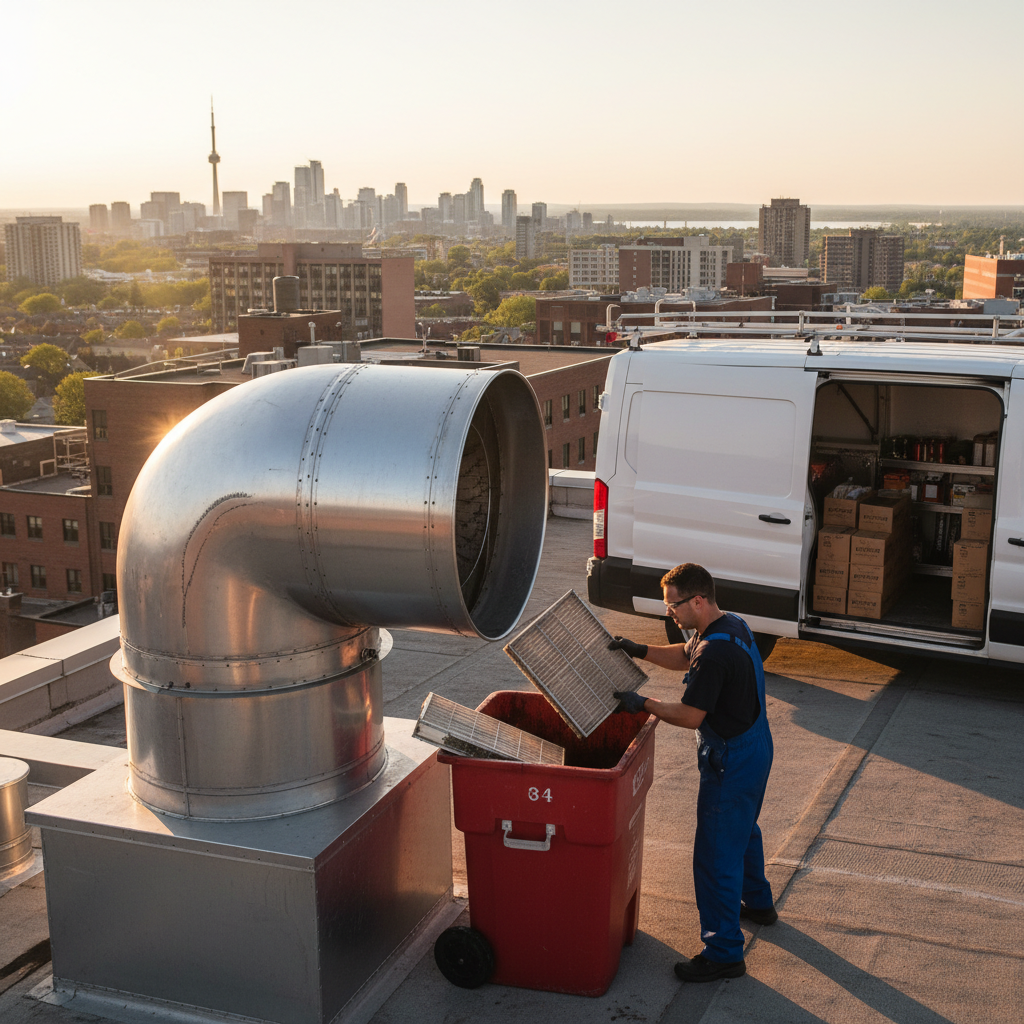
- Get a quick cadence plan for filters, ducts, and fans based on your menu and hours.
- Test an after-close filter exchange with zero downtime.
- Line up documentation that satisfies inspectors and insurers.
Common Mistakes (and Easy Fixes)
- Installing baffles upside down or sideways
- Fix: Train using a simple check—drain holes down, baffles vertical.
- Using mesh on heavy-grease lines
- Fix: Swap to stainless baffles sized to fill each opening.
- Letting filters air-dry on the cookline
- Fix: Dry fully off the line; wet filters can drip and attract debris.
- Skipping documentation
- Fix: Keep a simple log (date, initials, condition, action). It matters during inspections.
- Cleaning during peak prep or rush
- Fix: Schedule after close or between rushes; or use a second set for instant swaps.
Troubleshooting Smoke, Odor, and Drip
- Smoke rolling out at the hood lip
- Check: Filter orientation, fan operation, and damper positions.
- Action: Clean or replace filters; if issue persists, schedule duct/fan service.
- Persistent kitchen odor
- Check: Filters for baked-on film and trough drainage.
- Action: Deep-clean filters; evaluate duct elbows for grease loading.
- Active grease drip
- Check: Overfilled troughs, saturated filters, or warped frames.
- Action: Replace damaged filters; clear troughs; revisit cleaning intervals.
- Fan strain or belt squeal
- Check: Airflow restriction from clogged filters or duct buildup.
- Action: Clean/replace filters now; schedule hood/duct service next.
Maintenance Schedules by Menu and Volume
Start here, then tune using your log data and capture performance.
| Operation Type | Inspect | Clean | Replace | Notes |
|---|---|---|---|---|
| High-grease (wings, burgers, fried chicken, BBQ) | Each shift | Daily to every 2–3 days | When cleanability or fit drops | Keep two full sets for instant swaps |
| Mixed menu (casual dining, hotels, campuses) | Daily | 2–3 times/week | On condition (frame/fins) | Check airflow balance when seasons change |
| Lower grease (bake-heavy, light sauté) | Daily | Weekly | On condition | Still keep a spare set ready |
For system-wide cadence (filters + hood + ducts + fan), see our internal cleaning frequency guidance and align it with your inspection calendar.
Compliance, Records, and Proof for Inspectors
- Standards lens: Aim for “clean to bare metal” expectations that underpin NFPA 96 programs.
- Recordkeeping: Maintain a filter log: date, staff initials, condition, action (clean/replace), issues found.
- Photo evidence: Snap before/after for outliers and attach to your log.
- Certificates: Post service certificates near the hood for easy auditor access.
- Cross-reference: Confirm expectations against our Ontario restaurant fire safety primer.
Ontario Case Snapshots (Real-World Examples)
- Southern Ontario fry-forward chain (3 locations)
- Problem: Weekly smoke roll-back and hot lines during evening rush.
- Action: Second filter set with nightly swaps; monthly pro cleaning; quarterly fan check.
- Result: Strong capture, cooler lines, clean inspection notes across all sites.
- Downtown hotel banquet kitchen
- Problem: Galvanized baffles corroding and denting under aggressive degreasing.
- Action: Upgraded to stainless; added rotation labels and soak dwell timers.
- Result: Faster cleaning, fewer replacements, steadier airflow balance.
- University cafeteria
- Problem: Mixed filter sizes left gaps; grease reached duct elbows.
- Action: Sized a complete matched set; immediate duct service by NFPA 96 team.
- Result: No bypass, better capture, documented compliance for audits.
- Suburban casual-dining concept
- Problem: Filters “clean” but lingering odor and frequent belt squeal.
- Action: Verified orientation; added second set; scheduled fan and duct cleaning.
- Result: Odor resolved; belt strain gone; documented program satisfied inspection.
- Hospital production kitchen
- Problem: Inconsistent shift practices; missing logs during audit.
- Action: Rolled out SOP cards, labeled racks, and a simple log with photo evidence.
- Result: Smooth audit, clearer accountability, and repeatable results across shifts.
Local Tips
- Tip 1: Along Highway 401 and the QEW, schedule filter swaps after late-night rush to avoid traffic delays for service crews and deliveries.
- Tip 2: Winter rooftops in Southern Ontario can slow fan access—plan duct and fan service before storms to keep certificates current.
- Tip 3: During campus and downtown festival weeks, stage a spare filter set and coordinate with Robinhood Cleaners’ 24/7 crews to keep service continuous.
IMPORTANT: These tips reflect our NFPA 96–aligned approach and rapid response in Southern Ontario.
FAQ
How do I know when to replace instead of clean?
Replace when baffles are warped, frames are cracked, handles are loose, or grease won’t come off to bare metal after a proper soak-and-rinse. Also replace if filters are the wrong size or type and create bypass gaps. If smoke rolls out at the hood lip even after cleaning, airflow may be restricted upstream—pair a filter check with professional hood, duct, and fan service.
What’s a good cleaning frequency for a high-volume fry line?
Start with daily or every-other-day. Validate with your log: less smoke, cooler line, and no drip. If grease accumulates quickly, shorten the interval. Bundle filter care with scheduled hood and duct cleaning to keep the entire system balanced and aligned with NFPA 96 expectations.
Can I use galvanized or aluminum filters on heavy-grease lines?
You can, but stainless baffles hold up best under aggressive degreasing and frequent cycles. Galvanized steel can corrode and dent; aluminum can pit. For high-grease menus, stainless usually provides the most durable, compliant path.
Do inspectors look for documentation on filter maintenance?
Yes. Keep a simple filter log (date, initials, condition, action) and photo evidence for outliers. Post service certificates near the hood. Documentation shows a proactive, NFPA 96–aligned maintenance program that auditors and insurers appreciate.
How can multi-unit operators standardize across locations?
Set baselines by cuisine, then refine using real logs. Many groups standardize on two complete filter sets per line, swap after close, and schedule centralized hood/duct cleaning on a rotating route. Robinhood Cleaners supports multi-unit planning and 24/7 filter exchange across Southern Ontario.
Key Takeaways
- Filters are a fire barrier—keep them clean, intact, and correctly oriented.
- Choose replace when cleanability is lost or frames/fins won’t seat tight.
- Stock two full sets to enable instant swaps with no downtime.
- Document maintenance and align with NFPA 96 to satisfy inspectors and insurers.
- For commercial kitchen exhaust filter replacement Ontario, schedule around your real downtime—Robinhood Cleaners operates 24/7.
Ready to simplify? Book a quick alignment anywhere in Ontario to map your filter swap routine, hood/duct schedule, and documentation plan—timed around your service hours.