Small flames become big problems fast. In a busy line, a few seconds can make the difference between a scare and a shutdown. If you run a food service operation in Ontario, understanding restaurant fire safety standards Ontario isn’t optional—it’s how you protect people, keep inspectors happy, and stay open for business. This complete guide shows you how to comply and operate safely without slowing your kitchen down.
Overview
- What you’ll learn: Ontario Fire Code essentials for commercial cooking, how NFPA 96 fits in, inspection triggers, and cleaning schedules that actually pass.
- Why it matters: Reduce fire risk, protect staff and guests, maintain air quality, and avoid violations that disrupt service.
- Who this is for: Restaurant owners, kitchen managers, franchise operators, and institutional food service teams across Ontario.
- How this guide helps: Step-by-step checklists, best practices, tools, and examples drawn from real commercial kitchen cleaning work across the province.
Table of Contents
- Restaurant Fire Safety Standards Ontario: What to Know
- Why Compliance Matters (Beyond Fines)
- How Compliance Works Day-to-Day
- Types of Hazards and Controls
- Best Practices That Pass Inspections
- Step-by-Step: Build Your Fire Safety Program
- Tools, Checklists, and Resources
- Case Snapshots from Ontario Kitchens
- FAQ
- Conclusion and Next Steps
- Key Takeaways
- Related Topics
Quick Answer
In short: restaurant fire safety standards Ontario align with the Ontario Fire Code and NFPA 96 for commercial cooking. Operating from All Over Ontario, Robinhood Cleaners supports compliance with certified kitchen exhaust cleaning, filter exchange, hood and duct cleaning, fan belt service, and 24/7 scheduling—so inspections go smoothly and risk stays low.
Restaurant Fire Safety Standards Ontario: What to Know
For context, our kitchen fire safety compliance guide outlines why ventilation, suppression, and documented cleaning are the backbone of safe operations. Use these frameworks as your playbook, then adapt them to your menu and volume.
Frameworks You’ll Work With
- Ontario Fire Code (OFC): Provincial requirements for commercial cooking equipment, ventilation, suppression, and maintenance.
- NFPA 96: The recognized benchmark for ventilation control and fire protection of commercial cooking operations.
- Manufacturer instructions: Installation, clearance, and maintenance details for hoods, ducts, filters, fans, and suppression systems.
For an Ontario-focused breakdown of NFPA 96 expectations, see our NFPA 96 playbook that turns code language into night-of-service actions your team can follow.
What These Standards Actually Cover
- Ventilation & capture: Proper hood size and baffle filters, continuous access for cleaning, and documented maintenance.
- Fire suppression: Correctly installed, tagged, and tested systems over appliances; semi-annual inspections by licensed technicians.
- Safe placement: Clearances, guards, and approved installations for gas, electric, and solid-fuel appliances.
- Cleaning frequency: Set by cooking type and volume, with proof (certificates, logs, photos) ready for inspectors.
- Training & drills: Staff know shutoffs, extinguisher basics, and emergency protocols.
- Recordkeeping: Suppression reports, extinguisher tags, cleaning certificates, and incident logs stored onsite.
Why Compliance Matters (Beyond Fines)
Standards aren’t red tape—they’re risk control that protects people, property, and cash flow.
- People first: Reduce burns, smoke exposure, and heat stress; maintain breathable air on the line.
- Business continuity: Avoid forced closures and lost bookings after preventable incidents.
- Insurance alignment: Documented NFPA 96 cleaning supports claims and coverage eligibility.
- Operational performance: Clean exhaust moves air; stable capture equals cooler kitchens and steadier ticket times.
- Regulatory confidence: Organized logs and visible certificates make inspections faster and easier.
How Compliance Works Day-to-Day
Compliance isn’t a once-a-year event. It’s a repeatable rhythm that blends daily habits with scheduled professional service. To keep airflow consistent, pair line routines with a managed filter cleaning & exchange plan that matches your volume.
Daily Line Habits
- Wipe hood edges and backsplashes without pushing grease into filters.
- Empty and clean grease cups and trays at close; check for overflows.
- Confirm baffle filters are seated with arrows oriented to airflow.
- Verify make-up air is running; listen for new vibration or belt squeal.
- Keep combustibles away from appliances and hood plenums.
Weekly Manager Checks
- Inspect baffle filters for heavy buildup; rotate or exchange as needed.
- Verify extinguisher gauges are green; ensure training materials are current.
- Open rooftop access (if safe) to spot pooling grease or damaged containment.
Scheduled Professional Services
- Kitchen exhaust and hood duct cleaning per NFPA 96 frequency tables.
- Filter cleaning and exchange aligned to menu and service hours.
- Exhaust fan cleaning plus proactive fan belt inspection/replacement.
- Grease trap service to prevent backups and odors.
- Power washing of exterior hood skins, rooftop pads, and hard surfaces.
Types of Hazards and Controls
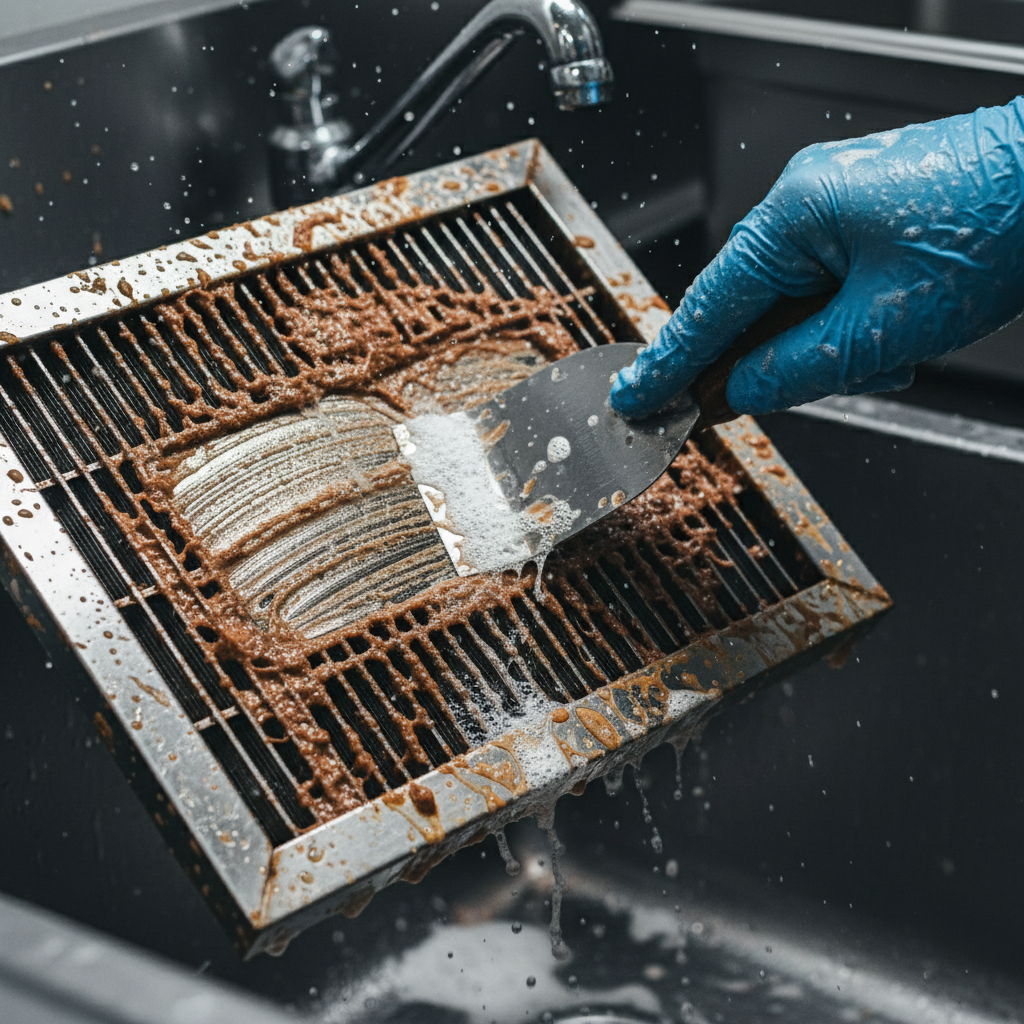
Most kitchen fires start with grease—either in the appliance or trapped in the hood and duct. Control the fuel and you control the risk.
Common Hazards
- Grease-laden vapors condensing in hoods, ducts, and on rooftop fans.
- Clogged baffle filters restricting airflow and pulling heat back onto the line.
- Worn or loose fan belts overheating motors and reducing capture efficiency.
- Improper rooftop discharge creating slip hazards and roof damage.
- Solid-fuel embers and ash from wood or charcoal appliances.
Controls That Work
- Right-sized and correctly seated baffle filters with routine exchange.
- Certified exhaust cleaning from hood to fan, including access panels.
- Grease containment on the roof with absorbent systems and drainage control.
- Fan belt inspection and timely replacement to maintain airflow.
- Trained staff who know emergency shutoffs and extinguisher basics.
Best Practices That Pass Inspections
Inspectors want to see clean metal, tagged systems, and clear records. For frequency guidance by cooking profile, our hood cleaning frequency guide explains how to tune schedules that actually pass.
Documentation
- Keep cleaning certificates, before/after photos, and service logs in a labeled binder.
- Store suppression test reports and extinguisher tags with dates.
- Log filter exchanges and grease trap service intervals.
Right Frequency
- Solid fuel or high-volume fry: monthly to bi-monthly exhaust cleaning.
- Typical line (grill, fryers, flattop): quarterly cleaning.
- Low volume or seasonal: semi-annual cleaning at minimum.
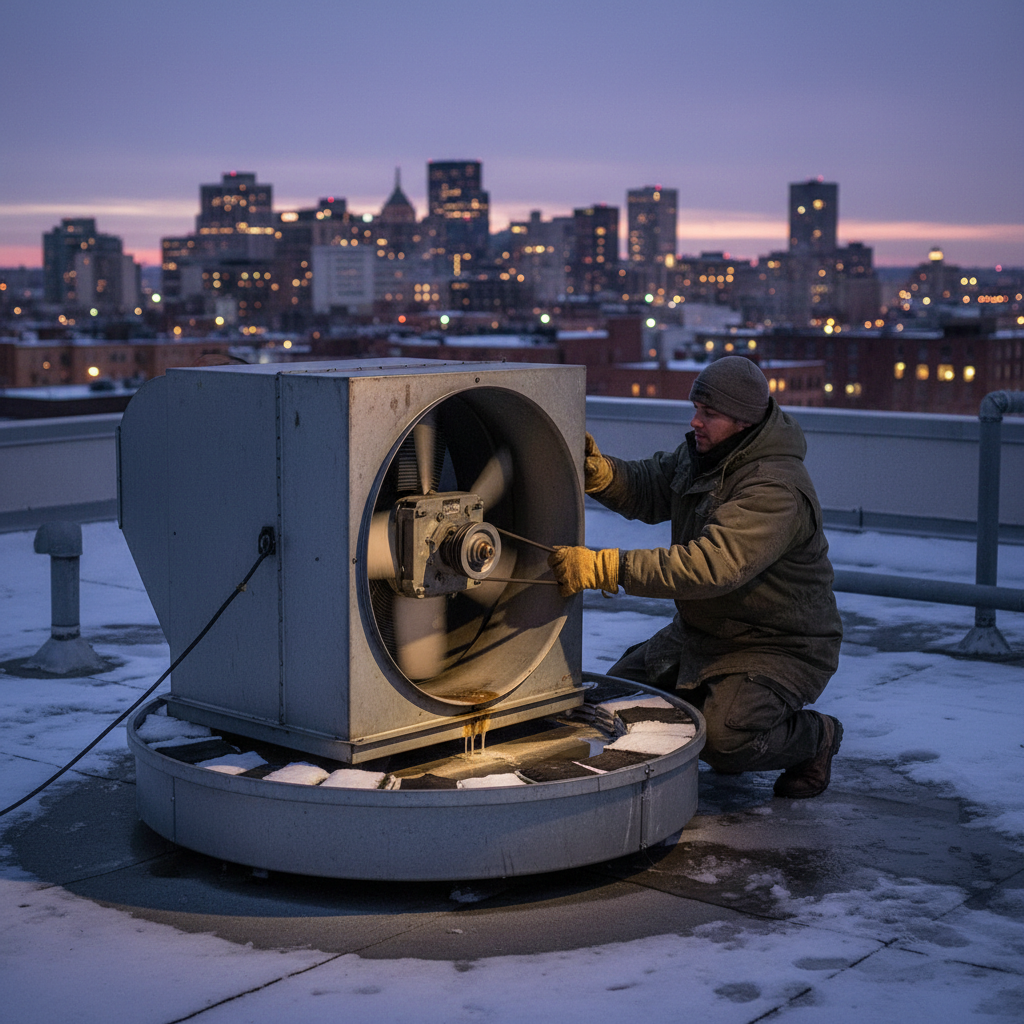
Rooftop Care
- Add or maintain grease containment; replace saturated media promptly.
- Protect roof membrane with pads and curbs; fix pooling immediately.
- Ensure hinge kits allow safe fan access without straining wiring.
Training Cadence
- Onboard new hires on shutoffs, “pull, aim, squeeze, sweep,” and alarm points.
- Run short quarterly refreshers; rotate extinguisher practice with training units.
Night-of-Service Coordination
- Schedule exhaust cleaning after close; clear access to hoods, roof, and traps.
- Cover sensitive equipment; confirm alarm and reset procedures with your vendor.
- Walk the job at handoff; ensure photos and certificates are added to your binder.
Step-by-Step: Build Your Fire Safety Program
Use this sequence to set up or tune your plan without guesswork. This aligns with restaurant fire safety standards Ontario and what inspectors expect to see onsite.
- Map your equipment
- List every hood, duct, fan, appliance group, and grease trap.
- Note solid-fuel, high-fry, or heavy grill lines that drive frequency.
- Baseline inspection
- Open access panels and rooftop fan; photograph current grease levels.
- Check filter condition, fan belt tension, and grease containment.
- Set frequencies that fit your reality
- Choose monthly, quarterly, or semi-annual by cooking volume and menu.
- Schedule filter exchange more frequently than full exhaust cleaning.
- Lock in professional vendors
- Use NFPA 96–trained, insured teams for hood, duct, and fan cleaning.
- Confirm WSIB coverage and 24/7 availability for off-hour work.
- Train your team
- Teach daily wipe-downs, grease cup checks, and shutdown procedures.
- Show where records live and who to call for emergencies.
- Measure and adjust
- Review incident logs and photo evidence each quarter.
- Increase frequency after menu changes or seasonal spikes.
Frequency Planner (Quick Comparison)
| Cooking Profile | Typical Exhaust Cleaning | Filter Exchange | Grease Trap Service |
|---|---|---|---|
| High-volume fry/grill | Monthly–Bi-monthly | Weekly–Biweekly | Biweekly–Monthly |
| Typical line | Quarterly | Biweekly–Monthly | Monthly–Quarterly |
| Low volume/seasonal | Semi-annual | Monthly–Quarterly | Quarterly |
| Solid fuel | Monthly (often) | Weekly | Biweekly–Monthly |
Tools, Checklists, and Resources
Use these to keep your team aligned and inspection-ready.
Daily Line Checklist
- Grease cups emptied; pans wiped.
- Baffle filters seated; edges wiped.
- Make-up air on; no belt noise.
- Extinguishers unobstructed; exits clear.
Monthly Manager Checklist
- Review cleaning certificates and photos.
- Confirm suppression tag dates and extinguisher inspections.
- Inspect rooftop containment and hinge kits.
Records to Maintain
- NFPA 96 cleaning certificates and photo logs.
- Filter exchange schedule and receipts.
- Grease trap service logs and manifests.
- Incident and training logs.
When to Call Certified Pros
- Heavy smoke or heat on the line even with fans running.
- Squealing belts, vibration, or weak capture at the hood.
- Visible grease in ducts or pooling on the roof.
- Upcoming inspection with missing certificates or photo records.
If you need a hand, review our NFPA 96 credentials and process for NFPA 96–certified hood cleaning in Ontario and our full commercial kitchen hood cleaning service overview.
Case Snapshots from Ontario Kitchens
- Franchise grill, Southern Ontario
- Problem: Quarterly schedule couldn’t keep up with a double-fry line; rooftop pads saturated.
- Action: Shifted to bi-monthly exhaust cleaning, weekly filter exchange, added grease containment media.
- Result: Lower hood temps, no roof runoff, clean inspection with zero deficiencies.
- Independent shawarma shop
- Problem: Caramelized sugar and fat glazing filters; fan belt slipping.
- Action: Replaced belt, deep-cleaned fan blades, set biweekly filter rotation.
- Result: Stronger capture, fewer smoke alarms, happier neighbors.
- Hotel banquet kitchen
- Problem: Event-driven spikes caused intermittent grease trap overflows.
- Action: Added pre-event checks, increased trap service in peak months.
- Result: No backups through wedding season; clean health inspection notes.
- Campus food hall
- Problem: Multiple vendors sharing one hood created accountability gaps.
- Action: Centralized records binder, color-coded filter sets by stall, single vendor for exhaust system cleaning.
- Result: Streamlined communication and faster close-downs.
- Pizza concept with solid-fuel oven
- Problem: Ash and embers raised duct risk; quarterly schedule fell short.
- Action: Moved to monthly exhaust cleaning; added ash disposal SOPs.
- Result: No build-up beyond access panels; inspector sign-off on first visit.
- Breakfast diner, highway corridor
- Problem: Early-morning rush created belt squeal and weak capture.
- Action: Replaced belt, aligned pulleys, tightened filter exchange.
- Result: Cooler line, consistent ventilation during peak hours.
- Seasonal lakeside restaurant
- Problem: Off-season storage left grease in ducts; spring startup smoke.
- Action: Pre-season deep clean; quarterly schedule for summer months.
- Result: Smooth startup, no nuisance alarms through patio season.
- High-volume burger chain
- Problem: Filter clogging by mid-shift increased hood temps.
- Action: Implemented twice-weekly filter exchange and nightly edge wipe-downs.
- Result: Stable capture; fewer staff complaints about heat.
- Hotel rooftop kitchen
- Problem: Grease overflow damaged roof membrane near drains.
- Action: Installed containment with absorbent media; scheduled media swaps.
- Result: Protected roof; eliminated slip hazards for maintenance crews.
- Catering commissary
- Problem: Sporadic production created unpredictable grease loads.
- Action: Flexible scheduling with photo-based triggers; rapid-response cleaning windows.
- Result: Pass-ready even during event spikes.
- Food truck hub (shared vent)
- Problem: Uneven responsibilities led to missed filter maintenance.
- Action: Shared calendar, labeled filter sets, consolidated vendor services.
- Result: Clear accountability; improved air quality in the prep area.
- Fine dining kitchen
- Problem: Open flame sauté line created visible flare-ups.
- Action: Focused staff training on extinguisher use and shutoffs; quarterly exhaust cleaning.
- Result: Faster, safer responses; zero flare-related incidents.
- Hospital cafeteria
- Problem: Multiple shifts lost track of grease cup emptying.
- Action: Added end-of-shift checklist and visible sign-off.
- Result: No cup overflows; reduced odor complaints.
Local Tips
- Tip 1: Winter rooftop checks matter. On routes near Highway 401 and the QEW, wind-driven snow can block fan discharge—build a quick visual check into close.
- Tip 2: Holiday rush means hotter lines. From Thanksgiving through New Year’s, tighten filter exchange to keep capture strong during extended service hours.
- Tip 3: For late-night operations around entertainment districts, schedule exhaust cleaning after last call to avoid disrupting diners and to ensure equipment is cool.
IMPORTANT: These tips align with high-traffic Southern Ontario corridors and the realities of commercial kitchen maintenance.
FAQ
- How often should a restaurant in Ontario clean its kitchen exhaust?
Most typical lines pass on quarterly cleaning. High-volume fry or solid-fuel operations often need monthly or bi-monthly service. Always match frequency to actual grease production and keep certificates on file. - Does NFPA 96 apply in Ontario?
Yes—NFPA 96 is the recognized standard for ventilation control and fire protection of commercial cooking; Ontario Fire Code provisions align with its requirements for cleaning, access, and maintenance. - What documents do inspectors want to see?
Cleaning certificates with dates and scope, before/after photos, suppression test reports, extinguisher tags, and a log of filter exchanges and grease trap service. - What are the signs my fan belt needs attention?
Squealing on start-up, weak airflow, vibration at certain speeds, or visible cracking. Proactively replacing belts avoids overheated motors and poor capture. - Can my team handle filter cleaning in-house?
Daily wipe-downs and basic washing are fine, but a managed filter cleaning & exchange program keeps airflow consistent and reduces line disruption.
Conclusion and Next Steps
- Know the frameworks: Ontario Fire Code + NFPA 96 keep you aligned.
- Clean to your volume: Monthly to quarterly exhaust cleaning is the norm.
- Document everything: Certificates, photos, and tags shortcut inspections.
- Train the team: Simple daily habits prevent the big problems.
- Partner with certified pros: Off-hour service keeps your kitchen moving.
Ready to build a pass-ready plan? Let a certified team handle the heavy lifting while your crew focuses on service.
Key Takeaways
- Restaurant fire safety standards Ontario align closely with NFPA 96; use both as your guide.
- Filter exchange and exhaust cleaning frequency should match menu and volume.
- Photo-backed records and certificates help you pass inspections faster.
- Rooftop containment and fan belt care protect airflow and your building.
- Certified, WSIB-insured teams working 24/7 reduce disruption and risk.
Related Topics
- Kitchen ventilation basics and make-up air troubleshooting.
- Grease trap maintenance to prevent backups and odors.
- Rooftop grease containment and roof protection best practices.