Grease-heavy menus, peak dinner rush, and a hot line create the perfect storm in any busy restaurant. If your hood filters are clogged, damaged, or past their service life, risk skyrockets. This complete guide to commercial kitchen exhaust filter replacement Ontario kitchens rely on shows what it is, why it matters, how to do it right, and when to bring in an NFPA 96–certified team like Robinhood Cleaners.
- Understand what baffle exhaust filters do and when to replace them.
- Reduce fire hazards, improve airflow, and stay inspection-ready.
- Follow a step-by-step replacement process with safety checks.
- Choose the right filter types and sizes for your menu and volume.
- Adopt best practices, checklists, and logs to standardize maintenance.
- Know when to call NFPA 96–certified, WSIB-insured specialists available 24/7.
Quick Answer
For commercial kitchen exhaust filter replacement Ontario operators should schedule swaps whenever baffles are warped, clogged, or past service life to cut fire risk and pass inspections. Robinhood Cleaners services All Over Ontario (with fast response in Southern Ontario) and provides NFPA 96–certified, WSIB-insured filter exchange and full hood cleaning 24/7.
Above the Fold: Why This Guide Matters + Table of Contents
Here’s the thing—filters are the first line of defense against grease fires. Replacing them on time protects your team and your business.
- What is exhaust filter replacement?
- Why timely replacement protects safety and compliance
- How the process works (step-by-step)
- Filter types, sizing, and selection
- Best practices, schedules, and checklists
- Tools and resources you can use today
- Ontario case examples and lessons learned
- FAQs answered clearly
- Key takeaways and next steps
Summary
- Exhaust baffle filters capture grease before it travels into ducts where fires spread.
- Replace filters when they’re bent, pitted, clogged, or can’t be cleaned back to bare metal.
- NFPA 96 requires maintained, functional grease removal devices; inspectors look for condition and documentation.
- Right-sized, UL 1046–listed baffle filters matched to your hood keep capture efficiency high and airflow stable.
- Pair replacement with scheduled hood, duct, and fan cleaning for real fire hazard reduction.
- Robinhood Cleaners is NFPA 96–certified and WSIB insured, serving All Over Ontario with quick service in Southern Ontario—24/7.
What Is Commercial Kitchen Exhaust Filter Replacement?
Filters do quiet, essential work. They sit above the cookline, pulling grease-laden vapors from the air so they don’t build up inside your hood and ducts.
Core definition
- Baffle exhaust filters use interlocking blades to change airflow direction, forcing grease droplets to impact and drain into the gutter.
- Replacement means removing worn or damaged filters and installing new, correctly sized, UL 1046–listed baffles that fit your hood track.
- Cleaning vs replacement: Clean when filters are intact and can be restored to bare metal; replace when they’re warped, cracked, corroded, or persistently clogged.
Standards and expectations
- NFPA 96 requires grease removal devices to be maintained and operable. Inspectors expect clean, undamaged baffles and documented service.
- Inspection readiness: Keep service logs and photo evidence aligned to your cleaning and exchange schedule.
- Menu and volume drive frequency—heavy fry or charbroil lines saturate filters faster than light sauté.
Signs it’s time to replace
- Blades are bent or separated, creating bypass paths for hot vapors.
- Frames show cracks, broken welds, or sharp edges that can cut gloves.
- Filters won’t clean back to bare metal after soaking and pressure washing.
- Persistent dripping or overflow from the hood gutter despite routine cleaning.
- Air capture issues: smoke escapes the hood, or cooks complain about heat and haze.
Why Timely Replacement Matters
Swapping a fatigued filter is a small task with outsized impact on safety, comfort, and compliance.
Fire hazard reduction
- Damaged baffles let flame and grease bypass the capture path, feeding fires in ducts.
- Clean, intact filters trap more grease at the source, keeping ducts cleaner between services.
- Pair with scheduled hood and duct cleaning to break the grease chain from line to rooftop.
Airflow and air quality
- Properly sized, clean baffles stabilize airflow for better smoke capture.
- Line cooks experience cooler, clearer air with fewer nuisance alarms.
- Balanced ventilation supports make-up air and comfort in the dining room.
Compliance confidence
- Documented filter exchanges and hood cleaning support inspection readiness.
- Align your program with our NFPA 96 compliance requirements guidance.
- WSIB-insured, certified technicians help standardize safe procedures.
How Commercial Exhaust Filter Replacement Works (Step-by-Step)
Here’s a practical, repeatable process your team can follow between professional services. Use it to train new staff and reduce risk during busy seasons.
Pre-check and safety
- Cool down the line and shut off cooking appliances beneath the hood.
- Use PPE: cut-resistant gloves, safety glasses, and non-slip shoes.
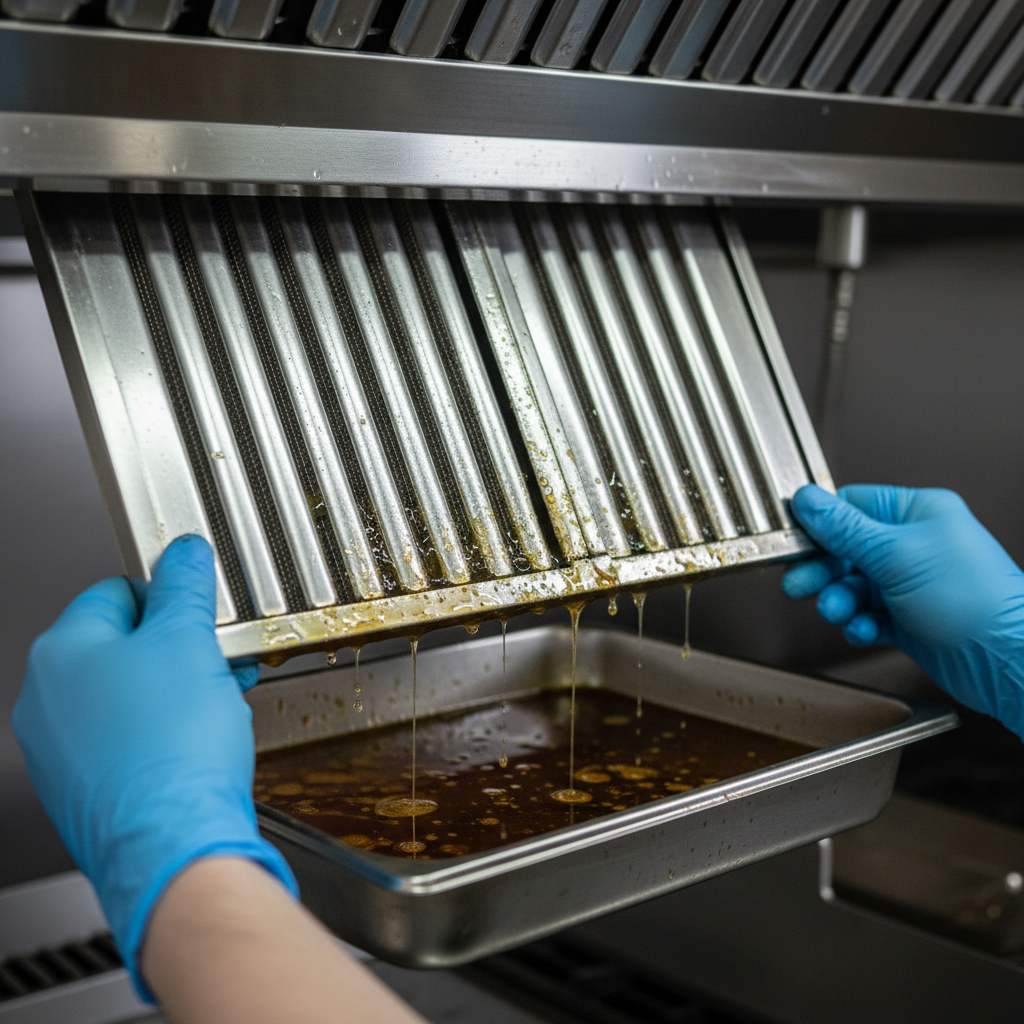
- Lay absorbent pads or trays beneath the hood to catch drips.
Removal and inspection
- Lift and slide each filter out of the track—watch for sharp edges.
- Inspect for bends, broken welds, and packed grease channels.
- Label any damaged units “replace” so they don’t re-enter circulation.
Clean the hood interface
- Wipe rails, frames, and gutters so new baffles seat flush.
- Ensure the drip tray is clean and properly installed.
Install the right replacements
- Match width, height, and thickness to the hood opening—no forced fits.
- Verify UL 1046 listing and grease-rated stainless construction.
- Maintain the blade orientation and complete coverage; no gaps.
Functional checks
- Restore ventilation and feel for strong, even capture along the hood face.
- Confirm no vibration or rattle from loose seating.
- Record the date, staff initials, and any notes in your log.
Simple replacement log template
| Date | Line/Station | Action | Notes | Initials |
|---|---|---|---|---|
| 2026-02-03 | Fry Line A | Replaced 3 baffles | Bent frames removed | JS |
Filter Types, Sizes, and Selection
Not all filters behave the same way under heat, smoke, and grease load. Choosing correctly prevents chronic smoke escape and premature clogging.
Common types you’ll see
- Stainless-steel baffle filters: The industry standard for grease capture, durable and cleanable.
- Aluminum baffle filters: Lighter but softer; avoid near intense flame or heavy char.
- Mesh filters: Not recommended for heavy grease; clog quickly and can allow flame spread.
- Spark arrestor baffles: Used for solid-fuel appliances where ember control matters.
Comparison at a glance
| Filter Type | Grease Capture | Durability | Best For | Notes |
|---|---|---|---|---|
| Stainless Baffle | High | High | Most commercial cooklines | UL 1046 listing recommended |
| Aluminum Baffle | Medium | Medium | Light-duty sauté | Avoid near open flame |
| Mesh | Low | Low | Non-grease applications | Not for grease removal |
| Spark Arrestor | High (plus ember control) | High | Solid-fuel appliances | Check manufacturer specs |
Sizing and fit
- Measure width × height × thickness precisely; small gaps cause bypass and smoke escape.
- Maintain full coverage across the hood face; odd sizes may require a custom mix.
- Confirm blade orientation matches airflow direction per the manufacturer.
Selection tips we use on-site
- Choose stainless baffles for heavy fryers, broilers, and chargrills.
- Consider spark arrestor models where solid fuel or heavy flame is present.
- Standardize SKUs across locations to simplify spares and training.
Best Practices That Keep You Safe and Inspection-Ready
Consistency beats last-minute scrambles. Build these habits into your opening and closing checklists.
Daily and weekly rhythms
- Daily: Wipe exposed baffle surfaces; empty and clean drip trays.
- Weekly: Pull, clean, and inspect baffles; rotate spares into service.
- Monthly+: Replace any baffle that won’t clean to bare metal or shows damage.
Pair replacement with system cleaning
- Coordinate with hood, duct, and fan cleaning to reduce grease throughout the system.
- Our team also handles grease trap service, fan belt replacement, and equipment cleaning so your kitchen runs smoothly.
- See our Ontario playbook for NFPA 96 compliance to align schedules and documentation.
Build redundancy into your program
- Keep one full spare set of baffles on-site for each hood.
- Train shift leads to identify damage quickly and tag out unsafe filters.
- Use a shared log so multiple locations stay on the same rhythm.
Tools and Resources You Can Use Right Now
Make maintenance easier with simple, reusable tools your managers can adopt today.
Printable checklists
- Opening checks: Verify baffle coverage, drip trays, and airflow.
- Closing checks: Wipe baffles, empty trays, note any damage.
- Weekly deep: Pull, soak, pressure-wash, inspect, and log.
Performance cues to watch
- Smoke rollback at the hood face suggests restricted airflow.
- Heat and haze on the line indicate clogged baffles or fan issues.
- Persistent drips point to saturated filters or gutter blockages.
Documentation that wins inspections
- Filter replacement logs stored with hood cleaning certificates.
- Photo evidence of damaged or replaced units labeled by date.
- Service provider credentials: NFPA 96 certification and WSIB insurance on file.
Case Studies from All Over Ontario
Real kitchens, practical lessons. These snapshots mirror common scenarios we see across Ontario.
1) Multi-unit burger chain (Southern Ontario)
- Challenge: Heavy fry output caused rapid filter saturation and smoke escape during rush.
- Action: Standardized stainless baffles across locations, added spare sets, and synced weekly pulls to the cleaning schedule.
- Result: Improved capture at the hood face, fewer nuisance alarms, and smoother inspections.
2) Boutique hotel kitchen (Niagara region)
- Challenge: Bent aluminum baffles near an open-flame grill led to hot spots and odor complaints.
- Action: Upgraded to UL 1046 stainless baffles, trained staff on daily wipe-downs, and logged replacements.
- Result: Better airflow balance and measurable reduction in grease drips.
3) College cafeteria (GTA)
- Challenge: Inconsistent maintenance across shifts and multiple lines; missing documentation.
- Action: Implemented unified logs, set a spare inventory, and aligned filter exchanges with semester peaks.
- Result: Faster inspections and fewer emergency calls during finals week rush.
Local Tips
- Tip 1: If your kitchen is near Highway 401 or the QEW corridor, plan filter exchanges before weekend traffic peaks to avoid delivery delays and coordinate with your line’s slower prep windows.
- Tip 2: Winter in Southern Ontario brings extra moisture and salt—schedule a mid-season check when doors stay closed and hoods work harder to clear steam and smoke.
- Tip 3: For multi-site brands across All Over Ontario, standardize SKUs and logs so managers can swap baffles quickly and keep the same documentation format for inspections.
IMPORTANT: These tips reflect Robinhood Cleaners’ focus on certified kitchen exhaust cleaning, filter exchange, and 24/7 availability across Ontario.
FAQ
How do I know it’s time to replace instead of deep clean?
Replace when baffles are bent, cracked, or won’t clean to bare metal after soaking and pressure washing. If airflow and capture don’t improve after cleaning, it’s time to swap. Keep damaged units out of circulation and log the exchange with date and initials for inspectors.
Can my staff safely replace exhaust filters?
Yes, with PPE and a clear process. Cool the line, shut off appliances, lay drip protection, and use cut-resistant gloves. Train leads to inspect for sharp edges and proper seating. For full-system safety checks or when damage is widespread, schedule a certified service visit.
What documentation should I keep for inspections?
Maintain filter replacement logs, photo evidence of damaged parts, and certificates from your hood and duct cleanings. File your service provider’s NFPA 96 credential and WSIB insurance. Align schedules with our NFPA 96 compliance requirements guidance.
Does seasonality change my replacement schedule?
Yes. Patio season and holidays increase volume, which saturates filters faster. Plan extra checks ahead of major events and during cold months when ventilation loads shift. Multi-unit groups should coordinate schedules across locations to keep logs consistent.
What else should I address during a filter swap?
Inspect hood rails, drip trays, and the fan belt. Note any vibration, reduced capture at the hood face, or rooftop grease. Combining exchanges with hood, duct, fan, and grease trap services reduces fire risk across the whole system.
Key Takeaways
- Intact, clean baffle filters are your first fire defense.
- Replace on condition: bent frames, broken welds, or persistent clogging.
- Size and listing matter: match hood openings and use UL 1046 baffles.
- Document everything: logs + photos + certificates = faster inspections.
- Integrate services with an NFPA 96–certified, WSIB-insured provider across Ontario.
Next Steps for Ontario Operators
- Adopt the weekly pull-and-inspect routine with a spare set ready.
- Schedule full hood, duct, and fan cleaning on a cadence suited to your menu.
- Standardize logs and photos across locations to simplify audits.
- Book a certified assessment with our team and align your schedule with NFPA 96.
Ready to simplify safety across your brand? Explore our NFPA 96–certified hood cleaning support or request a 24/7 service window. We serve All Over Ontario—with quick response in Southern Ontario—so your kitchen stays safe, compliant, and inspection-ready.