When should you clean a commercial kitchen hood, really? Here’s the short answer: more often than most restaurants think. In this complete guide, we’ll turn confusion into a clear, NFPA 96–aligned schedule you can actually run. Our focus is practical frequency guidance for busy operators in Ontario—especially fast-paced kitchens across Southern Ontario—based on what Robinhood Cleaners’ certified teams see every day.
- Understand commercial kitchen hood cleaning frequency by volume, fuel, and menu type.
- Map NFPA 96 expectations to an easy, month-by-month schedule.
- Spot risk signals that demand immediate service (before the inspector does).
- Use proven checklists Robinhood Cleaners applies in Ontario kitchens 24/7.
Quick Answer
For most restaurants, commercial kitchen hood cleaning frequency ranges from monthly to semiannual depending on cooking volume, fuel type, and grease load. In All Over Ontario at All Over Ontario, Robinhood Cleaners (NFPA 96 certified and WSIB insured) helps you set the right cadence so you stay compliant and reduce fire risk.
Table of Contents
- What Is Commercial Kitchen Hood Cleaning Frequency?
- Why Frequency Matters
- How Frequency Is Determined
- Types of Cleaning and Methods
- Best Practices by Kitchen Type
- Tools, Checklists, and Resources
- Ontario Case Studies and Examples
- Frequently Asked Questions
- Conclusion
- Related Articles
What Is Commercial Kitchen Hood Cleaning Frequency?
Commercial kitchen hood cleaning frequency is the cadence at which your exhaust hood, filters, ductwork, and rooftop fan should be professionally degreased to reduce fire hazards and maintain ventilation performance. It’s not one-size-fits-all.
- Defined by risk: Grease accumulation and cooking intensity dictate how often you clean.
- Guided by NFPA 96: Industry standards outline ranges based on volume and fuel type.
- Verified by inspection: Visible grease, airflow issues, and residue on baffle filters are red flags.
- Adapted to operations: Ontario kitchens with late-night service or seasonal spikes often need tighter schedules.
- Backed by documentation: Service reports and photo logs prove compliance during health and fire inspections.
Why Frequency Matters
Here’s the thing: grease doesn’t wait. The right cadence prevents small residue from becoming a chimney fire.
- Fire hazard reduction: Less fuel in the ducts means fewer ignition points during flare-ups.
- Air quality improvement: Clean systems exhaust smoke, heat, and odors more effectively.
- Equipment protection: Fans, belts, and motors last longer when not overloaded by greasy resistance.
- Compliance confidence: NFPA 96–aligned intervals + WSIB-insured crews keep your operation inspection-ready.
- Operational uptime: Proactive cycles reduce surprise shutdowns from failed inspections.
- Employee health: Lower particulate exposure and better ventilation create a safer line.
How Frequency Is Determined
Set your schedule using a simple matrix: cooking volume, fuel type, and menu style. Then fine-tune based on grease load and inspection results.
Key Inputs
- Volume: High-volume fryers, charbroilers, and woks produce more grease aerosol.
- Fuel type: Solid fuel (wood/charcoal) creates embers and heavier byproducts.
- Menu style: Fried, grilled, or sauté-heavy menus drive higher frequency.
- Hours of operation: Late-night or 24/7 service accelerates buildup.
- System condition: Old ductwork, poor makeup air, or undersized fans trap grease.
- Seasonality: Summer patios and holiday rushes can double daily output.
General Frequency Guide (Aligning with NFPA 96 ranges)
| Kitchen Profile | Typical Examples | Recommended Frequency | Why |
|---|---|---|---|
| High-volume, grease-heavy | Burger chains, fried chicken, barbecue, busy pubs | Monthly | Constant aerosolized grease saturates hoods, ducts, and fans quickly. |
| Solid-fuel cooking | Wood-fired pizza, charcoal grills | Monthly (or tighter) | Embers + creosote increase ignition risk and residue density. |
| Moderate-volume, mixed menu | Hotels, family dining, cafeterias | Quarterly | Grease load is steady but less intense than fry-forward concepts. |
| Low-volume or seasonal | Church kitchens, seasonal venues | Semiannual | Extended downtime and lighter use reduce buildup rate. |
Note: These are general ranges. Robinhood Cleaners sets frequency after an on-site assessment, photo documentation, and filter inspection to match your exact operation.
Five Fast Ways to Validate Your Interval
- Run a white-wipe test: Wipe inside the hood plenum. Visible brown/black residue suggests your cycle is too long.
- Weigh baffle filters: If filters feel noticeably heavier between washes, grease is accumulating fast.
- Check fan belts: Squeal or slip indicates overload from greasy resistance and reduced airflow.
- Inspect rooftop fan: Look for streaked grease on the shroud and curb—classic signs the system is saturated.
- Track complaints: If staff notes smoke hanging in the kitchen, ventilation performance is dropping.
Types of Cleaning and Methods
Not all “cleanings” are equal. A compliant service covers the entire path from canopy to rooftop fan.
Core Methods You’ll See
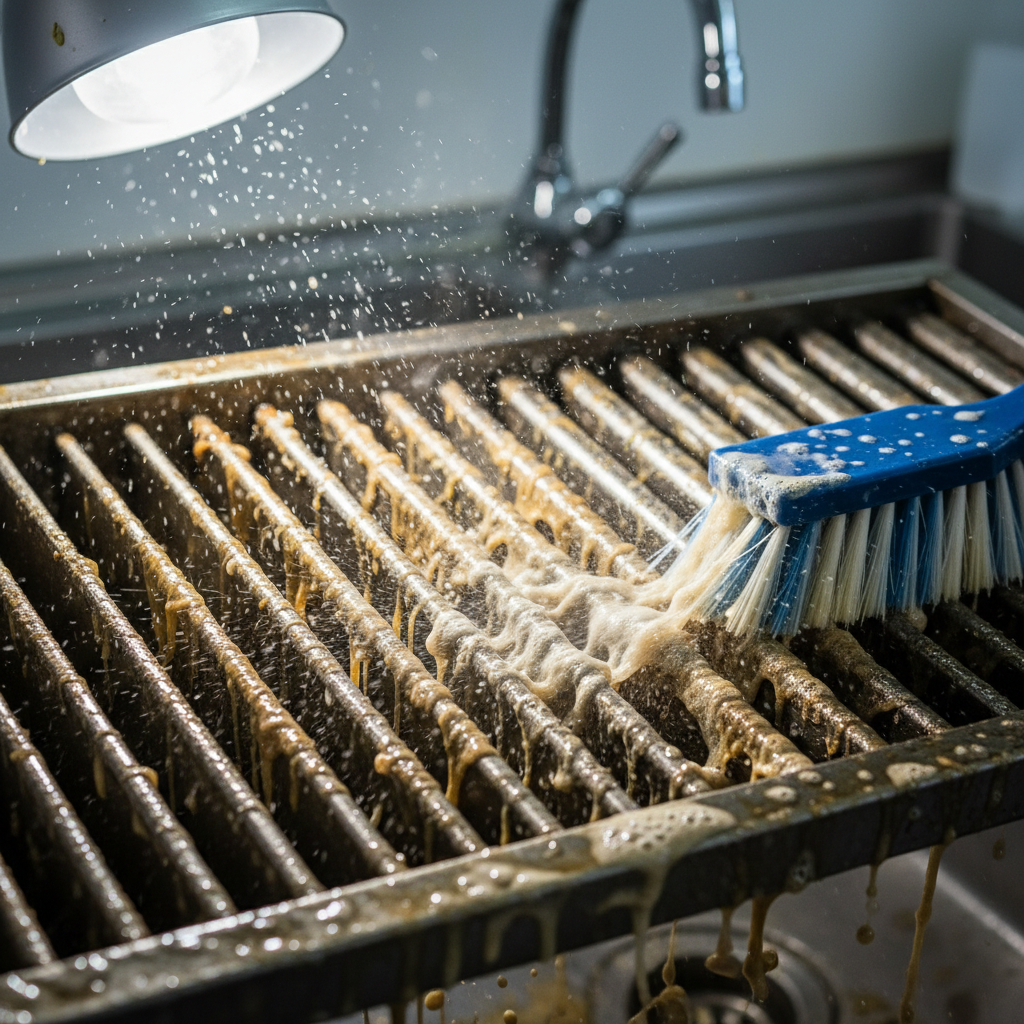
- Hood and plenum degreasing: Scrape and apply food-safe degreasers; rinse to bare metal where required.
- Duct cleaning: Access-panel scraping and hot-water pressure washing to remove hidden grease film.
- Exhaust fan cleaning: Degrease blades, housing, and shroud; verify rotation and vibration.
- Filter cleaning & exchange: Cycle baffle filters through hot wash or swap with clean inventory.
- Grease containment: Install and maintain rooftop absorbents to prevent roof damage and runoff.
- Fan belt inspection: Check tension and wear; plan timely replacements to prevent downtime.
Service Levels Robinhood Cleaners Provides
- Kitchen Exhaust Cleaning: Full system degreasing, hood to fan.
- Filter Cleaning & Exchange: Scheduled swaps keep filters effective between deep cleans.
- Fan Cleaning and Belt Checks: Reduce motor strain and improve airflow.
- Hood/Duct Cleaning: Access-panel service for hidden duct sections.
- Grease Trap Service: Keep plumbing flowing and odors down.
- Commercial Appliance Cleaning: Ovens, grills, and refrigeration interiors when needed.
- Power Washing: Floors, walls, and exterior pads for a complete hygiene perimeter.
Best Practices by Kitchen Type
Use these practical, menu-based schedules as a starting point. We fine-tune after on-site inspection.
High-Volume Fry or Grill Concepts
- Baseline: Monthly commercial kitchen hood cleaning frequency.
- Filters: Wash nightly; hot-swap weekly if buildup is heavy.
- Fan belts: Inspect monthly; replace at the first sign of glazing or fraying.
- Grease containment: Check rooftop pads every 2–4 weeks; replace as saturated.
- Mid-cycle wipe-down: Degrease hood exterior and plenum edges weekly to reduce ignition fuel.
Solid-Fuel (Wood or Charcoal)
- Baseline: Monthly or tighter, depending on ember exposure and creosote deposits.
- Ash management: Remove ash daily; store in metal containers with lids away from combustibles.
- Chimney focus: Verify access doors exist and seals are in good condition.
- Fan housing: Inspect for embers and soot residue; keep blades balanced.
Mixed-Menu Hotels and Institutions
- Baseline: Quarterly deep clean for hoods/ducts/fans.
- Filters: Wash 2–3 times per week; step up during banquet season.
- Documentation: Keep service logs accessible for multi-site auditors.
- Makeup air: Confirm balanced airflow to avoid smoke drift into dining or patient areas.
Low-Volume or Seasonal Kitchens
- Baseline: Semiannual deep clean around opening/closing cycles.
- Pre-season reset: Start with bare-metal conditions to keep grease loading slower.
- Off-season: Cover hoods and filters to prevent dust contamination.
Operational Triggers That Override Your Schedule
- Kitchen runs hotter than usual: Fans may be struggling with grease resistance.
- Smoke hangs over the line: Indicates reduced capture velocity—service ASAP.
- Grease odors in dining room: Duct film likely thick; risk is rising.
- Fan belt squeal or vibration: Overload or misalignment is stressing the system.
- Visible drip lines on the hood: Grease is migrating; ignition risk is increasing.
Need help setting the right cleaning cadence across multiple locations? Our NFPA 96–certified, WSIB-insured crews service restaurants, hotels, and institutional kitchens all over Ontario—24/7. Book a compliance assessment and we’ll build a schedule that passes inspections the first time.
Tools, Checklists, and Resources
Robinhood Cleaners standardizes results with pro-grade tools and simple, repeatable checklists.
What Our Teams Use
- Food-safe degreasers: Breaks down polymerized grease on metal surfaces.
- Hot-water pressure washers: Reaches bare metal in ducts and fan housings.
- Scrapers and access tools: Gets into seams, corners, and behind baffles.
- Grease containment systems: Protects rooftops and stormwater from runoff.
- Personal protective equipment (PPE): Gloves, goggles, harnesses for rooftop safety.
- Photo documentation: Before/after images for your inspection binder.
Simple Weekly Kitchen Tasks (Between Deep Cleans)
- Wash baffle filters on a set rotation; keep a spare set for quick swaps.
- Wipe hood interiors and edges with degreaser during low-traffic hours.
- Inspect fan belts and listen for noise at start-up and shutdown.
- Check rooftop grease pads; replace if saturated.
- Log each task in a visible binder near the manager’s office.
For a deeper dive on cadence specifics and Ontario considerations, review this concise NFPA 96 compliance schedule guide our team prepared for operators planning multi-site maintenance.

Local Tips
- Tip 1: If your locations are near Highway 401 or QEW corridors, plan rooftop access around traffic-heavy delivery times to keep parking and loading zones clear for night crews.
- Tip 2: Winter winds off Lake Ontario and lake-effect snow can complicate rooftop fan service; schedule preventive cleanings before deep cold, then tighten intervals during summer patio season.
- Tip 3: Southern Ontario rush periods (Leafs/Raptors home games, cottage season Fridays) can spike volume—flag these weeks in your maintenance calendar and consider a mid-cycle filter exchange.
IMPORTANT: These tips reflect what we see across Ontario’s busiest kitchens and align with Robinhood Cleaners’ 24/7 service model.
Ontario Case Studies and Examples
Real-world schedules work because they’re built around operations, not theory. Here are concise scenarios based on patterns we service across Ontario.
1) Toronto Burger Chain (High Volume, Fryers + Grills)
- Profile: 8 locations, late-night service, heavy fryer use.
- Initial state: Filters saturated mid-cycle; fan belts glazing; rooftop streaking.
- Schedule adopted: Monthly system cleaning; weekly filter exchange; monthly belt checks.
- Outcome: Passes inspections on first visit; quieter fans; better capture on busy nights.
2) Hamilton Wood-Fired Pizza (Solid Fuel)
- Profile: Wood-fired oven with weekend peaks.
- Initial state: Creosote evidence at access panels; rooftop grease absorbents saturated.
- Schedule adopted: Monthly hood/duct/fan cleaning; ash management SOP; rooftop containment reset every 3 weeks.
- Outcome: Reduced soot migration; stable fan vibration; documented compliance for insurer.
3) Windsor Hospital Cafeteria (Mixed Menu, Institutional)
- Profile: Mixed grilled and sauté menu; weekday lunch peak.
- Initial state: Uneven airflow; smoke drift near tray return at dinner.
- Schedule adopted: Quarterly deep cleans; filter washing 3x weekly; makeup-air balance check.
- Outcome: Improved air quality; fewer staff complaints; smooth health inspections.
4) Niagara Seasonal Venue (Low Volume)
- Profile: Operates May–September; occasional private events.
- Initial state: Dust and light grease film after off-season.
- Schedule adopted: Semiannual cleaning at open/close; mid-season filter service.
- Outcome: Strong capture velocity during peak months and faster start-up in May.
5) Guelph University Kitchen (High Output)
- Profile: Multiple lines; late study hours; heavy fryer bank.
- Schedule adopted: Monthly full system plus weekly filter exchange.
- Outcome: Consistent ventilation performance during exams and sports events.
Frequently Asked Questions
-
How often should a commercial hood be cleaned?
Most high-volume or solid-fuel kitchens benefit from monthly service. Moderate-volume mixed menus often run quarterly. Low-volume or seasonal kitchens can be semiannual. We confirm cadence after an on-site inspection, filter review, and rooftop fan check to align with NFPA 96 guidance and your specific operation.
-
What signs mean I need cleaning sooner?
Persistent smoke in the kitchen, greasy odors in dining areas, visible drip lines on the hood, fan belt squeal, or rooftop streaking suggest your current interval is too long. If any of these show up, move your commercial kitchen hood cleaning frequency forward and schedule service now.
-
Do filters affect cleaning frequency?
Yes. Clean filters capture grease efficiently, slowing duct buildup. Dirty filters allow more aerosolized grease into the ductwork, which accelerates the need for full-system cleaning. We often pair monthly deep cleans with weekly filter exchanges for high-output lines.
-
Will documentation satisfy inspectors?
Our service includes photo logs, access-panel notes, and a signed report listing the system components serviced. Keep these in your inspection binder. Inspectors look for both cleanliness and proof of a maintained schedule aligned with industry standards.
-
Can you work outside service hours?
Absolutely. Robinhood Cleaners operates 24/7 across Ontario with quick response in Southern Ontario. We plan after-hours or overnight service to minimize disruption, then verify capture performance before handoff to your opening crew.
Conclusion
- Match cadence to risk: Volume, fuel type, and menu style set the baseline.
- Respect inspection signals: Smoke, odors, belt noise, and rooftop streaking mean it’s time now.
- Document everything: Keep photo logs and reports ready for health and fire authorities.
- Standardize tasks: Weekly filter and wipe-down routines stretch intervals safely between deep cleans.
If you manage locations across All Over Ontario, our certified teams can unify schedules, documentation, and on-call support. See what’s included in our commercial kitchen hood cleaning service and book an assessment.
Key Takeaways
- Monthly for high-volume or solid fuel; quarterly for moderate; semiannual for low-volume.
- Filters and fan belts are the early-warning system—check them weekly.
- Seasonal spikes in Southern Ontario may require a temporary tighter cadence.
- Certified, WSIB-insured crews plus NFPA 96 alignment simplify inspections.
Related Articles
- Building a Filter Exchange Rotation That Actually Works
- Fan Belt Health: The Overlooked Ventilation Performance Lever
- Grease Trap Service: Prevent Odors and Plumbing Emergencies
- Power Washing the Kitchen Perimeter for Better Hygiene