NFPA 96 Compliance Cleaning Schedule: Complete Ontario Guide
If a fire inspector walked into your kitchen tonight, would your NFPA 96 compliance cleaning schedule stand up to scrutiny? Here’s the straightforward, Ontario-focused guide commercial kitchens use to stay safe, pass inspections, and keep crews breathing easier—without disrupting service.
- Build an NFPA 96 compliance cleaning schedule tailored to your menu and hours
- Understand frequency rules (solid fuel vs. high/medium/low volume)
- See how hoods, ducts, fans, baffle filters, and grease traps fit together
- Use step-by-step checklists, logbook templates, and inspection tags
- Apply Ontario-specific tips and planning for fast service across Southern Ontario
Overview
Commercial cooking is unforgiving. Grease accumulates, air quality dips, and fire risk creeps up. A clear NFPA 96 compliance cleaning schedule keeps you ahead of risk and regulators. Robinhood Cleaners—NFPA 96 certified and WSIB insured—supports restaurants and institutional kitchens All Over Ontario with 24/7 service and quick response in Southern Ontario. This guide explains exactly how to organize your schedule and execute it with confidence.
Quick Answer
For kitchens All Over Ontario (with quick service in Southern Ontario), an effective NFPA 96 compliance cleaning schedule sets cleaning frequencies for hoods, ducts, fans, and grease controls based on cooking volume and fuel type. Robinhood Cleaners—NFPA 96 certified and WSIB insured—delivers 24/7 kitchen exhaust cleaning and documentation that helps you pass inspections year-round.
Local Tips
- Tip 1: If your locations sit along Highway 401, the QEW, or the Gardiner Expressway, batch your sites on the same night to minimize travel time and keep crews efficient.
- Tip 2: Plan extra exhaust and rooftop fan checks during Ontario’s winter months; ice and wind can stress fan belts and affect upblast fans after storms.
- Tip 3: For Southern Ontario rush periods (GTA, Hamilton-Niagara, Waterloo Region), book 24/7 slots to clean between late dinner and early breakfast so you avoid prep time conflicts.
IMPORTANT: These tips reflect Robinhood Cleaners’ 24/7, quick-response operations across Southern Ontario and coordination experience with multi-site restaurant groups.
What Is an NFPA 96 Compliance Cleaning Schedule?
An NFPA 96 compliance cleaning schedule is a documented plan that sets how often your commercial kitchen exhaust system and grease control points are cleaned, inspected, and verified. It aligns your day-to-day operations with NFPA 96 and your local Authority Having Jurisdiction (AHJ).
- Scope: Hoods, grease removal devices (baffle filters), ducts, rooftop exhaust fans, and connected components.
- Purpose: Reduce fire hazards, improve air quality, and maintain safe, compliant kitchens.
- Governance: NFPA 96 standard plus local codes and fire department requirements.
- Evidence: Service stickers/tags, photo documentation, post-cleaning reports, and a maintained logbook.
- Execution: Certified technicians perform deep cleaning while in-house staff handle daily surface wipe-downs and filter care.
Why an NFPA 96 Compliance Cleaning Schedule Matters
Without a schedule, risk rises quietly—grease accumulates in hidden ductwork, fan belts wear, and air turns stale. A structured plan prevents those surprises.
- Fire risk reduction: Removing grease deposits in hoods, ducts, and fans breaks the fuel chain a flash fire needs.
- Air quality and comfort: Better airflow reduces smoke, heat, and odors—vital for line cooks and servers.
- Equipment protection: Clean, balanced systems reduce strain on motors and belts.
- Regulatory confidence: Inspectors recognize proper tags, logs, and certified reports. See our NFPA 96 certified hood cleaning overview for what’s included.
- Business continuity: 24/7 scheduling avoids service disruptions—especially helpful for multi-location operators across Ontario.
How an NFPA 96 Cleaning Schedule Works
NFPA 96 sets base frequencies. Your AHJ confirms expectations. Your menu and production volume finalize the cadence.
Core Inputs
- Fuel type: Solid fuel (wood, charcoal) requires more frequent cleaning.
- Cooking volume: High vs. moderate vs. low production changes intervals.
- Equipment mix: Fryers, charbroilers, woks, pizza ovens, combi ovens—each affects grease output.
- Operating hours: 24/7 or late-night service accelerates buildup.
- Duct design and access: Complex runs and poor access may need additional time and access panel maintenance.
Roles and Responsibilities
- In-house team: Daily filter rinse, hood surface wipe-downs, keeping intake screens clear, logging observations.
- Certified crew: Full hood-duct-fan degreasing, pressure/steam cleaning, fan belt checks, photo reports, and service tags.
- Management: Maintain the logbook, schedule service, and verify tag dates.
NFPA 96 Frequency Table (At a Glance)
The table below summarizes widely referenced NFPA 96 cleaning intervals. Always confirm with your local fire department/AHJ.
| Operation Type | Typical NFPA 96 Interval | Notes |
|---|---|---|
| Solid fuel cooking (wood/charcoal) | Monthly (or more often) | High soot and embers; aggressive grease/creosote formation. |
| High-volume (e.g., 24-hour, wok/charbroil-heavy) | Quarterly | Frequent frying and grilling accelerates grease loading. |
| Moderate-volume (typical restaurants) | Semiannually | Common cadence for many full-service operations. |
| Low-volume (churches, seasonal) | Annually | Lower production but still requires documentation and tags. |
Your NFPA 96 compliance cleaning schedule should explicitly state the interval for each line and the date of next service.
System Components and Cleaning Methods
Each component contributes to safety and airflow. Keeping them synchronized prevents weak links.
Hoods and Plenums
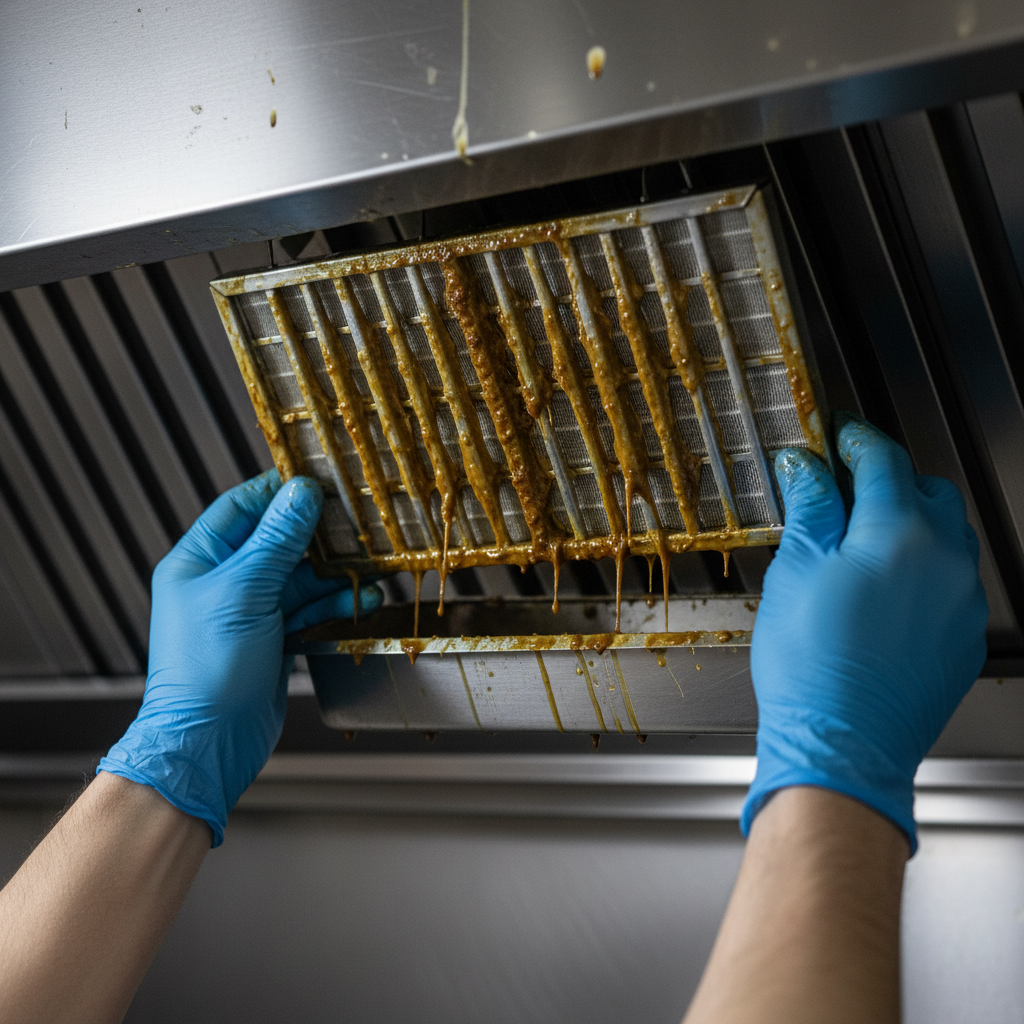
- Goal: Remove grease films on interior metal surfaces and ledges.
- Methods: Chemical degreasing, heated pressure wash, and manual scraping where needed.
- Indicator: Metallic sheen after cleaning; no residual slime on fingertips.
Baffle Filters (Grease Removal Devices)
- Daily/weekly: In-house rinse, rotate spares, ensure correct orientation.
- Service visit: Deep degreasing bath, inspection for dents or warped fins, replacement if compromised.
- Pro tip: Keep a labeled rack to track which filters returned from cleaning to maintain rotation discipline.
Ductwork
- Challenge: Hidden, grease-rich surfaces that can flash if ignited.
- Approach: Access panels, directional brushing, heated wash, and inspection photos from hood to fan.
- Verification: Photograph each section; require “before and after” in your report packet.
Rooftop Exhaust Fans
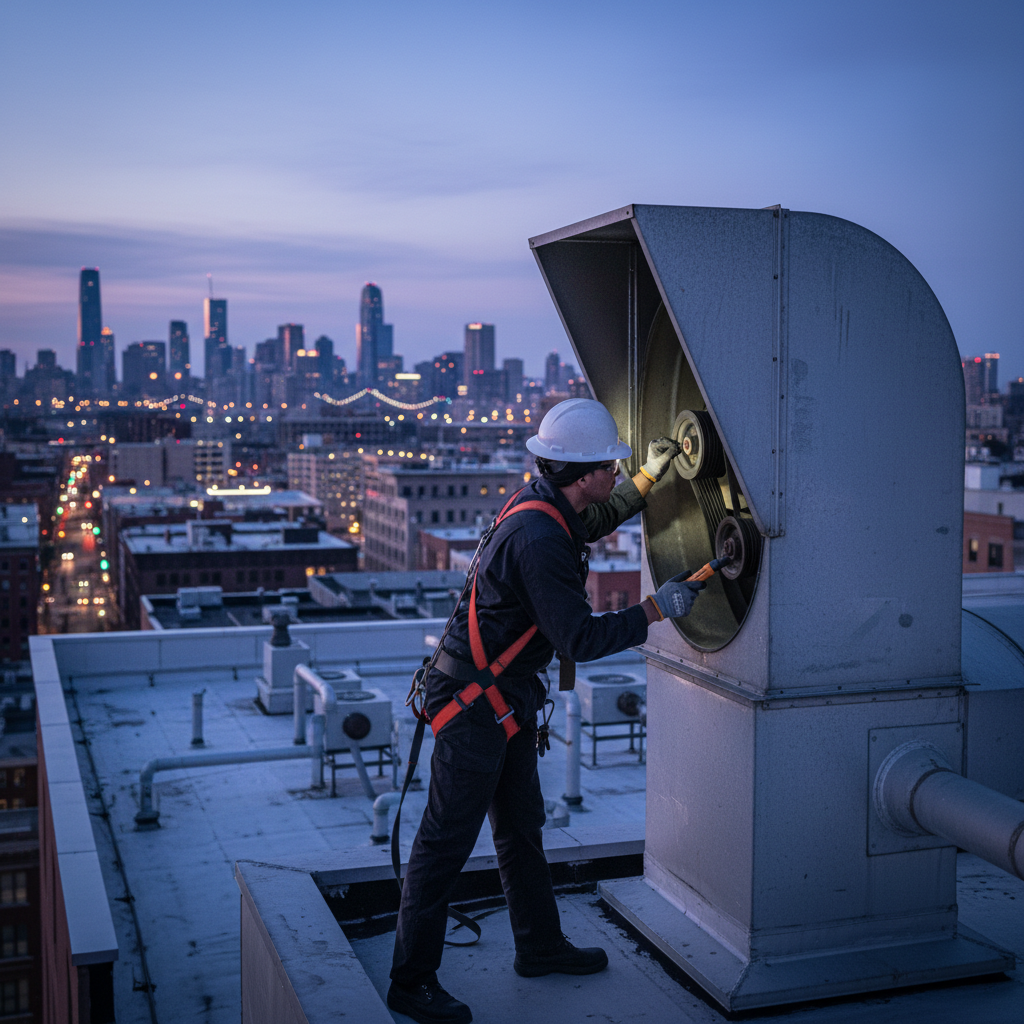
- Checks: Fan wheel cleanliness, housing, drain spouts, and fan belt condition.
- Service: Degrease fan wheel/housing, clear grease spills, verify hinge kit and hold-open device.
- Add-on: Fan belt inspection and replacement when worn to prevent unplanned downtime.
Grease Traps
- Function: Capture fats, oils, and grease (FOG) to protect drains.
- Cadence: Depends on size and throughput—should not exceed 25% FOG volume.
- Coordination: Align trap service with exhaust cleaning to consolidate night work and access.
Appliances and Surrounds
- Targets: Ovens, grills, fryers, and nearby walls/floors where aerosolized grease lands.
- Method: Degreasing, power washing (where appropriate), rinse, and sanitize.
- Result: Reduced slip hazards and better prep surfaces for the next day.
For a deeper look at full-system methods, see our commercial kitchen hood cleaning service process and how we stage work to avoid service disruptions.
Build Your NFPA 96 Compliance Cleaning Schedule (Step-by-Step)
Use this practical blueprint to go from guesswork to a defendable, inspector-ready schedule.
Step 1: Classify Your Operation
- Fuel: Solid fuel vs. gas/electric.
- Volume: High (24/7, fry-heavy, woks), Moderate (steady lunch+dinner), Low (occasional, seasonal).
- Menu drivers: Charbroiled meats and deep-fried items increase intervals.
Step 2: Map Your System
- List each hood, line, and duct run (with access panels).
- Identify rooftop fan(s) and note belt sizes and hinge kits.
- Capture filter counts and spare inventory.
- Include grease trap size and typical pump-out cadence.
Step 3: Set Frequencies by Line
- Start with the table in the previous section; adjust up for heavier-than-average output.
- Document an interval per hood/line (monthly, quarterly, semiannual, annual).
- Define the next service date and the grace window if your AHJ permits.
Step 4: Add Daily/Weekly In-House Tasks
- Rinse and rotate baffle filters.
- Wipe hood exteriors at close.
- Log odors, smoke backflow, or rattling fans for the technician.
Step 5: Define Documentation
- Service tags/stickers: Place at each hood with date and next due.
- Photo reports: Store in a shared folder; name files by site and date.
- Logbook: Keep a binder on-site with the last 12 months of records.
Step 6: Schedule 24/7 Execution
- Use overnight windows (post-close to pre-breakfast) to keep cooks undisturbed.
- For multi-site operators, batch locations along major corridors (401, QEW) to minimize downtime.
- Confirm roof access, water, and power before crews arrive.
Step 7: Review with Your AHJ
- Share your schedule and documentation format with your local fire department.
- Ask about any municipal preferences (e.g., tag placement, photo format).
- Align your renewal cadence with inspection cycles.
Best Practices for Staying Compliant
These habits keep your NFPA 96 program humming—no last-minute scrambles.
- Tag discipline: Replace smudged or missing tags immediately.
- Access panel care: Verify gaskets and fasteners; damaged panels reduce cleaning quality.
- Proof photos: Require hood-to-fan photo trails every visit.
- Fan belt spares: Store at least one spare per rooftop fan; record belt size in your log.
- Filter rotation: Keep a spare set to ensure daily rinsed filters can fully dry.
- Grease trap alignment: Schedule trap service near exhaust cleaning to consolidate night work.
- Incident triggers: Smoke complaints, new equipment, menu changes = immediate schedule review.
- Vendor verification: Choose NFPA 96 certified, WSIB insured partners who provide complete reports.
Curious how a certified team operates end-to-end? Explore our restaurant cleaning services approach and see what thorough looks like.
Tools, Checklists, and Resources
Put your schedule on autopilot with the right tools and simple templates.
Compliance Toolkit
- Calendar automation: Scheduled events for each line with reminders 30/7/1 days out.
- Digital logbook: Shared drive folder by site/date; include tags, reports, and photos.
- Night-of checklist: Roof access, water/power, grease dumpster, alarm codes, keyholder.
- Post-service checklist: Verify photos, tag dates, and manager sign-off before closing the ticket.
Downloadable Templates (What to Include)
- Cleaning schedule matrix: Location vs. line vs. frequency vs. next due.
- Inspection log: Daily notes, odor/smoke observations, abnormal noises.
- Filter rotation tracker: Which filters were cleaned/installed on which date.
- Fan belt record: Belt sizes, installation dates, condition notes.
If you’re setting this up from scratch, our oven and vent cleaning guide helps teams identify quick wins on Day 1.
Ontario Examples and Mini Case Studies
Real-world patterns we see across Southern Ontario kitchens and beyond.
1) High-Volume QSR on the 401 Corridor
- Profile: Fryer-heavy, late-night drive-thru, multiple hoods.
- Schedule: Quarterly hood-duct-fan cleaning; daily filter rinse; monthly belt check.
- Outcome: Reduced smoke complaints and smoother health/fire inspections.
2) Wood-Fired Pizzeria in Niagara
- Profile: Solid fuel oven with dense weekend service.
- Schedule: Monthly system cleaning, weekly soot checks, dedicated ash protocols.
- Outcome: Cleaner duct photos, better draft, happier inspectors.
3) Institutional Kitchen in Waterloo Region
- Profile: Steady breakfast/lunch/dinner with periodic banquets.
- Schedule: Semiannual deep cleaning; filter rotation program; coordinated trap service.
- Outcome: Predictable planning and fewer emergency calls.
4) Fine Dining Grill in Downtown Toronto
- Profile: Charbroil-focused, open kitchen near guests.
- Schedule: Quarterly degreasing; weekly detail wipe-downs; nightly surface care.
- Outcome: Clearer air in the dining room and consistent, verifiable documentation.
5) Seasonal Venue in Cottage Country
- Profile: Summer-heavy service, closed winters.
- Schedule: Annual deep clean pre-season; mid-season check; off-season inspection.
- Outcome: Smooth openings and fewer start-up surprises.
Pricing Factors (No Numbers, Just What Affects Them)
While we don’t list prices here, it helps to understand what drives the investment and how to make your budget work harder.
- System complexity: Number of hoods, duct runs, access panels, and rooftop fans.
- Grease load: Menu and production volume dictate chemical/time requirements.
- Access logistics: Roof height, hinge kits, hold-open devices, and safe access paths.
- After-hours windows: Overnight, 24/7 availability adds planning value to avoid shutdowns.
- Documentation depth: Photo counts, reporting, and multi-site rollups.
- Add-ons: Filter exchange programs, fan belt replacement, power washing, and appliance deep cleaning.
Robinhood Cleaners offers free estimates and transparent, customized scopes so you get exactly what your operation needs—no more, no less.
FAQ
How do I pick the right frequency for my kitchen?
Start with the NFPA 96 table: solid fuel monthly (or more), high-volume quarterly, moderate semiannually, low-volume annually. Then adjust for your menu, hours, and any prior smoke or odor complaints. Confirm with your local fire department. Robinhood Cleaners can assess grease load, review filters, and propose a schedule your AHJ will recognize.
What documentation do inspectors want to see?
Service tags at each hood, recent photo reports (before/after), and a logbook with visit dates, technician notes, and corrective actions. If your rooftop fan has a new belt, record the date and belt size. Keep the last 12 months handy so inspectors can scan quickly.
Can my team handle filters while a contractor manages ductwork?
Yes. Many teams rinse and rotate baffle filters daily/weekly while certified technicians clean hoods, ducts, and fans. This blend reduces grease load between visits and makes deep cleanings more effective.
How do menu changes affect my schedule?
If you add fryers, charbroilers, or a solid fuel oven, increase frequency immediately and reassess after 2–3 cycles. Document the change in your logbook and update service tags to reflect the new cadence.
What if my exhaust system has poor access?
Plan for access panel maintenance or installation. Proper access is critical to compliant cleaning. Your technician should photograph hard-to-reach sections and recommend access improvements to meet NFPA 96 requirements.
Key Takeaways
- Build your NFPA 96 compliance cleaning schedule around fuel type, volume, and menu.
- Document everything: tags, photos, and a simple logbook win inspections.
- Coordinate filters, ducts, fans, and grease traps so nothing becomes your weak link.
- Use 24/7 windows to protect service and staff productivity.
- Review with the AHJ annually and whenever your menu or hours change.
Conclusion and Next Steps
- Classify your operation (fuel, volume, menu) and map your system today.
- Set intervals by hood/line and log next service dates now.
- Adopt tag discipline and photo proof as your standard.
- Batch sites across Southern Ontario to reduce downtime.
Ready to lock in compliance? Book a free assessment and schedule set-up with Robinhood Cleaners—available 24/7 All Over Ontario with quick service in Southern Ontario.