Grease moves fast. Fire moves faster. If your team doesn’t have a clear exhaust fan cleaning maintenance schedule, risk piles up in the hood, the ducts, and on the rooftop fan before you notice the warning signs. This complete guide shows restaurant leaders and facilities managers how to plan, document, and execute a reliable schedule that fits your kitchen’s volume and cooking style—without disrupting service across All Over Ontario.
Contents
- Quick Summary
- Quick Answer
- Local Tips
- What Is an Exhaust Fan Cleaning Maintenance Schedule?
- Why Your Schedule Matters
- How Commercial Exhaust Systems Work
- Scheduling Methods & Frequency
- Best Practices
- Tools, Resources & Documentation
- Ontario Scenarios & Mini Case Insights
- Step-by-Step: Build Your 12‑Month Plan
- Common Mistakes to Avoid
- Inspection & Documentation Workflow
- Metrics & KPIs to Track
- Seasonal Adjustments in Southern Ontario
- FAQ
- Related Topics for Ontario Kitchens
- Conclusion & Next Steps
Quick Summary
- What you’ll learn: how an exhaust fan cleaning maintenance schedule works, why it matters for NFPA 96 compliance, and exactly how to build a 12‑month plan.
- Who it’s for: restaurants, food courts, hotels, institutional kitchens, and quick service operations All Over Ontario.
- Why it matters: fewer fire hazards, cleaner air, longer equipment life, smoother inspections, and less downtime.
- Extras inside: editable checklist, sample frequency table, real-world Ontario scenarios, and documentation tips that keep insurers happy.
Quick Answer
For busy Ontario kitchens, base your exhaust fan cleaning maintenance schedule on NFPA 96: monthly for solid-fuel, quarterly for high volume, semiannual for moderate, and annual for low volume. Robinhood Cleaners serves commercial kitchens All Over Ontario with NFPA 96–certified, WSIB‑insured crews, 24/7 scheduling, and photo-documented results.
Local Tips
- Tip 1: If your site is near major Southern Ontario corridors (Highway 401, QEW), book after-hours service to avoid loading dock congestion and protect prep time.
- Tip 2: Winter rooftop access can be icy. Plan fan, belt, and hinge inspections before freeze-up (late October/early November) and again after spring thaw to catch weather-related wear.
- Tip 3: For malls and food courts, submit security access lists 48 hours ahead so crews can reach rooftop fans and back-of-house areas without delays.
IMPORTANT: These tips reflect how Ontario kitchens operate and align with Robinhood Cleaners’ NFPA 96–certified, WSIB‑insured model.
What Is an Exhaust Fan Cleaning Maintenance Schedule?
It’s a documented, recurring plan that keeps your hood, ducts, filters, and rooftop fan free of grease and running within code. The schedule aligns cleaning frequency to cooking volume and fuel type, then locks in tasks, owners, and dates.
- Scope: Hood, plenum, baffle filters, horizontal/vertical ducts, access panels, rooftop upblast or inline fan, and grease containment.
- Triggers:
- Time-based (calendar-driven)
- Usage-based (hours, covers, fryer loads)
- Condition-based (grease thickness, vibration)
- Event-based (menu changes, seasonal surges, inspection notices)
- Roles:
- Kitchen staff: daily/weekly wipe-downs, filter swaps, basic visual checks.
- Certified cleaners: NFPA 96–compliant degreasing from hood to rooftop, fan belt and hinge checks, photo logs, and service tags.
- Management: schedule approvals, insurer records, and inspection readiness.
- Outcomes: Reduced fire load, better airflow, fewer odors/smoke, longer motor and belt life, and smoother fire inspections.
Why Your Schedule Matters More Than You Think
Here’s the thing: grease accumulation doesn’t just sit—it migrates from the hood to the ducts and finally to the fan, where ignition risk spikes.
- Fire prevention: Grease in ducts and fans is combustible. A reliable cadence interrupts buildup before it crosses the danger threshold.
- Compliance confidence: NFPA 96 and fire prevention officers expect documented, end-to-end cleaning and tagging.
- Air quality & comfort: Clean fans move air. That means less smoke, less heat stress, and a safer line.
- Equipment life: Belts, bearings, and motors last longer when blades and housings aren’t gummed with grease.
- Insurance readiness: Adjusters want service records and photos; having them can speed claims and reduce headaches.
You might be wondering, “Does a monthly wipe-down help?” It’s helpful, but it’s not a substitute for certified hood-to-fan service. The risk lives in the parts you can’t easily see.
How Commercial Exhaust Systems Actually Work
If you understand the airflow path, your cleaning intervals get easier to set.
- Capture: The hood and baffle filters catch heavy grease particles right over the heat source.
- Conveyance: Remaining aerosols travel up through ducts; internal grease accumulations create a hidden fire load.
- Discharge: The rooftop upblast or inline fan expels air to the atmosphere; blades and housings catch last‑mile residue.
- Controls: Fan belts (on belt-drive units) and motors set airflow; when they slip or drag, kitchens get smoky fast.
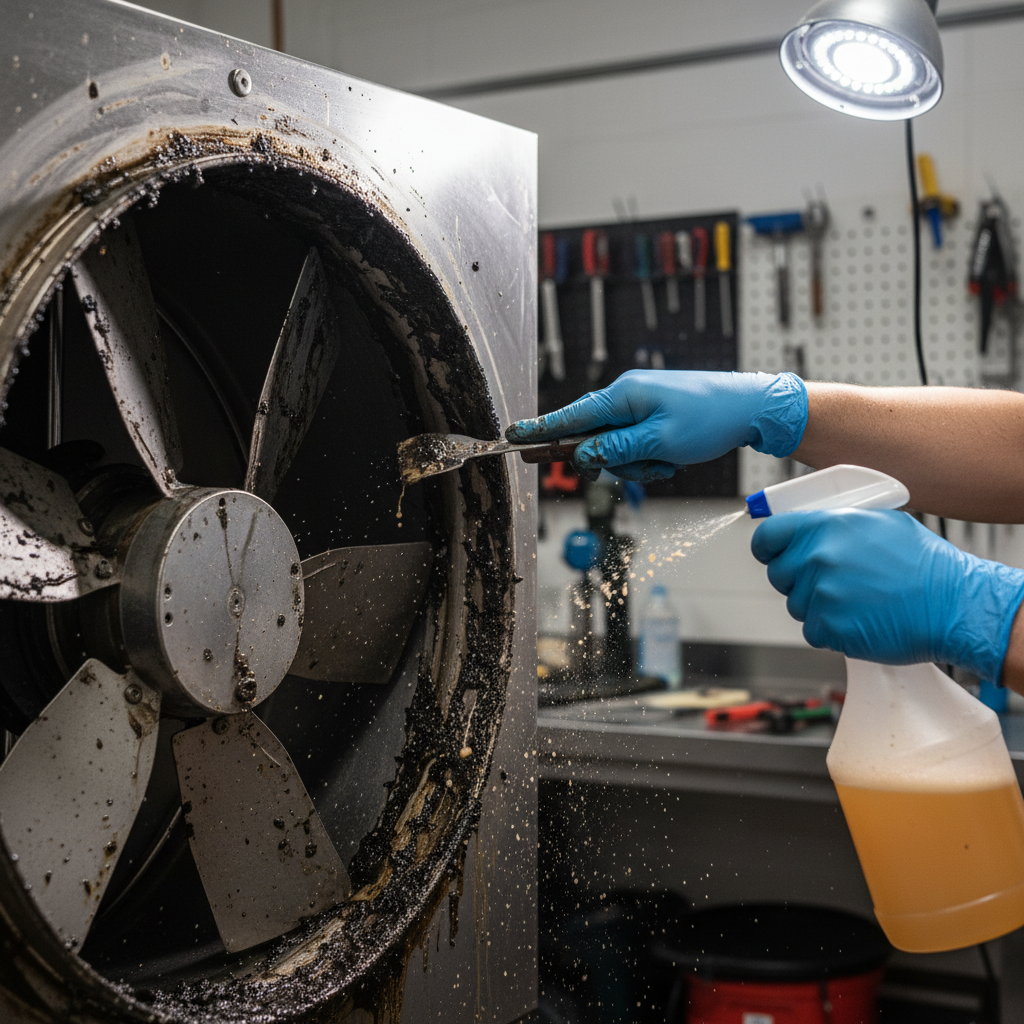
Once you see the system as one chain, it’s clear why partial cleanings fail. If ducts or the fan lag behind the hood, grease migrates and re‑contaminates the system.
For a deeper dive into hood-side practices that support airflow, see our commercial kitchen hood cleaning guide for practical, line-friendly habits.
Scheduling Methods and Frequency Guidelines
Use a blended strategy: anchor to NFPA 96 intervals, then fine-tune with usage and condition checks.
Four Ways to Trigger Cleanings
- Time-based: Put firm dates on the calendar (e.g., quarterly, semiannual).
- Usage-based: Tie to hours, covers, or fryer loads during peak seasons.
- Condition-based: Set grease thickness thresholds or visual cues for early pulls.
- Event-based: When you add wok stations, charbroilers, or solid fuel, tighten the schedule immediately.
Recommended Cleaning Frequency Table
| Operation Type | Typical Equipment | Suggested Interval (Starting Point) | Notes |
|---|---|---|---|
| Solid-fuel cooking | Wood/coal ovens, smokers | Monthly | Heavy soot and creosote; escalate during peak season. |
| High volume | Woks, charbroilers, fryers (QSR) | Quarterly | Common for busy quick-service and fried-chicken concepts. |
| Moderate volume | Mixed menu, standard line | Semiannual | Adjust up or down based on visual checks and complaints. |
| Low volume | Light-duty kitchens, seasonal | Annual | Still document; do not skip duct/fan verification. |
Treat these as baselines. If your ducts or fan show heavy residue at service time, shorten your interval by one step for the next cycle. For help deciding between quarterly and semiannual, our hood cleaning frequency explainer breaks down the tradeoffs.
Best Practices for Fan and System Cleanings
Well-run schedules pair frequency with smart execution. Here’s what separates reliable programs from risky ones.
- End-to-end scope: Insist on hood-to-fan cleaning, not just visible areas.
- Hinge kits & access panels: Proper fan hinges and duct access make full cleaning and inspection possible.
- Belts and bearings: Check tension and wear; replace belts proactively when glazing or fraying appears.
- Rooftop containment: Use approved containment to protect roofs from grease discharge.
- Photo documentation: Before/after photos and service tags back up your compliance story.
- After-hours windows: Schedule overnights or off-days to protect service and food prep.
- Lockout/tagout: Ensure safe fan shutdowns; verify airflow restoration before opening.
- Filter alignment: Pair filter exchange cycles with duct/fan services to stabilize airflow.
- Water protection: Shield sensitive equipment, electrical panels, and floors during washdowns.
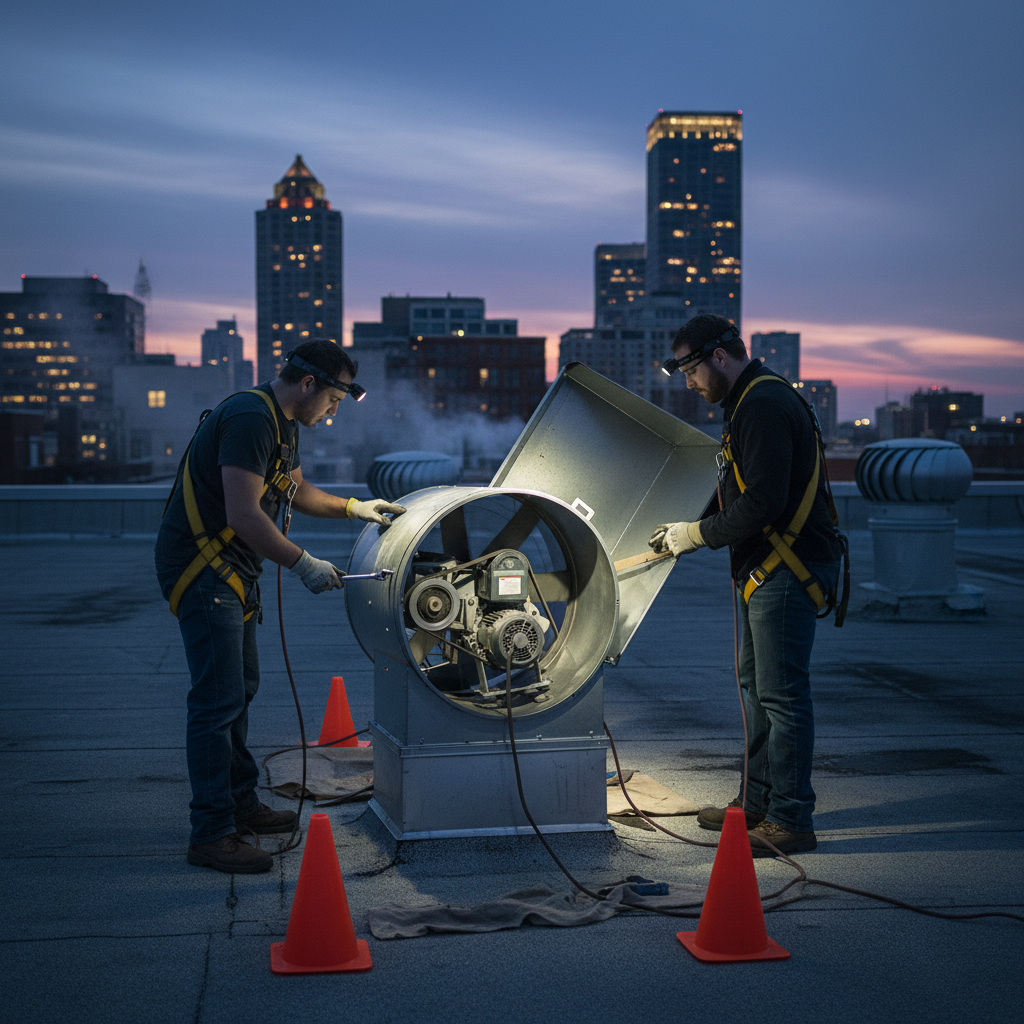
Small detail, big payoff: aligning filter exchanges with duct/fan cycles keeps airflow stable and reduces grease carryover. For practical cadence ideas, review our filter replacement schedule guide.
Procedural Checklist (Hood-to-Fan)
- Tag out power; confirm shutdown.
- Protect cookline and floors; remove baffle filters.
- Degrease hood interior and plenum; rinse and inspect seams.
- Open duct access panels; scrape heavy deposits; hot-water rinse.
- Open rooftop fan on hinge; clean blades, housing, and discharge.
- Inspect belt, sheaves, bearings; replace belt if glazing or cracks appear.
- Verify rooftop containment; clear overflow and replace absorbents.
- Reinstall clean filters; restore power; verify airflow and noise baseline.
- Apply service tag; capture before/after photos; file the report.
Tools, Resources, and Documentation You’ll Use
- Degreasers & hot water: Commercial-grade degreasers plus hot-water rinse/steam for heavy runs.
- Scrapers & brushes: For blades, housings, and tight duct corners.
- Pressure or power washing: For hoods, exterior plenums, and paved grease areas.
- Hinge kits & access panels: Enable safe, complete cleaning of fans and ducts.
- Fan belt kits: Keep common belt sizes on hand to avoid downtime.
- Documentation kit: Service tags, photo set, inspection report, and manager sign-off sheet.
Keep a central compliance folder—digital or binder—with your latest certificates, photo logs, and a one-page schedule summary for inspectors. If grease is a recurring issue around the hood, this primer on grease buildup patterns can help you pinpoint root causes.
Ontario Scenarios & Mini Case Insights
Take these snapshots from kitchens across Ontario. They show how volume, menu, and seasonality shape your plan.
- QSR near Highway 401: Fryers and grills run late. Quarterly hood-to-fan cleaning, monthly filter exchange, and a pre-winter rooftop check keep smoke complaints down.
- Hotel in Niagara region: Banquets surge on weekends. Semiannual deep cleans plus an added pre-holiday service prevent mid-season airflow dips.
- Mall food court (shared shafts): Quarterly full-system clean with tagged access panels and a shared photo log streamlines inspections across tenants.
- Institutional kitchen: Predictable volume. Semiannual deep cleans, quarterly visual checks, annual fan belt replacement as preventive maintenance.
- Wood-fired pizzeria: Solid-fuel oven. Monthly duct and fan cleanings, weekly ash and ember management, and documented soot checks.
- Downtown bistro: Small space, high heat. Quarterly cleans; chef-led weekly filter rinses keep noise and odors in check.
- Campus dining hall: Seasonal swings. Quarterly during school term; semiannual in summer; pre‑semester belt checks.
- Resort kitchen (Muskoka/Georgian Bay): High summer volume. Monthly visual roof checks; add a mid‑season fan service to prevent overflow in containment.
- Wok-heavy concept: High aerosol grease. Quarterly hood-to-fan, with condition-based pulls if filters load faster than expected.
- BBQ smokehouse: Mixed gas and smoker. Monthly duct/fan; weekly pit maintenance; record soot and creosote notes in the log.
- Hospital kitchen: 24/7 operations. Quarterly full-system; belt spares onsite; lockout/tagout protocol posted near the MCC.
Mini Case: Food Court Coordination
- Challenge: Multiple tenants, shared ducts, access restrictions.
- Approach: Central calendar, shared photo repository, unified tagging scheme.
- Result: Faster inspections, fewer smoke complaints, and simpler turnover plans.
Mini Case: Pre‑Winter Roof Readiness
- Challenge: Ice and snow blocking access, belt slip from moisture, containment overflow.
- Approach: Late‑October roof check, belt tensioning, absorbent replacement, hinge lubrication.
- Result: No mid‑winter fan failures; steady airflow during peak holiday banquets.
Robinhood Cleaners is NFPA 96–certified, WSIB‑insured, and available 24/7 across Ontario. We clean from hood to rooftop fan, replace belts, exchange filters, and document every step for inspections.
Step-by-Step: Build Your 12‑Month Exhaust Fan Cleaning Maintenance Schedule
Use this workflow to design a plan you can defend to inspectors, insurers, and your GM.
- Profile your operation: Menu items, hours, covers per day, and equipment list (fryers, woks, charbroilers, solid fuel).
- Choose a baseline interval: Start with the table above for your volume/fuel type.
- Map responsibilities (RACI):
- Daily: line wipe-downs, filter rinse or swap, grease cup checks.
- Weekly: deeper hood wipe, fan noise/vibration check, roof glance.
- Quarterly/Semiannual: certified hood-to-fan service with photos and tags.
- Set calendar holds: Reserve after-hours windows; coordinate with deliveries, events, and deep cleans.
- Align filter exchange: Schedule filter cleaning/replacement to match duct/fan services when possible.
- Add inspections: Put 10‑minute monthly visual checks into manager routines (hood interior, access panels, roof fan exterior).
- Document everything: Keep certificates, tags, and photo logs by date and system ID.
- Review & adjust quarterly: If photos show heavy residue or belts wear early, tighten intervals one step.
RACI Snapshot (Who Does What)
| Task | Responsible | Accountable | Consulted | Informed |
|---|---|---|---|---|
| Daily wipe-downs & filter rinse | Kitchen Lead | Chef/GM | Robinhood Crew (tips) | All Line Staff |
| Monthly visual roof check | Facilities | GM | Robinhood Crew | Chef/Line |
| Quarterly hood-to-fan service | Robinhood Cleaners | GM/Owner | Facilities | Chef/Line |
| Fan belt replacement | Robinhood Cleaners | GM/Owner | Facilities | Chef/Line |
- Quarter 1: Full hood-to-fan cleaning; filter exchange; photo log saved.
- Quarter 2: Manager visual check; belt inspection; rooftop containment check.
- Quarter 3: Full hood-to-fan cleaning; hinge/access verification; tags updated.
- Quarter 4: Pre‑winter roof inspection; fan belt replacement if needed; documentation audit.
Common Mistakes and How to Avoid Them
- Only cleaning the hood: Skipping ducts or the fan leaves a hidden fire load.
- No hinge on rooftop fan: Makes safe, thorough cleaning nearly impossible; install a proper hinge kit.
- Poor documentation: Missing tags or photos means repeat inspections and slower approvals.
- Seasonal blind spots: No pre-winter roof checks in Ontario can lead to ice-related failures.
- Ignoring belt wear: Glazed or frayed belts slip, reduce airflow, and increase heat stress on staff.
- Relying on odor as your only signal: By the time you smell it, ducts are already loaded.
- One-size-fits-all schedules: QSRs and solid-fuel kitchens need tighter cadences than low-volume sites.
Inspection & Documentation Workflow
- Before service: Confirm access, water, and power. Notify security/landlord if needed.
- During service: Capture before/after photos at hood, duct access panels, and rooftop fan.
- After service: Verify tags, store the certificate and photo set in your compliance folder.
- Manager review: Scan for notes on belts, hinges, or containment; schedule follow-ups.
- Quarterly audit: Compare photo histories; if residue rebounds fast, tighten your interval.
Metrics & KPIs to Track
- Smoke/odor incidents: Count per month; aim for steady decline after each service.
- Fan vibration/noise: Log observations; sudden changes suggest belt or bearing issues.
- Filter loading rate: How fast filters clog after cleaning; faster loading may warrant earlier pulls.
- Tag and photo completeness: Percentage of services with full documentation.
- Access compliance: Number of blocked panels or unsafe hinges flagged by crews.
Seasonal Adjustments in Southern Ontario
- Pre‑winter: Inspect hinges, belts, containment, and roof pathways; plan de‑icing where needed.
- Mid‑winter: Monitor for belt squeal or slip from moisture; check containment overflow after thaw cycles.
- Spring thaw: Re‑inspect fan housings and seals; tighten hardware loosened by freeze‑thaw.
- Summer peak: Add condition-based pulls for QSRs and resorts; grease loads rise with volume.
Frequently Asked Questions
How often should we clean our exhaust fan?
Use NFPA 96 guidance as your baseline: monthly (solid fuel), quarterly (high volume), semiannual (moderate), and annual (low volume). If your photo logs show heavy residue at service time, shorten your interval for the next cycle.
Do we need to clean ducts and the fan every time we clean the hood?
Yes. Partial cleanings leave fire load behind and re‑contaminate the system. End-to-end, hood-to-fan service is the safest, most compliant approach.
Can we schedule cleanings without closing the kitchen?
Most Ontario kitchens book after-hours windows or off-days. Overnight service with proper lockout/tagout lets you reopen with restored airflow by the morning prep shift.
What signs tell me our schedule is too loose?
Recurring smoke or odors, fan vibration or noise, greasy filters soon after cleaning, and inspection notes about access or documentation. Any two at once are a red flag—tighten intervals.
What records should we keep for compliance?
Service certificates, before/after photos, system tags, a running schedule, and any repair notes (hinges, belts, access panels). Store them in a single folder so inspectors and insurers can review quickly.
Related Topics for Ontario Kitchens
If your team is refining SOPs, our practical hood cleaning guide pairs well with this schedule. For dialing in cadence by concept, review our frequency breakdown. And if filter changes are dragging down airflow between services, this filter replacement schedule will help you stabilize performance.
Conclusion & Next Steps
- Create a documented exhaust fan cleaning maintenance schedule tied to your cooking volume and fuel type.
- Insist on hood-to-fan scope with photos, tags, and rooftop verification every time.
- Book after-hours windows and align filter exchanges to keep airflow steady.
- Review quarterly, compare photo histories, and tighten intervals if buildup returns fast.
Ready to simplify compliance and protect your operation? Robinhood Cleaners serves restaurants and food service operations All Over Ontario with NFPA 96–certified crews, belt replacement, filter exchange, and full photo documentation—24/7. Lock in your next four service dates and keep your kitchen fire risks low and airflow high.