Why Kitchen Fires Start: Grease Buildup in Kitchen Exhaust
Grease buildup in kitchen exhaust systems is the most overlooked fire risk in busy commercial kitchens across Ontario. If you operate a restaurant or food service facility, this service-focused guide explains why buildup happens, the exact steps to remove it, and how Robinhood Cleaners keeps you compliant with NFPA 96—24/7, with quick response in Southern Ontario.
- Understand where grease accumulates in hoods, ducts, and rooftop fans
- Follow our certified, step-by-step cleaning process (NFPA 96 compliant)
- Spot early warning signs before inspectors—or a fire—do
- Plan maintenance around your menu, hours, and locations
Overview
- Grease-laden vapors condense on metal inside hoods, ductwork, and fans. Deposits thicken and become highly flammable.
- NFPA 96 defines cleaning frequency, documentation, and full-path access to all duct sections for true compliance.
- Robinhood Cleaners provides NFPA 96 certified cleaning, filter exchange, fan belt replacement, and grease trap service—Ontario-wide.
- We work overnight or off-hours to avoid downtime. Service is available 24/7 with fast response in Southern Ontario.
Quick Answer
Grease buildup in kitchen exhaust is a leading cause of kitchen fires. In All Over Ontario at All Over Ontario, Robinhood Cleaners removes flammable deposits from hoods, ducts, and fans using NFPA 96 certified methods—keeping your team safe and your operation compliant.
Local Tips
- Tip 1: Along the Highway 401 corridor (Toronto to London), book overnight cleanings to avoid peak delivery traffic and morning prep.
- Tip 2: Summer heat in Southern Ontario raises rooftop fan temperatures—grease stays thinner and travels farther. Add an extra inspection in July–August.
- Tip 3: High-volume fryers in GTA and Niagara tourist zones push vapors fast. Rotate filter cleaning and exchange more frequently to prevent airflow restrictions.
IMPORTANT: We tailor cleaning frequency to your menu, hours, and equipment, then document compliance to NFPA 96.
Introduction
Here’s the thing: the more you cook, the faster grease buildup in kitchen exhaust systems creeps in. Those vapors don’t just disappear—they condense inside hoods, ducts, and the rooftop fan. When a flare-up happens, that residue becomes fuel. Our team at Robinhood Cleaners helps restaurants and institutional kitchens across Ontario break this cycle with certified, thorough service, any hour you need it.
- NFPA 96 certified and WSIB insured professionals
- Specialized focus on commercial kitchens—no general janitorial work
- 24/7 availability with quick service in Southern Ontario
- Free assessments and maintenance scheduling that match your volume
Want details on standards? Explore our NFPA 96 certified hood cleaning approach for Ontario operators.
What Causes Grease Buildup in Kitchen Exhaust
- Grease-laden vapor physics: Hot aerosolized fats hit cooler metal surfaces, condense, and leave sticky films inside the hood and ducts.
- Menu and volume: Fryers, grills, and solid-fuel cooking generate heavier vapors and faster deposit rates.
- Airflow and filters: Clogged baffle filters reduce capture efficiency, allowing more vapor to bypass and settle deeper in ducts.
- Mechanical issues: Loose or worn fan belts reduce CFM, keeping smoke and vapor in the plenum longer.
- Rooftop factors: Weather-driven temperature swings change condensation rates and push grease farther toward the fan.
- Deferred maintenance: Missing access panels and overdue cleanings allow deposits to thicken in elbows and vertical risers.
Bottom line: deposits accumulate along the entire path—from hood to fan—not just on the visible stainless face. That’s why full-path, NFPA 96 cleaning matters.
Services Offered for Grease Removal and Prevention
We align services to the exact sources and pathways of grease. You get a complete solution—not just a shiny hood face.
- Kitchen Exhaust Cleaning: Hood, plenum, horizontal/vertical ducts, and rooftop fan degreasing to permissible bare metal.
- Filter Cleaning & Exchange: Hot-tank or ultrasonic cleaning and scheduled exchanges to keep airflow strong.
- Fan Belt Replacement: Proactive belt assessment and swap to maintain proper CFM and reduce motor strain.
- Equipment Cleaning: Deep cleaning of ovens, grills, and prep zones to reduce airborne grease.
- Grease Trap Service: Pumping and cleaning to minimize odors and plumbing issues that interrupt service. See our grease trap cleaning for details.
- Power Washing: Targeted pressure cleaning for floors, walls, and back-of-house areas that collect residue.
- Commercial Appliance Cleaning: Refrigerators, fryers, and more—sanitized to reduce bacteria and improve efficiency.
- Regulatory Documentation: NFPA 96 compliant reports, stickers, and photo logs for inspectors and insurers.
Example: a high-volume quick service site in Mississauga cut smoke and odors within days after we combined an exhaust deep clean with a filter exchange rotation and a rooftop fan belt replacement. Air moved, heat dropped, staff comfort improved.
11 Signs Grease Buildup Is Putting You at Risk
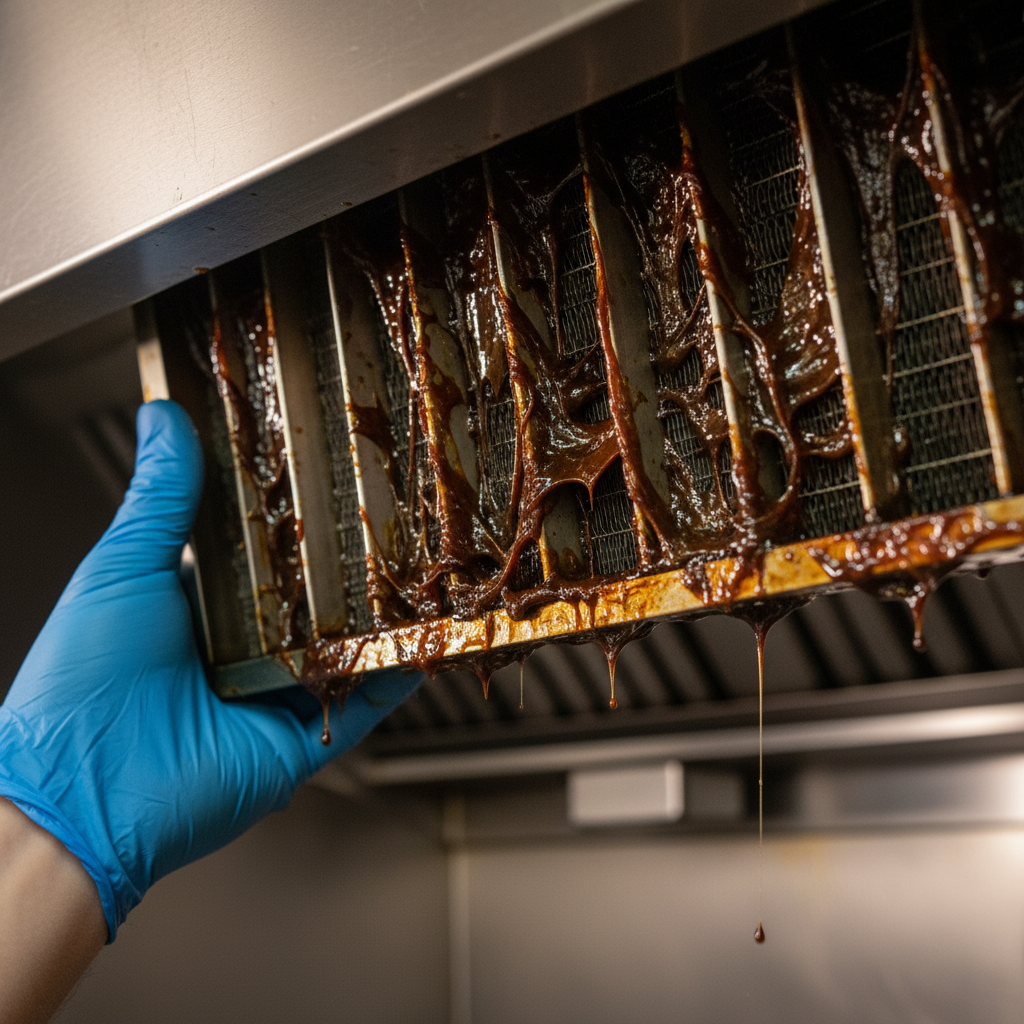
- Visible brown or black residue on hood edges or behind filters
- Filters feel heavy, sticky, or smell burnt after service
- Smoke or steam lingering longer than usual on the cookline
- Hotter kitchen even with fans “on high”
- Fan vibration or squealing (belt slipping or worn)
- Grease stains on rooftop around upblast fan
- Drips from hood seams or light fixtures
- White powder from fire suppression nozzles (recent discharge)
- Inspection sticker dates overdue or missing documentation
- Complaints from staff about headaches or odors
- Fire inspector flagged access panels or unreachable duct sections
Our NFPA 96 Certified Process: Step-by-Step
Every job includes access documentation and photo proof, so you can show inspectors a complete chain of care.
- Site prep and protection: Cover equipment, floors, and electrical with fire-safe sheeting and containment.
- Disassemble and soak: Remove baffle filters and compatible parts for hot-tank or ultrasonic cleaning.
- Hood and plenum degreasing: Apply food-safe degreasers; scrape, agitate, and wash down to permissible bare metal.
- Duct access cleaning: Open panels for horizontal and vertical sections; treat elbows and joints where grease pools.
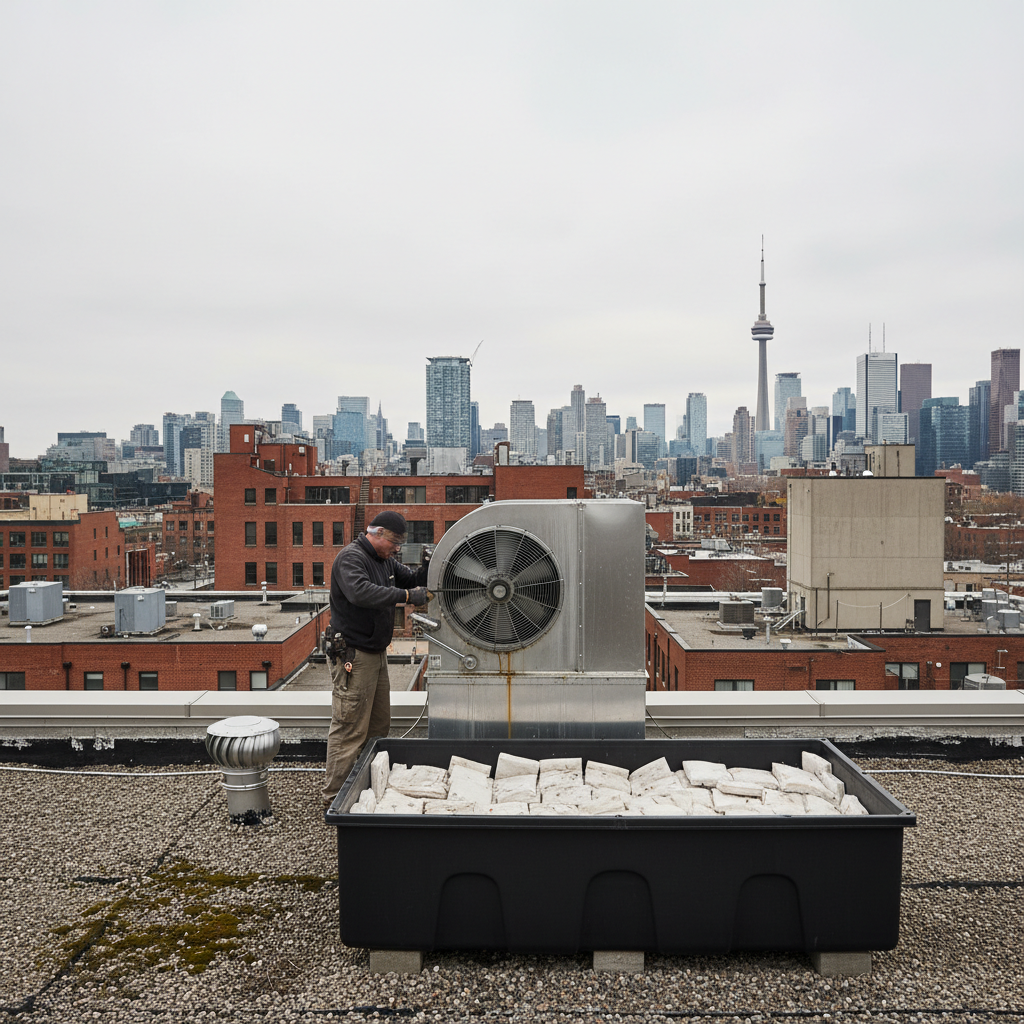
- Rooftop fan service: Clean blades, shroud, and housing; inspect bearings; check and replace fan belts if needed.
- Grease containment: Ensure rooftop containment devices work; replace absorbents and correct drainage paths.
- Polish, reassemble, and test: Refit filters, restore power, confirm airflow and vibration are within normal range.
- Compliance documentation: Apply service sticker with date, technician ID, and next due; store photos in your file.
| Phase | What We Do | Result |
|---|---|---|
| Preparation | Protect kitchen, set containment, isolate power | Safe, clean workspace with zero overspray |
| Degreasing | Hood, ducts, fan to permissible bare metal | Fire load reduced, airflow restored |
| Mechanical | Inspect/replace belts, bearings check | Smoother fan performance, less downtime |
| Compliance | Photos, sticker, NFPA 96 record | Ready for inspectors and insurers |
You might be wondering: how long does it take? Most units finish overnight with the cookline ready by open, but complex multi-duct systems may need staged visits.
Need a deeper overview? See our commercial kitchen hood cleaning service steps for Ontario operations.
Recommended Cleaning Frequency (What NFPA 96 Expects)
- High-volume, solid-fuel, or heavy frying: Monthly or biweekly inspections with scheduled cleaning.
- Moderate use (mixed menu): Quarterly service with filter exchanges between visits.
- Low-volume or seasonal: Semi-annual with a pre-season inspection.
- After any fire event or suppression discharge: Immediate full-system cleaning and documentation.
We adjust to your menu, hours, and staffing realities. Multi-site operators often put locations on staggered rotations so your teams always have coverage. For GTA kitchens specifically, our restaurant exhaust cleaning in GTA details how we plan routes to hit multiple sites overnight.
DIY Cleaning vs Professional Exhaust Cleaning
Some tasks are safe in-house; others require certified technicians and access equipment.
- Good DIY: Wipe the hood exterior daily; wash baffle filters on rotation; keep floors degreased.
- Not DIY: Internal duct cleaning, fan disassembly, belt replacement, and rooftop grease containment adjustments.
- Why it matters: Missed duct elbows and vertical risers hold the highest fire load—and require trained access and documentation.
- Inspector-ready records: Professional photos, service stickers, and NFPA 96 reports satisfy insurance and health/fire authorities.
Common Mistakes That Keep Grease Buildup Coming Back
- Only cleaning the visible hood face: Leaves ducts and fan (the true fuel) untouched.
- Overlooking filter exchange cadence: Restricts airflow and increases bypass into ducts.
- Ignoring belt slip or wear: Lowers CFM; smoke lingers and deposits thicken.
- Skipping rooftop containment: Grease drains onto roof membranes, creating slip and insurance issues.
- No photo documentation: Hard to prove compliance—or coverage—after an incident.
Pricing & Scheduling (No Surprises)
Every kitchen is different. We scope work based on system length, access, number of hoods, grease condition, and operating hours. You’ll receive a clear scope of work and a free estimate before service.
- Upfront scope and timing—no hidden fees
- Overnight, early morning, or Sunday scheduling
- Photo documentation for your records and insurers
- Maintenance contracts available for compliance peace of mind
Get Your Free Exhaust Assessment
- We inspect hood, ducts, and rooftop fan access
- Review filter condition and exchange cadence
- Identify fire and airflow risks you can fix fast
Book a slot that won’t interrupt service. We’re available 24/7 across Ontario.
Why Choose Robinhood Cleaners
- NFPA 96 certified cleaning: We clean the whole path—hood to fan—so deposits don’t hide in elbows.
- WSIB insured: Safety-first approach that protects your team and ours.
- 24/7 availability: True off-hours service, including overnight and holidays.
- Commercial-kitchen specialists: We only service commercial kitchens—depth over breadth.
- Top-tier equipment and chemistry: Industrial degreasers, hot-water wash, and ultrasonic tanks where appropriate.
- Southern Ontario response: Faster dispatch for GTA, Hamilton, Kitchener–Waterloo, Niagara, and London.
- Transparent, fair estimates: Clear scope, timing, and documentation from day one.
Service Area Across Ontario
- GTA: Toronto, Mississauga, Brampton, Scarborough, North York
- Hamilton and Niagara: St. Catharines, Niagara Falls, Grimsby
- Kitchener–Waterloo–Cambridge and Guelph
- London, Windsor, and Sarnia
- Ottawa and Eastern Ontario
- Barrie, Simcoe County, and Durham Region
Not sure if we cover your location? Ask—we serve All Over Ontario with quick service in Southern Ontario.
What Ontario Kitchens Say
- “After a full exhaust clean and filter rotation, our line runs cooler and the smoke is gone. The report made our inspection painless.”
- “They worked overnight across two sites and left everything spotless. Documentation was thorough and easy to file.”
- “Best detail we’ve seen—duct elbows and the rooftop fan were actually clean to the touch.”
FAQ
How often should a restaurant clean its exhaust system?
Frequency depends on volume and menu. Heavy frying or solid-fuel cooking often needs monthly attention; most mixed menus run quarterly; low-volume operations may be semi-annual. We’ll assess your system and set a schedule aligned with NFPA 96.
What’s the difference between hood cleaning and full exhaust cleaning?
Hood face cleaning only covers the visible exterior. Full exhaust cleaning includes the hood plenum, baffle filters, all ducts, and the rooftop fan. Fire risk hides in ducts and elbows, so full-path cleaning is essential.
Can you work after hours so we don’t lose service?
Yes. We provide true 24/7 service and typically schedule overnight cleanings. Your cookline is prepped, protected, and ready by open.
Do you replace fan belts and service rooftop fans?
We inspect fan belts during every visit and replace when worn. We also clean blades, housings, and check bearings to keep airflow where it should be.
What documentation do we receive for inspectors and insurers?
We provide service stickers with dates and technician IDs, photo documentation, and a written report detailing access points and cleaned sections, aligned to NFPA 96 expectations.
Key Takeaways
- Grease buildup in kitchen exhaust is the leading hidden fire risk—and it’s preventable.
- Full-path, NFPA 96 certified cleaning protects your people, property, and permits.
- Filters, fan belts, and grease containment are part of the same safety system.
- Scheduling around your hours keeps service uninterrupted and teams comfortable.
- Documentation matters—cleaning without records won’t satisfy inspectors.
Ready to Remove the Risk?
- Book a free exhaust assessment
- Align cleaning frequency with your menu
- Get NFPA 96 compliant documentation on file
Let’s schedule an off-hours visit anywhere in Ontario—fast response across Southern Ontario. Your kitchen runs safer tomorrow.