Kitchen hood filter cleaning is the thorough removal of grease and residue from the metal baffle or mesh filters in your range hood to restore airflow and reduce fire risk. For restaurants in All Over Ontario, Robinhood Cleaners provides professional Filter Cleaning & Exchange as part of full kitchen exhaust cleaning to keep operations safe and compliant.
By Robinhood Cleaners • Last updated: 2026-05-10
At a Glance
Hood filter cleaning removes grease from baffle or mesh filters so your exhaust system can breathe, capture aerosols, and resist ignition. Clean filters cut smoke, improve employee comfort, and support inspection readiness. This guide explains what to do in-house and when to call certified pros in Ontario.
Use this quick overview to align your team before you dive into details.
- What you’ll learn: how filters work, proven cleaning methods, step-by-step workflows, and scheduling.
- Why it matters: fewer flare-ups, steadier airflow, and smoother health/fire inspections across Ontario.
- Who it helps: restaurants, quick service, fine dining, food courts, and institutional kitchens.
- How we help: Robinhood Cleaners offers Filter Cleaning & Exchange plus full exhaust, duct, and hood service.
What Is Kitchen Hood Filter Cleaning?
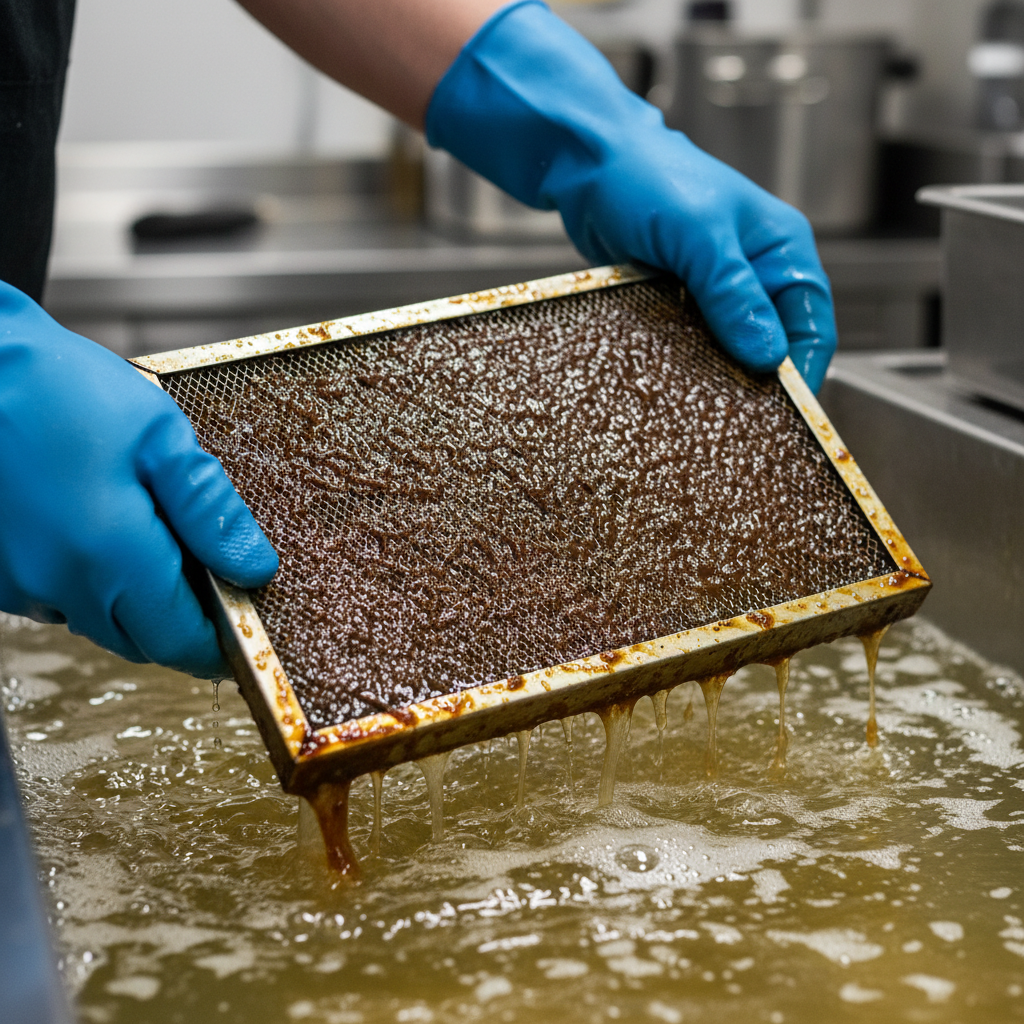
Kitchen hood filter cleaning is the routine degreasing of metal baffle or mesh filters inside a commercial range hood. The goal is to remove flammable buildup, maintain capture velocity, and protect ducts and fans from downstream contamination. Clean filters are a first line of defense against kitchen fires and odors.
Filters sit directly in the airstream, catching grease-laden vapors before they reach the plenum and ducts. When residue accumulates, airflow drops, capture weakens, and ignition risk rises. In our field work across Ontario, sites that tighten filter maintenance see faster smoke clearance and fewer nuisance alarms within weeks.
Two common designs dominate commercial kitchens:
- Baffle filters: Interlocking vanes shed heavy droplets into a trough; they also act as a flame barrier. Stainless baffles tolerate frequent hot-soak cleaning.
- Mesh filters: Multiple layers catch fine mist efficiently but clog faster; they demand gentler handling and frequent rinses.
If you operate fryers or solid-fuel equipment, stricter intervals are essential. Clean baffles resist ignition better than greasy ones, and they help maintain stable capture velocity on busy lines.
For deep dives on fundamentals, see our internal primer on why clean hood filters matter and our broader hood cleaning guide.
Why Hood Filter Cleaning Matters
Clean filters remove fuel from the fire triangle, stabilize airflow, and prevent grease from migrating into ducts and fans. The result is fewer flare-ups, better air quality for staff, and stronger outcomes during fire and health inspections. Regular attention also extends equipment life and reduces downtime.
Grease is fuel. When filters are saturated, a small flare-up can spread faster across residue. Airflow also suffers as static pressure rises; cooks notice lingering smoke, hotter lines, and persistent odors. In All Over Ontario, we regularly see performance rebound after just one well-executed filter cycle and proper reinstall.
- Fire risk reduction: Removing residue from the capture point limits ignition pathways into the plenum and ducts.
- Ventilation performance: Restored capture velocity means less haze and more comfortable staff on grill and fry stations.
- Inspection readiness: Documented filter care supports compliance alongside full exhaust cleanings.
- Lower downstream load: Cleaner filters slow grease migration into ducts, fans, and rooftops.
One Ontario quick-service client saw a notable drop in nuisance smoke alarms—about half—after adopting weekly staff rinses plus scheduled filter exchanges. That kind of change reduces disruptions and protects service windows.
How Hood Filters Work (Airflow + Capture)
Hood filters force greasy airstreams through vanes or mesh to shed droplets and trap fine mist. This protects the plenum and ductwork and helps the fan maintain capture. When filters clog, static pressure rises, capture falls, and more grease bypasses into the exhaust system.
Cooking generates aerosols—tiny droplets and vapors. Your hood’s negative pressure pulls that airstream through the filter. Baffle vanes induce rapid direction changes that separate heavy droplets; mesh layers intercept finer mist. Clean filters maintain lower resistance, enabling the fan to keep capture velocity at the source.
- With clean filters: Lower pressure drop, steadier capture, less grease downstream, quieter fan operation.
- With clogged filters: Higher pressure drop, smoke rollback, excessive residue in ducts/fans, increased fire risk.
From our Ontario service routes, we routinely measure better draw at the hood after a proper hot-soak and dry—often immediately visible as less visible haze during peak grill activity.
To learn how filter upkeep fits into the bigger picture, review our notes on exhaust cleaning frequency.
Types of Filters and Cleaning Methods
Most commercial kitchens use stainless baffle filters, with some operations running mesh or specialty cartridges. Effective methods include hot-soak tanks with alkaline degreaser, commercial dishwashers (filter-safe), ultrasonic cleaning, and professional exchange programs. Choose based on soil load, material, and staffing.
Common filter types
- Stainless baffle: Durable, flame barrier, ideal for hot soaks and frequent handling.
- Aluminum baffle: Lighter weight; avoid harsh caustics that can dull or pit the surface.
- Mesh/cartridge: High fine-mist capture; clean gently and more often; verify dishwasher compatibility.
Primary cleaning approaches
- Hot-soak tank: Submerge in a heated alkaline solution, agitate, rinse, and dry fully.
- Commercial dishwasher: Only for filter-rated cycles and materials; avoid forcing greasy load onto warewashers that serve food-contact wares.
- Ultrasonic: Cavitation loosens stubborn soils; typically handled by specialists.
- Professional exchange: Keep spares on hand; we remove soiled filters and install clean, documented replacements.
Method selection table
| Method | Best For | Pros | Watch-outs |
|---|---|---|---|
| Hot-soak tank | Stainless baffles, heavy soil | Deep degreasing, repeatable | Requires PPE, heat control, proper disposal |
| Dishwasher (rated) | Light/moderate soil, mesh/baffle | Fast, in-house | Not all filters or cycles are compatible |
| Ultrasonic | Intricate mesh, stubborn residue | Excellent penetration | Special equipment, offsite in many cases |
| Exchange program | High-volume, 24/7 sites | Zero downtime, documented swaps | Needs inventory management of spares |
For a side-by-side breakdown of materials and capture efficiency, see our filter types comparison.
Step-by-Step: Staff Cleaning Between Professional Services
Empower staff to do safe, consistent filter care: cool equipment, remove with gloves, pre-rinse, hot-soak in compatible degreaser, agitate, rinse, dry completely, and reinstall with vanes oriented correctly. Log the date and person responsible. Never reinstall wet filters.
- Cool and secure: Shut off pilots where practical. Allow filters to cool before handling.
- PPE: Heat-resistant gloves, apron, eye protection. Grease and hot water demand respect.
- Remove baffles: Pull toward you and down. Keep arrows oriented so you can reinstall correctly.
- Pre-scrape and rinse: Knock off heavy soils; a warm rinse shortens soak time.
- Hot soak: 140–160°F water with an alkaline degreaser labeled for kitchen grease. Follow the label; avoid harsh caustics on aluminum.
- Agitate and brush: Nylon brushes work well. Aim for clean rinse water sheeting.
- Rinse thoroughly: Remove chemical residues. Cloudy films indicate more rinsing is needed.
- Dry fully: Stand on racks; never rush this step. Moisture dripping onto hot equipment is a hazard.
- Reinstall correctly: Arrows up; vanes aligned with airflow. Ensure a snug fit for capture efficiency.
- Log and label: Record the date, initials, method, and any damage found. Tag cracked frames for replacement.
Teams that adopt a simple logbook often maintain steadier intervals. On busy Ontario routes, we see fewer callbacks when managers spot-check orientation and dryness during pre-shift.
Scheduling and Frequency (What’s Right for You)
Match filter care to cooking volume and fuel type. High-volume and solid-fuel lines benefit from weekly staff rinses and monthly exchanges. Moderate restaurants do well with biweekly staff care and quarterly professional cleanings. Document your cadence and adjust after inspections.
- High volume or solid fuel: Staff rinse 1–2x weekly; professional exchange monthly; full exhaust cleaning on the tighter end of industry ranges.
- QSR and 24/7 grills: Weekly staff rinse; professional exchange every 1–2 months, with documented reinstall checks.
- Moderate restaurants: Biweekly staff care; exchange quarterly; adjust seasonally.
- Low volume/seasonal: Monthly staff rinse; semi-annual exchange aligned to operating calendar.
To plan spares and rotations, reference our filter replacement schedule and this overview of hood cleaning frequency. For end-to-end support, our commercial filter replacement page outlines exchange logistics in Ontario.
Local considerations for All Over Ontario
- Cold winters drop incoming water temps—plan longer soak times or pre-heat tanks to maintain cleaning effectiveness.
- Summer event spikes and patio seasons boost volume; tighten exchange cadence during festival-heavy weeks.
- Late-night service is common; schedule overnight exchanges to avoid prep-hour congestion and minimize downtime.
Tools, Chemicals, and Safety Supplies
Stock the essentials: heat-resistant gloves, aprons, eye protection, nylon brushes, a lidded hot-soak tank, drying racks, and a kitchen-rated alkaline degreaser. Verify chemical compatibility with filter material (stainless vs aluminum) and train staff on safe handling and disposal.
- PPE: Heat gloves, splash goggles, aprons; non-slip footwear near wet zones.
- Cleaning hardware: Soak tank with thermometer, nylon brushes, scrapers, dedicated rinsing hose, drying racks.
- Chemistry: Alkaline degreaser labeled for kitchen grease; avoid harsh caustics on aluminum filters.
- Documentation: Simple paper or digital logbook; photo evidence during reinstalls aids training.
Sites that standardize PPE usage report fewer near-miss incidents during hot soaks. Safety-first habits help kitchens move faster with less risk.
Common Mistakes to Avoid
The biggest pitfalls are reinstalling wet filters, mixing incompatible chemicals with aluminum, skipping PPE, and mis-orienting baffles. Each mistake hurts capture, raises fire risk, and draws inspector attention. Avoid them with clear SOPs, labels, and routine manager spot-checks.
- Wet reinstalls: Drips can hit hot equipment; moisture also traps fine debris. Always air-dry to completion.
- Wrong chemistry: Harsh caustics can damage aluminum; verify compatibility on the label.
- No PPE: Hot water and grease demand gloves and eye protection.
- Orientation errors: Baffles installed upside-down disrupt capture; look for arrows up.
- Dishwasher misuse: Overloading warewashers spreads grease to food-contact wares; use dedicated cycles and racks.
When we tightened SOPs for a campus kitchen, orientation errors dropped to near zero within two weeks. Visual cue cards by the hood help new staff onboard quickly.
Documentation and Compliance Signals
Keep a simple log of filter maintenance with dates, initials, method, and damage notes. Pair this with scheduled exhaust, duct, and hood cleanings. Organized records demonstrate due diligence to fire marshals, insurers, and public health inspectors.
Documentation turns a good habit into a system. We recommend a one-page checklist per hood line and a recurring calendar invite so leadership sees status at a glance. Add photos when you swap damaged filters or correct orientation. These micro-audits reduce surprises during inspections.
Need a broader plan? Our commercial hood cleaning guide shows how filter care supports full-system maintenance across hoods, ducts, and fans.
Case Snapshots from Ontario Kitchens
Real kitchens across Ontario cut alarms, improved capture, and simplified inspections by tightening filter routines. These brief examples show practical schedules, staff roles, and exchange strategies that you can mirror in your operation.
Quick service cluster: late-night grills
Challenge: Recurring smoke alarms during late-night rush. Action: Weekly staff rinses, monthly exchange, orientation spot-checks. Result: Alarms fell by roughly 50% and pre-shift air felt noticeably clearer on grill stations.
Fine dining: sauté-heavy line
Challenge: Lingering haze over sauté during weekend service. Action: Biweekly staff care plus quarterly exchange; replaced damaged baffles. Result: Capture improved visibly; cooks reported less eye irritation.
Institutional kitchen: large volume, rotating staff
Challenge: Inconsistent filter care across shifts. Action: One-page SOP, photo log, manager verification; added spare filter set. Result: Inspector notes dropped to zero; reinstalls became routine and fast.
Explore exchange logistics and scheduling on our commercial filter replacement page.
When to Call the Pros (And What We Do)
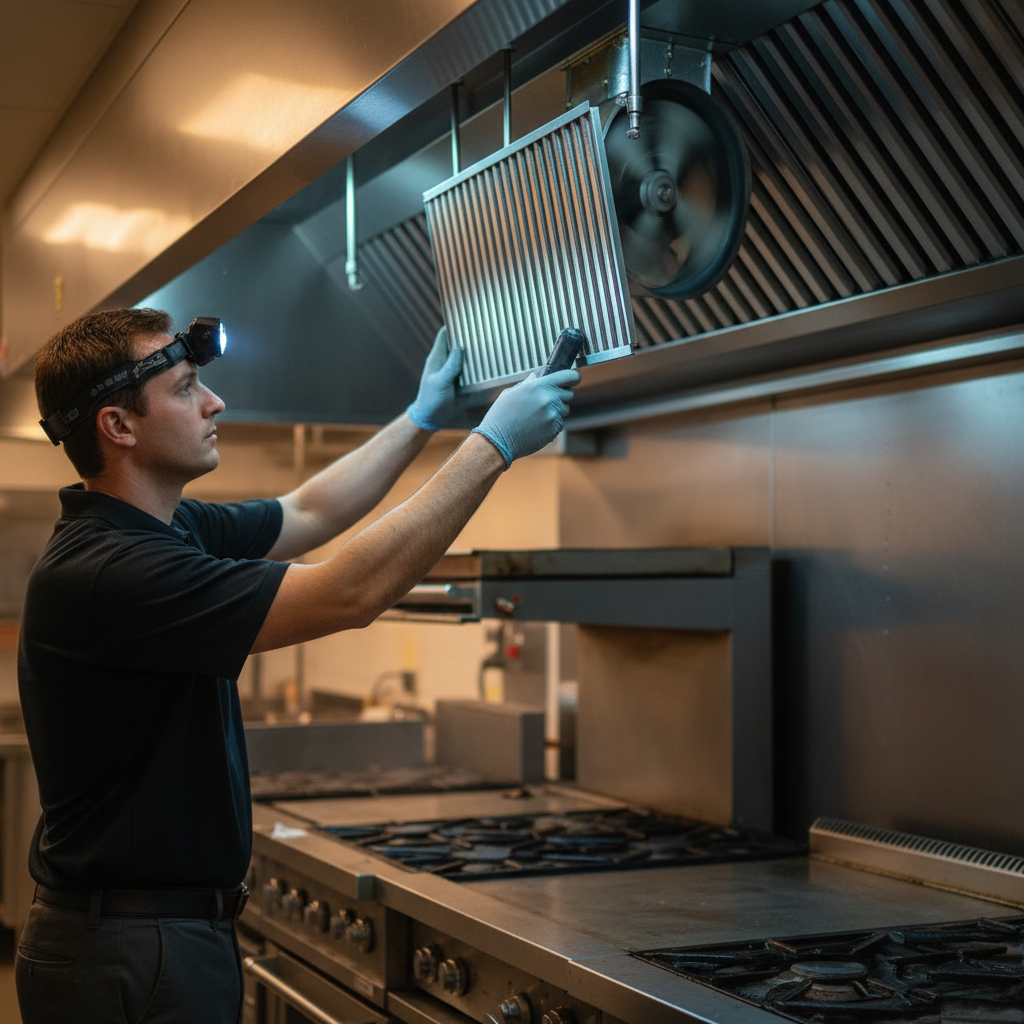
Call certified technicians when filters are heavily caked, frames are damaged, airflow is inconsistent, odors linger, or inspections are approaching. Robinhood Cleaners provides Filter Cleaning & Exchange plus full hood, duct, and exhaust service across Ontario—scheduled around your downtime.
- Service triggers: Persistent smoke rollback, routine alarms, visible dripping, or vibration/noise at the fan.
- What we handle: Filter Cleaning & Exchange, Kitchen Exhaust Cleaning, Hood and Duct Cleaning, Exhaust Fan maintenance, Ventilation System Maintenance, Grease Trap Cleaning, Commercial Appliance Cleaning, and Power Washing.
- Scheduling: 24/7 availability with quick service in Southern Ontario and coverage across all of Ontario.
Soft CTA: Want a quick filter and exhaust assessment? Review our Ontario-focused filter exchange overview or our kitchen hood cleaning guide, then contact our team to align service with your prep hours.
Frequently Asked Questions
These quick answers address the questions Ontario kitchen leaders ask most about hood filter care—frequency, dishwasher use, signs it’s due, and safe chemistry. Each answer is direct and action-oriented for busy managers.
How often should we clean kitchen hood filters?
Match to volume. High-volume or solid-fuel lines benefit from weekly staff rinses and monthly exchanges. Moderate restaurants often do biweekly staff care and quarterly exchanges. Adjust after inspections and document your cadence.
Can we run filters through a commercial dishwasher?
Sometimes. Only use cycles and racks rated for filters, and confirm material compatibility—stainless handles it better than aluminum. Don’t overload warewashers that clean food-contact wares. Hot-soak tanks are often more effective for heavy soil.
What are signs a filter is due for service?
Visible grease sheen, slow smoke capture, odors after service, or vibration and noise at the fan are common indicators. If a filter is warped, cracked, or won’t seat tightly, replace or exchange it immediately and check orientation arrows.
Which chemicals are safe on hood filters?
Use a kitchen-rated alkaline degreaser and follow the label. Stainless baffles tolerate hot alkaline solutions; aluminum requires milder chemistry to prevent dulling or pitting. Always rinse thoroughly and dry fully before reinstalling.
Conclusion and Next Steps
Hood filter cleaning is small effort with big payoff—safer lines, clearer air, and smoother inspections. Build a simple SOP, match frequency to volume, keep spares on site, and document swaps. When loads or timelines exceed your team, book professional exchange and exhaust service.
- Key takeaways: Clean, dry, and correctly oriented filters stabilize capture and reduce ignition risk.
- Action now: Create a log, label arrows-up orientation, and schedule your next exchange.
- Where to start: See our Ontario hood cleaning guide and filter exchange overview.
Final CTA: Ready for a safer, quieter line in All Over Ontario? Book a service window that fits your prep hours and let our certified team handle the heavy degreasing.