Grease doesn’t take a day off, and neither should your hood filters. If you operate a restaurant, food court stall, or institutional kitchen anywhere in All Over Ontario with quick service in Southern Ontario, the right filter choice can prevent flare-ups, protect airflow, and keep inspections smooth. This kitchen hood filter types comparison lays out exactly how to choose, install, and maintain filters that meet NFPA 96 expectations—then keep them performing with a practical care program you can run week after week.
Overview
- What you’ll get: a clear kitchen hood filter types comparison across stainless baffle, galvanized baffle, mesh, spark arrestor, water-wash cells, and downstream assists.
- Why this matters: safer lines, steadier airflow (CFM), fewer shutdowns, and better compliance with inspectors and insurers.
- Who should read: Ontario chefs, GMs, franchise owners, facility managers, and institutional foodservice teams.
- Immediate actions: size filters, set a cleaning cadence, rotate spares, and document each exchange.
Quick Answer
For most commercial kitchens in All Over Ontario (with quick service in Southern Ontario), stainless steel baffle filters are the inspection-friendly standard. Use this kitchen hood filter types comparison to match baffle depth and airflow to your menu, then schedule professional Filter Cleaning & Exchange with Robinhood Cleaners to keep grease under control.
Table of Contents
- What Is a Kitchen Hood Filter?
- Why Filter Choice Matters
- How Hood Filters Work
- Kitchen Hood Filter Types Comparison
- Step-by-Step: How to Choose
- Best Practices: Install, Inspect, Clean
- Tools & Resources
- Case Studies: 12 Ontario Examples
- Pricing Drivers (No Numbers)
- FAQ
- Conclusion & Next Steps
Local Tips
- Tip 1: If your kitchens sit near Highway 401/403/407 corridors, book exchange runs after close to avoid rush hour delays and keep staff off ladders during dinner service.
- Tip 2: Summer heat waves push fans harder. Increase weekly filter checks to protect motors, bearings, and belts.
- Tip 3: Many plazas share roof access points. Confirm safe access ahead of time so our hood, duct, and exhaust fan teams can service everything in one night.
IMPORTANT: These tips align with Robinhood Cleaners’ NFPA 96-certified technicians, 24/7 availability, and full-system maintenance approach.
What Is a Kitchen Hood Filter?
Think of hood filters as your exhaust system’s gatekeepers. They capture aerosolized grease at the hood before it can coat ducts, fans, and rooftops.
- Core function: Remove grease droplets from hot air streams at the source, reducing combustible buildup downstream.
- Regulatory role: In commercial settings, filters must be non-combustible, properly listed, and compatible with the hood to support fire safety.
- System impact: The right filter maintains airflow (CFM), stabilizes kitchen comfort, and eases the load on exhaust fans and make-up air.
- Maintenance reality: Filters take the hit first. Clean and exchange them on a routine to prevent duct and fan over-greasing.
Here’s the thing: a strong filter choice won’t replace cleaning, but it will make your kitchen safer, quieter, and easier to keep compliant.
Why Filter Choice Matters
- Fire safety: Better grease capture removes fuel from ducts and fans, lowering risk of flare-ups and roof fires.
- Compliance confidence: Inspectors look for listed, correctly installed filters and documented service that aligns with NFPA 96.
- Airflow stability: Well-sized baffles help keep CFM steady. That means less smoke, cooler cooks, and happier guests.
- Equipment life: Cleaner ducts and fans reduce belt slip, motor strain, and emergency downtime.
- Operational rhythm: Easy-swapping filters, spare sets, and coordinated cleaning windows keep the line moving.
The reality is simple: match your filter to your menu and service cadence, and the rest of the exhaust system becomes far easier to manage.
How Hood Filters Work
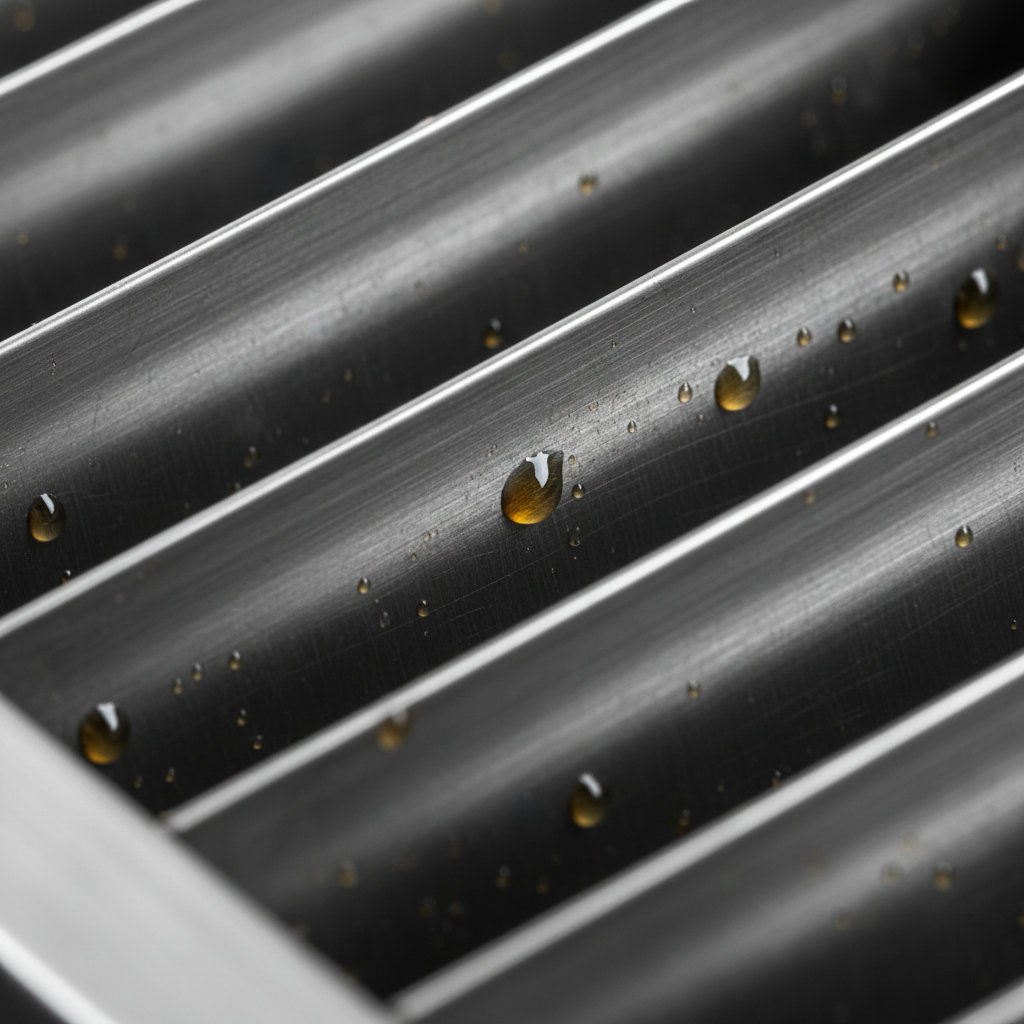
- Baffle filters (UL 1046): Slanted vanes make air change direction. Heavy grease droplets can’t follow, so they collide, stick, and drain to troughs and cups.
- Mesh filters: Layers of mesh create surface area but clog faster and are typically not acceptable for commercial hot lines due to fire risk.
- Charcoal/carbon modules: Great for odor adsorption in recirculating systems but not for primary grease capture ahead of ducts.
- Spark arrestor designs: Specialized baffles reduce flame and spark transmission—ideal for solid-fuel or flare-prone stations.
- Water-wash/UV/ESP assists: Downstream systems help cut smoke and odor but never replace listed primary grease filters.
Bottom line: for commercial cooklines in Ontario, stainless steel baffle filters remain the workhorse—if they’re sized, seated, and cleaned correctly.
Kitchen Hood Filter Types Comparison
Use this side-by-side to align filters with your menu, heat, and cleaning program.
| Filter Type | Best For | Grease Capture | Airflow (CFM) | Heat/Flame Resistance | Cleaning & Durability | Notes |
|---|---|---|---|---|---|---|
| Stainless Steel Baffle (UL 1046) | Most commercial lines: grills, fryers, ranges | High (mechanical separation) | Good when properly sized | Excellent | Dishwasher/soak safe; long lifespan | Ontario standard; inspector-friendly |
| Galvanized Baffle | Low to moderate volume operations | Moderate to High | Good | Good | Coating can wear; watch for corrosion | Use gentler degreasers; heavier to handle |
| Aluminum Mesh | Light-duty/recirculating setups | Low to Moderate | Good initially; clogs quickly | Poor (combustible media) | High cleaning burden; deforms | Generally not compliant for hot cooklines |
| Spark Arrestor Baffle | Solid-fuel or flare-prone menus | High | Moderate to Good | Excellent | Similar care to stainless baffles | Verify hood manufacturer compatibility |
| Water-Wash Hood Cells | High-volume, continuous-duty kitchens | High (automated cleaning assists) | Good when maintained | Excellent | Requires routine system maintenance | Doesn’t eliminate pro hood/duct cleaning |
| ESP/UV Assists (Downstream) | Smoke/odor reduction beyond baffles | N/A as primary grease filter | Varies by design | Excellent within listed systems | Specialized service cycle | Supplements, not replaces, baffles |
Stainless Steel Baffle: Details and Watchouts
- Why pros choose it: Non-combustible, rigid, dishwasher-safe, and recognized by inspectors and insurers.
- Where it shines: Grills, fryers, woks—any station with heavy grease aerosol.
- Fit and orientation: Seat fully in tracks, no gaps; arrows align with airflow.
- Robinhood example: We swapped warped baffles for a GTA burger line and restored airflow that night, then set a rotating Filter Cleaning & Exchange cadence.
Galvanized Baffle: Practical Considerations
- Good middle ground: Solid capture for moderate-volume lines or as a backup set.
- Care notes: Avoid harsh caustics; rinse and dry thoroughly to protect coatings.
- Robinhood example: A Hamilton cafeteria keeps a galvanized spare set so production never stalls during deep-clean windows.
Mesh Filters: When to Avoid
- Reality check: Not suitable for hot, greasy commercial lines; they saturate and can present a fire hazard.
- Better path: Upgrade to stainless baffles for compliance and easier cleaning cycles.
- Robinhood example: We replaced aluminum mesh in a new franchise build-out pre-inspection so they could open on schedule.
Spark Arrestor & Specialty
- Use case: Solid-fuel ovens or flare-prone charbroilers where sparks are common.
- Compatibility: Confirm listing and hood manufacturer specs before swapping filter styles.
- Care: Clean like stainless baffles; stay tight to your inspection intervals.
Step-by-Step: How to Choose the Right Hood Filter
Follow this simple, inspector-ready workflow to select and document the right filters.
- Confirm compliance baseline: Choose listed, non-combustible filters appropriate for commercial use (e.g., UL 1046-labeled baffles).
- Map your menu: Identify highest-heat, highest-grease stations (fryers, grills, woks) and note peak service times.
- Measure hood slots: Record height, width, depth, and number of slots; note airflow arrows and track condition.
- Match baffle depth to CFM: Higher airflow can pair with deeper baffles to stabilize face velocity and capture efficiency.
- Plan spares: Keep at least one clean backup set per hood section for mid-service or overnight swaps.
- Train staff: Label orientation arrows and tracks; include filter seating in opening/closing checklists.
- Schedule pro service: Align Filter Cleaning & Exchange with hood, duct, and exhaust fan cleaning to maintain full-system compliance.
Best Practices: Install, Inspect, Clean
Small habits prevent big headaches. Here’s how Ontario teams keep filters working every shift.
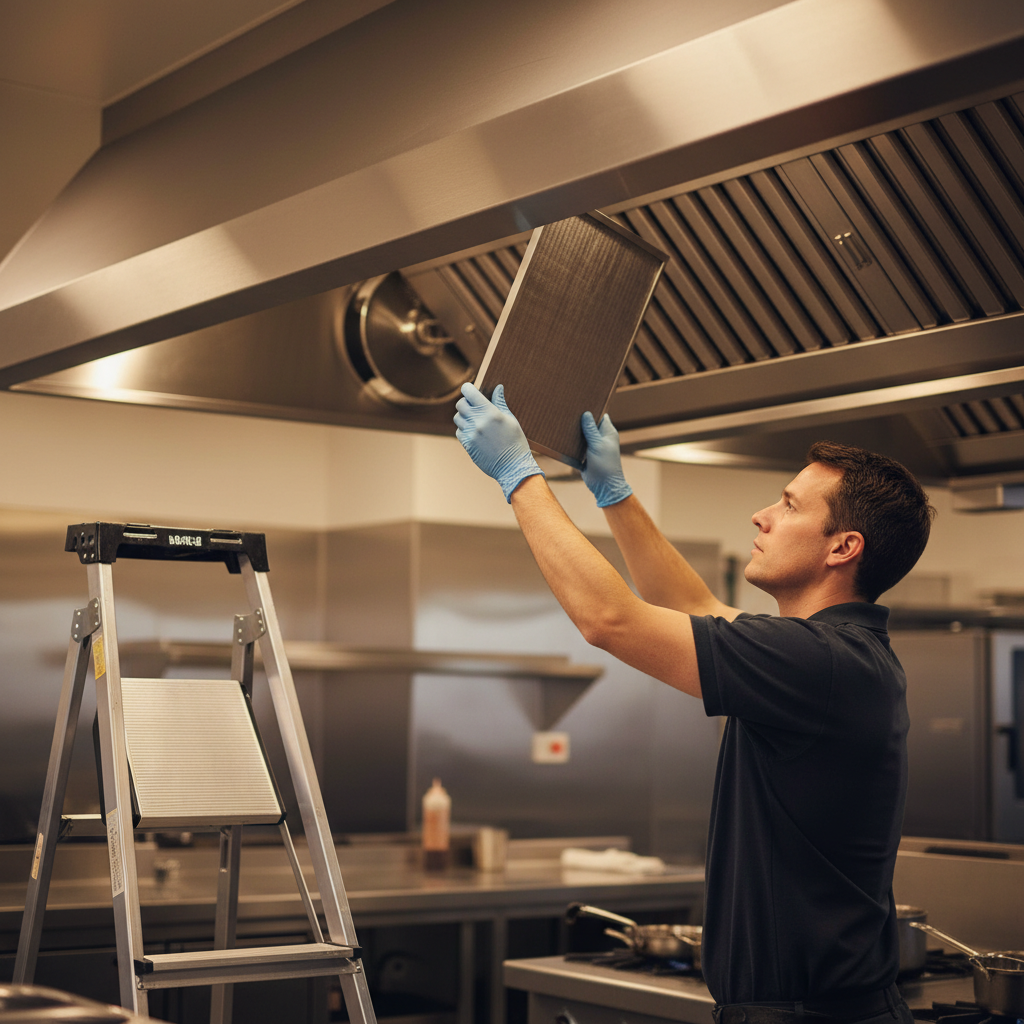
- Install correctly: Seat filters fully; arrows with airflow; no visible gaps along tracks.
- Set an inspection rhythm: Busy lines get weekly visual checks; increase frequency during patio season or promotions.
- Clean thoroughly: Hot soak, degreaser, rinse, and dry completely. Avoid aggressive chemicals on galvanized units.
- Rotate sets: Maintain a labeled spare set for each section to eliminate downtime during cleaning windows.
- Protect downstream: Empty grease cups and verify trough drainage after swaps.
- Bundle services: Pair filter exchange with exhaust fan cleaning and fan belt checks to catch wear early.
- Document services: Keep logs for insurance and inspector reviews. For cadence planning, see our hood cleaning frequency guide.
Pro move: tie your filter rotation to scheduled hood and duct cleaning so the whole system resets on the same timeline.
Tools & Resources
Use these practical tools to speed up decisions and simplify service.
- UL 1046 references: Verify filters are listed for commercial grease capture and flame resistance.
- NFPA 96 guidance: Align cleaning intervals to volume and equipment type; keep reports with your permits.
- CFM calculator: Estimate airflow to select appropriate baffle depth and slot count.
- Inspection checklist: Orientation arrows, seated fit, trough/cup condition, track cleanliness, and visible gaps.
- Soak tanks & racks: Speed deep cleans and minimize staff exposure to hot caustics.
- One vendor strategy: Coordinating Filter Cleaning & Exchange, Hood Cleaning, Duct Cleaning, Exhaust Fan Cleaning, Fan Belt Replacement, and Grease Trap Service reduces disruptions.
Need help setting the cadence? Our filter replacement schedule resource pairs well with a rotating spare set on-site.
Case Studies: 12 Ontario Examples
1) Quick-Serve Grill Line near Highway 401
- Issue: Flare-ups and visible smoke into dining room during rush.
- Fix: Replaced mixed filters with matched stainless baffles; sealed gaps; aligned arrows.
- Bundle: Same-night Hood Cleaning, Exhaust Fan Cleaning, Filter Exchange rotation.
- Outcome: Cooler line, clearer air, smoother inspection.
2) Food Court Wok Station in Mississauga
- Issue: Grease carryover into ducts despite frequent rinses.
- Fix: Upgraded to deeper stainless baffles; implemented weekly pro exchange in summer.
- Bundle: Duct Cleaning plus Fan Belt Replacement to restore design airflow.
- Outcome: Cleaner ducts noted at next inspection; quieter fan run.
3) Institutional Kitchen in Hamilton
- Issue: Filters installed backward post-shift, causing grease drip and smoke.
- Fix: Staff training, labeled slots, laminated orientation checklist.
- Bundle: Filter Exchange + quarterly Ventilation System Maintenance.
- Outcome: No recurrences; steadier airflow and cleaner troughs.
4) Downtown Toronto Bistro
- Issue: Odors reaching dining room during high-heat searing.
- Fix: Verified baffle fit; added downstream assist within listed specs.
- Bundle: Hood Cleaning + Grease Trap Service same night.
- Outcome: Odor complaints dropped; FOH felt cooler.
5) Franchise Fry Kitchen (Burlington)
- Issue: Frequent belt squeal and fan strain on weekends.
- Fix: Coordinated Filter Exchange with Exhaust Fan Cleaning and Fan Belt Replacement.
- Outcome: Stabilized airflow; kitchen noise reduced; fewer emergency calls.
6) University Cafeteria (Kitchener-Waterloo)
- Issue: Inconsistent filter sizes from mixed vendors created gaps.
- Fix: Standardized stainless baffles sized to hood slots; labeled sections.
- Outcome: Better capture; faster night swaps; cleaner cups.
7) Hospital Production Kitchen (Niagara Region)
- Issue: Water-wash cells neglected; buildup in plenum and ducts.
- Fix: Restored water-wash cycle; added quarterly Hood & Duct Cleaning; set filter inspection checkpoints.
- Outcome: Improved hygiene scores; documented compliance for audits.
8) High-Volume Wings Concept (Scarborough)
- Issue: Patio season spikes overwhelmed standard cadence.
- Fix: Increased exchange frequency; added spare set for weekend double-swaps.
- Outcome: Fewer smoke alarms; steadier kitchen temps during peak.
9) Mall Food Court Burger Line (Brampton)
- Issue: Filters saturated by lunch rush; evening service started dirty.
- Fix: Afternoon swap using spare set; nightly soak and pro exchange twice weekly.
- Outcome: Better capture in the evening; reduced smell complaints.
10) Fine Dining Grill (Oakville)
- Issue: Staff avoided heavy galvanized filters; improper seating left gaps.
- Fix: Switched to stainless for lighter handling; retrained on seating and arrow alignment.
- Outcome: Faster swaps; visible grease trails disappeared.
11) Catering Commissary (Milton)
- Issue: Mixed mesh and baffle filters from old tenant created compliance risk.
- Fix: Full replacement with UL 1046-listed stainless baffles; documented changeover.
- Outcome: Passed inspection; airflow improved; ducts stayed cleaner between services.
12) Campus Pub (Guelph)
- Issue: Odor drift on game nights.
- Fix: Verified baffle orientation; added scheduled Exhaust Fan Cleaning and grease cup checks before events.
- Outcome: Noticeable odor reduction; no service interruptions during peak hours.
Pricing Drivers (No Numbers—What Affects the Investment)
- Filter type and material: Stainless vs galvanized vs specialty spark arrestor designs.
- Quantity and sizes: Number of slots, custom dimensions, and baffle depth requirements.
- Service cadence: Weekly, biweekly, or monthly exchanges change logistics and labor timing.
- Menu intensity: Fryers, charbroilers, and woks load filters faster than light sauté stations.
- Bundled services: Coordinating Filter Cleaning & Exchange with Hood Cleaning, Duct Cleaning, and Exhaust Fan Cleaning streamlines labor.
- Access and scheduling: After-hours timing, plaza roof access, and holiday rushes affect planning.
For a deeper planning overview tailored to Ontario kitchens, see this comprehensive guide to filter programs for Ontario operators.
FAQ
- Is stainless steel always better than galvanized?
Stainless offers superior durability and tolerates stronger cleaners. Galvanized works for moderate-volume lines but needs gentler chemicals and closer corrosion checks. Choose by volume, handling needs, and cleaning process. - Can I use aluminum mesh filters on a commercial line?
Usually not. Mesh saturates, deforms, and can pose a fire risk on hot, greasy menus. Inspectors typically expect listed baffle filters on active cooklines. - How often should we clean or exchange filters?
Match to your volume. Heavy fryers and grills may need weekly exchanges; moderate lines often run biweekly or monthly. Document dates and align with hood/duct cycles for consistency. - Do water-wash hoods replace professional cleaning?
No. They help maintain baffles, but plenum, ducts, and fans still accumulate grease. You still need scheduled professional Hood Cleaning, Duct Cleaning, and Exhaust Fan Cleaning. - What’s the fastest way to reduce smoke at the pass?
Verify every filter is seated with arrows to airflow, empty grease cups, then check fan belts and blades. For advanced planning, review our notes on grease buildup prevention.
Soft CTA: Need an expert eye on your setup? Robinhood Cleaners provides Filter Cleaning & Exchange, Hood Cleaning, Duct Cleaning, Exhaust Fan Cleaning, Fan Belt Replacement, Grease Trap Service, and full Ventilation System Maintenance across Ontario—on your schedule.
Key Takeaways
- Stainless baffle filters remain the Ontario standard for commercial cooklines.
- Match baffle depth and count to measured airflow, not guesswork.
- Rotate spare sets and schedule exchanges to prevent grease carryover.
- Use UL 1046-listed filters and align service intervals with NFPA 96.
- Bundle filter, hood, duct, and fan service to reduce downtime.
Conclusion & Next Steps
- Choose listed baffles: Start with UL 1046 stainless unless your hood or menu requires a specialty arrestor.
- Size and orient: Measure slots precisely; seat tight; arrows with airflow—no gaps.
- Set cadence: Base exchanges on volume; escalate during seasonal spikes.
- Bundle work: Coordinate Filter Exchange with Hood, Duct, and Exhaust Fan cleaning for a clean slate.
- Document everything: Keep reports ready for inspectors and insurance reviews.
Ready to tighten up your program? Explore our complete filter replacement guide and our filter replacement schedule, then book service. We cover All Over Ontario with quick service in Southern Ontario, 24/7.