Kitchen airflow makes or breaks a service. When hood baffles or makeup air filters clog, smoke hangs, heat spikes, and grease travels where it shouldn’t. This complete guide walks you through building a filter replacement schedule for commercial kitchens that’s inspection-ready, easy to run on a busy Saturday night, and aligned with what Ontario inspectors expect.
- What you’ll learn:
- How hood, duct, and makeup air filtration really work together
- Baseline cadences you can use on day one (then tune with data)
- Step-by-step setup with roles, logs, and visual controls
- Smart adjustments for seasons, volume, and fuel type
- Tools, templates, and training that actually stick
- Why this matters in Ontario:
- NFPA 96–aligned maintenance reduces fire risk and eases inspections
- Seasonal humidity, winter salt/dust, and wildfire smoke change filter life
- Late hours and staffing shifts demand simple, visual routines
- Who this is for:
- Restaurant operators, facility managers, chefs, franchise leaders, and institutional kitchens across Southern Ontario
At a Glance
- The core move: standardize when each filter is inspected, cleaned, and replaced—then log it and verify weekly.
- Most lines benefit from daily baffle checks, weekly degrease soaks, and baffle replacement every 6–18 months when wear shows.
- Makeup air pleated filters often need 4–8 week changes; prefilters can require swaps every 2–4 weeks, faster in winter.
- Solid-fuel and fry-heavy programs require tighter cycles than light-cook or cold-prep areas.
- Align your cadence with your hood cleaning frequency so documentation tells one clean story.
Quick Answer
For a reliable filter replacement schedule in commercial kitchens, inspect hood baffle filters daily, deep clean weekly, and replace when damaged or no longer draining well. Change makeup air pleated filters every 4–8 weeks and prefilters every 2–4 weeks, tightening during winter. Robinhood Cleaners supports All Over Ontario at All Over Ontario with Filter Cleaning & Exchange and full hood system maintenance aligned with NFPA 96.
Local Tips
- Tip 1: If you’re near Highway 401 or the QEW with late-night service, set a pre-close filter check to prevent smoke alarms during the last ticket rush.
- Tip 2: Winter in Southern Ontario brings tracked-in salt and dust; expect makeup air prefilter and pleated filter changes to accelerate by 25–40% from December to March.
- Tip 3: On wildfire smoke or heat-advisory days, verify kitchen air balance twice daily; you may need same-day prefilter swaps to keep hood capture strong.
IMPORTANT: These tips align with Robinhood Cleaners’ Filter Cleaning & Exchange, Hood Cleaning, Duct Cleaning, and Ventilation System Maintenance services across Ontario.
Want more context before you build your cadence? Our Ontario-focused checklist distills the must-dos—see this short filter maintenance explainer for quick orientation, then circle back here for the full framework.
What Is a Filter Replacement Schedule for Commercial Kitchens?
- Definition: A written plan that sets inspection, cleaning, and replacement cadences for every filter in your kitchen ventilation system.
- Scope:
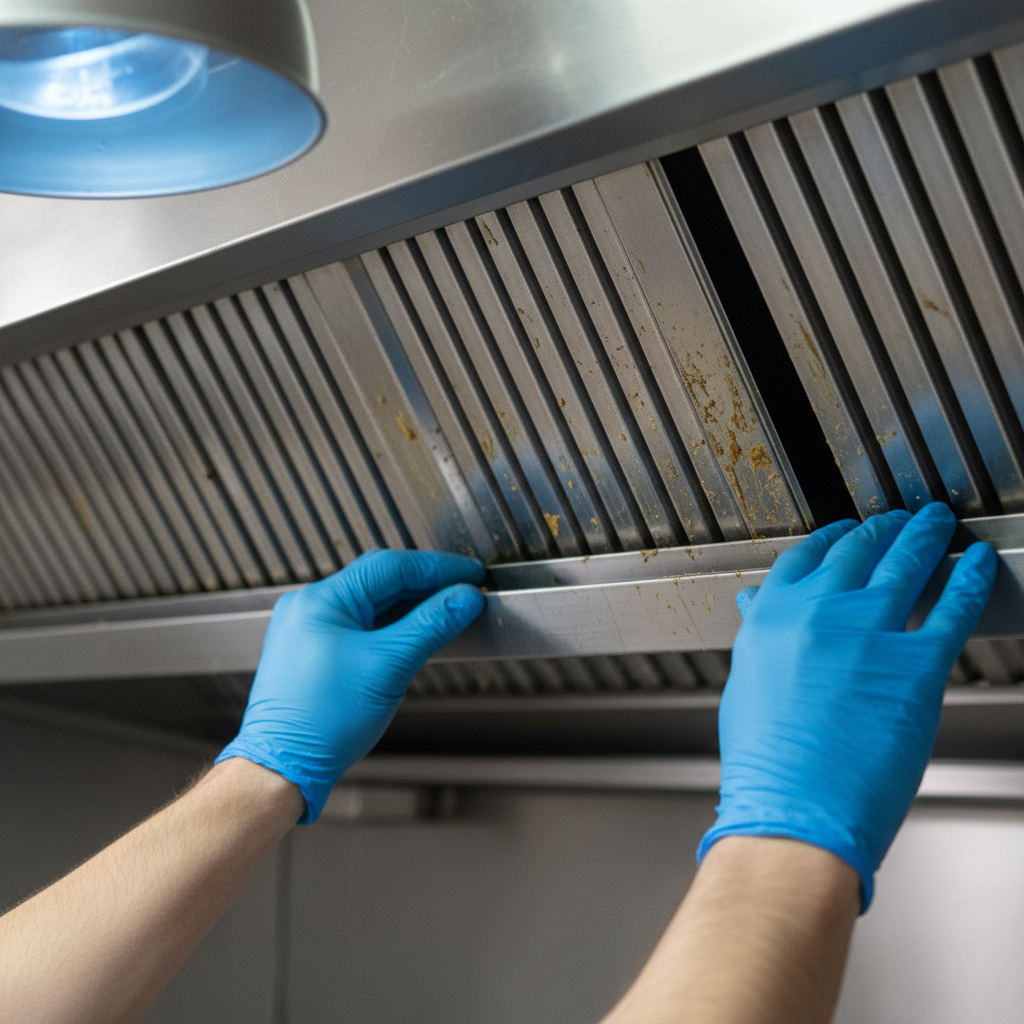
- Hood baffle filters (UL-listed stainless baffles for grease capture)
- Rooftop grease containment pads or cup media
- Makeup air unit (MAU) prefilters and pleated filters (commonly MERV 8–13)
- Return/prep area HVAC prefilters and optional odor/charcoal cartridges
- Documentation:
- A one-page calendar posted near the mop sink or manager’s office
- A digital log (simple spreadsheet or checklist app) with initials/dates
- Photo verification when grease loading or filter wear is borderline
- Ownership:
- Line leads/closing staff: daily checks and nightly rinses
- Managers: weekly degrease soaks and rooftop pad checks
- Service partner (e.g., Robinhood Cleaners): scheduled Filter Cleaning & Exchange, Hood Cleaning, and MAU/rooftop inspections
Why a Schedule Matters More Than You Think
- Fire safety: Grease-laden filters ignite faster. Regular cleaning and timely replacement reduce the chance of flame spread, consistent with NFPA 96 expectations.
- Air balance: Healthy makeup air and clear baffles keep smoke, steam, and heat off the line and away from guests.
- Compliance: Clean, undamaged filters signal control. Aligned records simplify conversations with health and fire inspectors.
- Equipment life: Fans, belts, and coils last longer when filters don’t starve airflow.
- Labor clarity: Clear, posted routines cut confusion and finger-pointing during the rush.
Here’s the thing: most problems blamed on “bad hoods” trace back to neglected filters. Fix the schedule, and other headaches fade.
How Kitchen Filtration Works (Fast Primer)
- Capture and drain: Hoods capture heat and vapor. Baffle geometry forces direction changes so grease condenses and drains into channels.
- Transport and separation: Ducts convey air to roof fans. Rooftop pads catch bypass grease before it stains roofs or drains.
- Replacement air: Makeup air units push tempered air back in to balance pressure and keep doors behaving.
- Why schedules matter: As filters load, static pressure rises and capture falls. Your schedule resets performance before the drop hurts service.
If you want a deeper dive into timing, our quick filter replacement schedule overview shows how cadence ties to inspection outcomes and guest comfort.
Types, Methods, and Approaches
Filter Types You’ll See
- Stainless baffle filters: Primary grease capture at the hood; must be UL-listed and intact.
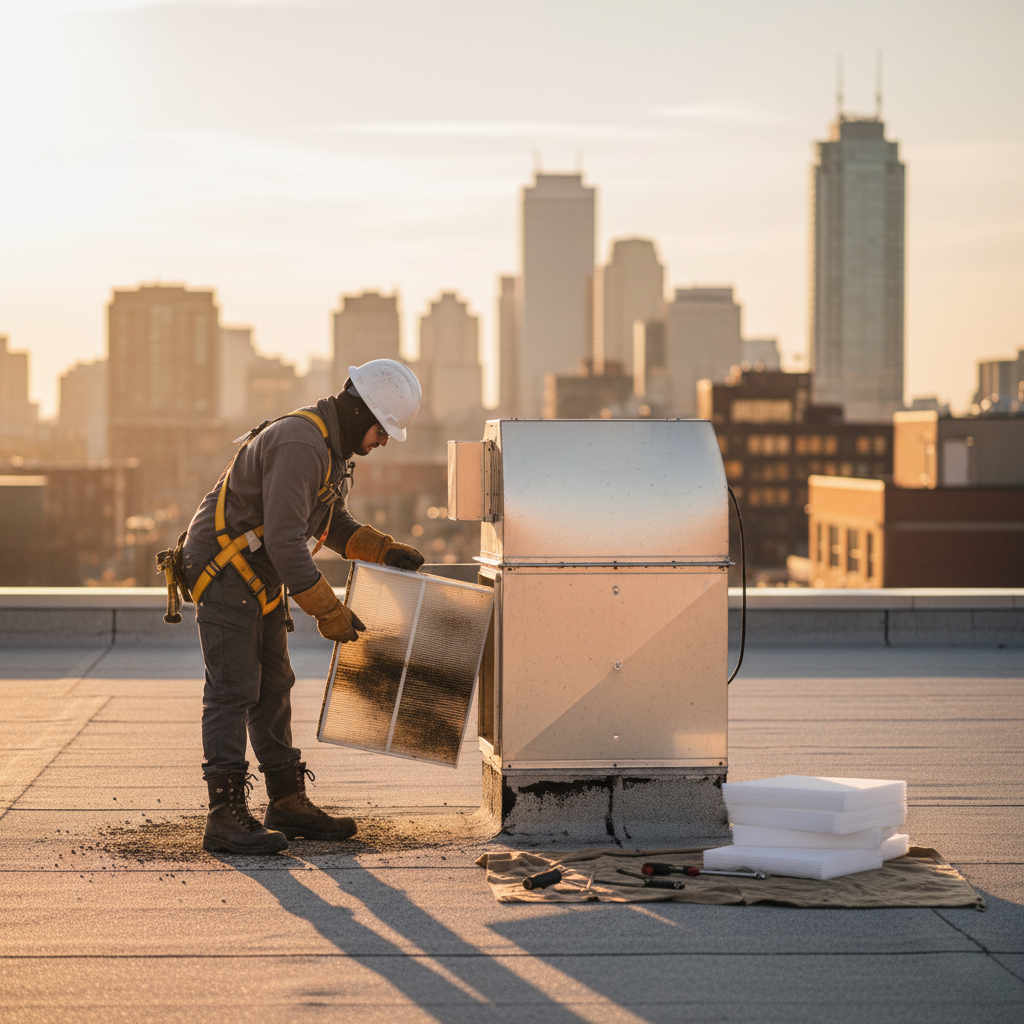
- Rooftop grease pads/cups: Contain carryover grease at the fan discharge to protect roofs and drains.
- MAU prefilters (coarse mesh): Catch larger dust/debris before pleated filters.
- MAU pleated filters (MERV 8–13): Protect coils and deliver cleaner supply air; higher MERV increases resistance.
- HVAC prefilters & odor cartridges: Optional layers for adjacent dining/prep areas or specific odor control.
Scheduling Approaches
- Calendar-based: Fixed intervals (e.g., weekly soak, 4–8 week pleated change). Simple and reliable for most restaurants.
- Condition-based: Triggered by visual load or a pressure setpoint. Great for variable seasons or construction nearby.
- Sensor-based: Differential pressure gauges or magnehelics on MAUs tell you exactly when resistance is too high.
- Hybrid: Calendar for baffles and rooftop pads; condition/sensor for pleated filters to avoid premature changes.
Ownership Models
- In-house with partner verification: Staff manage nightly/weekly work; Robinhood Cleaners verifies and exchanges filters during service.
- Full service program: We inventory, stock, swap, and log—your team reviews and signs off.
- Portfolio standardization: Chains/franchises use one schedule template and harmonized MERV/sizes to simplify stocking and training.
Filter Replacement Schedule for Commercial Kitchens (Benchmarks)
You might be wondering, “What’s a safe default if we’re starting from scratch?” Use these benchmarks today, then tighten or relax with real data.
Baseline Cadence by Filter Type
- Hood baffle filters:
- Visual check: every shift
- Remove/rinse: nightly (use dishwasher only if allowed by manufacturer)
- Degrease soak: weekly
- Replace: when fins warp, seams split, welds crack, or drainage fails (often 6–18 months in busy programs)
- Rooftop grease containment pads:
- Inspect: weekly
- Replace: monthly or when 80% saturated
- Makeup air prefilters (coarse):
- Inspect: weekly
- Replace: every 2–4 weeks; faster in winter or dusty periods
- Makeup air pleated (MERV 8–13):
- Inspect: bi-weekly
- Replace: every 4–8 weeks; tighten during winter and wildfire smoke days
- HVAC/prep area prefilters:
- Inspect: monthly
- Replace: every 1–3 months based on dust/traffic
Volume-Based Adjustments
- High-volume fryers, grills, solid-fuel: Tighten every interval by 25–50%.
- Moderate volume, mixed cooking: Follow baseline; validate with pressure readings.
- Low volume/cold prep heavy: Relax degrease soaks to bi-weekly; keep daily visuals.
Step-by-Step: Build Your Custom Schedule in One Afternoon
- Step 1 — Inventory your filters:
- Count baffle filters per hood and note sizes; tag each position (A1, A2, etc.).
- Identify MAU prefilters/pleated filters with sizes and MERV ratings.
- Check rooftop grease pads/cups and any odor cartridges.
- Step 2 — Map baseline cadences:
- Start from the benchmarks above.
- Mark tasks by shift, nightly, weekly, and monthly on a one-pager.
- Step 3 — Assign owners:
- Closing crew: rinse baffles and log completion.
- Manager: supervise weekly degrease soaks and rooftop pad checks.
- Service partner: MAU and rooftop swaps, quarterly system inspection.
- Step 4 — Set verification:
- Photo after weekly soak; label frame edges with date + initials.
- Record differential pressure on MAUs before/after changes.
- Step 5 — Post and train:
- Print a one-page calendar and review at preshift once a week.
- Store extra filters within 10 feet of the hood line to remove friction.
- Step 6 — Tune with data (first 30 days):
- Log smoke events, odors, and hot spots.
- Tighten or relax intervals by one week at a time based on results.
Recommended Cadences (Process Table)
| Filter/Component | Baseline | High Volume / Fry-Heavy | Low Volume / Cold Prep | Replace When… |
|---|---|---|---|---|
| Hood baffle filters | Rinse nightly; degrease weekly | Rinse after each rush; degrease 2× weekly | Rinse nightly; degrease bi-weekly | Warped frame, cracked welds, poor drainage |
| Rooftop grease pads | Inspect weekly; replace monthly | Inspect 2× weekly; replace every 2–3 weeks | Inspect bi-weekly; replace every 6–8 weeks | 80% saturated, shedding fibers |
| MAU prefilters (coarse) | Inspect weekly; replace 2–4 weeks | Inspect 2× weekly; replace weekly | Inspect bi-weekly; replace 4–6 weeks | Visibly gray, torn mesh |
| MAU pleated (MERV 8–13) | Inspect bi-weekly; replace 4–8 weeks | Inspect weekly; replace 3–6 weeks | Inspect monthly; replace 8–12 weeks | High pressure drop, surface matting |
| HVAC/prep area prefilters | Inspect monthly; replace 1–3 months | Inspect bi-weekly; replace monthly | Inspect quarterly; replace 2–4 months | Dust-loaded, airflow complaints |
Best Practices That Hold Up on a Saturday Night
- Keep a labeled spare set of baffle filters for each hood line (swap-and-soak routine).
- Color-code storage racks: clean (green zone), in-use (blue), to-clean (red). Simple, visual, fast.
- Never block baffles with foil or film—capture plummets and fire risk jumps.
- Match filter orientation arrows to ensure proper drainage.
- Log weekly degrease soaks with initials; snap a photo of the clean frame.
- Track MAU pressure drop: when it hits your setpoint, change that shift.
- Align swaps with hood cleaning and duct service so inspectors see one continuous maintenance story.
- Standardize sizes and MERV ratings across sites to simplify stocking and training.
- On Ontario wildfire smoke days, pre-stage extra prefilters by the back door and in the roof kit.
- Train relief managers on where spares live and how to log a swap—no excuses.
Tools & Resources (No Fancy Gear Needed)
- Spare baffle filters, MAU prefilters, and pleated filters (labeled by size/MERV)
- Food-safe degreaser and a dedicated soak bin with lid
- Non-abrasive brushes and proper PPE (gloves, eye protection)
- Pressure gauge or installed magnehelic for MAU monitoring
- Rooftop kit: grease pads, fasteners/zip ties, nitrile gloves, rags
- Drying rack or wall hooks to store filters vertically
- Laminated one-pager showing schedule and responsibilities
Case Examples from Ontario Kitchens
- QSR burger line off Highway 401:
- Issue: Smoke events during late rush.
- Fix: Nightly baffle swap-and-soak; MAU pleated changes every 4 weeks in winter, 6 in spring.
- Result: Zero smoke alarms in 90 days; cooler line temps and faster tickets.
- University cafeteria during construction season:
- Issue: Dust loading from nearby work.
- Fix: Weekly prefilters; pleated every 4 weeks; rooftop pads every 3 weeks.
- Result: Balanced air and fewer complaints at dish return.
- Hotel banquet kitchen downtown:
- Issue: Inconsistent logs; inspector flagged ducts.
- Fix: Posted schedule + manager sign-off; aligned swaps with hood cleaning.
- Result: Clean re-inspection; template adopted portfolio-wide.
- Bakery/café, light cook:
- Issue: Overcleaning baffles; wasting labor.
- Fix: Bi-weekly degrease soaks; monthly MAU changes.
- Result: Same capture, lower labor drag.
- Food court grill line:
- Issue: Grease tracks on roof near fan.
- Fix: Rooftop pad replacements every 3 weeks; added better containment tray.
- Result: Clean roof and no slip hazards.
- Fine-dining sauté station:
- Issue: Heat plume at pass elevated guest temps.
- Fix: Tightened baffle soaks to 2× weekly; verified MAU pressure.
- Result: Cooler pass, shorter dwell times on plates.
- Institutional kitchen (healthcare):
- Issue: Odor complaints on night shift.
- Fix: Added nightly visual checks and a spare set of baffles; standardized pleated changes.
- Result: Odor incidents dropped to near zero.
- Quick-service chicken concept:
- Issue: Fry vapor escaping on double-fryer runs.
- Fix: Added mid-shift rinse on peak days; increased MAU MERV to 11 with pressure monitoring.
- Result: Better capture without fan strain.
- Campus pub:
- Issue: Door suction during patio season.
- Fix: Verified MAU setpoints and advanced pleated change to every 4 weeks in summer.
- Result: Doors behave; servers happier.
- Catering commissary:
- Issue: Inconsistent weekend crews skipped rinses.
- Fix: QR-coded log at hood; manager reviews photos Mondays.
- Result: Compliance stabilized across shifts.
- Ramen shop:
- Issue: Steam/condensate pooling in baffles.
- Fix: Corrected baffle orientation and added slope check to nightly list.
- Result: Drainage restored; hood capture improved.
- Pizzeria with solid-fuel oven:
- Issue: Ash load overwhelmed prefilters.
- Fix: Condition-based swaps tied to pressure; increased inspection frequency.
- Result: Stable air balance despite weekend spikes.
- Seafood concept:
- Issue: Fish odor in prep hall.
- Fix: Tightened baffle cycles and verified MAU seals; deferred charcoal until baseline was stable.
- Result: Odor resolved without extra resistance.
Training and Documentation That Pass the Clipboard Test
- Post a single-page schedule and laminate it. Keep it eye-level near the hood or office.
- Use checkboxes with date + initials for nightly and weekly tasks—fast and auditable.
- Attach photos when a filter is borderline; store in a shared folder by month.
- During service visits, ask your partner to annotate which filters were replaced and why.
- Bundle filter logs with filter schedule docs and hood cleaning certificates for easy audits.
Common Mistakes to Avoid
- Waiting for smoke or odors before changing MAU filters.
- Running warped baffle filters because “they still fit.”
- Mixing filter sizes or MERV ratings across sites—creates stocking chaos.
- Ignoring rooftop grease pads until overflow stains the roof.
- Skipping orientation arrows on baffles—kills drainage performance.
- Treating filter work as “back-of-house only” instead of life-safety work.
Seasonal & Local Adjustments (Ontario Reality Check)
- Winter (Dec–Mar):
- Expect 25–40% faster loading from tracked-in salt, sand, and dust.
- Plan 2–4 week prefilter changes and 4–6 week pleated changes.
- Spring construction:
- Increase MAU inspections to weekly or 2× weekly if nearby projects kick up dust.
- Protect rooftop pads from windblown grit with proper covers.
- Summer patio season:
- Door cycling and hot air drives load; verify MAU setpoints and advance pleated swaps a week.
- Keep spare sets staged to avoid mid-service stalls.
- Wildfire smoke days:
- Switch to condition/sensor-based changes; carry extra prefilters and an extra box of pleated filters.
- Monitor differential pressure twice daily until AQI normalizes.
Troubleshooting: Quick Diagnostics
- Symptom: Smoke hangs at the hood.
- Check: Baffle loading, orientation, and MAU pressure.
- Action: Swap baffles now; verify MAU filters and setpoints.
- Symptom: Doors suck shut or drafts at the pass.
- Check: MAU pleated resistance and rooftop fan function.
- Action: Replace pleated filters; confirm fan/belt condition.
- Symptom: Grease on roof.
- Check: Rooftop grease pad saturation and containment alignment.
- Action: Replace pads; adjust containment tray and verify fan seals.
- Symptom: Odor complaints in dining hall.
- Check: Baffle cleanliness and HVAC prefilters.
- Action: Tighten baffle cycles; replace HVAC prefilters; re-test.
Need a hands-free program? Robinhood Cleaners inventories your filters, sets the baseline, and runs Filter Cleaning & Exchange on schedule. We align swaps with Hood Cleaning and Duct Cleaning so your records stay inspection-ready.
Frequently Asked Questions
- How do I know if my baffle filters need replacing versus just deep cleaning?
If the frame is warped, welds cracked, fins bent, or grease won’t drain after a proper degrease soak, it’s time to replace. If they’re structurally sound and drain well after soaking, keep them in rotation. - Are charcoal or odor cartridges worth it?
Use them only if you have specific odor complaints or requirements. They add resistance and can shorten MAU filter life. Master baffle, MAU, and rooftop pad discipline before adding specialty cartridges. - How often should I change makeup air filters during Ontario winters?
Plan on bi-weekly inspections and 4–6 week pleated changes. Salt, sand, and heavier foot traffic load filters faster from December through March. - Can I run filter changes the same day as hood cleaning?
Yes, and you should. Combining service creates one continuous maintenance record and resets performance end-to-end. - What measurement confirms a pleated filter is overdue?
Use differential pressure across the filter bank. When it hits your setpoint (from the unit’s spec), swap that shift—even if it’s off-cycle.
Key Takeaways
- Treat filters as life-safety components with defined cadences and clear owners.
- Tune schedules to cooking volume, seasons, and measured pressure—never just guess.
- Align filter swaps with hood and duct service to simplify inspections.
- Keep a spare set on-site and a one-page schedule posted where crews can see it.
- Partner with a certified, insured provider to verify and document the work.
What to Do Next
- Walk your line today and inventory every filter by size and location.
- Post the baseline schedule and run it for 30 days.
- Track pressure and smoke events; tighten or relax by one week at a time.
- Bring in Robinhood Cleaners to align Filter Cleaning & Exchange with Hood Cleaning and Duct Cleaning for a seamless record trail.
Want a quick reference you can tape up today? Here’s a concise, Ontario-ready filter schedule overview you can adapt for your line. For a deeper process breakdown, our Brampton 2026 guide expands on seasonal and volume tuning.