Kitchen exhaust hood cleaning is the professional removal of grease from hoods, filters, ducts, and exhaust fans to reduce fire risk and improve airflow. In All Over Ontario, Robinhood Cleaners delivers NFPA 96–aligned service that keeps commercial kitchens safe, compliant, and efficient so teams cook confidently and inspectors sign off quickly.
By Robinhood Cleaners • Last updated: 2026-05-27
Your Kitchen Exhaust Hood Cleaning Game Plan
Use this guide to understand what kitchen hood cleaning is, why it matters, and how to execute a safe, NFPA 96–aligned process. You’ll get step-by-step instructions, best practices, tools, and Ontario-specific tips—plus practical examples from restaurants Robinhood Cleaners supports across the region.
Here’s what you’ll learn and get right away:
- What it is: A plain-English definition and what “clean to bare metal” means.
- Why it matters: Fire safety, air quality, compliance, and equipment lifespan.
- How it works: A clear, field-tested, step-by-step cleaning workflow.
- What to use: Tools, degreasers, PPE, signage, and documentation checklists.
- Local insights: Timing and coordination tips for All Over Ontario operations.
- When to call pros: Triggers for scheduling Robinhood Cleaners’ crew 24/7.
Prefer a condensed playbook? See our internal process in our commercial exhaust cleaning overview and this practical exhaust duct benefits explainer.
What Is Kitchen Exhaust Hood Cleaning?
Kitchen exhaust hood cleaning removes grease and flammable residue from hoods, baffle filters, ducts, and rooftop fans until surfaces meet “clean to bare metal” standards. The goal is to reduce ignition sources, improve airflow, and document compliance for inspectors, insurers, and your internal safety program.
In practice, hood cleaning refers to a full-line system service—from the hood canopy over your cookline to the filters, horizontal and vertical ducts, and the rooftop upblast fan. Grease accumulates everywhere hot vapors travel, so partial cleanings leave hidden hazards in transition points and elbows.
- Hood canopy: Captures vapors; needs degreasing and polish to reduce residue adhesion.
- Baffle filters: Trap grease; should be hot-tanked or exchanged regularly to maintain airflow.
- Ductwork: Often the heaviest grease load; requires foam/steam application and scraping.
- Exhaust fan assembly: Blades, housing, and discharge plenum demand thorough degreasing.
Robinhood Cleaners supports restaurants, quick-service operations, and institutional kitchens across Ontario with restaurant kitchen cleaning services that integrate hood, duct, fan, and filter care into one documented visit.
Why Exhaust Hood Cleaning Matters for Safety and Compliance
Grease is fuel. Regular hood and duct cleaning lowers fire risk, improves kitchen air quality, and supports inspection readiness. Documented cleanings also protect insurance standing and minimize downtime from equipment failures or forced closures.
Here’s why leaders prioritize professional service schedules:
- Fire-risk reduction: Grease can ignite from flare-ups or heat. Removing residue interrupts that fuel source and confines incidents.
- Airflow and comfort: Cleaner hoods and filters maintain capture velocity, reducing smoke, heat, and odors on the line and in dining areas.
- Compliance confidence: Inspectors look for access panels, hinge-kits, bare-metal duct walls, and service tags. Robust documentation accelerates pass rates.
- Equipment longevity: Fans, belts, and motors last longer when blades and housings aren’t imbalanced by grease.
- Fewer disruptions: Scheduled overnight cleanings keep operations moving; fewer emergency callouts mean steadier labor plans.
For teams aligning to safety programs, start with our internal kitchen ventilation cleaning guide and this Ontario-focused NFPA hood compliance walkthrough.
How Professional Hood and Duct Cleaning Works
A professional cleaning sequence starts with system isolation and protection, then applies degreasing foam or hot solution from hood to fan, including ducts. Technicians remove, hot-tank, or exchange filters; degrease fan assemblies; verify belt tension; and document bare-metal results before tagging the system.
Below is the field-tested sequence our teams use across All Over Ontario to clean thoroughly without disrupting morning prep:
- Walkthrough and isolation: Lockout appliances, lay plastic sheeting, and install containment to protect equipment and floors.
- Filter removal: Pull baffles for hot-tank cleaning or swap via filter cleaning & exchange.
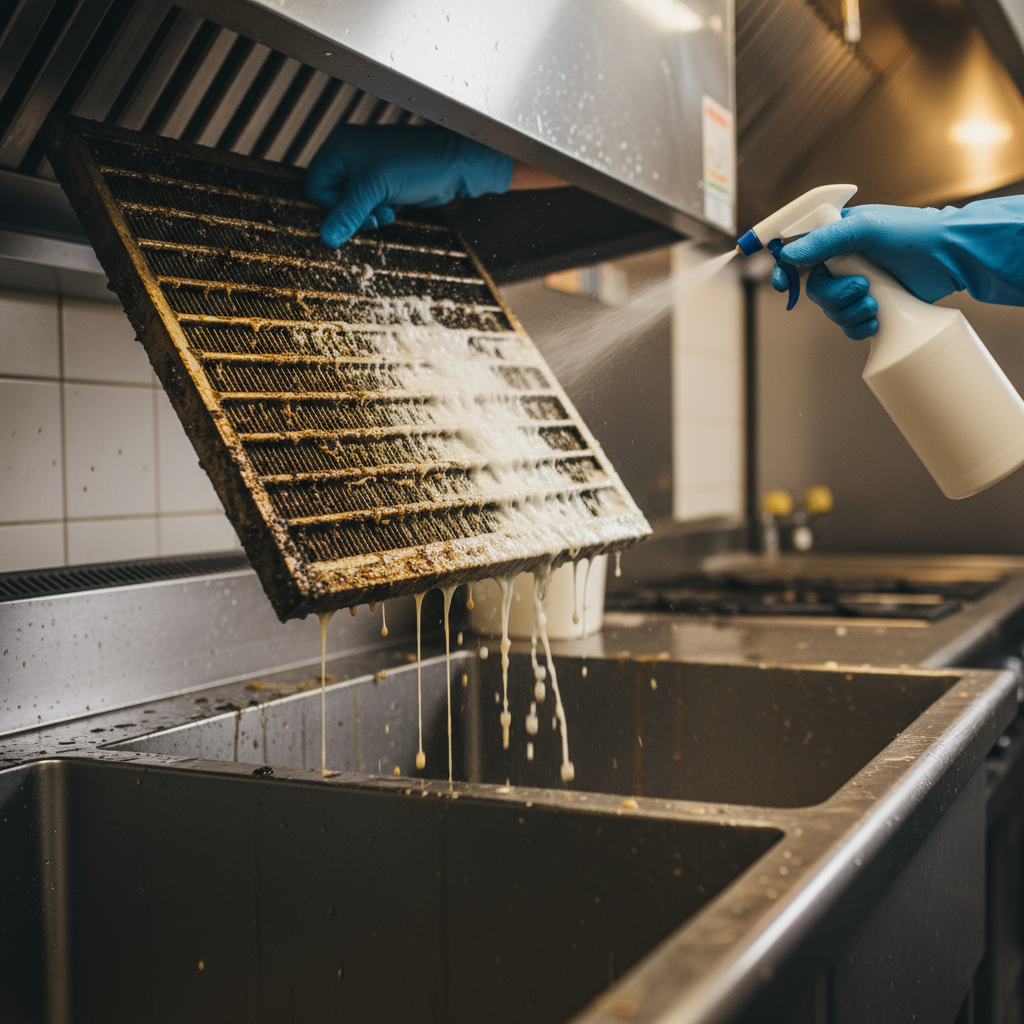
- Hood canopy degrease: Apply foaming degreaser, agitate, rinse, and polish.
- Duct access: Open access panels; apply foam/steam; scrape to bare metal; capture runoff.
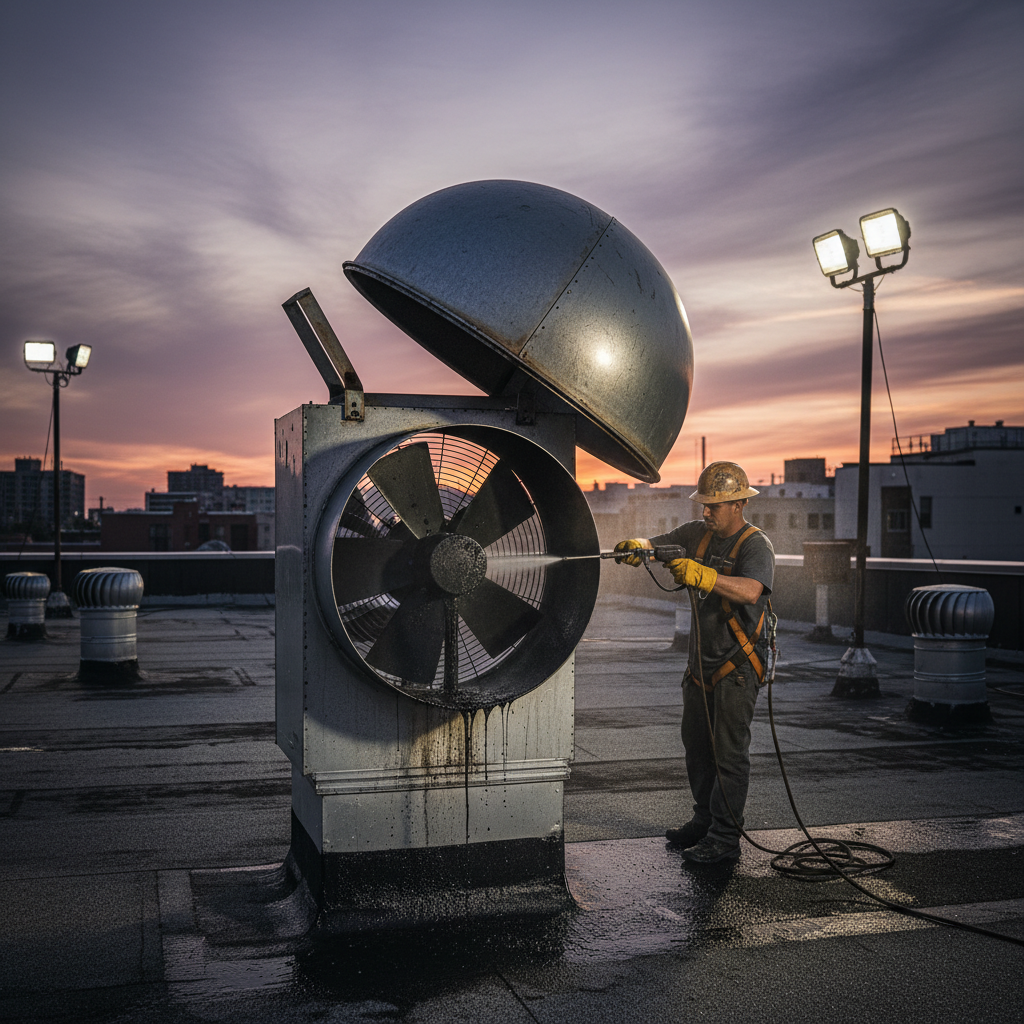
- Rooftop fan service: Use hinge-kit to open safely; degrease blades and housing; check bearings.
- Belt inspection: Verify tension and wear; replace if needed during fan belt replacement.
- Reassemble and test: Reinstall filters; power up; confirm draw and make-up air balance.
- Documentation and tag: Photo reports, service sticker, and next-service interval.
Completion targets clean-to-bare-metal surfaces in ducts and fan housings, and visibly de-greased hoods and filters. Our team also integrates power washing and equipment cleaning to return the line in ready-to-cook condition.
Step-by-Step Kitchen Exhaust Hood Cleaning Checklist
Follow this checklist to plan, clean, and document your hood system. It covers staging, degreasing, filter service, duct and fan cleaning, inspection items, and proof-of-service records your insurer and local inspectors recognize.
Pre-clean staging
- Confirm overnight access; notify managers and security if applicable.
- Shut down gas and electrical to affected lines; place lockout tags.
- Protect fryers, ranges, and prep tables with plastic and absorbent pads.
- Place wet-floor signs and route drainage to approved containment.
Degreasing workflow
- Remove baffle filters; hot-tank or exchange; inspect for damage.
- Apply food-service-safe degreaser to hoods and ducts; allow dwell time.
- Scrape and rinse to bare metal; verify with flashlight and photos.
- Service rooftop fan; degrease blades, housing, and rain collar.
Inspection and documentation
- Check fan belt tension, bearing noise, and vibration.
- Confirm access panels are sealed; wipe exterior finishes.
- Reinstall filters; run system; verify capture at cookline.
- Issue service tag and photo report; schedule the next interval.
For a deeper explainer on airflow and make-up air, our team published a practical primer on ventilation system optimization.
Methods: From Manual Degreasing to Steam and Foam
Technicians use a mix of foaming degreasers, hot water pressure, manual scraping, and sometimes steam to break down baked-on grease. The best method depends on cooking volume, duct geometry, grease load, and how long it’s been since the last service.
Foam-on, rinse-off (most common)
- When to use: Routine quarterly or semi-annual service with moderate buildup.
- Pros: Even coverage on vertical duct walls; predictable dwell time.
- Watch-outs: Dwell too short = residue; too long = surface staining on some finishes.
Hot water pressure + scraping
- When to use: Heavy grease loads, long service gaps, or complex elbows.
- Pros: Mechanical action lifts polymerized grease layers quickly.
- Watch-outs: Requires strong containment to manage runoff and aerosols.
Steam-assisted detailing
- When to use: Final detailing in tight corners, hinges, or fan hubs.
- Pros: Excellent for precision finishing; minimal chemical residue.
- Watch-outs: Not a substitute for primary degreasing on heavy loads.
In our experience, mixed-method service plus odor-reduction strategies gives the best result—cleaner ducts, quieter fans, and noticeably fresher dining rooms the next day.
Best Practices for Kitchen Hood Maintenance
Adopt a right-sized service interval, keep filters clean or exchanged, and protect your equipment during every cleaning. Document findings, track belt wear, and verify access panels so future service is faster and safer.
Set the right interval
- High-volume, solid-fuel, or frying-heavy kitchens: Plan monthly to quarterly service.
- Moderate-use operations: Semi-annual is common; verify with filter condition.
- Light-use or seasonal venues: Semi-annual to annual with visual checks.
Manage filter hygiene
- Use a filter cleaning & exchange program to keep capture efficiency high.
- Damaged baffles reduce performance; replace promptly to protect airflow.
Protect finishes and food safety
- Isolate prep areas; bag sensitive equipment; sanitize food-contact surfaces after service.
- Require hinge-kits and access panels to limit roof damage and speed inspections.
These practices align with our safety-first approach described in our note on fire risks and compliance, a core part of the “cleaning hazards” pillar.
Tools, Materials, and Resources to Do It Right
A professional kit includes PPE, signage, plastic sheeting, foaming degreasers, hot-water supply, scrapers, brushes, wet-vacs, and photo documentation tools. Add fan hinge-kits, belt gauges, and access panel supplies to speed future service and inspections.
- PPE and safety: Cut-resistant gloves, goggles, non-slip boots, harnesses for rooftop work.
- Containment: Plastic sheeting, magnetic duct covers, absorbent pads, wet-floor signs.
- Degreasing and tools: Foaming sprayers, scrapers, nylon/steel brushes, hot-water pressure capability.
- Fan and belts: Hinge-kits, belt tension gauge, replacement belts sized to model.
- Documentation: Service tags, photo reports, and a next-interval tracker.
Need a visual on what a well-organized service looks like? Our short primer on kitchen vent cleaning outlines the core kit and staging layout our crews use nightly.
Real-World Examples Across Ontario Kitchens
From quick-service lines to institutional cafeterias, consistent hood and duct cleaning reduces smoke, odor complaints, and surprise shutdowns. These Ontario-based scenarios show how tailored intervals and filter programs prevent grease hazards and keep service running on time.
- Quick-service restaurant: Fryers and flat-tops drove heavy aerosol grease. A monthly filter exchange plus quarterly duct cleaning stabilized capture and reduced smoke incidents during rushes.
- Fine dining kitchen: Lower daily volume but high-heat sauté. Semi-annual full-system cleanings with interim filter swaps kept fan noise low and dining-room odors negligible.
- Institutional cafeteria: Multiple cooklines under shared duct trunks. Staggered service rotations prevented bottlenecks and met inspection timelines without interrupting lunch periods.
We’ve found that adding fan belt replacement checks during every visit prevents mid-service squeals or failures that compromise capture. If a belt shows glazing or cracking, we replace during the same night to minimize return trips.
Local considerations for All Over Ontario
- Plan rooftop work with weather in mind: lake-effect winds and winter ice require hinge-kits, tie-offs, and flexible scheduling.
- Book overnight windows outside holiday peaks to keep service lines moving and ventilation balanced before brunch rush.
- Coordinate grease trap pumping with hood service to reduce back-to-back shutdowns and streamline inspector documentation.
Service Intervals and Comparison Table
Match cleaning frequency to cooking volume and fuel type. High-volume fry operations need monthly to quarterly service, while moderate-use kitchens often run semi-annual intervals. The table below helps you align intervals with operations.
| Kitchen Type | Typical Fuel & Load | Suggested Hood/Duct Interval | Filter Program |
|---|---|---|---|
| Quick Service (fried) | High aerosol grease | Monthly–Quarterly | Weekly exchange |
| Casual/Family dining | Moderate mixed menu | Quarterly–Semi-annual | Biweekly–Monthly |
| Fine dining | Lower volume, high heat | Semi-annual | Monthly |
| Institutional cafeteria | Multiple lines, steady | Quarterly–Semi-annual | Biweekly |
For more on balancing airflow and odor control between services, see our field notes on reducing kitchen exhaust odors and our ventilation optimization best practices.
When to Call Robinhood Cleaners
Call when filters discolor quickly, fan noise increases, or grease streaks appear at duct seams. If smoke escapes during rushes, or inspection dates approach, schedule a full-system service with documentation and a next-interval plan.
- Visual cues: Yellow/brown baffles after daily washing, residue under the canopy lip, or drip trails on exterior duct seams.
- Performance cues: Smoke roll-back, higher kitchen temperatures, or odor complaints in dining rooms.
- Mechanical cues: Fan squeal, belt slippage, or vibration increasing after startup.
Our team is WSIB insured, NFPA 96–aligned, and available 24/7 across Ontario. If you need a practical primer before scheduling, this concise Ontario service guide covers access, timing, and staging expectations.
Soft CTA: Ready to simplify inspections and reduce odors? Book a hood assessment with Robinhood Cleaners. We service kitchens All Over Ontario overnight, so your line is ready by morning.
FAQ: Kitchen Exhaust Hood Cleaning
These quick answers cover frequency, what’s included, and how to prep for service. Each response is field-tested across Ontario kitchens and helps teams plan with confidence.
How often should a commercial kitchen hood and duct be cleaned?
Match service to cooking volume. High-volume fry lines often need monthly to quarterly hood and duct cleaning, while moderate-use kitchens run semi-annual. Filters should be cleaned or exchanged weekly to monthly to keep capture velocity strong.
What’s included in a professional hood cleaning?
A full-system service covers hood canopy, baffle filters, ducts, and rooftop fan. Technicians degrease to bare metal where required, hot-tank or exchange filters, check belt tension, document with photos, and place a service tag with the next interval.
How should we prepare the kitchen for overnight cleaning?
Clear cooklines, turn off gas and electric to the affected appliances, and store food. Notify managers/security for access, and expect plastic sheeting, wet-floor signs, and containment. Our crew restores the line to a ready-to-cook state before leaving.
Do you replace worn fan belts during cleaning?
Yes. Belt inspection is part of every service. If we find glazing, fraying, or slippage, we replace the belt during the visit to prevent mid-shift failures that compromise ventilation.
Key Takeaways
Clean to bare metal, keep filters on a steady exchange program, and document every visit. Those three moves reduce fire risk, improve airflow, and help you pass inspections on the first attempt.
- Grease is fuel—removing it disrupts fire risk and stabilizes operations.
- Filters are airflow control; exchange programs are low-effort wins.
- Access panels and hinge-kits speed safe, thorough service.
- Photo reports and tags keep inspectors and insurers aligned.
- Schedule intervals that match your actual cooking load.
Conclusion and Next Steps
A consistent exhaust hood program is one of the highest-ROI safety moves a kitchen can make. Align intervals to volume, keep filters fresh, and document thoroughly. When you’re ready, Robinhood Cleaners handles the entire system overnight across Ontario—so you open on time with clear air.
- Review your current interval against the comparison table.
- Walk the line for visual and performance cues this week.
- Schedule an overnight service window before your next inspection.
- Adopt a filter exchange cadence that matches your rush periods.
Explore a quick primer on kitchen vent cleaning and our odor control tips to reinforce team training.