Kitchen ventilation cleaning is the professional removal of grease, carbon, and airflow-blocking debris from hoods, ducts, fans, and filters. Done on a 1–6 month schedule, it reduces fire risk, stabilizes airflow, and supports food safety. In All Over Ontario, Ontario, Robinhood Cleaners delivers compliant service that keeps commercial kitchens inspection-ready.
By Robinhood Cleaners • Last updated: May 24, 2026
Above the fold: hook and table of contents
If you run a restaurant, your hood, ducts, fans, and filters need routine degreasing and inspection. A clear schedule, documented reports, and trained technicians prevent grease fires and downtime. Use this guide to plan compliant service intervals, know what to expect, and keep airflow steady during peak hours.
Here’s the thing: most fire hazards start inside hidden ductwork, not on the cookline. This guide shows decision-makers exactly how to keep ventilation systems clean, safe, and efficient without disrupting service.
- What kitchen ventilation cleaning includes—and why it matters
- How commercial hoods and fans actually move heat, smoke, and grease
- Cleaning methods, frequency standards, and documentation to keep on file
- Practical best practices for Ontario operations and seasonal shifts
- Actionable tools, checklists, and real examples from busy kitchens
- What is kitchen ventilation cleaning?
- Why it matters
- How systems work
- Types and methods
- Best practices (Ontario)
- Tools and resources
- Case studies and examples
- FAQ
- Conclusion
Quick summary
Schedule kitchen ventilation cleaning every 1–6 months based on volume. Degrease hoods, ducts, fans, and baffle filters end-to-end. Document before/after photos, service tags, and reports. This keeps airflow stable, lowers fire risk, and supports health inspections without last‑minute scrambles.
For high-volume fryers and solid-fuel cooking, quarterly (or even bi-monthly) service is common. Moderate lineups often land at semi-annual cadence. Light-duty operations can stretch to annual cleaning when paired with diligent filter maintenance.
Need a partner to execute the plan? Our kitchen exhaust cleaning service keeps documentation tight and timelines realistic for busy Ontario teams.
What is kitchen ventilation cleaning?
Kitchen ventilation cleaning is a systematic process that removes grease and residues from hoods, ducts, upblast fans, and baffle filters. The goal is to restore metal to a bare, clean state, maintain safe airflow, and reduce ignition risk—while providing clear, auditable service records.
In practice, that means degreasing every accessible surface from the hood canopy to the rooftop fan and addressing the spots that quietly accumulate risk: fan housings, horizontal runs, elbows, and behind access panels. Thorough cleaning returns static pressure and exhaust velocity to design ranges.
- Scope: Hood, plenum, ductwork, fan assembly, and baffle filters.
- Targets: Grease films, polymerized fats, soot, and lint that cling to metal.
- Cadence: Typically every 1–6 months; document each event with tags and photos.
- Outcome: Measurably steadier airflow, cooler line conditions, and fewer odors.
For end-to-end results, we align ventilation cleaning with ventilation system optimization so capture efficiency and make‑up air stay balanced during rushes.
Why kitchen ventilation cleaning matters
Grease accumulation is a leading cause of commercial kitchen fires. Routine kitchen ventilation cleaning interrupts that fuel source, stabilizes airflow, and protects uptime. It also supports inspection compliance and insurance requirements with dated tags and photo documentation.
We’ve found that even a thin 1–2 millimeter film of grease across duct walls can trap particulates and accelerate buildup after a few busy weekends. Left unchecked, deposits layer into a thick, sticky substrate that’s difficult to remove and far easier to ignite under high heat.
- Airflow stability: Clean systems maintain design CFM, often 1,500–6,000 CFM per hood.
- Temperature control: Lower canopy heat improves line comfort and consistency.
- Odor reduction: Proper exhaust velocity reduces lingering smells in dining areas.
- Documentation: Service tags, photos, and reports streamline inspections.
Operations in Southern Ontario’s peak patio season often run extended hours, which accelerates residue. That’s why many sites shift to 90-day intervals between May and September, then return to semi‑annual service in colder months.
How kitchen ventilation systems work
Commercial hoods capture heat, smoke, and grease aerosols at the source. Ducts convey that air to a rooftop upblast fan, which discharges vertically. Make‑up air replaces exhausted air, keeping kitchens in slight negative pressure for comfort and control.
Think of your system as a chain: canopy capture, plenum and baffles, duct runs, and the fan. If one link is restricted—even 10%—the whole chain suffers. Fans work harder, noise increases, and capture efficiency drops. The result can be smoke roll‑out during peak service and uneven temperatures across the line.
Key components you should know
- Canopy and plenum: Where hot effluent is first captured; baffle angle and spacing matter.
- Baffle filters: These force air to change direction, separating grease as droplets.
- Ductwork: Horizontal runs and elbows are typical accumulation hot spots.
- Upblast fan: Discharges air vertically; hinges and grease containment are must‑haves.
- Make‑up air: Keeps the room balanced; poor balance strains HVAC and exhaust.
In our experience, a well‑tuned hood maintains capture with face velocities around 100–150 fpm at the hood edge. After deep cleaning, teams often report quieter fans and a 2–3 dB noise reduction—small on paper, noticeable on the line.
Types, methods, and approaches
Effective kitchen ventilation cleaning combines safe chemical degreasing, hot‑water rinsing, and mechanical agitation. Technicians open access panels, protect equipment, and work from the hood to the rooftop fan. The objective is bare‑metal results across every reachable surface.
Core cleaning sequence
- Prep and protection: Wrap/cover equipment and ensure electrical lockout as needed.
- Hood and baffles: Apply degreaser (dwell 10–15 minutes), agitate, rinse hot.
- Duct access: Open panels, scrape heavy deposits, then foam and rinse.
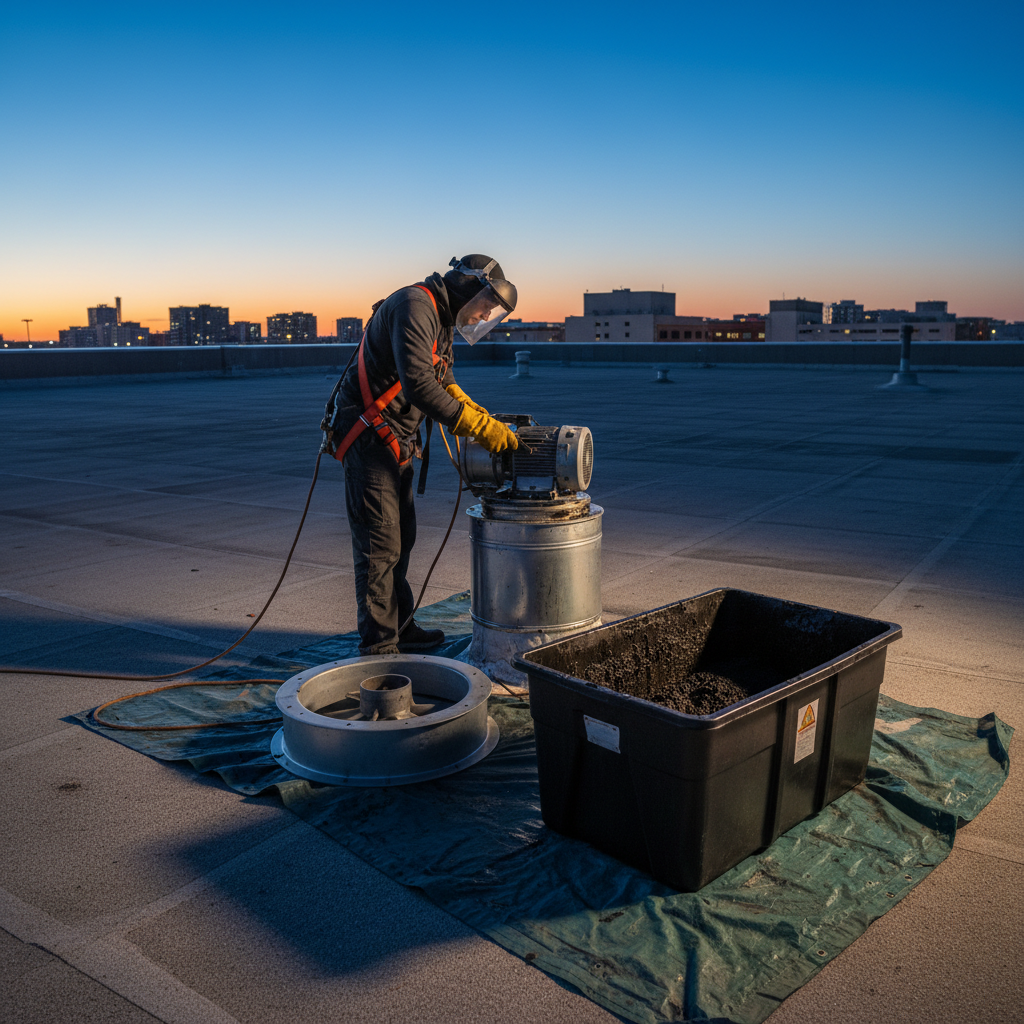
- Fan service: Hinge, lift safely, clean blades/housing, confirm belt tension.
- Rinse and restore: Final hot water rinse, polish stainless, re‑install filters.
- Proof: Before/after photos and a dated service tag on the hood.
Specialized add‑ons we integrate
- Filter Cleaning & Exchange: Spare baffles keep capture efficiency high between deep cleans.
- Fan belt replacement: A worn belt can slip 5–10%, hurting airflow and raising noise.
- Grease trap cleaning: Reduces odors and protects plumbing during high‑volume weeks.
- Duct cleaning services: Focus on elbows and long horizontal runs prone to residue.
- Power washing: Exterior and rooftop areas stay safer and cleaner post‑service.
For a deeper dive into airflow and capture balance, see our in‑depth exhaust duct cleaning guide and our ventilation optimization best practices.
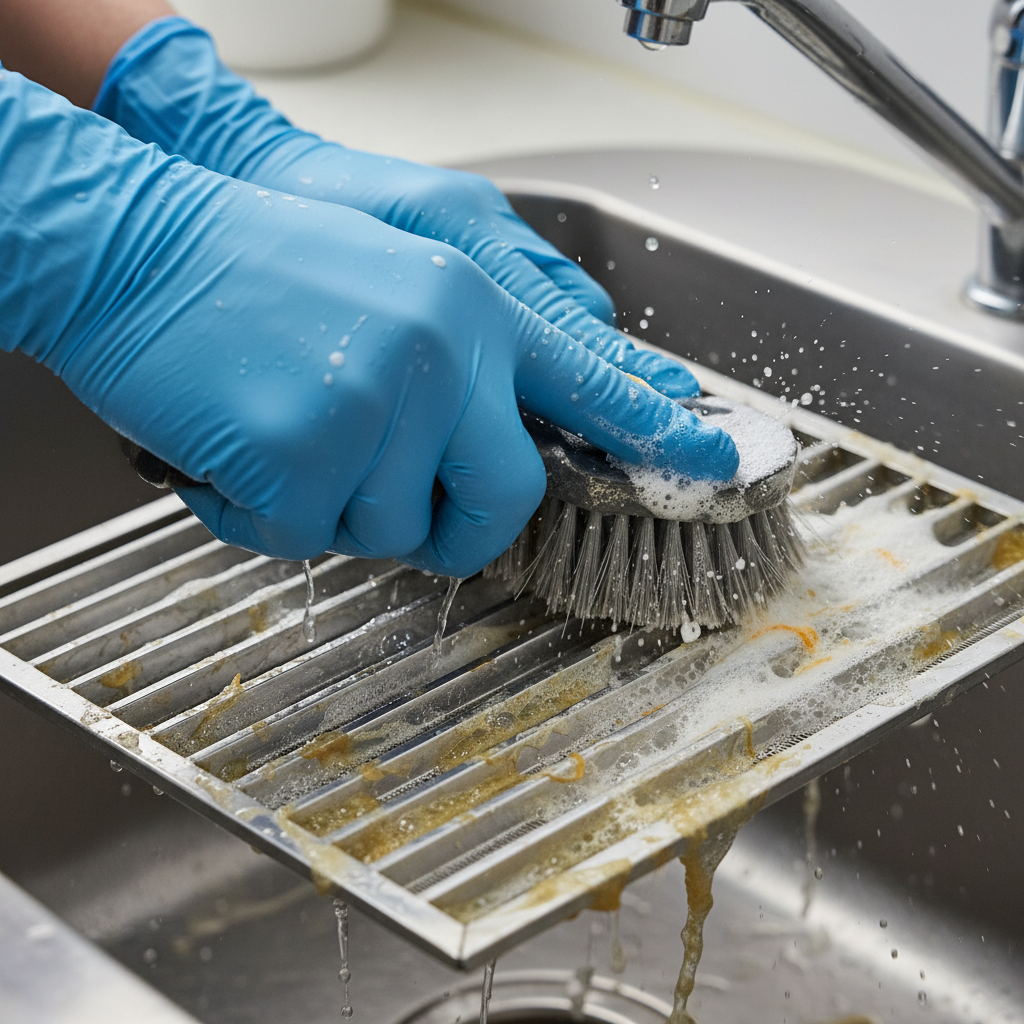
Helpful CTA: Want a documented process and flexible timing? Our team handles overnights and off‑days across Ontario. Explore our restaurant kitchen cleaning services to align ventilation, appliances, and safety checks in one visit.
Best practices for Ontario kitchens
Anchor your plan to cooking volume: heavy fryers and solid fuel need quarterly cleaning; moderate sauté and grill lines trend semi‑annual; light-duty kitchens can go annual with strict filter care. Always tag hoods with date/service and retain photo reports for inspections.
Recommended cleaning frequency by operation
| Kitchen type | Typical volume | Frequency | Notes |
|---|---|---|---|
| Quick service (QSR) | High, 12–18 hrs/day | Every 3 months | Fryers and grills load baffles quickly; swap filters monthly. |
| Casual/family dining | Moderate‑high | Every 4–6 months | Increase cadence May–Sept for patios and tourism. |
| Fine dining | Moderate | Every 6 months | Focus on sauté stations and solid‑fuel features. |
| Institutional (schools, healthcare) | Varies by term | Every 6 months | Coordinate with closures and inspections. |
- Document everything: Service tags, timestamped photos, and PDF reports reduce inspection time.
- Protect the roof: Use grease containment and hinged fans to prevent membrane damage.
- Filter discipline: Rinse or exchange monthly; a dirty baffle can add noticeable static pressure.
- Coordinate MUA: Make‑up air should run concurrently to avoid smoke roll‑out during service.
For compliance clarity and inspection prep, see our fire code requirements overview and our Ontario kitchen hood guide. Both align with the cleaning intervals summarized above.
Local considerations for All Over Ontario
- Seasonal volume spikes during summer patios and festivals can push residue rates higher; plan a 90‑day cycle from May to September, then reassess in October.
- Winter back‑of‑house doors stay closed longer; confirm make‑up air tempering to prevent drafts and maintain comfortable 68–72°F on the line.
- Rooftop access in snow and ice demands strict safety plans; schedule fan service midday when roofs are driest to reduce slip risk.
Tools, materials, and resources
Technicians rely on food‑safe degreasers, 150–180°F hot‑water rinses, scrapers/brushes, access panel keys, hinge kits, and grease containment. A camera‑rich report (with date/time stamps) proves bare‑metal results and supports inspections and insurance audits.
- Degreasers: Alkaline or citrus blends; choose foaming formulas for vertical surfaces.
- Water temperature: 150–180°F improves emulsification and rinse quality.
- Safety kit: PPE, fall protection for roof work, and lockout/tagout where required.
- Hardware: Fan hinges, access panels, and grease containment to protect the roof.
- Reporting: Photo sets (before/after), service tags with date, and a signed checklist.
Want a broader playbook? This kitchen ventilation system optimization resource outlines airflow tuning after cleaning. For scheduling support, this 24/7 service planning guide shows how to align overnights and off‑days with your crew. If you’re comparing vendors, see the Ontario hood cleaning service primer.
Case studies and examples
Across Ontario, we see the same pattern: consistent cleaning restores capture, lowers line temperatures, and cuts surprise shutdowns. The most reliable results come from quarterly schedules for high‑volume kitchens, with monthly filter swaps and documented fan inspections.
High‑volume quick service kitchen
- Challenge: Smoke roll‑out during dinner rush and strong roof odors.
- Action: Quarterly deep cleaning, monthly filter exchange, and fan belt replacement.
- Result: Noticeable smoke reduction; steadier capture at the hood edge; fewer odor complaints.
Hotel banquets and room service
- Challenge: Inconsistent airflow across multiple hoods tied to one fan.
- Action: Full duct and elbow degreasing, hinge install, and balancing check.
- Result: More even heat removal and quieter operation during back‑to‑back events.
Institutional kitchen with seasonal schedule
- Challenge: Short cleaning windows during breaks; heavy residue in elbows.
- Action: Semi‑annual deep clean aligned with closures and access panel upgrades.
- Result: Faster repeat service and cleaner photo proofs after the first cycle.
For more on reducing hazards while improving airflow, review our kitchen exhaust hazard reduction overview and our ventilation system guide.
FAQ: kitchen ventilation cleaning
Most commercial kitchens should schedule ventilation cleaning every 1–6 months, depending on volume and cooking type. Document each service with dated tags and photos. Keep baffle filters clean or exchanged monthly to stabilize capture between deep cleans.
How often should a high‑volume fryer line be cleaned?
Plan on quarterly deep cleaning for high‑volume fryers. If you run 12–18 hours per day, consider a 60–90 day cadence in summer months. Keep baffle filters on a monthly rinse or exchange cycle so capture doesn’t degrade between services.
What parts are included in proper ventilation cleaning?
A complete service includes the hood canopy and plenum, baffle filters, ductwork (including elbows and horizontals), and the rooftop upblast fan. Technicians open access panels, degrease to bare metal, rinse hot, and leave dated service tags with photo documentation.
Do I need to shut down the kitchen during cleaning?
Most services run overnight or on scheduled off‑days to avoid disrupting operations. Equipment is wrapped and protected, electrical is locked out if needed, and a final rinse and polish restore the space before staff return.
What documentation should I keep for inspections?
Keep dated service tags on the hood, before/after photo sets, and a signed service report. Store these as PDFs for quick retrieval during inspections or insurance reviews. Many teams file by quarter so reports are easy to locate.
Conclusion and next steps
A reliable kitchen ventilation cleaning plan protects people, property, and uptime. Anchor frequency to volume, keep filters clean between deep services, and document everything. Choose trained, insured technicians who can work overnight and provide full photo proof.
- Key takeaways: Quarterly for heavy use; semi‑annual for moderate; annual for light with strict filter care.
- Always include fan service, hinge kits, and roof grease containment to protect assets.
- Align ventilation cleaning with appliance and grease trap service to maximize downtime.
Ready to tighten your plan across Southern Ontario? Start with our fully documented exhaust cleaning service, then layer in ventilation optimization for stable capture year‑round.