Restaurant kitchen cleaning services are comprehensive, professional programs that deep clean hoods, ducts, fans, appliances, floors, and grease traps to meet fire and health codes. In All Over Ontario, Robinhood Cleaners delivers certified, 24/7 service so restaurants stay safe, compliant, and inspection-ready without disrupting service.
By Robinhood Cleaners Team • Last updated: 2026-05-22
Overview and Quick Summary
Professional restaurant kitchen cleaning protects guests, staff, and your brand by removing grease, sanitizing food-contact surfaces, and documenting compliance. This guide explains what’s included, how services work, recommended schedules, and how Robinhood Cleaners supports Ontario restaurants with NFPA 96–aligned processes and health-inspection readiness.
Running a busy line leaves little time for deep cleaning. Yet health inspections and fire risks don’t wait. Here’s what you’ll get from this expert guide, tailored to restaurants and food service teams operating across Ontario.
- Clear definition of restaurant kitchen cleaning services and scope
- Why it matters for safety, insurance, and inspections
- Step-by-step process walkthroughs and checklists
- Service types: hood, duct, filter, fan belt, appliances, grease traps, floors
- Best practices for scheduling with minimal downtime
- Tools, chemicals, photo documentation, and reports
- Ontario-specific tips and real examples from the field
What Is Restaurant Kitchen Cleaning?
Restaurant kitchen cleaning is a professional, system-wide deep clean of hoods, ducts, fans, appliances, floors, and grease traps designed to meet health codes and NFPA 96 fire standards. It goes beyond nightly wipe-downs, removing combustible grease and biofilm while producing inspection-ready documentation.
In our experience, the fastest way to understand scope is to map the airflow and grease path from the cookline to the roof fan. Wherever vaporized oils land, they harden. If you can see stainless discoloration or sticky residue, the exhaust path is catching grease.
Core components covered
- Kitchen Exhaust & Hood: Hood canopies, baffle filters, plenum, light lenses, and splash zones get degreased, rinsed, and polished.
- Ducts & Roof Fans: Accessible ductwork and fans are scraped, degreased, and inspected for hinges, belts, and vibration.
- Line Equipment: Ovens, fryers, ranges, grills, and refrigeration exteriors are detailed to remove carbon and grease film.
- Grease Traps: Pumping, scraping, and rinsing help prevent sewer backups and odors.
- Floors & Walls: Degreasing, power washing (where appropriate), and sanitizing cut slip risk and contamination.
For Ontario restaurants juggling high service volume, Robinhood Cleaners provides a single team for hoods, ducts, filters, fan belt replacement, grease trap service, and appliance deep cleaning—reducing coordination headaches.
Local considerations for All Over Ontario
- Plan cleaning around rush periods and late-night closings common in Southern Ontario service areas to avoid downtime.
- Winter roof access can be icy; schedule rooftop fan and duct work during safer daylight windows.
- During festival and patio seasons, grease load rises; tighten hood filter exchanges and spot cleaning.
Why It Matters: Safety, Compliance, Operations
Kitchen cleaning reduces fire risk, improves air quality, and keeps records aligned with inspection checklists. Clean exhaust systems move more air, lower heat around cooks, and help prevent flare-ups. Documented service also supports insurance requirements and reduces surprise shutdowns.
Grease accumulation is fuel. A flare on a line can ignite deposits inside the hood and ducts, pulling flame into the plenum and toward the fan. Regular removal breaks that chain. Meanwhile, food-contact sanitizing and floor degreasing help you pass routine inspections without stress.
- Fire prevention: Exhaust cleaning removes combustible residues throughout the hood-duct-fan system.
- Health compliance: Sanitized work areas minimize cross-contamination and employee illness.
- Operational efficiency: Clear airflow reduces kitchen heat and smoke, easing strain on staff.
- Insurance & inspections: Timestamped photos and service reports demonstrate due diligence.
If you’ve had repeat warnings for hood residue or greasy floors, a structured program typically corrects issues within the first two cycles. See our inspection checklist overview for what inspectors commonly flag.
How Professional Cleaning Works (Step-by-Step)
A professional crew preps the area, protects equipment, degreases hoods and ducts, services fans and filters, deep cleans appliances and floors, then documents results. The sequence minimizes downtime and aligns with NFPA 96 cleaning standards for commercial exhaust systems.
Here’s the typical overnight workflow Robinhood Cleaners follows to protect your line and maximize cleaning impact without interrupting service.
- Site prep & protection — Cover equipment, shut down gas/electric where needed, lockout/tagout fans.
- Hood & plenum degreasing — Apply hot, food-safe degreasers; agitate and rinse to bare metal.
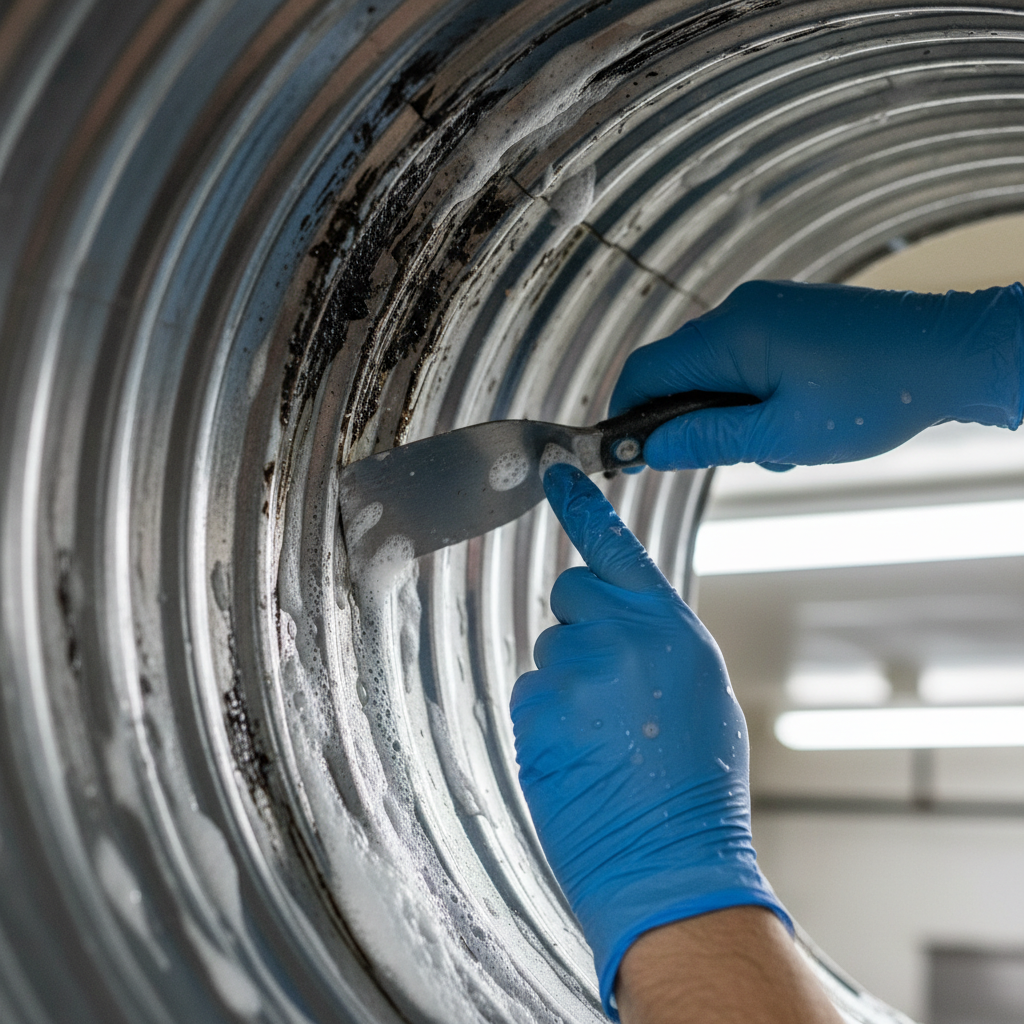
- Duct access & scraping — Open access panels; scrape heavy deposits; rinse and verify reflective metal.
- Exhaust fan service — Clean blades and housing; check hinges and fan belts; inspect vibration.
- Filter cleaning & exchange — Swap baffles; deep-clean backups; reset with correct orientation.
- Appliance deep clean — Detail fryers, grills, ovens, and refrigeration exteriors to remove carbon/grease film.
- Grease trap service — Pump, scrape, rinse, and reassemble to help prevent drain clogs and odors.
- Floors & walls — Degrease, power wash (where suitable), rinse, and squeegee dry for traction.
- Sanitizing & polish — Food-contact sanitizing and final stainless finish.
- Photos & report — Time-stamped before/after photos, service log, and recommended interval.
Real-world example: A quick-service site in Southern Ontario struggled with constant smoke alarms. After duct scraping and belt tension correction, exhaust draw improved immediately and alarms stopped on the next shift.
Types of Restaurant Kitchen Cleaning Services
Service programs bundle exhaust and hood cleaning with filter exchange, duct and fan maintenance, grease trap pumping, appliance deep cleaning, power washing, and ventilation optimization. A single provider streamlines scheduling, compliance records, and quality control across your entire kitchen.
Exhaust & hood cleaning
- Degreasing hood canopies, plenum, and baffles to bare metal
- Light lens cleaning and stainless polish for visibility
- Roof-safe fan cleaning and housing wipe-down
Explore detailed scope in our Ontario exhaust program overview.
Filter cleaning & exchange
- On-schedule swaps keep capture efficiency high and fire risk low
- Deep-clean standby sets; label and rotate for even wear
- Confirm correct baffle orientation and secure seating
When filters clog, vapor bypass increases duct grease. Our filter cleaning guide outlines best practices for busy lines.
Duct cleaning & fan belt replacement
- Access-panel scraping removes hardened deposits near elbows
- Inspect belt wear, pulley alignment, and fan vibration
- Document fan motor condition and required maintenance
We frequently find loose hinges and worn belts causing poor airflow. Addressing both cleaning and mechanics in one visit saves a follow-up call.
Grease trap cleaning
- Pumping, scraping, and rinsing to restore capacity
- Check baffles, tees, and gasket condition
- Record service intervals to limit odors and backups
Commercial appliance cleaning
- Detail ovens, fryers, grills, and refrigeration exteriors
- Remove carbon build-up that insulates heat and stifles performance
- Polish stainless for a professional finish and easier nightly cleaning
Floors, walls, and power washing
- Degrease porous floors and high-splash areas behind equipment
- Power wash curb pads, dumpster enclosures, and delivery paths
- Apply non-slip rinse where appropriate
For recurring deep cleans that combine exhaust and floors, see our restaurant deep cleaning approach.
Scheduling & Frequency: Best Practices
Match your cleaning frequency to cooking volume and menu. High-volume, grease-heavy operations often need quarterly exhaust service, while moderate sites may be semiannual. Keep filter exchanges tighter and document all visits to stay inspection-ready and protected.
We align cleaning intervals with kitchen realities—menu, hours, and equipment. A smoky grill line running late nights will load ducts faster than a light sauté kitchen.
Recommended exhaust cleaning intervals
| Kitchen profile | Typical interval | Notes |
|---|---|---|
| High-volume fry/grill | Every 3 months | Often benefits from monthly filter exchange |
| Moderate mixed menu | Every 6 months | Quarterly filter checks recommended |
| Low-grease production | Every 12 months | Monitor seasonal spikes and specials |
Document each service with time-stamped photos. If inspectors ask for proof, a concise report with images closes the loop fast. For common code expectations, review our NFPA 96–focused overview.
Mid-article tip: If your hood edges feel tacky within a week of cleaning, your filters are likely saturated or mis-seated. Tighten your filter exchange cadence and verify baffle orientation at the next opening.
Tools, Chemicals, and Documentation
Effective programs use food-safe degreasers, hot-water rinse systems, access tools for ducts, fall protection on roofs, and camera phones for photo logs. Organized documentation—scope, timestamps, and recommendations—helps you pass inspections and plan maintenance.
Our technicians arrive with NSF-listed degreasers, hot-water sprayers, scrapers, non-sparking tools for ducts, and PPE. On rooftops, hinges and grease containment are checked while belts and pulleys get a quick visual.
- Food-safe chemistry: Degreasers formulated for stainless and aluminum without caustic overuse
- Hot-water application: Boosts saponification and speeds rinse-down to bare metal
- Access & safety: Hinged fans, stable ladders, roof protection, and lockout/tagout
- Reporting: Before/after photos, noted hazards, and next-visit recommendations
Many Ontario operators keep a “compliance binder” at the manager’s station with service reports and filter rotation logs. Digital folders work too—just be sure staff can retrieve proof within seconds during a visit.
Restaurant Kitchen Cleaning Services in Ontario
Across Ontario, Robinhood Cleaners provides 24/7 exhaust and hood cleaning, filter exchange, fan belt replacement, grease trap service, appliance deep cleaning, and power washing. One team coordinates everything, reducing downtime and ensuring inspection-ready documentation after every visit.
Because we operate All Over Ontario with quick service in Southern regions, scheduling stays flexible—overnight, pre-open, or midweek closures. Multi-unit operators often choose synchronized cycles so every store hits the same documentation window.
- 24/7 availability: Book service windows that won’t disrupt peak times.
- Certified technicians: Experienced crews trained on exhaust systems and safety.
- WSIB insured: Coverage and safe work practices for peace of mind.
- Single-provider convenience: Exhaust, floors, appliances, and traps in one plan.
If you’re auditing risk level by location, this brief kitchen exhaust risk explainer can help you prioritize which sites need attention first.
How to Choose the Right Provider
Choose a provider with certified exhaust specialists, WSIB insurance, 24/7 scheduling, and full-scope services (exhaust, filters, fans, appliances, floors, and traps). Ask for photo documentation, references, and a clear service schedule matched to your menu and hours.
Here’s a practical shortlist you can use when you vet restaurant kitchen cleaning services in Ontario.
- Credentials: Certified exhaust cleaning technicians; safety training records.
- Insurance: Proof of WSIB and liability coverage.
- Scope: Hoods, ducts, fans, filter exchange, appliances, grease traps, and floors.
- Documentation: Before/after photos, service logs, recommendations.
- Scheduling: Overnight options and multi-site coordination.
- References: Recent Ontario restaurant case examples.
Want a prebuilt evaluation list? See our grease risk checklist to guide questions about duct access, filter rotation, and fan health.
Case Studies and Real-World Examples
Ontario restaurants see immediate gains from structured cleaning: fewer smoke alarms, cooler kitchens, and smoother inspections. With one provider managing exhaust, filters, and floors, managers spend less time coordinating vendors and more time serving guests.
Quick-service grill line (Southern Ontario)
- Challenge: Persistent smoke alarms and visible hood drip lines between services.
- Action: Quarterly duct scraping, monthly filter exchange, and belt tension fix.
- Result: Smoke alarms ceased; hood edges stayed dry between visits.
Hotel kitchen (banquet-heavy)
- Challenge: Seasonal demand spikes overwhelmed existing exhaust schedule.
- Action: Shifted to pre-event cycles; added interim filter swaps.
- Result: Passed inspection during peak season with no corrective orders.
University food court
- Challenge: Multiple vendors under one hood bank; inconsistent filter handling.
- Action: Centralized filter rotation; unified reporting binder.
- Result: Fewer hot spots; simpler audits across stalls.
If you prefer a rapid risk overview, our 24/7 Ontario cleaning explainer outlines common red flags managers can spot in minutes.
Checklists and Daily Routines that Support Deep Cleaning
Daily habits keep kitchens safe between deep cleans: wipe stainless with degreaser, keep filters seated and vertical, empty grease pans, spot mop spills, and record filter exchanges. Small routines dramatically reduce buildup and inspection stress.
Daily/weekly task list for managers
- Confirm baffle filters are oriented with baffles vertical and seated.
- Wipe hood edges and light lenses at close, checking for tackiness.
- Empty and clean hood drip pans; never let grease pool.
- Check fan noise and vibration during first shift; report changes.
- Spot-degrease walls behind fryers and grills after heavy service.
- Log filter exchanges and any unusual smoke/odor notes.
Managers who use a single-page log taped in the dish area often see better filter discipline and faster inspection responses. For deep-clean alignment, compare your log with our exhaust duct cleaning overview.
Compliance, Inspections, and Proof
Keep reports, photos, and schedules handy. Inspectors want proof that exhaust, filters, appliances, and floors are on a cadence matched to your menu. A tidy binder—or shared folder—demonstrates control and speeds visits.
Our service logs include dates, areas cleaned, chemicals used, and hazards noted. Photos verify “clean to bare metal” on hoods and ducts and show appliance and floor results. Many operators post the latest report in the manager’s office and store backups digitally.
- Store last two years of reports where they’re easy to retrieve.
- Keep a running filter rotation schedule with initials and dates.
- Log belt replacements and roof-fan adjustments with line notes.
If a previous vendor left sparse records, start fresh at your next service cycle. Our Ontario restaurant protection explainer shows how to rebuild documentation fast.
Frequently Asked Questions
Get fast answers to common questions about restaurant kitchen cleaning services, including scheduling, what’s included, who should be present, and how documentation works in Ontario. Each response is based on our field experience supporting restaurants across the province.
How often should a restaurant schedule exhaust and hood cleaning?
Match frequency to cooking volume. Grease-heavy, high-volume kitchens often need quarterly exhaust cleaning with monthly filter exchanges. Moderate sites may be semiannual. Keep photos and service logs to confirm “clean to bare metal” for inspections.
What’s included in professional restaurant kitchen cleaning services?
A full program covers hood and plenum, baffle filters, ducts, roof fans, appliance exteriors, grease traps, and floors/walls. Teams degrease to bare metal where required, sanitize food-contact areas, and provide time-stamped before/after photos with a service report.
Can cleaning be done without disrupting dinner service?
Yes. We schedule 24/7 across Ontario and typically clean overnight or during off-hours. Crews protect equipment, isolate wet areas, and finish with full sanitizing, so your team can open on time with a cooler, cleaner line.
Do you replace fan belts or just clean exhaust systems?
We do both. Along with hood, duct, and fan cleaning, our technicians can replace worn belts, check pulley alignment, and note vibration issues. Handling cleaning and minor mechanical fixes in one visit saves time and reduces smoke issues.
Conclusion and Next Steps
A reliable kitchen cleaning program lowers fire risk, improves air quality, and keeps your team inspection-ready. Pair quarterly or semiannual exhaust service with tighter filter exchanges and strong documentation to protect guests, staff, and your brand.
- Map grease paths—hood, ducts, fans, appliances, floors, and traps.
- Set intervals by volume; tighten filter swaps during peak seasons.
- Keep a clear photo log and service binder for inspections.
- Choose a single provider to coordinate exhaust, floors, appliances, and traps.
Ready to simplify kitchen care? Book a quick assessment with Robinhood Cleaners. We serve All Over Ontario with flexible, 24/7 scheduling and certified teams who leave your kitchen clean, cool, and compliant.
Key takeaways
- Restaurant kitchen cleaning services remove grease, sanitize work areas, and support compliance.
- Photo documentation and regular filter exchanges make inspections easier.
- One coordinated provider reduces downtime and vendor overlap.