Quick Answer
In Ontario, restaurant cleaning services that focus on fire safety, NFPA 96–compliant kitchen exhaust cleaning, and full equipment care give you the best protection. Partnering with a professional team like Robinhood Cleaners helps Ontario restaurants reduce fire hazards, improve air quality, and stay inspection-ready around the clock.
Summary
Running a busy restaurant or commercial kitchen in Ontario means juggling menus, staff, suppliers, and guests. But behind every smooth service is something less glamorous—and absolutely critical: professional restaurant cleaning services. When your kitchen exhaust system, hoods, ducts, fans, appliances, and grease traps are properly cleaned and maintained, you protect your team, your guests, and your business license.
This article breaks down what truly effective restaurant cleaning looks like, why kitchen exhaust cleaning and restaurant hood cleaning are non-negotiable, and how Ontario restaurants can choose a service partner that understands fire codes, WSIB coverage, and real-world kitchen operations.
What “Restaurant Cleaning Services” Really Means in an Ontario Kitchen
People often picture mopping floors and wiping counters, but for commercial kitchens, restaurant cleaning services go much deeper. In a typical Ontario restaurant, a complete program should cover:
- Kitchen exhaust cleaning (hood, duct, fan, rooftop)
- Grease trap cleaning and proper disposal
- Filter cleaning and exchange
- Exhaust fan cleaning and fan belt inspection or replacement
- Commercial appliance cleaning (ovens, grills, fryers, refrigerators)
- Wall, floor, backsplash, and ceiling degreasing (often with power washing)
- Prep-area and equipment sanitizing for food safety
When all of these are handled by professional kitchen cleaners, your kitchen not only looks clean—it operates more safely, more efficiently, and with less downtime.
Why Restaurant Cleaning Services Matter More in Ontario
Ontario’s restaurant scene is competitive and heavily regulated. Local health departments, fire inspectors, landlords, and insurance providers all expect your commercial kitchen cleaning to meet strict standards. For busy operations in Toronto, Hamilton, Mississauga, London, Kitchener–Waterloo, and across Southern Ontario, a missed cleaning can mean:
- Grease buildup that dramatically increases fire hazards in the kitchen
- Poor ventilation and smoke that affect guests and neighbors
- Unpleasant odors and poor indoor air quality
- Failing a fire or health inspection—and potential shutdown
- Higher energy costs as clogged systems work harder
That’s why many operators choose a trusted Ontario partner like Robinhood Cleaners to create a scheduled program for Ontario kitchen cleaning that keeps them ahead of inspectors and insurance requirements.
Local Tips
- Tip 1: If you’re near high-traffic corridors like the 401, QEW, or 403, plan hood and duct cleaning during overnight hours to avoid delivery congestion and staff overlap.
- Tip 2: Ontario winters mean doors and windows stay shut—schedule extra kitchen ventilation cleaning before peak holiday seasons to control smoke and odors.
- Tip 3: Southern Ontario humidity in summer can worsen grease and odor issues; align restaurant cleaning services with your busiest patio and catering months.
Core Components of Professional Restaurant Cleaning Services
Let’s break down the most important services for a modern commercial kitchen in Ontario and what “good” really looks like.
1. Kitchen Exhaust Cleaning and Restaurant Hood Cleaning
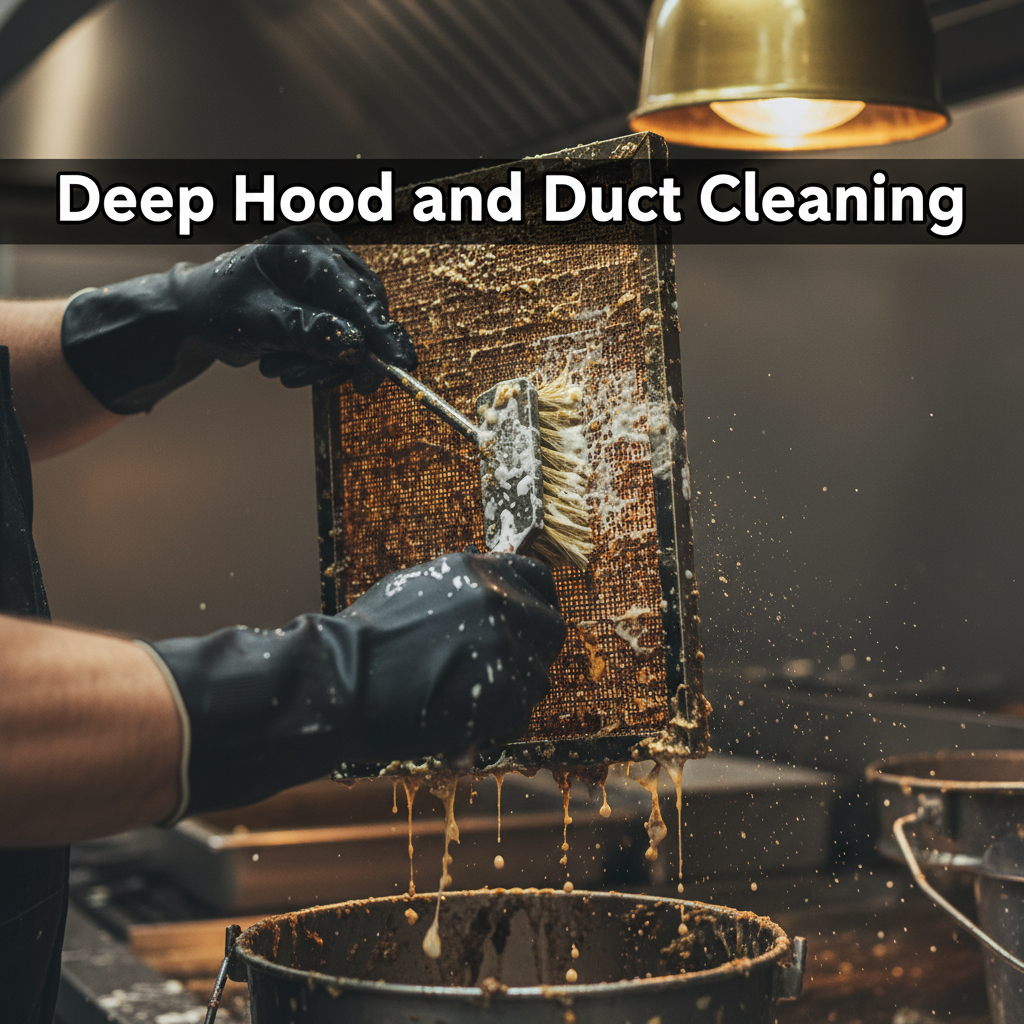
The exhaust system is your first line of defense against grease fires and poor air quality. A robust program for kitchen exhaust cleaning and hood and duct cleaning should include:
- Protecting equipment and surfaces with plastic and floor coverings
- Removing filters, access panels, and fan housings
- Scraping heavy grease, then applying hot water and chemical degreasers
- Cleaning ducts from the hood all the way to the rooftop fan
- Cleaning and balancing the exhaust fan and checking bearings
- Polishing visible hood surfaces for a professional finish
Robinhood Cleaners performs NFPA 96 compliant cleaning, meaning the work aligns with the fire code standard most used across North America for commercial cooking ventilation systems.
2. Exhaust Fan Cleaning and Fan Belt Replacement
A dirty or failing exhaust fan can cripple your line during a rush. Quality exhaust fan cleaning and fan belt replacement will typically involve:
- Locking out power for safety
- Removing heavy grease from blades, housings, and guards
- Inspecting and tightening hardware and hinges
- Checking fan belts for cracks, stretching, or glazing
- Proactively replacing worn belts before they fail mid-service
This is how restaurant cleaning services directly prevent smoke-filled dining rooms and emergency service calls on a Saturday night.
3. Filter Cleaning and Exchange Programs
Grease filters catch flammable particles before they reach ducts and fans. Overloaded filters are a top cause of fire and poor draw. Look for a partner who offers:
- Regular filter cleaning and exchange so you always have clean, dry filters in rotation
- Inspection for warping, damage, or poor fit that allows bypass
- Proper labeling so filters return to the correct locations
Many Ontario restaurants choose a monthly or bi-weekly exchange schedule, adjusted based on volume and cooking style.
4. Grease Trap Cleaning and Grease Removal Service
Grease traps are easy to ignore—and expensive to neglect. A professional grease trap cleaning and grease removal service program should include:
- Scheduled pump-outs before traps hit capacity
- Scraping of walls, baffles, and lids to remove hardened fats
- Inspection for cracks, leaks, or cross-threaded lids
- Documentation for municipal bylaw or landlord requirements
Staying ahead of trap maintenance helps you avoid flooding, foul odors, and emergency plumbing bills.
5. Commercial Appliance Cleaning
Your cooking equipment is where fire risk, energy use, and food quality all come together. A thorough commercial appliance cleaning program should handle:
- Oven cleaning service for decks, combis, and convection units
- Grill cleaning service for flat-tops and charbroilers
- Refrigerator cleaning service for gaskets, coils, and interiors
- Deep cleaning of fryers, ranges, and warming units
Regular equipment cleaning helps maintain temperature consistency, reduces breakdowns, and keeps food tasting the way guests expect.
How Often Should Ontario Restaurants Schedule Cleaning?
Frequency depends on menu, volume, and ventilation design, but these are typical Ontario kitchen benchmarks:
| Area / Service | Typical Frequency | Notes for Ontario Kitchens |
|---|---|---|
| Hood and duct cleaning | Every 3–6 months | High-volume or solid-fuel cooking (pizza, charcoal, tandoor) may need every 1–3 months. |
| Exhaust fan cleaning | Every 6 months | Often done with hood cleaning; inspect belts every visit. |
| Filter cleaning / exchange | Weekly to monthly | Busy fry kitchens near Toronto or Mississauga may need weekly service. |
| Grease trap cleaning | Every 1–3 months | Follow municipal guidelines; heavy use may require monthly pump-outs. |
| Appliance deep cleaning | Monthly to quarterly | Schedule around menu changes or seasonal rushes. |
| Full commercial kitchen cleaning | Quarterly to semi-annually | Combines walls, floors, ceilings, and hard-to-reach areas. |
Key takeaway: The busier and greasier your cooking style, the more often you need professional restaurant cleaning services to stay compliant and safe.
How Professional Cleaning Reduces Fire Hazards and Improves Air Quality
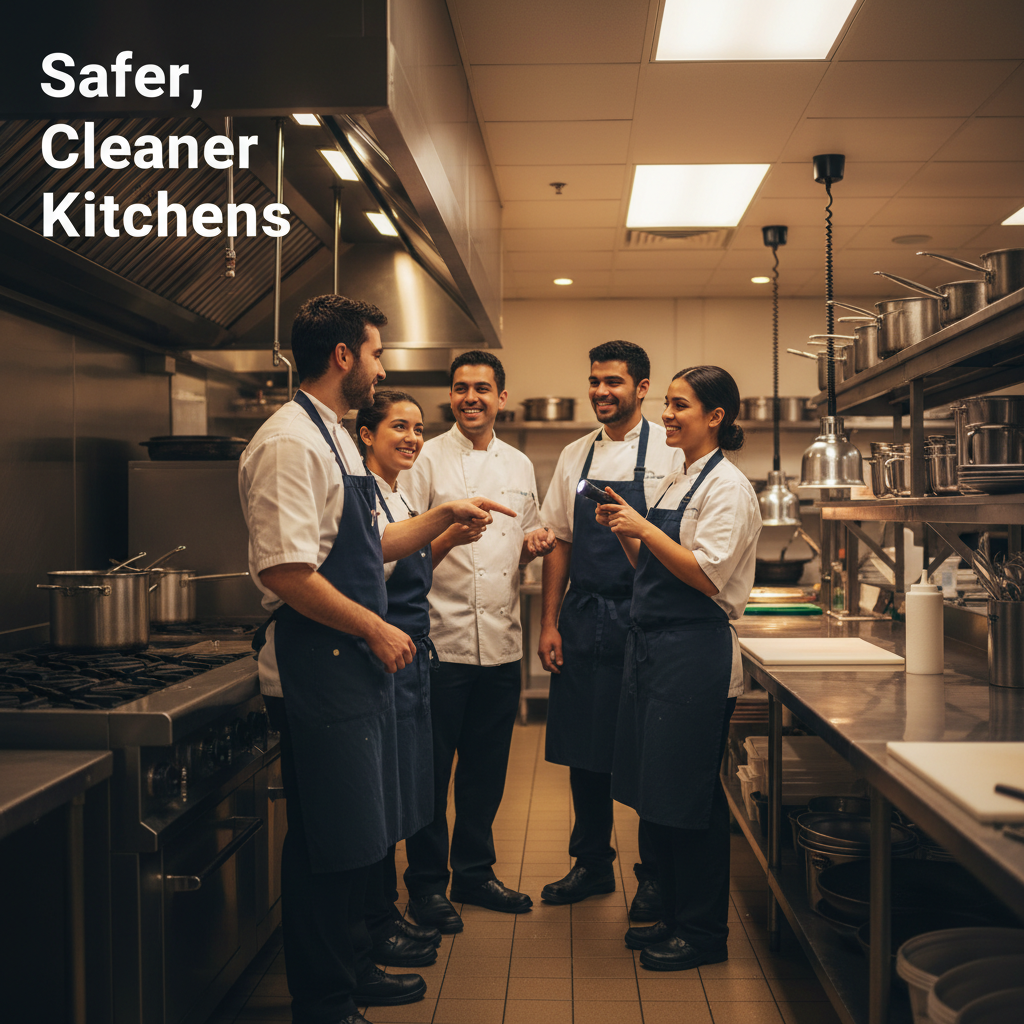
Every time a burger hits the grill or a fryer basket drops, microscopic grease particles head toward your exhaust system. Over time, those particles collect in filters, ducts, and fans. Without regular hood and duct cleaning, that buildup becomes a continuous fuel source just a few feet above open flames.
Effective restaurant cleaning services help you:
- Reduce fire hazards in the kitchen by removing flammable grease deposits
- Improve kitchen air quality for cooks, servers, and guests
- Keep smoke, steam, and odors from escaping into dining areas and neighboring tenants
- Extend the life of your HVAC and make-up air equipment
When inspectors see a clean, well-maintained exhaust system, they know they’re dealing with a serious operator.
Schedule-Friendly Cleaning for Busy Ontario Restaurants
Robinhood Cleaners is built around the realities of restaurant life—late closes, early prep, and back-to-back services. With 24/7 kitchen cleaning availability, NFPA 96–certified methods, and WSIB insured cleaners, our team helps Ontario restaurants stay safe without losing revenue hours. To explore a custom schedule that matches your menu and volume, visit our kitchen exhaust and restaurant cleaning services page.
What Sets a Professional Ontario Restaurant Cleaning Partner Apart
Many companies can scrape a hood. Fewer can protect your entire operation. When evaluating partners in Ontario, look for these elements:
1. NFPA 96–Compliant Processes
A serious provider will design their kitchen exhaust maintenance program around NFPA 96 standards and local fire code expectations. That includes full system cleaning (not just what you can see), documentation, and service stickers on your hoods.
2. WSIB Insured Cleaners and Safety Training
Because work is done at height, often on rooftops and ladders, your vendor should be fully insured with WSIB coverage and trained in fall protection, chemical handling, and lockout/tagout procedures. That protects both your team and theirs.
3. True 24/7 Kitchen Cleaning Availability
Ontario’s restaurant industry doesn’t run 9–5. A practical partner offers overnight, early morning, and off-day service windows so you’re never forced to choose between safety and revenue.
4. Before-and-After Proof
Ask for photo documentation so you can see exactly what was done. Robinhood Cleaners, for example, showcases transformations on its before and after gallery, giving owners and managers confidence that grease is removed all the way to the rooftop.
5. Transparent, Fair Pricing
Professional restaurant cleaning services should come with clear, written quotes, not surprise add-ons. Look for vendors who inspect your system first, explain exactly what’s included, and stand behind their work.
DIY vs. Professional Restaurant Cleaning Services
Some tasks—like wiping prep tables or spot-cleaning walls—belong in your daily closing checklist. Others are best left to trained technicians with the right tools and insurance.
| Task Type | Handled In-House | Best for Professionals |
|---|---|---|
| Daily wipe-downs and sanitizing | Yes – part of closing duties | No |
| Line equipment wipe and minor degreasing | Yes – cooks and dish staff | No |
| Hood, duct, and fan degreasing | No – safety and access issues | Yes – certified restaurant hood cleaning |
| Grease trap pumping and cleaning | Rarely – requires disposal | Yes – licensed grease removal service |
| Rooftop fan and belt service | No – height and electrical risk | Yes – trained techs |
| Appliance deep cleaning (ovens, grills, fryers) | Sometimes – light work | Yes – heavy-duty degreasing |
Key takeaway: Your staff should handle surface-level cleanliness. To manage fire risk, ventilation performance, and compliance, bring in qualified professionals.
Case Snapshot: How Pro Cleaning Saves an Ontario Kitchen from Shutdown
A mid-size restaurant in Southern Ontario started noticing smoke hanging in the dining room during weekend rushes. The manager also received a warning from the fire inspector about greasy hood filters and stained ceiling tiles. Instead of waiting for a re-inspection, they booked a full restaurant cleaning services visit with a focus on kitchen exhaust cleaning, grease trap cleaning, and commercial appliance cleaning.
Technicians discovered heavy grease in the vertical duct and a nearly worn-through fan belt. After full hood and duct cleaning, new filters, and fan belt replacement, smoke clearance improved dramatically and the kitchen passed follow-up inspections without issue. The owner later commented that energy bills dropped and staff turnover stabilized because cooks no longer had to work in a smoky, uncomfortable space.
How to Choose the Right Restaurant Cleaning Services Provider in Ontario
When you’re comparing vendors, use this quick checklist:
- Do they specialize in commercial kitchen cleaning, not just janitorial work?
- Are they insured and WSIB covered, with proof on request?
- Can they explain how they meet NFPA 96 expectations for exhaust systems?
- Do they offer 24/7 kitchen cleaning to match your schedule?
- Can they provide references or photo proof of similar Ontario kitchens?
- Will they help set up a recurring plan instead of one-off reactive calls?
Robinhood Cleaners, for example, lays out its capabilities and service scope clearly on its about us page, helping Ontario operators understand exactly who is working in their kitchen and what to expect on every visit.
Frequently Asked Questions About Restaurant Cleaning Services in Ontario
How often should I schedule restaurant hood cleaning?
Most Ontario restaurants benefit from restaurant hood cleaning every 3–6 months. High-volume, high-grease operations—like burger spots, fried chicken, or solid-fuel pizza—may need monthly or quarterly service. A professional provider will inspect your system and recommend a schedule that satisfies fire inspectors and insurers.
What’s included in professional restaurant cleaning services?
It depends on your package, but comprehensive services typically include kitchen exhaust cleaning (hoods, ducts, fans), filter cleaning and exchange, grease trap cleaning, commercial appliance cleaning (ovens, grills, fryers, refrigerators), and full-area commercial kitchen cleaning for walls, floors, and ceilings. In Ontario, many operators also request documentation for landlords and inspectors.
Can my staff handle kitchen exhaust maintenance themselves?
Staff should clean visible surfaces—like backsplash areas, equipment exteriors, and prep tables—as part of daily closing. But internal ductwork, rooftop fans, and grease traps require specialized tools, training, and disposal methods. For safety, compliance, and insurance reasons, tasks like hood and duct cleaning and grease removal service are best left to certified professionals.
How do restaurant cleaning services help with inspections?
Professional restaurant cleaning services make inspections smoother by keeping high-risk areas under control. Clean exhaust systems reduce fire citations, clear floors and walls impress health inspectors, and documented service visits show you’re proactive. Many Ontario operators schedule cleaning just before known inspection windows or lease renewals.
Do you offer free cleaning estimates for Ontario restaurants?
Many Ontario providers, including Robinhood Cleaners, offer a free cleaning estimate. A technician will walk your kitchen, inspect hoods, ducts, fans, appliances, and grease traps, then provide a clear quote and suggested schedule. This helps you budget accurately and prioritize the services that will make the biggest impact on safety and efficiency.
Key Takeaways
- Restaurant cleaning services go far beyond mopping floors—they protect your kitchen from fire, odors, and downtime.
- For Ontario restaurants, NFPA 96–aligned kitchen exhaust cleaning and restaurant hood cleaning are essential to stay compliant and safe.
- Services like exhaust fan cleaning, filter cleaning and exchange, and grease trap cleaning directly reduce risk and improve air quality.
- Choosing WSIB insured, 24/7, Ontario-focused professional kitchen cleaners gives you peace of mind and predictable costs.
- A tailored plan from a local expert like Robinhood Cleaners keeps your team safe, your guests comfortable, and your business inspection-ready.
Ready to Protect Your Ontario Kitchen?
If you operate a restaurant, bar, hotel, or commercial kitchen anywhere in Ontario, a proactive cleaning partner is one of the best risk management tools you can invest in. Robinhood Cleaners combines NFPA 96–compliant exhaust work, full commercial kitchen cleaning, and restaurant cleaning services designed around real-world Ontario operations.
To discuss your kitchen, schedule, and budget, reach out for a free estimate and discover how a cleaner system can mean safer staff, happier guests, and fewer surprises at inspection time.