Fire code requirements kitchen exhaust are the enforceable standards that govern hood, duct, fan, and grease control systems in commercial kitchens to prevent fires and smoke spread. They define design, access, clearances, cleaning frequency, maintenance, and documentation under NFPA 96 as adopted and enforced by your local authority having jurisdiction (AHJ).
By Robinhood Cleaners • Last updated: 2026-04-11
Above the Fold: Why This Guide Matters + Table of Contents
This complete guide breaks down the exact kitchen exhaust fire code requirements, how inspectors enforce them, and the practical steps to stay inspection-ready. Use it to align your team, your vendors, and your records before your next AHJ visit or insurance renewal.
- Quick Summary
- What Is a Code-Compliant Kitchen Exhaust?
- Why Fire Code Compliance Matters
- How a Commercial Kitchen Exhaust System Works
- Fire Code Requirements Kitchen Exhaust (2026)
- System Types, Fuels, and Risk Tiers
- Best Practices and Checklists
- Tools, Tags, and Records
- Case Studies: Ontario Kitchens
- FAQ
- Conclusion + Next Steps
Quick Summary
To meet 2026 kitchen exhaust fire codes, design to NFPA 96, keep ducts accessible, clean to bare metal on the right interval, and document with tags and photo-backed reports. Train staff, vet contractors, and maintain 12–24 months of records your AHJ and insurer will accept.
- Scope covered: Hoods, baffle filters, welded ducts with cleanouts, rooftop fans with hinge kits, and grease containment.
- Intervals baseline: High-volume quarterly; moderate semiannual; low annual; solid-fuel monthly.
- Proof of work: Post-cleaning tags and signed reports with before/after photos for all sections.
- People and protection: Use NFPA 96–competent, WSIB-insured crews who know local inspectors.
- Ontario reality: Peak patio season may justify tightening high-volume cycles to 8–10 weeks.
Quick Answer
Fire code requirements kitchen exhaust focus on NFPA 96 design, safe access, and cleaning intervals verified by tags and reports. In All Over Ontario, Robinhood Cleaners aligns hoods, ducts, fans, and grease control with inspection-ready documentation on flexible, Southern Ontario–friendly schedules.
Local Tips
- Tip 1: Downtown venues often share docks and have tight lanes—book rooftop fan hinge checks and grease containment service outside delivery windows.
- Tip 2: Heatwaves and winter freeze-thaw shift belt tension; add quick mid-season fan belt inspections to prevent airflow dips.
- Tip 3: Food courts and institutional kitchens benefit from overnight service to match building HVAC curfews and security schedules.
IMPORTANT: Robinhood Cleaners services Southern Ontario quickly and coordinates with building ops and AHJ calendars.
What Is a Code-Compliant Kitchen Exhaust?
A code-compliant system meets NFPA 96 design and maintenance rules: listed Type I hoods and baffle filters, continuously welded ducts with cleanouts, proper clearances or fire wrap, upblast fans with hinge kits and grease containment, and documented to-bare-metal cleaning at required intervals.
- Type I hood coverage: Over grease-producing appliances, with correct overhang and capture volume for the line.
- Grease filters: Listed stainless baffle filters installed at the right angle; avoid mesh in grease systems.
- Duct construction: Continuously welded, liquid-tight, with cleanouts at direction changes and per-floor spacing.
- Fire protection path: Maintain clearances to combustibles or use listed fire wrap or fire-rated shaft.
- Fan assembly: Upblast fan, hinge kit for safe service, rain cap, disconnect within sight, and rooftop grease containment.
- Evidence of compliance: Tags at each hood and signed, photo-backed reports accessible to managers, insurers, and inspectors.
In our Ontario fieldwork, missing hinge kits and undersized cleanouts are the top two citations on first inspections—both are fast to correct once identified.
Why Fire Code Compliance Matters
Compliance reduces ignition risk, protects staff and guests, and keeps operations online. Kitchens that follow NFPA 96 intervals and maintain photo-backed reports experience fewer citations, smoother renewals, and faster claims review after incidents.
- Life safety: Grease-coated ducts act like a fuse; cleaning to bare metal removes the fuel path.
- Business continuity: Avoid shutdowns from citations or airflow failures linked to neglected belts and filters.
- Insurance readiness: Carriers routinely request recent exhaust cleaning reports to validate risk controls.
- Team conditions: Lower heat and smoke improve air quality and line cook retention.
- Brand protection: Passing inspections on schedule keeps you off social and local news for the wrong reasons.
If you need a refresher on inspection scopes and timing, see our internal guide on kitchen exhaust inspection requirements for a practical checklist.
How a Commercial Kitchen Exhaust System Works
The hood captures grease-laden vapors, filters trap particulates, the duct conveys vapors outdoors, and the rooftop fan discharges air safely. Every surface accumulates grease and must be accessible and cleaned to bare metal on a schedule matched to your menu volume.
- Capture zone: The canopy overhang and face velocity pull smoke and grease into the hood.
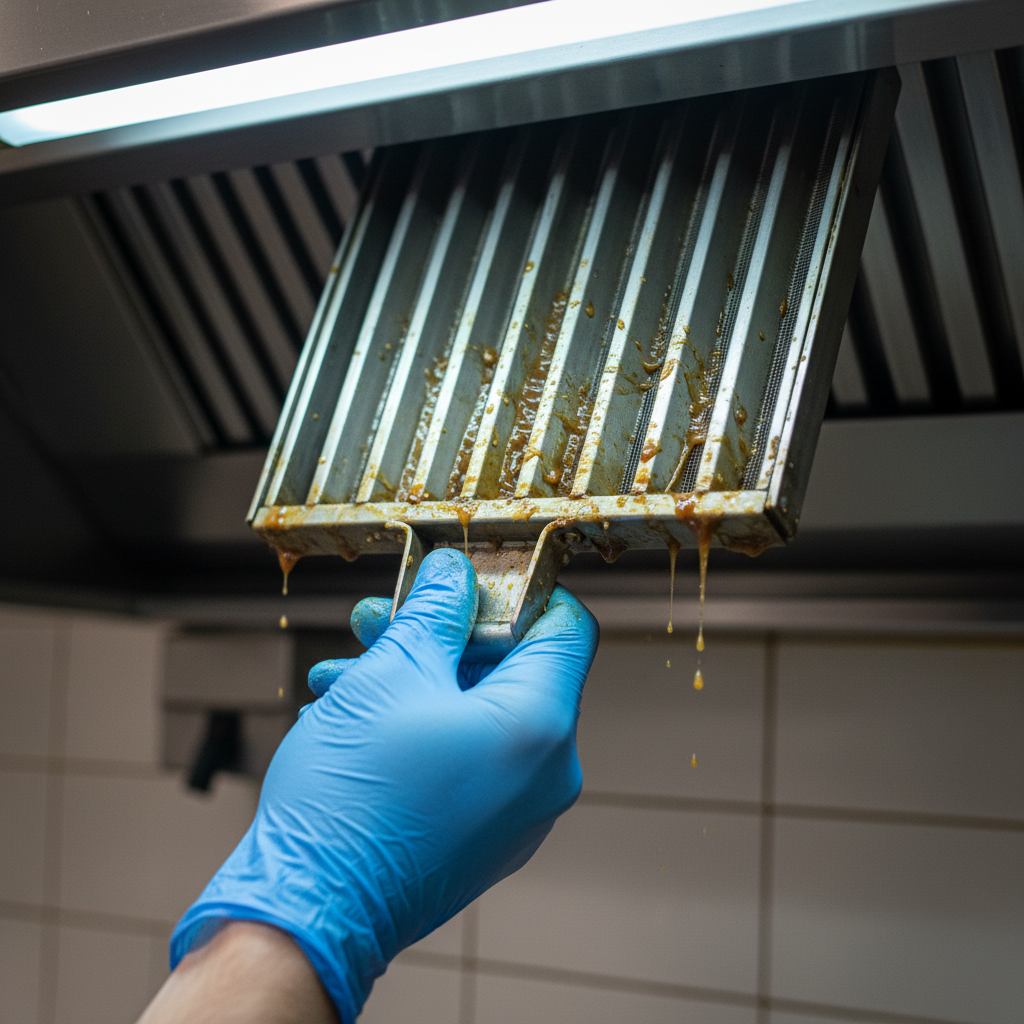
- Filtration: Baffle filters separate grease droplets; clogged baffles increase smoke and heat on the line.
- Conveyance: Grease vapor condenses on duct walls—elbows and long horizontals are the highest-risk areas.
- Exhaust discharge: Upblast fans must maintain design airflow; worn belts or imbalanced wheels cut performance.
- Make-up air: Balanced supply prevents backdrafting and keeps smoke under control during peak service.
When airflow drops, cooks turn up heat to compensate—ironically speeding up grease loading. Our exhaust fan maintenance schedule shows how small belt and wheel issues cascade into code risks.
Fire Code Requirements Kitchen Exhaust: Core Standards for 2026
Follow NFPA 96 for design, access, clearances, and cleaning intervals; maintain listed filters, welded ducts with cleanouts, hinged fans with grease containment, and proof of cleaning. Your AHJ adopts and interprets NFPA 96—document everything with tags and signed, photo-backed reports.
Design and Installation Essentials
- Type I hood sizing: Proper overhang and capture volume over fryers, grills, and ranges.
- Listed baffle filters: Oriented and seated correctly; no mesh filters in grease ducts.
- Welded ducting: Continuous, liquid-tight construction; slope to drain when required.
- Cleanouts and access: At direction changes, per-floor spacing, and within 18 inches of the hood collar when feasible.
- Fire clearances: Maintain prescriptive gaps to combustibles or use approved fire-rated wrap/shaft assemblies.
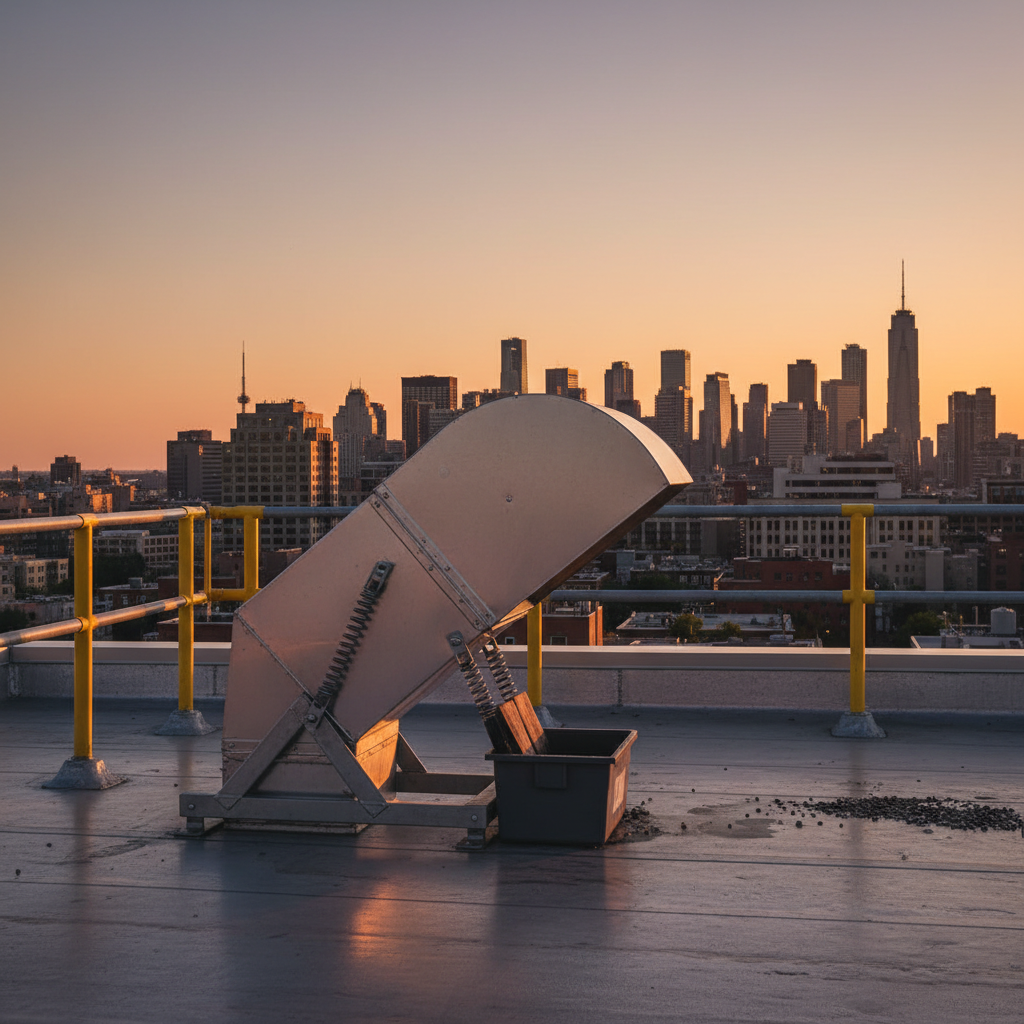
- Fan assemblies: Upblast fan with hinge kit, rain cap, electrical disconnect within sight, and grease containment on the roof.
Cleaning Intervals (NFPA 96 Benchmarks)
- High-volume (QSR, continuous fryers, grill-heavy): Every 3 months baseline.
- Moderate-volume (casual dining, mixed sauté/grill): Every 6 months.
- Low-volume (churches, seasonal catering): Annually.
- Solid fuel (wood/charcoal): Monthly due to embers and soot loading.
| Operation Type | Typical Menu | Code-Referenced Minimum | Ontario Reality Check |
|---|---|---|---|
| High-volume QSR | Fryers, flat-tops | Quarterly | Often 8–10 weeks in patio season |
| Casual dining | Mixed sauté, grill | Semiannual | 4–5 months if grill-heavy |
| Low-volume | Occasional events | Annual | Annual with mid-year inspection |
| Solid fuel | Wood-fired oven | Monthly | 2–4 weeks depending on soot |
Documentation and Labels Inspectors Expect
- Service tag: At each hood with date, company, tech initials, and next due.
- Photo report: Before/after images verifying to-bare-metal cleaning in hoods, verticals, horizontals, fans, and rooftop containment.
- Deficiency list: Items like broken hinges, warped filters, belt wear, missing access panels, with a corrective plan.
- Retention window: Keep 12–24 months of reports for AHJ reviews, insurance renewals, and audits.
For a deeper checklist that mirrors inspector expectations, review our NFPA 96 compliance guide built for Ontario operators.
Access Panels and Cleanouts: Common Pitfalls
- Undersized openings: Panels too small to reach elbows lead to “incomplete clean” write-ups.
- Painted shut or hidden: Access points must remain visible and operable after finishes.
- Missing near the hood collar: Add a panel within reach to verify the first horizontal run is cleaned.
- Gasket degradation: Replace high-heat gaskets to maintain duct integrity after service.
Clearances, Wraps, and Shafts
- Combustible separation: Maintain code-listed clearances from framing and finishes.
- Fire-rated wrap: Use listed systems with manufacturer instructions on overlaps, banding, and terminations.
- Fire-rated shafts: Coordinate access doors’ fire rating and placement with cleaning access needs.
Rooftop Fans, Hinges, and Containment
- Hinge kits: Required for safe servicing; prevent damage to wiring and roof membranes.
- Grease containment: Capture discharge; saturated pads must be replaced to prevent roof staining and fire spread.
- Disconnects and guards: Electrical disconnect in sight; belt guards in place after service.
System Types, Fuels, and Risk Tiers
Risk depends on fuel, menu, and duct geometry. Solid-fuel and long horizontal runs load fastest; compact vertical ducts load slowest. Set your cleaning cadence to the greasiest hood and hardest-to-reach elbow—not to the average of your line.
- Solid-fuel appliances: Ember and soot loading justify monthly cleanings and ember screen checks.
- Multiple hoods/long runs: More elbows and horizontals create condensation traps and ignition pockets.
- Shared shafts (food halls): Coordinate tagging and access windows across tenants to keep documentation consistent.
- Compact vertical-only ducts: Easier to clean; base intervals often suffice if filters seat correctly.
- Make-up air interaction: Poor balance raises smoke and heat; confirms need for airflow verification.
Best Practices: Implementing, Verifying, and Staying Compliant
Build a defensible program: right-size intervals per hood, hire NFPA 96–competent cleaners, require photo reports, track tags, and fix deficiencies fast. Align overnight service windows with operations and keep records centralized for your AHJ and insurer.
Set the Right Interval
- Start with NFPA 96 frequency table; tighten based on observed grease depth, not just the calendar.
- Use simple grease depth gauges on filters and near elbows to justify interval decisions.
- Consider 8–10 week cycles for QSR lines during patio or festival season.
Choose Qualified Partners
- Confirm NFPA 96 competency and familiarity with your local AHJ’s preferences.
- Verify coverage; in Ontario, insist on WSIB-insured crews for on-site protection.
- Require to-bare-metal scope with photos of hoods, horizontals, verticals, fans, and rooftop containment.
- Bundle Filter Cleaning & Exchange and Fan Belt Replacement with exhaust cleaning to reduce downtime.
Pre-Clean Prep Checklist
- Confirm cookline shutdown windows with FOH/BOH leads.
- Protect equipment and floors with appropriate coverings.
- Verify water access, drains, and rooftop access permissions.
- Stage new baffle filters and spare belts if replacements are likely.
Post-Clean Verification
- Check tags at each hood and confirm next-due dates are legible.
- Review photo report for bare-metal verification in all sections.
- Test fan start-up, listen for belt squeal, and verify capture at typical cooking loads.
- Log deficiencies and assign owners and due dates.
Close the Loop on Deficiencies
- Replace warped or damaged baffle filters to restore capture efficiency.
- Install hinge kits and rooftop grease containment where missing.
- Correct belt alignment and tension to hit design airflow.
- Repair or add access panels near elbows and at the hood collar.
These steps align with Ontario’s practical guidance summarized in our commercial kitchen fire safety standards guide, which mirrors inspector expectations in Southern Ontario.
Mid-article CTA: Need an AHJ-ready exhaust program in Southern Ontario? Robinhood Cleaners provides NFPA 96–aligned Kitchen Exhaust Cleaning, Hood Cleaning, Duct Cleaning, Filter Cleaning & Exchange, Fan Belt Replacement, Grease Trap Cleaning, and Ventilation System Maintenance on schedules that fit your service hours.
14-Day Inspection Prep Plan
- Day 1–2: Audit tags, access panels, hinges, containment, and belt condition.
- Day 3–5: Schedule cleaning and exchange filters; order any missing hardware.
- Day 6–8: Complete cleaning to bare metal, replace belts/filters, update tags.
- Day 9–10: Compile photo report and deficiency list; assign corrective actions.
- Day 11–12: Verify airflow and capture with a smoke test during a mock service.
- Day 13–14: File everything in a shared folder and brief managers on talking points for inspectors.
| Prep Task | Owner | Evidence | Done? |
|---|---|---|---|
| Tag audit (all hoods) | Kitchen Manager | Photo of each tag | [ ] |
| Access panel check | Vendor + KM | Photos, deficiency log | [ ] |
| Hinge/containment | Vendor | Photos | [ ] |
| Belts/filters replaced | Vendor | Invoice notes + photos | [ ] |
| Photo report compiled | Vendor | PDF in shared folder | [ ] |
| Team brief | GM | Bullet points | [ ] |
Tools, Tags, and Records You Should Maintain
Keep service tags current at each hood, photo reports for every cleaning, and a deficiency log with dates and fixes. Use a calendar plus a shared folder so managers, insurers, and inspectors can verify compliance in minutes.
- Tags: Visible date/next due at each hood line—snap a photo after every service.
- Photo reports: Time-stamped images covering hoods, ducts, fans, and rooftop containment.
- Deficiency register: Track hinge kits, filter swaps, belt changes, and access-panel repairs with dates.
- Startup/shutdown SOPs: Laminated checklists help openers avoid smoke events after cleaning nights.
- Manager binder + cloud: Keep last 24 months of reports in both places for quick access.
For operators building a documentation standard, this reference overview of inspection requirements shows how to organize tags, photos, and deficiency logs.
Case Studies and Ontario Examples
Ontario operators cut citations and downtime when they match cadence to menu load, add hinge kits and grease containment, and keep photo-backed reports. Small changes—like swapping warped filters—often move systems from callbacks to clean passes.
- QSR burger line (Southern Ontario): Shifted from quarterly to 8-week cycles in summer; no citations in two inspections.
- Food hall tenant: Installed hinge kit and containment; rooftop staining eliminated and AHJ sign-off improved.
- Institutional kitchen: Unified tagging across three hoods; audit time dropped by half.
- Wood-fired pizza: Monthly solid-fuel cleaning plus ember screen checks; fewer fan imbalance calls.
- Casual grill: Belt replacement restored capture at peak dinner rush and smoke complaints ended.
- Catering commissary: Annual cadence with a mid-year inspection kept renewals uneventful.
For a perspective on code interpretations across municipalities, see this overview of Ontario restaurant fire safety standards (external reference compiled for operators).
Frequently Asked Questions
Operators ask most about intervals, inspector focus, and proof. Follow NFPA 96 intervals, fix access issues, and keep tagged, photo-backed reports—your AHJ and insurer will accept that documentation.
- How often should our system be cleaned? High-volume quarterly, moderate semiannual, low annual, and solid-fuel monthly—then adjust based on observed grease load and photo evidence.
- What do inspectors check first? Visible grease, tags at each hood, access panels and cleanouts, fan hinges/containment, and the quality of your documentation.
- Do we need hinge kits on rooftop fans? Yes—hinges protect wiring, reduce roof damage, and are commonly required for safe access during cleaning.
- What proves compliance during audits? Service tags, signed reports, and clear before/after photos showing bare metal in hoods, verticals, horizontals, and fans.
- Where can I learn the exact standard? NFPA 96 is the baseline standard; many AHJs reference its 2024 edition. For a practitioner’s summary, review this NFPA 96 overview for restaurants.
Conclusion and Next Steps
Treat NFPA 96 as your playbook: set the right intervals, fix access and airflow issues, and document every cleaning. Pair trained staff with AHJ-aligned contractors, and your kitchen stays open, safer, and inspection-ready year-round.
- Key Takeaways
- Design + access + intervals + documentation = compliance.
- Match cadence to your greasiest hood and hardest elbow.
- Hinge kits, containment, and belts prevent common failures.
- Photo-backed reports speed inspections and renewals.
- Action Steps
- Audit each hood for tags, access, and hinge/containment.
- Set a calendar: monthly (solid fuel), quarterly (high), semiannual (moderate), annual (low).
- Standardize your report format and shared storage.
- Align overnight service windows with your busiest days.
If you operate in Southern Ontario and want a turnkey, inspection-ready program, our team can stand up your tagging, reporting, and cleaning cadence without disrupting service. We also offer Ontario-specific safety guidance and a practical NFPA 96 playbook to keep everyone aligned.
Related Topics to Review Next
Round out your program by reviewing inspection scopes, fan maintenance, and documentation habits. Building these into your SOPs keeps your kitchen compliant, efficient, and ready for unannounced inspections.
- Inspector-ready hood and duct access planning
- Fan belt care and airflow verification routines
- Grease trap service coordination with exhaust cleaning
- Team SOPs for post-clean start-up checks