Restaurant ventilation duct cleaning cost is driven by system scope, grease load, access complexity, and documentation needs. In All Over Ontario, Robinhood Cleaners aligns service with NFPA 96 practices to reduce fire risk and downtime. Understanding these drivers helps you plan maintenance, match frequency to cooking volume, and avoid surprise add-ons while protecting safety.
By Robinhood Cleaners • Last updated: 2026-04-29
Quick Summary
Restaurant ventilation duct cleaning cost depends on four core variables: system scope, grease buildup, access and safety setup, and reporting requirements. Control spend by standardizing scope, setting frequency by cooking volume, and bundling services—filters, fans, ducts, and grease traps—with one certified provider.
Use this section as your at‑a‑glance playbook. It condenses what affects your total investment and how to keep your kitchen compliant and inspection‑ready without derailments.
- What you’ll learn: the cost drivers, a practical step‑by‑step process, scheduling strategy, and documentation essentials.
- Who this is for: restaurant owners, multi‑unit operators, facility managers, chefs, and management teams.
- Outcome: safer lines, steadier airflow, faster inspections, and predictable maintenance planning.
- What it is
- Why it matters
- Nine cost drivers
- Step‑by‑step process
- Service frequency
- Pricing models (no numbers)
- DIY vs. professional
- Documentation and insurance
- Southern Ontario case examples
- Tools and resources
- Best practices
- FAQ
- Conclusion
What is restaurant ventilation duct cleaning?
Restaurant ventilation duct cleaning is the professional removal of grease and residue from hoods, ducts, and exhaust fans to a “bare metal” result with photos and service labeling. Complete scope includes access panels, heated degreasers, high‑pressure rinse, rooftop fan service, and a documented post‑clean report.
The exhaust path is a system. It runs from the hood canopy and baffle filters, through horizontal and vertical ducts, into the rooftop or exterior fan, and out to discharge. A thorough cleaning addresses each point, not just the visible stainless steel over the line.
- Systemwide focus: Hoods, filters, duct interiors, elbows, risers, and the fan housing all accumulate grease.
- To bare metal: The target “clean endpoint” is exposed metal—no smeared film or residue bands.
- Evidence: Before/after photos, a service sticker, and technician notes create your audit trail.
In our experience across All Over Ontario, “hood‑only” wipe downs hide risks. Once we open elbows and verticals, deposits tell the truth. That’s why our team pairs duct cleaning with a full hood degreasing process and routine fan maintenance—so capture and airflow stay stable between deep services.
Why duct cleaning matters for safety, uptime, and compliance
Clean ducts reduce fire risk, stabilize airflow for cooler lines, and speed inspections. A photo‑backed service record proves due diligence, supports insurance conversations, and helps teams schedule the next due date before grease layers rebuild.
Grease is combustible. Deposits in elbows and verticals can ignite from heat or flame, and fire can move quickly through a shaft if the load is high. Removing buildup lowers ignition risk and reduces smoke and odor complaints that frustrate staff and guests.
- Fire risk reduction: Elbows and risers are hotspots; systematic removal interrupts potential flame paths.
- Air quality: Clear ducts maintain capture velocity, reducing aerosol backdraft and heat at the line.
- Compliance: Photos, labels, and deficiency notes make inspections faster and more predictable.
Operationally, we see measurable effects: kitchens with consistent intervals report fewer odor calls, steadier hood capture on peak nights, and quicker pre‑service temp drops. On multi‑unit portfolios, aligned scopes across 5–15 sites cut confusion and reduce emergency dispatches within a quarter.
For deeper context on risk, our overview of exhaust duct fire hazard prevention and this kitchen fire hazard guide outline the typical failure points we address during service.
The 9 drivers of restaurant ventilation duct cleaning cost
Total investment is shaped by nine levers: system count and size, grease load, duct length and turns, rooftop logistics, fan condition, access panels, building constraints, scheduling window, and reporting depth. Optimizing these inputs controls duration and crew size.
These variables determine how long a crew will need, what safety gear is required, and how many technicians should be scheduled. You’ll notice most are controllable with planning—especially access, frequency, and bundled maintenance.
- System size and count: One hood with a short duct run behaves differently from three canopies feeding a shared riser.
- Grease load: Fryers, woks, and charbroilers load ducts faster than boil‑bake or light sauté.
- Duct geometry: Long verticals, tight elbows, and offsets slow passes and require more agitation.
- Rooftop logistics: Hatch vs. ladder access, parapets, and seasonal ice drive safety setup time.
- Fan condition: Missing hinges, worn belts, or bent blades add maintenance work.
- Access panels: Hidden sections require compliant panels to reach and verify cleanliness.
- Building constraints: Fire wrap, narrow chases, and shared shafts demand careful containment.
- Scheduling window: Overnight or compressed turnarounds may require larger crews.
- Reporting depth: Inspector‑ready photo logs and deficiency lists add admin time.
Example from our Ontario routes: a quick‑service grill line with two canopies and 10–20 feet of duct can be turned faster than a shared‑shaft bistro with multiple elbows and a large rooftop fan. Bundling belt checks and filter exchange during the same visit reduces separate truck rolls and stabilizes airflow between deep cleans.
How the hood and duct cleaning process works (step‑by‑step)
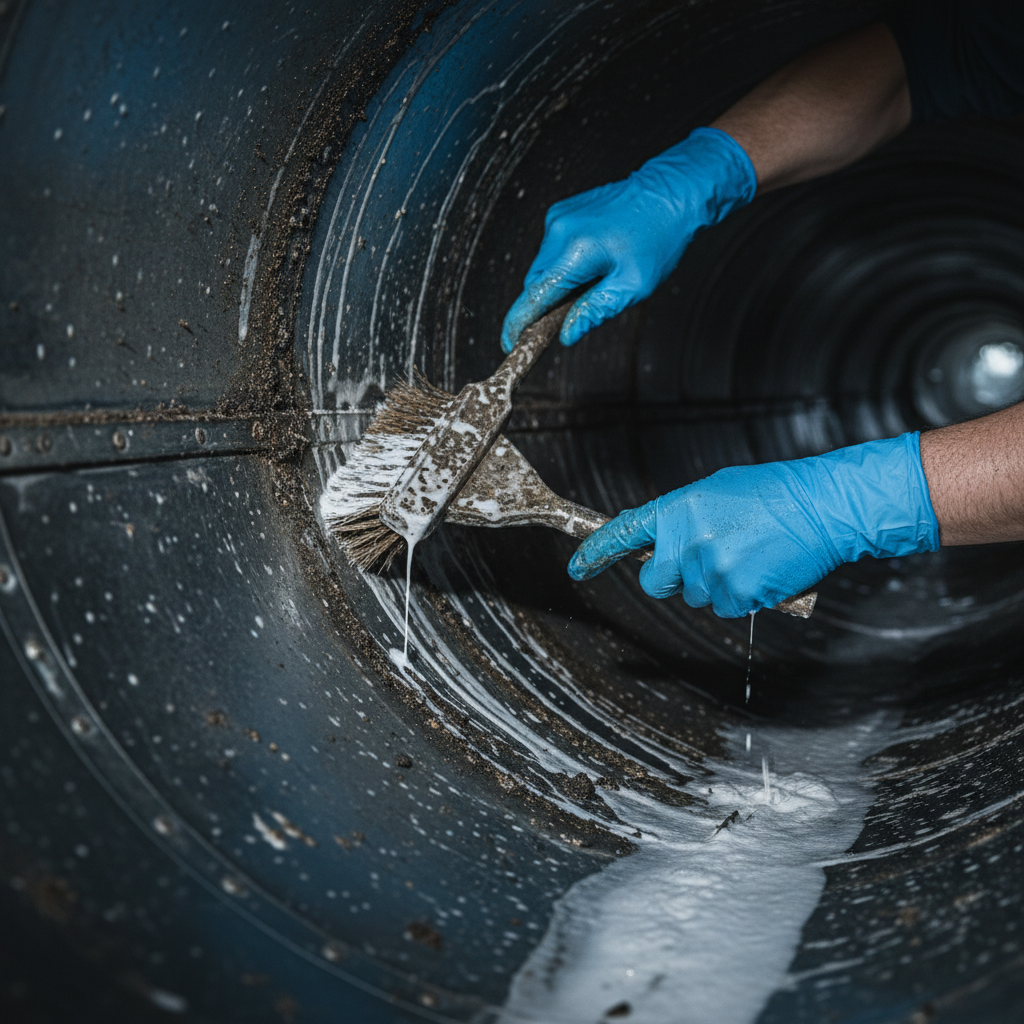
A proven sequence limits downtime: protect equipment, open access, apply heated degreaser, agitate deposits, rinse to bare metal, service filters and the rooftop fan, reassemble, verify airflow, and document with photos and a service sticker.
The sequence below is the one we use across All Over Ontario. It’s designed to protect appliances, avoid rework, and produce verifiable results inspectors can trust on first review.
- Site prep and containment: Wrap appliances, mask floors, set wet/dry zones, and stage rooftop PPE.
- Access and inspection: Open hoods and panels to confirm reach to elbows, verticals, and the fan.
- Degreasing: Apply heated, food‑safe degreasers; allow proper dwell for heavy films.
- Mechanical agitation: Scrapers, brushes, and rotary tools dislodge stubborn residue.
- High‑pressure rinse: Hot rinse clears residue without redeposit, exposing clean metal.
- Filters: Clean or exchange baffle filters; verify correct orientation and seating.
- Rooftop fan service: Hinge open, clear housing, check belt alignment and bearings.
- Reassemble and test: Restore capture; verify fan draw and listen for abnormal noise.
- Documentation: Time‑stamped photos, service sticker, and a deficiency list if needed.
Every step ties to a risk: water ingress into equipment, missed elbows, belt slippage, or unverified results. Our crews also collect rooftop evidence—grease run‑off or ponding—so managers can plan follow‑ups before small issues spread.
For a deeper dive into performance benefits after cleaning, see our piece on exhaust duct cleaning benefits, which details capture velocity gains and odor reduction patterns we track post‑service.
Service frequency and scheduling: matching cleaning to cooking volume
Match cleaning cadence to production. Heavy fry and solid‑fuel lines need shorter intervals; mixed sauté/grill can follow standard intervals; light or seasonal kitchens can extend with periodic checks. Use photo logs to adjust rather than guess.
Cadence is a control lever for restaurant ventilation duct cleaning cost. When intervals drift too long, grease rebuilds in elbows and risers, extending dwell and agitation on the next visit. That’s why many operators pair quarterly duct service with monthly filter exchange—keeping capture stable and the next deep clean predictable.
- Heavy use: Multiple fryers, woks, or charbroilers; schedule shorter intervals and monitor elbows.
- Moderate use: Mixed sauté and grill; set a standard interval, then tune from photos.
- Light/seasonal: Cafés or limited menus; extend intervals, but keep a periodic check‑in.
For interval planning and what inspectors expect to see on your sticker, skim our internal cleaning frequency guide that we share with new managers.
Local considerations for All Over Ontario
- Winter rooftop access can require de‑icing and extra setup; plan service before peak freeze‑thaw cycles.
- Holiday rush periods increase grease load; schedule a post‑peak reset to restore capture and reduce odors.
- Older buildings may share shafts or limit access; a pre‑inspection helps stage panels and hinge kits in advance.
Pricing models explained (without numbers)
Most proposals follow one of four models: per‑system flat projects, time‑and‑materials, portfolio contracts with set cadences, or bundled maintenance plans. Pick the structure that fits your kitchen complexity and scheduling rhythm.
Regardless of model, insist on precise scope language and evidence expectations. The two phrases that prevent confusion are “to bare metal” and “includes rooftop fan service.” Add photo count expectations and a deficiency list to complete the documentation loop.
- Per‑system flat projects: Clear scope, easy comparisons; requires accurate site details up front.
- Time and materials: Flexible for unknowns; useful for first‑time or post‑renovation conditions.
- Portfolio contracts: Standardize intervals and reporting across multiple locations.
- Bundled maintenance: Combine filter exchange, belt checks, and grease trap service to reduce visits.
- Event add‑ons: Pre‑opening resets, post‑inspection cleans, or post‑remodel flushes.
For certification expectations and what “passing” documentation looks like, see our explainer on hood cleaning certification. For urgent situations when schedules slip, our emergency hood cleaning resource outlines how we triage risk and restore capture quickly.
DIY vs. professional: what your team can handle—and what they shouldn’t
Your team can handle daily hood exteriors and baffle filters. Professionals should open ductwork, service rooftop fans, install access panels, and certify to standards. If it requires confined space work, working at height, or formal documentation, bring in a trained crew.
We encourage strong daily habits—clean exteriors and scheduled filter care—but draw a bright line at ducts and fans. Hidden elbows, long verticals, and roof work introduce safety risks and make it hard to verify “bare metal” without photos and labeling.
- Do in‑house: Wipe hood exteriors, degrease splash zones, and clean or swap baffle filters.
- Leave to pros: Duct interiors, rooftop fans, access panels, hinge installs, and documentation.
- Why it matters: Fall protection, confined spaces, slip hazards, and verifiable results.
We routinely uncover heavy deposits behind “clean‑looking” hoods. The difference is access and documentation—two things a professional crew brings every time. For odor and capture performance between visits, review our tips on reducing kitchen exhaust odors.
Documentation, insurance, and signals that protect your kitchen
Look for insured crews, standards‑aligned methods, time‑stamped photos, service stickers with next‑due dates, and deficiency notes. These signals reduce liability, streamline inspections, and give managers confidence that “to bare metal” wasn’t just a phrase.
Robinhood Cleaners is WSIB insured and operates 24/7 to fit kitchen schedules across Southern Ontario. We mirror report formats across locations, so regional managers can compare status at a glance and schedule the next due before load accumulates.
- Insurance and coverage: Confirm active workplace and liability coverage for on‑site work.
- Method and scope: “To bare metal” language plus rooftop fan service and filter handling.
- Evidence: Before/after photos of hoods, elbows, verticals, and the fan housing.
- Labeling: Service sticker with technician names, dates, and a clear next‑due reminder.
- Deficiency list: Items like missing hinges, worn belts, or rooftop ponding to resolve.
To see how we structure performance improvements after service, browse our piece on ventilation system optimization and how small hardware changes compound benefits over a quarter.
Mini case examples from Southern Ontario kitchens
Real kitchens show how scope and cadence control outcomes. Consolidating services, adding fan hinges, and right‑sizing frequency reduce disruptions while strengthening compliance. These brief scenarios mirror common restaurant profiles in Southern Ontario.
- Quick‑service grill line: Quarterly duct cleaning plus monthly filter exchange stabilized capture; hinge installs cut rooftop handling time.
- High‑volume wok and fry: Shortened intervals reduced vertical deposits and improved peak‑night hood capture.
- Historic dining room: Added access panels for shared shafts uncovered elbow deposits and ended smoke complaints.
- Food‑court vendor: Standardized reports simplified landlord checks and reduced repeat visits after inspections.
Each example repeats the same pattern: define complete scope, match cadence to cooking load, and keep visual proof organized. That’s how you protect uptime and avoid last‑minute scrambles before an inspection window.

Tools and resources to standardize results
Use simple tools to prevent surprises: a filter‑change calendar, a pre‑clean access checklist, fan hinge and belt notes, and a running photo log. Consistent templates keep teams aligned and make inspection day quick.
- Filter calendar: Post it near the line and sync to your scheduler so filters aren’t missed.
- Access checklist: Note panel locations, clearances, rooftop path, and winter hazards.
- Fan hardware log: Record hinge status, belt type, and last replacement date.
- Photo repository: Keep time‑stamped before/after images by location and system name.
| Driver | Low impact | Medium impact | High impact | What you can do |
|---|---|---|---|---|
| Grease load | Light sauté | Grill + sauté | Fryers/solid‑fuel | Right‑size frequency; swap filters more often |
| Duct geometry | Short, straight | Several elbows | Long vertical with offsets | Stage access panels; plan crew time |
| Rooftop access | Hatch | Ladder + parapet | Limited, winter ice | Install hinges; schedule pre‑freeze |
| Fan condition | Aligned belt | Worn belt | Bent blades | Bundle belt checks with cleaning |
Soft CTA: Need a quick scope review? Robinhood Cleaners offers a short planning consult for multi‑unit operators across All Over Ontario. Share your hood count, cooking styles, and access notes to map a maintenance rhythm that fits service hours.
Best practices to control total cost of ownership
Standardize scope, match frequency to load, and bundle related tasks. Add hinges and access panels once, then maintain filters and belts on cadence. Document with photos so you can prove compliance and fine‑tune intervals with confidence.
- Define complete scope: Hood, ducts, and fan; include “to bare metal” language in writing.
- Bundle smartly: Filters, belt checks, and grease trap care during the same overnight window.
- Invest in access: Hinges and panels reduce future labor and rooftop handling risks.
- Keep a photo trail: Visual evidence accelerates inspections and insurance calls.
- Audit twice a year: Review logs and adjust intervals up or down based on load patterns.
These habits help kitchens stay inspection‑ready while avoiding last‑minute, high‑disruption work. Over time, benefits show up as steadier airflow, fewer odor complaints, and simpler audits—hallmarks of strong back‑of‑house operations.
Frequently asked questions
Operators ask about timing, scope, disruptions, and how to verify a “bare metal” clean. These direct answers clarify who does what, when to schedule, and what proof you should expect after service.
How often should restaurant ventilation ducts be cleaned?
Match frequency to cooking intensity. Heavy fry and charbroil lines need shorter intervals; mixed sauté/grill can follow standard intervals; light or seasonal kitchens can extend with periodic checks. Use photo logs to fine‑tune timing.
What does “to bare metal” actually mean?
It means removing grease films until clean metal is visible on hoods, ducts, and fans. Wiping only visible areas isn’t enough. Access panels are opened, deposits are agitated and rinsed, and results are documented with time‑stamped photos and a service sticker.
Can my team just clean the hood and filters?
Yes, staff can wipe exteriors and clean or exchange baffle filters. Duct interiors and rooftop fans should be handled by trained professionals who can install access panels, work safely at height, and provide compliance documentation.
How do I know if the ducts were really cleaned?
Ask for before/after photos of elbows, verticals, and the fan housing. Confirm the service sticker lists the date, technicians, and a next‑due reminder. A brief deficiency list should flag hinges, belts, or rooftop grease issues to resolve.
Conclusion and next steps
Control your restaurant ventilation duct cleaning cost by standardizing scope, matching cadence to cooking load, and bundling related maintenance. Choose insured, standards‑aligned crews that document to bare metal. The result is safer kitchens, steadier airflow, and smoother inspections.
- Key takeaways: Define full scope, right‑size frequency, and keep a photo trail.
- Action: Inventory hoods, ducts, and fans; note access and cooking styles; plan your next service window.
- Partner: Work with a provider that can service filters, fans, ducts, and grease traps in one visit.
Ready to align scope and cadence? Robinhood Cleaners serves restaurants across All Over Ontario with 24/7 scheduling, WSIB‑insured crews, and NFPA 96–aligned methods. Let’s map a plan that fits your line and keeps inspections simple.