Grease doesn’t wait. In busy restaurant kitchens across Southern Ontario, a film of fat can turn from harmless shine to a fire path inside your hood, ducts, and exhaust fan. If you’re responsible for a commercial kitchen, exhaust duct fire hazard prevention isn’t optional—it’s your frontline defense. In this complete guide, we break down how routine, NFPA 96–aligned cleaning and smart maintenance stop ignition before it starts.
- Understand what creates exhaust duct fire risk—and how fires spread fast through hoods, ducts, and fans.
- See exactly how professional hood and duct cleaning reduces ignition sources and heat transfer.
- Follow maintenance schedules that match your cooking volume and menu type.
- Use checklists, tools, and proven practices Robinhood Cleaners applies across Ontario kitchens.
- Learn how documentation supports inspections, insurance, and compliance.
Above the Fold: Why This Guide Matters + Table of Contents
You need fast, reliable answers you can act on today. Here’s what you’ll find below.
- Quick Answer (2–3 sentences with local context)
- What Is Exhaust Duct Fire Hazard Prevention?
- Why It Matters to Restaurants in Ontario
- How Exhaust Systems Work—and How Fires Spread
- Approaches: Cleaning Methods That Actually Reduce Risk
- Best Practices: Scheduling, Monitoring, and Documentation
- Tools & Resources: From Filters to Rooftop Containment
- Case Studies & Examples from Southern Ontario
- FAQ: Clear Answers to Common Questions
- Conclusion + Key Takeaways
- Related Articles (topics to explore next)
Quick Answer
For kitchens across All Over Ontario, exhaust duct fire hazard prevention means consistent, NFPA 96–aligned hood, duct, and exhaust fan cleaning plus proper grease control. Robinhood Cleaners provides kitchen exhaust cleaning, filter cleaning and exchange, duct cleaning, and ventilation system maintenance to remove fuel, reduce heat transfer, and keep your team safe while meeting inspection requirements.
What Is Exhaust Duct Fire Hazard Prevention?
It’s the set of practices that remove fuel (grease), cut heat transfer, and block flame travel inside your hood, ducts, and exhaust fan—so a flare-up never becomes a structural fire.
- Primary objective: Eliminate combustible deposits and ignition pathways across the entire exhaust system.
- Scope: Hood canopies, baffle filters, horizontal and vertical ductwork, exhaust fan housing and blades, grease containment, and discharge areas.
- Standard alignment: Procedures and documentation aligned with NFPA 96 recommendations and local fire prevention bylaws.
- Who needs it: Restaurants, QSRs, food courts, catering kitchens, hotels, institutions—any commercial cooking operation using grease-producing appliances.
- What it prevents: Flash fires, duct fires, rooftop grease damage, fan failures, smoke conditions, and business interruptions.
Here’s the thing: small grease films ignite more easily than most people expect. A clean, cool duct doesn’t transmit flames. A hot, greasy duct can act like a fuse.
Why Exhaust Duct Fire Hazard Prevention Matters
Beyond compliance, this is about safety, uptime, and peace of mind.
- Protects people: Lowers risk for cooks, servers, and guests.
- Preserves property: Prevents duct and roof fires that can damage your building envelope and HVAC.
- Keeps you open: Reduces shutdowns from incidents or failed inspections.
- Supports insurance: Demonstrates responsible risk reduction with dated reports and before/after photos.
- Improves air quality: Clean systems move air better, reducing smoke and odors on the line and in dining rooms.
Robinhood Cleaners is NFPA 96 certified, WSIB insured, and available 24/7 so you can schedule around service hours without losing revenue. Our team services kitchens all over Ontario with quick response in Southern Ontario—matching your real operating constraints.
To go deeper on risk fundamentals, see our discussion of early warning signs in our kitchen hood fire hazard overview and how standards apply in our NFPA 96 cleaning guide.
How a Commercial Kitchen Exhaust System Works (and How Fires Spread)
Understanding flow paths explains why thorough, system-wide cleaning is essential.
- Capture: The hood canopy and baffle filters capture grease-laden vapors from appliances.
- Transport: Ducts pull vapors to the exhaust fan; vapors cool and condense into grease on interior surfaces.
- Discharge: The rooftop fan expels air; grease can collect in housing, blades, and containment trays.
- Fire path: A flare-up can ignite filter residue, jump into ducts, preheat grease films, and flash through to the fan.
- Acceleration factors: Heavy fry/grill menus, solid fuel cooking, poor filter fit, reduced airflow, deferred cleaning, and broken fan belts.
Common Weak Links We Find
- Filters installed backward or missing: Allows hot vapors to bypass capture and stick deeper in ducts.
- Unsealed duct joints: Grease weeps out, coating ceilings and roof surfaces.
- Fan belt wear: Slipping belts reduce airflow, increasing heat and condensation in ducts.
- Poor grease containment on roof: Overflow saturates roofing, increasing the chance of rooftop fires.
- Access panel gaps: If you can’t access, you can’t clean—grease accumulates out of sight.
When you correct these weak links and clean to bare metal, you break the chain reaction. That’s exhaust duct fire hazard prevention in action.
Approaches and Methods That Actually Reduce Risk
Not all “cleaning” is equal. Robinhood Cleaners uses methods selected for your menu, soils, and system layout.
Hands-On Mechanical Removal
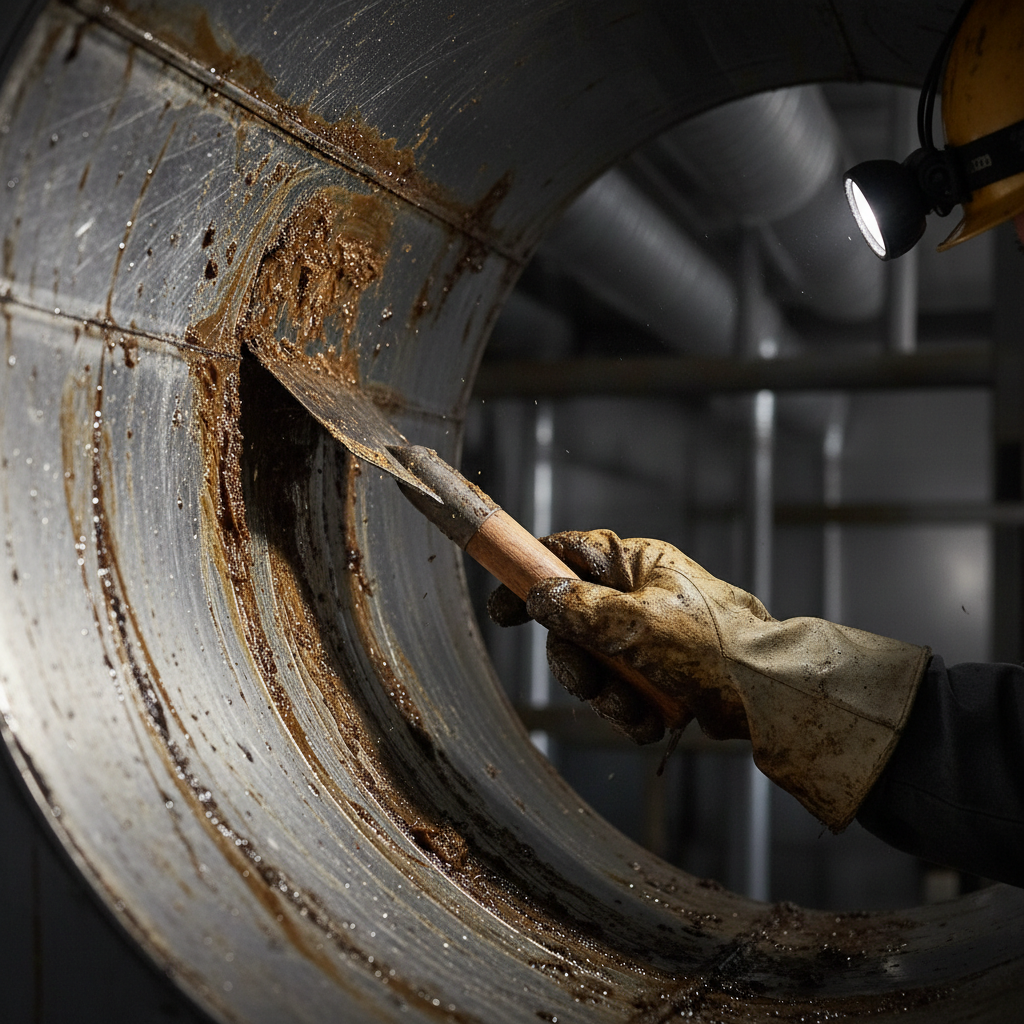
- Scraping to bare metal: Physical removal with scrapers in heavy-build areas (hood plenums, duct elbows, transitions).
- Brushes and pads: Agitate stubborn deposits before washdown; safe on stainless.
- Access-driven: We open and reseal panels to reach every run we can safely access.
Hot Water Pressure Washing
- Degreasing detergents + 180–200°F water: Emulsifies films and flushes residues.
- Controlled flow paths: Protects equipment and floors, collects wastewater for proper disposal.
- Great for fans and verticals: Restores performance without harsh abrasion.
Chemical Foam Degreasing
- Cling foams: Adhere to duct walls, breaking down thick, polymerized grease.
- Time-on-surface: We allow proper dwell times, then rinse to bare metal.
- Safety-first: Ventilation and PPE; care around electrical and control systems.
Filter Cleaning & Exchange
- Deep cleaning: Removes trapped grease from baffles to restore capture efficiency.
- Exchange programs: Keep backups ready so you’re never running with dirty filters.
- Fit checks: Properly sized, undamaged filters reduce bypass and duct contamination.
Fan and Belt Maintenance
- Exhaust fan cleaning: Housing, blades, and discharge cleaned to prevent imbalance and hotspots.
- Fan belt replacement: Tension and alignment checks maintain airflow and cooling.
- Grease containment: Trays and absorbents capture overflow; prevents roof saturation.
Want to see how these align with standards? We outline our process in our NFPA 96–aligned Ontario service overview, and we share practical reduction tactics in our fire hazard reduction checklist.
Best Practices: Schedules, Checks, and Proof
Frequency depends on cooking load, fuel type, and menu. Use this as a starting point, then confirm with an on-site assessment.
| Operation Type | Typical Load | Suggested Hood/Duct/Fan Cleaning |
|---|---|---|
| Quick service frying/grilling | High grease | Monthly to bi-monthly |
| Casual dining line cook | Medium | Every 2–3 months |
| Fine dining sauté/grill | Medium–High | Every 2 months |
| Institutional kitchens | Medium | Quarterly |
| Solid fuel (charcoal/wood) | Very high | Monthly or more often |
Daily/Weekly In-House Routines
- Wipe hood exteriors daily: Prevents residue bake-on.
- Hot-swap filters: Rotate clean baffles in at start of shift; send soiled ones for deep clean.
- Check airflow cues: Smoke rollback, heat lingering, or odors mean it’s time to investigate.
- Log issues: Belt squeal, vibration, or rattling filters should be recorded and escalated.
Monthly/Quarterly Professional Actions
- Clean to bare metal: Hood, duct, fan, and containment—documented with photos and certificates.
- Inspect fan belts and pulleys: Replace worn belts to maintain airflow and lower heat.
- Verify access panels and seals: Ensure full reach and prevent grease weeping.
- Service grease traps: Keep drain lines clear and floors safer around prep sinks.
Documentation That Protects You
- Service certificate on site: Date, scope, and technician details for inspectors.
- Before/after photos: Visual proof of bare-metal results at key points in the system.
- Maintenance log: In-house checks, filter exchanges, and reported issues create a defensible record.
Need a baseline cleaning plan that matches your menu and hours? Book a quick assessment with Robinhood Cleaners. Our NFPA 96–certified team services kitchens across Ontario, with rapid response in Southern Ontario and 24/7 scheduling to avoid downtime.
Tools & Resources for Safer Exhaust Systems
Simple upgrades make a big difference when paired with routine cleaning.
- High-quality baffle filters: Stainless, UL-listed, sized to eliminate gaps and reduce bypass.
- Grease containment kits: Trays, absorbent pads, and drain management to protect roofs.
- Access panels: Strategically placed doors so every duct run can be cleaned thoroughly.
- Make-up air checks: Balanced supply prevents smoke rollback and cooler running temps.
- Fan belt and motor maintenance: Proper tension reduces friction heat and improves capture.
- Professional degreasers and foams: Formulations designed for food-service exhaust systems.
- Power washing equipment: Hot water systems restore bare metal quickly and safely.

Case Studies & Examples from Southern Ontario
Real scenarios show how small changes prevent big problems. Names are generalized to protect privacy.
- QSR burger line (401 corridor): Heavy fry output caused monthly flashback scares. We shifted to monthly hood/duct cleaning, upgraded filter fit, and replaced a slipping fan belt. Result: no flare-ups in six months and noticeable heat reduction on the line.
- Mall food court galley: Multiple tenants tied into common exhaust. We coordinated overnight cleaning with access to shared ducts and installed additional panels. Result: inspectors cleared previously unreachable buildup; airflow improved for all stalls.
- Fine dining sauté/grill house: Thick polymerized deposits in vertical ducts. We used foam degreasing with dwell time, then hot water pressure wash to bare metal. Result: elimination of burnt-oil odor in the dining room.
- Institutional kitchen (hospital): Grease containment overflow was saturating roofing. We deep-cleaned the fan housing and added larger containment with absorbents. Result: stopped roof staining and lowered fire exposure.
- Catering commissary: Filters installed backward reduced capture; smoke rollback triggered alarms. We trained staff on proper filter orientation and set a filter exchange cadence. Result: rollback resolved; fewer nuisance alarms.
- Pizza/wing concept: Duct elbows packed with carbonized grease near the oven stack. Mechanical scraping plus panel reseals restored access. Result: fan amp draw normalized and vibration stopped.
- Breakfast diner: Bacon-heavy menu with medium volume. Switched from quarterly to bi-monthly cleaning. Result: visible hood cleanliness and steadier airflow during rush.
- Hotel banquet line: Irregular event schedule caused inconsistent maintenance. We created a flexible, event-driven cleaning calendar. Result: compliance maintained without unnecessary interruptions.
- University residence hall: Student staffing led to variable filter care. We set a simple, posted in-house checklist. Result: better daily wipe-downs and fewer grease streaks reaching ducts.
- Airport concession: Limited overnight access windows. Our 24/7 team performed phased cleaning with containment and rapid rinse. Result: zero service disruption; inspector sign-off on first pass.
- Sports venue vendor: High surge volume during games. We added mid-season cleanings and reinforced rooftop containment. Result: reduced roof staining and safer peak operations.
- Solid-fuel concept: Wood-fired grill introduced soot and embers. Monthly (and sometimes more frequent) cleaning plus spark arrestor checks. Result: no duct ignition events across a busy season.
Exhaust Duct Fire Hazard Prevention Checklist
- Confirm hood, ducts, and fan are cleaned to bare metal at defined intervals.
- Document each service with photos, certificate, and technician details.
- Inspect filter fit and orientation at the start of every shift.
- Replace or deep-clean baffle filters routinely; never run without them.
- Verify fan belt tension and listen for squeal or vibration weekly.
- Open and reseal duct access panels; ensure every run can be reached.
- Install/maintain rooftop grease containment; change absorbents as needed.
- Balance make-up air; address smoke rollback immediately.
- Train staff on daily wipe-down and spill control around fryers and grills.
- Keep a maintenance log accessible for management and inspectors.
Local Insights for Ontario Kitchens
Operations here face real-world constraints—tight schedules, 400-series highway access, and winter conditions. We work around them.
- 24/7 scheduling: Overnight or early-morning slots minimize closures for downtown cores and plaza locations.
- Winter rooftop access: We plan safe access and protect drain paths so rinse water doesn’t freeze at discharge points.
- Mall/food court coordination: Multi-tenant ducts require building coordination and security windows—our crews are used to it.
Local Tips
- Tip 1: For sites along Highway 401 or the QEW, schedule overnight cleaning to avoid delivery congestion and ensure safe rooftop access.
- Tip 2: In winter, ask for heat-traced rinse setups and extra containment so water doesn’t ice near exhaust discharge or walkways.
- Tip 3: If you’re in a food court or mixed-use building, coordinate with security for duct access keys and elevator bookings—our WSIB-insured crews handle the permits and timing.
IMPORTANT: These tips reflect Ontario site realities and the services Robinhood Cleaners actually delivers: hood, duct, and fan cleaning; filter exchange; fan belt replacement; and ventilation maintenance.
Common Mistakes (and What to Do Instead)
- Assuming shiny outside = safe inside: The danger is in hidden duct runs and the fan housing. Insist on access panels and photo documentation.
- Stretching intervals too far: Grease loads vary. Reassess frequency after menu changes, promotions, or seasonal shifts.
- Skipping filter exchanges: Clogged baffles reduce capture and overheat ducts. Keep a clean set ready to swap.
- Ignoring belt noise: Slipping belts reduce airflow, increasing heat and condensation film formation.
- Neglecting rooftop containment: Overflowed grease saturates roofing—both a slip and fire hazard.
Documentation, Inspectors, and Compliance
Auditable records prove you’ve reduced risk in line with industry standards.
- Certificates: Keep the latest service certificate posted near the hood or in your safety binder.
- Photos: Request before/after shots of hood plenums, duct elbows, verticals, and fan housing.
- Scope notes: Confirm what was cleaned, which panels were opened, and any inaccessible runs that require remediation.
- Follow-ups: Track recommended repairs (e.g., seal replacement, panel installation) and schedule them.
To understand inspector perspectives, see patterns we flag in our brief on restaurant exhaust system risks.
How Robinhood Cleaners Reduces Your Risk
We tailor service to your operation and support you end to end.
- NFPA 96–certified technicians: Procedures aligned to recognized standards for commercial cooking.
- Full-system cleaning: Hoods, filters, ducts, exhaust fans, and rooftop containment.
- Filter cleaning & exchange: Keep capture efficiency high day to day.
- Fan belt replacement: Maintain airflow and reduce heat accumulation.
- Grease trap cleaning: Safer floors, fewer odors, and better overall sanitation.
- Commercial appliance cleaning: Ovens, grills, refrigerators—because a clean line runs cooler and safer.
- Power washing: Fast, effective restoration to bare metal.
- 24/7 availability: Schedule around rushes and events anywhere in Ontario.
FAQ
- How often should we clean our exhaust ducts?
Match frequency to grease load. High-volume frying and grilling typically need monthly to bi-monthly service; casual or institutional kitchens often run 2–3 months or quarterly. Reassess after menu or volume changes. - What does “clean to bare metal” actually mean?
All accessible interior surfaces of hoods, ducts, and fans are free of grease residue. We verify with touch and photos at key points, including elbows and the fan housing. - Can we handle this with in-house staff?
Daily wipe-downs and filter swaps are great in-house. Deep cleaning inside ducts and the fan requires access, hot water systems, foams, and trained technicians to meet safety and documentation requirements. - What signs show our system needs service now?
Smoke rollback, lingering heat, belt squeal, filter discoloration, or rooftop staining. If you see or smell burnt oil quickly after opening, it’s time. - Will cleaning disrupt service?
We schedule 24/7 and often work overnight. Containment, floor protection, and rapid rinse keep your kitchen ready for morning prep.
Conclusion
- Grease is fuel; ducts can be a fuse. Remove both risks by cleaning to bare metal.
- Set a schedule that reflects your actual cooking volume and revisit it quarterly.
- Document each cleaning with photos and certificates for compliance and insurance.
- Pair professional cleanings with daily filter care and airflow checks.
- Leverage Ontario-specific logistics—24/7 scheduling, safe winter access, and mall coordination.
Key Takeaways
- Exhaust duct fire hazard prevention starts with system-wide grease removal.
- NFPA 96–aligned service plus filter exchange and belt maintenance stops ignition pathways.
- Local know-how matters—seasonal and building constraints change the plan.
Ready to reduce risk and breathe easier on the line? Let’s design a plan that fits your hours and menu. Our team covers all of Ontario with quick service in Southern Ontario.
Related Articles
- How to align exhaust cleaning frequency with menu changes
- Designing effective rooftop grease containment
- Staff training essentials: filter swaps and airflow cues
- What inspectors look for during kitchen exhaust reviews