The restaurant hood degreasing process is a defined, NFPA 96–aligned sequence that removes combustible grease from hoods, filters, ducts, and rooftop fans. It includes prep and containment, chemical application, agitation, hot-water rinsing, fan and duct cleaning, polish, verification photos, and service tagging to reduce fire risk and stabilize airflow for safer service.
By Robinhood Cleaners • robinhoodcleaners.ca • Last updated: April 19, 2026
Quick Answer
Across All Over Ontario, the restaurant hood degreasing process means prepping the area, applying degreaser to hoods, filters, ducts, and rooftop fans, then rinsing and documenting to NFPA 96. Robinhood Cleaners completes this end to end with 24/7 scheduling so your team can reopen on time with verified compliance.
At a Glance
- What you’ll learn: a complete, step-by-step hood degreasing workflow used in commercial kitchens.
- Why it matters: grease fires are preventable; clean exhaust systems improve capture, airflow, and compliance.
- Who this helps: restaurants, quick service brands, food courts, hotels, and institutional kitchens.
- Tools to know: foamers, hot-water pressure units, soak tanks, hinge kits, and roof grease containment.
- When to schedule: volume-based frequencies from monthly to semiannual per NFPA 96 guidance.
- What Is the Restaurant Hood Degreasing Process?
- Why Degreasing Matters
- How the Process Works (Step-by-Step)
- Types, Methods, and Approaches
- Best Practices that Stick
- Tools & Resources
- Case Studies & Examples (Ontario)
- FAQ
- Conclusion & Next Steps
Local Tips
- Tip 1: In Southern Ontario corridors, plan overnight degreasing to avoid morning prep and supplier deliveries competing for space at back doors.
- Tip 2: Rooftop fan work in winter needs early de-icing. Build 20–30 minutes into the schedule so crews lift fans safely with hinge kits.
- Tip 3: Shared food-court risers require coordination. Sync service windows so all tenants receive one set of verification photos and tags for the landlord.
IMPORTANT: These tips reflect Ontario operations and help minimize downtime while meeting fire-safety expectations.
What Is the Restaurant Hood Degreasing Process?
Restaurant hood degreasing is the professional removal of grease from exhaust hoods, baffle filters, plenum spaces, ducts, and rooftop fans to NFPA 96 standards. The objective is bare metal on internal surfaces, restored airflow, and clear documentation—timestamped photos and a dated service tag—after every cleaning event.
- Scope: Hood canopies, filters, plenum, horizontal/vertical ducts, inline and rooftop upblast fans.
- Standard: Technicians follow NFPA 96 guidance for frequency, access, and documentation.
- Outcome: Bare-metal internal surfaces, polished exteriors, and a service tag visible at the hood.
- Typical ranges: Hot-water rinsing often runs 160–200°F with 1,500–3,000 PSI for controlled flush.
- Scheduling bands: Monthly for high-volume/solid fuel; quarterly for moderate; semiannual for light load.
In our Ontario work, clearly defined scope prevents misses at elbows, fan housings, and grease cups—small areas that account for most residual buildup after DIY attempts.
Why Degreasing Matters
Grease is fuel. Removing it from hoods, ducts, and fans cuts the probability of ignition, supports NFPA 96 compliance, improves capture at the hood, and extends fan and belt life. Clean exhaust paths also reduce odors and roof staining that hurt brand perception.
- Fire prevention: Flare-ups can ignite duct and fan residues if layers remain above the hood line.
- Compliance proof: Inspectors expect photographic evidence and a dated service tag after each cleaning.
- Airflow stability: Less restriction at filters and risers improves capture of smoke and steam at the hood edge.
- Asset protection: Clean blades reduce fan vibration, which protects bearings and extends belt service life.
- Operations: Teams work in clearer air; guests experience fewer odors near dining rooms and patios.
We’ve seen quick service lines stabilize cookline temperatures immediately after degreasing heavy fan housings—measurably smoother airflow and quieter service.
How the Process Works (Step-by-Step)
A reliable hood degreasing process follows a checklist: protect and isolate, pre-scrape, foam degreaser, agitate, hot-water rinse, clean ducts and fans, polish, reassemble, photograph, and tag. Consistency prevents skipped components and simplifies inspections.
- Pre-inspection (10–15 minutes): Walk the line, photograph current state, locate access panels, confirm rooftop access, and verify power isolation points.
- Containment setup: Plastic sheeting around the canopy, equipment covers, and floor protection. Aim for zero overspray outside the taped zone.
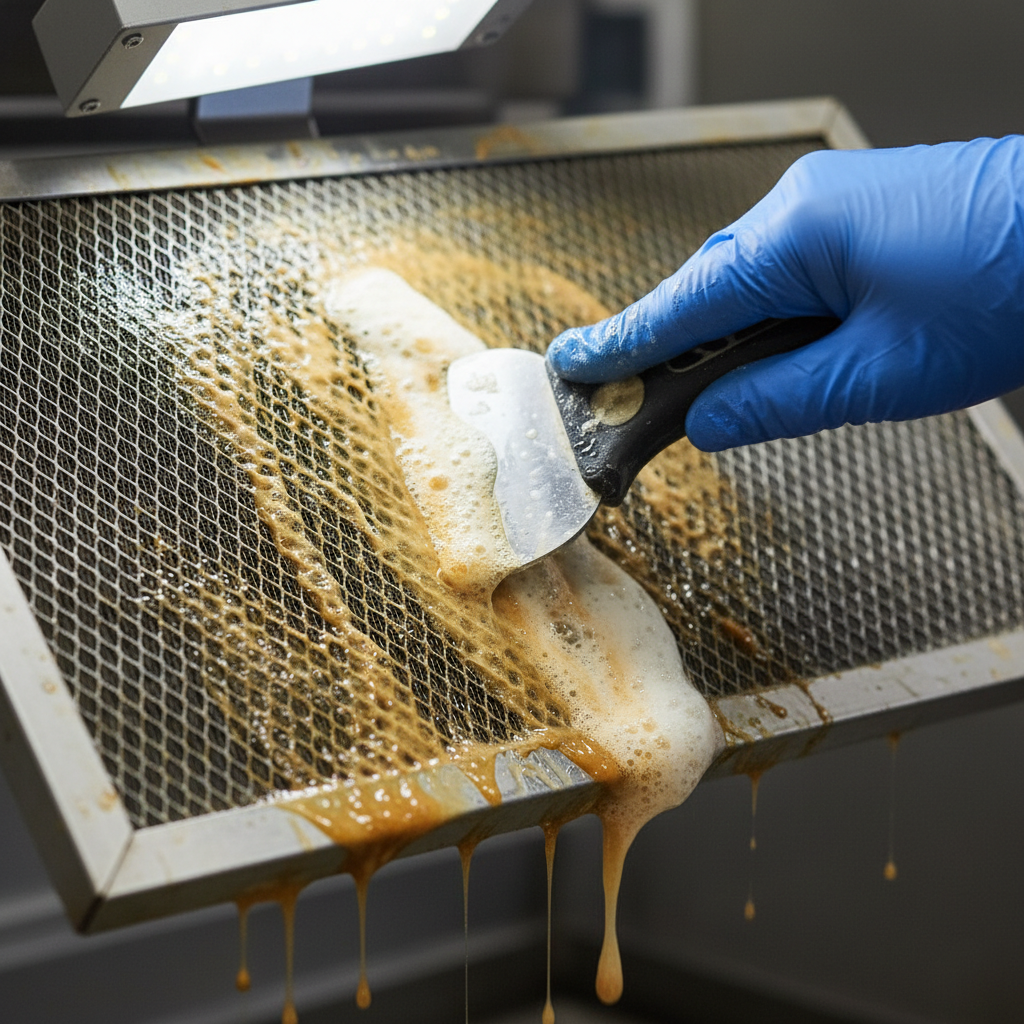
- Filter removal: Pull baffle filters; set in a soak tank or apply foam on racks for 5–15 minutes depending on soil load.
- Pre-scrape: Scrapers remove thick deposits to reduce chemical demand and speed dwell effectiveness.
- Degreaser application: Foam/spray alkaline or citrus-based chemistry across hood interiors, seams, and rivets.
- Agitation: Non-sparking brushes and scouring pads detail corners, fasteners, and ledges.
- Hot-water rinse: 160–200°F water with controlled pressure flushes residues into containment without flooding.
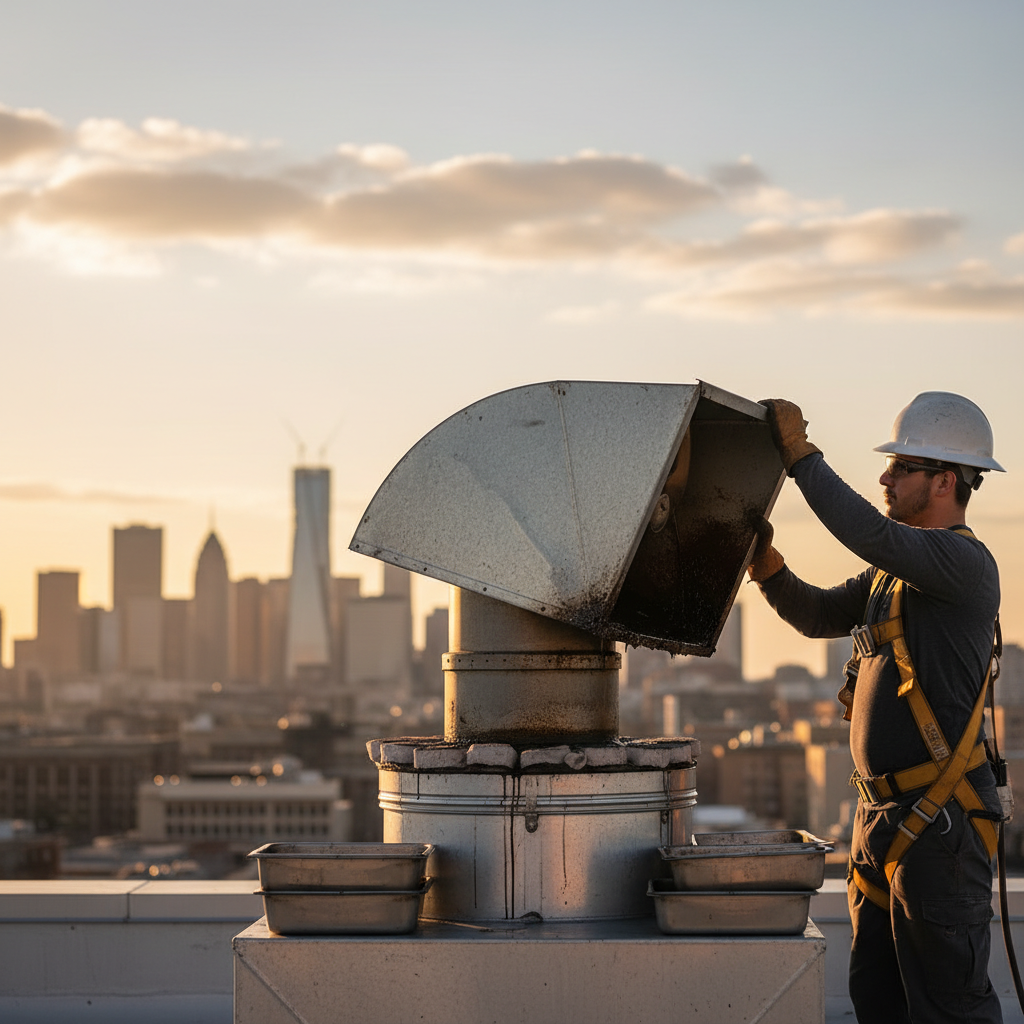
- Duct & fan cleaning: Open access panels; rotary brush or jet tools advance through risers. Lift rooftop fans using hinge kits for thorough housing and blade cleaning.
- Polish & reassemble: Stainless exteriors polished; dry floors; filters reinstalled after a white-glove check.
- Verification & tag: Timestamped after photos, a dated service tag, and a walkthrough with a manager.
| Step | Goal | What Good Looks Like |
|---|---|---|
| Containment | Protect equipment and floors | No overspray; dry floors at finish |
| Chemical dwell | Break down grease safely | Uniform foam coverage; proper dwell time |
| Rinse & flush | Remove residue | Metallic sheen; no slick spots |
| Verification | Prove compliance | Timestamped photos; service tag |
For a deeper dive into scope and cadence, see our commercial kitchen hood cleaning guide and our overview on exhaust duct cleaning fire prevention.
Types, Methods, and Approaches
Professionals combine techniques: manual scraping for bulk removal, foam-applied chemistry for vertical coverage, hot-water pressure for flush, and heated soak tanks for filters. Steam or rotary-jet tools help in tight duct runs. The mix depends on menu, volume, and access.
- Manual scraping: Removes heavy deposits first; speeds chemical work and reduces runoff.
- Foam degreasing: Clings to verticals and seams; target dwell of 5–15 minutes on typical soil loads.
- Soak tanks: Heated alkaline baths restore baffles to bare metal with consistent, repeatable results.
- Hot-water pressure: 1,500–3,000 PSI at high temp assists thorough flushing without damaging finishes.
- Steam: Useful when minimizing water is essential (tight back-of-house spaces or older buildings).
- Rotary/jet duct tools: Mechanized brushes and nozzles reach elbows and risers through code-compliant access panels.
When we service multi-hood lines, method selection balances soil load with reopen targets. The goal is repeatable, photo-verified bare metal from canopy to rooftop fan.
Best Practices that Stick
Focus on safety, documentation, and repeatability: lockout-tagout, roof grease containment, hinge kits, code-compliant access panels, chemical SDS on site, photo logs, and dated service tags. These steps reduce risk and speed inspections.
- Lockout-tagout (LOTO): Confirm fans are off and locked out before opening housings or access panels.
- Roof containment: Use catch pans and absorbents to protect roof membranes and downspouts.
- Hinge kits: Required for safe upblast fan lifting; protect wiring and fan housings during service.
- Access panels: Install where missing so elbows and vertical risers can be cleaned to bare metal.
- Photo logs: Before/after sets act as proof for inspections and insurance reviews.
- Service tags: Dated tag at the hood documents who cleaned, when, and next-due timing.
Our NFPA 96–aligned workflow, WSIB-insured crews, and 24/7 availability help Ontario kitchens reopen with confidence and a clear paper trail. For certification details, visit our page on NFPA 96 certified hood cleaning.
Tools & Resources
Essential tools include baffle filter soak tanks, foam cannons, hot-water pressure washers, scrapers, non-sparking brushes, steam units, hinge kits, wet-vacs, and roof grease containment. Helpful resources are NFPA 96 guidance and local fire inspection checklists.
- Application: Foam cannons and pump sprayers provide uniform coverage, even on vertical surfaces.
- Agitation: Scouring pads, nylon/non-sparking brushes, and detail tools for corners and rivets.
- Rinse: Adjustable nozzles tuned to surface; hot-water units keep rinse effective without flooding.
- Safety: PPE kits, GFCI-protected cords, anti-slip mats, and wet-vacs for quick dry-down.
- Access: Roof-rated ladders, hinge kits, and harnesses where required by site policy.
- Documentation: Photo apps, digital logs, and printed tags for audits and insurance.
Standardized kits mean every Ontario site receives the same methodical care and verifiable outcomes. For frequency planning, see our note on hood cleaning frequency.
Free Download: Hood Degreasing Checklist (PDF)
- Pre-inspection and lockout points
- Chemical dwell and agitation checkpoints
- Duct access panel notes and rooftop tasks
- Photo documentation prompts and sign-off
- Emergency contact and reopen checklist
Use this to train new managers and keep audits smooth. Ask our team to send the latest version.
Case Studies & Examples (Ontario)
Across Ontario, we’ve reduced grease risk and improved airflow for quick service chains, hotel kitchens, food courts, and institutional cafeterias. Overnight degreasing with photo logs and tags helped teams pass inspections and open on schedule.
- Quick service grill line: Monthly hood and riser degreasing stabilized capture during lunch, reducing nuisance alarms.
- Hotel banquet kitchen: Coordinated filter soaks, duct cleaning, and rooftop fan service before peak weekend events to prevent odors near ballrooms.
- Food court cluster: Multi-tenant riser cleaning with one shared photo set simplified landlord reporting.
- Institutional cafeteria: Semester-based scheduling mapped to volume swings and maintenance windows.
- Fine dining venue: Semiannual service plus exterior polish ensured spotless sightlines visible to guests.
- Franchise rollout: Multi-site plan created identical checklists and tags for 10+ locations to standardize audits.
- Solid-fuel concept: Added monthly inspections of spark arrestors and risers to control soot-laden grease.
- Rooftop staining issue: Roof containment and more frequent fan cleanings eliminated drip paths to downspouts.
- New-build kitchen: Early hinge kit installation enabled safer fan access from day one.
- Shared riser retrofit: Installed required access panels to reach elbows previously inaccessible to tenants.
- Seasonal venue: Pre-opening deep clean each spring and a mid-season touch-up kept inspections smooth.
- University food hall: Coordinated overnight across multiple stalls to avoid daytime student traffic.
- Healthcare kitchen: Extra odor control measures and quiet equipment respected patient areas.
See how these patterns align with our grease buildup prevention guide and a deeper look at exhaust duct cleaning in Ontario.
Need an expert pair of hands?
- NFPA 96–aligned hood, duct, and fan degreasing across Ontario
- WSIB-insured, certified teams with 24/7 scheduling
- Verification photos and a dated service tag every visit
Robinhood Cleaners keeps commercial kitchens safe and inspection-ready—without disrupting service.
Frequently Asked Questions
Plan degreasing around volume, schedule overnight, and keep photos and tags ready for inspections. Include ducts and rooftop fans, not just the canopy, and install access panels where needed for elbows and risers.
- How often should we degrease our hood and ducts?
- Match frequency to cooking volume and fuel type. High-volume fryers and solid fuel often need monthly service; moderate kitchens quarterly; light or seasonal sites semiannually. Coordinate dates with inspections and insurance expectations.
- How long does the process take?
- Most single-hood kitchens finish overnight. Setup, dwell, rinse, and verification typically fit a dark-hour window so you reopen for prep. Multi-hood lines or shared risers may require longer windows.
- What documentation do we need for inspectors?
- Keep before/after photos that clearly show hoods, filters, ducts, and fans; retain the dated service tag; and maintain technician notes. These demonstrate NFPA 96–aligned care and support audit readiness.
- Can we clean just the hood and skip ducts?
- Skipping ducts and fans leaves combustible grease where ignition can travel. Full-path cleaning—from canopy to rooftop fan—reduces risk and satisfies inspection criteria.
- Do access panels really matter?
- Yes. Panels let technicians reach elbows and risers safely. If panels are missing, plan an installation during the next service cycle to eliminate hidden grease pockets.
Conclusion & Next Steps
A consistent restaurant hood degreasing process prevents fires, improves airflow, and simplifies inspections. Build a schedule tied to volume, insist on photo verification, and choose a team equipped for hoods, ducts, and rooftop fans across your sites.
- Set a volume-based cadence—monthly, quarterly, or semiannual.
- Use checklists and photo logs to prove compliance.
- Include ducts and rooftop fans—not just the hood canopy.
- Plan overnight service to avoid downtime and wet floors.
- Confirm a dated tag and a manager walkthrough at finish.
Ready to align with NFPA 96 and reduce fire risk across Ontario? Our team can coordinate multi-site schedules and standardized documentation.