Kitchen fires don’t start big. They start as a flare-up, a spark, or a layer of grease that finally ignites. If you manage a restaurant or institutional kitchen in Ontario, exhaust duct cleaning fire prevention isn’t a nice-to-have—it’s core risk management. In this complete guide, we show you exactly how to prevent duct-fed fires, document compliance, and keep service running safely without last-minute shutdowns.
At a Glance
- Understand what exhaust duct fire risks look like in busy Ontario kitchens.
- Apply NFPA 96-aligned schedules tailored to your cooking volume and fuel type.
- Follow a step-by-step hood, duct, and fan degreasing process that holds up in inspections.
- Choose tools, chemistries, and rooftop containment that actually work.
- Document service the right way for insurance, landlords, and health/fire officials.
Quick Answer
For kitchens across All Over Ontario at All Over Ontario, exhaust duct cleaning fire prevention means removing flammable grease from hoods, ducts, and fans to break the fire path. Robinhood Cleaners provides NFPA 96–aligned hood, duct, and exhaust fan cleaning so restaurants and institutional kitchens stay compliant, safe, and open.
Summary
- Primary objective: Stop grease-fed fires from traveling through hoods and ducts.
- Core method: NFPA 96–aligned degreasing of the full system: hood, filters, plenum, horizontal/vertical ducts, fan, and rooftop containment.
- Who benefits: Restaurants, quick service brands, food courts, hotels, and institutional kitchens.
- How often: High-volume fry/grill/solid fuel: monthly to quarterly. Moderate volume: quarterly to semi-annual. Low volume: semi-annual to annual—always verify with inspections.
- Proof of work: Before/after photos, stickers, written reports, and recommendations to satisfy insurers and inspectors.
- Local edge: WSIB-insured, NFPA 96–certified teams, 24/7 scheduling, and quick service across Southern Ontario.
Contents
- What Is Exhaust Duct Cleaning Fire Prevention?
- Why It Matters (Safety, Uptime, Compliance)
- How It Works: Step-by-Step Process
- Methods, Schedules, and Approaches
- Best Practices That Pass Inspections
- Tools, Products, and Resources
- Ontario Case Studies and Examples
- FAQ
- Conclusion and Next Steps
What Is Exhaust Duct Cleaning Fire Prevention?
Exhaust duct cleaning fire prevention refers to a systematic program that removes grease deposits from the entire kitchen exhaust system to interrupt fire spread.
- Scope of system: Hood, filters, plenum, horizontal and vertical ducts, fan housing and blades, and the rooftop discharge area.
- Combustible threat: Cooking vapors condense into grease on metal surfaces. Layers ignite from heat, open flame, or sparks.
- Fire pathway: A flare-up can flash into the hood and follow grease films through ducts to the fan and roof—endangering the building.
- Prevention lever: Remove grease to bare metal (where feasible) at a frequency aligned to cooking volume and fuel type.
- Standards backbone: NFPA 96 guidance on frequency, access, cleaning to metal, and documentation.
Here’s the thing: even spotless-looking hoods can hide heavy duct buildup. The reality is that inspection access and full-length cleaning—not just visible areas—determines real risk reduction.
Why It Matters: Safety, Uptime, and Compliance
Grease doesn’t just smell bad—it’s fuel. Exhaust systems concentrate that fuel in hidden places.
- Life safety: Duct-fed fires accelerate quickly, produce toxic smoke, and can breach fire barriers.
- Operational uptime: Emergency shutdowns derail service, events, and catering schedules.
- Insurance posture: Carriers expect proof of NFPA 96–aligned cleaning and may tighten terms after losses.
- Landlord/health/fire requirements: Documentation and compliant stickers reduce friction during inspections.
- Equipment health: Clean fans and balanced belts pull correct CFM, improving capture and indoor air quality.
For Ontario operators, add seasonal realities: winter stiffens rooftop fans and can freeze grease; summer patio volume spikes throughput. A rigid schedule without inspections misses these swings.
How Exhaust Duct Cleaning Fire Prevention Works (Step-by-Step)
Effective programs follow a clear, documented process that addresses every combustible surface.
1) Pre-job planning and protection
- Walkthrough and access check: Verify all access panels, rooftop hinges, and electrical disconnects.
- Protect assets: Wrap appliances and prep areas; bag electrical components; dam and divert to containment.
- Confirm scope and schedule: Align around cook times to minimize downtime—Robinhood Cleaners offers 24/7 windows.
2) Hood and filter service
- Filter removal and exchange: Swap or deep clean baffle filters; verify correct orientation for air capture.
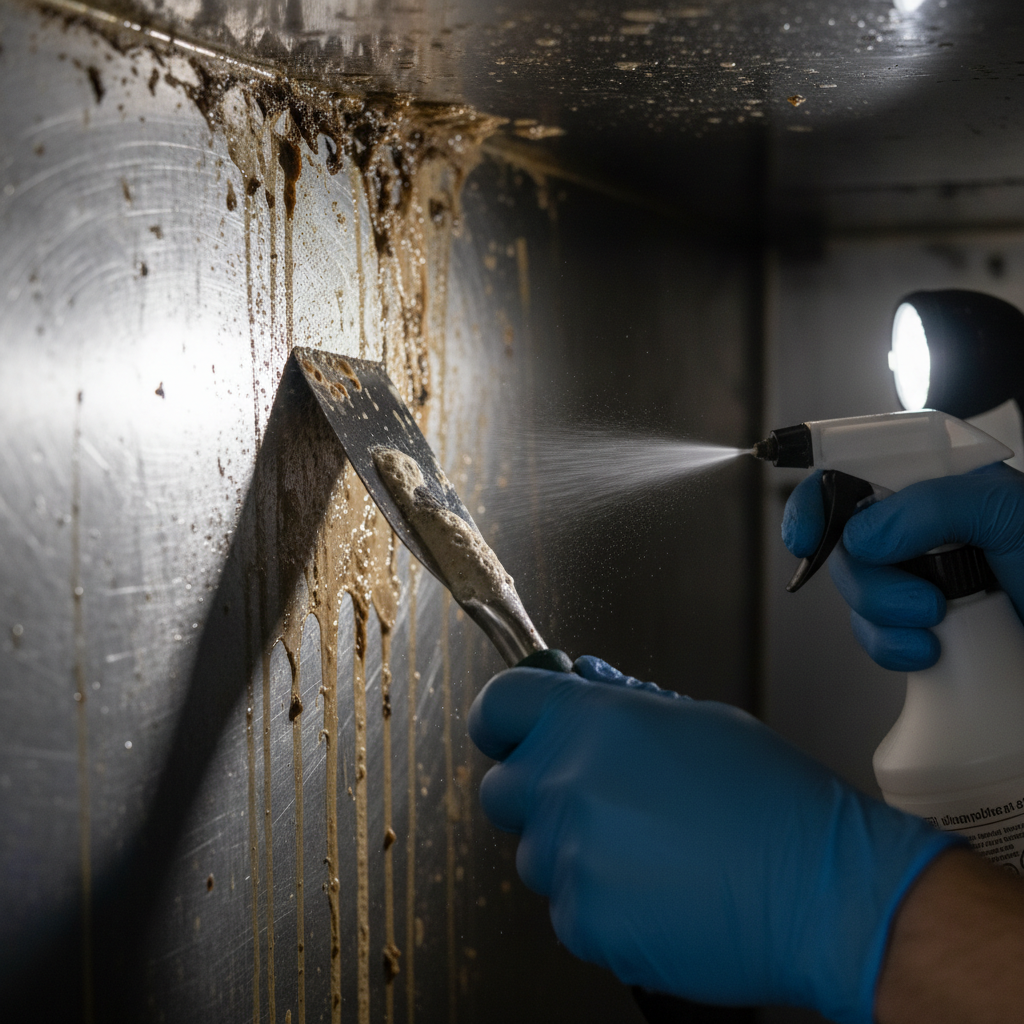
- Hood degreasing: Apply food-safe degreaser; agitate and hot-water rinse to bare metal where feasible.
- Plenum cleaning: Clean behind light lenses, along seams, and around fire-suppression components.
3) Duct cleaning
- Access panels: Open panels on horizontals and vertical risers; create new access points per standard if missing.
- Mechanical agitation: Scrapers, rotary brushes, and steam/hot-water rinse to remove grease layers.
- Verification: Photo inspection of each duct run to validate clean-to-metal results where achievable.
4) Exhaust fan and rooftop
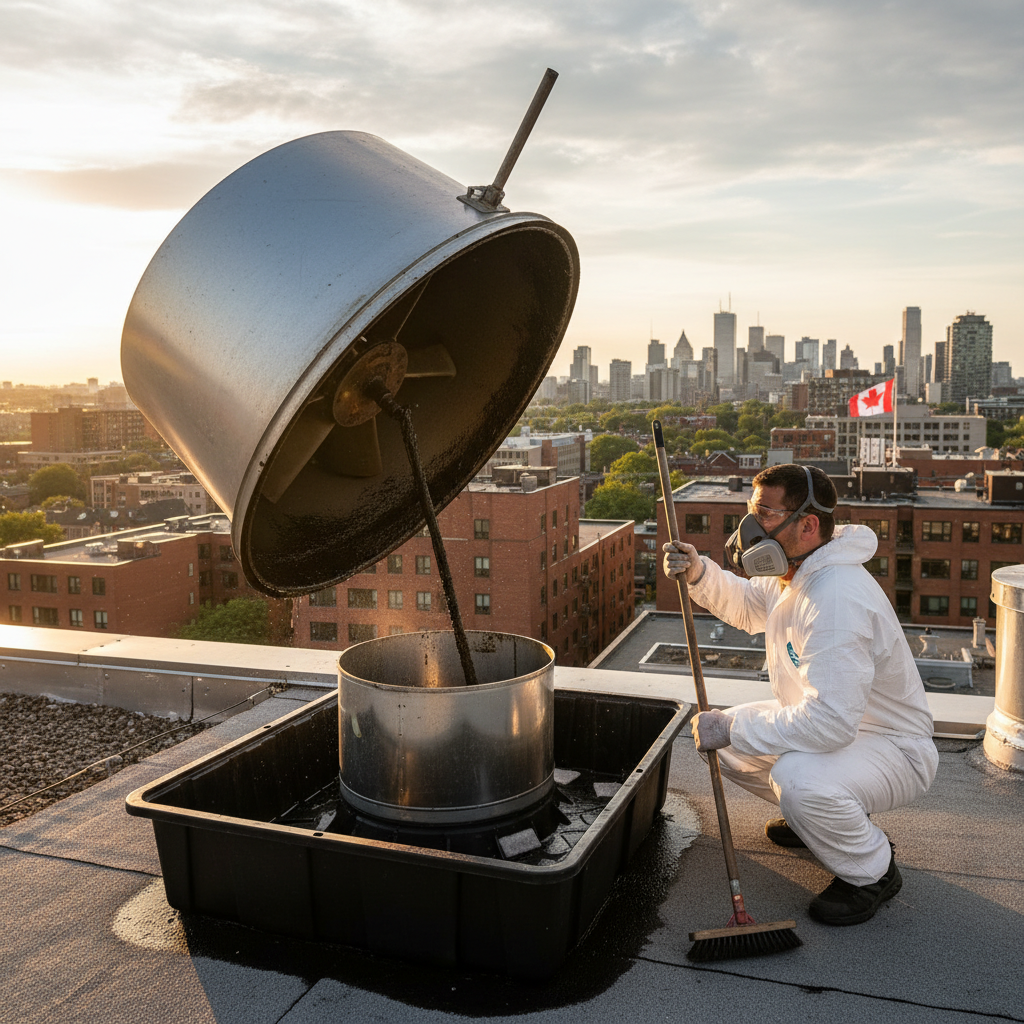
- Fan disassembly: Hinge and lift the upblast fan; clean blades, housing, and discharge apron.
- Grease containment: Service or add containment to prevent roof damage and drainage issues.
- Belts and bearings: Inspect belt wear and tension; check bearings; confirm rotation and vibration.
5) Reassembly, polish, and documentation
- System restore: Reinstall filters; test fan operation and makeup air balance.
- Detailing: Polish stainless and reset the space for immediate use.
- Compliance record: Apply service sticker; deliver photo report and recommendations.
Need a deeper dive into risk indicators? See our Ontario-focused restaurant exhaust fire risk guide for early-warning signs your ducts are overdue.
Methods, Schedules, and Approaches
Your approach should match your menu, volume, fuel type, and equipment layout.
Cleaning methods
- Hot-water pressure with degreaser: Standard for most stainless systems; efficient on heavy film.
- Manual scraping/rotary brushing: Essential for baked-on layers or awkward geometry.
- Steam-assisted degreasing: Useful in cold conditions and on stubborn residues.
- Chemistry rotation: Alternate degreasers to avoid plate-out and improve breakup of polymerized fats.
Scheduling and frequency
- High volume (solid fuel, heavy fry/grill): Monthly to quarterly.
- Moderate volume (mixed cooking): Quarterly to semi-annual.
- Low volume (light duty, seasonal): Semi-annual to annual—but verify with inspections.
- Seasonal adjustments: Increase during summer patio peaks; address winter rooftop access and fan performance.
| Kitchen Profile | Primary Risks | Typical Frequency | Notes |
|---|---|---|---|
| Solid-fuel oven or smoker | Sparks, embers, heavy soot/grease combination | Monthly | Use spark arrestors; inspect weekly |
| High-volume fry/grill QSR | Rapid grease film in ducts and fans | Monthly–Quarterly | Rotate filters; monitor fan belts |
| Full-service restaurant | Mixed residue, variable peaks | Quarterly–Semi-annual | Adjust for patio/holiday spikes |
| Institutional (schools, hospitals) | Steady throughput; long service windows | Quarterly–Semi-annual | Coordinate with facilities teams |
Program approaches
- Compliance-first: Focus on NFPA 96 intervals and clean-to-metal verification with photos.
- Performance-first: Blend cleaning with ventilation optimization (CFM, capture, belt tension).
- Risk-based: Use inspections to tune frequency by duct thickness, menu changes, and peak seasons.
For filter logistics, our Brampton-focused filter replacement guide explains safe swaps and orientation checks that materially lower grease carryover.
Best Practices That Pass Inspections
Passing an inspection isn’t luck. It’s process discipline and documentation.
Plan for full-length access
- Access panels: Ensure panels exist at every turn and riser; add missing access per standard.
- Fan hinges: Install robust hinges to safely lift and service the upblast fan.
- Disconnects: Confirm electrical safety for service; label clearly for teams.
Clean to bare metal where feasible
- Verification photos: Use time-stamped images along each duct run.
- Edge detailing: Seams, corners, and behind fire-suppression piping trap residue—don’t skip them.
- Drain and containment: Keep runoff controlled; protect floors and rooftops from grease discharge.
Document what matters
- Sticker details: Date, crew, scope, and next due.
- Report package: Before/after photos, notes on access/fan/belts, and frequency recommendation.
- Find-and-fix loop: Convert defects into work orders (belt replacement, hinge install, missing panels).
Coordinate with operations
- 24/7 windows: Schedule overnight or off-days to protect lunch and dinner rushes.
- Prep checklist: Cool equipment, clear the line, cover sensitive items, secure chemicals.
- Reopen sequence: Verify fan rotation, reinstall filters, run capture test before the first ticket.
Need a compliant, photo-documented clean that doesn’t derail service? Book a NFPA 96–aligned hood, duct, and fan service window with Robinhood Cleaners—available 24/7 across Southern Ontario.
Tools, Products, and Resources
The right gear speeds cleaning, improves outcomes, and protects your building envelope.
- Degreasers: Food-safe, heavy-duty degreasers with rotating formulas to avoid film plate-out.
- Mechanical tools: Scrapers, rotary duct brushes, and hot-water pressure washers with correct tips.
- Steam assist: Helpful in winter for loosening polymerized fats and avoiding flash cooling.
- Containment: Hood dams, floor protection, and rooftop grease containment systems.
- PPE and safety: Gloves, eye protection, fall-arrest gear for rooftop access, and lockout/tagout.
- Verification: High-CRI lights, inspection mirrors/cameras, and a standardized photo protocol.
- Maintenance parts: Fan belt replacements, hinge kits, and access panel hardware on the truck.
For a broader service view tailored to Ontario operators, scan our 24/7 Ontario service overview to plan safe windows between rushes.
Ontario Case Studies and Examples
These real-world scenarios illustrate how small changes in program design eliminate big fire risks.
QSR grill line on the 401 corridor (monthly program)
- Situation: High fry/grill volume; grease film returning in under 30 days.
- Action: Switched to a monthly hood/duct/fan cycle with mid-cycle filter exchanges.
- Result: Measurable drop in duct thickness, steadier CFM, and smoother inspections.
Hotel kitchen near Niagara (quarterly + rooftop containment)
- Situation: Clean hoods but stained roof and clogged drains; inspectors flagged discharge.
- Action: Installed upblast fan hinges and upgraded rooftop containment; added belt check with every visit.
- Result: No roof staining, faster service times, and improved capture on busy weekends.
Institutional kitchen in Waterloo (semi-annual, winter adjustments)
- Situation: Consistent throughput, but winter fan startups were noisy and slow.
- Action: Winterized the rooftop service plan; added steam-assist and preheat protocol for cold mornings.
- Result: Reliable fan starts, reduced vibration, and successful annual inspections.
Food court operation in the GTA (risk-based frequency)
- Situation: Mixed tenants with different menus and duct contributions.
- Action: Implemented inspections by tenant stack; adjusted frequency per duct thickness and menu.
- Result: Lower total grease load and fewer emergency calls.
Local Tips
Local Tips
- Tip 1: Schedule overnight service to avoid QEW/401 traffic and ensure we can stage equipment close to rear service doors for safer hose runs.
- Tip 2: In winter, request steam assist for rooftop fans—Ontario cold can flash-cool grease and stiffen bearings, slowing startups.
- Tip 3: During summer festival and patio season, bump filter exchanges; increased fry/grill volume accelerates grease carryover into ducts.
IMPORTANT: Tie cleaning windows to your real service patterns—our 24/7 teams align with prep, close, or dark days to protect revenue.
FAQ
How do I know if my exhaust ducts are a fire risk?
Look for quick grease return after cleaning, yellow/brown streaks at hood seams, smoke spillage at the hood, a noisy or vibrating fan, and roof staining near the upblast fan. If filters load up fast or you smell burnt oil during rush, it’s time to inspect. Our photo-documented inspections confirm duct thickness and set the right frequency.
What’s the difference between hood cleaning and full-system exhaust cleaning?
Hood cleaning addresses visible surfaces and filters. Full-system cleaning includes the plenum, ducts (horizontal and vertical), the fan housing/blades, and rooftop discharge with containment. Fire risk lives inside ducts and fans, so exhaust duct cleaning fire prevention requires the entire airflow path to be degreased and verified with photos.
How often should we clean to stay compliant?
Frequency depends on volume and fuel type. High-volume fry/grill or solid-fuel lines often need monthly to quarterly service. Moderate volume is quarterly to semi-annual. Light or seasonal use can stretch to semi-annual or annual. We confirm with inspections and adjust for Ontario’s seasonal swings.
Can you work around our operating hours?
Yes. Our WSIB-insured teams schedule 24/7, including overnights and dark days. We stage protection, control runoff, and return the space clean so your crew can open on time. Documentation packages are delivered immediately after service.
Do you also handle fan belts, filters, and grease traps?
We do. Robinhood Cleaners provides filter cleaning and exchange, fan belt replacement, grease trap service, commercial appliance cleaning, and power washing. Bundling these reduces grease load, improves capture, and shortens total downtime—key to kitchen safety compliance.
Conclusion: Make Fire Prevention Routine
- Grease is fuel: If it can burn, it will—especially under rush heat.
- Full-path cleaning: Hoods, ducts, fans, and roofs must all be included.
- Right frequency: Tune schedules by volume, menu, and season.
- Pro documentation: Photos, stickers, and reports keep inspectors and insurers aligned.
- Local capacity: NFPA 96–certified, WSIB-insured, 24/7 service across Southern Ontario.
Key Takeaways
- Exhaust duct cleaning fire prevention breaks the path a fire uses to spread.
- NFPA 96–aligned intervals plus inspections deliver safe, predictable operations.
- Rooftop fans and containment are as critical as hood and duct internals.
- Documentation matters as much as the clean—it proves compliance.
Ready to turn risk into routine? Book a discovery walk-through in All Over Ontario and set an evidence-based program that keeps your kitchen open and compliant.