Restaurant kitchen air quality improvement is the systematic process of removing smoke, grease aerosols, heat, moisture, and odors while supplying clean make-up air to keep staff safe and food areas compliant. In All Over Ontario, consistent exhaust, hood, and duct maintenance paired with filter rotation and airflow balancing delivers the fastest, most reliable results.
By Robinhood Cleaners • Last updated: July 4, 2026
Quick Summary
Improve kitchen air quality by pairing NFPA 96–aligned hood and duct cleaning with frequent baffle filter exchanges, tuned make-up air, and routine exhaust fan inspections. Track CO2/PM, schedule filter swaps weekly or biweekly, and document cleanings. This integrated program reduces smoke, heat, and odors while supporting staff comfort and compliance.
If you only have time for the essentials, focus on these actions first. They deliver significant gains with minimal disruption to service.
- Clean the entire exhaust system (hoods, ducts, fans) on a fixed cadence.
- Rotate/clean baffle filters weekly or biweekly based on cooking volume.
- Balance make-up air so kitchens stay slightly negative without drafts.
- Inspect belts and bearings to prevent airflow drops from fan slippage.
- Measure CO2 and particulates during peak service to reveal ventilation gaps.
- Degrease floors and surrounds to cut odor reservoirs and re-aerosolization.
- Document work for inspections, insurance, and training.
Jump straight to what you need:
- What it is
- Why it matters
- How ventilation works
- Methods that work
- 30-day improvement plan
- Best practices & schedules
- Tools and resources
- Ontario case studies
- FAQ
- Key takeaways & next steps
What Is Restaurant Kitchen Air Quality Improvement?
Restaurant kitchen air quality improvement is the coordinated maintenance of exhaust, make-up air, and filtration to remove grease aerosols, smoke, heat, and odors, while supplying clean air for staff and food safety. It combines hood and duct cleaning, filter exchange, fan upkeep, and ventilation tuning—implemented on a measured, recurring schedule.
Air quality in active kitchens changes minute by minute. Fryers, grills, and ovens produce hot vapors and ultrafine particles that must be captured at the source and safely exhausted outdoors.
- Source capture: Canopy hoods and baffle filters intercept grease-laden vapors.
- Transport: Grease ducts and fans move contaminated air out of the building.
- Replacement air: Make-up air units add tempered, filtered air to stabilize pressure.
- Control: Sensors and maintenance keep airflow consistent during peak rushes.
Our team at Robinhood Cleaners supports this end-to-end cycle with real-world services: Kitchen Exhaust Cleaning, Filter Cleaning & Exchange, Duct Cleaning, Exhaust Fan Cleaning, and Ventilation System Maintenance. For operators in All Over Ontario, these are the practical levers that move the needle fast.
Why Air Quality Matters for Restaurants
Better kitchen air quality protects staff, stabilizes food safety, reduces fire risk, and improves guest comfort. Clean exhaust paths lower heat and odors, reduce grease accumulation, and help pass inspections. Teams work faster with fewer complaints when smoke and hot air are removed efficiently.
Here’s why this deserves attention today, not next quarter.
- Staff safety and productivity: Cooler, cleaner air reduces fatigue. Teams stay sharper through long services.
- Compliance confidence: Documented hood and duct maintenance supports inspections and insurance.
- Fire hazard reduction: Less grease in hoods and ducts means fewer ignition points.
- Odor control: Guests and neighboring tenants notice when exhaust is dialed in.
- Equipment longevity: Fans running at proper tension and alignment fail less often.
In our experience across Ontario kitchens, operators who pair exhaust cleaning with regular filter swaps often see service complaints around smoke and heat drop quickly—sometimes in the very next weekend rush.
How Commercial Kitchen Ventilation Works
Kitchen ventilation works by capturing hot, greasy air at the hood, filtering it through baffles, moving it via ducts to the roof fan, and replacing it with tempered make-up air. Balanced airflow keeps kitchens slightly negative, so contaminants flow outward—not into dining or prep areas.
Think of the system as a loop that never stops during business hours. Each link needs maintenance to protect airflow.
- Hood and baffle filters: Capture grease droplets before they reach ducts.
- Grease ducts: Transport exhaust; even light residue adds resistance.
- Rooftop fan and belt: Create the pressure that moves air; worn belts slip and cut CFM.
- Make-up air unit: Adds filtered, tempered air to stabilize pressure and staff comfort.
- Controls and sensors: Reveal when performance drifts during peak heat loads.
When any component drifts—clogged filters, slipping belts, unbalanced make-up air—you’ll see smoke linger, odors intensify, and kitchen temperatures rise. That’s your signal to schedule a system tune with a qualified partner like our exhaust cleaning team.
Methods and Interventions That Work
The fastest wins come from whole-system cleaning: degrease hoods, ducts, and fans; exchange baffle filters on a fixed cycle; and verify make-up air performance. Add monthly fan belt checks and targeted power washing to control odor reservoirs around the line.
Use proven interventions that fit your menu, hours, and volume. Here’s what consistently delivers results in All Over Ontario.
- Hood cleaning and degreasing: Removes residue that traps heat and re-aerosolizes grease. See our restaurant hood cleaning guide for steps we follow onsite.
- Duct cleaning: Reduces friction and fire load along the entire run; learn how it ties to airflow in duct cleaning and air quality.
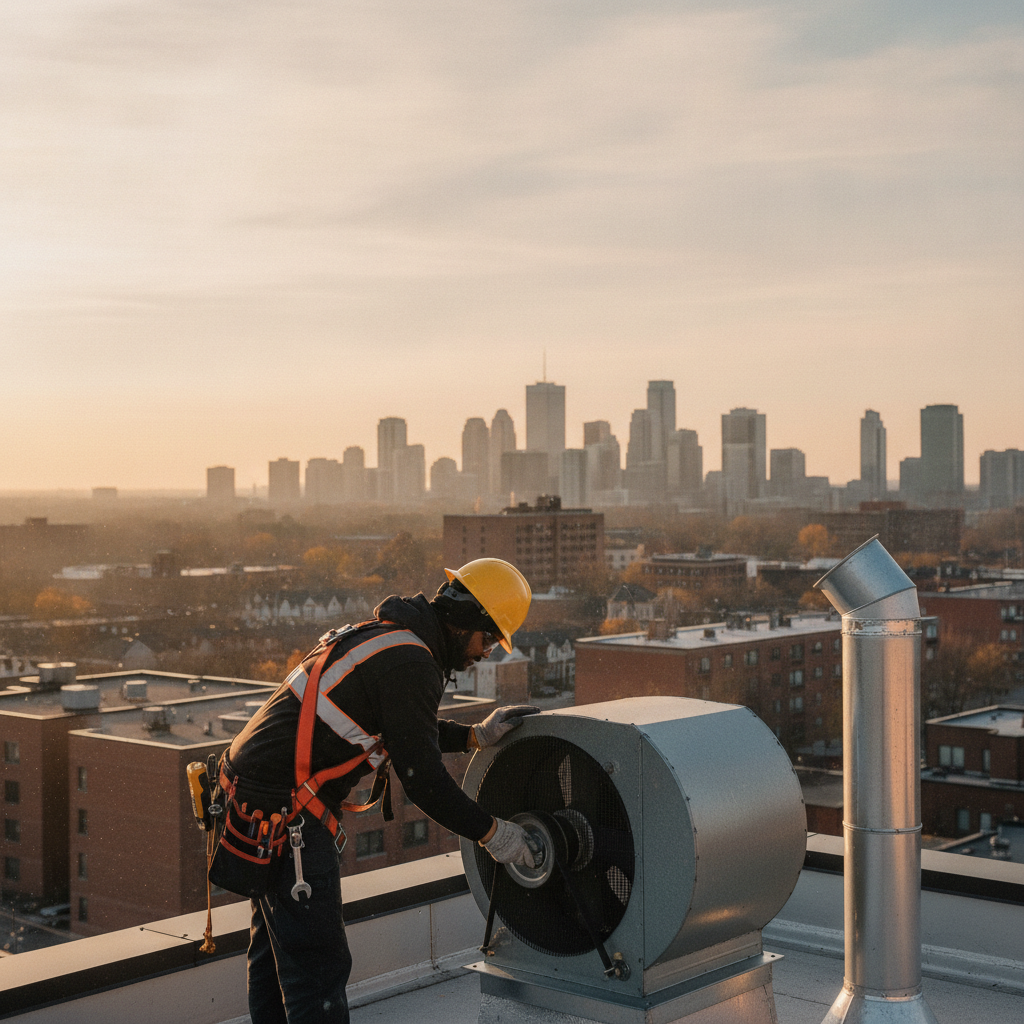
- Exhaust fan cleaning and maintenance: Deep clean blades, confirm rotation, tighten hardware, and check belt tension.
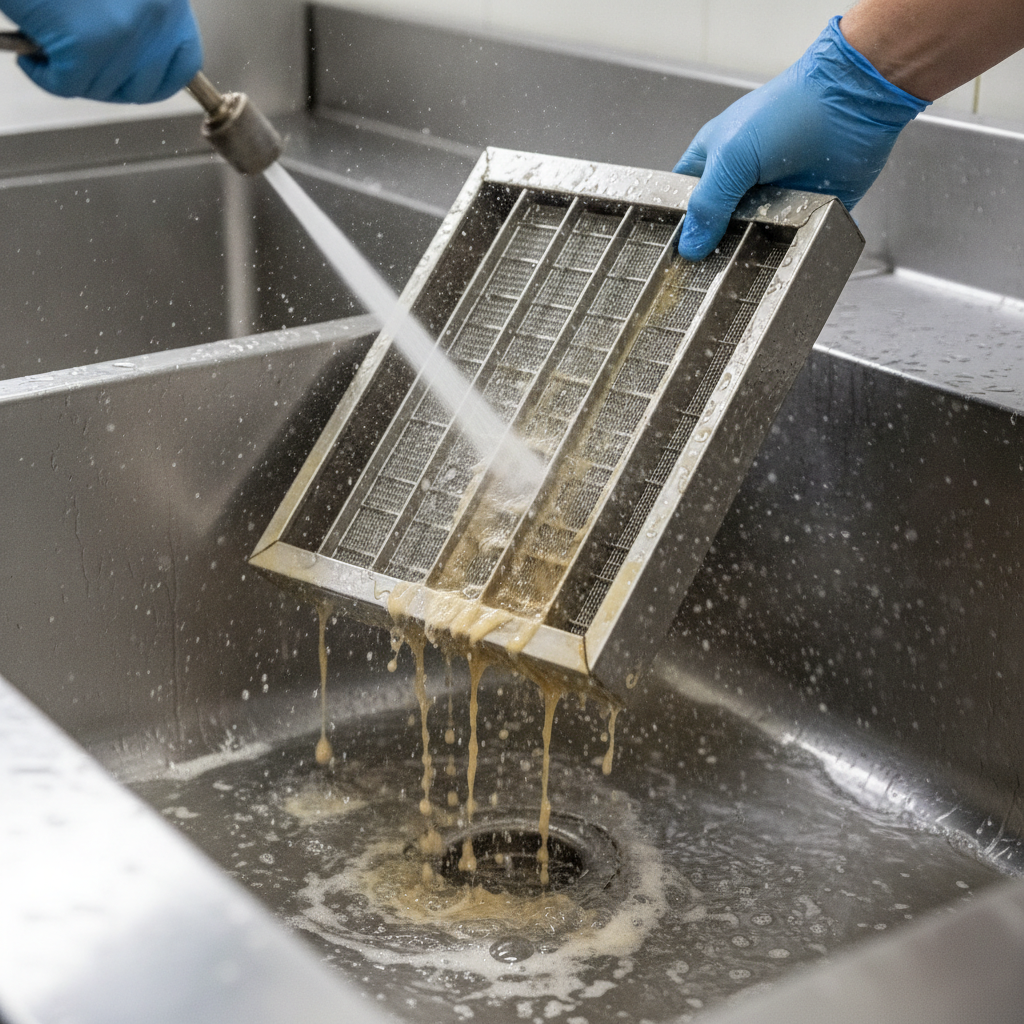
- Filter Cleaning & Exchange: Swap and soak baffle filters on a weekly or biweekly plan. Our exhaust hood cleaning page details best practices.
- Make-up air balancing: Adjust supply to prevent drafts while keeping kitchens slightly negative.
- Power washing: Cut grease films around hoods and dumpsters to reduce persistent odors.
- Grease trap service: Managing trap hygiene supports odor control and staff comfort near prep areas.
For ongoing tips you can hand to shift leads, bookmark our kitchen air quality improvement tips. We update them as new equipment and filter media evolve.
Step-by-Step: A 30-Day Kitchen Air Quality Plan
Start with a baseline check, then complete hood/duct/fan cleaning, set a filter exchange cadence, and verify make-up air. Track CO2/PM during peak hours and adjust. In 30 days, you’ll stabilize smoke, heat, and odors and have a repeatable schedule.
Use this four-week plan to lock in predictable gains without interrupting service.
- Day 1: Baseline walk-through
- Note smoke hang time at grills and fryers during rush.
- Record perceived heat at the line and any odor issues in FOH.
- Document filter condition and fan belt wear.
- Week 1: Full system clean
- Schedule Kitchen Exhaust Cleaning: hood canopies, plenum, ducts, and rooftop fan.
- Power wash floors/walls near the line to reduce odor reservoirs.
- Establish weekly baffle filter exchange (or biweekly for lighter volume).
- Week 2: Verify airflow and balance
- Confirm fan rotation and belt tension; replace worn belts.
- Check make-up air temperature and throw—aim for comfort without drafts.
- Measure CO2 and visible particulates during peak dinner service.
- Week 3: Tune and train
- Adjust filter exchange frequency based on observed loading.
- Train shift leads on quick visual checks at line open and close.
- Document SOPs and assign owners per station.
- Week 4: Validate and lock the schedule
- Re-measure CO2/PM; compare to Week 1 observations.
- Set recurring work orders for cleaning, inspection, and filter rotation.
- Archive photos before/after to keep compliance-ready records.
Many kitchens maintain momentum by adding a quarterly mini-audit. A 30-minute check prevents small drifts from becoming big fixes during the holidays and summer patio season.
Best Practices and Maintenance Schedules
Pair quarterly or semiannual system cleaning with weekly filter exchanges, monthly fan inspections, and routine degreasing around the line. Document every service with photos and completion notes. This cadence keeps airflow stable and inspections smooth.
Match your schedule to style of service and hours.
| Kitchen Type | Hood/Duct/Fan Cleaning | Baffle Filter Exchange | Fan Belt/Hardware Check | Notes |
|---|---|---|---|---|
| Quick Service (heavy fry/grill) | Every 1–3 months | Weekly | Monthly | High grease load; monitor odors at dumpsters |
| Fast Casual (moderate volume) | Every 3–4 months | Weekly or biweekly | Monthly | Watch seasonal patio rushes |
| Full Service/Fine Dining | Every 3–6 months | Biweekly | Monthly | Open kitchen visibility; odor control matters |
| Institutional (schools, healthcare) | Every 3–6 months | Biweekly | Monthly | Coordinate with maintenance windows |
A reliable schedule is only half the equation. The other half is documentation. Capture before/after photos of hoods, ducts, and fans, and keep service logs. If you need a partner to formalize this, our restaurant kitchen cleaning services include templated checklists and reporting.
Tools, Sensors, and Resources
Outfit the kitchen with PM and CO2 monitors, a belt tension tool, spare belts, and degreasing kits for filters. Use checklists for open/close inspections. The right tools make it easy for shift leads to spot airflow drifts early and act fast.
Give your team visual tools and simple routines.
- PM/CO2 monitors: Mount at the line and dish area; log peak readings to spot trends.
- Spare fan belts and a tension gauge: Keep downtime near zero during service.
- Filter exchange kit: Label bins for “clean” vs. “to be soaked,” plus degreaser and PPE.
- Make-up air checks: Verify temperature and airflow throw with a simple vane anemometer.
- Power washing schedule: Target floor edges and dumpster pads to cut odor sources.
Want a deeper dive into frameworks and checklists? This concise Ontario kitchen air quality guide outlines action items you can adapt to your operation, and our kitchen air quality series expands on monitoring strategies across busy seasons. For a practical walkthrough, see this breathe easy explainer.
Free operational walk-through: If you operate in All Over Ontario, we can audit your hood, duct, and fan setup and recommend a filter exchange plan that fits your rushes. No disruption to service—most reviews take under an hour.
Case Studies from All Over Ontario Kitchens
Targeted exhaust cleaning, filter exchanges, and fan tuning deliver fast, visible gains. In Ontario kitchens, operators report cooler lines, fewer smoke complaints, and steadier inspections within the first month when they pair cleaning with monitoring and a filter rotation plan.
Here are three anonymized mini cases that mirror common scenarios we see every month.
Quick-Service Chicken Concept
- Challenge: Persistent smoke at fryers during dinner rush; staff reported hot, sticky air.
- Interventions: Full hood/duct/fan clean, weekly filter exchange, belt replacement, small make-up air tweak.
- Result: Noticeable reduction in visible smoke and heat at the line the same week; fewer FOH odor comments.
Open-Kitchen Steakhouse
- Challenge: Searing on wood-fired grill produced bursts of smoke visible to guests.
- Interventions: Added mid-week filter soak, dialed in make-up air throw, and scheduled monthly fan checks.
- Result: Smoke spikes during searing shortened significantly; dining room odors stabilized.
Institutional Cafeteria
- Challenge: Fluctuating airflow when multiple stations opened at once; staff noticed lingering heat.
- Interventions: Balanced supply air, standardized filter exchanges biweekly, and added open/close checklists.
- Result: More consistent temperatures on the line; easier to pass routine facility checks.
Local considerations for All Over Ontario
- Match maintenance to seasonal volume swings. Summer patios and holiday rushes elevate heat loads; pre-rush cleanings keep airflow steady.
- Plan winter make-up air adjustments. Colder intake air needs proper tempering to prevent drafts on the line during long service hours.
- Coordinate rooftop access windows. Weather and building schedules affect fan inspections; lock in quarterly slots ahead of peak seasons.
Frequently Asked Questions (FAQ)
Operators ask how often to clean systems, what to monitor, and whether make-up air matters. Clean on a fixed cadence tied to your volume, track CO2/PM during peaks, and balance make-up air so kitchens stay slightly negative without drafts.
How often should we clean our hood, ducts, and fan?
Match frequency to volume. Heavy fry and grill lines often benefit from cleaning every 1–3 months. Moderate operations can extend intervals, but weekly or biweekly baffle filter exchanges keep airflow steady between deep cleans.
Which readings should we track to catch problems early?
Log CO2 at the line and dish area during peak service and note visible particulate behavior near grills and fryers. Spikes alongside lingering smoke or rising heat suggest clogged filters, belt slip, or make-up air imbalance.
Do grease traps really affect air quality?
Yes. Poorly maintained traps become strong odor sources, especially near prep and dish areas. Regular trap service reduces odors that drift into the line and dining room and supports overall hygiene and staff comfort.
What’s the fastest way to see improvement this month?
Complete a full hood/duct/fan cleaning, set a weekly filter exchange, and verify make-up air and belt tension. Most operators notice less smoke and heat in the first week when these steps are done together.
Key Takeaways and Next Steps
Clean the system end to end, rotate filters on schedule, and measure what matters during peak service. Balance make-up air, inspect belts, and document work. This integrated approach stabilizes smoke, heat, and odors and keeps inspections predictable.
- End-to-end cleaning beats spot fixes. Hoods, ducts, and fans work as one system.
- Filter exchanges are the weekly habit that prevents most airflow surprises.
- Measure peaks to detect drift early; adjust make-up air before complaints rise.
- Document everything with photos and logs to streamline inspections and training.
Ready to implement this in your kitchen? Our NFPA 96–aligned team is WSIB insured, on call 24/7, and operates across All Over Ontario. Explore our exhaust cleaning services or start with a quick odor-reduction playbook to get traction this week.