Smoke that lingers. Odors that don’t quit. Staff rubbing their eyes at the end of a rush. If any of that sounds familiar, it’s time to look closely at air quality inside your commercial kitchen. In this complete, NFPA 96–aligned guide by Robinhood Cleaners, we connect day-to-day cooking realities with a practical plan for measurable indoor air quality (IAQ) gains—grounded in the certified hood, duct, fan, and filter cleaning we perform every week across Ontario. If you’re searching for air quality improvement commercial kitchens solutions that work fast and last, you’re in the right place.
Quick Summary
- Outcome you want: Clean, balanced ventilation that protects people, food quality, and uptime.
- Core lever: NFPA 96–compliant hood, duct, and exhaust fan cleaning to remove grease and restore airflow.
- Keep it steady: Routine filter cleaning & exchange, grease trap service, and make-up air checks.
- Prove gains: Track simple metrics (visible capture, handheld PM/CO) before and after service.
- Best fit for: Restaurants, hotels, and institutional kitchens that value safety, compliance, and 24/7 scheduling.
Quick Answer
For restaurants All Over Ontario at All Over Ontario, the fastest path to air quality improvement commercial kitchens is certified hood, duct, and exhaust cleaning paired with routine filter exchange and make-up air checks. Robinhood Cleaners (NFPA 96 certified, WSIB insured) provides true 24/7 service to restore capture, reduce smoke/odors, and lower fire risk—with especially quick response in Southern Ontario.
Table of Contents
- What Is Kitchen IAQ?
- Why Kitchen Air Quality Matters
- How Kitchen Ventilation Works (In Plain English)
- Approaches That Actually Improve IAQ
- Step-by-Step Improvement Plan
- Best Practices (NFPA 96–Aligned)
- Tools & Resources
- Ontario Case Snapshots (Real-World)
- FAQ
- Key Takeaways & Next Steps
What Is Kitchen IAQ (Indoor Air Quality)?
In a commercial kitchen, IAQ is the quality of the air your team breathes around cooklines, prep, dish, and pass windows. It’s shaped by heat, moisture, smoke, grease aerosols, and cleaning chemicals. You feel IAQ in comfort, smell it in odors, and see it in visible spillover at the hood.
Key IAQ factors in commercial kitchens
- Capture and containment: Does the hood fully envelop the plume from fryers, grills, and ranges?
- Filtration and separation: Do baffle filters remove grease droplets so air can move freely?
- Transport and discharge: Are ducts clear enough to move air to the roof without excess resistance?
- Exhaust power: Is the fan clean, balanced, and spinning at the right speed?
- Make-up air balance (MUA): Is fresh air supplied in the right amount and direction to prevent backdrafts?
Typical pollutants and stressors
- Fine particles: Smoke and grease mist from frying, grilling, searing, and solid fuel cooking.
- Gases: Carbon monoxide (CO), nitrogen dioxide (NO₂), and volatile organic compounds (VOCs) from combustion and cleaners.
- Heat and humidity: Dense plumes reduce comfort, strain equipment, and push odors into dining spaces.
- Odors: Grease-laden vapors, sulfur smells from drains or under-serviced grease traps.
What drives IAQ up or down?
- Menu and volume: High-temp grills, solid fuel, and heavy fryer use create more particulate and grease.
- Equipment layout: Hood overhang, height, and side panels determine how well plumes are captured.
- Maintenance discipline: Baffle cleaning, hood/duct/fan service, and MUA balancing keep systems on spec.
- Seasons and weather: Wind gusts and temperature swings change draft behavior, affecting capture.
Why Kitchen Air Quality Matters
- Protects people: Less smoke and CO means fewer headaches, less eye irritation, and better shift stamina.
- Reduces fire risk: Removing grease from hoods, ducts, and fans eliminates a major ignition pathway.
- Improves food and guest experience: Odors stay out of the dining room; crisp textures survive to the table.
- Extends equipment life: Clean fans, aligned belts, and cooler ambient temps reduce breakdowns.
- Supports compliance: NFPA 96–aligned cleaning and documentation streamline inspections and insurance audits.
For a deeper dive on provincial expectations and risk reduction, see our discussion of
Ontario restaurant fire safety standards and how steady maintenance helps you avoid last‑minute scrambles.
How Kitchen Ventilation Works (In Plain English)
Think of your ventilation as one continuous path: capture at the hood, air cleaned by baffles, air pushed through ducts by the fan, then fresh air supplied back in. If any piece underperforms, the whole system feels it.
The exhaust path
- Hood geometry: Proper overhang and height help corral plumes; side panels stop cross-drafts from stealing capture.
- Baffle filters: These force air to turn, separating grease droplets. When clogged, static pressure rises and spillover starts.
- Ductwork: Grease coats interior walls, shrinking effective diameter and raising resistance; that kills airflow and raises fire risk.
- Exhaust fan: Clean blades and correct belt tension keep CFM in design range; imbalance and buildup erode performance quickly.
The supply side (make-up air)
- Balanced volumes: Exhaust must be matched by supply. Too little MUA creates negative pressure and backdrafting.
- Diffuser placement: Aim supply so it feeds the hood’s capture zone; avoid blowing across the hood face.
- Seasonal impacts: Cold snaps, heat waves, and high winds change stack effect and draft direction.
Controls and behaviors
- Start-up sequence: Turn on MUA and exhaust before cooking to stabilize draft.
- Operational discipline: Keep pans centered, lids used wisely, and equipment fully under the hood.
- Staff awareness: Train teams to spot visible spillover and report fan belt squeal, vibration, or odd odors early.
For a practical breakdown of improving capture and flow, review our
kitchen ventilation optimization guide—it explains how small layout and airflow tweaks compound into big IAQ gains.
Approaches That Actually Improve IAQ
- NFPA 96–compliant hood, duct, and exhaust cleaning: Foundational for removing grease and restoring design airflow. This is where most kitchens see the biggest, fastest improvement.
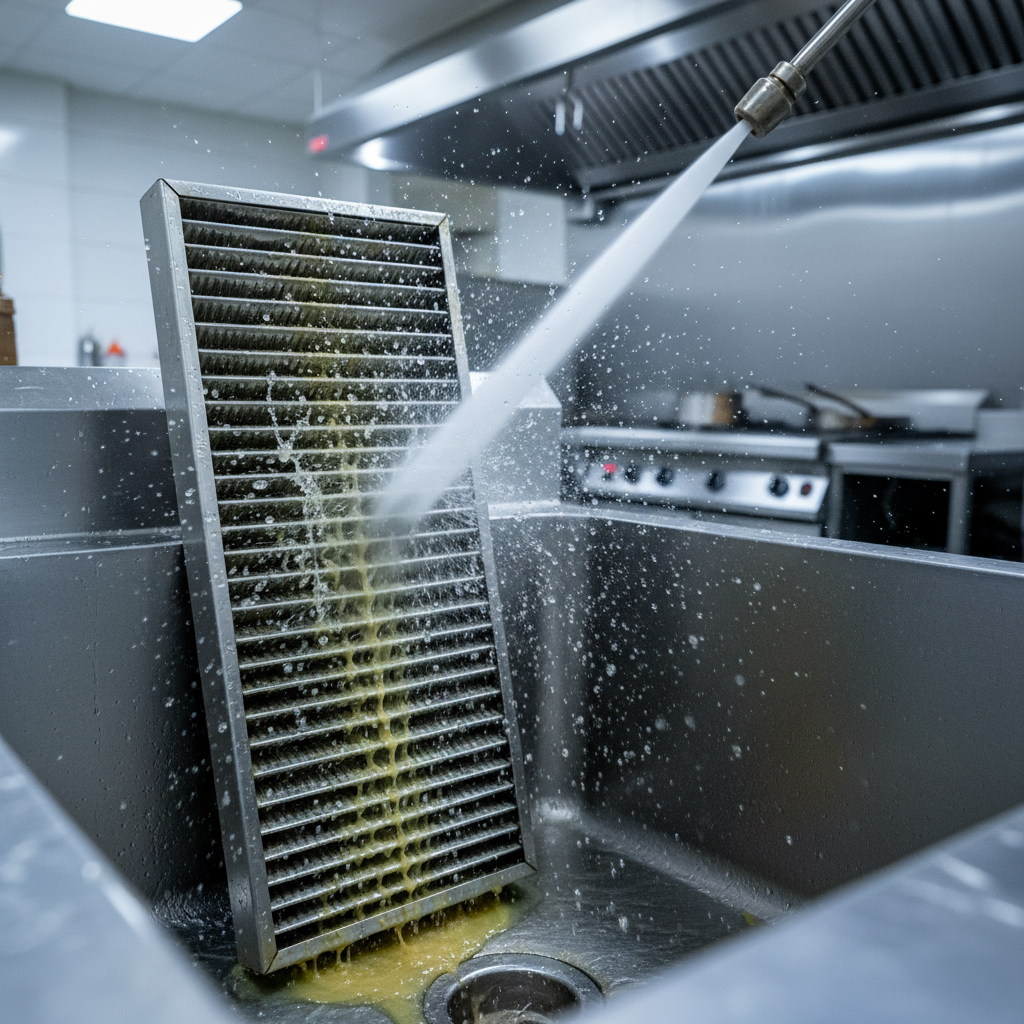
- Filter cleaning & exchange: Maintain a labeled rack of clean baffles and rotate them before peak periods; never let filters choke capture efficiency.
- Exhaust fan inspection and belt care: Check condition, tension, and alignment; a slipping belt can cut airflow dramatically mid-rush.
- Make-up air balancing: Verify supply volumes and diffuser aim; correct cross‑drafts that push smoke out of the hood.
- Grease trap service: Control odors and prevent plumbing issues that undermine IAQ and guest comfort.
- Solid-fuel vigilance: Wood and charcoal demand tighter cleaning frequencies and ember control routines.
- Demand-based ventilation (when available): Variable speed control can lower heat and noise; keep systems clean so sensors and dampers work as intended.
Looking for a done‑for‑you path? Our crew handles hood, duct, fan, and baffle detail work on your schedule. Learn how our
commercial kitchen hood cleaning service in Ontario keeps capture strong through your busiest seasons.
Step-by-Step Improvement Plan
Use this seven-part playbook. It’s the same sequence we apply across restaurants, hotels, and institutional kitchens All Over Ontario.
- Baseline your kitchen during a rush
- Walk the line at peak. Note visible spillover, hot spots, odor creep, and any nuisance alarms.
- Check door behavior. If doors suction shut or whistle, you’re likely under-supplied on MUA.
- Ask staff about symptoms: headaches, eye irritation, stale odors at dish or expo.
- Jot simple measures: visible capture rate (yes/no at each appliance), hood surface temps (touch-safe vs. hot), and any audible belt squeal.
- Inspect the hood and baffle filters
- Confirm hood overhang and equipment placement; push appliances fully under capture zone.
- Pull baffles and check for heavy grease or dents that disrupt airflow.
- Set a labeled rotation so a clean set is always ready for pre-rush swaps.
- Schedule NFPA 96–certified exhaust cleaning
- Clean hood, plenum, vertical/horizontal ducts, and exhaust fan to bare metal where applicable.
- Photograph before/after for inspection records and staff training (what “good” looks like).
- Confirm rooftop grease containment and clean perimeter; protect roofing membrane.
- Tune the exhaust fan and belts
- Verify RPM and motor behavior; tighten or replace belts as needed.
- Listen for bearing noise and feel for vibration; imbalance erodes CFM quickly.
- Inspect pulleys and guards; ensure safe, reliable operation through peak hours.
- Balance make-up air
- Check supply volumes and diffuser placement; don’t blow across the hood face.
- Adjust louvers and diffusers to feed the capture zone gently and consistently.
- Re-check door behavior; aim for easy open/close without drafts.
- Close the loop on odors and drains
- Service grease traps on schedule; prevent sulfur smells that compete with food aromas.
- Flush floor drains and review cleaning cadence in dish and prep areas.
- Sanitize pop-up odor sources (under-shelf spaces, mop sinks, and behind equipment).
- Monitor and maintain
- Set monthly hood/baffle checks and a cleaning calendar per NFPA 96 frequency.
- Spot-check IAQ with simple PM and CO meters during peak periods.
- Document services, photos, and tags in a shared folder for inspections.
DIY vs. Professional: Who Does What?
| Task | Owner | How Often | Why It Matters |
|---|---|---|---|
| Wipe hood exterior & change baffles | Kitchen team | Daily/Weekly | Keeps capture area clear; reduces residues and odors. |
| Deep clean hood, ducts, fan (NFPA 96) | Certified vendor | Per NFPA 96 table | Removes fire fuel; restores airflow; supports compliance. |
| Fan belt inspection/replacement | Certified vendor | Quarterly or as needed | Prevents sudden CFM loss and nuisance smoke. |
| Grease trap service | Certified vendor | On schedule | Controls odors and plumbing issues that impact IAQ. |
| MUA balance & diffuser checks | HVAC/ventilation pro | Annually or post-reno | Stops backdrafting and improves comfort. |
Curious how often your system needs certified cleaning? Our short explainer on
hood cleaning frequency breaks it down by cooking type and volume so you can plan confidently.
Best Practices That Stick (Aligned to NFPA 96)
- Follow NFPA 96 cleaning frequencies: Solid-fuel commonly monthly; high-volume frying/grilling quarterly; moderate semiannually; low-volume annually. Document every service.
- Standardize filter rotation: Keep a clean, labeled baffle rack; swap before peaks rather than after problems appear.
- Go to bare metal where applicable: Hidden horizontals often harbor the worst buildup; don’t stop at the hood.
- Protect the rooftop: Install grease containment on fans; prevent membrane damage and slippery hazards.
- Train for capture: Center pans, avoid cross-drafts, and keep lids on when not searing; small habits, big impact.
- Photo-log and tag: Keep dated before/after photos and tags in a binder or shared drive ready for inspectors.
- Seasonal tune-ups: Recheck MUA and exhaust balance at the start of patio season and before winter.
- Rooftop housekeeping: Clear debris, confirm safe access, and verify fan curbs and hinges are secure.
- Incident drills: Practice hood suppression checks and staff reporting for smoke, vibration, or odor anomalies.
Need a compliance blueprint? Our
NFPA 96 compliance playbook outlines records, tags, and service intervals inspectors expect to see.
Tools & Resources
- Handheld IAQ meters: Simple PM2.5/PM10 and CO meters for spot checks during lunch and dinner peaks.
- Airflow tools: Anemometer and manometer for quick reads on hood face velocity and pressure trends.
- Cleaning hardware: Food-grade degreasers, hot-water pressure washers, rotary brushes, scrapers, and rooftop grease containment.
- Documentation kit: Photo log, service tags, and a digital calendar aligned to NFPA 96 frequencies.
- Staff training one-pagers: “What good capture looks like,” “When to swap baffles,” and “How to report belt issues.”
Ontario Case Snapshots (Real-World)
- Multi-unit grill concept (Southern Ontario):
- Problem: Persistent haze over fryers; doors hard to open during rush.
- Actions: Full exhaust cleaning to bare metal, belt replacement, diffuser re-aim for MUA, baffle exchange plan.
- Result: Visible spillover dropped, odor complaints fell, kitchen temps stabilized.
- Downtown hotel kitchen (All Over Ontario service area):
- Problem: Smoke alarm triggers during banquets; staff eye irritation.
- Actions: Hood/duct/fan degreasing, rooftop grease containment, scheduled trap service.
- Result: No nuisance alarms post-clean cycle; improved staff comfort feedback.
- Independent bistro (Southern Ontario quick call):
- Problem: Odors migrating to dining room on windy days.
- Actions: Duct cleaning, baffle swap, MUA balance, sealed small hood gaps.
- Result: Odor complaints dropped; stable capture during gusty weather.
- Campus food court (Ontario institution):
- Problem: Mixed vendors sharing ducts; backdraft between stalls.
- Actions: Coordinated full-duct cleaning, staggered start-up sequence, diffuser repositioning.
- Result: Balanced flow; reduced cross‑stall smoke migration.
- Ghost kitchen hub (delivery-heavy):
- Problem: High fryer throughput loaded baffles mid-shift.
- Actions: Labeled baffle rack with pre‑rush swaps; quarterly certified cleanings; fan belt checks.
- Result: Capture stayed consistent across dinner rush; fewer odor calls from tenants.
- Steakhouse with solid fuel:
- Problem: Ember risk and heavy soot on horizontal runs.
- Actions: Monthly certified cleaning, ash management SOPs, rooftop containment.
- Result: Lower fire risk; staff reported easier breathing near grill station.
- Quick-serve chain (province-wide):
- Problem: Inconsistent vendor quality across locations.
- Actions: Standardized NFPA 96 schedule, shared photo log, centralized service tags.
- Result: Uniform IAQ and compliance outcomes; smoother inspections.
- Banquet facility:
- Problem: Odors trapped in prep corridors during high-output events.
- Actions: MUA volume increase, diffuser aim correction, trap service before events.
- Result: Fresher back-of-house; guest areas stayed odor‑free.
- Pizza concept:
- Problem: Hood face cross‑draft from supply grille.
- Actions: Redirected MUA, adjusted overhang with side paneling, filter rotation.
- Result: Capture restored; cooler working temps near ovens.
- Hotel breakfast line:
- Problem: Odors lingering into lobby.
- Actions: Duct cleaning, small fan belt correction, lobby door sweep improvement.
- Result: Odor creep stopped; better guest first impressions.
- Hospital kitchen:
- Problem: Negative pressure pulling air from dish into prep.
- Actions: MUA balancing; diffuser repositioning to feed hood capture zone.
- Result: Cleaner airflow paths; reduced cross‑area odors.
- Cafe with open kitchen:
- Problem: Visible haze at espresso bar during brunch.
- Actions: Filter swap cadence, low‑noise MUA boost, targeted hood edge seals.
- Result: Clear sightlines; baristas reported easier breathing.
- Food truck commissary:
- Problem: Shared exhaust path loaded with grease; frequent odor complaints.
- Actions: Consolidated quarterly cleanings, trap service alignment, shared SOPs for baffle swaps.
- Result: Fewer complaints; smoother overnight prep for trucks.
- Catering kitchen:
- Problem: Seasonal surges overwhelmed filters.
- Actions: Pre‑season deep clean, increased filter inventory, staff refresher training.
- Result: Consistent capture during peak holiday runs.

Local Tips
- Tip 1: Sites exposed to strong lake winds or highway corridors should ask for a make‑up air check—cross‑drafts can push smoke out of the hood during peak service.
- Tip 2: Plan deep cleaning before major holidays and patio season; warmer months and rush periods amplify smoke and odor issues.
- Tip 3: Late‑night kitchens can leverage our 24/7 scheduling so cleaning happens after close and systems are cool for morning prep.
IMPORTANT: These tips reflect conditions common across Ontario and align with our NFPA 96–certified services.
FAQ
How often should a commercial kitchen schedule hood and duct cleaning?
Follow NFPA 96 guidance: solid‑fuel operations often monthly; high‑volume frying/grilling quarterly; moderate semiannually; low‑volume annually. Exact frequency depends on menu, hours, and observed grease accumulation. We confirm the right cadence during our site assessment and document each service for inspections.
What are the fastest wins for better kitchen air quality?
Restore capture at the hood and keep it there. Clean baffles on rotation, schedule NFPA 96–certified hood/duct/fan cleaning to bare metal where applicable, and check make‑up air diffusers so they don’t blow across the hood opening. Most kitchens feel the difference the next shift.
Do better filters really matter?
Yes. Clean, properly seated baffle filters are essential for both grease removal and airflow. When they load up, static pressure rises and smoke spills out. A simple labeled filter rack and exchange schedule keeps capture efficiency high through peak periods.
How does grease trap service affect IAQ?
Grease traps don’t just protect plumbing—they also control odors that can drift into prep and service areas. Regular trap pumping and cleaning prevent sulfur smells that compete with food aromas and trigger guest complaints.
Can I measure IAQ without complex sensors?
Start simple. Observe visible capture at the hood, note nuisance alarms, and use handheld PM and CO meters during peak service. These quick checks help you decide when to adjust make‑up air, swap baffles, or schedule certified cleaning.
Key Takeaways & Next Steps
- Remove the fuel, restore the flow: NFPA 96–aligned hood/duct/fan cleaning is the fastest lever for better IAQ.
- Keep filters fresh: Rotations prevent mid‑shift performance drops.
- Balance make‑up air: Good supply stops backdrafts and odor creep.
- Prove gains: Track capture, PM, and CO during peak hours.
- Document everything: Photos and tags speed inspections and protect your team.
Action steps: Walk your line during a rush and list the worst spillover spots. Set a weekly baffle swap and a realistic NFPA 96 cleaning cadence. Book an after‑hours service window so your team never loses prep time. For NFPA 96–certified work across the province, see our page on
NFPA 96–certified hood cleaning in Ontario.
Need help now? Our NFPA 96–certified, WSIB‑insured team serves commercial kitchens All Over Ontario with true 24/7 availability and quick response in Southern Ontario. We handle exhaust systems end‑to‑end so you can focus on food and guests.