Duct cleaning air quality improvement is the targeted removal of grease, dust, and contaminants from commercial kitchen hoods, ducts, and exhaust components to restore airflow, cut odors and smoke, and support safer, healthier spaces. For Ontario restaurants and institutional kitchens, it directly improves staff comfort, food quality, and inspection readiness.
By Robinhood Cleaners • Last updated: 2026-04-16
Quick Summary
Clean, well-maintained kitchen ducts pull smoke, heat, and grease aerosols out of the air so your team breathes easier and your facility passes inspections. This guide explains what to clean, how often, and which best practices keep airflow strong and indoor air quality (IAQ) high all year.
- What duct cleaning is and why it improves IAQ in commercial kitchens
- How the cleaning process works from hood to rooftop fan
- Methods, tools, and documentation aligned to NFPA 96
- Maintenance cadence by volume, menu, and season in Southern Ontario
- Actionable checklists, case examples, and a planning worksheet
- What drives the investment (no pricing), scheduling, and downtime tips
Quick Answer
Duct cleaning air quality improvement in All Over Ontario means removing grease and particulates from hoods, ducts, and exhaust fans to restore airflow and reduce contaminants. Robinhood Cleaners provides NFPA 96–aligned hood and duct cleaning, filter exchange, and ventilation maintenance across Ontario to keep teams breathing easier.
Local Tips
- Plan rooftop access smartly: Along the QEW/401 corridors, roof access can be restricted during daytime deliveries. Schedule after-hours so crews can service exhaust fans without interrupting loading bays.
- Adjust for winter loads: With doors sealed December–March, CO2 and humidity rise. Tighten your filter exchange and hood inspections to keep capture efficiency up when kitchens run hottest.
- Coordinate plaza rules: Many Southern Ontario plazas require roof keys and advance notice. Confirm access windows when you book so your cleaning window stays on track.
IMPORTANT: These tips reflect typical Southern Ontario operations and pair with our NFPA 96–aligned services so your kitchen stays clean, compliant, and comfortable.
What Is Duct Cleaning for Air Quality Improvement?
It’s a specialized deep-clean of commercial kitchen hoods, ducts, and exhaust components to remove grease and particulates. The outcome is higher airflow, fewer odors and smoke, and safer, healthier air for staff and guests. Proper service aligns to NFPA 96 with photo documentation and tagging.
- Scope: Stainless hoods, horizontal/vertical ductwork, exhaust fans, curbs, and make-up air intakes.
- Targets: Grease films, aerosolized oils, dust, soot, and debris that throttle airflow and elevate fire risk.
- Results: Restored CFM, better capture at the hood, lower static pressure, and improved IAQ in back-of-house.
- Compliance: “Bare metal” cleaning standard and service tags that simplify health and insurance audits.
According to the U.S. Environmental Protection Agency, indoor air in typical buildings can be 2–5 times more polluted than outdoor air; in fry-heavy kitchens, grease aerosols push those levels higher unless ventilation is maintained regularly. That’s why kitchen duct cleaning isn’t optional—it’s operational risk control.
For a practical overview of capture and containment at the hood, see our plain-language primer in the commercial hood cleaning guide, which outlines how smoke and heat should be intercepted before they reach diners.
Why Duct Cleaning Matters to Kitchens Like Yours
Kitchen ducts accumulate grease that reduces airflow and elevates fire risk. Cleaning restores capture efficiency, lowers heat and humidity, and keeps inspections smooth. For high-volume, oil-forward menus, it protects guests, staff, and inventory while stabilizing daily operations.
- Fire hazard reduction: Grease-laden vapors deposit combustible residue in hoods, ducts, and fans. NFPA incident summaries consistently rank cooking equipment among the top causes of restaurant fires.
- Health and comfort: Better exhaust reduces exposure to fumes and radiant heat—key factors for retention and performance on the line. We’ve seen prep station temperatures drop several degrees after fan and duct service.
- Guest experience: Less smoke creep and odor carry-over into dining rooms keeps reviews positive and allergen complaints down.
- Regulatory readiness: NFPA 96–aligned cleaning, photos, and service tags ease insurer and landlord audits—especially critical for mall food courts and institutional kitchens.
In our experience across Southern Ontario, locations that align duct service with filter exchange and fan belt checks report fewer odor complaints and smoother inspections within a single service interval. Want a quick checklist? We summarized the essentials in our kitchen air quality improvement tips.
How Professional Kitchen Duct Cleaning Works
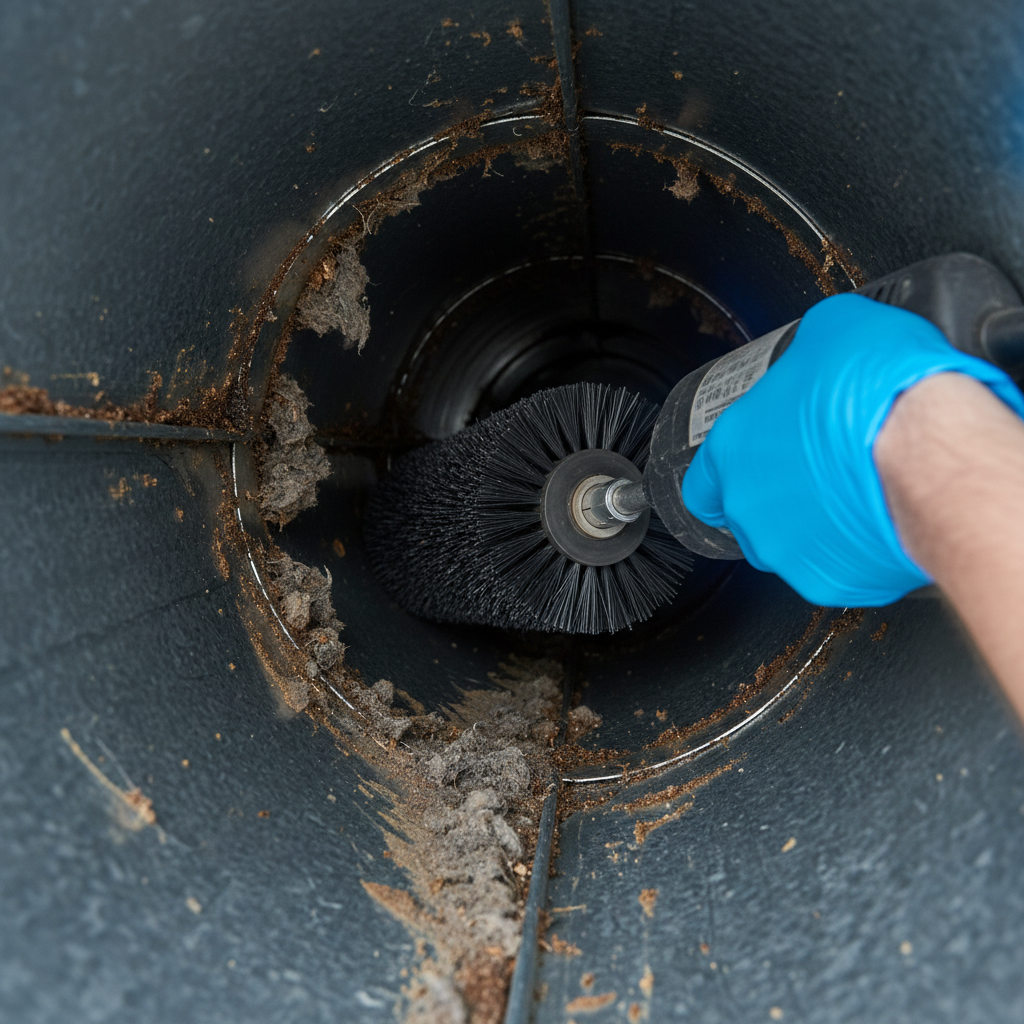
Technicians isolate the system, apply degreasers, and remove residue from hoods, ducts, and fans using rotary brushes, scrapers, and hot-water rinsing. They document results, tag equipment, and recommend filter exchange or belt replacement to lock in capture performance.
- Site prep and protection: Wrap equipment, set drip containment, and lay non-slip floor protection.
- Access panels: Open existing panels or install new ones to ensure full-duct reach—vertical risers included.
- Mechanical agitation: Rotary brushing and scraping to break heavy deposits.
- Chemical application: Food-service-safe degreasers dissolve stubborn grease films.
- Hot-water rinse: Pressurized rinse clears residue to recovery systems—no mess left behind.
- Fan service: Clean blades and housings, check hinges and grease containment, and verify belt condition.
- Make-up air: Inspect and clean intakes and screens to balance supply and exhaust.
- Verification: Photo documentation, tags, and post-service airflow checks so you can show compliance at a glance.
| Step | Goal | What You See |
|---|---|---|
| Agitation | Loosen grease | Brush passes, scraped panels |
| Degrease | Dissolve residue | Foam action, managed runoff |
| Rinse | Clear debris | Clean bare metal surfaces |
| Fan tune | Restore pull | Balanced blades, belt check |
| Document | Prove compliance | Photos, tags, concise report |
Teams that follow this sequence reduce rework and avoid residue redeposit. We align our reports with what inspectors ask for so your audit takes minutes, not hours.
Methods, Tools, and Approaches We Trust
Use mechanical cleaning to bare metal and verify with photos. Pair HEPA capture for dry debris with hot-water rinsing for grease. Maintain negative pressure, protect appliances, and finish with filter exchange and belt checks for lasting airflow gains.
- Mechanical to bare metal: The NFPA 96 expectation for grease systems—visual confirmation matters.
- HEPA capture: High-efficiency particulate air vacuums prevent re-aerosolization during dry debris removal.
- Negative air control: Keep contaminants out of dining and prep areas by maintaining controlled airflow during work.
- Rooftop exhaust fan focus: Clean blades, housings, and curbs; verify hinges and grease containment so wind events don’t push residue onto roofs.
- Filter cleaning & exchange: Set cadence by volume and measured pressure drop, not just the calendar.
- Fan belt replacement: Proper belt tension is a direct lever on capture velocity at the hood—loose belts cost airflow.
Industry guidance from ASHRAE emphasizes source capture and appropriate filtration as core IAQ controls. In kitchens, that begins at the hood and extends through ducts and rooftop fans. We bring those principles on-site, pairing them with our ventilation system optimization practices for reliable day-to-day performance.
Best Practices and Maintenance Cadence
Match cleaning frequency to grease load and operations. Document every service, inspect filters monthly, and align hood, duct, and fan maintenance with menu changes and peak seasons to keep capture and airflow steady.
- Cadence by volume: Fryer- and grill-heavy lines need more frequent service than bake-forward menus. Document rationale for your schedule.
- Filter policy: Clean or exchange based on visible load or pressure drop—don’t wait for odor complaints.
- Access matters: Proper access panels reduce guesswork and time on future visits, improving consistency.
- Photo documentation: Before/after evidence accelerates inspections and insurance reviews.
- IAQ checks: Track CO2 (aim to hover near 800–1000 ppm in occupied areas as a simple ventilation proxy) and relative humidity.
- Seasonal planning: Increase attention before winter closures and before patio season ramps up.
Our checklists build on real-world observations from Ontario kitchens, where we’ve found that pairing filter exchange with duct cleaning holds IAQ gains longer than servicing these elements separately.
Tools and Resources Used on Real Jobs
Commercial-grade degreasers, rotary brush heads, heated rinsing, HEPA vacuums, and airflow meters provide verifiable results. Rooftop safety gear and proper access panels allow complete coverage and documentation your inspector will recognize.
- Rotary brush systems: Reach long horizontal runs efficiently without damaging duct seams.
- Food-service-safe degreasers: Formulations that break down baked-on grease while meeting kitchen safety standards.
- Heated, pressurized rinsing: Lifts residue and prevents re-deposit inside elbows and risers.
- HEPA filtration vacuums: Capture fine particulates around make-up air and returns.
- Airflow and pressure tools: Anemometers and manometers to spot low-capture zones at the hood.
- Documentation kit: Photo, tag, and digital reporting that maps to NFPA 96 expectations.
When we combine these tools with fan belt checks and filter exchange, kitchens typically report immediate comfort improvements on the line within the first service cycle.
Case Studies and Ontario Examples
From quick-service lines to institutional kitchens, IAQ improves quickly after duct cleaning. Airflow rises, smoke capture stabilizes, and inspections run faster when systems are cleaned to bare metal and filters are maintained on a defined cadence.
- QSR corridor off Highway 401: Fryer-heavy line suffered smoke spillover into front-of-house. After cleaning ducts to bare metal and exchanging filters, complaints dropped and dining room haze vanished on peak nights.
- University residence kitchen: Seasonal surges created odor spikes near exams. Aligning cleaning just ahead of surge windows cut complaints and kept prep rooms cooler.
- Shared food court exhaust: Tenants experienced uneven capture due to a common riser. Coordinated, after-hours cleaning and rooftop fan service stabilized performance across stalls.
- Winery restaurant (Niagara): Low ceilings and short canopies reduced capture margin. Adding access panels enabled full-duct reach, making subsequent cycles faster and more thorough.
- Commissary kitchen (Hamilton): Overnight production intensified grease load. Rooftop fan cleaning and belt replacement improved morning pull and kept ambient temps manageable.
- Banquet hotel in a downtown core: Roof curb grease containment failed during windy conditions. Upgraded containment and thorough fan housing cleaning prevented staining and slip hazards.
Similar patterns play out across Ontario: when hood, duct, and fan care move in lockstep, air quality and compliance follow. For fire-prevention specifics, we break down risk factors in our exhaust duct cleaning fire prevention explainer.

Kitchen vs. HVAC Duct Cleaning: What’s the Difference?
Kitchen ducts carry grease-laden vapors and must be cleaned to bare metal per NFPA 96. HVAC ducts mostly handle dust. Methods, chemicals, access, and compliance requirements differ, so choose a provider experienced in commercial kitchen systems.
- Contaminants: Kitchen ducts = grease aerosols; HVAC = dust and fibers.
- Standard: Kitchens require NFPA 96 bare-metal outcomes; HVAC follows different guidance and goals.
- Tools/chemistry: Degreasers and heated rinsing for kitchens vs. primarily dry agitation and vacuuming for HVAC.
- Access and safety: Rooftop fans, hinges, and curbs demand specialized safety practices and documentation.
Selecting the wrong approach can leave hidden grease in risers and elbows. That’s why we specifically train crews on kitchen systems and document to inspection expectations.
Step-by-Step: Plan Your Next Service Window
Audit your system, map access, and schedule around operations. Confirm power, hot water, and rooftop access. Align cleaning with filter exchange and a fan belt check, then close the loop with photos and tags so your next inspection is a non-event.
- Audit: Identify hoods, risers, horizontal runs, fans, and make-up air intakes.
- Access: Verify panels and roof keys; plan new panels if needed.
- Schedule: Choose after-hours windows; consider plaza restrictions and tenant overlap.
- Integrate: Add filter cleaning & exchange and fan belt replacement to the same visit.
- Prep: Clear areas under hoods; secure water and power as needed.
- Verify: Request photos, tags, and a concise report aligned to NFPA 96.
Need help mapping your runs? Our crews do this daily across Ontario and can align frequency to your menu volume and risk profile.
Common Mistakes We See (And How to Avoid Them)
Don’t separate hood cleaning from duct and fan service. Skipping filters or belt checks erodes results fast. Document every visit with photos and tags, and keep access panels in good order for complete coverage each cycle.
- Cleaning the hood but not the duct: Grease left in risers and horizontals will re-contaminate the hood quickly.
- Ignoring filters: Dirty filters reduce capture velocity and push smoke into front-of-house.
- Skipping fan belts: Loose or worn belts rob airflow—capture falls even after a good cleaning.
- No photos or tags: Inspectors need proof. Without it, you redo work or face delays.
- One-size scheduling: A fry line and a salad station shouldn’t share the same cadence.
We built our ventilation optimization framework to prevent these pitfalls. It ties filtration, duct cleaning, and fan performance into one repeatable plan.
Pricing: What Drives the Investment (No Numbers)
Scope, grease load, access, timing, and documentation needs drive the investment. Multi-hood lines, long vertical runs, rooftop access, and overnight scheduling influence planning more than any single factor.
- System size and complexity: Hood count, duct length, and vertical risers change labor and access needs.
- Grease load and soil level: Fry/grill intensity and last-service interval affect time-on-task.
- Access requirements: Panel installs, roof keys, and mall restrictions matter.
- Scheduling: After-hours, holidays, and turnover windows can shape your plan.
- Compliance deliverables: Photo reporting, tagging, and inspection support are part of the value.
- Integrated add-ons: Filter exchange, fan belt replacement, and make-up air cleaning extend results.
While every kitchen is unique, one constant remains: pairing duct cleaning with filter and fan care gives your team the longest-lasting IAQ and safety improvements.
FAQ
Align duct cleaning with grease load and inspection cycles. Look for NFPA 96 alignment, photo documentation, and filter/fan integration. Below are concise answers to questions we hear from Ontario kitchen teams.
How often should a restaurant schedule duct cleaning?
Match frequency to menu and volume. Fryers and solid-fuel grills require more frequent service than light sauté lines. Coordinate with inspections and keep photo documentation ready for insurers and landlords.
What’s the difference between HVAC duct cleaning and kitchen duct cleaning?
Kitchen ducts handle grease-laden vapors and must be cleaned to bare metal per NFPA 96. HVAC ducts target dust and general particulates. Tools, chemicals, access, and compliance requirements differ significantly.
Will service disrupt operations?
Plan after-hours or during closed windows. Protect equipment, coordinate rooftop access, and confirm water and power availability. A well-run crew contains runoff and leaves stations ready for morning prep.
Can better filters replace duct cleaning?
No. Filters support IAQ but don’t remove grease films inside ducts and fans. Mechanical cleaning remains essential for fire safety and airflow; filters and make-up air maintain those gains.
Do you provide inspection-ready documentation?
Yes. We provide photos, tags, and concise reports mapped to NFPA 96 so audits move quickly. Many Ontario clients keep our latest report on file by the manager’s station.
Key Takeaways
Clean ducts, tuned fans, and timely filter exchange deliver healthier air, smoother inspections, and fewer odor complaints. Align cadence to volume, document every visit, and integrate filter and belt checks to lock in results.
- Grease residues throttle airflow and elevate fire risk—clean to bare metal
- Filter exchange and fan belt health sustain capture velocity at the hood
- Photo reports and tags speed inspections and insurance reviews
- Schedule around Southern Ontario access rules and peak seasons
Need a quick assessment?
We service restaurants, hotels, food courts, and institutional kitchens across Ontario with hood and duct cleaning, filter exchange, fan belt replacement, and ventilation maintenance. Book a short discovery call and get a practical plan.
Conclusion
For food service leaders, duct cleaning is both an IAQ and safety lever. When hoods, ducts, and fans are cleaned and documented, teams breathe easier and inspections are simpler. Pair service with filter exchange and belt checks for durable performance.
Robinhood Cleaners is NFPA 96–aligned, WSIB insured, and available 24/7 for flexible scheduling across Ontario. Our certified teams use pro-grade tools and documentation to keep your kitchen compliant and comfortable—so your focus stays on great food and guests.