Kitchen exhaust fan maintenance is the ongoing inspection, cleaning, and repair of commercial vent hoods, ductwork, and rooftop fans to remove grease and ensure safe airflow. It lowers fire risk, helps meet NFPA 96-type standards, and keeps kitchens productive. In All Over Ontario, Robinhood Cleaners aligns service with real restaurant schedules.
By Robinhood Cleaners · Last updated: 2026-06-04
Overview and table of contents
This guide explains how exhaust systems work, what fails first, and the exact steps to maintain hoods, ducts, filters, and exhaust fans. You’ll get a practical schedule, tool list, safety checks, and real Ontario examples—so your team prevents downtime and passes inspections without stress.
If you manage a restaurant, institutional kitchen, or food court in Southern Ontario, this complete guide shows how to run a safer, quieter, and more efficient ventilation system without trial and error.
- What kitchen exhaust fan maintenance includes and why it matters
- How commercial exhaust systems move air and trap grease
- Step-by-step maintenance workflow and frequency table
- Common failure points: belts, bearings, hinges, and filters
- Best practices our NFPA 96–certified team uses on site
- Tools and resources for in-house checks vs. pro service
- Mini case studies from Ontario kitchens
Local considerations for All Over Ontario
- Plan rooftop fan service around windy days and shoulder seasons; gusts across Southern Ontario can complicate lid-hinge safety and ladder stability.
- Holiday rush and patio season increase grease load; schedule filter exchanges weekly and full hood cleanings more frequently during peak months.
- Coordinate after-hours service; our 24/7 availability fits quick service and fine dining rotations without interrupting meal periods.
What is kitchen exhaust fan maintenance?
Kitchen exhaust fan maintenance is a recurring program of inspections, cleaning, and minor repairs to hoods, filters, ducts, and rooftop fans. It removes grease, protects motors and belts, improves airflow, and supports safety compliance for commercial kitchens.
At Robinhood Cleaners, we define maintenance as more than “cleaning the hood.” It’s a coordinated cycle that covers filters, plenum and ducts, fan internals, hinges, rooftop grease containment, and documentation that inspectors actually want to see.
- Cleaning scope: Hood canopies, baffle filters, plenum, horizontal/vertical ducts, fan blades/housing, and grease containment.
- Mechanical checks: Fan belts, pulley alignment, bearings, hinges, electrical disconnect visibility, and vibration.
- Airflow and makeup air: Balance checks so the hood captures smoke without drafts pulling flames.
- Records: Service tags, photos, and notes that help you demonstrate compliance in seconds.
For teams in All Over Ontario, we align this with your real cookline usage—from high-volume fryers to wood-fired grills—because load determines frequency and scope.
Why exhaust fan maintenance matters
Exhaust maintenance cuts fire risk, stabilizes airflow, and extends fan life. Clean, verified systems lower grease ignition hazards, improve kitchen comfort, and keep insurers and inspectors satisfied—reducing surprise shutdowns.
Here’s the thing: unmanaged grease migrates from filters into ducts and the fan bowl. Bearings run hotter. Belts slip. Capture plummets. Kitchens get smoky right when a rush hits. A disciplined maintenance rhythm prevents that spiral.
- Fire hazard reduction: Removing grease from ducts and fan bowls disrupts the most common ignition pathway in busy kitchens.
- Operational uptime: Fans that start and pull consistently prevent smoke alarms and production stops.
- Employee comfort: Better capture equals cooler lines and happier teams—key for retention.
- Compliance confidence: Organized logs and visible service tags speed up inspections.
We’ve found that teams who keep filters clear and belts correctly tensioned report fewer cooking-line complaints and smoother weekend services. It’s not glamorous—but it’s the backbone of a safe kitchen.
How commercial exhaust systems work
A commercial hood captures heat and smoke, baffle filters knock down grease, ducts move air to the roof, and an upblast fan throws contaminants clear. Makeup air keeps room pressure neutral so capture stays strong.
Understanding the airflow path helps you spot failure early. When filters clog, static pressure rises, the fan works harder, and belts slip sooner. When makeup air lags, the hood can’t pull a stable plume, so smoke escapes the canopy.
- Hood and capture: Proper overhang and edge velocity keep the plume under control.
- Baffle filters: Angled baffles collect grease; when saturated, they restrict flow and migrate grease downstream.
- Ductwork: Straight runs move air efficiently; elbows and long verticals need more frequent degreasing.
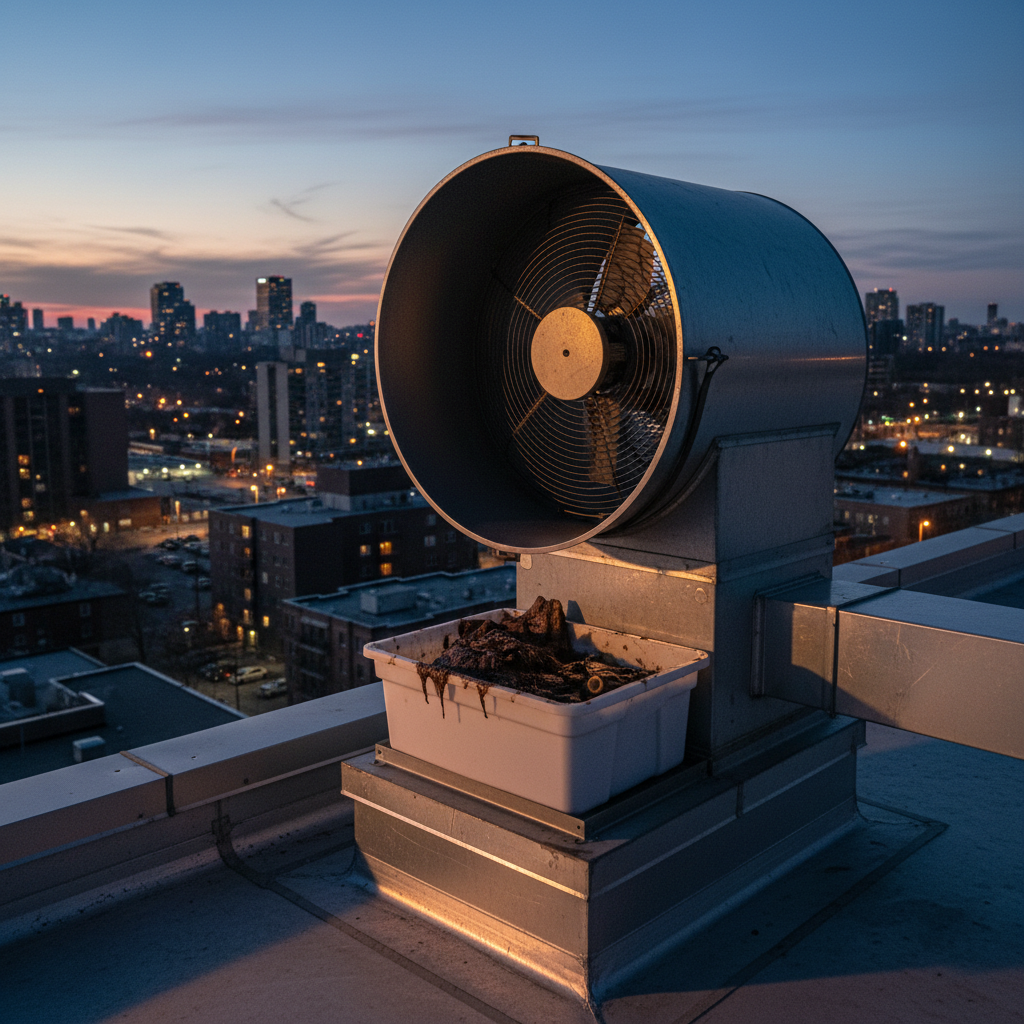
- Upblast fan: The wheel throws air upward; hinges allow safe access for cleaning and belt checks.
- Makeup air: Supplies tempered air so doors close easily and flames stay stable.
Want a deeper dive into ventilation fundamentals? See our ventilation system guide for layouts we commonly service across Ontario.
Maintenance types and approaches
Pair daily filter care with scheduled professional hood and duct cleaning. Add quarterly mechanical checks—belts, bearings, hinges—and document everything. This layered approach keeps grease under control and equipment predictable.
Different kitchens need different rhythms. We map maintenance to cooking volume and fuel type, then blend in-house tasks with professional services.
In-house, daily to weekly
- Remove and wash baffle filters at the end of each shift or daily during peak season.
- Wipe hood interiors, ledges, and light lenses to stop thin films from hardening.
- Visually confirm fan is running quietly with no scraping or wobble.
Professional, monthly to quarterly
- Hood, plenum, and duct degreasing throughout accessible lengths.
- Rooftop fan open, degrease bowl and blades; verify hinge kit and safety pin.
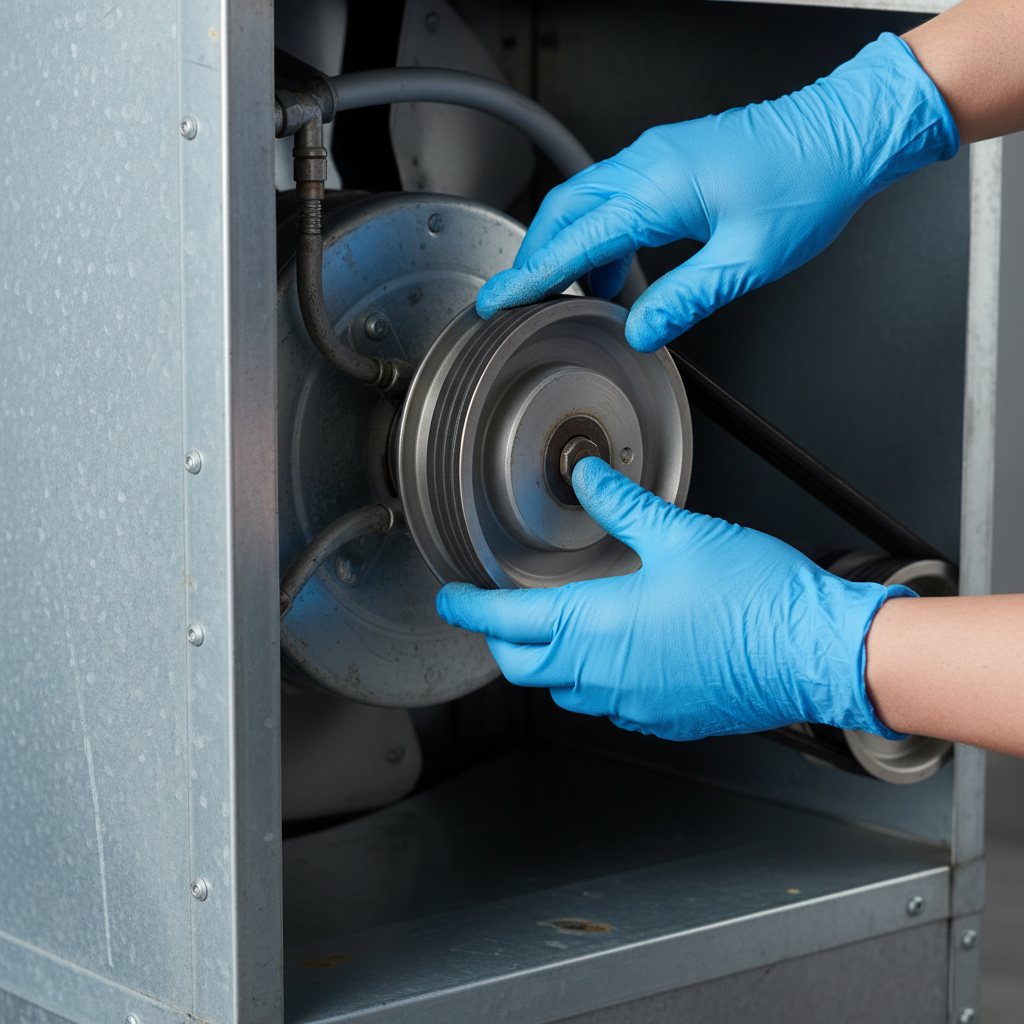
- Inspect belt wear, pulley alignment, set screw security, and bearing condition.
As-needed and annual
- Filter cleaning and exchange program when volumes spike.
- Fan belt replacement if glazing, fraying, or cracking appears.
- Ventilation system optimization if smoke capture or room pressure drifts.
Our maintenance schedule outlines typical cycles for quick service and fine dining operations.
Step-by-step exhaust fan maintenance
Lock out power, open the hinged fan, remove grease safely, then inspect, adjust, and document. Work methodically: filters first, then hoods and ducts, then the rooftop fan and belt drive.
Below is a field-tested workflow our technicians follow. Adapt it to your space and equipment.
- Prepare and secure: Coordinate after-hours access. Verify electrical disconnect and lockout/tagout; use cones and roof fall protection.
- Filters: Remove baffles; soak or swap through a filter exchange program to keep capture high.
- Hood and plenum: Apply degreaser, scrape, and rinse. Protect appliances and floors; manage runoff responsibly.
- Duct sections: Access through panels; degrease toward the fan. Photograph before/after for records.
- Open the fan: Secure hinge with safety pin; lift dome carefully. Lay absorbent pads to catch residues.
- Clean the bowl and wheel: Remove grease from blades and housing; avoid water intrusion at motor.
- Belt and pulleys: Check for cracks, glazing, or fray. Confirm alignment; tighten set screws.
- Bearings and vibration: Spin by hand; listen for roughness. Verify mounts and hardware.
- Grease containment: Empty saturated pads; ensure overflow paths are clear.
- Test and document: Reassemble, restore power, and verify smooth start and capture. Tag service date and keep photos.
Quick reference matters during a rush. We keep logs concise so managers can confirm status in under a minute.
Maintenance frequency table
Match frequency to cooking load. High-volume fryers and grills need more frequent filter care and duct cleaning than light-duty prep lines. Use this table to plan work across shifts.
| Component | Light Use | Moderate Use | Heavy Use |
|---|---|---|---|
| Baffle filters | 2–3x weekly | Daily | Each shift |
| Hood & plenum | Quarterly | Every 2 months | Monthly |
| Duct runs | Semiannual | Quarterly | Every 2 months |
| Rooftop fan clean | Semiannual | Quarterly | Every 2 months |
| Belt inspection | Quarterly | Bi-monthly | Monthly |
Need help tuning these intervals? Our ventilation efficiency guide explains how menu and hours shift the schedule.
Common failures to catch early
The fastest way to avoid downtime is to spot belt wear, misaligned pulleys, saturated filters, loose hinges, and overflowing grease containment. Fixing these early is quick; waiting turns them into service-stoppers.
- Glazed or cracked belts: Slipping belts heat up, stretch, and suddenly fail at peak hours.
- Pulley misalignment: Side-loaded belts fray on one edge; vibration increases noise and bearing load.
- Filter saturation: Capture drops; smoke escapes canopy and sets off alarms.
- Hinge problems: Without a proper kit and pin, lids twist, wires stress, and resealing is messy.
- Containment overflow: Saturated pads leak down roofs and invite landlord complaints.
When we onboard new locations, we often find two or three of these issues together. A single well-timed service visit clears the stack and resets reliability.
Best practices from NFPA 96–certified crews
Standardize your checklist, protect the roof, and document with photos. Keep a belt on hand, tension it correctly, and tag the fan with the next due date. Make compliance easy to verify.
- Use a hinge kit: It prevents duct damage and makes future cleanings safer.
- Label filters by position: Rotating them distributes wear and keeps capture consistent.
- Carry a spare belt: If wear is borderline, swap now rather than waiting for rush-hour failure.
- Protect roofing: Use pads and drip guards; never let caustics stain membrane.
- Photo documentation: Before/after sets and service tags speed internal audits and external inspections.
For a structured framework you can adapt, review our system optimization overview and adapt it to your line layout.
Tools and resources you’ll actually use
Keep it simple: a lockout device, hinge safety pin, absorbents, non-caustic degreaser, scraper set, PPE, and a spare belt. Add a one-page log and photo checklist for quick sign-off.
- Safety and access: Lockout/tagout kit, roof-rated ladder, fall protection where required.
- Cleaning tools: Scrapers, non-scratch pads, food-safe degreaser, low-pressure rinse options.
- Fan service: Allen keys, wrenches, alignment straightedge, spare belt sized to your model.
- Containment: Grease pads for curb, sealed bags for disposal, spill kit for surprises.
- Records: A single-page log with date, components serviced, and next due date.
When your menu or hours change, revisit the checklist. Our Ontario exhaust fan guide shows how to right-size tasks for seasonal shifts.
Mini case studies: Southern Ontario kitchens
Simple changes—filter exchanges, belt swaps, and hinge upgrades—dramatically stabilize capture. These quick wins reduce callouts and help teams breeze through inspections.
High-volume quick service line
A chicken-and-fries concept struggled with smoke at lunch. Filters were cleaned nightly but saturated mid-shift. We launched a filter cleaning & exchange rotation and added monthly belt checks. Result: stable capture during peak windows and fewer line complaints.
Institutional kitchen with long duct run
Vertical duct length made grease control difficult. Our duct cleaning cadence moved from semiannual to quarterly, paired with upgraded grease containment. Rooftop staining stopped, and alarms dropped off.
Fine dining with mixed fuel
Wood grill and sauté stations created uneven loads. We implemented targeted hood/plenum zones and quarterly ventilation system maintenance. Managers reported cooler line temps and easier close.
Explore practical tactics in our air quality tips tailored for Ontario kitchens.
Compliance and documentation that stand up to audits
Keep visible tags, date-stamped photos, and a simple log. Make it obvious what was cleaned and when the next service is due. Inspectors appreciate clarity and consistency.
- Service tag placement: At the hood and on the fan curb or housing.
- Photo sets: Before/after for hood interior, ducts (through access panels), and the fan bowl/blades.
- Hazard notes: Document any wiring exposure, missing hinges, or worn belts with recommended actions.
- Schedule attached: Keep your frequency table with dates and signatures where managers can reach it.
Our crews are WSIB insured and NFPA 96–certified, so reports align with what insurers and fire inspectors expect to see in Ontario jurisdictions.
When to call Robinhood Cleaners
Call when smoke escapes the canopy, belts chirp or glaze, grease containment looks saturated, or inspections approach. Pro crews clear buildup in ducts and fans safely and reset your maintenance baseline.
- 24/7 availability: We schedule after-hours or pre-open to avoid service disruption.
- Comprehensive coverage: From hood to fan belt replacement, greasetraps to appliances.
- Quick Southern Ontario response: Rapid dispatch across All Over Ontario.
If you’re building a program from scratch, start with our kitchen vent cleaning guide and adapt it to your line and hours.
Frequently asked questions
These quick answers help managers make fast, confident decisions about kitchen exhaust fan maintenance and what to handle in-house versus calling a certified crew.
How often should commercial kitchen exhaust ducts be cleaned?
Match frequency to cooking load. High-volume frying and grilling often require quarterly duct cleaning, while lighter use might be semiannual. Filters, however, should be cleaned or exchanged daily—or each shift during peak seasons—to keep airflow steady.
What are the signs my exhaust fan belt needs replacement?
Look for glazing, cracks, frayed edges, or chirping noise at startup. If airflow drops and the fan wheel still spins, the belt may be slipping. Pro tip: keep a spare belt sized for your model on hand to avoid a mid-service outage.
Can we handle filter cleaning in-house?
Yes. Many teams wash baffle filters daily and rotate spares. During heavy volume, a filter exchange program maintains capture without tying up staff. Just avoid harsh chemicals that pit aluminum baffles or leave residues.
What documentation helps with inspections?
Visible service tags at the hood and fan, date-stamped photos of cleaned sections, and a simple maintenance log. Keep the next-due date prominent. These items make it fast to show a consistent program and reduce audit friction.
Key takeaways
Prioritize filters, keep belts healthy, protect the roof, and document everything. Pair daily in-house care with scheduled professional duct and fan service to maintain capture and pass inspections.
- Filters drive capture; treat them as daily essentials, not afterthoughts.
- Belts and alignment fail quietly—inspect them on a set cadence.
- Hinges and containment protect the fan and roof during cleanings.
- Simple logs and photos make inspection day easy.
Get a maintenance assessment
Not sure where to start? A short assessment benchmarks your current system, sets a realistic schedule, and prevents surprises during inspections. It’s the fastest way to stabilize capture.
Soft CTA: Want a quick-read checklist tailored to your line? Reach out to Robinhood Cleaners for a no-pressure assessment aligned to your hours and menu in All Over Ontario.
Where to go next
Build a simple, durable program. Start with filters, schedule duct and fan service, and keep records within arm’s reach. Use the linked guides to tune airflow and efficiency.
For deeper planning, explore our kitchen air quality tips and this efficiency overview. When you’re ready, we’ll align service windows with your operations.
For more context on optimizing capture and maintenance planning, see this practical overview of kitchen ventilation optimization and a focused guide to commercial exhaust filter replacement.