Grease trap pumping service is the professional removal of fats, oils, and grease (FOG) and solids from restaurant traps and interceptors. For kitchens in All Over Ontario, reliable pumping prevents backups, odors, and fines while protecting plumbing and compliance. Robinhood Cleaners integrates pumping with hood, duct, and exhaust maintenance to keep operations safe and smooth.
By Robinhood Cleaners • Last updated: 2026-06-19
Overview and Table of Contents
This guide explains what grease trap pumping service includes, why it matters for safety and compliance, how the process works, how often to schedule, and how to select a provider in Ontario. You’ll also see best practices, tools, examples, and a practical checklist you can apply immediately.
Running a busy kitchen means managing FOG at the source and downstream. This complete guide is written for restaurants, quick service locations, food courts, fine dining, catering teams, and institutional kitchens across Ontario.
- What grease trap pumping is and how it differs from cleaning
- Why pumping impacts fire risk, plumbing health, and inspections
- How the service works step-by-step, from access to manifests
- Intervals, the 25% rule, and signs you’re overdue
- Indoor traps vs outdoor interceptors — methods and pros/cons
- Provider selection, documentation, and red flags
- How Robinhood Cleaners bundles service with hood and exhaust care
What Is Grease Trap Pumping Service?
Grease trap pumping is the complete removal of accumulated FOG and settled solids from a trap or interceptor, followed by scraping and rinsing to restore capacity. Proper pumping prevents blockages, sewer overflows, and odors, and it supports compliance with local FOG bylaws and health inspections.
Grease traps (small under-sink or in-floor units) and grease interceptors (larger outdoor tanks) slow wastewater so FOG rises and solids settle. Over time, layers build up. When capacity shrinks, flow slows, drains gurgle, and odors spread. That’s your signal the system needs a full pump-out and reset.
- Trap vs. interceptor: Traps are typically inside and smaller; interceptors are outside and hold more volume.
- Pumping vs. skimming: Skimming removes surface grease only. Pumping removes FOG, water, and bottom solids.
- Reset to working volume: Restoring capacity reduces backups and helps you pass inspections.
Many municipal programs use a “25% rule” threshold. When FOG plus solids occupy roughly one-quarter of the liquid depth, performance drops and cleaning is due. In practice, high-volume kitchens may reach that mark faster than expected during peak seasons.
Why Grease Trap Pumping Matters
Pumping protects your drains, reduces odors, lowers overflow risk, and supports compliance. It also extends plumbing life by keeping lines clear of FOG. Well-maintained traps and interceptors help avoid service interruptions and fines during health or environmental inspections.
FOG is sticky. It coats pipe walls, narrows flow, and traps solids. Left unchecked, it can cause sewage backups, dish area slowdowns, and bad smells that reach the dining room. Overflow events are disruptive and difficult to remediate. They also create audit trails that inspectors remember.
- Operational uptime: Clear drains keep prep, dish, and service lines moving during rushes.
- Compliance readiness: Accurate manifests and cleaning logs show due diligence.
- Property protection: Controlled FOG reduces slip hazards and protects flooring and walls.
- Community impact: Responsible FOG management helps prevent sewer overflows downstream.
In our experience serving Ontario kitchens, teams that schedule pumping proactively see fewer emergency calls. Most stick to predictable intervals tied to menu type and foot traffic, then adjust seasonally. This disciplined cadence pays off in fewer surprises.
How Grease Trap Pumping Service Works
A complete service includes site safety setup, opening the unit, measuring FOG depth, vacuuming liquids and solids, scraping interiors, rinsing, reassembly, and documenting waste haul with a manifest. Quality providers also note defects and suggest interval adjustments.
Here’s the typical workflow Robinhood Cleaners follows for restaurants and commercial kitchens across Ontario:
- Arrival and safety: Place cones, verify access, protect surrounding surfaces.
- Open and assess: Remove lids, record FOG/solids depth, inspect baffles and gaskets.
- Vacuum pump-out: Extract liquids and solids thoroughly to the bottom of the tank.
- Scrape and rinse: Dislodge adhered grease; rinse walls, baffles, and inlet/outlet tees.
- Functional check: Confirm inlet/outlet aren’t obstructed; inspect flow.
- Close and seal: Clean lid seating surfaces; reseal gaskets; secure bolts.
- Documentation: Provide manifest, service notes, and next-interval guidance.
| Process Step | What We Do | Why It Matters |
|---|---|---|
| Assess | Measure FOG/solids; photograph condition | Baseline for compliance and interval tuning |
| Vacuum | Pump liquids and settled sludge | Restores capacity and flow |
| Scrape | Remove adhered grease on walls/baffles | Prevents rapid re-accumulation |
| Rinse | Final interior rinse and debris removal | Leaves system ready for service |
| Document | Leave manifest and service log updates | Supports inspections and audits |
For outdoor interceptors, truck access and hose routing are planned to avoid guest areas. For indoor traps, we protect floors, stainless surfaces, and prep lines. Either way, the goal is a clean reset with minimal disruption to your staff.
Service Intervals and the 25% Rule
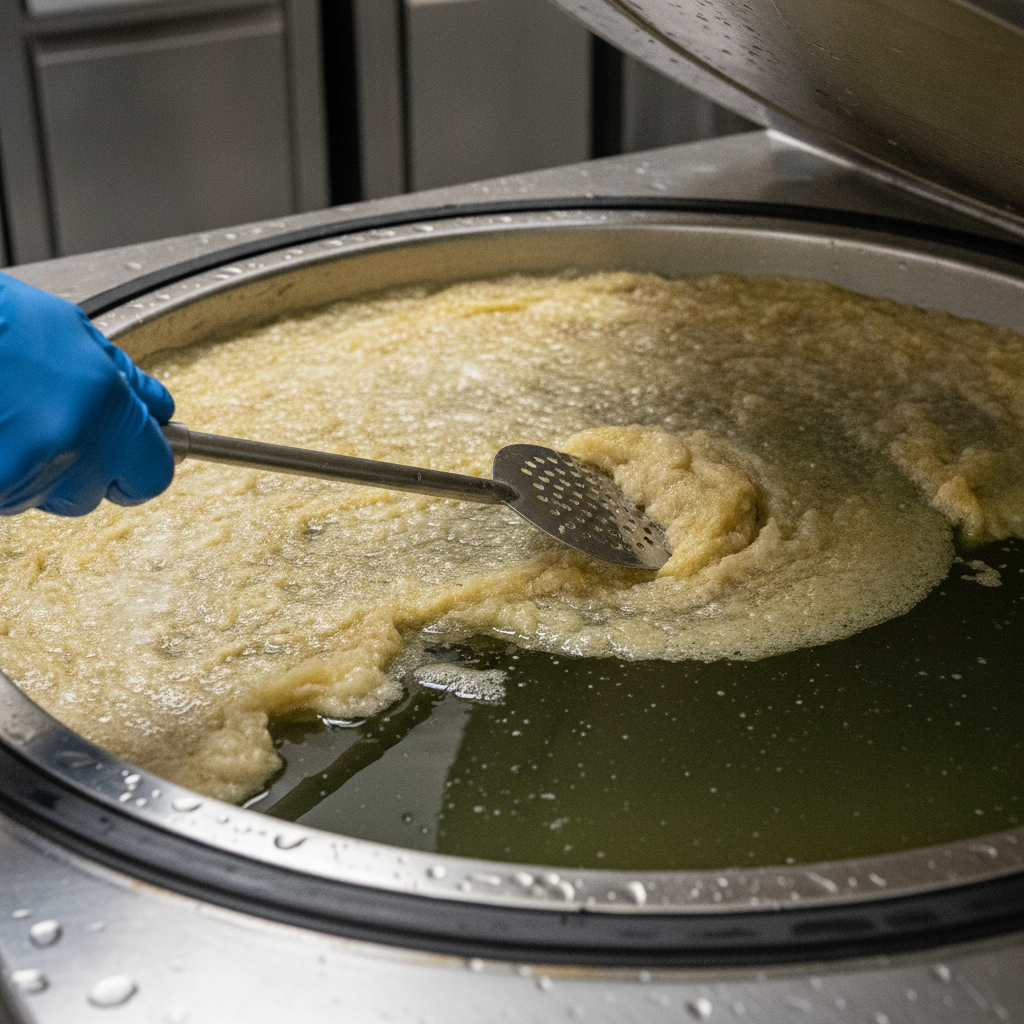
Most kitchens schedule pumping every 30–90 days, adjusting for menu, volume, and trap size. The 25% rule is a practical trigger: when FOG plus solids reach roughly one-quarter of depth, it’s time to pump to prevent performance loss and odors.
Intervals vary by operation. A burger concept with heavy fry volume typically needs shorter intervals than a café with a lighter menu. Seasonal swings matter too. Summer patios, holidays, and catering events can spike FOG load quickly.
- High-volume, fried menu: 4–6 weeks is common; monitor and adjust.
- Moderate volume, mixed cooking: 6–10 weeks with spot checks.
- Lower volume or large interceptors: 8–12 weeks, measured by sludge judge or dipstick.
Signs you’re overdue include slow floor sinks, dish pit odors, gurgling drains, grease film on water, and frequent backups. Tightening intervals usually resolves these issues and improves overall kitchen flow.
Indoor Traps vs Outdoor Interceptors
Indoor traps are compact units near fixtures, while outdoor interceptors are larger tanks that capture higher volumes. Traps are quicker to service but fill faster; interceptors require vacuum trucks and planning but offer longer intervals between pump-outs.
Choosing between the two depends on your space, fixture count, and anticipated FOG load. Many sites use both: an indoor trap for the dish area and an outdoor interceptor for the main line. Each needs the right pumping approach.
- Indoor traps: Typically 7–100+ liters capacity; convenient access; faster turnover.
- Outdoor interceptors: Significantly larger volume; require truck access; longer service time.
- Hybrid strategies: A well-tuned schedule across both prevents line carryover and odors.
Our teams document each unit’s condition and share photos in your service log. That record helps justify recommended intervals and supports any follow-up with local inspectors.
Choosing a Grease Trap Pumping Service
Select a provider with commercial kitchen expertise, proper insurance, 24/7 availability, and complete documentation. Look for teams that integrate pumping with hood, duct, and exhaust maintenance to streamline compliance and reduce disruptions across your kitchen.
Robinhood Cleaners is built for restaurants and commercial kitchens. Our certified technicians handle traps, interceptors, hoods, ducts, and exhaust fans as one program. That means single-visit efficiency, documented manifests, and coordinated scheduling around service hours.
- Credentials and coverage: Professional, certified staff; WSIB insured; Ontario-wide service.
- Compliance mindset: NFPA 96–aligned exhaust cleaning practices and diligent recordkeeping.
- 24/7 availability: Flexible scheduling around rushes, events, and overnight windows.
- Integrated services: Pair pumping with grease trap cleaning services, hood and duct care, and plumbing compliance support.
Quality control matters. We inspect lids, gaskets, baffles, and outlet tees, then leave service notes with photos so you can see exactly what was done and why the next interval makes sense for your operation.
Best Practices for Grease Trap Care
Train staff on FOG handling, keep lids sealed and accessible, maintain a visible service log, and schedule proactive pump-outs. Pair trap maintenance with hood, duct, and exhaust cleaning to reduce fire risk and streamline inspections.
- Front-of-house to dish: Scrape plates, cool and pour used oil into bins, and keep food solids out of sinks.
- Access readiness: Keep lids clear, mark locations, and avoid sealing lids with tile or grout.
- Documentation: Maintain a binder or digital log with dates, photos, and manifests.
- Bundle service: Combine pumping with scheduled hood and maintenance best practices for one smooth visit.
- Monitor performance: Note slow drains or odors; they’re early warning signs.
Local considerations for All Over Ontario
- Seasonal spikes from patios, festivals, and catering increase FOG load. Tighten pump-out intervals in peak months and relax when volume dips.
- Winter weather can limit outdoor access. Ensure interceptor lids are visible and clear of ice and snow to prevent delays.
- Many Ontario municipalities enforce FOG discharge limits. Keep manifests handy and align schedules with inspection cycles to avoid infractions.
We’ve found that kitchens that align trap pumping with exhaust hood cleaning have smoother inspections and fewer scheduling conflicts. One calendar, one provider, fewer surprises.
Tools and Resources
Use simple measurement tools to check FOG depth, clear labeling for lids, and a service log that captures dates, photos, and manifests. Reliable manifests and interval notes make inspections quick and predictable.
- Measurement: Sludge judge or dipstick to estimate FOG and solids layers.
- Access tools: Lid lifters, socket sets, replacement gaskets if needed.
- Containment: Floor protection, absorbent pads, and PPE.
- Documentation: Physical binder or cloud folder for manifests and photos.
- Learning: See an overview of how interceptors work for helpful background.
When we recommend interval changes, it’s based on measured layers and real kitchen use, not guesswork. Over time, this narrows in on a steady cadence that fits your menu and hours.
How This Connects to Hood and Vent Cleaning
Grease management is a system: traps capture FOG in wastewater, while hoods and ducts capture airborne grease from cooking. Coordinating both reduces fire risk and speeds inspections, keeping your kitchen compliant and running.
Robinhood Cleaners coordinates grease trap pumping with hood, duct, and exhaust fan cleaning. One integrated program simplifies scheduling and improves accountability. Your logs show a complete picture of FOG control from sink to roof.
- Kitchen exhaust cleaning: Align with NFPA 96–focused practices for fire safety.
- Filter cleaning & exchange: Swap clogged filters to improve airflow and reduce grease carryover.
- Duct cleaning: Remove accumulated grease to improve ventilation and safety.
- Exhaust fan checks: Belt tension and fan health affect airflow and grease capture.
- Power washing: Degrease exterior pads and access zones safely.
For deeper reading on our integrated approach, explore our complete grease trap guide and our grease trap cleaning requirements article.
Case Studies and Examples
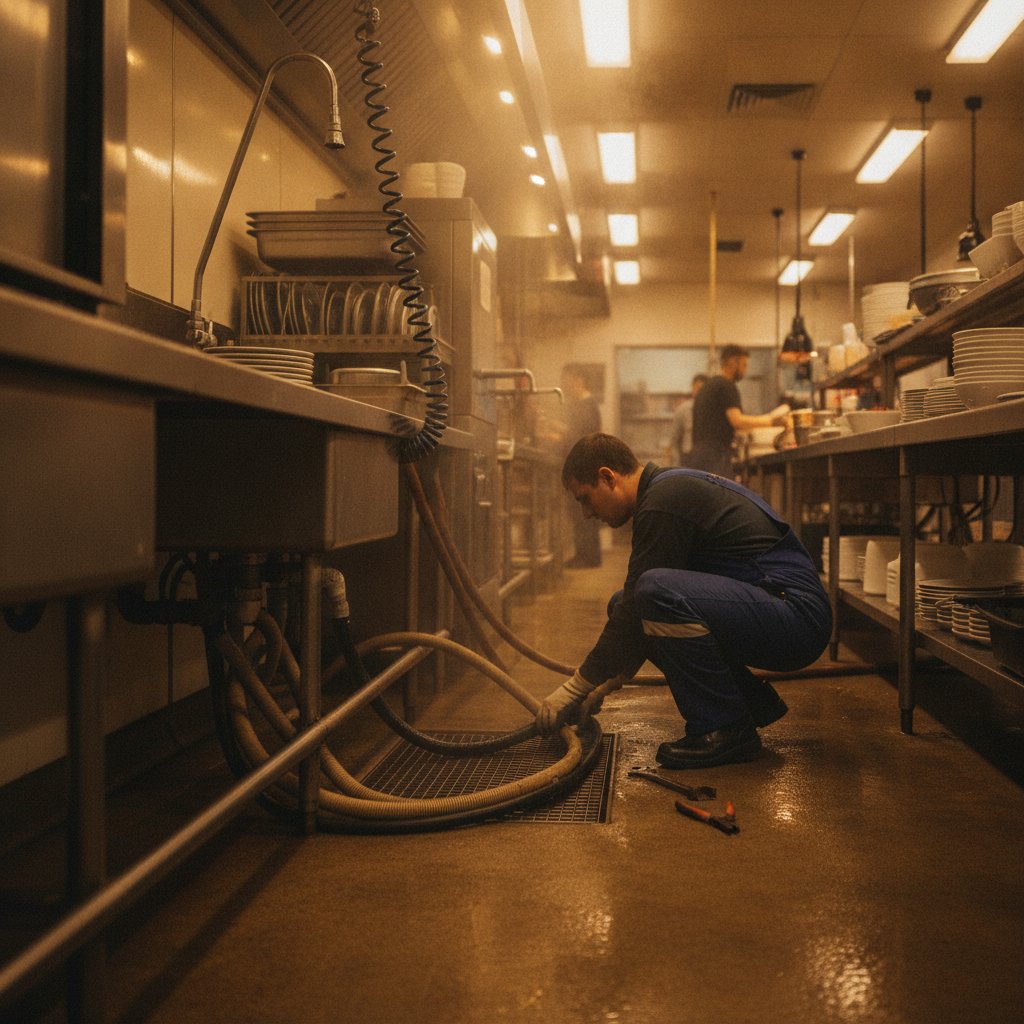
Well-tuned intervals and integrated service reduce emergencies and inspection friction. These brief examples show how aligning trap pumping with hood and duct care prevents backups, cuts odors, and makes audits faster.
Quick service concept with heavy fry load
- Problem: Weekly backups and dish area odors during lunch rush.
- Action: Shifted to 5-week pumping, added filter exchange cadence, verified exhaust fan belt tension.
- Result: Backups dropped, odors cleared, service pace stabilized.
Fine dining kitchen with seasonal spikes
- Problem: Outdoor interceptor hit the 25% threshold before holidays.
- Action: Pulled forward pump-out by two weeks; paired with pre-holiday hood cleaning.
- Result: No slow drains during peak events; inspection passed cleanly.
Food court operator managing multiple tenants
- Problem: Inconsistent manifests and unmarked trap lids led to failed checks.
- Action: Centralized service logs, labeled access points, aligned pumping with off-hours windows.
- Result: Faster audits; predictable, documented schedule across units.
Each scenario used the same playbook: measure, plan, perform, document. The consistency is what drives reliable outcomes.
Scope of Work and What You’re Paying For
A fair grease trap pumping service covers full pump-out, scraping, rinse, proper resealing, and waste manifests—plus photos and notes. You’re paying for thoroughness, safe handling, documentation, and minimal disruption to your kitchen.
- Full extraction: Not just skimming—complete removal down to settled solids.
- Detail cleaning: Interior scrape and rinse to slow re-accumulation.
- Equipment and access: Vacuum truck, hoses, safety gear, and floor protection.
- Compliance artifacts: Manifests, photos, and interval recommendations.
- Professionalism: On-time arrival, 24/7 options, and certified, insured techs.
If a proposal skips documentation or mentions only “surface skimming,” that’s a red flag. Look for scope clarity and evidence of complete removal, especially for outdoor interceptors.
Common Red Flags and How to Avoid Them
Beware of partial pump-outs, missing manifests, unsealed lids, and unmarked access points. These lead to faster re-accumulation, odors, and inspection headaches. Demand complete service with proof and clear next-interval guidance.
- Skim-only service: Leaves sludge behind; capacity doesn’t reset.
- No manifest: Harder to prove compliance during checks.
- Poor resealing: Causes leaks, odors, and pest attraction.
- Ignored defects: Cracked baffles or damaged tees go unnoticed without inspection.
Well-documented service protects you. That’s why our teams take and share photos, note depths, and log every visit for your records.
Maintenance Checklist
Use this quick checklist to standardize FOG control: train, label, measure, schedule, document, and review. Consistency reduces emergencies and keeps inspectors satisfied.
- Train staff on FOG handling and solids disposal.
- Label and keep lids accessible (indoor and outdoor).
- Measure FOG/solids monthly; track in a simple log.
- Set pump-out intervals based on load and the 25% rule.
- Bundle with hood/duct cleaning for one visit.
- Keep manifests and photos in a binder or shared drive.
- Review quarterly; adjust cadence before peak seasons.
Provider Comparison: What to Look For
Compare providers by scope, documentation, availability, safety practices, and integration with kitchen exhaust cleaning. Favor teams that measure FOG depth, share photos, and leave manifests every time.
| Criteria | Better | Best |
|---|---|---|
| Scope | Vacuum and partial scrape | Complete extraction + detail scrape/rinse |
| Documentation | Stamped receipt | Manifest + photos + interval notes |
| Availability | Business hours | 24/7 scheduling |
| Integration | Standalone pumping | Pumping + hood/duct/exhaust coordination |
| Safety | Basic PPE | Full PPE + floor and fixture protection |
Use this side-by-side to align expectations with your service agreements. It prevents scope drift and keeps standards high from the first visit.
Frequently Asked Questions
These concise answers address common questions about grease trap pumping intervals, odors, documentation, and choosing a provider. Use them to align your team and speed internal decisions.
How often should we schedule grease trap pumping?
Most kitchens schedule every 30–90 days, then adjust based on menu type, volume, and measured FOG/solids levels. The 25% rule is a reliable trigger. High-volume fry programs often need shorter intervals than light-cooking cafés.
What’s the difference between pumping and skimming?
Skimming removes surface grease only. Pumping extracts liquids and settled solids, then includes scraping and rinsing to restore capacity. For compliance and performance, complete pump-outs are preferred over skim-only service.
Do we need manifests or paperwork after each service?
Yes. Keep manifests and service logs with dates, measurements, and photos. Inspectors expect proof of routine pumping and responsible FOG handling. Organized records also help fine-tune intervals over time.
Can pumping be combined with hood and duct cleaning?
Absolutely. Bundling trap pumping with hood, duct, and exhaust maintenance streamlines scheduling, reduces disruption, and supports fire safety alignment. Many Ontario kitchens coordinate both in a single service window.
Conclusion and Next Steps
A reliable grease trap pumping program prevents backups, reduces odors, and supports compliance. Measure, plan, perform, and document—then repeat on the right cadence. Align pumping with hood and vent care to protect your kitchen end-to-end.
- Key Takeaways
- Pumping resets capacity and keeps drains clear.
- Intervals hinge on load, menu, and the 25% rule.
- Documentation (manifests/photos) speeds inspections.
- Integrated hood, duct, and fan care reduces risk.
- Action Steps
- Map your traps/interceptors and label lids.
- Start a service log; measure FOG/solids monthly.
- Set an initial 6–8 week interval; adjust with data.
- Bundle with hood and frequency guidelines to simplify scheduling.
For more background on trap and interceptor function, see this technical overview and installation considerations from this guide. For benefits of disciplined pumping programs, review this pumping benefits article.