Grease trap cleaning services are the scheduled pumping, cleaning, and inspection of grease interceptors to remove fats, oils, grease, and solids so drains flow, odors disappear, and plumbing stays compliant. In All Over Ontario, Robinhood Cleaners delivers this service for restaurants and commercial kitchens to prevent backups, protect health, and meet local wastewater bylaws.
By Robinhood Cleaners • Last updated: 2026-05-05
Quick Overview & Table of Contents
This guide explains what grease traps are, why professional service matters, how pumping and cleaning work step-by-step, and how to set the right service frequency. You’ll see best practices, tools, and Ontario-focused tips, plus examples from Robinhood Cleaners’ NFPA96-certified, WSIB-insured teams serving commercial kitchens All Over Ontario.
Running a busy kitchen leaves little margin for plumbing surprises. Use this section to scan the essentials, then dive deeper where you need detail.
- What a grease trap does and how it protects your drains
- Why regular service prevents clogs, odors, and fines
- Step-by-step cleaning process (from open to certify)
- Service intervals, the 25% rule, and recordkeeping
- Best practices your staff can apply today
- Tools and truck gear professionals bring to the job
- Ontario-specific operational tips and seasonality
- Case examples from restaurants and institutional kitchens
Summary
Grease interceptors capture fats, oils, grease, and solids before they reach municipal sewers. Professional grease trap cleaning services remove built-up waste, reset system performance, and document compliance. Kitchens that follow the 25% capacity rule and service every 30–90 days reduce backups, avoid odors, and protect brand reputation.
Here’s the big picture in one place. If you’re time-crunched, read this and the Best Practices section next.
- Function: Traps slow the flow so FOG floats, solids sink, and only graywater exits.
- Risk when neglected: Clogs, sewer overflows, pest attraction, and health code violations.
- Service signals: Slow drains, sulfur odors, alarms, and visible FOG above baffles.
- Intervals: 30–90 days for most restaurants; audit based on volume and menu.
- Documentation: Keep manifests and service logs for inspections and insurance.
- Integration: Pair with kitchen exhaust cleaning to reduce overall fire and odor risks.
Local considerations for All Over Ontario
- Plan service windows around lunch/dinner rush and weekend peaks; our 24/7 scheduling prevents downtime for quick service and fine dining sites.
- Winter curbside access can be tight; clear snow and ice near outdoor interceptors so vacuum trucks connect safely and quickly.
- Menu mix matters: fried foods and high-fat prep increase FOG load; tighten intervals during patio season when volume jumps.
What Are Grease Traps and Why They Exist
A grease trap (interceptor) is a plumbing device that separates fats, oils, and grease from wastewater so they don’t enter municipal sewers. By slowing flow, FOG rises to the top and solids settle. Regular service prevents clogs, odors, and fines and keeps kitchens operating without disruptions.
Grease traps work by using gravity separation inside a baffled chamber. Wastewater from sinks and dish areas enters, flow slows, FOG rises, solids drop, and relatively cleaner water exits to the sewer.
- Upstream sources: Prep sinks, dishwashers, woks, combi-ovens, floor drains.
- FOG behavior: At kitchen temperatures, fats emulsify, then congeal downstream.
- Why it matters: Hardened grease narrows pipe diameter, spiking blockage risk.
- Regulatory angle: Municipal bylaws typically require functioning interceptors and service logs onsite.
For a primer on how interceptors separate FOG with baffles and retention time, see this plain-language explanation from how grease traps work.
Grease Trap Cleaning Services: What They Include
A complete grease trap service includes site prep, lid removal, pre-inspection, full pump-out, scraping and jetting, baffle cleaning, interior wash, component checks, and manifest documentation. Robinhood Cleaners also advises on interval planning and staff practices to keep FOG out of the drain between visits.
In our experience across All Over Ontario, the best outcomes come from a defined method that restores capacity and captures proof of compliance.
- Access and safety: Block off the area, verify confined-space needs, and ventilate.
- Open and inspect: Remove the lid, measure FOG/solids depth, and check inlet/outlet.
- Pump-out: Vacuum liquids and solids, skim floating grease, and capture samples if needed.
- Scrape and rinse: Dislodge hardened deposits; rinse baffles and walls to bare condition.
- Jet and verify: Jet lines to the trap and downstream to confirm clear flow.
- Reassemble: Inspect gaskets, reseat the lid, and ensure a tight seal to prevent odors.
- Document: Provide a manifest and update the onsite log with date, volume, and findings.
Pairing trap service with upstream staff training reduces FOG entering the system. We often combine this visit with maintenance best practices reviews.
Why Routine Service Matters (Safety, Compliance, Reputation)
Routine grease trap service prevents backups, odors, and health code violations. It also protects brand reputation and ensures safer, more efficient operations. Documented service proves due diligence during inspections and supports insurance requirements for commercial kitchens.
Backups rarely happen at a convenient time. When FOG exceeds capacity, flow slows, sulfide odors increase, and a single rush can push grease downstream, triggering an emergency call and potential sanitation issues.
- Hygiene: Overflow risks cross-contamination and attracts pests—both inspection red flags.
- Operations: Unplanned downtime disrupts service and frustrates guests and staff.
- Reputation: Odors travel. Dining rooms notice quickly and reviews reflect it.
- Documentation: Manifests and logs demonstrate you’re managing FOG responsibly.
- Integration with fire safety: Less FOG migrating into hoods and ducts supports exhaust cleaning outcomes.
We often see one more benefit: improved dish area morale and efficiency. Faster drains make all the difference during a slammed Friday night.
How Grease Trap Cleaning Works: Step-by-Step
Professional cleaning follows a repeatable sequence: prepare the area, open and measure, pump liquids and solids, scrape and rinse to bare condition, jet lines, reassemble and seal, then document. This restores hydraulic performance and resets the service clock based on observed FOG load.
Here’s our field-tested sequence used across restaurants, campuses, and institutional kitchens.
- Pre-check: Confirm trap size and location (under-sink vs in-ground) and access path.
- Containment: Mats, absorbents, and splash guards prevent mess during lid removal.
- Depth readings: Record FOG and solids to apply the 25% rule accurately.
- High-vac extraction: Remove contents completely; avoid leaving a grease “ring.”
- Mechanical scraping: Target corners, baffles, and the invert where sludge hides.
- Rinse and wash: Low-odor degreaser and a controlled rinse restore clean surfaces.
- Jet downstream: Clear any post-trap restrictions while equipment is onsite.
- Seal and test: Refit gaskets, set the lid, and run water to verify proper flow.
- Report: Provide photos, measurements, and recommendations for interval timing.
Our teams often schedule this alongside hood and duct cleaning to minimize disruption—one night, multiple risks handled.
Types of Traps and Service Approaches
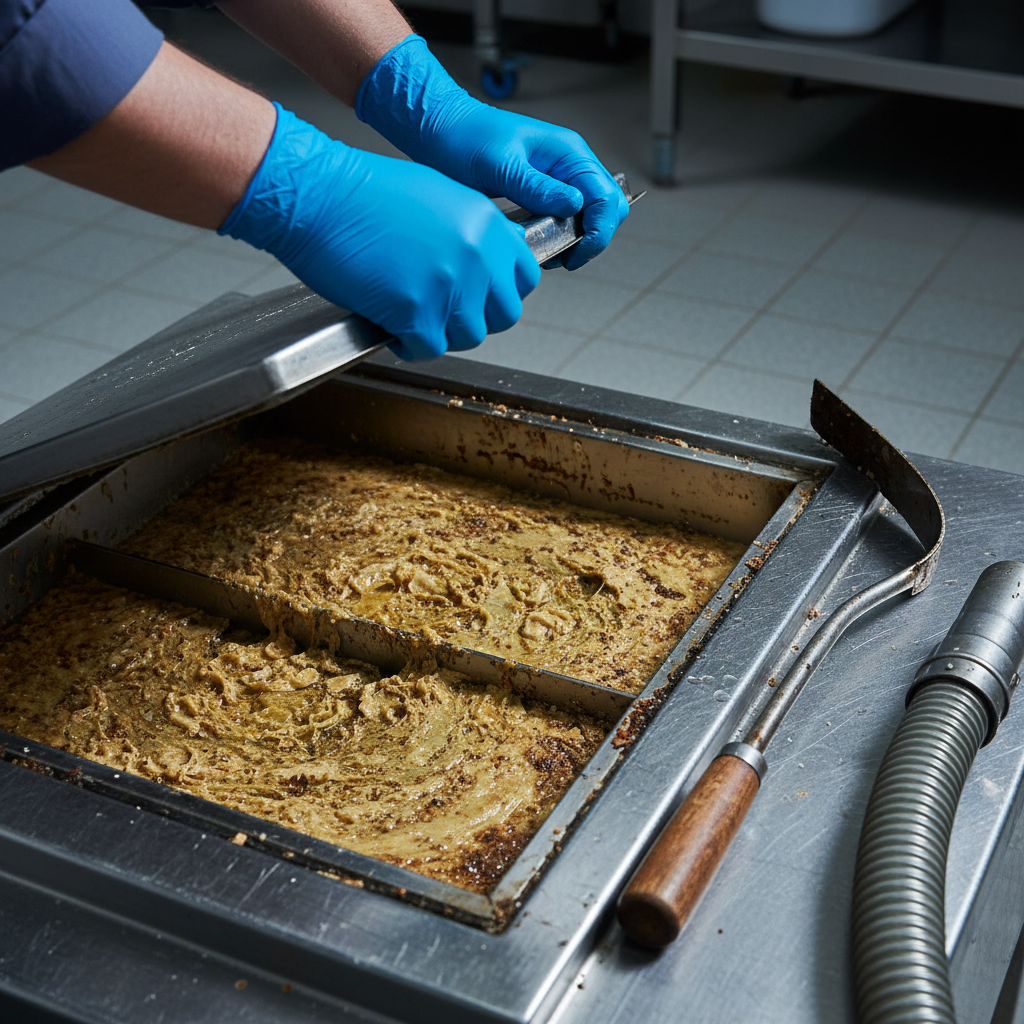
Two common interceptor types are under-sink (small, indoor) and in-ground (large, outdoor). Service approaches vary: full pump-and-clean resets capacity, while skim-only or partial pumping leaves residue and shortens time to the next backup. Choose complete cleaning for reliable performance.
Trap design shapes access, dwell time, and how quickly FOG accumulates. Understanding the difference helps set realistic service plans.
- Under-sink traps: Common in quick service sites; frequent service, shorter cycles.
- In-ground interceptors: Larger volumes; require outdoor access and longer pump times.
- Hydromechanical vs gravity: Hydromechanical units accelerate separation; gravity units rely on retention time and baffle geometry.
- Service options: Pump-only vs pump-and-clean; the latter removes hardened residue that otherwise recontaminates new wastewater.
We recommend pump-and-clean for kitchens that experienced any slow-flow or odor issues. It resets the system and provides a clean baseline for interval planning.
Setting the Right Service Interval (The 25% Rule)
The best interval is the shortest period before combined FOG and solids reach 25% of trap volume. For most restaurants, that’s 30–90 days. Track depth readings each visit and adjust with menu seasonality and sales volume to prevent backups and odor complaints.
Intervals aren’t guesswork; they’re data-driven. Our teams log FOG and solids percentages and use trends to recommend the next date. If you add a fryer station, intervals usually tighten.
- Typical ranges: Quick service: 30–45 days; casual dining: 45–60 days; institutional: 60–90 days.
- Menu effect: More fried items = faster FOG load; grilled/steamed tends to extend cycles.
- Alarm signals: Odor, gurgling, slow drains, or dish area complaints mean you’re overdue.
- Recordkeeping: Keep manifests with date, volume pumped, and pre/post FOG depth.
We also align trap intervals with quarterly pumping guidelines so training and checklists fall into a reliable rhythm for staff.
Best Practices Your Staff Can Implement Today
Train staff to keep FOG out of drains: dry-wipe pans, use sink strainers, dump fryer oil into containers, and never use hot water to “melt” grease. Post simple checklists in prep and dish areas and audit weekly. These steps extend service intervals and reduce emergency calls.
Here’s a practical, low-lift set of habits that pay off fast in any Ontario kitchen.
- Dry-wipe first: Scrape and towel pans before washing to remove FOG and solids.
- Strainers always: Fit sink drains with strainers; empty them into waste, not the trap.
- Containerize oils: Cool fryer oil and pour into designated containers for pickup.
- No emulsifying: Avoid detergents and hot water intended to “melt” grease; it resolidifies downstream.
- Spill control: Use absorbents; don’t hose grease into floor drains.
- Signage: Post reminders by prep sinks; make the right action the easy action.
- Weekly walk-through: Supervisors confirm strainers, signage, and proper utensil scraping.
We can reinforce these steps during each service visit and leave a one-page checklist tailored to your operation.
Tools and Equipment Professionals Bring
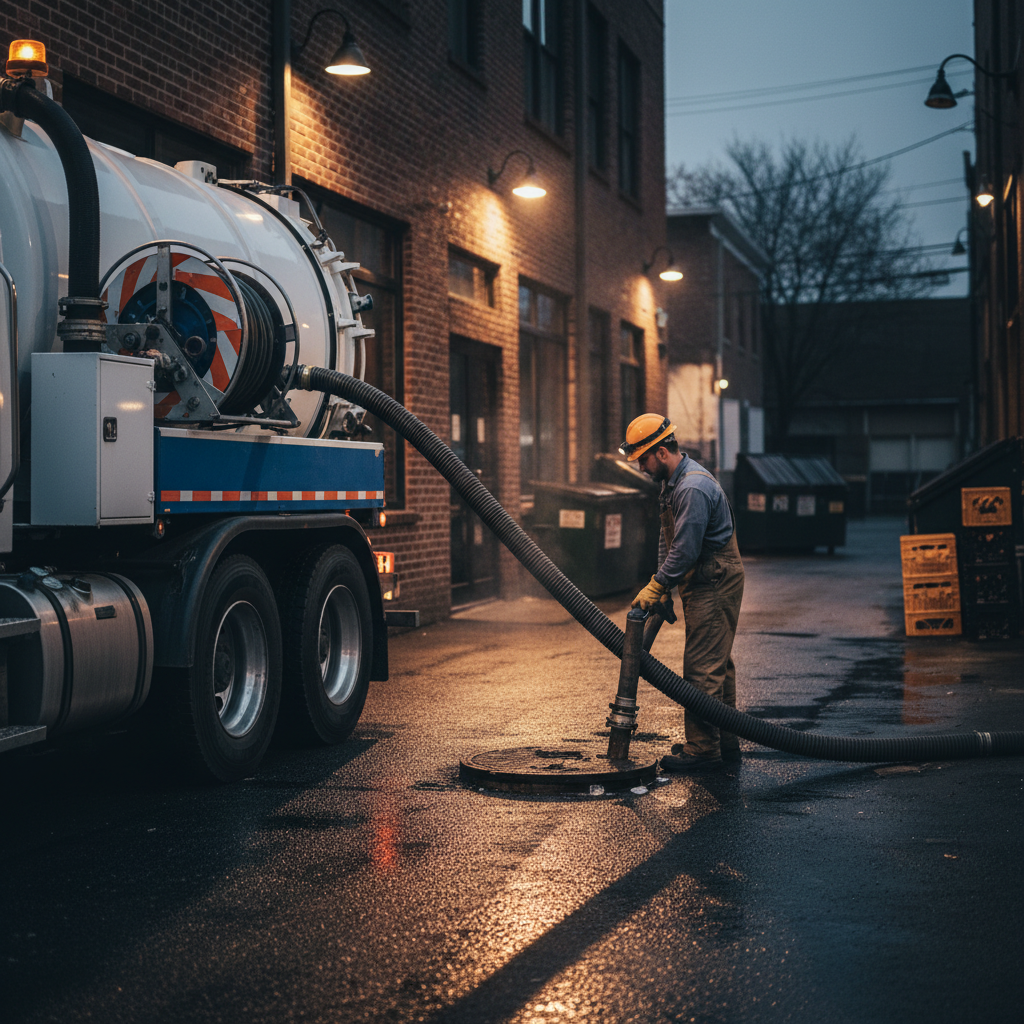
Professional crews use high-vacuum pump trucks, jetters, odor-controlled degreasers, scrapers, baffle tools, gas monitors, PPE, and manifest systems. The gear matters because complete removal and safe handling extend time between services and ensure compliant waste transport.
Quality tools speed the job and produce better outcomes. Here’s the core kit our Robinhood Cleaners teams stage for a standard visit.
- High-vac pump unit: Efficient extraction for liquids and sludge.
- Jetting system: Clears downstream lines and stubborn deposits.
- Hand tools: Scrapers, baffle brushes, gasket scrapers, and pry bars.
- PPE and safety: Gloves, eye protection, gas monitors, and ventilation aids.
- Containment: Floor mats, splash guards, absorbents, and wet/dry vac.
- Documentation: Photo capture, manifest forms, and service log templates.
With the right tools on the truck, most services run in a tight window—especially useful for quick service restaurants that rely on off-hour scheduling.
Integration with Kitchen Safety and Ventilation
Grease management doesn’t stop at the trap. Pairing interceptor service with hood, duct, and fan maintenance reduces fire risk and odors, stabilizes airflow, and supports compliance audits. Coordinated scheduling minimizes downtime and provides one consolidated service record.
Our cleaning cluster spans upstream and downstream risks—trap, hood, ducts, fans, and filters—to keep the whole system balanced.
- Kitchen exhaust cleaning reduces grease in hoods and ducts.
- Hood cleaning and degreasing support fire safety.
- Filter cleaning & exchange: Fresher filters help airflow and reduce carryover grease.
- Fan belt replacement: Right tension and alignment stabilize ventilation performance.
- Duct cleaning: Maintains draw and limits odor migration into dining areas.
One provider means less scheduling friction and a clearer paper trail—something managers appreciate during inspections.
Choosing a Provider in Ontario
Select a provider with documented process, interval planning, and WSIB-insured, NFPA96-certified crews. Look for 24/7 availability, manifest documentation, jetting capability, and references from similar kitchens. A single partner for traps, hoods, and ducts simplifies scheduling and compliance.
Here’s a practical checklist we use when kitchens ask what to look for in a partner.
- Credentials: WSIB-insured, NFPA96 familiarity, and trained technicians.
- Scope: Pump-and-clean plus jetting, not skim-only service.
- Scheduling: 24/7 windows to avoid service disruption.
- Documentation: Photo reports, volume removed, and signed manifests.
- Integration: Ability to handle hood, duct, filters, and fan belts too.
- Local proof: References from restaurants and institutions in Ontario.
Many sites we serve started with emergency pump-outs then shifted to proactive schedules tied to their sales cadence. That’s the ideal path—no drama, just results.
Process and Frequency at a Glance
Use this table to match your kitchen type with a starting service interval and the core steps performed. Adjust the frequency based on logged FOG depth and menu changes. Document each visit to demonstrate compliance during inspections.
| Kitchen Type | Starting Interval | Core Steps Per Visit | Proof of Service |
|---|---|---|---|
| Quick Service | 30–45 days | Open, measure, full pump, scrape, rinse, jet, reseal | Manifest + photos |
| Casual/Fast Casual | 45–60 days | Open, measure, full pump-and-clean, gasket check | Manifest + log entry |
| Institutional/Campus | 60–90 days | Pump, scrape, jet downstream lines, reseal | Manifest + report |
These are starting points. We’ll calibrate to your exact FOG trend after two or three cycles.
Ontario Case Examples (Restaurants and Institutions)
Real-world examples show why proactive service wins. Kitchens that paired interval planning with staff training saw fewer odor complaints and no emergency calls over peak seasons. Coordinated hood and trap service delivered cleaner air and faster dish area turnaround.
We anonymized details but kept the operational takeaways clear.
- Quick service burger concept: Under-sink trap exceeded 25% in 35 days. We tightened to a 30–35 day cycle, added dry-wipe training, and eliminated recurring Friday slow drains.
- Catering commissary: In-ground interceptor near loading bay; winter access limited. Team cleared snow prior to service, added a path cone kit, and stayed on 60-day intervals with zero odor calls.
- Institutional kitchen: Menu change increased fried volume. We shortened intervals from 75 to 55 days until new baseline stabilized, then extended to 65 days.
- Food court tenant: Shared lines magnified FOG load. We coordinated schedules with neighbors, added strainers, and reduced complaints building-wide.
These patterns repeat: measure, adjust, document, and train—small habits that protect uptime.
Compliance and Recordkeeping
Keep a binder or digital folder with manifests, FOG depth logs, service photos, and interval recommendations. During inspections, quick access to records proves due diligence. Assign a manager to spot-check logs weekly and initial entries after each service.
We deliver a manifest and photo set after every visit. Many managers file them next to their food safety plans so everything is easy to produce during walk-throughs.
- What to keep: Manifests, depth readings, photos, and corrective action notes.
- Where to store: Binder at dish area office and a shared digital folder.
- Who owns it: One accountable manager plus a trained backup for vacations.
- When to audit: Weekly five-minute review; monthly trend review against sales.
Clear records reduce stress and help justify interval adjustments when operations shift.
Service Integration with Robinhood Cleaners
Robinhood Cleaners offers grease trap pumping and cleaning, hood and duct cleaning, filter exchange, fan belt replacement, and commercial appliance cleaning. Our NFPA96-certified, WSIB-insured teams operate 24/7 across Ontario, with attention to detail and thorough documentation every visit.
One coordinated provider simplifies everything: fewer vendor calls, one invoice trail, and fewer after-hours disruptions.
- Grease trap service and interval planning.
- Professional grease trap cleaning with jetting capability.
- Plumbing compliance support and log templates.
- Filter Cleaning & Exchange: Keeps airflow and capture efficiency high.
- Fan Belt Replacement: Stabilizes draw to reduce kitchen heat and smoke.
- Commercial Appliance Cleaning: Ovens, grills, and refrigeration gaskets.
We cover fast casual, fine dining, food courts, and institutional food service—All Over Ontario.
Ask for a 10-minute maintenance review during your next service. We’ll align trap intervals with your hood schedule and leave a one-page staff checklist you can post today.
Staff Training and Checklists (Downloadable Outline)
Brief, repeated training beats long seminars. Use a one-page checklist covering dry-wipe, strainers, oil containerization, and spill control. Review it during pre-shift once a week for one minute. Assign a rotating “FOG captain” to reinforce habits and log any issues.
Training works when it’s short, visible, and repeated. Integrate it into your existing pre-shift rhythm.
- Daily: Dry-wipe, strainers, and containerize oil; supervisor spot-check.
- Weekly: Five-minute walk-through and checklist sign-off.
- Monthly: Review odor/drain notes versus sales and adjust intervals if needed.
We can tailor a checklist for your concept and post it near dish and prep sinks during service.
Troubleshooting Common Issues
Slow drains, recurring odors, or frequent alarms point to overdue service, partial cleanings, or upstream habits. Verify the last full pump-and-clean, inspect baffles and gaskets, add strainers, and tighten intervals. If issues persist, jet downstream lines and audit staff practices.
Here’s our quick diagnostic flow used by supervisors before they call us after-hours.
- Check service date and FOG depth from the last manifest.
- Open the trap if trained; inspect for a thick FOG cap over baffles.
- Ensure gaskets are seated; reseal to eliminate odor leaks.
- Confirm strainers are in place and being emptied frequently.
- If symptoms persist, schedule a jetting add-on during the next visit.
A tight loop of check–act–log prevents repeat calls and keeps your team focused on guests.
FAQ: Grease Trap Cleaning Services
These quick answers address the most common questions we hear from Ontario restaurant managers and food service directors about grease trap cleaning services, service intervals, odors, and recordkeeping. Each answer is concise and designed for pre-shift coaching.
How often should a restaurant schedule grease trap cleaning services?
Most restaurants start at 30–90 days based on volume and menu. Track FOG depth each visit and tighten intervals if drains slow or odors return. The 25% capacity rule is a reliable guide to prevent backups and emergency calls.
What’s included in a professional grease trap service?
A complete service includes opening and inspection, depth readings, full pump-out, scraping and rinsing to bare condition, downstream jetting as needed, resealing with gasket checks, and a signed manifest with photos. Partial services leave residue that shortens the time to your next backup.
Why do odors return soon after pumping?
Odors often return when only liquids are pumped and hardened FOG is left on walls and baffles. Complete pump-and-clean resets the trap. Also check lid gaskets and staff habits like dry-wiping pans and using strainers.
Can we align trap service with hood and duct cleaning?
Yes. Many Ontario kitchens schedule grease trap service the same night as hood and duct cleaning. It minimizes downtime, keeps the documentation in one folder, and improves overall safety and odor control.
Conclusion and Next Steps
Grease trap cleaning services keep kitchens compliant, odor-free, and running smoothly. Set an interval based on the 25% rule, train staff on simple FOG controls, and document every visit. Pair trap service with hood and duct maintenance to reduce risks and simplify inspections.
Key takeaways you can act on right away:
- Use the 25% rule and track FOG depth to set service frequency.
- Adopt dry-wipe, strainers, and oil containerization habits today.
- Choose pump-and-clean with jetting, not skim-only service.
- Keep manifests and photos for easy inspection wins.
- Bundle trap, hood, and duct service for fewer disruptions.
Ready to simplify your kitchen maintenance plan? Our WSIB-insured, NFPA96-aware teams serve restaurants and institutions All Over Ontario—day or night.
For broader kitchen hygiene planning, see commercial kitchen cleaning services and hood cleaning service in Ontario for how ventilation care complements grease management.