Worried about fire risks, surprise inspections, or poor airflow? If you operate a food service venue in the GTA, commercial kitchen cleaning services Toronto operators trust can be the difference between smooth service and costly downtime.
- Learn what comprehensive, NFPA 96–aligned cleaning includes—beyond the hood.
- Understand why WSIB-insured, certified crews protect your business and staff.
- See how to schedule cleaning with zero disruption using true 24/7 service.
- Use our checklists, best practices, and maintenance calendar ideas.
Overview
- Who this is for: Restaurant owners, franchise managers, and facility leaders across Toronto and Southern Ontario.
- What you’ll get: A complete guide to commercial kitchen hygiene, from exhaust systems and filters to equipment and grease traps.
- Why trust this: Built from the real workflows of Robinhood Cleaners—an NFPA 96–certified, WSIB-insured specialist serving All Over Ontario with rapid response in Southern Ontario.
- Primary keyword focus: commercial kitchen cleaning services Toronto (appears throughout for SEO + AEO).
Quick Answer
For fast, compliant results, Robinhood Cleaners delivers NFPA 96–certified commercial kitchen cleaning services Toronto restaurants rely on—24/7 and WSIB-insured—serving All Over Ontario at All Over Ontario with quick service in Southern Ontario. Expect thorough hood, duct, fan, filter, equipment, and grease trap cleaning aligned to health and safety standards.
What Is Commercial Kitchen Cleaning?
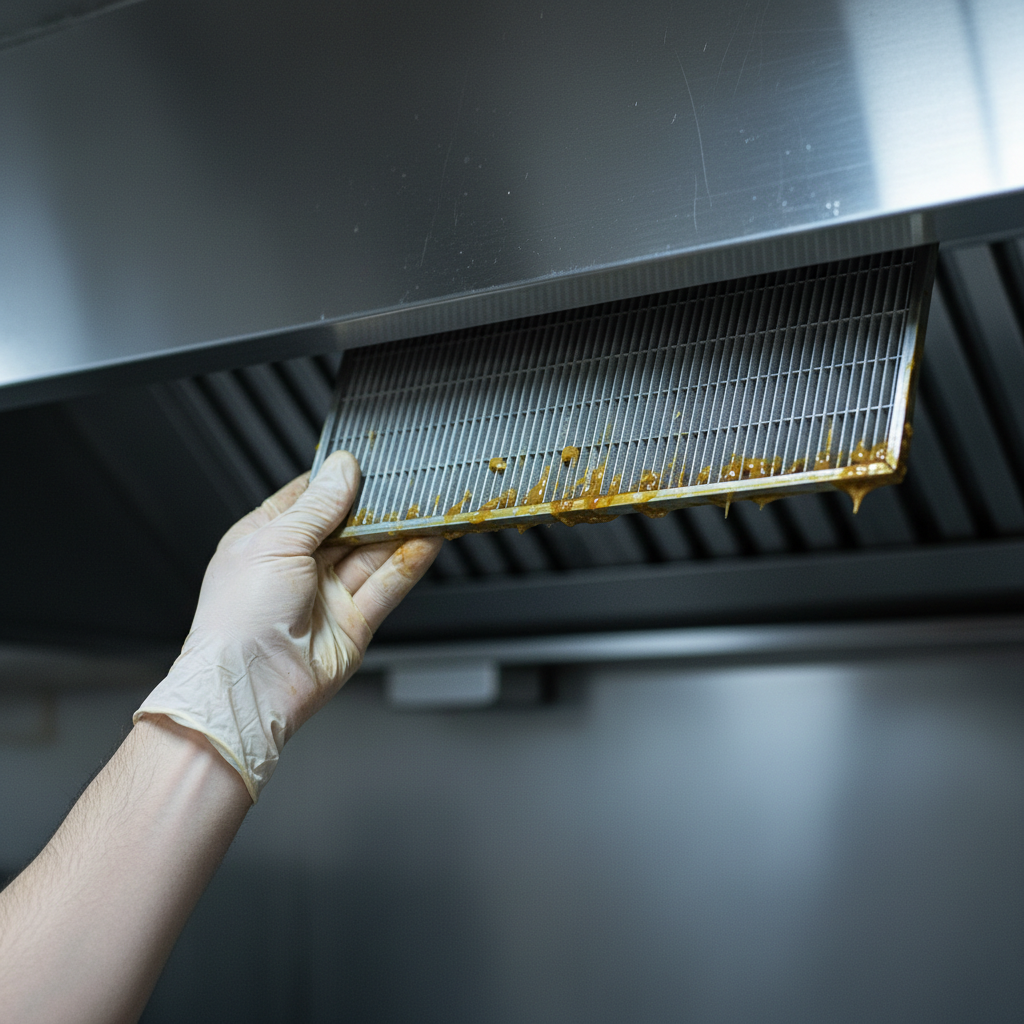
Let’s define the scope. “Commercial kitchen cleaning” is more than a quick wipe-down after service. It’s a structured, certified process that targets the highest-risk areas—especially those hidden from view.
- System-level focus: Hoods, ducts, fans, and rooftop exhausts where grease vapor accumulates.
- Component care: Filter cleaning & exchange, fan belt inspection/replacement, and equipment degreasing.
- Compliance alignment: Work performed to NFPA 96 fire code standards by WSIB-insured crews.
- Waste and plumbing: Grease trap service to keep drains flowing and prevent odors and clogs.
- Surrounds and surfaces: Power washing and sanitizing of adjacent hard surfaces for a safer environment.
- Scheduling built around you: True 24/7 availability so you can maintain operations without disruption.
For Toronto’s fast-moving restaurants, commercial kitchen cleaning services Toronto teams book regularly to avoid fire hazards, improve airflow, and prepare for inspections with confidence.
Why It Matters: Safety, Compliance, Air Quality
Here’s why owners and managers treat certified cleaning as essential infrastructure—not a nice-to-have.
- Fire hazard reduction: Grease deposits in hoods, ducts, and fans can ignite. Removing buildup lowers risk.
- Inspection readiness: Health and fire inspectors look for maintenance evidence and code alignment.
- Air quality improvement: Clean ventilation expels heat, smoke, and vapor more efficiently, boosting comfort and performance.
- Equipment longevity: Clean, correctly tensioned fan belts and degreased equipment run cooler and last longer.
- Operational stability: Scheduled service avoids emergency shutdowns and weekend surprises.
- Staff morale and safety: A cleaner kitchen is a safer, more professional workplace that attracts talent.
If you’ve ever had smoke linger during a dinner rush, you’ve felt the difference clean ventilation makes. The right partner keeps those airways clear.
How Professional Cleaning Works (Step-by-Step)
Robinhood Cleaners follows a documented, NFPA 96–aligned workflow designed for consistency and verifiable results.
1) Pre-visit coordination
- Schedule to fit operations: Overnight, early morning, or between shifts—true 24/7 options.
- Scope confirmation: Identify all hoods, ducts, fans, rooftop access, filters, grease traps, and equipment zones.
- Safety checks: Confirm power isolation, rooftop permits, access ladders, and PPE requirements.
2) Site preparation
- Protective setup: Cover appliances, prep surfaces, and floors; stage containment for runoff.
- System lockout/tagout: De-energize fans where required; verify safe access points.
- Documentation: Baseline photos and notes for before/after reporting.
3) Hood, duct, and exhaust fan cleaning
- Hood degreasing: Food-safe degreasers applied; scrubbing and rinsing to bare metal.
- Duct cleaning: Mechanical agitation and hot-water rinse to remove stubborn grease films.
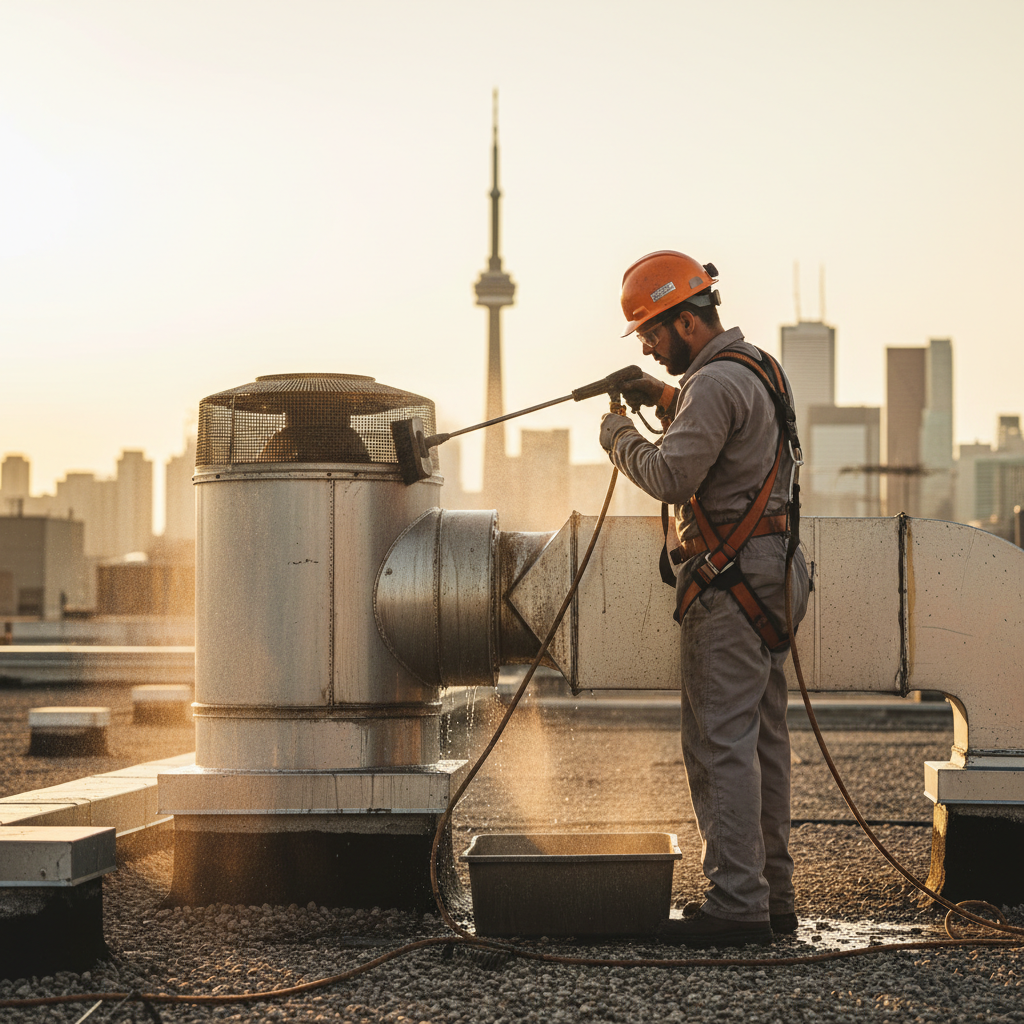
- Exhaust fan service: Clean blades, housings, and shrouds; check bearings and balance; replace fan belts if worn.
4) Filter cleaning & exchange
- Remove and soak: Baffle filters degreased, rinsed, and dried or exchanged for cleaned spares.
- Inspect and re-seat: Ensure correct orientation and fit for optimal capture and airflow.
- Set reminders: Establish a filter exchange cadence based on menu, volume, and hours.
5) Equipment and surrounds
- Equipment cleaning: Ovens, grills, fryers, and refrigeration exteriors degreased and wiped to manufacturer-safe standards.
- Power washing: Treat floors and adjacent hard surfaces where appropriate for traction and hygiene.
- Ventilation system tuning: Confirm airflow paths are unobstructed; check make-up air balance if applicable.
6) Grease trap service
- Trap inspection: Check baffles, flow, and odor sources; document current condition.
- Pump and clean: Remove FOG (fats, oils, grease) safely; relaunch with proper sealing and odor control.
- Maintenance record: Log service date and notes to simplify inspections.
7) Verification and reporting
- Before/after documentation: Photos, notes, and any corrective actions.
- Sticker and log updates: Visible service stickers and a digital record help prove compliance.
- Recommendations: Frequency, filter exchange timing, and belt inspection intervals.
Want a deeper look at hood systems? See how this aligns with our commercial kitchen hood cleaning service process.
Mid-article CTA: Need no-downtime scheduling? Our crews work overnight or pre-open. Start with a quick assessment and free estimate—Robinhood Cleaners is WSIB insured and NFPA 96–certified.
Types, Methods, and Approaches
Different kitchens demand different cleaning approaches. Here’s how we tailor the work.
Core service types
- Kitchen exhaust cleaning: Hoods, ducts, fans, and rooftop terminations to bare metal where required.
- Filter cleaning & exchange: Routine removal, degreasing, drying, and rotation/exchange.
- Fan belt replacement: Inspect tension and wear; replace belts to prevent airflow loss.
- Equipment cleaning: Ovens, grills, and refrigeration exteriors degreased and wiped.
- Grease trap service: Pumping, cleaning, and log updates to keep plumbing intact.
- Power washing: Floors and surrounds for traction and sanitation improvements.
Methods we use
- Food-safe degreasers: Effective on polymerized grease but safe for kitchen environments.
- Hot-water rinse and mechanical agitation: Dislodges stubborn films within ducts and housings.
- Containment and recovery: Protects equipment and prevents runoff issues.
- Documentation-first approach: Before/after photos, stickers, and logs for inspector clarity.
Scheduling by concept type
- High-grease (QSR, burger, wings): More frequent exhaust service and filter exchanges.
- Mixed menus (casual, family): Standard NFPA 96 intervals with periodic checks.
- Low-grease (bakeries, light sauté): Longer intervals but maintain filter and trap cadence.
Commercial kitchen cleaning services Toronto operators choose should adapt cadence to volume, menu, and ventilation design—not a one-size-fits-all schedule.
Best Practices and Scheduling
Simple habits keep you ahead of inspections and prevent last-minute scrambles.
Daily and weekly habits
- Daily: Wipe hood exteriors; check filters for visible grease; log anomalies.
- Weekly: Pull and clean baffle filters; verify correct orientation and fit.
- Weekly: Inspect fan belt sightlines if visible; listen for squeal or vibration.
- Weekly: Spot-check floor traction; schedule power washing if surfaces are slick.
Monthly and quarterly actions
- Monthly: Review ventilation logbook; confirm sticker dates align with internal records.
- Monthly: Inspect grease trap odor and flow; schedule service before issues start.
- Quarterly: Photolog ducts and fan housings; adjust interval based on grease load.
Every service interval
- Confirm access and safety: Ladders, roof keys, lockout/tagout.
- Verify documentation: Before/after photos, checklist sign-off, and service sticker.
- Close the loop: Review recommendations; schedule the next visit before crews leave.
Tools, Checklists, and Resources
A reliable program blends certified technicians, proven tools, and easy-to-use records.
- Technician toolkit: Food-safe degreasers, hot-water sprayers, scrapers/brushes, PPE, belt tension tools, wet/dry vacs.
- Rooftop safety: Tie-off points, harnesses, and weather-aware scheduling.
- Documentation set: Service stickers, logbook or digital folder, and photo evidence.
- Manager checklists: Daily/weekly/quarterly tasks and an inspection-prep sheet.
Explore how exhaust work connects to broader kitchen hygiene in our overview of restaurant cleaning services across Ontario.
Local Tips
- Tip 1: If your site is near the Gardiner Expressway or Don Valley Parkway, schedule crews outside rush hours to simplify rooftop access and material delivery.
- Tip 2: Winter in Toronto brings ice on roofs—book exhaust and fan work for midday when surfaces are warmer and safer, or use indoor pre-open windows.
- Tip 3: For multi-unit operators across All Over Ontario at All Over Ontario, align visits in Southern Ontario back-to-back to reduce downtime across locations.
IMPORTANT: These tips reflect Robinhood Cleaners’ 24/7 approach and Ontario-wide coverage with a quick-service focus in the south.
In-House vs. Certified Specialists (Comparison)
| Factor | In-House Only | NFPA 96–Certified Specialist |
|---|---|---|
| Fire code alignment | Varies by team | Built into process + reporting |
| Documentation for inspectors | Inconsistent | Before/after photos, stickers, logs |
| Grease removal quality | Surface-level | To bare metal where required |
| Rooftop fan service | Limited access | PPE, harnesses, and full cleaning |
| Scheduling flexibility | Business hours only | 24/7 with no downtime |
Case Examples (Toronto and Southern Ontario)
Here are brief scenarios based on common requests Robinhood Cleaners receives.
- Downtown QSR near Union Station: Heavy fry output led to rapid filter saturation. We moved to weekly filter exchanges and shorter exhaust intervals. Result: steadier airflow and fewer smoke alarms during lunch rush.
- Entertainment District steakhouse: Grease-laden ductwork caused persistent odor in the dining room. A full hood/duct/fan reset to bare metal plus fan belt replacement restored capture. Result: improved guest comfort and stable exhaust draw.
- Hospital cafeteria in North York: Tight operating windows required pre-open service. We staged overnight setup, performed dawn cleaning, and logged before/after photo evidence for facilities compliance.
- Suburban franchise group (Mississauga to Oshawa): Multi-unit timing was coordinated back-to-back. Shared checklists standardized operations and simplified inspections across stores.
- Rooftop fan access in winter: Ice risk mitigated via midday service when roof warmed, with harnesses and spotters. Result: safer access and complete fan housing cleaning.
For more on overarching restaurant hygiene programs, review our Ontario-wide restaurant cleaning services approach.
FAQ
How often should a Toronto restaurant schedule exhaust cleaning?
Intervals depend on menu, volume, and hours. High-grease concepts (wings, burgers, fry-heavy) often need more frequent exhaust and filter service. Lighter menus may extend intervals but should still maintain routine inspections. We document each visit with stickers and photos and help you adjust cadence as grease loads change.
What’s included beyond the hood?
Comprehensive service targets hoods, ducts, exhaust fans, filters, and rooftop terminations. It also includes fan belt checks/replacement, equipment exterior degreasing (ovens, grills, refrigeration exteriors), and grease trap service with log updates. Our focus is practical fire hazard reduction and inspection readiness.
Will cleaning interrupt my operating hours?
It doesn’t have to. Robinhood Cleaners offers true 24/7 scheduling, so we can work pre-open, overnight, or between shifts. We protect nearby equipment, contain runoff, and coordinate access to minimize impact on service and staff.
Are you certified and insured?
Yes. Robinhood Cleaners is NFPA 96–certified and WSIB-insured. That means you get a documented process aligned to recognized fire safety standards, plus the coverage and professionalism you expect from a vetted contractor.
Do you provide documentation for inspectors?
Absolutely. Each visit includes before/after photos, service stickers, and notes. We maintain a clear record of maintenance that inspectors can review, including grease trap logs, filter exchange cadence, and exhaust cleaning dates.
Key Takeaways
- Compliance and safety: NFPA 96–aligned cleaning is essential to reduce fire hazards and pass inspections.
- Holistic scope: Go beyond the hood—filters, ducts, fans, equipment, and grease traps all matter.
- Flexible timing: 24/7 scheduling prevents downtime and protects revenue.
- Proof of work: Photos, stickers, and logs make inspections straightforward.
- Local expertise: Robinhood Cleaners covers All Over Ontario with quick service in Southern Ontario, including the GTA.
Conclusion + Next Steps
- Align scope to risk: Match service intervals to grease output and ventilation design.
- Institutionalize records: Keep a central logbook with filter exchanges, grease trap dates, and exhaust cleanings.
- Plan around operations: Use overnight or pre-open windows to avoid disruption.
- Choose certified pros: NFPA 96–certified, WSIB-insured specialists bring consistency and credibility.
- Start with an assessment: Book a quick walkthrough to validate scope and timeline.
Ready to tighten up your kitchen safety plan? Explore our oven and vent cleaning services and see how our Ontario restaurant cleaning team supports multi-unit operators.
Related Articles
For deeper context on how exhaust work anchors a broader hygiene program, read our guide to commercial kitchen hood cleaning in Ontario and our province-wide overview of restaurant cleaning services. Each article explains inspection prep, documentation, and scheduling strategies.