Professional grease trap cleaning in Ontario is the scheduled pumping, scraping, and safe disposal of fats, oils, and grease (FOG) from under-sink traps and in-ground interceptors. It prevents backups, foul odors, and compliance issues for restaurants All Over Ontario. Done by trained technicians, it keeps kitchens safe, efficient, and inspection-ready.
By Robinhood Cleaners • Last updated: 2026-04-30
Overview
This complete guide explains what professional grease trap cleaning involves, why it matters for safety and compliance, how the service works step-by-step, and the best practices Ontario kitchens should follow. You’ll also find service interval guidance, DIY vs. pro comparisons, tools used, and real-world examples from our work.
If you manage a restaurant, café, or institutional kitchen, grease trap reliability isn’t optional—it’s the backbone of smooth operations. Clogs can shut down dish lines and trigger health code violations within hours. A disciplined plan for professional grease trap cleaning in Ontario keeps you ahead of surges, inspections, and seasonal volume swings common across Southern Ontario.
- What you’ll learn: Clear definitions, compliance context, service workflow, and scheduling tips.
- Why it matters: Less downtime, better hygiene, fewer emergency calls, and audit-ready records.
- Who it’s for: Restaurants, quick service brands, food courts, hotels, and institutional kitchens.
- How to use it: Apply checklists, adopt intervals, and align with your broader hood and duct plan.
What is professional grease trap cleaning?
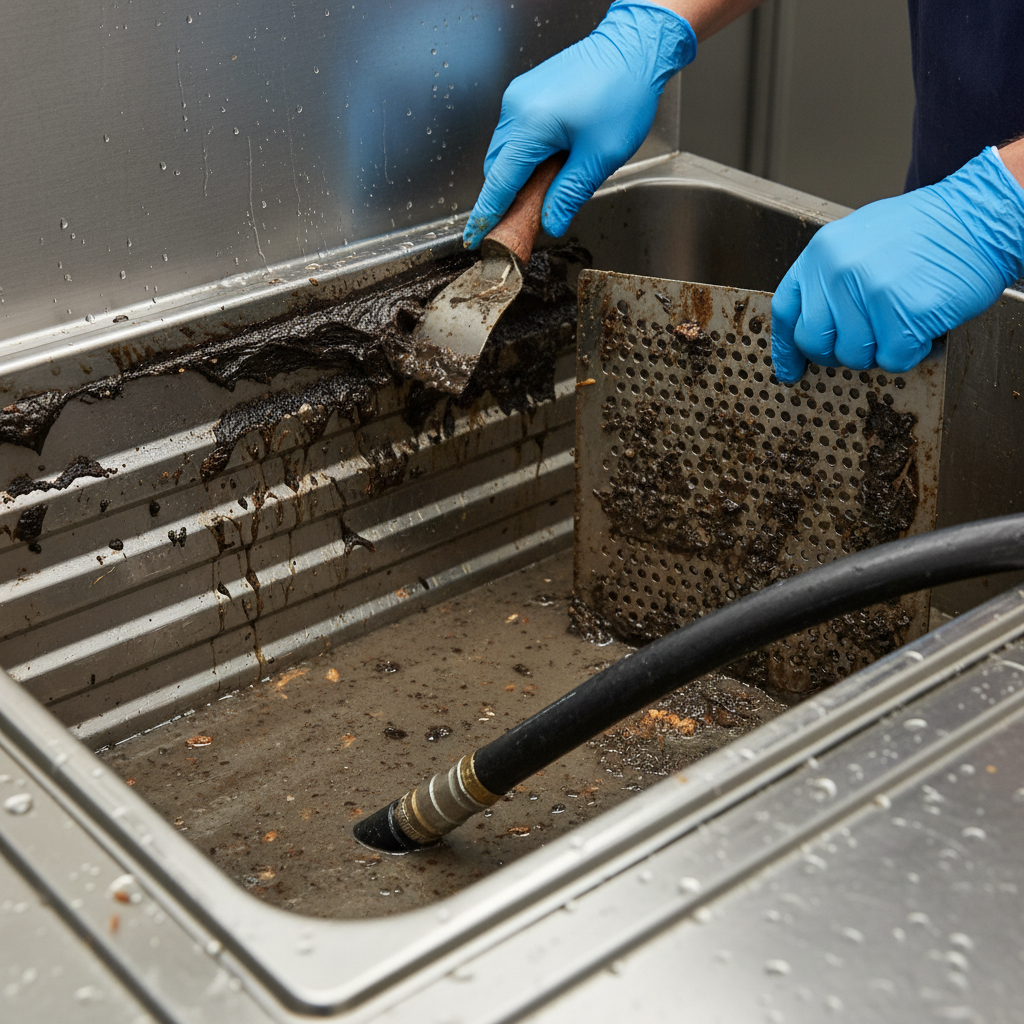
Professional grease trap cleaning removes fats, oils, grease, and solids from traps and interceptors, followed by wall scraping, rinsing, and responsible FOG disposal. The outcome is free-flowing drains, reduced odors, and a kitchen that meets inspection standards without emergency downtime.
In plain terms, a grease trap separates lighter FOG from wastewater before it reaches municipal lines. Over time, layers of floating grease on top and settled solids on the bottom reduce capacity and restrict flow. That’s when smells intensify, sinks drain slowly, and dishwashers stall.
- Core tasks: Pumping out contents, scraping hardened FOG, rinsing interior surfaces, and reassembling baffles.
- Technician know-how: Identifying inlet/outlet blockage, checking gaskets, verifying baffle alignment, and noting abnormal inflow.
- Documentation: Service notes with approximate volumes removed and visual condition keep teams aligned and audit-ready.
In our experience across All Over Ontario, traps reach the 25% rule quickly in peak seasons. That threshold is a common internal benchmark: when combined grease and solids occupy roughly a quarter of capacity, performance drops and odors rise. Clearing traps before that point preserves flow and shortens service time.
For a quick primer on how traps work, see this accessible explanation of grease interceptors in action. Use it to brief new staff on why your scheduling matters.
Why grease trap cleaning matters in Ontario
Regular cleaning prevents backups, health violations, and plumbing emergencies. It also supports food safety, odor control, and staff productivity. A documented plan signals compliance readiness and helps kitchens pass inspections without urgent, after-hours calls.
Here’s the thing—FOG doesn’t just vanish. When traps aren’t maintained, it migrates into laterals and main lines, hardening into blockages that can halt dish rooms at the worst time. Even one backup during a weekend rush can upend revenue and staff morale.
- Operational continuity: Proactive pumping and scraping minimize surprise stoppages that derail service windows.
- Hygiene and air quality: Removing rancid layers curbs odors that linger in prep zones and dining areas.
- Inspection readiness: Logs and labels show diligence; clean equipment is easier to verify at a glance.
- Cross-system protection: Healthy traps reduce downstream strain on mop sinks, floor drains, and dish machines.
We’ve found that kitchens pairing trap care with hood and duct maintenance experience fewer fire-risk citations and fewer odor complaints. If you’re updating your plan, align it with your exhaust schedule and filter exchange cadence for a coherent, all-systems approach.
For related planning ideas, our page on grease management for compliance outlines checklists that help supervisors pass audits with confidence.
How professional service works (step-by-step)
A trained crew isolates the trap, pumps liquids and solids, scrapes interior walls, rinses components, checks flow, and documents the visit. The result is maximum capacity restored, faster drainage, and proof of service for compliance files.
- Arrival and safety setup: Wet floor signs, PPE, ventilation check.
- Isolate and open: Shut inflow where possible; lift covers; locate baffles.
- Pump-out: Vacuum both the floating grease layer and bottom solids.
- Scrape and rinse: Dislodge hardened FOG from walls, baffles, and the outlet tee.
- Inspection: Verify inlet/outlet flow, gasket condition, and lid seating.
- Reassemble and test: Restore flow, run rinse water, confirm no leaks.
- Documentation: Record date, approximate volumes, conditions, and recommendations.
| Step | Primary Task | Typical Duration | Key Check |
|---|---|---|---|
| 1 | Safety setup | 5–10 minutes | Signage and PPE in place |
| 2–3 | Open and pump | 15–30 minutes | Liquids and solids fully removed |
| 4 | Scrape/rinse | 10–20 minutes | Walls and baffles visibly clean |
| 5–6 | Inspect/reassemble | 10–15 minutes | Free flow confirmed |
| 7 | Document | 5 minutes | Service log updated |
We coordinate around prep rhythms to prevent interruptions. For example, we often align with filter exchanges and schedule cleaning between rushes, leveraging our 24/7 availability to cut disruption.
For a deeper walk-through and service options, explore our grease trap cleaning services page, which outlines scheduling patterns by venue type.
Service intervals and sizing
Match your cleaning frequency to trap size, menu type, and volume. High-output fry lines and dish-heavy operations often need monthly service; moderate use may stretch to 6–8 weeks. The 25% capacity rule is a practical trigger across many kitchens.
- Trap size: Under-sink traps (typically small) fill faster than in-ground interceptors.
- Menu profile: Fryers, grills, and high-fat prep accelerate FOG accumulation.
- Operating hours: Long service windows drive shorter intervals; off days help.
- Staff behavior: Scrape plates, dry-wipe pans, and use sink strainers to extend intervals.
In our Ontario routes, quick service brands commonly hold a 4-week cadence, while mid-volume bistros can run 6–8 weeks if kitchen habits are disciplined. Institutional kitchens vary with semester and program schedules, often tightening during peak intake periods.
Need help calibrating? Our quick guide to pumping frequency outlines simple checks any supervisor can run at shift change.
DIY vs. professional
DIY can handle light skimming and odor control, but full pump-outs, hardened FOG removal, and compliant disposal are best left to trained, insured crews. Professional service reduces mess, speeds turnaround, and gives you verifiable documentation.
| Aspect | DIY | Professional Service |
|---|---|---|
| Scope | Surface skimming, minor debris removal | Full pump-out, wall scraping, outlet tee clearing |
| Speed | Variable; depends on team | Predictable; optimized process |
| Disposal | Unclear routes risk non-compliance | Tracked and documented disposal |
| Risk | Spills, odors, missed build-up | Insured crew with proper PPE |
| Records | Inconsistent | Service logs and recommendations |
We encourage teams to keep lids and gaskets clean between visits and to report slow drains early. But for recurring FOG, baffle rinsing, and sludge removal, our certified technicians complete the job quickly with fewer disturbances to prep lines.
For a plain-language refresher on concepts like baffles and interceptors, this short primer on how grease traps work is handy for onboarding.
Types of grease traps and interceptors
Most kitchens use either compact under-sink traps or larger in-ground interceptors. Understanding which you have—plus inlet/outlet layout and baffle design—helps you schedule the right service length and crew configuration.
- Under-sink traps: Small, accessible, and common in quick service. They fill fast and need frequent care.
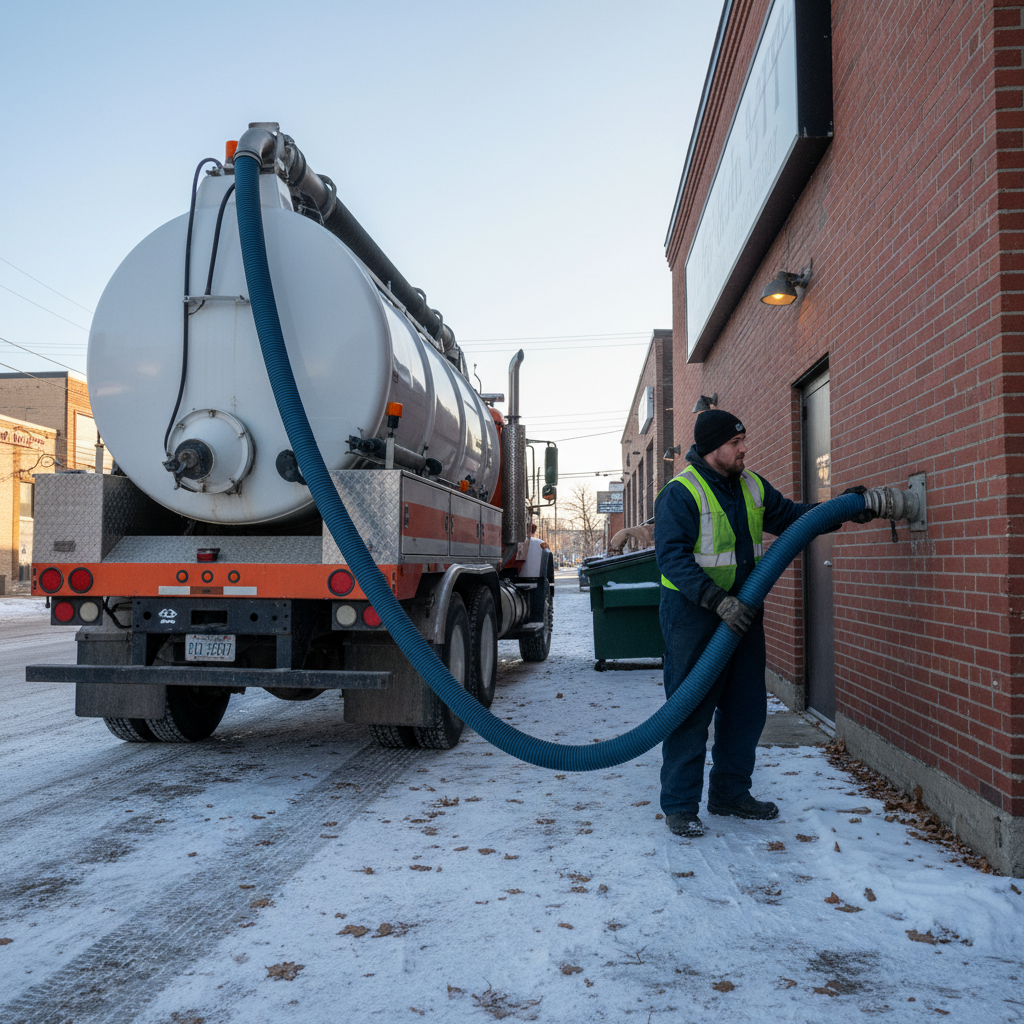
- In-ground interceptors: Larger capacity units serving multiple fixtures; often cleaned less frequently but require vacuum trucks.
- Hybrid setups: Some venues run both, capturing FOG at the source and again at the main line.
We map each client’s fixtures—three-compartment sink, mop sink, dish machine—to the correct trap or interceptor and note which baffle sections collect the most solids. That map shortens service windows and prevents accidental bypass during cleaning.
For service details by unit type, see our Ontario grease trap service overview, which also ties in filter exchange and hood cleaning cadence for whole-kitchen reliability.
Best practices for Southern Ontario kitchens
Adopt a clear schedule, train staff in FOG prevention, and sync trap care with hood and filter routines. Simple habits—dry-wiping pans, straining scraps, and labeling service dates—meaningfully extend intervals and reduce odors.
Daily and weekly habits
- Dry-wipe cookware: Scrape and wipe before washing to cut FOG at the source.
- Use strainers: Catch solids in three-compartment and prep sinks.
- Log slow drains: Note and escalate before a rush begins.
- Label lids: Mark last service date for quick visual checks.
Program-level practices
- Coordinate services: Align with exhaust duct cleaning and filter exchange.
- Bundle risk checks: Pair trap inspections with hood/duct walk-throughs.
- Incident drills: Teach teams how to triage a slow drain vs. a full backup.
Local considerations for All Over Ontario
- Winter cold thickens grease; schedule visits ahead of cold snaps to stay ahead of slower drainage.
- Holiday peaks and summer events boost volume; tighten intervals by one cycle during known surges.
- Quick service venues with long hours should add mid-cycle lid checks to spot early odor or slow flow.
For more on preventing build-up across the line, our short read on hood grease buildup prevention shows how traps and hoods influence each other.
Tools and resources we use
We deploy purpose-built pumps, sealed hoses, scrapers, baffle tools, and safe rinsing methods. Crews arrive with PPE, signage, and disposal plans. Documentation captures conditions, recommendations, and timing for the next cycle.
- Vacuum systems: For both liquid layers and bottom sludge.
- Scrapers and brushes: To clear hardened FOG from walls and baffles.
- Gasket kits: Replace worn seals that cause leaks and odors.
- PPE and signage: Gloves, eye protection, and wet floor signs to keep staff safe.
- Service logs: Records that support audits and training.
Our teams are NFPA96-aware, WSIB insured, and available 24/7. That combination reduces operational risk while giving you flexible windows around service. When we see recurring patterns—like chronic outlet tee blockage—we flag root causes and propose staff training or fixture adjustments.
Case snapshots from Ontario kitchens
From quick service to institutional dining, consistent trap care stabilizes dish lines, curbs odors, and shortens inspections. These brief scenarios show how interval tuning and bundled services cut downtime and complaints.
Quick service rush recovery
- Problem: Weekend backups at the three-compartment sink slowed dish cycles.
- Action: Moved from 8-week to 4-week cleaning; trained staff on dry-wiping pans.
- Result: Faster drainage and no emergency calls across two quarters.
Hotel banquet coordination
- Problem: Odors near dish machine during wedding season; trap filled early.
- Action: Pre-event service window; paired with whole-kitchen degreasing.
- Result: Odors resolved; banquet teams reported smoother turnover between events.
Institutional semester shifts
- Problem: Variable traffic caused inconsistent FOG loading and surprise slow drains.
- Action: Semester-based planning with mid-term checks; labeled lids to track cadence.
- Result: Predictable service windows and fewer maintenance tickets.
These snapshots mirror what we see All Over Ontario: when intervals match volume and staff adopt a few prevention habits, kitchens gain hours back every week—without late-night surprises.
Connected systems: hoods, ducts, and exhaust
Grease traps, hoods, and ducts influence each other. Cleaner traps mean fewer odors and better morale; clean hoods and ducts reduce fire risk and eases inspections. Bundle maintenance to control risk across the whole kitchen.
- Hoods and ducts: Capture airborne grease; left unchecked, they elevate fire risk.
- Exhaust fans: Need routine checks—belt slippage and vibration hint at build-up.
- Filters: Exchange or clean on a clear schedule; dirty filters strain systems.
We align trap cleanings with hood and duct programs so you’re never playing catch-up. For more on this, review our page on exhaust duct cleaning benefits and use it to plan bundled visits that reduce service overlaps.
Free readiness check: Want a quick second opinion on your current schedule? Our team can review your logs and suggest an interval plan aligned to your menu and hours. We work 24/7 across Southern Ontario to fit your prep windows.
Explore options on our grease trap service page or reach out via our site.
Frequently asked questions
These quick answers help supervisors and chefs align staff routines with scheduled service. Share them in pre-shift huddles to reinforce prevention and inspection readiness.
How often should a grease trap be cleaned?
Intervals depend on trap size, menu, and hours. Many high-volume kitchens schedule monthly cleanings; moderate operations run every 6–8 weeks. Use the 25% capacity rule—if combined grease and solids hit a quarter of volume, it’s time.
What are signs a trap needs service now?
Slow drains, odors near the dish area, gurgling sounds, and visible grease at the lid are red flags. If you notice any ahead of a busy shift, request an accelerated service window to avoid mid-rush backups.
Can we handle grease trap maintenance in-house?
Teams can manage light prevention—dry-wiping cookware, using strainers, and keeping lids clean. For full pump-outs, hardened FOG removal, and compliant disposal, a professional, insured crew is the safer, faster option.
How does grease trap care connect to hood and duct safety?
They’re part of one system. Cleaner traps reduce odors and stress on drains; clean hoods and ducts lower fire risk and ease inspections. Bundle services to coordinate prep downtime and strengthen compliance.
Key takeaways & next steps
Set a realistic, written cleaning schedule, train staff on FOG prevention, and align trap care with hood and filter routines. With records in place, inspections move faster and backups are rare.
- Document a cadence: Monthly for high volume; 6–8 weeks for moderate use.
- Prevent at the sink: Dry-wipe and strain to extend intervals.
- Bundle services: Pair traps with hoods, ducts, and filter exchanges.
- Stay inspection-ready: Keep logs, labels, and photos on hand.
Ready to tighten your plan? Review our frequency guidelines and schedule a visit through our Ontario grease trap service page. For context on pumping benefits and prevention ideas, see this quick overview of grease trap pumping benefits and our tips on grease buildup removal techniques.