You run a fast-moving kitchen. When the rush hits, the last thing you want is a sewage backup, foul odors, or an emergency call to shut down service. That’s exactly why clear, practical grease trap pumping frequency guidelines matter. In this guide, we translate the technical into the tactical—so restaurants and commercial kitchens across Ontario can keep operations smooth, safe, and compliant.
In the first 100 words, here’s the key: follow grease trap pumping frequency guidelines grounded in the 25% rule, your menu’s FOG output, and your volume. Robinhood Cleaners serves commercial kitchens all over Ontario with NFPA 96–informed maintenance, including grease trap cleaning, hood and duct cleaning, and safety-first protocols that fit busy schedules.
Quick Summary
- What you’ll get: A step-by-step schedule builder, the 25% rule explained, and a ready-to-use inspection log.
- Why it matters: Prevent backups, pass inspections, protect drains and municipal systems, and keep air and water quality strong.
- Who this helps: Restaurants, quick-service brands, fine dining, food courts, catering, and institutional kitchens operating in Southern Ontario and beyond.
- What we cover: How traps work, types of interceptors, frequency tables, best practices, tools, mini case studies, and FAQs.
Quick Answer
For All Over Ontario kitchens, start with monthly service for small indoor traps and 8–12 weeks for larger outdoor interceptors—then confirm using the 25% rule. Robinhood Cleaners provides scheduled grease trap pumping frequency guidelines and on-time pumping across Southern Ontario to keep you compliant and running without interruptions.
Local Tips
- Tip 1: Kitchens along the Highway 401 corridor see heavy commuter traffic and extended hours—plan grease trap service just before peak weekend volume to avoid mid-shift surprises.
- Tip 2: Winter freeze–thaw cycles in Southern Ontario can slow wastewater flow. Shorten intervals slightly during deep cold snaps to prevent congealed FOG from hardening in lines.
- Tip 3: Many municipalities require proof of maintenance. Keep signed pumping manifests and a simple log on-site; our techs provide documentation at every visit.
IMPORTANT: These tips align with busy Ontario kitchen operations and our scheduled maintenance approach.
What Is Grease Trap Pumping?
Grease trap pumping removes accumulated fats, oils, and grease (FOG), food solids, and gray water from your interceptor so it can keep capturing FOG before it reaches the sewer. Think of it as preventive maintenance for your drains—simple but critical.
- Core objective: Stop FOG from clogging lines and municipal infrastructure.
- Where it lives: Small hydromechanical traps inside near dish areas; large gravity interceptors outdoors or in mechanical rooms.
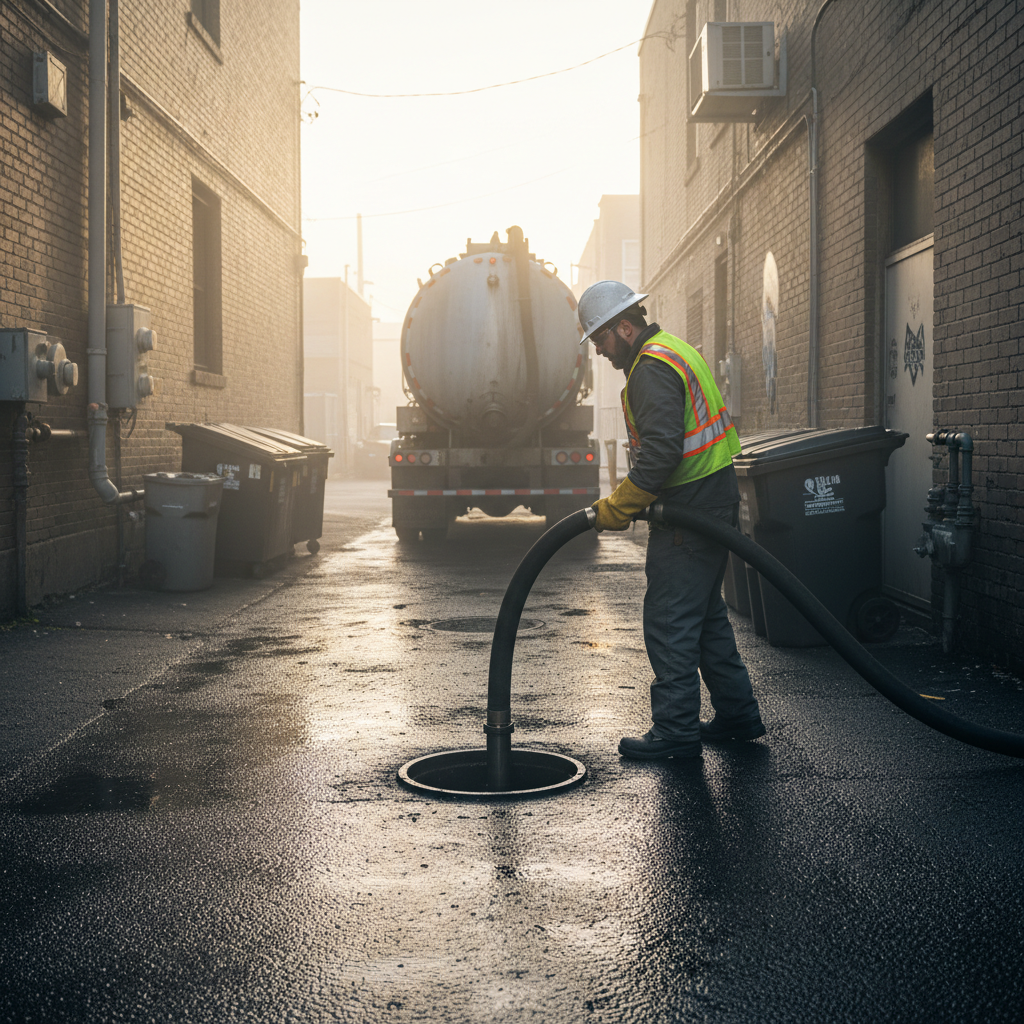
- What’s removed: Floating grease layer (top), settled solids (bottom), and middle water—usually with a vacuum truck.
- Who needs it: Any commercial kitchen: QSRs, full-service, hotels, food courts, institutions, and catering facilities.
Robinhood Cleaners performs grease trap cleaning as part of a bigger kitchen safety plan that also covers hood, duct, and exhaust fan cleaning to NFPA 96 standards—reducing fire risk above the line and drain risk below it.
Why Pumping Frequency Matters
Getting the interval right prevents costly and disruptive issues. Too long between services and the trap loses efficiency; too frequent and you’re spending resources without need.
- Protects uptime: No backups, no mid-service emergencies, fewer after-hours calls.
- Supports compliance: Many jurisdictions expect proof of routine service and adherence to the 25% rule.
- Preserves infrastructure: Less chance of line blockages and premature pipe wear.
- Improves hygiene: Fewer odors, pests, and sanitation headaches.
- Optimizes spend: Right-sized schedule fits your output and trap size.
For busy Southern Ontario restaurants, we often pair trap service with planned hood cleaning frequency windows so teams prep once and return to a fully serviced kitchen.
How Grease Traps Work (and the 25% Rule)
Understanding flow helps you set the right cadence. Traps slow wastewater so grease rises to the top and solids settle. Efficiency drops as layers build.
- Influent: Dish and prep sinks, floor drains, and equipment discharge send gray water into the trap.
- Separation: Gravity and baffles create calm zones where grease floats and solids sink.
- Effluent: Cleaner water exits to the sanitary line when the trap is maintained.
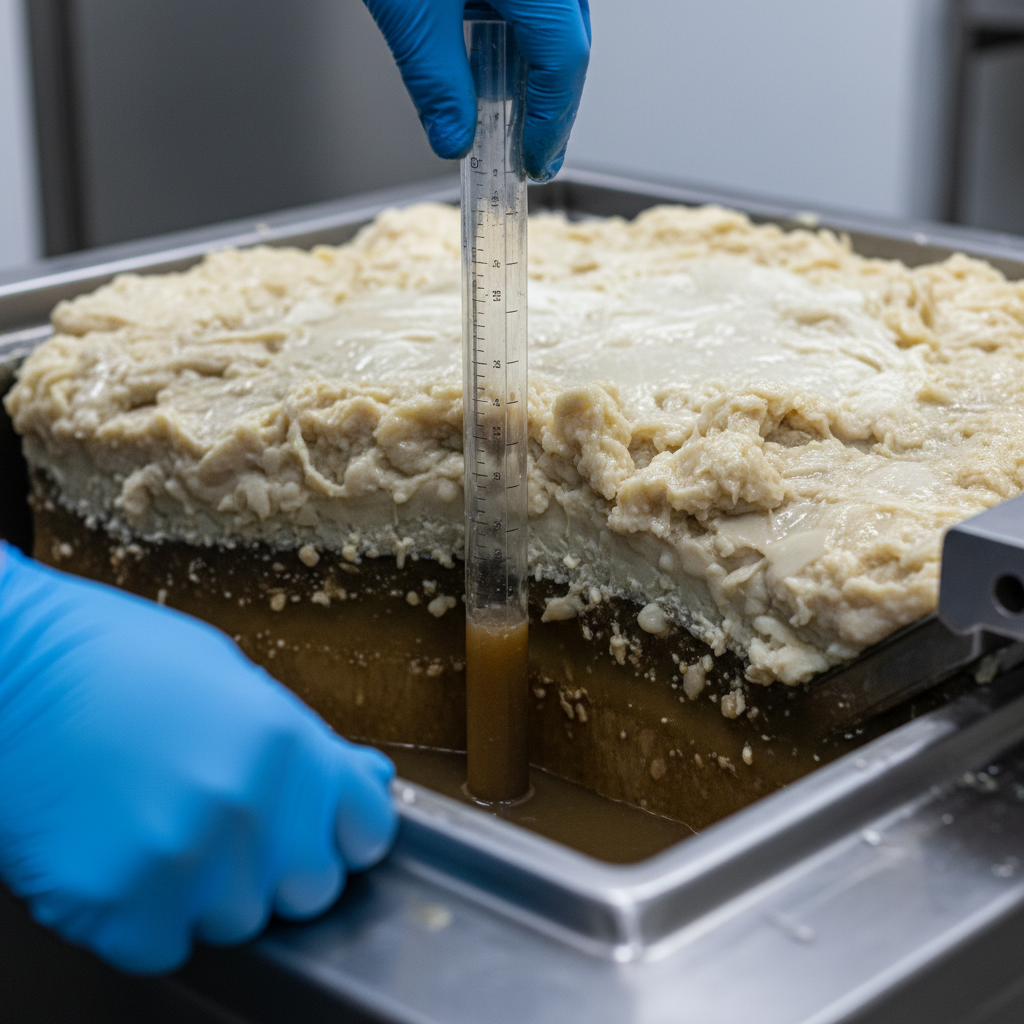
- 25% rule: When combined FOG (top) and solids (bottom) reach 25% of liquid depth, schedule a pump-out now. Beyond this, efficiency falls fast.
Our teams measure FOG and solids at each visit and record results on your service ticket. This data feeds your next due date, making frequency evidence-based instead of guesswork.
Types of Traps and Interceptors
Trap type, size, and placement impact how often you need pumping. Here’s how they differ.
Hydromechanical (Indoor) Traps
- Location: Under or near three-compartment sinks, dishwashers, or prep sinks.
- Capacity: Smaller volume; fills faster with high FOG menus.
- Typical frequency: Every 2–6 weeks for busy QSR; 6–8 weeks for moderate volume.
- Watchouts: Temperature swings harden grease; daily skimming and strainer habits help.
Gravity (Outdoor) Interceptors
- Location: Outside in-ground tanks with service ports.
- Capacity: Larger; tolerates more volume but still governed by the 25% rule.
- Typical frequency: 8–12 weeks for high-volume sites; 12–16 weeks for mixed-menu, steady traffic.
- Watchouts: Seasonal temperature and rain infiltration can change layers; confirm with measurements.
Automatic Grease Removal Devices (AGRDs)
- What they do: Mechanically skim grease to a container, reducing but not eliminating pumping.
- Typical frequency: Pumping still needed—often quarterly—plus device maintenance and container emptying.
- Best for: Consistent, predictable FOG streams with trained staff.
Not sure which you have? Our technicians label access points and document sizes, baffles, and flow rates during your first service.
Grease Trap Pumping Frequency Guidelines (Ontario)
Use this table to set a starting cadence, then adjust using the 25% rule and your actual log data.
| Kitchen Type | Daily Covers | Menu FOG Level | Typical Trap | Starting Frequency | Trigger (25%) |
|---|---|---|---|---|---|
| Quick Service (fried) | 300–800 | High | Indoor hydromechanical | Every 2–4 weeks | FOG+solids ≥ 25% |
| Casual/Family dining | 150–400 | Medium | Indoor or outdoor | Every 6–8 weeks | FOG+solids ≥ 25% |
| Fine dining | 80–200 | Medium | Indoor with AGRD | Every 8–10 weeks | FOG+solids ≥ 25% |
| Food court vendor | 200–500 | High | Indoor hydromechanical | Every 3–6 weeks | FOG+solids ≥ 25% |
| Institutional (schools, hospitals) | Varies (bulk prep) | Medium–High | Outdoor gravity | Every 8–12 weeks | FOG+solids ≥ 25% |
Build-Your-Interval: 6-Step Method
- Identify your trap (indoor vs outdoor, size in gallons or liters).
- Estimate FOG (menu style: fried, grill-heavy, sauté-focused, or low-fat).
- Log daily covers (sales or POS data works fine).
- Pick a starting interval from the table above.
- Measure layers at the next service; record FOG + solids depth.
- Adjust: If near 25%, shorten; if well below, cautiously extend.
Pair this with a standing service window so staff always know “pumping day,” just like hood-cleaning night.
Best Practices That Keep You Ahead
Frequency is only one part. Habits and systems make it stick.
Daily and Weekly Habits
- Use sink strainers and scrape plates to reduce solids entering the trap.
- Never pour fryer oil down drains; use designated oil bins.
- Hot-water flushes: Avoid “melting” grease into lines; it will re-solidify downstream.
- Quick inspections: Pop lids safely to check levels weekly on indoor traps.
Documentation and Proof
- Service manifests: File every pump-out ticket and keep the latest on-site.
- Maintenance log: Note measured depths, odors, and next due date after each service.
- Training notes: Keep a one-pager for closing staff on FOG do’s and don’ts.
Bundle Services to Reduce Downtime
- Coordinate trap pumping with grease trap cleaning service and hood maintenance windows.
- Add NFPA 96–aligned exhaust cleaning for a top-to-bottom safety refresh.
- Confirm access: clear lids, unlock gates, and note parking for the vacuum truck to speed service.
Tools and Resources You Can Use
Simple tools make schedules measurable, repeatable, and inspection-ready.
- Sludge judge or measuring stick: Track FOG and solids to the quarter inch.
- Kitchen maintenance log: Keep dates, measurements, and signatures in a binder.
- Calendar holds: Book recurring pumping days (early a.m. before prep).
- Staff one-pagers: Visual dos/don’ts for new hires.
- Photo records: Snap layers before/after service for trend tracking.
Need a template? Our crews leave a simple two-page log after your first visit so you’re inspection-ready from day one.
Our Step-by-Step Pumping and Maintenance Process
Here’s what to expect when Robinhood Cleaners services your trap or interceptor.
- Pre-check: Verify access, review last manifest, confirm trap type/size.
- Safety prep: PPE on, area coned, ventilation confirmed.
- Open and measure: Record FOG and solids, note odors or inflow issues.
- Vacuum removal: Extract grease, water, and sludge; minimize splash and mess.
- Scrape and rinse: Clean walls, baffles, and lids; check gaskets.
- Downline check: Look for slow drains indicating downstream buildup.
- Reset and seal: Refill with water, secure lids, and restore flow.
- Documentation: Provide signed manifest, measurements, and next due date.
- Recommendations: If near the 25% threshold, we advise schedule tweaks on the spot.
This disciplined workflow fits overnight or early morning windows so your line can fire on time.
Case Studies: Frequency in the Real World
Every kitchen is different. These Ontario scenarios show how we right-size schedules.
QSR Burger Concept, Southern Ontario
- Setup: Indoor hydromechanical trap near three-compartment sink; high fryer output.
- Starting point: 3-week cycle.
- Finding: 25–28% by week 3; occasional odor near dish area.
- Tune-up: Shifted to 2.5 weeks; added daily strainer checks; odors resolved and readings stabilized at 18–20%.
Food Hall Vendor Row, Greater Toronto Area
- Setup: Several small traps tied to shared prep; mixed menus, variable rush.
- Starting point: 6 weeks.
- Finding: Two vendors hit 25% in 4 weeks; others at 10–15%.
- Tune-up: Staggered schedule: 4 weeks for high-FOG stalls; 6–8 for lower FOG concepts. Central log binder kept all tenants inspection-ready.
Institutional Kitchen, Southwestern Ontario
- Setup: Large outdoor gravity interceptor, batch cooking, steady dayparts.
- Starting point: 12 weeks.
- Finding: 15–18% consistently; winter months saw slower flow.
- Tune-up: 10 weeks from December to March; back to 12 weeks in spring/summer.
Fine Dining, Niagara Area
- Setup: Indoor trap with AGRD; sauté and grill heavy but controlled volume.
- Starting point: 8 weeks.
- Finding: Device working well; 10–12% at service.
- Tune-up: Extended to 10 weeks with monthly AGRD maintenance to stay ahead.
Compliance, Safety, and the Bigger Picture
Pumping cadence isn’t just an operations decision—it touches compliance, fire safety, and environmental responsibilities.
- Municipal expectations: Keep manifests and logs as proof of routine maintenance and 25% adherence.
- Fire safety synergy: Grease above the line matters too. Pair trap care with NFPA 96–aligned hood and duct cleaning to mitigate risk in the exhaust system.
- Waste handling: We transport and dispose of waste per required standards; paperwork provided after each pump-out.
- Staff safety: Our crews are WSIB insured, trained, and equipped for confined-space and PPE protocols as needed.
Want a deeper dive on benefits? See this overview of grease trap pumping advantages and how proactive service reduces emergencies and odors.
Troubleshooting: Signs You’re Overdue
These red flags point to a frequency that’s too long.
- Persistent odors near dish areas or floor drains.
- Slow sink or floor drain performance even after cleaning.
- Grease sheens or residue on the trap lid or surrounding surfaces.
- Overflow or backup during peak service.
- Manifest gaps—no documented pump-out in 8–12 weeks for active kitchens.
If any show up, shorten your interval by 1–2 weeks and re-check at the next service.
Mid-Article CTA: Get a Right-Sized Schedule
Need a schedule you can trust? Robinhood Cleaners sets grease trap pumping frequency using measured data, your menu, and your hours of operation. We service kitchens across Southern Ontario with 24/7 availability and leave documentation that satisfies inspections.
- NFPA 96–informed maintenance
- WSIB insured crews
- Coordinated hood, duct, and trap service
Ask us to align pumping with your existing hood-cleaning night for a single, efficient downtime window.
FAQ
How do I know my grease trap pumping frequency is correct?
Track the combined FOG and solids depth at each service. If it’s close to 25% of the liquid depth by your next scheduled visit, shorten the interval. If it’s well below 25% for two consecutive services, you can cautiously extend by a week and re-check. Keep manifests and a simple log so adjustments are based on data, not guesswork.
What’s the difference between cleaning and pumping?
Pumping removes the liquid, grease, and sludge with a vacuum truck. Cleaning includes scraping, rinsing, and checking baffles, gaskets, and lids to restore capacity and function. A complete service does both. Robinhood Cleaners documents measurements and maintenance tasks so you can show inspectors a full record.
Can I coordinate grease trap service with hood cleaning?
Yes. Many Ontario restaurants schedule trap pumping right before planned hood and duct work. Crews arrive off-hours, complete both services, and leave the kitchen ready for the next shift. This reduces downtime and ensures both fire safety (above the line) and drain reliability (below the line) are handled together.
Do automatic grease removal devices replace pumping?
No. AGRDs skim surface grease and reduce manual intervention, but solids still accumulate and tanks need periodic pump-outs. Most sites with AGRDs maintain quarterly pumping plus device maintenance. Always confirm with the 25% rule and your logs.
What documentation should I keep for inspections?
File all pump-out manifests, keep a maintenance log with measured depths and due dates, and store any service reports for related systems like hoods and ducts. Our technicians leave signed paperwork and recommended next dates after every visit, which supports municipal expectations and internal audits.
Key Takeaways
- Start with data: Use the 25% rule and your actual FOG readings to set intervals.
- Match to your menu: Higher-fat menus need shorter cycles—often 2–6 weeks indoors.
- Bundle services: Coordinate traps with hood and duct cleaning to minimize downtime.
- Document everything: Manifests + a simple log keep you inspection-ready.
- Adjust seasonally: Ontario winters can slow flows—shorten cycles slightly if needed.
Conclusion
- Right-sized grease trap pumping frequency keeps your kitchen compliant, odor-free, and operational during crunch time.
- Begin with our table, verify with the 25% rule, and dial in your interval using simple logs.
- Robinhood Cleaners services kitchens all over Ontario with NFPA 96–informed maintenance, WSIB insured crews, and 24/7 availability.
Ready to lock in a schedule that fits your rush? Book a service window in All Over Ontario and we’ll build a frequency plan that your team and inspectors will appreciate.