Commercial kitchen grease trap cleaning in Ontario is the scheduled removal of fats, oils, and grease (FOG) from grease interceptors to prevent blockages, odors, and compliance violations. For restaurants across All Over Ontario, consistent service keeps drains flowing, protects equipment, and supports food premises and fire safety standards your kitchen must meet.
By Robinhood Cleaners • Last updated: April 22, 2026
Quick Summary
Ontario kitchens should service grease traps before FOG exceeds 25% of liquid depth. Routine pumping every 1–3 months prevents backups, odors, and fines. Robinhood Cleaners integrates grease trap service with hood, duct, and exhaust maintenance so restaurants stay safe, compliant, and open with minimal downtime.
Here’s what you’ll learn in this complete guide for All Over Ontario food service operators:
- What grease traps are and how they protect drains and sewers
- How often to schedule commercial grease trap pumping and why the 25% rule matters
- Best practices that align with NFPA 96 cleaning and restaurant safety goals
- Tools, documentation, and checklists that make inspections painless
- How Robinhood Cleaners coordinates grease, hood, and ventilation work in a single visit
What Is Commercial Grease Trap Cleaning?
Commercial grease trap cleaning is the professional pumping and cleaning of grease interceptors that capture fats, oils, and grease (FOG) from kitchen wastewater. The goal is to remove settled solids and floating grease layers before they reach 25% capacity, protecting drains, preventing odors, and helping kitchens pass inspections.
A grease trap (also called a grease interceptor) sits in the drain line from sinks and dishwashers. It slows flow so FOG floats and solids settle, while clearer water exits to the sewer. Over time, FOG and sludge accumulate and must be removed.
- Main functions: Capture FOG, protect municipal sewers, reduce blockages, and limit odors.
- Where they’re installed: Beneath three-compartment sinks, near dishwashers, or in-floor units.
- Who needs them: Restaurants, quick service, fine dining, catering, food courts, and institutional kitchens.
- Service scope: Pumping, scraping baffles, rinsing walls, vacuuming sludge, and verifying inlet/outlet tees.
For multi-site operators, standardizing grease trap cleaning across locations reduces risk and keeps operations consistent. It also makes training easier and inspections smoother.
Why Grease Trap Cleaning Matters in Ontario
Regular grease trap maintenance prevents clogs, sewer backups, and health code violations. It also reduces fire risk by controlling FOG migration to hoods and ducts, supports better kitchen air quality, and protects your business from unplanned downtime and service interruptions.
In practice, kitchen drains slow long before a full blockage. Odors can rise when FOG turns rancid. Staff productivity slips when sinks back up during service. None of this is acceptable in a busy Ontario kitchen that depends on consistent throughput and positive guest experiences.
- Operational continuity: Clean traps keep warewashing lines moving during rush periods.
- Inspection readiness: Logs and manifests demonstrate responsible FOG management.
- Equipment protection: Less strain on pipes, pumps, and dishwashers over time.
- Fire hazard reduction: Effective FOG control supports cleaner hoods and ducts between services.
Local considerations for All Over Ontario
- Plan services around seasonal traffic spikes (patio season, holidays) to keep sinks and dishwashers clear when volumes surge.
- Schedule off-hours or overnight visits to avoid disrupting quick service operations and breakfast prep routines.
- Document each pump-out with a manifest and log entry; consistent records help during municipal inspections and internal audits.
How Grease Traps Work (and Why the 25% Rule Protects You)
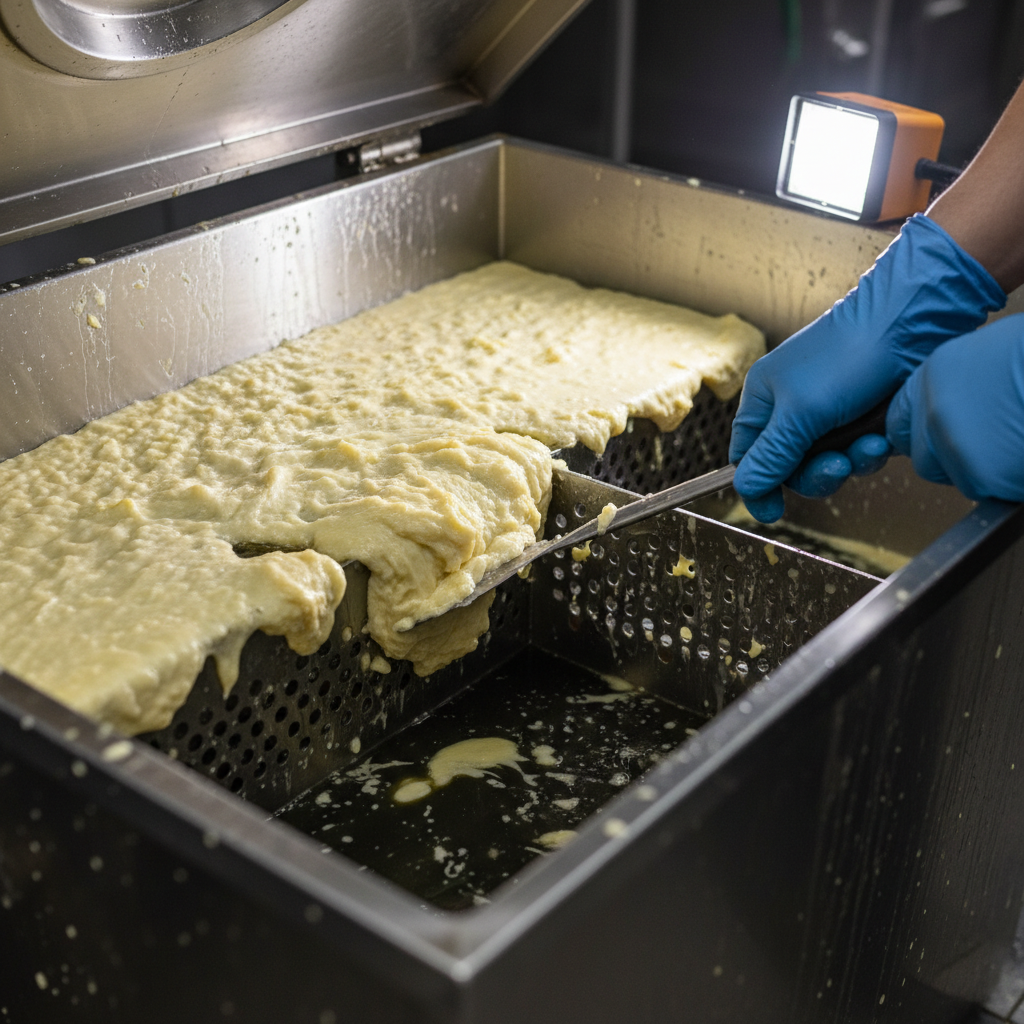
Grease traps slow wastewater so fats float and solids settle. When combined FOG and solids reach about 25% of liquid depth, efficiency drops and odors rise—so service before that point. This simple threshold prevents backups and keeps lines flowing in high-volume kitchens.
Inside a typical interceptor, baffles create calm zones. Hot, greasy water cools; lighter FOG forms a top layer, while heavier particles sink. The middle layer exits to sewer. As layers thicken, retention time shortens and separation fails. That’s when clogs and smells begin.
- FOG layer: Floats at the top; becomes waxy over time and can harden on walls.
- Clear zone: Middle layer of relatively cleaner water that should discharge.
- Sludge layer: Food particles and solids that accumulate at the bottom.
- Inlet/outlet tees: Control flow; must be intact to prevent short-circuiting.
We’ve seen fast-casual kitchens in Southern Ontario hit the 25% threshold in under six weeks during peak season. Conversely, bakeries with lighter FOG loads can extend intervals—but only with regular measurement and logging.
Types of Interceptors and Service Approaches
Most kitchens use either passive grease traps or automatic grease removal units (AGRUs). Both require routine service: passive units need full pump-outs; AGRUs still need periodic inspection, solids removal, and verification that skimming mechanisms are working.
Common interceptor types
- Under-sink passive traps: Compact units near three-compartment sinks; ideal for small or retrofit spaces.
- In-floor interceptors: Larger capacity; better for high-volume restaurants and institutional kitchens.
- Automatic grease removal units (AGRUs): Use heaters and skimmers to remove FOG daily; still need solids management and periodic deep cleaning.
Service models we deploy
- Routine pump-outs: 1–3 month cadence based on measured FOG depth and menu profile.
- Seasonal surge plans: Temporary frequency increases during holidays or patio season.
- Integrated visits: Combine grease trap service with duct cleaning in Ontario and hood/exhaust maintenance for one-and-done scheduling.
Quick comparison
| Option | What it involves | Best for | Watch-outs |
|---|---|---|---|
| Passive trap + routine pumping | Full pump-out, scrape baffles, rinse walls, verify tees | Most restaurants and cafes | Must track 25% threshold and keep logs |
| Automatic removal unit (AGRU) | Daily skim cycles, periodic solids removal and inspection | High-FOG, space-limited kitchens | Mechanical parts require checks; still needs deep cleans |
| Integrated service window | Coordinate grease, hood, duct, and filter work together | Multi-site or high-volume venues | Requires tight scheduling across teams |
Best Practices for Ontario Restaurants
Measure and log FOG depth monthly, pump before reaching 25%, strain solids at the sink, and train staff on FOG disposal. Pair trap service with hood, duct, and filter maintenance to reduce fire hazards and keep air moving cleanly through your kitchen.
Daily and weekly habits
- Strain at the source: Use sink strainers to minimize solids entering the trap.
- Wipe, don’t rinse: Staff should wipe pans before washing to limit FOG discharge.
- Warm-up wisdom: Avoid dumping hot oil; allow to cool and collect for recycling.
- Odor watch: Note sulfur or rancid smells—often the first sign performance is dropping.
Monthly checkpoints
- Measure layers: Skim-stick or marked probe to estimate FOG and sludge depth.
- Inspect tees/baffles: Ensure inlet/outlet tees are intact and not short-circuiting flow.
- Verify seals: Lids and gaskets should be tight to prevent odor escape.
Quarterly alignment
- Coordinate services: Pair grease trap pumping with exhaust filter cleaning and hood cleaning for fewer visits.
- Ventilation check: Review make-up air balance and exhaust fan performance.
- Training refresh: Reinforce FOG handling SOPs with back-of-house teams.
Tools, Logs, and Helpful Resources
You need a basic FOG measuring tool, a service log, and a reliable manifest from each pump-out. A clear SOP binder with photos, contact numbers, and intervals keeps teams aligned and inspectors confident in your program.
- FOG measurement: Skim-stick or transparent sampling tube marked in inches/centimeters.
- Service log: Date, FOG depth, sludge depth, issues found, corrective actions, next due date.
- Manifests: Keep every pump-out record; inspectors often ask for the last 12 months.
- SOP binder: Photos of your trap, arrows for flow direction, and emergency contacts.
Many kitchens also keep a short laminated checklist at the three-compartment sink. A visible reminder reduces missed steps when shifts are slammed.
Compliance, Safety, and Documentation
Document each service, track the 25% rule, and align with kitchen safety cleaning such as hoods, ducts, and exhaust fans. Consistent records demonstrate due diligence during food premises audits and support your overall fire safety posture.
While your grease trap protects drains, your hood and duct systems protect people and property. Coordinating both is a smart operational strategy that simplifies compliance discussions and reduces risk. Auditors respond well to a single, coherent maintenance narrative.
- Logs and manifests: Keep them organized and accessible—digital copies are fine if consistent.
- Before/after photos: Visuals help staff understand why intervals matter.
- Technician notes: Track recurring issues (e.g., broken tees) to stop repeat problems.
Scheduling and Service Frequency (What Works in Practice)
Most Ontario restaurants thrive on 1–3 month pump-out cycles. High-FOG menus or peak seasons may require shorter intervals. The best approach is measure-and-adjust: log FOG depth routinely and schedule service before the 25% capacity threshold.
In our experience, quick service restaurants that fry or sauté heavily often require the shortest cycles. Institutional kitchens may succeed with a slightly longer interval, provided staff strain solids and wipe pans religiously. Measurement—not guesses—drives success.
- Baseline: Start at 8 weeks; collect FOG data for two cycles, then refine.
- Peaks: Reduce interval by 1–2 weeks during known surges.
- AGRUs: Inspect weekly; schedule deep cleans on a set calendar.
Integrating Grease Trap Service with Hoods, Ducts, and Ventilation
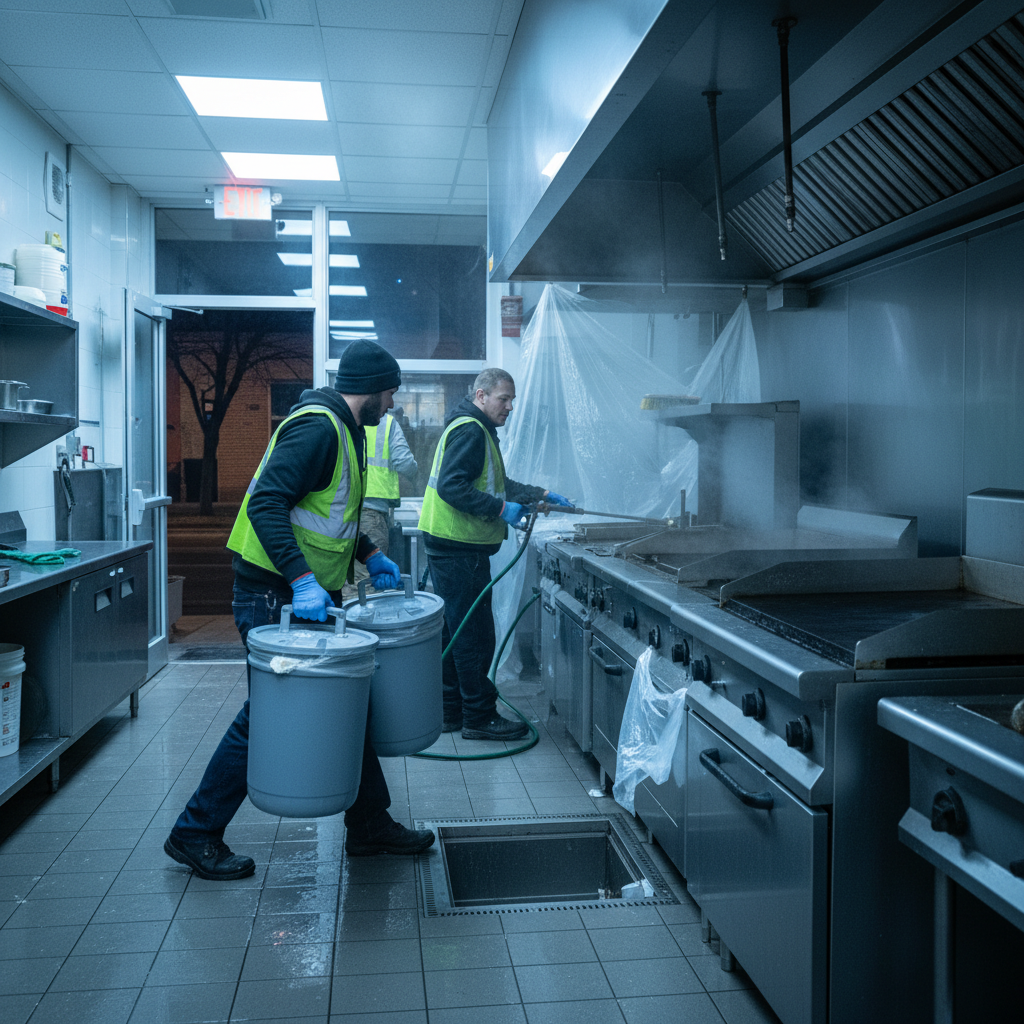
Bundle grease trap cleaning with hood, duct, and exhaust services to reduce site visits, limit downtime, and keep your kitchen inspection-ready. Coordinated FOG control uplifts air quality, reduces fire hazards, and streamlines your safety documentation.
Robinhood Cleaners specializes in whole-kitchen maintenance for All Over Ontario operations. Our teams handle traps, hoods, ducts, exhaust fans, and filter cleaning & exchange—often in one coordinated visit. The result is a safer workspace and smoother audits.
- Hood and duct cleaning: Removes grease films that can fuel fires and degrade airflow.
- Exhaust fan cleaning: Keeps fans pulling correctly; reduces heat buildup on cooklines.
- Filter services: Swap or deep-clean filters to keep capture efficiency high.
Explore our filter replacement guide for how filters support capture efficiency between hood services.
Step-by-Step: What a Professional Grease Trap Service Includes
A complete service documents the site, measures FOG, pumps solids and grease, scrapes baffles, rinses walls, verifies tees, reseals lids, and logs the next due date. The visit should end with a signed manifest and simple recommendations for your team.
- Pre-inspection: Confirm trap location, capacity, and access; note odors or slow drainage.
- Measurement: Record FOG and sludge depths; inspect tees and baffles.
- Pumping: Vacuum remove floating grease and settled solids; minimize splash and mess.
- Mechanical cleaning: Scrape and rinse walls, baffles, lid, and seals.
- Reassembly: Verify inlet/outlet integrity; reseal lid and gaskets.
- Documentation: Provide manifest, photos, notes, and next service due date.
This process standardizes outcomes across different sites and shift teams—key for multi-location operators.
Mini Case Studies: Real Ontario Kitchen Scenarios
Measured, coordinated service reduces emergencies. In multi-site rollouts, kitchens that adopted an 8-week baseline with integrated hood and filter work reported steadier dish throughput, fewer odor complaints, and cleaner inspections—especially during peak months.
- Quick service grill: After tracking FOG for two months, we shifted to 6-week pump-outs and added quarterly hood/duct service. Result: zero backup-related delays for three consecutive quarters.
- Institutional kitchen: Staff training on wipe-before-wash and sink straining extended the interval from 8 to 10 weeks without odor returns.
- High-end bistro: Introduced AGRU checks plus filter exchange; stabilized kitchen air temperature and reduced perceived heat on the line.
Small operational tweaks—like wiping pans and logging FOG depth—compound into real throughput gains when rush hits.
Choosing a Grease Trap Service Provider
Pick a provider that understands whole-kitchen safety, not just traps. Look for technicians who coordinate with hood, duct, and exhaust schedules, offer 24/7 availability, carry proper insurance, and deliver clear manifests and photo documentation.
- Whole-kitchen expertise: Grease traps, hoods, ducts, exhaust fans, and filters handled together.
- Availability: Overnight and off-hours support to protect service windows.
- Coverage: Reliable response across Southern Ontario with province-wide reach.
- Credentialing: Trained teams aligned with NFPA 96 cleaning standards and WSIB insured.
- Documentation: Clean manifests, photos, and simple recommendations after each visit.
Need a coordinated maintenance plan? Robinhood Cleaners schedules grease trap service alongside hood, duct, filter, and exhaust work so your kitchen stays open and audit-ready. Tell us your peak hours—we’ll plan around them.
Practical Checklists You Can Use Today
A simple checklist keeps every shift aligned. Post it near the three-compartment sink and file completed logs monthly. Clear routines drive compliance and fewer surprises during inspections.
FOG control checklist (front-of-house to back-of-house)
- Wipe cookware before washing
- Use sink strainers and empty them routinely
- Collect and recycle waste oil
- Measure FOG depth monthly
- Log pump-outs and attach manifests
- Escalate odor or slow-drain alerts to the manager
Grease trap service-day prep
- Clear the area and ensure safe access to the trap
- Brief opening/closing managers on timing
- Confirm contact numbers for after-hours coordination
- Stage a rinse hose and extra towels for quick wipe-down
Frequently Asked Questions
Service intervals depend on your menu and volume, but most Ontario kitchens benefit from 1–3 month cycles with measurement and logs. Pump before the 25% threshold to prevent backups, odors, and inspection headaches.
How often should we schedule commercial kitchen grease trap cleaning?
Start with every 8 weeks and adjust using your FOG measurements. High-FOG menus may need 4–6 weeks, while lighter operations can extend intervals. Always pump before FOG and solids together reach about 25% of the interceptor’s liquid depth.
What happens if we miss grease trap service?
You’ll likely see slow drains, odors, and potential overflows. Hardened FOG can coat trap walls and pipes, making recovery harder. Missed service also complicates inspections when you can’t produce recent manifests and logs.
Can automatic grease removal units replace pumping?
AGRUs reduce daily FOG buildup but don’t eliminate the need for inspections and periodic deep cleaning. Skimming mechanisms need verification, and solids still accumulate. Keep a regular schedule for checks and cleanouts.
How do grease trap services fit with hood and duct cleaning?
They complement each other. FOG control at drains reduces migration into hoods and ducts, while clean exhaust systems improve air movement and reduce fire hazards. Coordinating both in one visit minimizes downtime and simplifies documentation.
Key Takeaways
Measure FOG monthly and pump before 25%. Pair trap work with hood, duct, and filter services. Keep clean manifests and simple logs. These habits reduce clogs, odors, and fire risks while keeping Ontario kitchens inspection-ready.
- Use a measure-and-adjust cadence rather than fixed dates alone
- Bundle grease, hood, duct, and filter work to reduce shutdowns
- Train staff on wipe-before-wash and straining to slow FOG buildup
- Keep manifests and photos—auditors love organized documentation
Conclusion: A Safer, Smoother Kitchen Starts with FOG Control
Commercial kitchen grease trap cleaning in Ontario protects drains, prevents odors, and supports safety goals. When you coordinate traps with hood, duct, filter, and exhaust work, you reduce risk and keep teams focused on service—not emergencies.
Robinhood Cleaners supports restaurants, quick service, fine dining, catering, and institutional kitchens across All Over Ontario with integrated maintenance: grease traps, hoods, ducts, exhaust fans, filter cleaning & exchange, and more. Tell us your busiest hours, and we’ll build a plan around them—keeping your kitchen safe, compliant, and open.