Grease trap cleaning requirements define how often restaurants must inspect, pump, and document grease interceptor maintenance to prevent clogs, fines, and health hazards. In All Over Ontario, Robinhood Cleaners designs threshold-based programs, performs compliant pump-outs, and keeps inspection-ready records aligned with municipal FOG guidance and kitchen safety standards.
By Robinhood Cleaners • Last updated: 2026-05-06
Above-Fold: Hook, Overview & Table of Contents
Stay compliant by inspecting weekly, cleaning before fats, oils, and grease (FOG) plus solids exceed one-quarter of liquid depth, and keeping a one-year log. A threshold-based routine — measure, pump, document — prevents backups, odors, and penalties while keeping your kitchen open.
Surprise inspections and sudden blockages are preventable. This complete guide explains what a grease trap is, why the 25% rule matters, how to set frequency by kitchen type, and what inspectors expect in your logs. Use our checklists and examples to standardize your routine today.
- What a grease trap is and how it works
- Why regulations exist and what inspectors check first
- The 25% rule and service frequency by kitchen type
- Step-by-step cleaning and documentation standards
- Common violations and simple prevention tactics
- Tools, templates, and credible resources
- Mini case studies from All Over Ontario
Overview at a Glance
Grease trap cleaning requirements center on measurable thresholds, predictable schedules, and defensible documentation. If you measure weekly, clean before hitting 25%, and retain one year of service records, you meet most municipal expectations and minimize risk of odors, slow drains, and shutdowns.
Here is how to align operations and compliance without guesswork:
- Inspect weekly; log FOG percent, staff initials, and observations
- Order a full pump-and-scrape before 25% combined FOG and solids
- Keep 12 months of records on-site and tag the next due date
- Reduce upstream grease with hood, duct, filter, and appliance care
- Schedule after-hours to protect service and guest experience
What Is a Grease Trap (Grease Interceptor)?
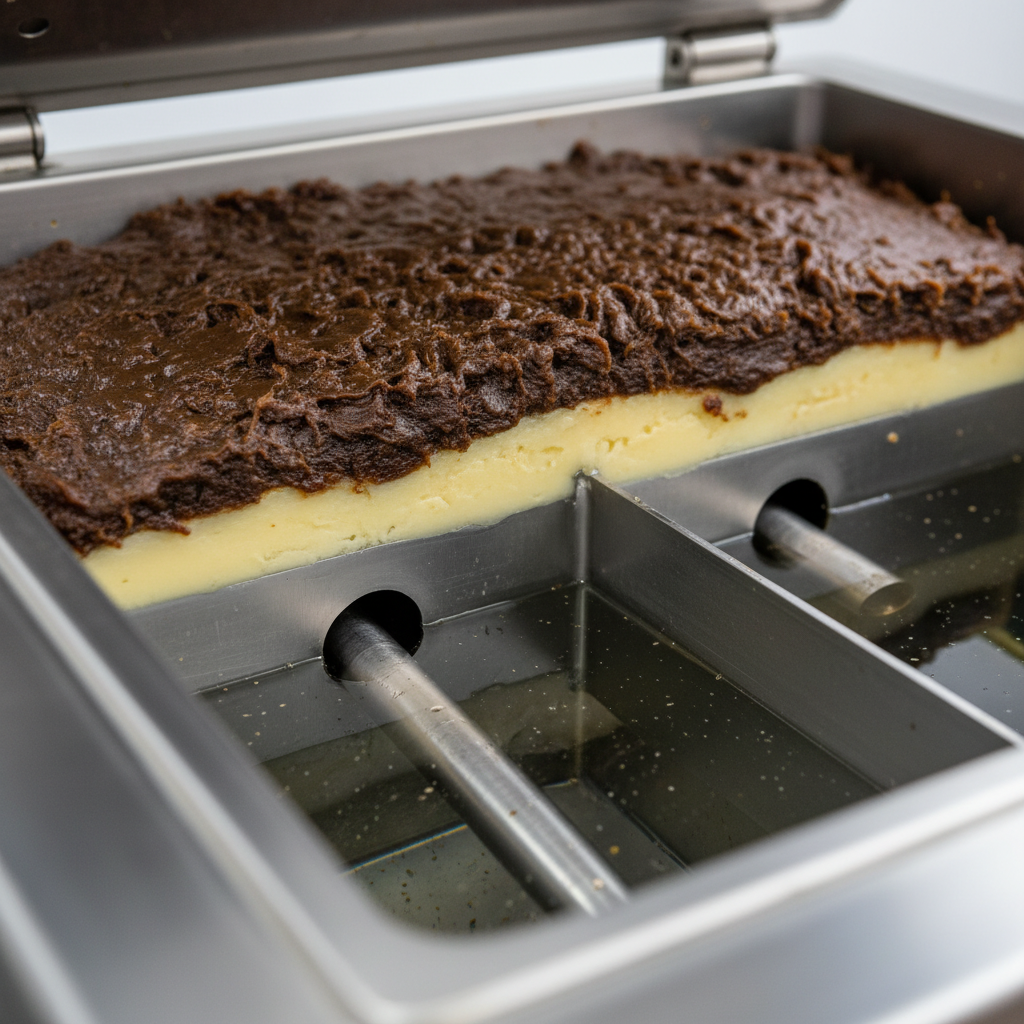
A grease trap, also called a grease interceptor, separates fats, oils, and grease from kitchen wastewater so they do not enter sewers. Water slows, grease floats, solids settle, and clearer effluent exits. Correct sizing, access, and scheduled pump-outs keep separation efficient and compliant.
Think of it as a separation tank between your sinks and the city sewer. Small hydromechanical units often sit under prep sinks, while large gravity interceptors are buried outside and serve multiple fixtures. Both need periodic cleanouts to remove floating FOG and settled solids so performance stays within code expectations.
- Core components: inlet and outlet tees, baffles, access covers, sample port, and vent
- Under-sink traps: compact, easy access, but fast to overload
- In-ground interceptors: higher capacity, serviced via outdoor lids
- Performance variables: flow rate, temperature, detergents, and maintenance
For a mechanical overview from an industry source, see this explainer on how grease traps separate FOG.
Why Grease Trap Cleaning Requirements Matter
Compliance protects sewers, safety, and uptime. When FOG accumulates, drains slow, odors rise, and backups can force closures. Documented, threshold-based cleaning supports insurance reviews and reduces emergency callouts, sanitation workloads, and customer complaints.
Requirements exist to prevent blockages and environmental harm. Health inspectors often start with a simple request: “Show me your log.” If you cannot produce measurements and manifests for the last 12 months, expect a longer visit and a deadline to correct deficiencies. With tidy records, inspections are quick and predictable.
- Regulatory: avoid citations, re-inspection orders, and closure risk
- Operational: eliminate slow drains, odors, and insect activity
- Financial: prevent product loss and schedule disruptions from emergencies
- Reputation: guests notice odors and closures quickly — stay ahead
Pairing compliance with upstream grease control is the win. Our crews often combine grease trap cleaning services with hood, duct, filter exchange, and appliance deep cleans to lower grease at the source.
How Traps Work and What Clean Means
Traps use gravity separation: hot wastewater slows, lighter FOG rises, solids settle, and clearer effluent exits. Clean means FOG and solids are removed before they reach 25% of liquid depth, and residue is scraped from baffles and walls so buildup does not rebound quickly.
The 25% rule is a practical threshold. As combined FOG and solids approach one-quarter of the trap’s volume, separation efficiency drops and the chance of downstream carryover rises. Waiting for symptoms — gurgling, slow drains, or odors — means you are already late from a compliance standpoint.
- Removal is not just skimming: pump contents, scrape surfaces, and rinse
- Enzymes and emulsifiers can push grease downstream and cause violations
- Cooler water increases grease solidification and separation effectiveness
- Logs convert a “looks clean” trap into a defensible compliance record
For installation and access considerations, review an industry perspective on grease interceptor installation which can affect serviceability and cleaning outcomes.
Types of Traps and Cleaning Approaches
Commercial kitchens use under-sink hydromechanical traps or larger in-ground gravity interceptors. Cleaning ranges from frequent small cleanouts to scheduled full pump-and-scrape service. High-volume menus benefit from bundling upstream hood, duct, and appliance cleaning to slow FOG accumulation.
Under-sink hydromechanical traps
These compact traps sit close to the source. They capture grease quickly but have limited headspace, so they overload faster and often demand weekly checks. Because access is simple, they are ideal for training staff on measurement and tagging next-due dates.
- Advantages: easy access, fast service, minimal disruption
- Watchouts: overload risk, more frequent checks and pump-outs
- Tip: label the lid with the next service due date for quick verification
In-ground gravity interceptors
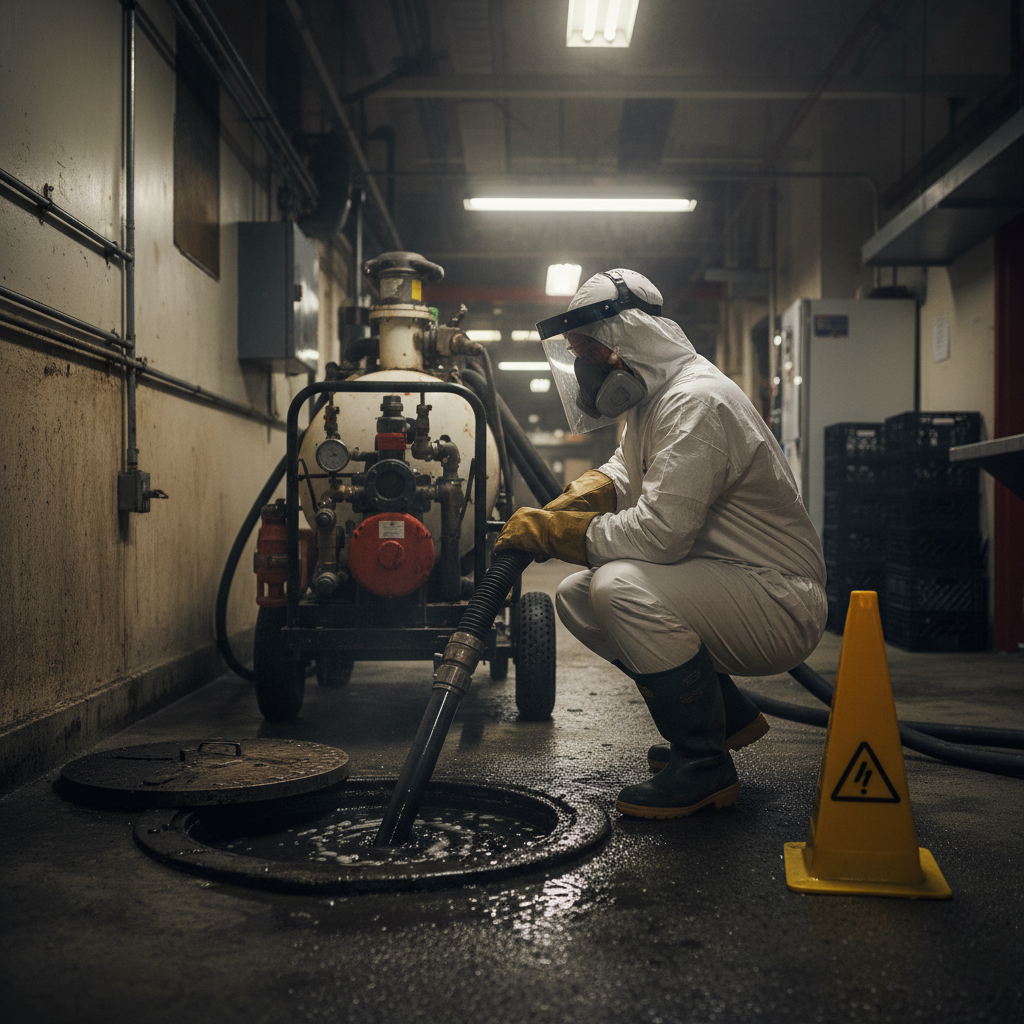
These larger units handle multiple fixtures and higher volumes. They require vacuum trucks and disposal manifests. Access lids and traffic patterns matter; scheduling after-hours reduces safety risks and protects guest experience.
- Advantages: capacity, less frequent pumping when upstream control is strong
- Watchouts: access constraints, confined-space safety policies
- Tip: map lid locations and keep covers free of debris or ice
Cleaning methods we recommend
- Full pump-and-scrape: remove all liquids and solids, scrape baffles and walls, rinse, reassemble, and document (the compliance standard)
- Partial skim: removes only floating FOG; not compliant as a routine method
- Enzyme or hot-water “flushes”: can move grease downstream; avoid as a cleaning substitute
Robinhood Cleaners delivers end-to-end programs: professional grease trap cleaning in Ontario, hood and duct cleaning, filter exchange, and appliance deep cleans — coordinated to reduce FOG at the source.
Grease Trap Cleaning Requirements and Frequency
Most programs require weekly FOG checks, full pump-and-scrape service before the combined FOG and solids exceed 25% of liquid depth, and retention of at least 12 months of records. High-volume fry kitchens trend monthly, mixed menus every 1–2 months, and lighter operations quarterly — verified by measurements.
Use this matrix to set a starting point, then tune to your menu and measured levels.
| Kitchen profile | FOG check | Typical pumping cadence | Trigger to clean |
|---|---|---|---|
| Quick service, fry-heavy | 2–3x weekly | Monthly | 25% rule or slow drains/odors |
| Full service, mixed menu | Weekly | Every 1–2 months | 25% rule |
| Catering or banquet peaks | Before and after events | Variable (post-event) | 25% rule or event surge |
| Institutional (schools or hospitals) | Weekly | Every 1–3 months | 25% rule |
| Light café or bakery | Biweekly | Quarterly | 25% rule |
The 25% rule in practice
Measure FOG and solids depth with a marked dipstick or sludge judge. If recent entries trend from 18% to 22% to 26%, you are overdue and at risk of a citation. The fix is simple: schedule a full pump-and-scrape and reset the interval to stay comfortably under 25%.
Volume-based scheduling
Seasonality matters. Holidays, festivals, and banquet stretches spike grease production. Add pre and post-event checks and temporary extra service to avoid overloads. If your log shows lower FOG after adding filter exchanges or hood and duct cleaning, consider extending intervals while staying below 25%.
For interval tuning and examples, see our note on grease trap pumping frequency and how to align service with production peaks.
Step-by-Step: Compliant Grease Trap Cleaning
Follow a repeatable sequence: set safety controls, open and measure, pump all contents, scrape and rinse internal surfaces, inspect components, reassemble, and document with measurements and manifests. Consistency across visits proves due diligence to inspectors and insurers.
- Prepare PPE and ventilation; place wet-floor controls as needed.
- Open access covers carefully; follow gas testing policy where applicable.
- Measure FOG and solids depth with a calibrated tool; record percentages.
- Skim floating grease; pump liquids and settled solids to an approved tank.
- Scrape baffles and walls; rinse to remove residual films that accelerate buildup.
- Inspect inlet and outlet tees, gaskets, sample port, and structure; replace worn parts.
- Reassemble, reseal, restore flow; confirm leak-free operation.
- Attach service report, photos, and disposal or hauler manifest to your log.
To minimize regrowth, coordinate cleaning with upstream services. Our technicians often combine interceptor service with grease management and compliance, filter exchanges, hood or duct cleaning, and appliance degreasing during the same after-hours window.
Documentation Inspectors Expect
Keep a 12-month binder or digital folder with measurement logs, service reports, volumes removed, and licensed hauler manifests. Label the next service due date near the trap so any inspector can verify your schedule at a glance and close the visit quickly.
- FOG measurement log: date, percentage, staff initials, observations
- Service report: pre and post photos, technician, parts inspected or replaced
- Transport and disposal manifests from licensed haulers
- Trap diagram and spec sheet for size and access points
- Corrective actions for any past violations and proof of fix
We set up labeled binders or shared folders so any shift lead can retrieve records in seconds. That visibility alone cuts average inspection times and reduces stress during spot checks.
Common Violations and How to Avoid Them
Typical violations include exceeding the 25% threshold, missing logs, damaged or bypassed baffles, and using emulsifiers that push grease downstream. Prevent them with weekly checks, training, timely part replacements, and full pump-and-scrape service rather than partial skims.
- Under-sink traps ignored until they overload
- No accessible log book or digital records during inspections
- Broken inlet or outlet tees that let grease bypass separation
- Hot-water or enzyme “flushes” that move grease to the main line
- Missing sample-port caps and worn gaskets causing leaks and odors
Assign one shift lead per day to the check-and-sign routine and violations drop fast. Pair that with a scheduled cadence from our Ontario grease trap service and emergencies become rare.
Grease Trap Best Practices
The strongest programs standardize measurement, act before symptoms, and reduce grease at the source. Train shift leads, pre-scrape and dry-wipe cookware, maintain filters and hoods, and coordinate after-hours pump-and-scrape to lock in predictable, compliant routines that survive staff turnover.
Upstream control
Most of the battle is upstream. The cleaner your hoods, filters, appliances, and floors, the less grease reaches your drains. Dry-wipe before washing to capture food waste. Maintain filters and schedule exchanges to trap more grease at the source.
- Pre-scrape plates and cookware; use dry-wipe methods before washing
- Maintain hood filters; schedule exchanges and cleanings
- Deep-clean appliances and floors with non-emulsifying degreasers
Standard operating procedures
Simple, visible SOPs prevent misses. Post the weekly checklist, keep logs within reach, and add a “next due” tag on the trap. Review logs quarterly to tune schedules to your real production pattern.
- Weekly measurement checklist with named shift lead
- Threshold trigger: pump before 25% combined FOG and solids
- Photo documentation and a labeled next-due date on the trap
Schedule and staffing
Choose after-hours windows to protect service and safety. Assign one point of contact to coordinate vendors and keep manifests in order. This clarity speeds audits and reduces last-minute scrambles.
- After-hours windows that do not collide with prep or service
- Quarterly reviews to adjust cadence based on measured trends
- One coordinator for vendors, logs, and manifests
For everyday drain behavior training, this plain-language explainer on preventing grease in sinks helps during onboarding for back-of-house staff.
Tools, Supplies, and Helpful Resources
A reliable program needs a measurement tool, PPE, absorbents, a labeled log, and access to licensed haulers. Add credible FOG guidance and local program reminders to your SOP so every shift can follow the same playbook and answer inspector questions confidently.
- Measurement: sludge judge or marked dipstick for consistent readings
- PPE: gloves, eye protection, splash-resistant apron, respirator policy
- Cleanup: absorbent pads and non-emulsifying degreasers for floors
- Admin: printed or digital log, pre and post photos, next-due tags
- Vendors: licensed hauler and a partner for upstream hood or filter work
If you are building SOPs from scratch, pull staff training points from concise explainers like the grease trap overview above to reinforce why measurement and logs matter.
Bundled Services, Scheduling, and Scope Factors
Bundle interceptor service with hood, duct, filter exchange, and appliance deep cleans to reduce FOG and extend intervals. Choose after-hours windows. Scope, access, trap size, and documentation deliverables drive scheduling and value — avoid partial skims.
- Scope clarity: full pump-and-scrape including baffle cleaning
- Access realities: under-sink versus in-ground lids and maneuver space
- After-hours slots to protect service quality and safety
- Deliverables: measurements, photos, manifests, and a next-due tag
Mid-article CTA: Book an after-hours inspection and log review so we can right-size your schedule, reduce emergency risk, and align everything to the 25% rule. Our crews are WSIB insured and available 24/7 across Southern Ontario corridors.
Mini Case Studies: All Over Ontario Kitchens
Ontario kitchens that measure weekly, pump before 25%, and bundle upstream cleaning keep tidy logs and avoid downtime. Align cadence with menu cycles and seasonality to prevent surprises during holidays and events. Consistency is what turns compliance into a non-event.
- Quick-service chain: switched from biweekly skims to monthly full pump-outs; average FOG fell into the high teens after adding filter exchanges and quarterly hood or duct cleaning.
- Hotel banquet kitchen: added pre and post-event checks and a flexible service window; zero odor complaints and no backups during the holidays.
- Institutional cafeteria: assigned weekly sign-off to a shift lead; passed two unannounced inspections in under 20 minutes each.
Want similar results? Pair interceptor service with commercial grease trap cleaning and scheduled filter exchanges to reduce upstream load and extend intervals safely.
Frequently Asked Questions
Inspect weekly, clean before 25%, avoid emulsifiers, and keep a one-year log with manifests. When in doubt, schedule a professional inspection and log review. These four habits prevent most violations and downtime scenarios.
How often should a grease trap be cleaned?
Check FOG weekly and pump before combined grease and solids exceed 25% of liquid depth. High-volume fry kitchens often need monthly service; lighter operations can go quarterly — always guided by measurements and inspector feedback.
What is the 25% rule?
The 25% rule is a common compliance threshold: when floating grease plus settled solids equal one-quarter of the trap’s liquid depth, it is time to pump. Past that point, separation efficiency drops and you risk violations, odors, and backups.
Can I use enzymes or hot water to clear grease?
Avoid emulsifiers and enzyme quick fixes. They can push grease downstream where it re-solidifies and causes sewer blockages. Physical removal (pump and scrape) with upstream controls is the reliable, compliant approach.
What records do inspectors want to see?
Keep a 12-month log with dates, percent FOG, technician initials, service reports with photos, and hauler manifests. Label the next-due service on or near the trap for quick verification during spot checks.
Key Takeaways
Measure weekly, pump before 25%, document everything, and manage grease at the source. Bundle after-hours services to reduce load and keep inspections quick. These habits keep you compliant, odor-free, and open for business.
- Inspect, log, and act before symptoms
- Choose full pump-and-scrape over partial skims and chemical shortcuts
- Bundle hood, duct, filter, and appliance cleaning
- Keep inspector-ready records within arm’s reach
Local considerations for All Over Ontario
- Schedule after-hours windows to avoid peak dining times common across Southern Ontario service corridors.
- Cold winters thicken grease; increase mid-season checks and keep covers sealed to maintain separation temperatures.
- Holiday peaks and local festivals spike volume; add pre and post-event FOG measurements to stay under 25%.
Conclusion
Grease trap compliance is straightforward with a measurable routine: check weekly, pump before 25%, and keep inspection-ready logs. Pair trap service with upstream hood, filter, and appliance cleaning to extend intervals and prevent emergencies year-round.
Need a turnkey program? Robinhood Cleaners supports restaurants and institutional kitchens across All Over Ontario with NFPA96-certified technicians, WSIB-insured crews, and 24/7 scheduling. We align interceptor service with hoods, ducts, filters, and appliances so your kitchen stays open and audit-ready.
Ready to standardize your program? Book an after-hours inspection and log setup so we can align cadence to your menu and volume, then maintain it with predictable, inspector-friendly documentation.