Grease trap pumping is the scheduled removal of fats, oils, and grease (FOG) and solids from a grease interceptor to prevent drain clogs, odors, and sewer backups. Most commercial kitchens in All Over Ontario need routine pump-outs guided by the 25% rule and cooking volume. Done right, it protects plumbing, reduces cleaning hazards, and keeps you compliant.
By Robinhood Cleaners • Last updated: 2026-05-28
Above the Fold: Hook, Overview, and Quick TOC
Grease trap pumping keeps drains flowing and kitchens compliant by removing accumulated fats, oils, grease, and solids before they reach 25% of trap volume. Proper scheduling reduces blockages, odors, and emergency downtime, especially for high-output kitchens across All Over Ontario that cook with fryers, grills, and ovens daily.
You’re here because you want fewer backups, faster service, and simple compliance. This guide shows how to plan, inspect, and document grease trap care—so your team cooks, serves, and closes on time.
- What grease trap pumping is and why it matters
- The 25% rule and how to measure FOG
- Cadence by kitchen type (weekly to quarterly)
- Step-by-step pumping workflow and documentation
- Local tips for All Over Ontario operations
- Checklists, tools, and mini case studies from our fieldwork
Navigate this guide:
- What is Grease Trap Pumping?
- Why It Matters
- How It Works
- Types and Methods
- Best Practices
- Tools and Resources
- Case Studies and Examples
- FAQ
- Conclusion and Next Steps
Overview
A grease trap (interceptor) separates FOG and solids from kitchen wastewater so only clarified water moves downstream. Pumping removes the captured layers before they exceed 25% of volume, preventing clogs, sewer overflows, and fines while protecting downstream pipes and municipal systems.
In our experience across Ontario kitchens, the fastest way to steady operations is a clear pumping cadence, simple FOG checks, and consistent logs. Kitchens that follow this trio see fewer service calls and smoother inspections month after month.
What Is Grease Trap Pumping?
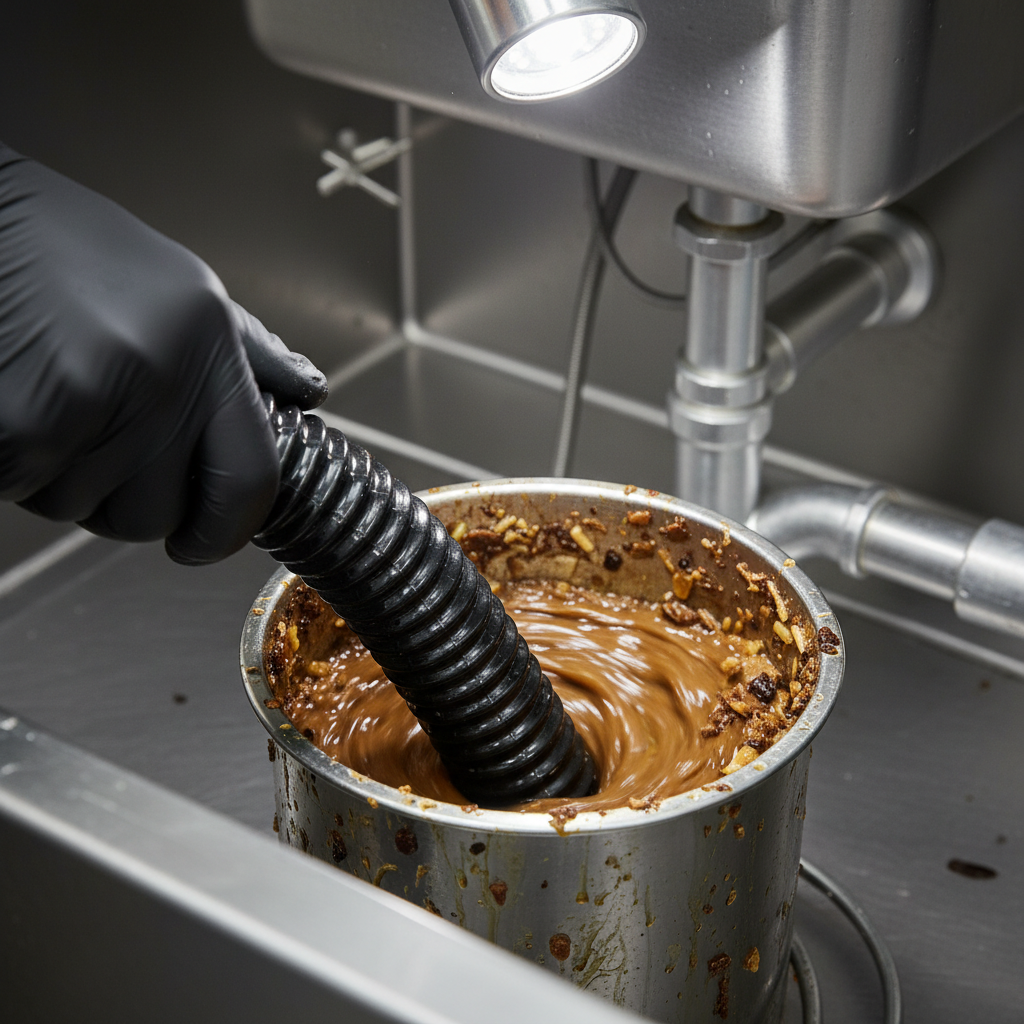
Grease trap pumping is the full evacuation and cleaning of an interceptor’s FOG and solids using a vacuum service, followed by interior rinsing and inspection. The goal is to restore hydraulic capacity and prevent FOG from entering drains and sewers.
When we talk about grease trap pumping, we’re describing a complete service: evacuate liquids and solids, scrape and wash internal baffles, check inlet/outlet tees, and verify the cover seal. Partial skimming leaves sludge behind and shortens time to the next backup. For busy fryers, we often schedule weekly or biweekly service; for moderate sauté lines, monthly to 6-week intervals hold up well. Consistent pumping supports safe exhaust and duct cleaning cycles too, since fewer backups mean fewer emergency shutdowns that derail planned maintenance.
For a deeper dive into our program design, see our internal primer on pumping frequency guidelines and this operations page covering plumbing compliance and grease management.
Why Grease Trap Pumping Matters
Proper pumping protects drains, avoids foul odors, reduces emergency downtime, and supports compliance with local pretreatment programs. Kitchens that maintain traps under the 25% rule experience fewer blockages and more predictable closing routines.
Here’s the thing—grease moves. Heat liquefies FOG at the line, then it cools and congeals in pipes. Without a working interceptor, buildup creeps into lateral lines, then the main. One overnight backup can sideline a full shift. We’ve seen busy quick-service restaurants go from two emergencies per month to zero by locking in a weekly pump-out and recording dipstick readings on the closing checklist.
- Operational stability: Predictable closings and openings reduce labor churn and rework.
- Health and safety: Less standing water and fewer slippery floors lower incident risk.
- Fire safety alignment: A steady kitchen supports scheduled grease trap cleaning and timely grease removal that complement hood and duct cycles—key pieces of the broader cleaning hazards picture.
- Compliance: Many municipalities set 25% as the pump trigger and expect logs on request.
Want service designed around your hours? Our team is WSIB insured and available 24/7 across Southern Ontario, so you don’t lose covers during prime times.
How Grease Trap Pumping Works (Step-by-Step)
A technician measures FOG thickness, removes lids, evacuates liquids and solids with a vacuum truck, cleans interior baffles and tees, inspects for damage, reseals the cover, and documents volumes and readings. The process restores capacity and verifies performance.
- Arrival and safety: Set cones and ventilation. Verify access inside or outside.
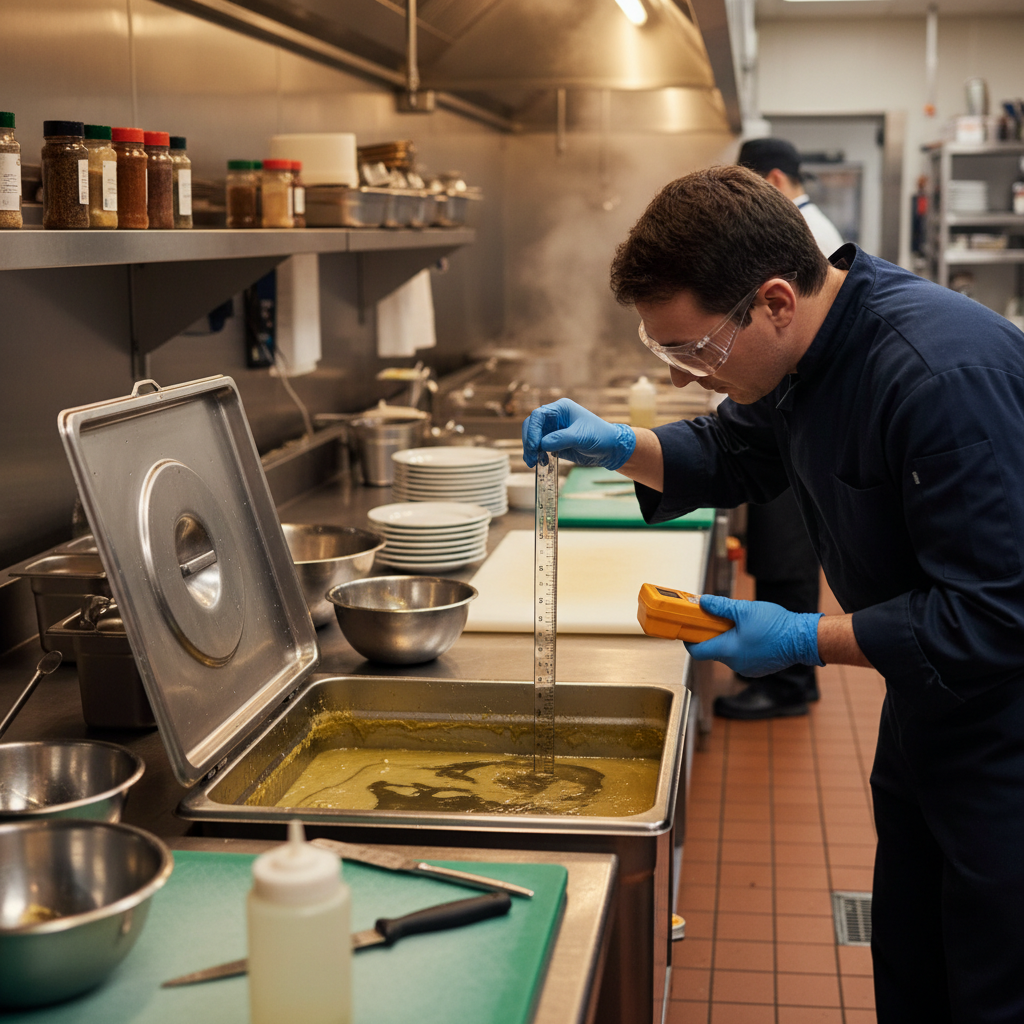
- Measure FOG: Use a clear dipstick or sludge judge to record grease and solids thickness (in inches or centimeters). Note the total volume percent.
- Open and inspect: Remove cover(s) carefully. Check gaskets, baffles, and tee connections.
- Evacuate: Vacuum liquids, grease cap, and bottom solids until empty.
- Wash and scrape: Rinse walls and baffles; scrape adhered FOG so capacity returns to spec.
- Final check: Inspect inlet/outlet flows, reseal, and wipe the work area.
- Document: Record FOG percent, volume removed, and next due date in the logbook.
We align this workflow with kitchen exhaust and hood cleaning schedules so you get one coherent plan. See our quick overview on professional grease trap cleaning and broader commercial grease trap programs.
Types/Methods/Approaches
Grease traps range from small under-sink units to large in-ground interceptors. Pumping methods include full vacuum service with interior wash-down, paired with inspection, recordkeeping, and scheduled intervals matched to cooking volume.
Common interceptor types
- Under-sink traps (passive): 5–50+ gallons, common in compact kitchens and cafés. Quick to access; fill quickly with fryer-heavy menus.
- In-floor units: Mid-size capacity with top access. Often serve multiple fixtures; require precise resealing after service.
- In-ground interceptors: 250–1,500+ gallons outdoors. Ideal for high-volume sites; require truck access and lid integrity checks.
- Hydromechanical traps: Improved separation via internal flow geometry; still need routine pumping and interior cleaning.
Approaches to maintenance
- Interval-based: Weekly to quarterly set by menu, covers, and fryer usage. Weekly is common for deep-fry programs.
- Measurement-based: Trigger at 25% FOG/solids volume. Faster for fryer-heavy menus; slower for low-fat prep.
- Hybrid: Fixed baseline (e.g., every 4 weeks) plus dipstick checks that accelerate when readings climb.
Process table: typical cadence by kitchen type
| Kitchen profile | Typical cadence | FOG check | Notes |
|---|---|---|---|
| High-volume QSR with multiple fryers | Every 1–2 weeks | Daily dipstick | Grease caps build rapidly; backups escalate fast without pumping. |
| Casual dining with grill and sauté | Every 3–4 weeks | 2–3x/week | Hot line drives steady FOG; watch solids from prep sinks. |
| Institutional kitchen (schools/healthcare) | Every 4–6 weeks | Weekly | Seasonal and menu-driven; summer downtime can reset baseline. |
| Low-fat café/bakery | Every 6–12 weeks | Biweekly | Less fryer use; flour solids can still shorten intervals. |
For background on how traps and interceptors separate FOG in practice, see this primer on how grease traps work.
Best Practices (What Pros Do Differently)
Pros standardize cadence, measure FOG regularly, clean interiors fully, document every visit, and align pumping with hood and duct cycles. The result is fewer emergencies, safer floors, and easier inspections.
- Use the 25% rule: When combined grease and solids reach 25% of volume, schedule a pump-out. This threshold preserves separation efficiency and prevents downstream congealing.
- Measure and log: Add a 30–60 second dipstick reading to closing. Record inches of grease, inches of solids, and date. Consistent numbers tell you when to accelerate.
- Clean, don’t skim: Full evacuation plus interior wash-down. Skimming the grease cap leaves sludge that speeds the next clog.
- Seal the cover: Replace cracked gaskets. A clean, tight seal prevents odors and keeps pests out.
- Coordinate services: Pair trap pumping with grease trap cleaning and exhaust-hood maintenance so you move grease out of the building on a rhythm.
- Document for compliance: Keep manifests, volumes, next due dates, and photos where possible. Many inspectors ask for 12 months of logs.
We also recommend review points each quarter: Are your readouts creeping up faster? Did a menu change add fryer load? Small shifts now prevent weekend emergencies later.
Tools and Resources
A simple toolkit—dipstick or sludge judge, flashlight, gloves, and a clear log—powers reliable grease trap pumping. Add training and a standing service window to remove guesswork for busy shifts.
Hands-on tools
- Dipstick / sludge judge: Transparent tube to measure grease and solids in inches or centimeters.
- Flashlight and mirror: See baffles, tees, and residue on the walls to judge interior cleaning quality.
- Nitrile gloves and eye protection: Personal safety basics for quick checks at close.
- Gasket brush: Lightly clean the cover seal area when you see residue.
Operational resources
- Log template: Date, time, grease inches, solids inches, percent estimate, initials.
- Service manifest folder: Keep 12 months of manifests and photos.
- Standing service window: A consistent off-peak slot helps us arrive, pump, and be gone before the next rush.
For a regional overview of cleaning options, see this summary of grease trap cleaning services in Ontario. For do’s and don’ts around drain grease, this short refresher on dealing with grease in drains adds context for line employees.
Case Studies and Real-World Examples
Across Ontario kitchens, weekly to monthly pumping paired with daily dipstick checks cuts blockages and stabilizes closing routines. Aligning trap care with hood and duct cleaning drives safety, uptime, and inspector confidence.
QSR with dual fryers (Southern Ontario)
A quick-service site experienced two drain emergencies per month. We set a weekly pump-out, added a 20-second closing dipstick step, and coordinated a monthly hood cleaning cycle. Result: zero emergencies over the following quarter and steadier prep mornings.
Casual dining grill line
Grease odors near the dish area signaled a failing lid seal. Our technician replaced the gasket during a routine pump-out and extended service to 4-week intervals after dipstick numbers stabilized under 25% volume for two consecutive months.
Institutional kitchen with seasonal swings
During summer, production dropped; we shifted from 4-week to 6-week intervals and returned to 4-week in September. Logging made the decision obvious—numbers, not guesswork.
If you’re building a comprehensive plan, pair trap care with our maintenance best practices and cross-reference your exhaust system schedule outlined here: fire risks and compliance.
Local considerations for All Over Ontario
- Plan for winter: access to outdoor in-ground interceptors can be slower with snow and ice. Book pump-outs earlier in the day and keep lids clear.
- Peak seasons: tourist surges and holidays can double fryer output. Add a mid-cycle dipstick check to prevent surprise overflows.
- Municipal expectations: pretreatment programs often ask for recent logs. Keep 12 months of manifests and dipstick records on-site.
Scheduling and Cadence (Putting It on Autopilot)
Set a baseline interval from your menu and covers, verify with dipstick readings, and adjust until FOG stays below 25% at the end of each cycle. The right schedule prevents backups and wastes no service visits.
- Pick a starting cadence: 1–2 weeks for fryer-heavy QSRs; 3–4 weeks for casual grills; 4–6 weeks for institutional kitchens; 6–12 weeks for low-fat cafés.
- Check mid-cycle: Take a reading halfway through. If you’re nearing 25%, shorten the interval.
- Align with other cleaning: Coordinate with grease removal and hood/duct work so grease leaves the building in a single, predictable flow.
- Lock in a window: A consistent day and time keeps your team focused on service, not logistics.
For kitchens that need a hand getting started, our professional program includes baseline design, logs, and first-month coaching for line leads.
Compliance and Documentation
Maintain a log with dates, FOG measurements, volumes removed, and manifests. Many inspectors ask for records within the last 12 months, along with proof that the trap stays below 25% between services.
- Logbook basics: Date, shift, grease inches, solids inches, percent estimate, initials.
- Manifests: Keep service receipts by date with volume removed and destination.
- Photo evidence: Quick phone photos of dipstick readings and clean interiors help during audits.
- Cross-reference: Add pump dates to the same calendar as trap cleaning and hood service so maintenance forms a single story.
Simple, consistent records shorten inspections and build trust with your local pretreatment program.
Troubleshooting and Risk Reduction
Most emergencies trace back to over-capacity traps, poor sealing, or skipped logs. By checking FOG weekly, sealing lids, and pumping on time, you cut the leading causes of blockages and odors.
- Recurring odors: Inspect the lid gasket. Replace if cracked or saturated.
- Slow drains: Check FOG percent immediately. If above 25%, schedule a pump-out and consider shortening the cycle.
- Grease downstream: Inspect tees and baffles; look for missing or broken fittings that allow short-circuiting.
- Overflow during service: Prep area with absorbent pads and ensure the vacuum hose path is clear before the pump begins.
Staying ahead of these issues supports your broader safety plan, including the cleaning hazards associated with neglected hood and duct systems.
Need a hand? (Soft CTA)
If your team is firefighting backups, a quick assessment resets the schedule and restores capacity. We’ll measure FOG, inspect seals, and align pumping with your hood cycle, then hand you a simple, reliable plan.
Book a no-pressure assessment with Robinhood Cleaners. We’re WSIB insured, NFPA96-aware, and available 24/7 across Southern Ontario. Explore our service overview for commercial grease trap programs.
Related Services and Integration
Grease management works best as a system: trap pumping, grease removal, exhaust hood cleaning, duct cleaning, and ventilation checks. Integrating these reduces fire risks and unplanned downtime.
- Kitchen exhaust cleaning: Pair trap pumping with scheduled hood and duct cleaning to move grease out consistently.
- Filter cleaning & exchange: Cleaner filters improve airflow and reduce heat, lowering grease aerosol deposition.
- Fan belt replacement: Healthy belts maintain exhaust performance, supporting odor and aerosol control.
- Ventilation system maintenance: Balanced airflow reduces grease mist and helps traps last closer to their interval.
See how we integrate these on our grease removal services page and this guide to professional grease trap cleaning.
Frequently Asked Questions
Most kitchens start with a 1–6 week pumping cadence based on menu and volume, then fine-tune with quick dipstick readings. Documenting the 25% rule and maintaining tight lid seals prevents odors and backups.
How often should a commercial kitchen schedule grease trap pumping?
Start with your menu: fryer-heavy QSRs often need weekly or biweekly pump-outs. Casual dining typically runs 3–4 weeks, institutional kitchens 4–6 weeks, and low-fat cafés 6–12 weeks. Verify with mid-cycle dipstick readings and keep FOG under 25% of trap volume.
What is the 25% rule in grease trap maintenance?
When the combined thickness of grease and settled solids reaches 25% of the trap’s total liquid depth, schedule a pump-out. Efficiency drops sharply beyond that threshold, and the risk of downstream clogs rises quickly.
How do I know if my trap was fully cleaned, not just skimmed?
Ask for interior photos and the volume removed, and look for notes about baffles and tees. Full service evacuates liquids and solids, scrubs interior surfaces, and verifies a tight cover seal. Skimming leaves sludge that shortens your interval.
Can enzymes or additives replace pumping?
No. Additives may temporarily mobilize grease, but the FOG still has to go somewhere—often farther down the line. Physical removal through pumping and proper disposal is the reliable, inspection-ready method.
Should grease trap care connect to hood cleaning schedules?
Yes. Coordinating trap pumping with hood and duct cleaning builds one maintenance rhythm. It keeps grease moving out of the building consistently and supports fire safety and air quality goals.
Conclusion and Next Steps
Build a simple, durable program: measure FOG quickly, pump before 25%, and document every visit. Pair trap care with hood and duct cycles to cut risk, odors, and downtime—and to keep inspectors satisfied.
- Key takeaways:
- Grease trap pumping prevents clogs, odors, and emergencies.
- Use the 25% rule with quick dipstick checks.
- Match cadence to menu volume; adjust with data.
- Integrate pumping with hood/duct maintenance.
- Keep 12 months of logs and manifests ready.
- Action steps:
- Choose a starting interval based on your kitchen profile.
- Add a 30–60 second FOG check to closing.
- Set a standing off-peak service window.
- Align with hood and duct schedules for a single maintenance rhythm.
Ready to stabilize your operation? Explore our grease trap cleaning page, or reach out through our commercial grease trap program. We serve restaurants, hospitality, and institutional kitchens across All Over Ontario.