Extractor hood filter cleaning is the removal of grease and food residue from baffle or mesh filters so exhaust airflow stays strong and safe. In All Over Ontario, teams should clean extractor hood filters on a schedule to reduce fire risk and support inspections. Robinhood Cleaners backs this up with Filter Cleaning & Exchange and full hood-and-duct service.
By Robinhood Cleaners • Last updated: 2026-05-12
Above the fold: why this guide matters
Dirty extractor hood filters choke airflow and concentrate combustible grease. Clean them on a set schedule and document it. This guide delivers step-by-step methods, pro tools, compliance cues, and when to call certified help—so your Ontario kitchen stays safer, cooler, and inspection-ready.
Running a busy line? This complete guide blends fast, practical steps with safety context. You’ll find:
- Clear definitions and how extractor baffle filters actually work
- Exact steps to clean extractor hood filters without damaging vanes
- Signals to swap, not scrub—and how exchange programs help
- Compliance cues aligned to recognized fire-safety practices
- Local tips for teams across All Over Ontario, from quick service to fine dining
Contents
- Quick summary
- What are extractor hood filters?
- Why cleaning filters matters
- How extractor filters work
- How to clean extractor hood filters (step-by-step)
- Filter types and cleaning methods
- Best practices and schedules
- Tools and resources
- Case examples from Ontario kitchens
- Troubleshooting and when to call a pro
- FAQ
- Key takeaways
- Conclusion
Quick summary
To clean extractor hood filters: cool, remove, scrape, pre-rinse, degrease, agitate, soak, rinse hot, sanitize if required, dry vertically, reinstall, and log it. Tie cleaning frequency to volume—nightly wipe-downs, weekly soaks or exchange, and recurring professional hood, duct, and fan service.
In our field work with quick service, hotels, and institutional kitchens, teams that batch-clean filters on a set weekday see steadier capture and fewer nuisance alarms. For deeper context, see our extractor filter cleaning guide and the broader commercial hood cleaning guide.
What are extractor hood filters?
Extractor hood filters are removable metal panels—often stainless baffles—that intercept grease aerosols at the hood before they reach the ducts. By keeping vanes and drain paths clear, filters protect fans, reduce fire risk, and preserve design airflow over the cook line.
Most commercial operations rely on stainless steel baffle filters sized to individual hood slots. As air moves through angled channels, droplets collide, coalesce, and drain into rails and grease cups. Mesh filters exist, but they clog faster in fry-heavy menus and are less common in high-volume Ontario kitchens.
- Main roles: capture grease, maintain airflow, lower ignition risk, and extend time between full duct cleanings.
- Materials: stainless resists heat and chemicals; aluminum is lighter but reacts to strong alkalis.
- Fit: wrong-sized panels create bypass gaps that let aerosols enter the plenum and ductwork unchecked.
When you clean extractor hood filters routinely, you slow buildup up the stack—making your scheduled hood degreasing process faster and less disruptive.
Why cleaning extractor filters matters
Clean filters cut fire risk, stabilize air capture, and keep inspections smooth. Grease-laden baffles ignite more readily, and clogged vanes restrict flow—letting smoke and heat spill into the kitchen and overworking the exhaust fan.
Grease is fuel. Kitchens that pair nightly wipe-downs with weekly soaks or filter exchange report fewer smoke alarms and steadier temperatures on the line. Restricting airflow also raises static pressure, which strains fan belts and bearings—problems that always seem to surface during a rush.
- Air quality: clogged panels raise particulates and odors, leading to complaints and fatigue.
- Equipment health: poor airflow accelerates wear on fans and can shorten belt life.
- Inspection readiness: visible cleanliness and simple logs reduce friction with inspectors.
If your team needs a deeper framework for the stack beyond the filters, skim our exhaust duct fire hazard prevention overview.
How extractor filters work
Baffle filters work by mechanical impingement. Airflow turns through angled vanes; heavy grease droplets impact the metal, coalesce, and drain to rails and cups. Keeping channels clear preserves capture efficiency and design airflow.
Baffles aren’t just screens; vane geometry balances pressure drop with capture. When fins clog, resistance spikes and the hood can lose its edge capture—allowing smoke roll-out. That leads to odor complaints and heat stratification at the cook line.
- Design intent: direct aerosols into collision paths while maintaining adequate air volume to the fan.
- Failure modes: bent fins, packed channels, missing drip trays, and poor seating defeat the design.
- Maintenance signals: tarry film, slow drainage, or a new fan pitch often signal overdue cleaning.
Understanding this physics helps staff clean extractor hood filters without damaging the vanes or rail geometry that make them effective. For system-level context, review our hood cleaning guide.
How to clean extractor hood filters (step-by-step)
Clean extractor hood filters by cooling, removing, scraping, pre-rinsing, applying a food-service degreaser, agitating, soaking, hot-rinsing, optionally sanitizing, drying vertically, then reinstalling and logging. Handle stainless baffles with gloves and protect adjacent equipment from overspray.
- Cool and power down: Let the line cool and switch off the hood to avoid drawing in overspray.
- Remove panels safely: Lift baffles up and tilt out. Wear cut-resistant, chemical-safe gloves.
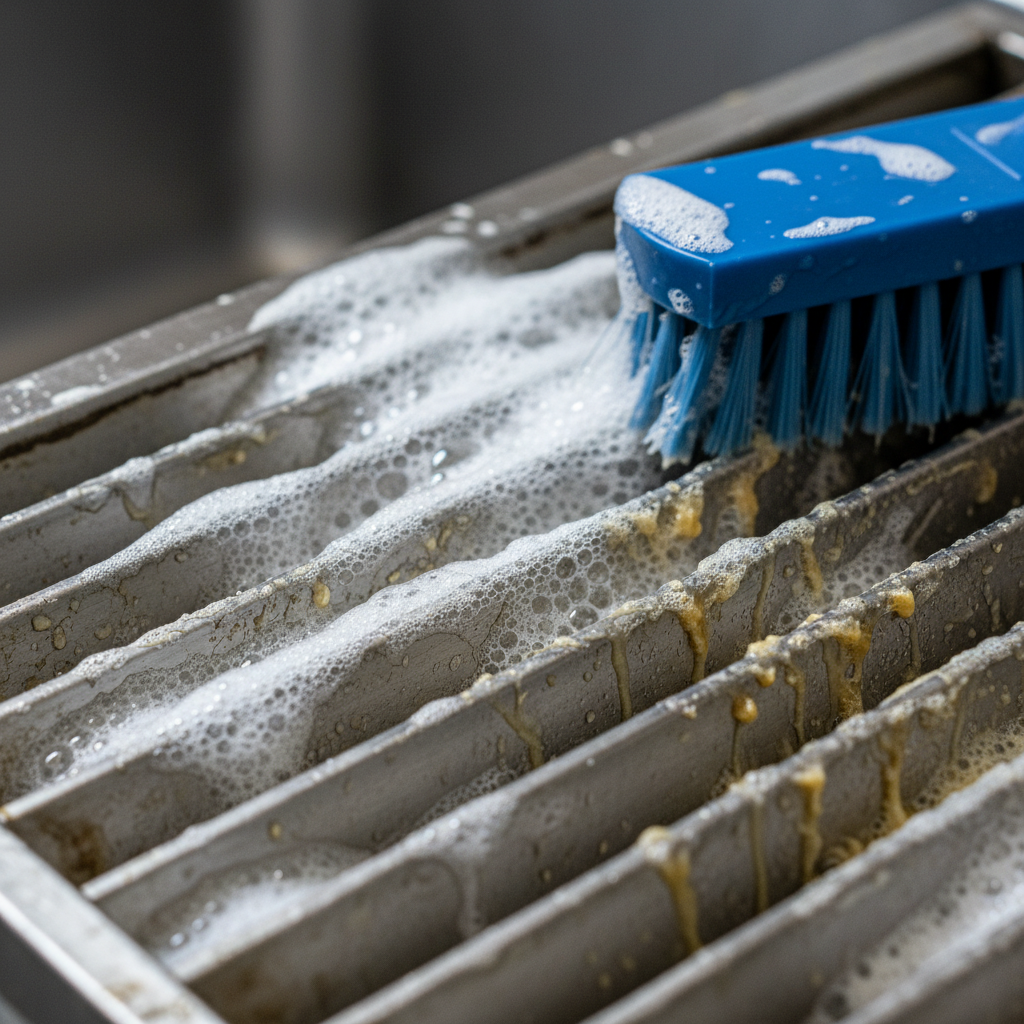
- Scrape excess: Use a plastic scraper to remove thick grease—less soil makes degreasers more effective.
- Pre-rinse warm: 100–120°F water breaks surface tension without flash-drying residue.
- Apply degreaser: Use a kitchen-safe alkaline or citrus degreaser. Avoid strong caustics on aluminum.
- Agitate: Nylon brushes along the vane direction prevent bending fins.
- Soak: Submerge in a sink or soak tank 10–20 minutes depending on soil load.
- Rinse hot: 140–160°F rinse flushes emulsified fats and soap film.
- Optional sanitize: If policy requires, apply a compatible food-contact sanitizer and allow proper dwell.
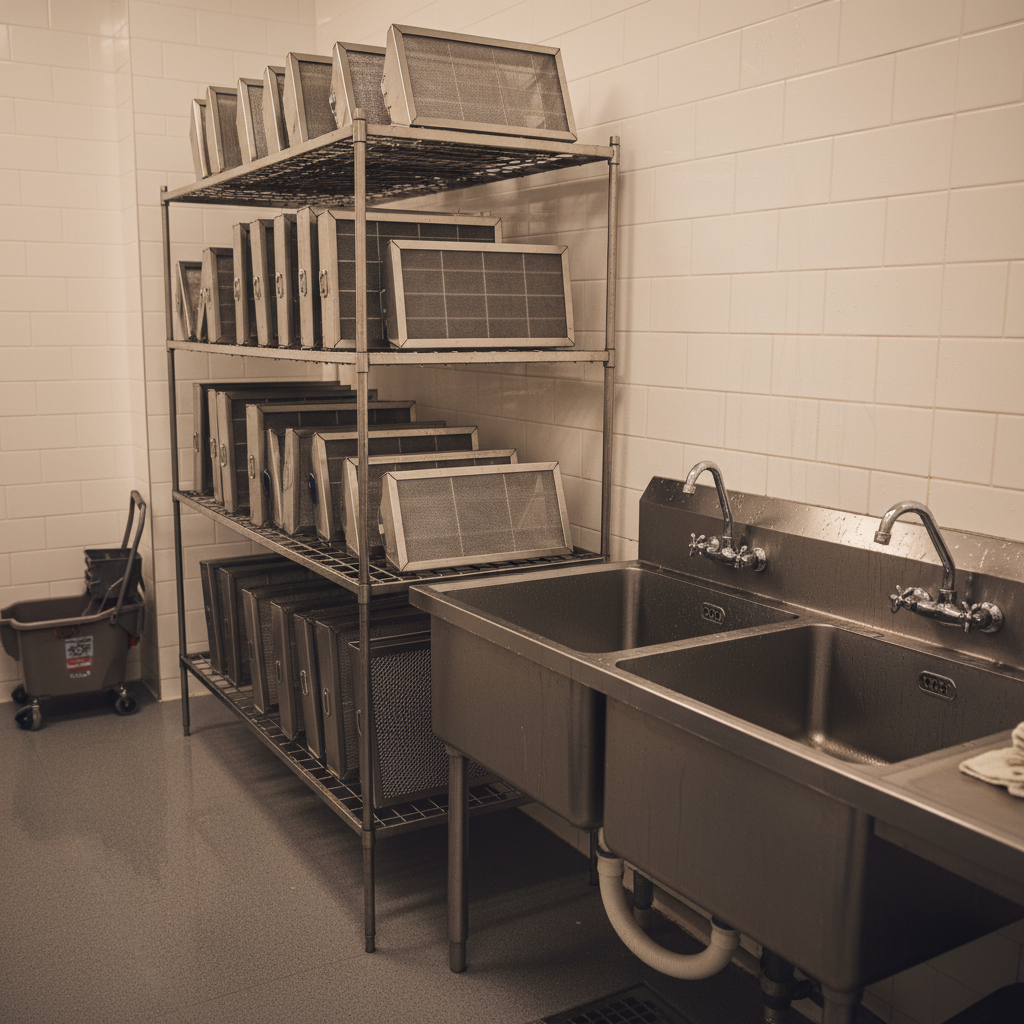
- Dry fully: Stand panels vertically on a rack for complete drainage; residual water can drip onto the line.
- Inspect and reinstall: Check for bent fins or broken handles. Seat panels snugly with rails and grease cups in place.
- Document: Log date, initials, method, and any damage for maintenance follow-up.
For deeper degreasing inside the canopy and plenum, see our step-by-step restaurant hood degreasing process.
Filter types and cleaning methods
Most commercial kitchens use stainless baffle filters. Cleaning options include manual scrubbing, soak tanks, high-temp dish machines, ultrasonic systems, and managed exchange programs. Match the method to soil load, material, and labor capacity to avoid damage and maximize uptime.
Common filter types
- Stainless baffle: Durable and heat-resistant; preferred for high-grease cooking.
- Aluminum baffle: Lightweight; avoid harsh alkalis that can darken and pit the surface.
- Mesh (light duty): Captures fine mist; clogs faster; requires gentler scrubbing.
Cleaning methods compared
| Method | Best for | Pros | Watch outs |
|---|---|---|---|
| Manual scrub + soak | Most kitchens | Low equipment needs; flexible timing | Labor-intensive; risk of bent fins if scrubbing across vanes |
| Soak tank (heated, saponifying) | Heavy grease loads | Consistent results; frees staff time | Requires safe chemical handling and ventilation |
| High-temp dish machine | Stainless baffles | Fast cycles; sanitization included | Confirm size/weight limits; avoid aluminum with harsh detergents |
| Ultrasonic system | Fine soils and complex fins | Excellent penetration; reduces manual scrubbing | Training needed; equipment investment |
| Exchange program | High-volume, minimal downtime | Clean set delivered; dirty set removed | Requires inventory planning and vendor coordination |
Planning a replacement instead of another scrub? Review a practical filter replacement Ontario guide to align on sizes, fire-safety features, and seating hardware before you buy.
Best practices and schedules
Tie frequency to volume and menu. Wipe faces nightly, soak weekly for fry-heavy menus, and schedule certified hood, duct, and exhaust fan cleanings on a recurring cadence. Keep a simple log to satisfy inspections and insurance audits.
- Nightly: Wipe baffle faces, rails, and splash zones during close.
- Weekly: Deep-clean or exchange filters; inspect rails, cups, and seating.
- Monthly/Quarterly: Book certified full-system degreasing based on production volume.
- After incidents: If a flare-up reaches the hood, inspect and clean immediately.
Scheduling consistency beats intensity. Operators who pick a standing weekday for filters and a fixed cadence for system service rarely scramble. For timing guidance, our filter replacement schedule tips pair well with the hood cleaning guide.
Tools and resources
Use food-service degreasers, nylon brushes, soak tanks or deep sinks, hot water to 140–160°F, PPE, and vertical drying racks. When labor is tight, a managed Filter Cleaning & Exchange service keeps airflow steady with near-zero downtime on the line.
- Core toolkit: chemical-resistant gloves, cut protection, eye protection, plastic scrapers, nylon brushes, degreaser, sanitizer (if required), absorbent floor pads, and labeled containers for waste.
- Facilities: a deep sink or soak tank with 140–160°F supply and a ventilated wash area.
- Up the stack: pair filter care with exhaust fan care to stabilize draw and reduce belt wear.
If you’re refining capture performance, these principles align with broader ventilation system optimization practices that reduce smoke roll-out and kitchen heat stress.
Case examples from Ontario kitchens
Batch-cleaning filters and pairing it with scheduled hood-and-duct service reduces smoke roll-out, improves comfort, and strengthens inspection outcomes. Consistent weekly soaks or exchange plus documented professional cleanings deliver the biggest wins.
- Quick service grill line: Switching to weekly exchange cut morning smoke alarms and stabilized capture at the fryers.
- Hotel banquet kitchen: Nightly wipe-downs and monthly soaks reduced odor complaints on event days and improved staff comfort.
- Food court tenant: Coordinated after-hours hood, duct, and fan service with filter exchange to meet center requirements without interrupting lunch rush.
- Institutional kitchen: A laminated filter log posted at the hood simplified walkthroughs and kept maintenance on schedule.
Curious how this links to overall air quality? Dive into our field-tested kitchen air quality tips that complement robust filter maintenance.
Local considerations for All Over Ontario
- Plan after-hours service during winter rush periods when ventilation loads spike from comfort heating and longer hours.
- Before long weekends and summer festivals, swap in a clean filter set to handle fried menu surges without smoke roll-out.
- For shared-duct venues, coordinate hood and duct access windows with building management to avoid conflicts and keep documentation aligned.
Short on time? Robinhood Cleaners offers Filter Cleaning & Exchange plus full hood, duct, and exhaust fan service across All Over Ontario—scheduled around your off-hours.
Troubleshooting and when to call a pro
Call certified help if filters clog within a shift, smoke rolls out at normal fan settings, or you see grease beyond the plenum. Pros degrease the whole system, verify fan belts and hinges, and document service for inspections.
- Early warnings: darker filter faces within a day, drip trails on splash zones, or a new whine from the rooftop fan.
- DIY limits: once grease moves into ducts, specialized tools, access panels, and trained techs are required.
- Upgrades: hinge kits, drain pans, and proper cup rails make future maintenance safer and faster.
Want background on what causes persistent buildup up the stack? Skim this primer on grease buildup in exhaust systems and pair it with your next service plan.
Frequently asked questions
These are the most common extractor hood filter questions we hear from Ontario operators. Each answer is concise and field-tested so your team can act with confidence today.
How often should I clean extractor hood filters?
Match frequency to volume. Wipe nightly, soak weekly for fry-heavy menus, and schedule full hood, duct, and fan service on a recurring cadence. If filters darken within a shift, increase cleaning or consider a managed exchange program.
Can I run baffle filters through a dish machine?
Yes for stainless steel if your machine and racks can handle the size and weight. Use compatible detergents, avoid harsh caustics on aluminum, and still inspect and dry vertically to prevent drip-back on the line.
When should I replace, not clean, a filter?
Replace when fins are bent, frames warped, welds cracked, or baffles no longer seat tightly. If grease bypass marks appear behind the filter, that’s a strong sign the panel isn’t doing its job and needs replacement.
Do clean filters really improve air quality?
Yes. Clean baffles preserve design airflow, pulling smoke, steam, and aerosols away from the line. Kitchens report fewer odor complaints and better comfort when filters are cleaned on a set schedule and the whole system is serviced routinely.
What records should I keep for inspections?
Keep a simple log: dates of nightly wipe-downs, weekly soaks or exchanges, and professional hood, duct, and fan service. Note any repairs (fan belt, hinge kits) and keep service photos or certificates handy.
Key takeaways
Clean extractor hood filters on a routine, documented schedule. Pair weekly soaks or exchange with certified hood, duct, and fan service. This simple rhythm keeps airflow strong, reduces fire risk, and makes inspections easier.
- Nightly wipe-downs prevent hardened films that slow cleaning later.
- Weekly soaks or exchange deliver the biggest day-to-day impact.
- Certified system service is essential for ducts, plenum, and fans.
- Logs near the hood speed up walkthroughs and insurance reviews.
- Train staff to reinstall baffles correctly to avoid bypass gaps.
Conclusion
Clean extractor hood filters protect people, property, and productivity. Set a realistic schedule, train the team, and pair staff cleanings with certified hood-and-duct service for steady capture and safer kitchens.
Here’s the bottom line: when you clean extractor hood filters consistently—and document it—you improve comfort, reduce fire risk, and make inspections faster. If you want hands-off reliability, move to a managed Filter Cleaning & Exchange program backed by scheduled hood, duct, and exhaust fan maintenance.
Next step: Align on a weekly filter day, post the log near the hood, and schedule your next system service so the stack stays clean from baffles to fan.