Restaurant deep cleaning services are the rigorous, scheduled sanitizing and degreasing of hoods, ducts, exhaust fans, grease traps, and equipment to reduce fire risk and meet inspection standards. In All Over Ontario, Robinhood Cleaners delivers NFPA 96–aligned programs that keep commercial kitchens safe, efficient, and ready for health and fire inspections.
By Robinhood Cleaners • Last updated: 2026-05-20
Overview and table of contents
This guide explains how restaurant deep cleaning protects kitchens, what services are included, how often to schedule them, and how to choose a qualified provider. Use it to align with NFPA 96 practices, reduce cleaning hazards, and prepare for inspections—without disrupting service hours.
Here’s what you’ll find below, along with quick-jump links to each section:
- What is restaurant deep cleaning?
- Why deep cleaning matters
- How deep cleaning works
- Types of services included
- Best practices and compliance
- Tools and resources
- Case studies from Southern Ontario
- Scheduling, scope, and readiness (no pricing)
- How to choose restaurant deep cleaning services
- Frequently asked questions
- Conclusion and next steps
What is restaurant deep cleaning?
Restaurant deep cleaning is the systematic degreasing and sanitizing of high-risk kitchen systems—hoods, ducts, exhaust fans, filters, appliances, and grease traps—to reduce fire hazards and contamination. It goes beyond nightly wipe-downs, targeting hidden buildup and airflow restrictions that inspections and insurers expect you to control.
At Robinhood Cleaners, deep cleaning concentrates on the places nightly crews can’t fully reach or safely service. These include inside the hood plenum, vertical and horizontal duct runs, fan housings, baffle filters, and rooftop discharge areas.
- Primary focus areas: hood and duct degreasing, exhaust fan cleaning, filter exchange, grease trap pumping, equipment detailing, and targeted power washing.
- Inspection readiness: clean, document, tag, and photograph critical components to simplify audits and insurance requirements.
- Outcome: steadier airflow, lower fire risk, better odors, and fewer surprise shutdowns.
High-volume kitchens often require more frequent hood and duct service than seasonal or low‑volume operations. Many teams align their maintenance with menu changes or promotional periods to avoid peak hours.
Why deep cleaning matters
Deep cleaning prevents grease ignition, improves ventilation, and reduces cross‑contamination. Kitchens that follow a documented program experience fewer airflow complaints, better employee comfort, and smoother inspections—key factors for safety, morale, and brand reputation.
Grease accumulates fastest where heat, vapor, and aerosolized oils meet—hood inlets, duct elbows, and fan blades. Without intervention, these surfaces develop a combustible layer that can ignite during routine cooking.
- Fire hazard reduction: consistent hood and duct degreasing reduces ignition risk in exhaust paths.
- Ventilation stability: clean fans and ducts maintain draw, limiting smoke rollback and kitchen hotspots.
- Food safety support: fewer residues and odors lower contamination vectors around prep and cook lines.
- Operator confidence: crews work faster when fans pull properly and surfaces aren’t tacky.
In our experience across All Over Ontario, kitchens that document services quarterly or semi‑annually spend less unplanned time troubleshooting exhaust performance. The reason is simple: airflow issues are visible sooner when a professional team inspects and photographs each component.
Explore the mechanics of airflow and compliance in our commercial kitchen exhaust cleaning guide, which outlines how exhaust paths should perform between service cycles.
How restaurant deep cleaning works
A professional crew isolates cooking areas, applies food‑safe degreasers, scrubs and rinses hoods, ducts, and fans, exchanges or deep‑cleans filters, then documents results. Work is planned after hours to avoid downtime and ends with a clean, dry, and fully functioning line.
Here’s the step‑by‑step flow our teams follow to keep service disruption low and results high:
- Pre‑inspection and photos: verify access panels, fan hinges, and any previous deficiencies.
- Protective prep: wrap equipment, place containment, and set floor safety markers.
- Hood degreasing: apply heated, food‑safe degreaser to the hood interior and plenum.
- Duct cleaning: brush and rinse ductwork from hood to rooftop discharge where accessible.
- Exhaust fan service: open hinges, clean blades and housings, check vibration and belt tension.
- Filter cleaning & exchange: remove baffle filters for hot soak or swap with a clean set.
- Grease trap service: pump, skim, clean walls and baffles, and check flow.
- Equipment detailing: target ovens, grills, fryers, and refrigeration gaskets as scoped.
- Power washing: treat floors, mats, and exterior grease zones where appropriate.
- Final verification: dry surfaces, restore power, tag equipment, and log photos.
For a visual of filter handling, see the image below. It captures the critical step many teams rush—complete removal and soaking of baffle filters to restore airflow.
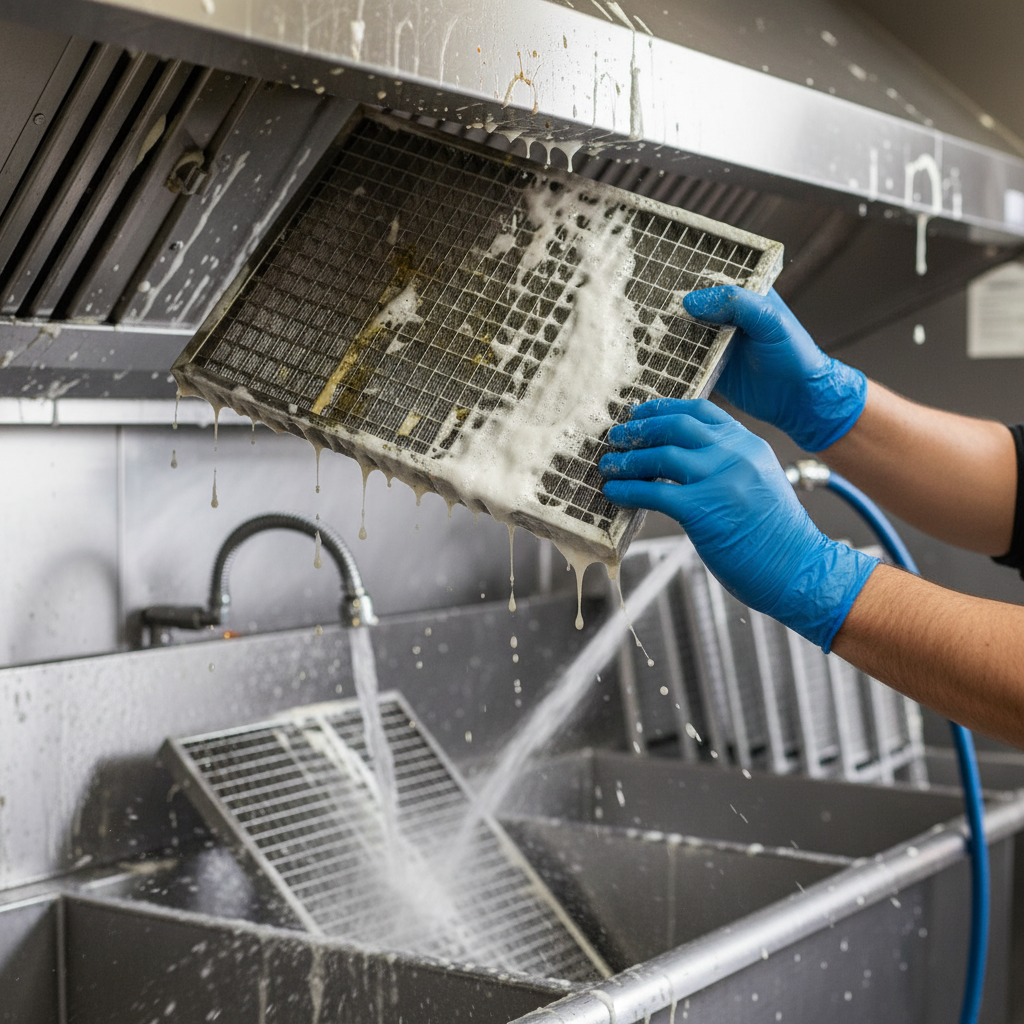
If you’re troubleshooting odors or smoke rollback, this deeper process often uncovers the root cause: clogged filters, underserviced duct runs, or fan belt slippage. For a detailed look at fan-side work, review our hood degreasing process walkthrough.
Types of restaurant deep cleaning services
Comprehensive programs bundle hood and duct degreasing, exhaust fan cleaning, filter cleaning and exchange, grease trap service, equipment detailing, and targeted power washing. Tailor the mix to kitchen volume, menu, and inspection history for best results.
Hood and duct degreasing
- Removes combustible residue from hood plenums, duct walls, elbows, and access doors.
- Improves airflow, reduces odor, and supports fire-code alignment.
- Start with our overview: kitchen exhaust cleaning in Ontario.
Exhaust fan cleaning and maintenance
- Opens hinged fans, cleans blades and housings, checks bearings and balance.
- Confirms belt condition and tension; replaces belts when worn.
- Learn how clean fans stabilize draw in our air quality improvement guide.
Filter cleaning & exchange
- Hot-soak or ultrasonic clean; swap with a ready set to avoid downtime.
- Restores capture efficiency; reduces grease aerosol carryover into ducts.
Grease trap pumping and cleaning
- Removes FOG (fats, oils, and grease), washes walls and baffles, and verifies flow.
- Helps prevent drain backups and foul odors during service rushes.
Commercial appliance detailing
- Targets ovens, grills, fryers, refrigeration gaskets, and under‑equipment zones.
- Useful before health inspections and menu changes.
- See what teams gain in our equipment cleaning overview.
Targeted power washing
- Treats floors, mats, walls, and exterior grease areas with containment.
- Restores traction and removes slip hazards around dish and fryer lines.
Not every kitchen needs every service each visit. We right-size the scope to your current conditions and inspection cadence so you’re covered without unnecessary disruption.
Best practices and compliance
Documented schedules, photo verification, and accessible components (hinged fans, labeled access doors) keep kitchens aligned with recognized practices. Align service frequency to cooking volume—monthly for high‑volume fry, quarterly for grills, and semi‑annual for lighter duty.
Scheduling that matches risk
- High‑volume fry lines typically need monthly hood and duct service to control aerosolized grease.
- Mixed menus with grills and ovens often stabilize with quarterly cycles.
- Seasonal or low‑volume operations may extend to semi‑annual service after verification.
Access and safety enable quality
- Install fan hinges so housings can open safely for blade cleaning.
- Label and maintain duct access doors at each elbow and long run.
- Ensure roof containment to prevent grease discharge staining and slip hazards.
Documentation that stands up to audits
- Keep tagged dates visible at the hood and fan; archive service photos.
- Track findings and corrective actions (e.g., worn belts, missing access panels).
- Align logs with your internal safety program and inspection calendar.
For a deeper dive on code alignment and inspection prep, read our NFPA 96 compliance checklist, which clarifies common inspection questions.
Tools and resources for safer, faster results
Professional crews rely on heated, food‑safe degreasers, rotary duct brushes, low‑pressure rinse systems, wet vacuums, and PPE. Fan hinges, access doors, and rooftop containment are small upgrades that dramatically improve cleaning quality and safety.
Chemistry and equipment
- Food‑safe degreasers: designed for hot application and thorough emulsification.
- Rotary and manual brushes: size‑matched to ducts and elbows for complete contact.
- Controlled rinse systems: minimize splatter while protecting electrical components.
- Wet vacuums and containment: speed drying and prevent secondary mess.
Safety and ergonomics
- PPE: cut‑resistant gloves, eye protection, non‑slip footwear, and respirators where needed.
- Roof work: harness points and grease containment protect crews and surfaces.
- Electrical lockouts: fan and appliance isolation prevents accidental starts.
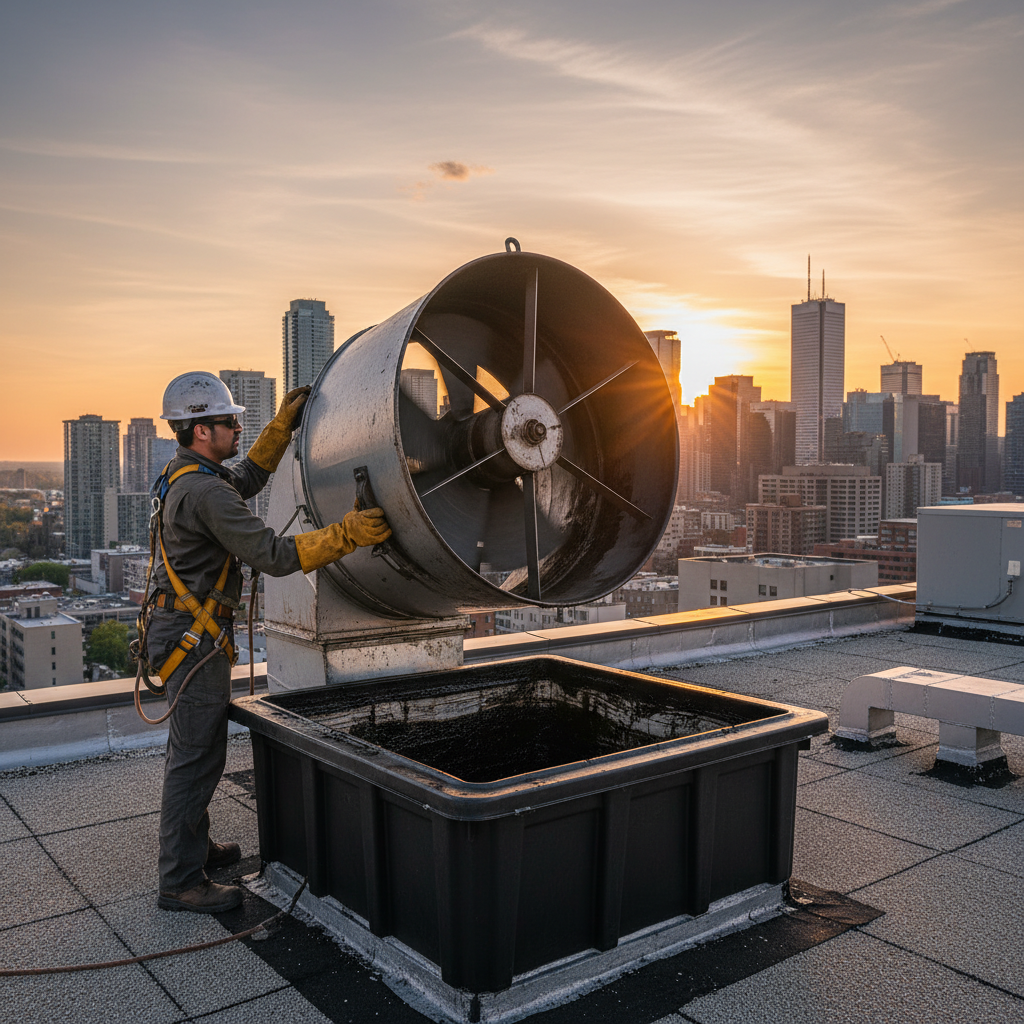
We standardize tools across crews so results are consistent, even when timelines are tight. That consistency is critical for multi‑unit brands and institutional kitchens with strict audit calendars.
Case studies: Southern Ontario kitchens
Across All Over Ontario, kitchens that adopted quarterly or monthly programs saw steadier airflow and fewer odor complaints. These snapshots show how scope and scheduling adapt to menu, volume, and space constraints.
High‑volume quick‑service line
- Challenge: smoke rollback during dinner rush; filters clogged in days.
- Solution: monthly hood/duct service, weekly filter exchange, fan belt replacement.
- Result: stable draw through peak periods; shorter ticket times.
Institutional kitchen with mixed menu
- Challenge: inconsistent ventilation in multiple cook zones.
- Solution: quarterly degreasing; added access doors at long duct runs.
- Result: even airflow; easier audit documentation across shifts.
Fine dining with seasonal peaks
- Challenge: odors near expo during holiday events.
- Solution: pre‑season deep clean; power wash floors and mats; gasket detailing.
- Result: improved guest experience; fewer complaints near the pass.
To understand what scope typically includes by area, compare this section with our kitchen deep clean guide covering line-by-line priorities.
Local considerations for All Over Ontario
- Plan after‑hours work around extended patio seasons and late service windows common in Southern regions; our crews operate 24/7 to avoid rushes.
- Schedule pre‑holiday deep cleans before fall and winter event peaks to minimize odor carryover and fan strain when volumes spike.
- Account for rooftop access and weather; windy or icy conditions require extra time and safety gear for exhaust fan service.
Scheduling, scope, and readiness (no pricing)
Right‑size your program by matching frequency to cooking volume and documenting each visit. A short readiness checklist—clear access, cooled equipment, and staff notifications—saves on‑site time and improves results.
How we scope a visit
- Menu and volume: fryers, charbroilers, and wok lines drive more frequent cycles.
- System design: longer or complex duct runs require added access and time.
- Past findings: recurring belt wear or discharge staining informs future plans.
Visit readiness checklist
- Clear counter space and cover or remove open food.
- Cool equipment when possible; disconnect power where directed.
- Reserve staff entry points and brief overnight managers.
Recommended frequency by kitchen type
| Kitchen profile | Hood & duct | Filters | Grease trap | Equipment detail |
|---|---|---|---|---|
| High‑volume fry/wok | Monthly | Weekly exchange | Monthly to 6 weeks | Monthly targets |
| Mixed grill/oven | Quarterly | Bi‑weekly to monthly | Quarterly | Quarterly zones |
| Low‑volume/seasonal | Semi‑annual | Monthly | Semi‑annual | Semi‑annual |
When you need rapid response between cycles, this overview of emergency hood cleaning explains what a same‑night stabilization can include. For multi‑unit scheduling, see this 24/7 service planning guide to coordinate access windows and line resets.
How to choose restaurant deep cleaning services
Pick a provider with documented hood/duct expertise, 24/7 availability, WSIB coverage, and a photo‑verified process. Ask about fan hinges, access doors, and filter exchange programs—small upgrades that deliver safer, faster, better cleanings every cycle.
What to verify up front
- Scope depth: hoods, ducts, fans, filters, grease trap, and key appliances.
- Safety coverage: training, protective gear, and rooftop procedures.
- Documentation: tags, photo logs, and corrective‑action notes.
Signals of a reliable partner
- Crews suggest hinges and access doors where missing for safer cleanings.
- Teams offer filter exchange so you always have a clean set ready.
- Night‑owl scheduling and quick service in Southern Ontario to avoid downtime.
Want a practical benchmark for service depth? Compare your current plan with the practices in our exhaust cleaning guide and this short note on deep cleaning scope examples.
Restaurant deep cleaning services: FAQ
These quick answers address the scheduling, scope, and readiness questions we hear most from Ontario restaurant teams. Use them to brief managers and set expectations for after‑hours work.
How often should our hoods and ducts be deep cleaned?
Match frequency to cooking volume. High‑volume fry or wok lines often need monthly service. Mixed menus typically stabilize with quarterly cycles. Low‑volume or seasonal operations can extend to semi‑annual after verification. Always confirm with your inspection cadence and internal safety program.
What’s included in a restaurant deep cleaning service visit?
A typical visit targets hood and duct degreasing, exhaust fan cleaning, filter cleaning or exchange, grease trap service, and appliance detailing. Work is scheduled after hours, includes protective prep and containment, and ends with photo documentation and tagging for audit records.
How do we prepare our kitchen for an overnight deep clean?
Clear counters, cover or remove open food, and cool equipment where possible. Reserve access paths and brief the closing manager on isolation steps for fans and appliances. These small steps save time on site and improve cleaning outcomes.
Will deep cleaning fix kitchen odors and smoke rollback?
Often, yes. Restoring filter capture and cleaning ducts and fans improves draw. If problems persist, we check belt condition, duct design, or missing access panels. When those are corrected, most kitchens see immediate airflow improvements.
Conclusion and next steps
A documented deep cleaning program reduces fire risk, stabilizes airflow, and keeps inspections predictable. Right‑sized scope, good access, and photo logs are the multipliers that make results stick between visits.
Here are the key takeaways and practical next steps for your team:
- Key takeaways
- Deep cleaning targets hidden grease where ignition and odors start.
- Frequency follows volume; access hardware enables safer, faster work.
- Photo‑verified logs simplify audits and insurance documentation.
- Immediate actions
- Walk your hood line: confirm hinges, access doors, and filter condition.
- Align scheduling with service peaks and your inspection calendar.
- Standardize a readiness checklist for overnight managers.
Need a plan that fits your hours? Our crews operate 24/7 across All Over Ontario. Explore our exhaust cleaning services or message the team through our website to book a walk‑through.