Emergency Restaurant Hood Cleaning: The 24/7 Action Plan
- Get a clear, step-by-step plan for emergency restaurant hood cleaning that keeps your kitchen safe and compliant.
- Understand when to call a 24/7 NFPA 96–certified team and what happens on-site in the first 90 minutes.
- See proven best practices to prevent the next emergency, tailored for Ontario restaurant operations.
- Learn how Robinhood Cleaners supports operators All Over Ontario with quick service in Southern Ontario.
Emergencies don’t wait. When a sudden grease flare-up, failed inspection, or airflow collapse shuts down your line, you need emergency restaurant hood cleaning now—not tomorrow. This guide gives Ontario restaurant operators a practical, 24/7 action plan grounded in NFPA 96 standards and real-world, on-the-line realities.
- Who it’s for: quick service, full-service, hotels, cafeterias, and institutional kitchens in Ontario.
- Primary goal: reduce fire risk, restore airflow, and pass re-inspection without disrupting service.
- Delivered by: NFPA 96–certified, WSIB-insured professionals who work safely around your schedule.
Quick Answer
Need emergency restaurant hood cleaning in Ontario? Robinhood Cleaners provides 24/7 NFPA 96–certified response All Over Ontario at All Over Ontario, with quick service in Southern Ontario. We clear grease, restore ventilation, and help you meet inspection requirements fast so you can reopen safely.
Table of Contents
- What Is Emergency Hood Cleaning?
- Why It Matters (Fire, Compliance, Uptime)
- When to Call for Emergency Service
- How the 24/7 Response Works
- Methods, Add‑Ons, and Approaches
- Best Practices to Avoid the Next Emergency
- Tools, Documentation, and Expectations
- Ontario Case Snapshots
- FAQ
- Related Articles
- Conclusion + Next Steps
What Is Emergency Hood Cleaning?
Emergency hood cleaning is a rapid, NFPA 96–aligned response that clears hazardous grease from your canopy hood, filters, plenum, ductwork, and rooftop fan so you can safely operate again.
- Trigger events: grease flare-ups, smoke alarms, airflow failures, failed health/fire inspections, or odors signaling hazardous buildup.
- Scope: full degreasing from the cooking line to the rooftop exhaust fan, including baffle filters, plenum, vertical/horizontal ducts, and fan blades/housings.
- Goal: reduce fire risk, restore ventilation, pass re-inspection, and document work with photos and NFPA 96 tagging.
- Delivered by: trained, WSIB-insured and NFPA 96 certified technicians who work overnight or off-hours to minimize downtime.
Robinhood Cleaners focuses exclusively on commercial kitchen cleaning—kitchen exhaust cleaning, filter cleaning and exchange, equipment cleaning, fan belt replacement, grease trap service, power washing, and commercial appliance cleaning—so the emergency plan integrates seamlessly with the way restaurants actually run.
Why It Matters (Fire, Compliance, Uptime)
Here’s why same-day action is critical and how a certified team protects your business:
- Fire hazard reduction: grease-saturated hoods and ducts act like a fuse. Removing residue breaks the ignition path.
- Compliance protection: work aligns to NFPA 96 practices and your local authority having jurisdiction (AHJ). Tagging and reporting help with re-inspections.
- Air quality restoration: clean systems move air. Staff comfort improves, and smoke/odors dissipate.
- Operational uptime: 24/7 scheduling means cleaning happens after close or during low-traffic windows.
- Legal and insurance reassurance: WSIB-insured crews reduce liability exposure while they work.
If you need a deeper understanding of certification specifics, see Robinhood’s overview of NFPA 96–certified hood cleaning in Ontario for how standards translate into day-to-day kitchen safety.
When to Call for Emergency Service
Don’t wait for a shutdown to make the call. Act fast when you see any of the signals below.
- Visible grease sheen on hood interiors, filter frames, or the plenum that reappears soon after wiping.
- Smoke or heat accumulating on the line, or alarms triggered without clear cause.
- Exhaust fan underperforming: rattling, belt squeal, or noticeable drop in capture velocity.
- Rooftop grease runoff on the curb or roof membrane (risk to building and environmental compliance).
- Failed inspection or a warning notice with a deadline to correct deficiencies.
- Odors and haze lingering in the dining room or service corridor.
Pro tip: If the issue centers on ventilation and capture, ask about filter cleaning and exchange and a quick fan belt replacement during the same emergency visit. Those two fixes often bring immediate relief.
How the 24/7 Response Works
Robinhood Cleaners runs a tight, documented process that’s built for speed and safety.
| Stage | What Happens | Why It Matters |
|---|---|---|
| Call & Triage (0–10 min) | You describe symptoms; we assess risk, crew size, and equipment needed. | Sends the right NFPA 96–certified team, first time. |
| Mobilization (10–60 min) | Crew rolls with degreasers, PPE, hot-water pressure systems, and rooftop access gear. | Minimizes downtime; prevents rework. |
| Site Safety Setup | Cones, covers, and containment; lockout/tagout for fan if needed. | Protects staff, food contact surfaces, and equipment. |
| Full-System Degrease | Hood, baffles, plenum, ducts, and rooftop fan cleaned end-to-end. | Removes ignition sources; restores airflow. |
| Add‑Ons As Needed | Filter exchange, fan belt replacement, grease containment tune-up, equipment wipe-down. | Addresses root causes; stabilizes operations. |
| Verification & Tagging | Before/after photos, airflow check, NFPA 96 tagging, and service report. | Supports re-inspection and staff training. |
For an overview of routine (non-emergency) scheduling and scope in Ontario, review our commercial kitchen hood cleaning service guide to align your emergency response with your ongoing maintenance plan.
Methods, Add‑Ons, and Approaches
Emergency cleaning blends proven techniques with quick fixes that steady operations.
Core Hood & Duct Methods
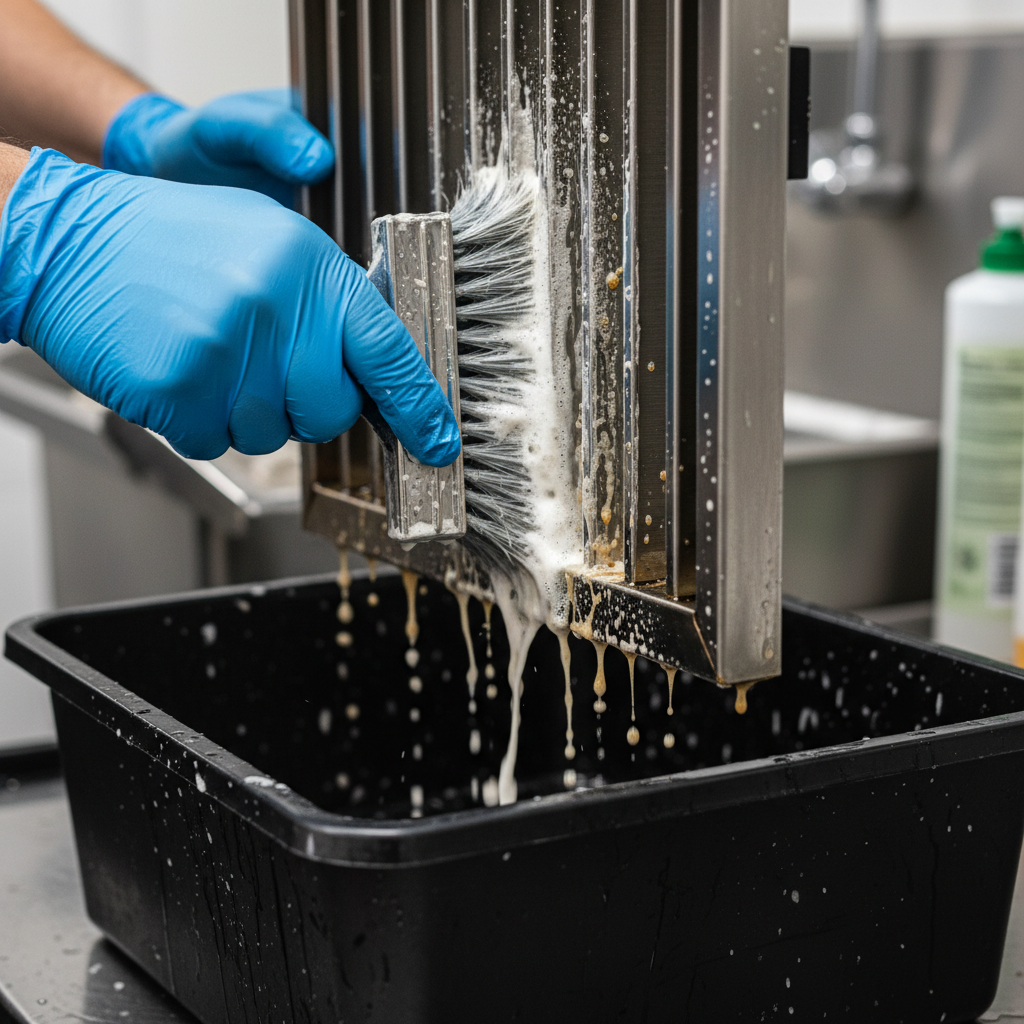
- Chemical degreasing: food-safe, heavy-duty degreasers break down baked-on fats in the plenum and duct walls.
- Hot-water pressure washing: high-temp rinse flushes dissolved grease and leaves metal surfaces clean and bright.
- Manual scraping: used where heavy carbon layers resist chemicals or water pressure.
- Access via panels: ensures every duct section is reachable and cleaned to bare metal.
Stabilizers and Quick Wins
- Filter cleaning and exchange: swap to clean baffles that maximize capture and airflow.
- Fan belt replacement: restore fan speed and reduce noise to improve ventilation immediately.
- Grease containment adjustments: stop rooftop runoff and environmental damage.
- Equipment wipe-downs: remove overspray and surface grease on nearby appliances.
Beyond the Hood
- Grease trap service: if backups or odors accompany the emergency, schedule a trap pump-out and cleaning.
- Power washing: address greasy floors and service corridors for slip prevention.
- Commercial appliance cleaning: deep clean ovens, grills, and refrigeration gaskets to curb bacteria spread.
In the GTA, restaurant exhaust cleaning support is available around the clock—helpful when a weekend rush exposes hidden issues.
Best Practices to Avoid the Next Emergency
Prevent the urgent call by tightening daily, weekly, and quarterly routines.
Line-Level Habits (Daily)
- Dry-wipe and then wet-wipe hood edges, light lenses, and backsplash between dayparts.
- Inspect baffle filters at lineup; swap clogged filters before peak hours.
- Confirm the fan sounds normal (no belt squeal, grinding, or unusual vibration).
- Keep fire suppression nozzles unobstructed and caps seated.
Supervisor Checks (Weekly)
- Remove, soak, and rinse baffle filters; allow them to dry completely before reinstalling.
- Look for grease trails inside the plenum or on the rooftop curb—early warnings of deeper issues.
- Verify light bulbs and lenses are intact so operators can see and clean properly.
Management Rhythm (Monthly/Quarterly)
- Schedule kitchen exhaust cleaning to NFPA 96 frequency based on your cooking volume and fuel type.
- Bundle filter exchange, fan belt inspection, and grease containment with your service window.
- Review before/after photos from each service with your shift leads for training.
Need a broader operations checklist for Ontario? See our internal guide on recovering from a failed grease inspection and pair it with routine hood service so you stay ahead of the curve.
Tools, Documentation, and Expectations
Knowing what a professional team brings—and leaves behind—helps you plan confidently.
- PPE and site protection: gloves, goggles, covers, cones, and containment to safeguard food zones and floors.
- Degreasers and hot-water systems: tailored chemistry and temperature for stainless finishes and carbon buildup.
- Access equipment: ladders, hinge kits, and rooftop safety harnesses for safe fan service.
- Grease management: vacuums, filters, and disposal practices aligned with environmental expectations.
- Documentation: before/after photos, NFPA 96 tag, and a service report your AHJ can review.
- Scheduling coordination: 24/7 availability means overnight or off-hour work to limit disruption.
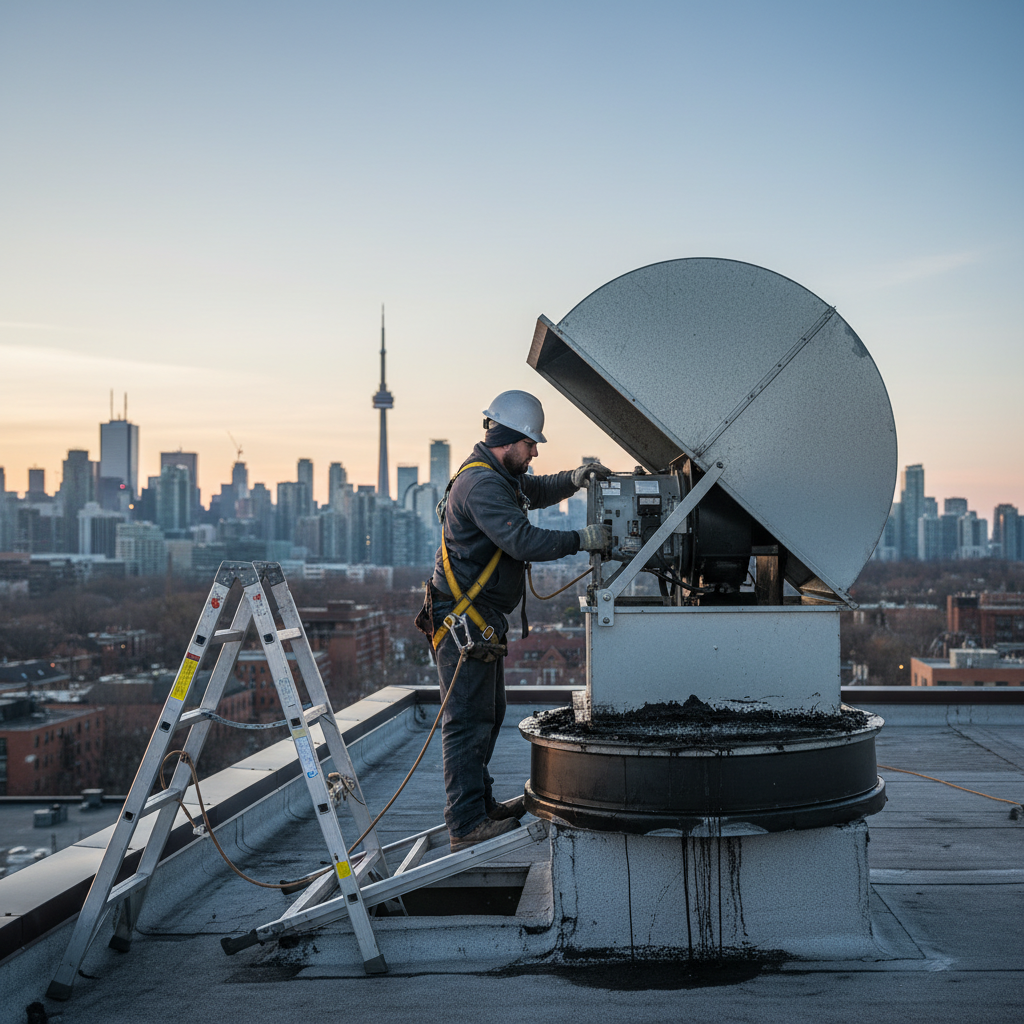
Need help tonight? Our certified crew can mobilize 24/7 across Ontario. Explore scope and scheduling in our Ontario hood cleaning service overview and book an emergency slot.
Local Tips
- Tip 1: If you operate near busy corridors like the QEW, 401, or Highway 403, plan emergency access routes and load-in points so crews can reach the hood fast without blocking customer areas.
- Tip 2: Ontario winters bring early sunsets and icy rooftops—ensure safe rooftop ladder access and clear snow near fan housings to speed service.
- Tip 3: Friday night rush in Southern Ontario is peak time for emergency calls. Keep a spare set of baffle filters and an extra fan belt onsite to stabilize airflow while the crew mobilizes.
IMPORTANT: These tips reflect how Robinhood Cleaners supports commercial kitchens All Over Ontario with quick response in Southern Ontario.
Ontario Case Snapshots
Real scenarios we see across Ontario, and how an emergency plan resolves them quickly:
- GTA weekend smoke-up: A quick service grill line saw smoke roll into the dining room. Emergency cleaning plus filter exchange and a fan belt replacement stabilized capture and eliminated the haze before brunch service.
- Niagara rooftop runoff: A fine-dining kitchen’s exhaust fan leaked grease onto the roof curb. Rooftop containment and a full duct degrease stopped runoff and passed re-inspection.
- Kitchener cafeteria odor: Lingering fried odors indicated a load of grease in the plenum. Overnight degreasing and hot-water pressure washing restored airflow and staff comfort.
- Hamilton inspection deadline: A surprise deficiency notice required proof of NFPA 96 cleaning inside 72 hours. Documentation, photos, and tagging satisfied the AHJ.
Emergency vs. Scheduled Hood Cleaning: What’s the Difference?
| Aspect | Emergency Cleaning | Scheduled Cleaning |
|---|---|---|
| Trigger | Fire risk, failed inspection, airflow collapse | NFPA 96 frequency based on volume/fuel |
| Speed | Mobilize same day/overnight | Planned off-hours |
| Documentation | Photos, NFPA 96 tag, AHJ-ready report | Photos, service log, recommendations |
| Compliance Risk | High—immediate correction required | Low—routine prevention |
| Downtime | Minimized but urgent | Planned with no surprises |
| Add‑Ons | Filter swap, belt change, containment fix | Preventive swaps and inspections |
FAQ
How do I know it’s time for emergency restaurant hood cleaning?
Call if you experience smoke accumulation on the line, airflow collapse, grease trails in the plenum, rooftop runoff, or a failed inspection. Visible grease that returns quickly after wiping is another red flag. A certified crew can stabilize capture with filter exchange and fan belt replacement while completing a full degrease.
What happens during an emergency visit?
The team triages by phone, mobilizes with the right gear, sets up safety containment, and cleans the hood, filters, plenum, ducts, and rooftop fan. They can also swap filters, replace a belt, adjust grease containment, and provide before/after photos, NFPA 96 tags, and a report for your AHJ.
Do you work overnight or off-hours?
Yes. True 24/7 availability means we schedule around your traffic patterns. Most Ontario kitchens prefer overnight service to avoid disrupting dinner or brunch service.
Will this help me pass a re-inspection?
Emergency hood cleaning aligned with NFPA 96, plus documentation and tagging, can satisfy inspection requirements. Review the report with your manager and prep team to demonstrate corrective action and updated routines.
What else should I bundle with the emergency clean?
Common quick wins include filter cleaning and exchange, fan belt replacement, grease containment tuning, and a targeted appliance wipe-down. If odors or backups persist, schedule grease trap service next.
Related Articles
- Emergency response checklists for kitchen exhaust systems (what to stage, who to call, where to store spare parts).
- How to train shift leads to spot early warning signs (smells, sounds, and performance cues).
- Bundling routine exhaust service with grease trap cleaning for a cleaner, safer back-of-house.
If you want the full scope of routine coverage, our commercial kitchen cleaning services in Toronto page outlines how ongoing maintenance complements emergency work.
Conclusion + Next Steps
- Act fast: if there’s smoke, odor, or a failed inspection, call for emergency support immediately.
- Expect full-system cleaning: hood, filters, plenum, ducts, and rooftop fan—documented and tagged.
- Stabilize the system: combine filter exchange, belt replacement, and containment fixes for lasting airflow.
- Prevent the next emergency: lock in NFPA 96–aligned frequency and staff routines.
- Emergency restaurant hood cleaning restores safe operations and supports AHJ re-inspections.
- Certified, WSIB-insured crews protect people, property, and documentation requirements.
- Pair emergency work with routine kitchen exhaust cleaning to avoid repeat incidents.
Operating All Over Ontario with quick service in Southern Ontario, Robinhood Cleaners responds 24/7. Explore our Ontario hood cleaning services and keep your team safe and your kitchen inspection-ready.