Restaurant equipment cleaning services are the professional deep cleaning and preventive maintenance of ovens, grills, fryers, dishwashers, hoods, ducts, and exhaust systems to reduce fire risk and meet codes like NFPA 96. In All Over Ontario, Robinhood Cleaners delivers this work 24/7 to keep kitchens safe, compliant, and running at peak uptime.
By Robinhood Cleaners • Last updated: 2026-05-16
Above-Fold Overview: Why Clean Equipment Pays Off
Clean, well-maintained equipment runs cooler, lasts longer, and passes inspections. It cuts fire risk, prevents unplanned downtime, and protects food quality. For busy restaurants in All Over Ontario, a planned cleaning program with Robinhood Cleaners aligns operations with NFPA 96 and FDA Food Code expectations while freeing your team to focus on service.
Here’s the thing most operators feel daily: grease never sleeps. In high-heat environments, tiny deposits add up fast. The right partner and cadence keep risk low and productivity high—without burning staff hours.
At a Glance Summary
- What you’ll learn: Definitions, compliance musts, methods, schedules, and checklists that pass inspections.
- Who this is for: Restaurants, QSRs, food courts, hotels, and institutional kitchens across Ontario.
- Services covered: Hood and duct degreasing, exhaust fan service, filter cleaning and exchange, grease trap care, commercial appliance deep cleaning, power washing, and ventilation maintenance.
- Outcomes: Fewer fire hazards, steadier airflow, better air quality, and reliable health-code performance.
Local considerations for All Over Ontario
- Plan overnight or early-morning appointments to avoid rushes common for Ontario restaurants and food courts.
- Build a winter grease strategy (salt, slush, and heavier comfort-food menus raise exhaust load and trap solids).
- Document NFPA 96 service intervals visibly; Ontario inspectors often ask for recent photos and tags on hoods and fans.
What Is Restaurant Equipment Cleaning Services?
Restaurant equipment cleaning services are specialized deep-cleaning and maintenance routines for cooking appliances and ventilation systems. They target grease, carbon, and biofilm on food-contact and heat-exposed surfaces to reduce fire risk, protect food safety, and sustain airflow. Done right, they align with NFPA 96, FDA Food Code, and insurer documentation needs.
In our experience, the term spans both hot-side equipment (ovens, ranges, charbroilers, fryers) and the full exhaust path (hoods, baffles, ducts, fans). It also includes grease traps, dish machines, coolers, and surrounding floors and walls where aerosolized oils land.
- Hot-side equipment: Carbon removal, burn-on degreasing, soak tanks, and safe reassembly.
- Exhaust system: Hood interiors, baffle filters, plenum, vertical/horizontal duct runs, fan housing and blades.
- Ancillary systems: Grease traps, make-up air units, and rooftop containment.
- Surfaces/structure: Power washing non-slip tile, bases, and splash zones to stop slip-and-fall incidents.
For Ontario operators, Robinhood Cleaners brings NFPA 96 certified pros and WSIB-insured teams, so work is documented, safe, and inspection-ready.
Why It Matters: Safety, Compliance, Uptime
Equipment cleaning matters because grease fuels fires, airflow losses slow kitchens, and dirty surfaces risk foodborne illness. Routine service reduces ignition sources, keeps ducts clear, and protects food-contact surfaces. The result is steadier output, happier inspectors, and fewer emergency shutdowns.
Consider airflow: even minor baffle restrictions drive up static pressure and heat. That strains belts and motors. Add grease-laden vapors, and the ignition potential rises in hood plenums and duct elbows.
- Fire safety: NFPA 96 sets the performance bar for exhaust systems; documented cleanings help satisfy insurers and AHJs.
- Food safety: The FDA Food Code expects clean food-contact surfaces and proper sanitizing frequency for in-use tools.
- Operational continuity: Clean fans move air; cooks stay cooler; tickets move faster; fewer heat-related shutdowns.
- Asset life: Degreased bearings, unhindered fans, and descaled ovens last longer and fail less.
How Services Work: From Assessment to Proof
A professional program follows four steps: assess, prepare, clean, and verify. Teams inspect the hood-to-fan path, protect the kitchen, degrease equipment and ducts, then document with photos and tags. Successful vendors schedule around service windows and leave airflow measurably improved.
At Robinhood Cleaners, we structure visits to minimize disruption. Night work is common; early mornings for cafes and quick service restaurants are too. Here’s our standard flow:
- Assessment: Walkthrough, access mapping, fan and belt check, filter counts, rooftop containment check.
- Preparation: Bag/film protection, equipment cooling, lockout/tagout for fans, rooftop pads and grease capture.
- Cleaning: Food-contact surfaces treated per Food Code; hoods, baffles, ducts, and fans degreased to bare metal where required; floors power washed.
- Verification: Before/after photos, hood and fan tags with date and tech, service report with recommendations.
Types, Methods, and Service Options
Restaurant equipment cleaning services span hot-side appliance deep cleans, hood and duct degreasing, exhaust fan maintenance, filter cleaning and exchange, grease trap service, and power washing. Providers tailor cadence to volume, fuel type, and menu mix, pairing one-time recovery with ongoing programs.
Hot-side equipment deep cleans
- Ovens and ranges: Carbon removal, door gasket checks, rack and cavity descaling where allowed by manufacturer guidance.
- Grills/charbroilers: Burnt-on carbon scraping, grate seasoning after degrease to control sticking.
- Fryers: Boil-out cycles, crumb trap cleaning, exterior degreasing to prevent flare-ups.
- Dish machines: Deliming and rinse-arm cleaning to stabilize rinse temps and sanitizing efficacy.
Exhaust system service
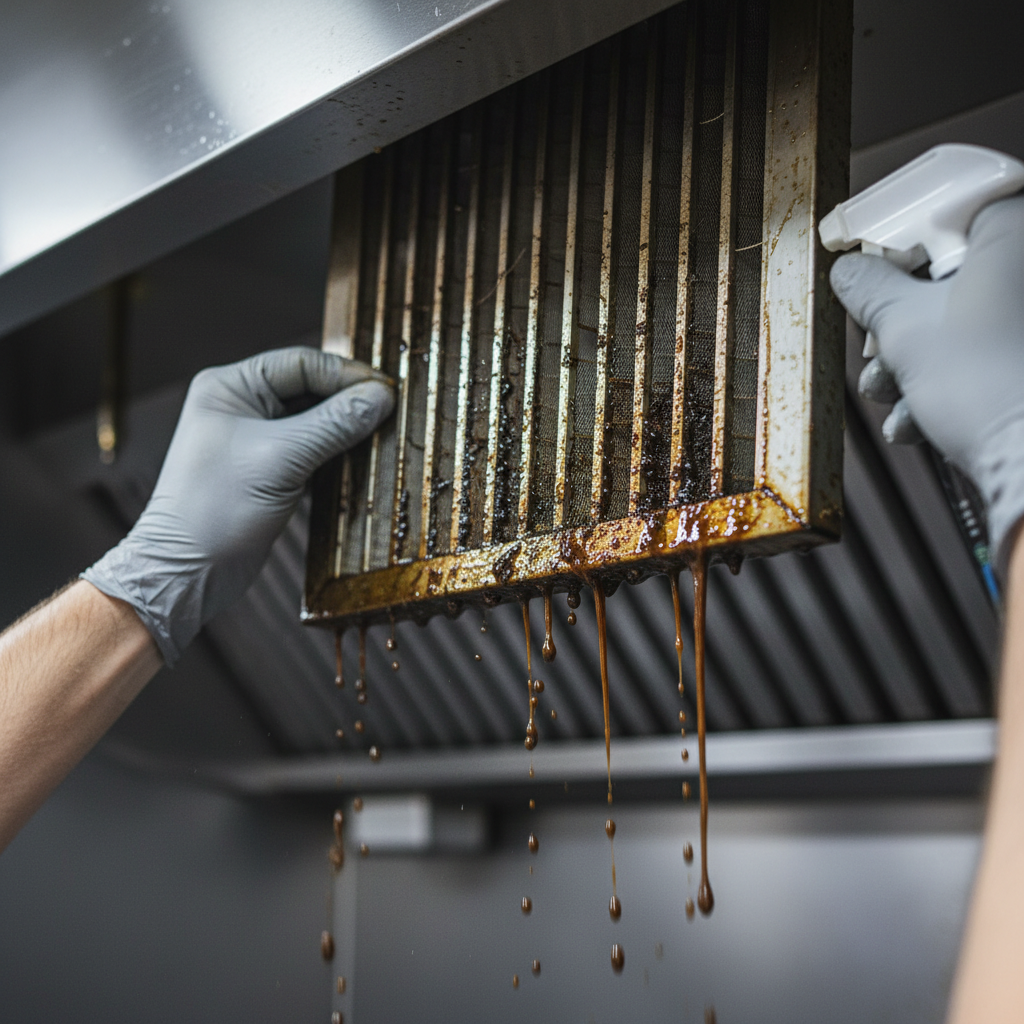
- Hood interiors and plenums: Degrease to bare metal when required; re-seal access panels.
- Baffle filters: Clean/exchange program to sustain CFM and reduce heat over the line.
- Duct runs: Mechanical agitation and chemical degreasing through access panels and elbows.
- Exhaust fans: Blade degreasing, bowl cleanup, hinge kits, and belt inspection/replacement.
Grease management and floors
- Grease traps: Pumping, baffle and lid cleaning, and recordkeeping for inspectors.
- Power washing: Non-slip tile, mats, walls, and splash zones to reduce slip hazards.
- Rooftop containment: Pads and absorbents to stop rooftop grease damage and keep drains clear.
Explore our deep dive into airflow on our exhaust duct cleaning benefits guide and see how fan health drives kitchen comfort.
Best Practices: What Works in Busy Kitchens
The best programs set clear cadences, standardize checklists, and document every visit. Focus on the hood-to-fan path, high-heat appliances, and grease management. Align with NFPA 96 frequencies, Food Code cleaning intervals, and your service windows to protect uptime.
Cadence that fits your volume
- Solid fuel or heavy char: Often monthly hood and duct cleaning per NFPA 96 guidance.
- High-volume fry/grill: Quarterly hood, duct, and fan service; weekly baffle filter exchange.
- Moderate volume: Semiannual exhaust service; monthly filter deep clean.
Documentation that passes inspections
- Hood/fan tags: Date, tech, and company visible to inspectors.
- Photo logs: Before/after shots of plenum, elbows, and blades.
- Service reports: Noted deficiencies (hinge, belt wear, access panel gaskets).
Line-friendly scheduling
- Off-hours work: Overnight or pre-open to avoid lost covers.
- Zone protection: Poly sheeting, drain protection, and rooftop containment to keep spaces clean.
- Rapid resets: Reassemble, test fans, confirm make-up air, and leave the line cook-ready.
We maintain these standards across Ontario kitchens and map cadences to your menu, volume, and inspections calendar so you’re always audit-ready.
Tools, Chemicals, and Helpful Resources
Effective cleaning blends mechanical agitation, food-safe chemistry, and the right safety gear. Degreasers, descalers, and sanitizers work with scrapers, rotary brushes, and hot-water power washers. For compliance clarity, lean on NFPA 96 and the FDA Food Code as your primary references.
- Mechanical: Rotary duct brushes, scrapers, baffle tanks, and low-profile tools for elbows.
- Chemistry: Alkaline degreasers for carbon; descalers for dish machines; sanitizers appropriate to Food Code.
- PPE and safety: Heat-resistant gloves, eye/face protection, non-slip footwear, and lockout/tagout.
- Documentation: Photo apps, digital logs, and visible service tags on hoods and fans.
Get a free operational walk-through. Our Ontario team will map your hood-to-fan path, document baffle counts, and propose a cleaning cadence that fits your rush windows. No disruption, just clarity and a safer kitchen.
Process, Scheduling, and Proof of Work
Schedule service when heat is lowest. Protect prep zones, shut down fans, degrease equipment and ducts, then tag, photo, and test. A strong partner leaves measurable airflow gains and a clear report you can hand to an inspector or insurer.
What we do on-site
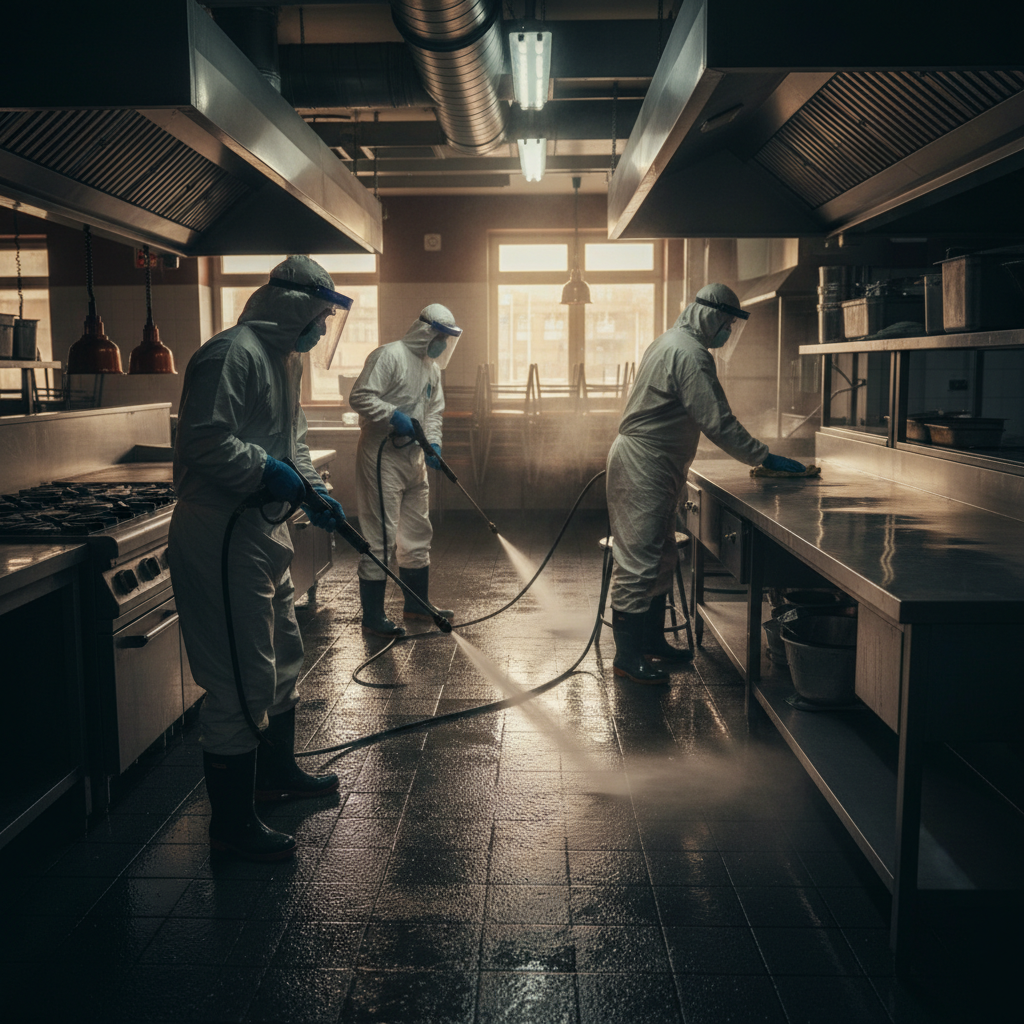
- Isolate the line, set poly and floor protection, and cover equipment that isn’t being serviced.
- Remove baffles, open access panels, and clean hood interiors to bare metal when required.
- Agitate and degrease ducts; clean fans, bowls, and blades; install hinge kits and replace worn belts if needed.
- Boil-out and descale hot-side equipment where appropriate and allowed by manufacturer guidance.
- Power wash floors and splash zones; verify drains are protected and cleared.
Proof you can trust
- Before/after photos stored with timestamps.
- Hood and fan tags with service date and tech ID.
- Report with findings (e.g., fan bearing noise, belt wear, access needs).
For more on hood specifics, see our restaurant hood degreasing process explainer and how we balance thoroughness with speed.
In-House vs. Professional: What’s the Difference?
In-house teams can handle daily wipe-downs and light degreasing. Professionals tackle the hood-to-fan path, duct interiors, and heavy carbon safely, documenting NFPA 96 compliance. Blending both gives you spotless lines daily and inspection-ready exhaust systems.
| Aspect | In-House Cleaning | Professional Service |
|---|---|---|
| Scope | Surfaces, light degrease, daily/weekly tasks | Hood-to-fan, ducts, fans, heavy carbon, grease traps |
| Compliance | Basic sanitation logs | NFPA 96 documentation, tags, photo reports |
| Risk | Limited access, higher residual grease | Access panels, rooftop safety, full degreasing |
| Downtime | During open hours | Scheduled off-hours, rapid reset |
| Results | Cleaner line, variable airflow gains | Verified airflow, lower ignition risk |
Mini Case Insights from Ontario Kitchens
Ontario kitchens see three recurring wins: lower heat over the line, steadier make-up air, and faster ticket times. When exhaust paths are clean and fans tuned, cooks stay cooler, QA improves, and managers stop firefighting surprise shutdowns.
- QSR fry line: After quarterly hood/duct/fan service plus weekly baffle exchange, line temps dropped and fryer recovery time stabilized during lunch peaks.
- Hotel banquet kitchen: A neglected elbow caused smoke pushback. Access panel cut-in and degrease removed the choke point; complaints vanished.
- Institutional café: Regular grease trap pumping and dish machine deliming eliminated recurring odors and sanitizer alarms before inspections.
These outcomes are common when a plan blends daily in-house habits with scheduled professional work. If you need a starting checklist, see our equipment deep cleaning checklist.
Scheduling Cadence and Service Menu
Map cadence to volume and fuel. Many high-volume operations thrive on quarterly exhaust service, weekly baffle cleaning, monthly power washing, and routine grease trap maintenance. Robinhood Cleaners offers 24/7 scheduling to fit Ontario kitchens without sacrificing service windows.
- Kitchen exhaust cleaning: Quarterly to monthly based on volume and fuel type.
- Filter cleaning & exchange: Weekly to monthly to stabilize airflow and cut heat.
- Fan belt replacement: Inspect each visit; replace on wear or squeal.
- Grease trap cleaning: Routine pumping and baffle care to prevent backups and odors.
- Commercial appliance cleaning: Ovens, grills, fryers, and dish machines on rotating cycles.
- Power washing: Floors, walls, splash zones; pair with exhaust work for a full reset.
- Duct cleaning: Access-panel agitation and degreasing to keep elbows from choking.
- Ventilation system maintenance: Fan, bearings, hinges, make-up air checks.
For air quality specifics, review our notes on duct cleaning and air quality and how better CFM boosts comfort.
How to Choose a Provider in Ontario
Choose a provider with NFPA 96 certification, WSIB coverage, 24/7 scheduling, real photo documentation, and a full hood-to-fan service scope. Ask for sample reports, references, and proof of hinge kits, belt service, and rooftop containment.
- Credentials: NFPA 96-trained techs; WSIB-insured for Ontario job sites.
- Scope: Hood, ducts, fans, filters, traps, appliances, and floors—one coordinated reset.
- Documentation: Tags, time-stamped photos, and clear service summaries.
- Scheduling: Overnight/early windows and emergency coverage when needed.
- Proof of results: Airflow improvements and heat reduction you can feel on the line.
See our overview of commercial kitchen exhaust cleaning services to understand how scope and documentation work together.
Frequently Asked Questions
Operators ask about frequency, scope, downtime, and what inspectors want to see. Here are direct answers that help you plan without guesswork.
How often should our hood and ducts be cleaned?
Frequency depends on volume and fuel type. Many high-volume fry or grill kitchens schedule quarterly service, while solid-fuel operations often require monthly cycles under NFPA 96 guidance. Moderate-volume kitchens can be semiannual. We’ll map cadence to your exact menu and hours.
What’s included in professional restaurant equipment cleaning services?
Expect hood and plenum degreasing, baffle filter cleaning or exchange, duct and fan cleaning, grease trap service, and deep cleaning of ovens, grills, fryers, and floors. You should also receive dated tags, time-stamped photos, and a clear report for inspections.
Will cleaning shut down my kitchen?
We schedule off-hours—overnight or before open—so service doesn’t cut into sales. Prep areas are protected, equipment is reassembled, and fans are tested before your first tickets. Most sites resume normal operations by opening time.
How do we show inspectors we’re compliant?
Keep hood/fan tags visible, maintain photo logs, and save your service reports. Pair professional records with in-house sanitation logs for food-contact surfaces. This combined documentation makes inspections straightforward and defensible.
More Ways to Keep Your Kitchen Compliant
Blend daily habits with scheduled professional work. Use checklists, photo logs, and clearly labeled tags. Link exhaust service to floor care and trap maintenance so your kitchen gets one cohesive reset, not scattered tasks.
For step-by-step planning, our kitchen deep clean guide and equipment degreasing methods break down tasks your team can own between professional visits.
Conclusion: Make Clean a Competitive Advantage
A reliable equipment cleaning program reduces fires, improves air quality, and protects food safety. When documentation is airtight and scheduling is 24/7, inspections get easier and teams move faster. That’s how clean becomes an operational edge, not a chore.
- Key Takeaways
- Grease control and airflow are the backbone of kitchen safety and speed.
- NFPA 96 and the FDA Food Code define the bar; documentation proves you met it.
- Combine daily habits with quarterly hood-to-fan service for consistent results.
- Use photos, tags, and reports to make inspections simple.
Next steps: Map your volume to a service cadence, pick a 24/7 certified partner, and align professional visits with your in-house list. Ready to start? Book a discovery call in Ontario.