A kitchen deep clean is a systematic, top-to-bottom sanitation of cooking, ventilation, and drainage systems that removes grease, food soil, and odors to a hygienic standard. In All Over Ontario, restaurants use deep cleaning to reduce fire risk, meet health codes, and keep staff safe. Robinhood Cleaners delivers this with NFPA 96–aligned methods and commercial-grade tools.
By Robinhood Cleaners • Last updated: 2026-05-15
Quick summary and table of contents
A thorough kitchen deep clean targets hoods, ducts, fans, filters, appliances, floors, walls, and drains to remove grease and biofilm. It follows a set order (top to bottom, clean to dirty) and documents results for compliance. Use this guide to plan frequency, choose methods, and align with NFPA 96 and food-safety expectations.
Use this at-a-glance map to jump to what you need now.
- What is a kitchen deep clean?
- Why deep cleaning matters (safety, compliance, longevity)
- How it works: step-by-step
- Methods and approaches (hoods, ducts, fans, appliances)
- Tools, chemicals, and resources
- Buying guide + comparison table (DIY vs. pro)
- Best practices and scheduling
- Ontario case examples
- FAQ
- Conclusion and next steps
What is a kitchen deep clean?
A kitchen deep clean is a planned, top-to-bottom process that restores ventilation, surfaces, and equipment to a hygienic, low-fire-risk state. It goes beyond daily wipe-downs by degreasing hoods and ducts to bare metal, detailing appliances, and sanitizing floors and drains with documented results for inspections.
In commercial operations, “deep” means measurable outcomes: bare-metal results inside the hood and duct, grease capture systems reset to baseline, and documented photos before and after. The process includes ventilation components and the surrounding cookline—areas daily cleaning can’t fully reach.
- Scope: Hoods, baffle filters, ducts, rooftop fans, make-up air, appliances, walls, ceilings, floors, and drains.
- Standard: Alignment with NFPA 96 for ventilation fire safety and local health expectations for sanitation.
- Outcome: Reduced fire load, better airflow, fewer odors, and cleaner, safer work zones.
For context on the ventilation side, see our in-depth primer on commercial kitchen exhaust cleaning and how it supports inspection readiness.
Why deep cleaning matters for safety, compliance, and longevity
Deep cleaning lowers fire risk, improves air quality, and supports health-code compliance. Clean hoods and ducts reduce combustible grease, while sanitized prep zones cut cross-contamination risk. Documented service helps during inspections and insurance reviews and prevents premature equipment failures.
The top reason Ontario kitchens schedule a kitchen deep clean is fire prevention. Grease-laden vapors accumulate inside hoods, ducts, and fans during high-heat cooking. Over time, this creates a flammable film that can ignite. Removing it to bare metal drastically lowers this risk and supports NFPA 96 expectations.
- Food safety: Detailing cooklines and cold storage minimizes bacterial harborage and odors.
- Airflow and comfort: Clean ducts and fans move more air, stabilizing temperatures on the line.
- Equipment life: Less grease means fewer premature bearing, belt, and motor issues.
- Inspection confidence: Photo logs and service tags demonstrate due diligence to inspectors.
Want the ventilation science behind this? Our article on exhaust duct cleaning benefits explains how airflow and grease removal connect to fire load reduction.
How a professional kitchen deep clean works (step-by-step)
Pros follow a top-to-bottom flow: protect, prep, degrease, rinse, detail, sanitize, then verify. They isolate power and gas, apply food-safe degreasers, remove grease to bare metal, detail appliances, sanitize floors and drains, and finish with photos and a service tag for inspection records.
- Pre-check and protection: Verify gas/electrical lockout where needed; bag and shield appliances; lay floor mats and containment.
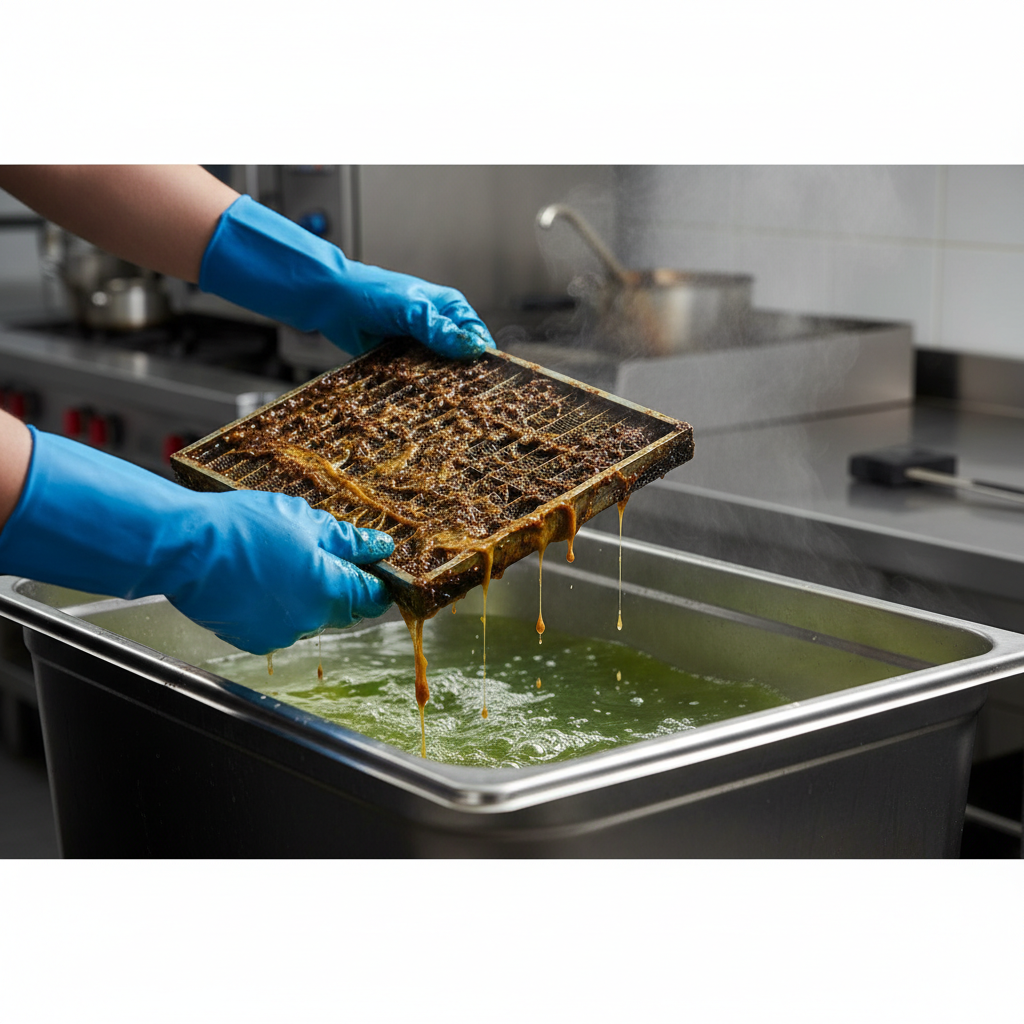
- Filter removal: Pull baffle filters for soak-tank degreasing and inspection.
- Hood and plenum degreasing: Apply alkaline or enzyme degreasers, dwell, and scrape to bare metal.
- Duct access and cleaning: Open access panels; foam, scrape, and hot-water rinse interior surfaces.
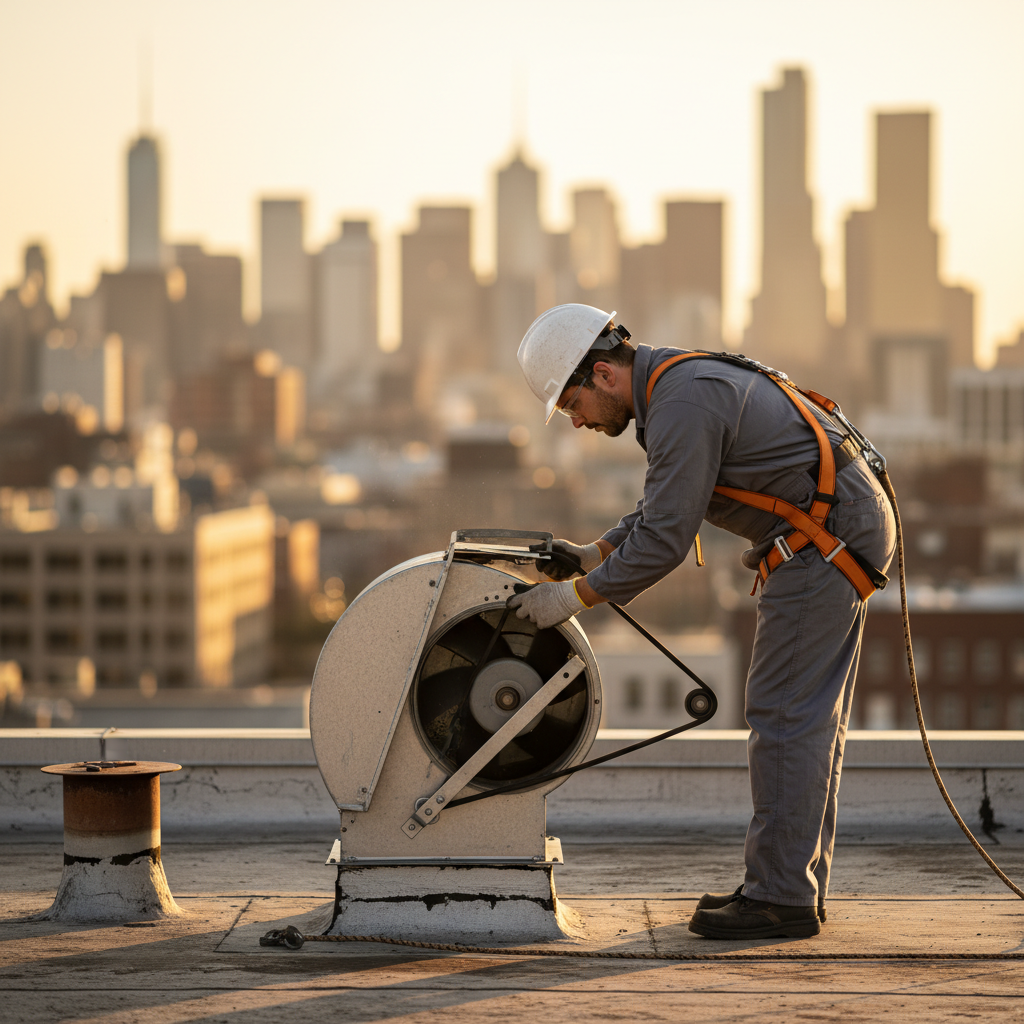
- Rooftop fan service: Safely hinge the fan, clean blades and housing, check belt tension and bearings.
- Make-up air checks: Wipe and vacuum inlets, verify filters and airflow direction.
- Appliance detailing: Degrease ovens, grills, fryers exteriors; clean undersides, casters, and gaskets.
- Floors, walls, ceilings: Degrease splash zones, power wash floors, and squeegee to drains.
- Grease trap service coordination: Pump and clean traps, wipe lids and baffles, verify seals.
- Sanitize and reset: Sanitize touchpoints; reinstall filters; relight pilots; remove containment.
- Quality verification: Before/after photos, service tag, and recommendations for intervals.
For a visual on what “good” looks like, review our equipment deep cleaning checklist, which mirrors the order above and helps your team prepare.
Methods and approaches by system
Effective deep cleaning combines chemical degreasers, heat, mechanical agitation, and rinse/neutralization. Hoods and ducts are restored to bare metal; filters are soaked and rinsed; fans are disassembled and cleaned; appliances are detailed; floors are degreased and sanitized with controlled runoff.
Hood, duct, and fan systems
- Chemistry: Alkaline foams and gels break heavy grease; enzymatic blends help on verticals.
- Heat and dwell: Hot-water rinse (often 140–180°F equivalent) improves lift after dwell time.
- Mechanical action: Scrapers, pads, and rotary brushes reach corners and seams.
- Verification: Bare-metal standard in accessible areas; photo documentation at each access point.
Explore our hood cleaning guide for a breakdown of plenum and filter angles that trap grease and how we access them safely.
Filters and capture efficiency
- Baffle filters: Remove, soak in a heated degreaser tank, rinse, and inspect for warping or clogged vanes.
- Exchange programs: Swapping in clean filters on a fixed route maintains capture efficiency between services.
- Sizing and fit: Proper baffle orientation and snug fit reduce bypass and improve grease capture.
Our Filter Cleaning & Exchange program keeps capture high and odors low between services—one reason Ontario kitchens pair it with regular duct service.
Appliances and work surfaces
- Ovens and ranges: Carbon and grease removal on doors, hinges, and under-cookline zones.
- Grills and fryers: Degrease exteriors, splash zones, and wheels; verify caster locks.
- Refrigeration: Wipe gaskets, clean coils and pans, and sanitize handles.
For appliance-specific methods, see our piece on commercial oven deep cleaning and what to prep before service.
Tools, chemicals, and resources
Successful deep cleaning uses food-contact-safe degreasers, heated rinse systems, soak tanks, access tools, PPE, and documentation kits. Choose chemistry matched to soil load, use heat and agitation to lift grease, and always finish with neutralization and potable-water rinses where required.
- Degreasers: Alkaline foams/gels for hoods and ducts; citrus or enzyme blends for sensitive areas.
- Soak tanks: Heated tanks restore baffle filters faster and more completely than hand-scrubbing.
- Hot-water systems: Portable or truck-mounted units accelerate rinsing and recovery.
- Access equipment: Hinges for rooftop fans, magnetic LED lights, and compliant ladders.
- PPE: Cut-resistant gloves, splash goggles, non-slip boots, harnesses for rooftop work.
- Documentation: Before/after photos, service tags, and interval recommendations.
If indoor air has been a complaint lately, our duct cleaning and air quality guide explains how clean ducts, balanced make-up air, and filtration interact.
Buying guide and comparison: DIY vs. in-house vs. professional service
Choose a kitchen deep clean approach by weighing safety, compliance, downtime, and proof of results. Pros bring NFPA 96–aligned methods, rooftop safety gear, and photo documentation. DIY and in-house can handle light detailing, but ventilation internals, fan belts, and ducts are best left to certified technicians.
Here’s a quick comparison to help you decide the right approach for your operation in All Over Ontario.
| Approach | What it suits | Strengths | Limitations | Best for |
|---|---|---|---|---|
| DIY (owner/chef) | Light appliance exteriors, spot degreasing, daily sanitizing | Fast, immediate, minimal scheduling | No hood/duct access, safety risks on rooftops | Very small, low-volume kitchens |
| In-house staff | Weekly detailing, filter swaps, floor care | Familiar with space and routines | Lacks NFPA 96 training, limited documentation | Small to mid-size venues between pro visits |
| Professional service | Full hood/duct/fan restoration, photo logs | Certified techs, rooftop safety, inspection-ready | Requires coordinated scheduling | Most commercial operations |
Looking for a detailed ventilation-focused option? Our commercial kitchen exhaust cleaning services page outlines what’s covered and how visits are documented for inspectors.
For broader sanitation standards and a stepwise overview of deep cleaning tasks, this independent guide on health code essentials for kitchens is a useful read when you’re aligning internal SOPs with service visits.
Best practices and scheduling that work in Ontario
Adopt a top-to-bottom order, pair pro ventilation service with routine filter exchanges, and schedule around your slowest shifts. High-volume, fry-heavy operations often need quarterly hood and duct service; lighter-use kitchens may stretch intervals but should validate with photo evidence and airflow observations.
Interval planning
- Ventilation: High-volume or solid-fuel kitchens benefit from quarterly or more frequent hood/duct service; moderate volume may be semiannual.
- Filters: Weekly cleaning or exchange improves capture and reduces odors; more often during peak periods.
- Appliances: Monthly to quarterly deep detailing depending on menu and spatter load.
Documentation and compliance
- Photo logs: Keep dated before/after photos at each access panel and fan.
- Service tags: Post hood tags with date and next-due interval near eye level.
- Grease disposal: Ensure rooftop and ground containment to prevent environmental violations.
Local considerations for All Over Ontario
- Plan rooftop fan and duct work during milder weather or daytime windows to reduce wind and ice hazards in colder months.
- Before long holiday weekends and festival seasons, add a filter exchange to keep capture efficiency high during rush periods.
- Ventilation pulls are heavier in quick-service, fry-forward menus common across Southern Ontario—tighten intervals and verify with photos.
If indoor comfort or smoke complaints persist after service, check out our air quality improvement guide for balancing tips and signs of make-up air issues.
Need an expert eye? Robinhood Cleaners is WSIB insured, NFPA 96–aligned, and available 24/7 across Ontario. We pair hood and duct service with filter exchange, fan belt checks, and appliance detailing to keep you compliant and comfortable without interrupting service.
Ontario case examples: what success looks like
Across Ontario, kitchens that standardize deep cleaning reduce odors, stabilize cookline temps, and move through inspections with confidence. Pairing quarterly hood/duct service with monthly filter exchanges and seasonal appliance detailing yields the most consistent results without disrupting peak service windows.
Here are real-world scenarios (anonymized) that mirror what we see daily:
- Quick-service burger line: Fry-heavy menu caused rapid filter loading and rooftop grease. We set monthly filter exchange, quarterly duct service, and established a rooftop containment check. Odor complaints subsided, and fan belts stopped glazing.
- Hotel banquet kitchen: Irregular volume created inconsistent grease patterns. A semiannual hood/duct plan with pre-event filter swaps stabilized capture and reduced smoke alarms during high-output banquets.
- University food court: Multiple small lines share exhaust trunks. Coordinated, after-hours service with thorough access-panel documentation helped facilities pass periodic inspections with fewer rechecks.
- Fine dining sauté line: High-heat searing created sticky residues in the plenum. Enzyme pre-spray followed by hot rinse shortened dwell time and improved bare-metal results at the corners.
- Catering commissary: Seasonal spikes required flexible scheduling. Our 24/7 availability let us hit weekend windows, combining appliance detail, floor degrease, and hood service in one mobilization.
For an equipment-focused planning template, download the structure from our deep cleaning checklist and align it to your line layout.
Frequently Asked Questions
These concise answers address the most common deep cleaning decisions: how often to schedule, what’s included, what staff can handle, and how to pass inspections confidently. Each response is practical and aligned with Ontario operations.
How often should I schedule a kitchen deep clean?
High-volume, fry-forward kitchens often benefit from quarterly hood and duct service with monthly filter exchanges. Moderate-use kitchens may go semiannual. Validate with photo evidence inside the hood and at duct access panels, and adjust intervals seasonally to match volume.
What does a professional deep clean include?
Service targets hoods, baffle filters, ducts, rooftop fans, and appliances, plus walls, ceilings, floors, and drains. Technicians remove grease to bare metal in ventilation, detail appliances, sanitize floors, and finish with photos and a service tag. Many teams also check fan belts and make basic airflow observations.
Can my staff handle deep cleaning instead of hiring pros?
Staff can handle daily sanitation, light detailing, and routine filter swaps. However, internal hood and duct work, rooftop fan cleaning, and belt checks require training, access tools, and safety gear. Certified technicians provide documentation and reduce risk while restoring hard-to-reach areas.
How do I prepare my kitchen for a deep clean visit?
Clear the cookline, remove pans and portable equipment, and cool hot surfaces. Share any access concerns, roof details, and alarm contacts. Plan service during your slowest window and notify staff about temporary gas or power isolations while technicians work.
What proof will I have for inspectors or insurance?
You’ll receive before/after photos, a service tag on the hood with the date and next due, and a brief summary of access points serviced. Keep these records with your safety documentation. Photo evidence is the simplest way to confirm bare-metal results in ventilation.
Conclusion and next steps
A kitchen deep clean is your frontline defense against fires, odors, and downtime. Pair pro hood and duct service with filter exchanges and scheduled appliance detailing, and document results. With 24/7 availability across Ontario, Robinhood Cleaners makes it easy to stay clean, compliant, and inspection-ready.
Key takeaways
- Deep cleaning targets hidden grease and biofilm that daily routines miss.
- Top-to-bottom order and photo documentation keep you compliant and confident.
- Quarterly hood/duct service plus monthly filter exchanges fit many Ontario kitchens.
- Certified rooftop fan and belt checks cut noise, odors, and equipment strain.
Ready to align your SOPs and service schedule? Review our ventilation service overview and skim this concise Ontario-specific cleaning guide for planning tips.