Smoke rolling out of the line, hot spots that burn pastries, and that stubborn “yesterday’s roast” smell—these are red flags your oven needs more than a wipe-down. This complete guide demystifies the commercial oven deep cleaning process so your crew gets safer shifts, better food, and fewer surprises during inspections—without upending service.
Overview
- What you’ll learn: What deep cleaning really covers, a precise step-by-step workflow, tool and chemical choices, safety protocols, documentation, and the maintenance cadence that works in busy Ontario kitchens.
- Who this helps: Restaurants, QSRs, fine dining, catering teams, food courts, and institutional kitchens running ovens hard, all week.
- Why it matters: Fire hazard reduction aligned with NFPA 96, better air quality on the line, consistent food quality, and longer equipment life.
- How we help in Ontario: Robinhood Cleaners fields NFPA 96–certified, WSIB insured technicians, available 24/7 across Southern Ontario and throughout the province. We integrate oven deep cleans with hood and duct service in Ontario for full fire-safety coverage.
Quick Answer
The commercial oven deep cleaning process is a documented, top-to-bottom degrease and carbon removal of the cavity, fans, baffles, racks, and gaskets—restoring heat efficiency and cutting fire risk. In All Over Ontario, Robinhood Cleaners integrates this with NFPA 96–aligned exhaust work to keep your team safe and your kitchen inspection-ready.
Table of Contents
- What Is the Commercial Oven Deep Cleaning Process?
- Why Deep Cleaning Matters for Safety, Food Quality, and Compliance
- Commercial Oven Deep Cleaning Process (Step-by-Step)
- Methods and Approaches (Foam, Gel, Steam, Dip Tank)
- Best Practices Pros Use Every Time
- Tools, Chemicals, and Resources Checklist
- Process Frequency Guide (Table)
- Case Examples from Ontario Kitchens
- How Oven Care Connects to Hoods, Ducts, and Grease Traps
- On-Shift Habits that Prevent Buildup
- When to Call a Professional Team
- FAQ
- Key Takeaways and Next Steps
- Related Articles (Topics to Explore)
Summary
- Definition: A structured, documented program to remove grease, carbon, and residues from all oven components, restoring safe and efficient operation.
- Scope: Interior cavity, racks/rails, fans and housings, baffles, burners/elements, probe ports, door gaskets, glass, drip trays, and adjacent floor/wall areas.
- Outcomes: Faster temperature recovery, less smoke, consistent bakes, and service notes that support inspections and warranties.
- Partner advantage: Pairing with oven vent cleaning in Ontario and planned hood schedules multiplies fire-risk reduction.
What Is the Commercial Oven Deep Cleaning Process?
- Plain-English definition: A predictable, repeatable sequence that removes grease, baked-on carbon, and food soils from every reachable surface and component.
- Appliance types covered: Convection, combi, deck and pizza ovens, conveyor/tunnel ovens, and holding cabinets with heat elements.
- Deliverables you should expect:
- Residue-free metal, clear fan housings, and intact, clean gaskets
- Consistent browning and bake times across racks
- Documented notes: parts replaced, detergents used, and before/after imagery
- Where this fits: Complementary to kitchen exhaust cleaning and ventilation service. Cleaner ovens emit fewer aerosols—helping hoods, filters, and ducts stay cleaner longer.
Why Deep Cleaning Matters for Safety, Food Quality, and Compliance
- Fire hazard reduction: Grease and carbon are fuel. Removing them denies oxygen-starved flare-ups a source.
- NFPA 96 alignment: While NFPA 96 focuses on hoods/ducts, clean ovens reduce the vapor load those systems capture—supporting overall compliance.
- Food quality: Burnt fat vapors and old spice residues transfer into new dishes. Clean ovens protect flavor.
- Efficiency and uptime: Free-spinning fans and clear heat exchangers help ovens reach and hold set points faster.
- Team safety and morale: Less smoke, better visibility, cooler line temps, and fewer slip hazards.
Here’s the thing: pairing the oven program with scheduled hood and duct care keeps inspections straightforward. If you’re mapping your cadence, our hood cleaning frequency guide is a practical reference.
Commercial Oven Deep Cleaning Process (Step-by-Step)
Use this 10-step workflow to train your crew or audit a contractor. It’s the backbone of a safe, efficient commercial oven deep cleaning process.
1) Prep, Cool-Down, and Lockout/Tagout
- Allow a full cool-down. Disconnect power or fuel following manufacturer instructions.
- Post signage and brief the team. PPE: chemical/heat gloves, goggles, apron, slip-resistant shoes, and a respirator when aerosols are used.
- Lay absorbent mats. Stage a wet/dry vac to control rinse water.
2) Disassemble and Stage Components
- Remove racks, rails, drip trays, fan guards, and baffles. Photograph for reassembly order.
- Stage parts in a three-bay sink or heated dip tank with food-service–approved degreaser.
3) Dry Scrape and Vacuum
- Use plastic scrapers to lift carbon without scratching stainless.
- Vacuum loose debris from the cavity floor, corners, and behind guards.
4) Apply Degreaser (Foam or Gel)
- Select alkaline, food-contact–safe chemistry. Foam for broad coverage; gel for vertical cling.
- Respect dwell time (typically 5–20 minutes). Keep surfaces wet; avoid atomizing near open flames.
5) Agitate and Rinse
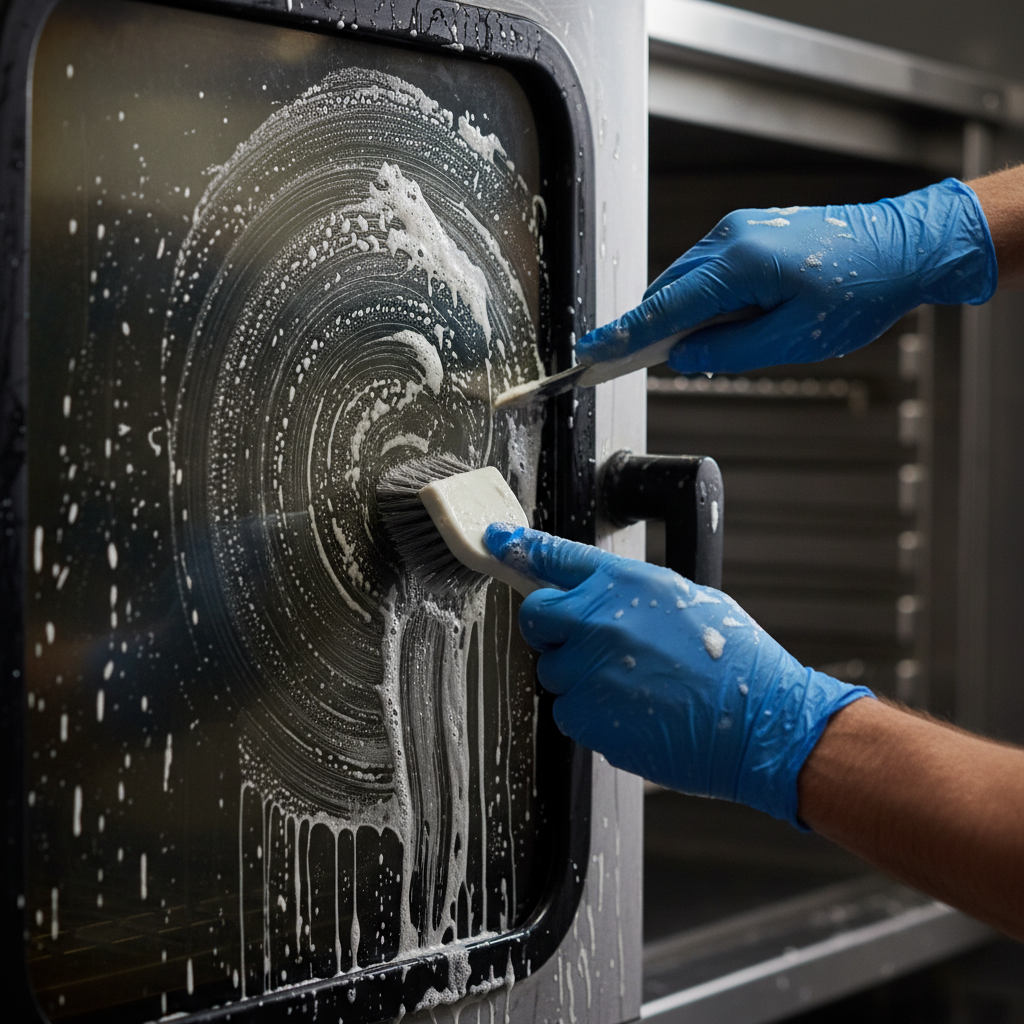
- Agitate with stiff nylon brushes and non-scratch pads. Drill-driven brushes speed large cavities.
- Wipe and rinse with clean water or neutralizer. Control runoff to protect electronics.
6) Heat-Assisted Carbon Lift (When Needed)
- Warm the cavity to a low, manufacturer-approved setting to soften heavy bake-on, then repeat Step 4–5.
- Never exceed safe temps that risk gasket warping or electronics damage.
7) Detail Clean Hidden Areas
- Remove fan plates where accessible; clean fan blades and housings end-to-end.
- Brush channels, probe ports, and gasket grooves with bottle brushes.
- Clean sight glass and light covers; polish the stainless face.
8) Soak, Sanitize, and Restore Components
- Soak racks, rails, trays, and guards in a heated dip tank; rinse and sanitize per label.
- Dry completely to prevent flash rust. Replace worn gaskets or warped racks.
9) Reassemble and Test
- Reinstall components in the photographed order. Reconnect power/fuel.
- Ramp to operating temp. Confirm even fan rotation, smooth ignition, and clean airflow with no smoke.
10) Document and Schedule the Next Service
- Log dwell times, detergents, parts replaced, and before/after photos.
- Set cadence: monthly for heavy conveyor/pizza, every 4–6 weeks for high-volume combi, quarterly for standard convection.

Methods and Approaches (Foam, Gel, Steam, Dip Tank)
- Foaming degreaser + dwell: Efficient for broad surfaces; watch for runoff into electronics.
- Gel cleaners: Cling to ceilings and vertical walls, reducing drip risk on elements and sensors.
- Steam cleaning: Softens carbon and sanitizes. Use cautiously around control boards and displays.
- Heated dip tank: Restores racks, rails, and fan guards quickly; ideal for overnight turns.
- Mechanical agitation: Nylon pads and plastic scrapers lift soils without scratching stainless; avoid steel wool.
- Neutralization: A light neutralizing rinse prevents chemical smoke at first heat-up.
Want a deeper dive on techniques and sequences? Explore our practical overview of commercial oven deep cleaning methods to compare approaches by oven type.
Best Practices Pros Use Every Time
- Protect sensitive parts: Bag thermostats, tape probe ports, and cover igniters before chemistry goes in.
- Vent control: Run the hood and keep filters in place when using aerosols to manage fumes.
- Chemistry fit: Use food-contact–safe alkalis; never mix chlorine with stainless (pitting risk).
- Gasket care: Don’t soak door gaskets in strong alkali; wipe, rinse, and condition.
- Water discipline: Minimal water near electronics; vacuum runoff as you go.
- Top-to-bottom flow: Work clean-to-dirty to avoid rework; finish with glass and polish last.
- Document it: Notes and photos support inspections and warranty claims.
Tools, Chemicals, and Resources Checklist
- PPE: Chemical/heat gloves, goggles, apron, slip-resistant footwear, respirator as needed.
- Chemicals: Alkaline food-service degreaser, neutralizer, stainless polish.
- Hand tools: Plastic and nylon scrapers, stiff brushes, bottle brushes, drill brush kit.
- Equipment: Heated dip tank or three-bay sink, steam unit (optional), wet/dry vac, low-pressure foamer.
- Consumables: Microfiber towels, non-scratch pads, spare gaskets, high-temp anti-seize for bolts.
Building your own kit? Cross-check with our equipment deep cleaning checklist so nothing gets missed during a rush turn.
Process Frequency Guide
| Oven Type / Usage | Light Clean (Daily/Weekly) | Deep Clean Cadence | Notes |
|---|---|---|---|
| Conveyor / Pizza (heavy) | Daily crumb/soil removal; weekly racks | Monthly | Fans/baffles load quickly; monitor smoke at open |
| Combi (high volume) | Run self-clean cycle daily | Every 4–6 weeks | Detail gasket channels and probe ports |
| Convection (standard) | Weekly wipe & vacuum | Quarterly | Check rails for carbon flakes |
| Low-volume / Backup | Monthly quick clean | Semiannual | Keep door ajar post-shift to dry |
Case Examples from Ontario Kitchens
- QSR conveyor ovens (Niagara corridor): Carbon on fan housings triggered smoke each belt open. Full disassembly, dip-tank soak, and new door gaskets restored clear airflow.
- Banquet combi ovens (hotel near Pearson): Self-clean cycles left residues behind door glass. Gel-cling plus bottle-brush detail around probe ports removed persistent odors.
- Pizza deck ovens (downtown Hamilton): Carbonized flour along the deck lip smoked at peak. Dry scrape, targeted steam, and controlled heat-assisted lift cleared hotspots without harming stones.
- Institutional convection bank (Kitchener-Waterloo): Uneven bakes traced to clogged fan housings. After deep clean, racks browned evenly again.
- Catering hub (Mississauga): Sticky gaskets leaked heat and slowed recovery. Cleaning plus gasket replacement cut cycle times.
- Food court prep (Scarborough): Odor spikes near close traced to drip tray overflow. Tray service and neutralizer rinse eliminated carryover smells.
- Fine dining line (Downtown Toronto): Residual polish on glass hazed service photos. Switch to food-contact–safe polish and microfiber restored clarity.
- Bakery combi (Guelph): Sugar caramelization on rails flaked into pastries. Soak and sanitize, then weekly rail wash solved it.
- University kitchen (London): Burners fouled by degreaser runoff. Re-trained team on foam control and electronics shielding.
- Resort kitchen (Muskoka): Summer humidity slowed dry times. Added fans and door-ajar policy post-clean.
- Hospital galley (Windsor): Probe port residue caused temp errors. Detail-brushing ports fixed false alarms.
- High-volume brunch spot (Oshawa): Crumb buildup under the cavity base scorched during rush. Vacuum-first policy removed the issue.
How Oven Care Connects to Hoods, Ducts, and Grease Traps
- Cleaner ovens, cleaner air: Less aerosol grease loading makes hoods and filters more effective.
- Duct health: Reducing vaporized fats slows duct deposits—supporting NFPA 96 goals.
- Grease trap stability: Fewer aerosols mean steadier trap performance and fewer odors.
Coordinating oven work with oven vent cleaning and routine hood service keeps your whole extraction system performing as designed.
On-Shift Habits that Prevent Buildup
- Empty crumb trays and vacuum loose soils at close.
- Wipe fresh spills while warm (safe temps only).
- Run self-clean cycles as directed; don’t skip rinse phases.
- Leave the door ajar to dry and prevent musty odors.
- Spot-check gaskets weekly; replace at the first sign of tearing or compression set.
When to Call a Professional Team
- Persistent smoke or odors after a standard clean.
- Uneven heating or slow temperature recovery.
- Heavy carbon that safe agitation won’t budge.
- Need for documentation aligned to NFPA 96 and integrated hood/duct service.
Not sure whether it’s time? Skim our refresher on oven deep cleaning methods to compare what DIY can cover versus when to bring in a certified crew.
Local Tips
- Tip 1: If your kitchen is near 400-series highways with heavy truck traffic, expect faster filter and vent loading—schedule oven and hood work together to keep capture efficiency high.
- Tip 2: Summer humidity across Southern Ontario slows dry times. After deep cleans, run low heat with door ajar to evaporate moisture before pre-service.
- Tip 3: During holiday rushes and festival weeks, book overnight service windows. Our 24/7 teams minimize downtime for quick service restaurants and hotels.
IMPORTANT: These tips reflect operating realities for Ontario kitchens and align with our certified focus on ovens, hoods, ducts, and grease control.
FAQ
How long does a deep clean usually take?
Plan for several hours per oven, depending on soil load and disassembly needed. Conveyor and combi units run longer because of fans, baffles, and controls that require detailed care. We often coordinate oven work with hood and duct service in one overnight window.
Which degreasers are safe for food-service ovens?
Use alkaline, food-contact–safe products designed for commercial appliances. Foams deliver coverage; gels cling to verticals. Always follow label directions and perform a neutralizing rinse to prevent chemical smoke at the next heat-up.
What’s the difference between a wipe-down and a deep clean?
A wipe-down clears visible soil on accessible surfaces. A true deep clean includes disassembly, degrease + dwell, agitation, rinse/neutralize, component soaking, reassembly, functional testing, and documentation. It restores heat efficiency and reduces fire risk.
How often should high-volume kitchens schedule deep cleaning?
Heavy-use conveyor or pizza ovens benefit from monthly deep cleans. High-volume combi units run best at 4–6 week intervals. Standard convection ovens typically perform well on a quarterly cycle—adjust based on actual soils and smoke observations.
Do we need to shut down the kitchen?
For safety and quality, ovens must be cool and isolated (power/fuel off) during service. We commonly book overnight or low-volume windows so your team returns to a clean, ready oven for the next shift.
Key Takeaways
- The commercial oven deep cleaning process is a defined, repeatable workflow—not just “scrubbing harder.”
- Safety, compliance, food quality, and equipment life all improve when ovens are truly clean.
- Pair oven service with hood/duct care for the biggest fire-risk reduction and simpler inspections.
- A clear cadence (daily/weekly/monthly) prevents heavy carbon from returning.
Next Steps
- Set your cadence using the table above; observe smoke and odors during service to fine-tune intervals.
- Document every deep clean: dwell times, photos, parts replaced, and any gasket issues.
- Coordinate with certified pros to align ovens, hoods, and ducts in one visit.
Related Articles (Topics to Explore)
- How to map oven deep cleans to your hood schedule
- What inspectors look for around ovens, hoods, and ducts
- Dip tank vs. three-bay sink: when each approach wins
- Gasket upkeep: small part, big impact on recovery times