Kitchen exhaust cleaning is the professional removal of grease and combustible residue from hoods, filters, ducts, and fans. Routine service every 1–6 months is the common standard for busy commercial kitchens. It reduces fire risk, improves airflow, and supports compliance—key for restaurants operating All Over Ontario with Robinhood Cleaners on call 24/7.
By Robinhood Cleaners • Last updated: 2026-05-19
Overview
Commercial kitchen exhaust cleaning keeps hoods, ducts, and rooftop fans free of grease so heat and smoke evacuate efficiently. Clean systems reduce fire hazards, improve air quality, and help satisfy inspections. This overview explains the what, why, and how—plus a practical 12-step process you can expect from certified professionals.
Running a restaurant is hard enough without safety surprises. This guide brings clarity to kitchen exhaust cleaning so you can plan maintenance confidently and pass inspections without drama.
- What kitchen exhaust cleaning includes—and where grease hides
- Why cleaning frequency varies by cooking type and volume
- How hoods, baffle filters, ducts, and upblast fans work together
- Which methods remove grease effectively (steam, foam, scraping)
- Our 12-step professional process, documentation, and tagging
- Local scheduling tips for All Over Ontario operations
If you need a primer before diving deep, skim our internal explainer on our kitchen exhaust service and this practical hood cleaning guide to see how we approach fire safety and airflow.
What Is Kitchen Exhaust Cleaning?
Kitchen exhaust cleaning is the comprehensive degreasing of hoods, baffle filters, ducts, and exhaust fans that remove heat, smoke, and vapors from commercial kitchens. The goal is to eliminate flammable residue, restore airflow, and document compliance so inspections and insurance requirements are met without disruption.
In fast-paced kitchens, grease mist rises from cooking surfaces. It passes through baffle filters and travels into ducts and the rooftop fan. Over weeks, thin films turn into sticky layers that can ignite. That’s why regular degreasing is a core safety practice for restaurants, quick service outlets, and institutional kitchens.
- Scope: Canopy hood interiors, baffle filters, plenum and horizontal ducts, vertical risers, fan housing, blades, and discharge area.
- Frequency: Common schedules range from monthly for high-volume fryers to semi-annual for light-duty operations.
- Outcome: Lower ignition risk, steadier ventilation, quieter fans, and fewer odors in front-of-house areas.
We align cleaning with your menu and production volume. For example, a fried chicken concept may need month-to-month service, while a light breakfast cafe can often maintain safety on a quarterly cadence.
Why Kitchen Exhaust Cleaning Matters
Clean exhaust systems cut fire risk at the source and keep air moving. Grease buildup is highly combustible; left unchecked, it can ignite from flare-ups or high heat. Routine degreasing also supports kitchen comfort, reduces smoke and odors, and helps you document compliance for inspections and insurance.
Here’s the thing: grease accumulates everywhere air travels. Even when hoods look clean from the line, residue can hide behind filters, in elbows, and inside the rooftop fan housing. When layers thicken, they restrict airflow and create ignition points near cooking equipment.
- Fire prevention: Removing residue interrupts the ignition chain at the hood, in ducts, and at the fan.
- Air quality: Clear pathways keep make-up air balanced and smoke out of dining rooms.
- Equipment life: Fans draw steadier amperage when clean, which supports longevity and fewer emergency visits.
- Inspection-ready: Photo documentation and service tags help prove diligence during routine checks.
Many Ontario operators tell us the biggest benefit is predictability—scheduled service means fewer late-night surprises and smoother audits.
How a Commercial Kitchen Exhaust System Works
A commercial hood captures heat and vapors, baffle filters separate grease droplets, ducts carry exhaust to the roof, and an upblast fan discharges it outdoors while make-up air replenishes indoor balance. If any segment is dirty, airflow drops and heat, smoke, and odors linger.
Think of the system as a chain:
- Capture: The canopy hood pulls rising heat and vapor across the cooking line.
- Separation: Baffle filters force rapid direction changes, dropping larger grease droplets into the trough.
- Transport: Residual mist moves through horizontal ducts, elbows, vertical risers, and to the roof.
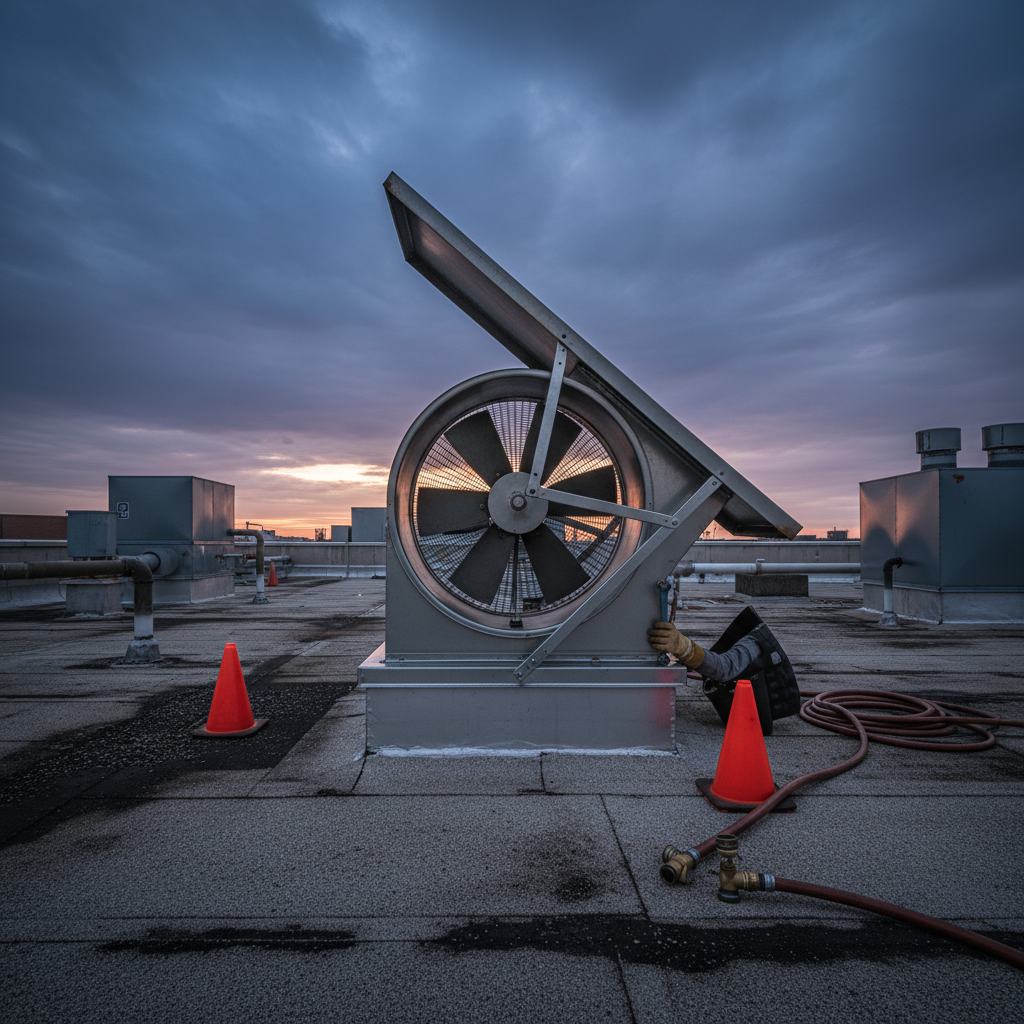
- Discharge: The upblast fan accelerates exhaust into the air while a curb and grease containment keep roofs protected.
- Balance: Make-up air units (MAU) feed tempered air back in so doors don’t whistle and HVAC stays stable.
In our experience across quick service and fine dining sites, the weakest link is often the fan: loose belts, seized bearings, or hinges that don’t lift safely for cleaning. That’s why we pair degreasing with ventilation checks to improve air quality.
Types and Methods of Exhaust Cleaning
Effective exhaust cleaning combines heated degreasers, steam or hot-water pressure, controlled foam dwell, and targeted scraping. Technicians choose methods based on grease thickness, duct geometry, and fan condition to reach bare metal safely without damaging components.
Common cleaning approaches
- Heated chemical degreasing: Professional alkaline solutions break down polymerized grease on metal surfaces.
- Hot-water pressure/steam: Heat accelerates grease removal and flushes residues toward containment.
- Foam dwell: Clinging foam extends contact time on vertical risers and fan housings.
- Manual scraping: Blades and elbows often need careful scraping before rinse and neutralization.
- Filter exchange: Rotating clean baffle filters reduces downtime and keeps capture efficiency high.
Method comparison at a glance
| Method | Best for | Notes |
|---|---|---|
| Heated degreaser | Medium–heavy films | Follow with hot rinse; protect electricals. |
| Steam / hot-water | Wide surfaces, filters | Fast, thorough; manage runoff and splash. |
| Foam dwell | Vertical ducts, fans | Improves contact on hard-to-reach areas. |
| Scraping | Heavy buildup | Often first pass before chemical steps. |
| Filter exchange | Daily capture | Keep spares on rotation to stabilize airflow. |
To see how this translates into everyday results, review our short overview on duct cleaning benefits and the role of clean risers and elbows in keeping fans efficient.
Step-by-Step: Our 12-Step Professional Cleaning Process
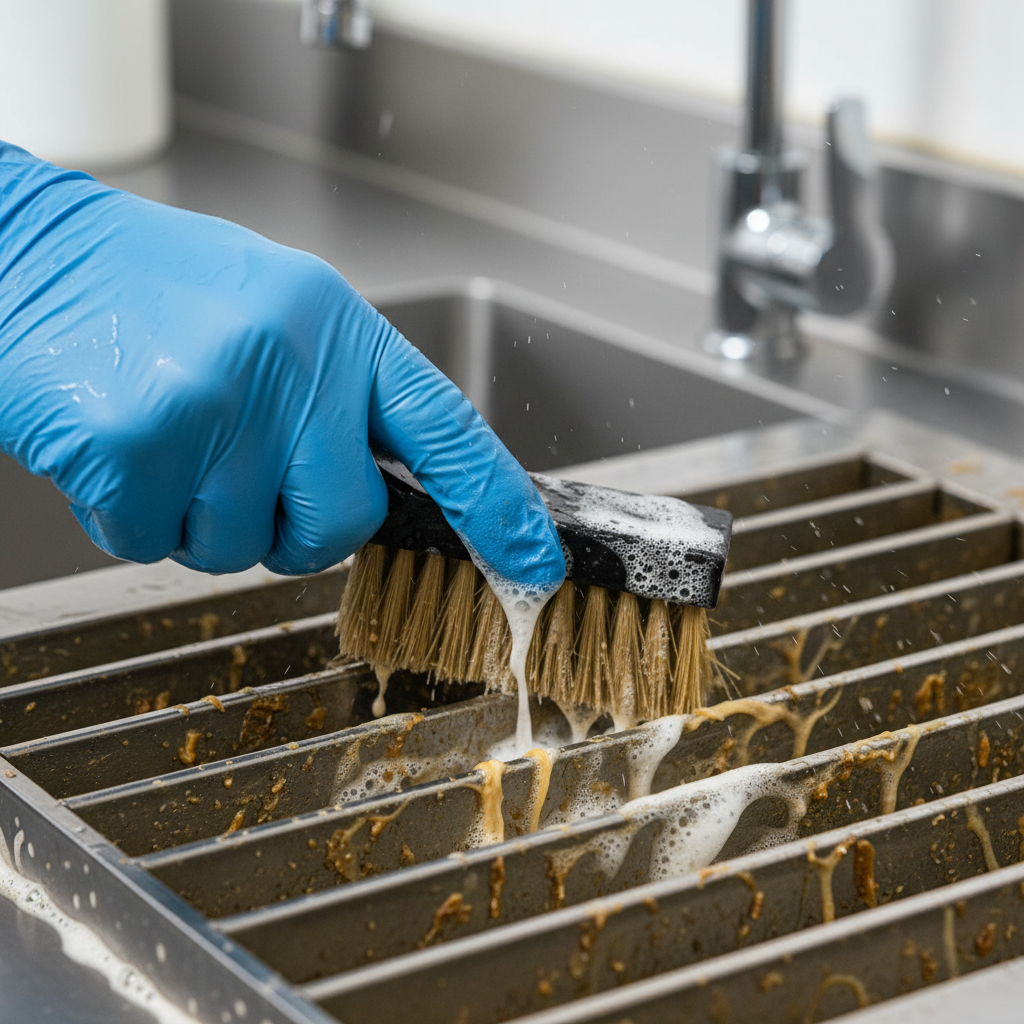
Our 12-step process protects your kitchen, reaches bare metal, and leaves clear documentation. We isolate equipment, contain runoff, degrease from hood to fan, verify airflow, and apply a compliance tag—so you’re inspection-ready the next morning with photos and notes on every component.
- Pre-inspection: Walkthrough of hood, filters, access panels, ducts, and fan; note wear items like belts and hinges.
- Protect & contain: Wrap equipment, set plastic sheeting, set up roof containment, and verify drains.
- Power down & lockout: Secure electricals and gas where required.
- Filter removal: Pull baffle filters for soaking, scrubbing, or exchange.
- Hood degreasing: Apply heated solution, dwell, scrape where needed, rinse, and neutralize.
- Duct access: Open panels to reach horizontals and risers; scrape heavy sections before foam.
- Duct cleaning: Foam dwell and hot-water rinse until surfaces are clean and runoff is clear.
- Fan service: Lift on hinge kit, degrease blades/housing, inspect bearings; note fan belt wear.
- Grease containment: Empty/replace absorbents so rain doesn’t carry grease to the roof.
- Filters reinstalled: Reinstall or swap in cleaned spares; confirm baffles face correctly.
- Polish & reset: Wipe stainless, remove sheeting, restore power, test capture and discharge.
- Photos & tag: Provide photo log and place a service tag with date and next recommended interval.
When ducts or fans reveal unusual issues, we loop in related services like ventilation system maintenance or schedule complementary hood cleaning follow-ups.
Best Practices and Cleaning Frequency
Match cleaning frequency to cooking volume: monthly for heavy fried foods, quarterly for moderate grills and sauté, and semi-annual for lower-volume or lighter oils. Keep spare filters on rotation and document every service with photos and tags to stay inspection-ready.
Scheduling guidance
- High-volume fryers/griddles: Often benefit from a monthly cycle to hold down rapid buildup.
- Mixed grill/sauté: Quarterly is a common cadence when line-up heat and oils vary.
- Light-duty kitchens: Semi-annual can be workable with diligent filter care and visual checks.
- Seasonal peaks: Add interim cleanings during holiday rushes or patio season.
Checklist for every visit
- Protect cooking equipment and place roof containment.
- Degrease hood, plenum, ducts, and fan to bare metal.
- Service or swap baffle filters; verify proper orientation.
- Inspect hinges, fan belts, and bearings; note repairs.
- Document with before/after photos and a dated tag.
For local code context and inspection expectations, see our overview of fire code requirements and this quick reference on inspection requirements.
Tools, Documentation, and Compliance Resources
Success comes from the right tools and proof of work. Technicians use heated degreasers, foamers, and hot-water systems; then provide a dated tag and photo log. Keep records on file and align frequency with your cooking volume for smoother insurance and inspection reviews.
Core tools we deploy
- Adjustable sprayers and foam cannons for uniform chemical application.
- Hot-water pressure units with controlled flow for indoor and rooftop use.
- Scrapers and non-scratch pads for sensitive stainless areas.
- Hinge kits and secure lifts to access upblast fans safely.
- Grease containment systems to protect roofing and drains.
Documentation you should expect
- Dated service tag with next suggested interval.
- Before/after photos from hood, ducts, and fan.
- Technician notes on belts, bearings, hinges, and access.
- Recommendations for filter exchange cadence and visual checks.
For broader context on regional practices and scheduling thought-starters, you can also review this regional exhaust cleaning overview, a synopsis of commercial kitchen cleaning services in Toronto, and this 24/7 exhaust cleaning guide.
Case Studies and Real-World Examples in Ontario
Different kitchens need different schedules. These short Ontario scenarios show how menu, volume, and equipment influence cleaning frequency, filter rotation, and fan maintenance—so you can benchmark your operation against similar concepts and plan proactive service.
Quick service chicken concept (heavy fry)
- Challenge: Rapid grease accumulation across hood and fan; odors creeping into the lobby during lunch rush.
- Action: Monthly degreasing plus mid-cycle filter exchange; hinge kit installed for safer fan access.
- Result: Stronger capture, steadier make-up air balance, and fewer line slowdowns during peak periods.
Upscale bistro (mixed sauté/grill)
- Challenge: Inconsistent airflow; warm zones near the sauté station late evenings.
- Action: Quarterly cleaning with targeted scraping in elbows; documented notes on belt wear prompted timely replacement.
- Result: More consistent discharge and improved staff comfort during late service.
Institutional kitchen (steady but light oils)
- Challenge: Extended intervals created stubborn films in vertical risers.
- Action: Semi-annual deep degreasing with foam dwell on risers; added visual filter checks weekly.
- Result: Easier subsequent cleans, confident inspections, and quieter fan operation.
When equipment cleaning overlaps with ventilation hygiene, we coordinate exhaust service with related tasks like grease trap maintenance and appliance deep cleaning to minimize downtime.
Local Tips for All Over Ontario Kitchens
Plan maintenance around regional rushes and weather. Ontario kitchens often see patio-season spikes and winter closures of rooftop access. Build buffer time for inspections and confirm roof safety before the first cold snap or thaw to keep your schedule on track.
Local considerations for All Over Ontario
- Align service windows with your slow periods; late nights or early mornings help avoid lunch and dinner rushes.
- Patio season increases volume; consider an interim cleaning so grease doesn’t overrun filters and fans mid-summer.
- Confirm rooftop access, hinge kits, and containment before winter; ice and wind can complicate fan servicing.
Kitchen Exhaust Cleaning FAQ
These common questions clarify scope, timing, and what to expect on service day. Use them to prepare your team and keep back-of-house running smoothly while work is completed safely and thoroughly.
How often should a commercial kitchen exhaust be cleaned?
Match frequency to cooking volume. Heavy frying often needs monthly service. Mixed grills and sauté stations tend to run quarterly. Light-duty operations can be semi-annual if filters are maintained and visual checks catch early buildup.
What parts are included in a professional exhaust cleaning?
Technicians degrease the hood interior, baffle filters, plenum, accessible horizontal ducts, vertical risers, and the rooftop upblast fan (housing and blades). They also protect equipment, manage runoff, and provide photo documentation with a dated service tag.
Do I need to shut down the kitchen during cleaning?
Yes, the line should be off. Professional teams work during off-hours—late night or early morning—to avoid service disruptions. Power and gas may be locked out for safety while hoods, ducts, and fans are cleaned.
How do filters factor into airflow and fire safety?
Baffle filters capture grease droplets before they reach ducts and the fan. When they clog, airflow drops and residue gets pushed deeper into the system. Keeping spare filters on rotation stabilizes capture and reduces grease migration.
Get Started: Schedule Your Exhaust Cleaning
Ready for a safer, quieter kitchen? We align cleaning frequency with your menu, document everything with photos, and tag your system for the next recommended interval. Book a visit that fits your hours—our crews work 24/7 across Ontario.
Need a concise refresher? Our pages on exhaust duct cleaning benefits and exhaust service scope break down what to expect.
Key takeaways
- Grease removal from hood to fan lowers ignition risk and stabilizes airflow.
- Match service frequency to cooking volume; rotate clean filters between visits.
- Document every job with photos and a dated tag to stay inspection-ready.
- Coordinate fan belt checks and hinge kits to keep rooftop service safe year-round.
Next step: Book a flexible window All Over Ontario. We’ll tailor a plan around your rushes and seasonal demands—then keep you on schedule without surprises.