Kitchen exhaust cleaning services are the professional degreasing and inspection of hoods, ducts, filters, and exhaust fans to remove flammable grease. Service intervals typically range from monthly to semiannual based on cooking volume. For restaurants in All Over Ontario, this work reduces fire risk, improves air quality, and supports health and safety compliance.
By Robinhood Cleaners • Last updated: June 12, 2026
Above-the-fold: why this guide and what you’ll get
This complete guide explains how professional kitchen exhaust cleaning protects your people, property, and kitchen uptime. You’ll learn the standards that matter, how services work, which methods to use, and how to schedule by risk level—tailored for restaurants and commercial kitchens operating across Ontario.
Running a high-performing kitchen means controlling grease, heat, airflow, and documentation. Here’s how this guide helps you do it with confidence:
- Clarifies what kitchen exhaust cleaning services include (and what they don’t)
- Maps cleaning frequency to your menu, volume, and risk profile
- Shows a step-by-step cleaning workflow and inspection checklist
- Explains fan belt, filter exchange, and rooftop fan maintenance
- Shares real-world scenarios from Ontario food service operations
Quick summary
Professional hood, duct, filter, and fan cleaning removes grease before it fuels a fire. Pair quarterly or monthly service with daily line wipes and routine filter exchange. Document every job, fix airflow issues, and confirm NFPA 96-aligned results with service photos and tags.
- Primary goal: reduce fire hazards and keep ventilation efficient
- Scope: hoods, ducts, filters, exhaust fans, and rooftop components
- Cadence: monthly to semiannual based on cooking volume and fuel type
- Proof: photos, service tags, and a signed report after each visit
What is kitchen exhaust cleaning?
Kitchen exhaust cleaning is a specialized service that removes grease accumulations from hoods, ducts, filters, and exhaust fans. It’s essential for fire safety, airflow, and compliance. Trained technicians degrease metal surfaces to bare metal and document results with photos and service tags.
In our experience supporting quick service, full service, and institutional kitchens, the fastest path to safer ventilation is consistent, professional degreasing. Robinhood Cleaners delivers end-to-end hood and duct cleaning, filter cleaning and exchange, and exhaust fan maintenance to kitchens operating All Over Ontario.
- Where grease hides: hood plenums, vertical risers, horizontal ducts, fan housings, and filters
- What “clean” means: degreased to exposed metal, no residue on wipe tests, and clear fan blades
- Outputs you should expect: before/after photos, a dated service tag, and a signed service report
For readers who want additional depth on definitions and scope, see our guide on commercial kitchen exhaust cleaning and our focused article on kitchen exhaust hood cleaning.
Why exhaust cleaning matters for safety, uptime, and inspections
Exhaust cleaning matters because grease is combustible and restricts airflow. Clean systems lower fire risk, stabilize kitchen temperatures, reduce smoke and odors, and help teams pass inspections. The result is safer shifts, healthier staff, and fewer unplanned shutdowns.
Grease accumulations can ignite from high heat or open flames. Even before ignition risk, buildup chokes airflow, which elevates ambient temperatures and smoke. That strain can stress fan motors and bearings, undermining ventilation performance when you need it most.
- Fire risk reduction: Removing grease layers from ducts and fans prevents them from becoming fuel.
- Air quality and comfort: Better draw at the hood means less smoke and heat on the line.
- Equipment longevity: Clean fan wheels and balanced belts reduce vibration and wear.
- Inspection readiness: Dated service tags and photo logs streamline health and safety checks.
If you’re building your safety program, pair this section with our overview of fire code requirements for kitchen exhaust and these core restaurant kitchen cleaning services that support daily hygiene.
How kitchen exhaust cleaning services work
A pro crew protects equipment, applies degreaser, scrapes heavy deposits, hot-washes to bare metal, and reinstalls parts. They finish with photos, a dated tag, and a service report. Coordinated scheduling keeps your kitchen online with minimal disruption.
Here’s the typical Robinhood Cleaners workflow for restaurants and commercial kitchens across Ontario. While the exact steps vary by system layout, the core method stays consistent and traceable.
- Pre-inspection: Confirm hood, duct path, rooftop access, and fan condition; note any hinge kits or missing access panels.
- Protection: Wrap equipment and floors; set up containment and drainage for wastewater management.
- Chemical application: Apply food-service-safe degreaser to hoods, ducts, and fan housings.
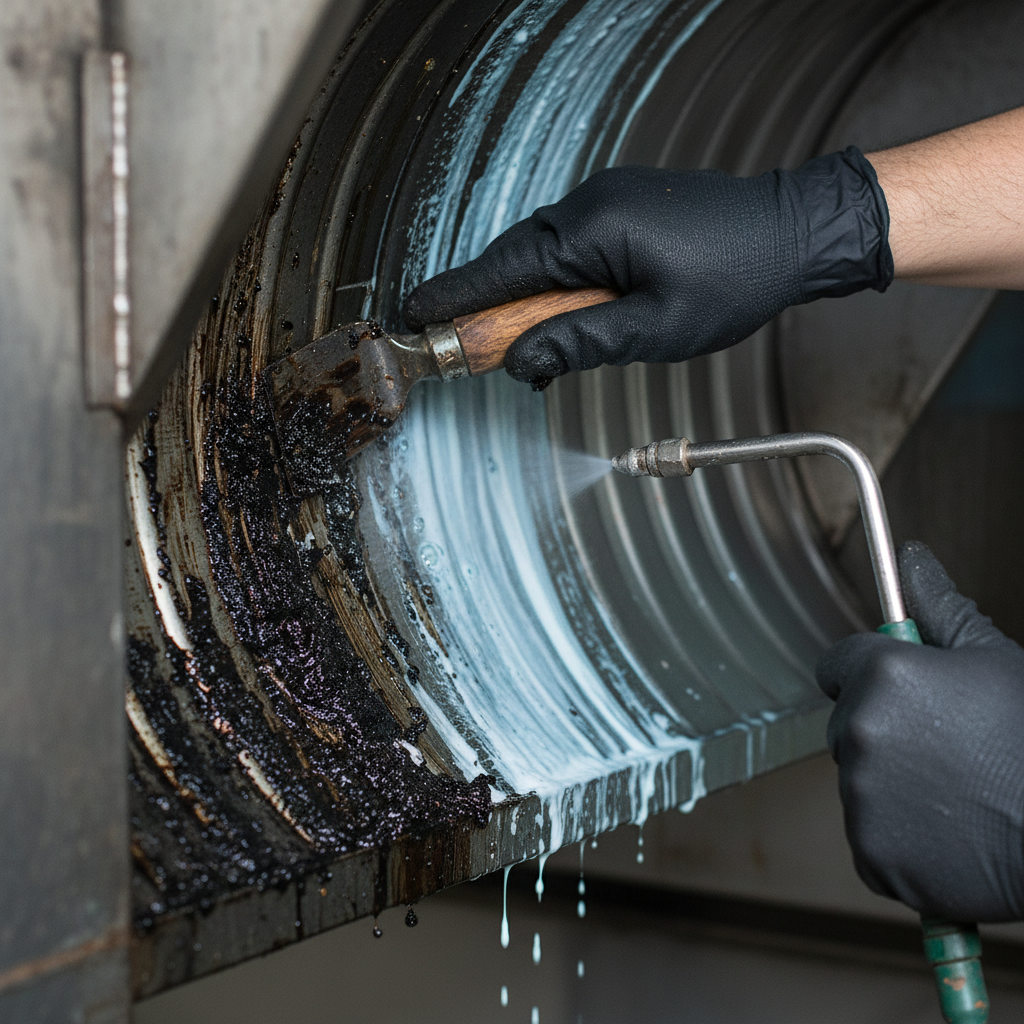
- Mechanical agitation: Scrape and brush to remove heavy carbonized grease before hot washing.
- Hot-water rinse: Pressure-wash to bare metal without damaging seams or electrical components.
- Filter service: Swap or deep-clean baffle filters; confirm tight fit and correct airflow orientation.
- Fan and belt check: Verify belt tension, pulley alignment, bearings, and hinge kit safety.
- Quality control: Wipe tests, photos, service tag placement, and a signed report for your records.
| Process step | Your team’s role | Our team’s role | Proof of completion |
|---|---|---|---|
| Scheduling | Choose low-volume window | Confirm crew and access plan | Email confirmation |
| Pre-inspection | Share prior reports | Photo and note system layout | Pre-checklist |
| Degreasing & rinse | Secure sensitive areas | Scrape and hot-wash to metal | Before/after photos |
| Filter & fan service | Provide spare filters if on hand | Clean/swap filters; check belts | Service tag |
| QC & documentation | Sign off with manager | Issue report with findings | PDF report |
For a deeper dive into airflow and access specifics, see our explainer on exhaust duct cleaning benefits and this practical kitchen vent cleaning guide.
Types, methods, and related services you should know
Effective exhaust hygiene combines chemical degreasers, mechanical scraping, and hot-water rinsing—plus filter exchange, fan belt checks, and rooftop fan service. Matching methods to your menu and volume delivers safer, longer-lasting results.
Core degreasing approaches
- Manual scraping and brushing: Breaks up heavy, carbonized layers in ducts and fan housings.
- Chemical degreasing: Food-service-safe cleaners emulsify grease on steel surfaces before rinsing.
- Heated pressure washing: Flushes loosened residue to reveal bare metal without damaging seams.
Connected services from Robinhood Cleaners
- Filter Cleaning & Exchange: Routine swaps keep draw strong and reduce duct loading. Reference our filter replacement guide.
- Fan Belt Replacement: Proper belt tension stabilizes CFM; loose belts slip and overheat motors.
- Grease Trap Cleaning: Keeps drains clear and odors down; complements hood-line hygiene.
- Duct Cleaning: Access-panel installation improves reach for future services.
- Ventilation System Maintenance: Periodic checks optimize airflow and reduce noise and vibration.
If you’re evaluating vendors, review our overview of commercial kitchen exhaust cleaning services to see how these elements fit together in a single maintenance plan.

Best practices and scheduling by risk profile
Set your cleaning cadence by cooking volume and fuel type: monthly for high volume, quarterly for moderate, and semiannual for low. Combine pro degreasing with daily wipes and routine filter swaps. Always document results with service tags and photos.
Service cadence that aligns with your menu
- High-volume frying or solid fuel: Target monthly professional cleanings.
- Mixed menus with grills and sauté: Plan on quarterly service.
- Light-use or low-grease operations: Semiannual cleanings can be appropriate.
Operational best practices
- Daily line hygiene: Wipe visible hood surfaces at close, remove stray grease from ledges.
- Weekly filter focus: Clean or exchange baffle filters to maintain draw and cut duct loading.
- Fan belt checks: Listen for squeal or vibration; replace stretched belts before they snap mid-service.
- Photo documentation: Require before-and-after images for every service visit.
- Tag and track: Keep dated tags visible inside each hood and file the service report.
These habits align with our article on exhaust cleaning in restaurants and help your team stay inspection-ready between visits.
Tools, materials, and resources
A reliable crew brings food-safe degreasers, scrapers and brushes, heated pressure washers, PPE, and proper rooftop access gear. You’ll get service photos, a signed report, and a dated tag so your next inspection goes smoothly.
What the crew brings
- Degreasers and foamers: Formulas designed for stainless steel and carbonized fats.
- Scrapers, drill brushes, and pads: To remove thick residue before rinsing.
- Heated pressure washers: Calibrated to clean without damaging seams or sensors.
- Containment and reclaim: Tarps, plastic sheeting, and wastewater collection for tidy cleanup.
- PPE and fall protection: Gloves, goggles, respirators, and rooftop harness systems.
Resources for managers
- Service report templates: Keep a simple binder or drive folder of PDF reports.
- Photo log: Save images labeled by hood number and date.
- Access map: A one-page diagram of your duct path and rooftop fan location speeds service.
For a broader view of hood cleaning’s role within your kitchen program, review our page on restaurant kitchen cleaning services and this detailed piece on exhaust duct benefits.
Compliance signals: what inspectors look for
Inspectors look for clean-to-metal ductwork, clear fan blades, service tags with dates, and access panels where needed. A photo-backed report demonstrates due diligence and accelerates inspections for busy kitchens.
- Visible cleanliness: Interior metal surfaces free of residue; baffles seated correctly.
- Access and safety: Hinge kits on rooftop fans and safe ladder access for crews.
- Documentation: Dated tags inside each hood and an itemized service report on file.
- Maintenance notes: Belt wear, motor noise, or damaged panels flagged for follow-up.
To see how our teams align service to recognized standards, explore this Ontario-focused page on NFPA 96–aligned hood cleaning and our broader note on commercial hood service in Ontario.
Ontario operations: scheduling and local nuance
In Ontario, schedule rooftop work around weather and daylight, and plan high-volume sites for off-peak evenings. Keep spare filters on hand and confirm building access and keys before crews arrive to shorten downtime.
Local considerations for All Over Ontario
- Winter rooftops get icy—confirm safe access and allow extra time for careful fan removal and reinstallation.
- Patio season increases volume; consider tightening service frequency during summer weekends.
- Many sites share roofs—coordinate with building management for safe ladder placement and key access.
Operations teams across Southern Ontario rely on predictable service windows. Robinhood Cleaners offers 24/7 scheduling flexibility and WSIB-insured, NFPA 96–aligned crews for consistent results, shift after shift.
Case studies and practical examples
The best way to validate a program is to see it in action. These Ontario scenarios show how matching cadence, method, and maintenance delivers safer kitchens, happier staff, and smoother inspections.
Quick service restaurant with heavy frying
A quick service site in Southern Ontario struggled with smoky rushes and hot cooklines. We installed a filter exchange rotation, tightened belt tension, and moved to monthly degreasing. Within the first month, line temperatures stabilized and smoke complaints dropped during peak periods.
Full-service grill and sauté kitchen
A busy dining room relied on mixed cooking methods. We standardized quarterly kitchen exhaust cleaning services, added a weekly filter soak, and documented each visit with photos. The chef reported steadier airflow and fewer lingering odors after close.
Institutional kitchen with long hours
An institutional operation ran extended shifts with varied menus. Semiannual degreasing, quarterly filter exchange, and routine belt checks provided a balanced plan. The facilities team appreciated clear reports and predictable overnight service windows.
For more examples and technical notes, see our Ontario-focused page on managing exhaust system grease buildup.
Choosing the right provider
Select a provider with NFPA 96–aligned methods, WSIB insurance, 24/7 scheduling, and photo-backed reports. Look for full-scope capability—hoods, ducts, filters, fans, and belts—so you get one accountable partner.
- Proof of insurance and alignment with standards for safety and compliance.
- Documented process and photos demonstrating clean-to-metal results.
- Comprehensive services including filter exchange, fan belt replacement, and rooftop fan hinge kits.
- Responsive scheduling to match your off-peak windows across All Over Ontario.
Curious how a full-scope plan looks? Scan our commercial exhaust service overview to see everything covered under one coordinated schedule.
Manager checklists and templates
Use a simple three-part system: daily wipes, weekly filter service, and professional degreasing at the right cadence. Keep photo logs and signed reports so you can verify performance during audits and surprise inspections.
Daily close (2–5 minutes)
- Wipe hood edges and ledges; remove visible splatter.
- Check baffle filters are seated and facing the correct direction.
- Note unusual fan noise, vibration, or heat at the motor.
Weekly task block (20–30 minutes)
- Soak or exchange filters; label with date.
- Check belt tension; look for fraying or glazing.
- Clear rooftop grease containment if present.
After every professional service
- Collect the signed report; save it to your binder or drive.
- Verify the dated tag inside each hood.
- Walk the line; confirm airflow feels stronger and heat is lower.
Need a hand getting started?
If you want a simple, inspection-ready plan, we can help. Our Ontario crews deliver photo-backed cleanings, filter exchange, and belt checks on a schedule that fits your rushes and rooftops.
Soft CTA: Book a zero-pressure assessment with Robinhood Cleaners. We’ll map your system, set the right cadence, and align service windows with your operations—day or night.
Frequently asked questions
These concise answers address the most common questions from Ontario kitchen managers about ventilation hygiene, service cadence, and what to expect during professional cleanings.
How often should a commercial kitchen schedule exhaust cleaning?
Match service to risk: monthly for high-volume frying or solid fuel, quarterly for mixed-use kitchens, and semiannual for low-grease operations. Pair professional work with daily wipes and routine filter exchange to keep airflow strong between visits.
What areas are included in kitchen exhaust cleaning services?
A typical scope covers hoods, baffle filters, ductwork, and the rooftop exhaust fan. Crews degrease to bare metal, verify belt and fan condition, and finish with a dated tag and photo-backed service report for your records.
Can cleaning happen overnight to avoid downtime?
Yes. Many Ontario kitchens choose late evening or overnight windows to reduce impact on service. Crews protect equipment, manage wastewater, and restore your line before morning prep so you’re ready for the next rush.
How do I verify quality after a service visit?
Look for clean metal inside the hood and ducts, clear fan blades, and seated filters. Review before-and-after photos, confirm the dated service tag, and file the signed report. Walk the line—airflow should feel stronger and heat lower.
Key takeaways
Focus on three levers: the right cadence, complete scope (hoods, ducts, filters, fans), and solid documentation. When those align, you reduce fire risk, improve comfort, and move through inspections with confidence.
- Kitchen exhaust cleaning services prevent grease from becoming fuel.
- Monthly to semiannual schedules work—match them to your volume.
- Filter exchange and belt checks keep airflow stable between visits.
- Photo logs, tags, and reports make inspections faster and easier.
Conclusion
A safe, comfortable kitchen isn’t accidental—it’s scheduled. Set your cadence, confirm full-scope service, and keep airtight documentation. That’s how Ontario kitchens protect people, throughput, and compliance every single day.
When you’re ready, our Ontario team can align service windows with your rushes and rooftops. Explore our hood cleaning overview and restaurant exhaust cleaning guide, then reach out to plan your first visit. Prefer a quick start? Book a discovery session in All Over Ontario.