Choosing a grease trap service is the act of vetting vendors for compliance, documentation, and low-disruption scheduling. The right partner keeps you inspection-ready in All Over Ontario, prevents backups, and protects drains. To choose well, verify credentials, demand proof of work, and align service windows with your actual kitchen rhythm.
By Robinhood Cleaners • Last updated: 2026-07-12
| Service area | All Over Ontario (quick service in Southern Ontario) |
|---|---|
| Availability | 24/7 scheduling to avoid prep and service hours |
| Credentials | NFPA 96–aware technicians |
| Insurance | WSIB insured |
| Core services | Grease trap cleaning & maintenance, plumbing compliance support, hood & duct cleaning |
| Satisfaction | Customer satisfaction guarantee |
Local tip for All Over Ontario kitchens
Book trap pump‑outs the same night as hood and duct cleaning to avoid opening twice. In winter, clear a salted path to outdoor interceptors—frozen lids slow tear‑downs. Keep your FOG log binder near the trap; local health inspectors often ask for it on arrival.
Quick Summary
To choose grease trap service, confirm compliance knowledge, insist on manifests and photo proof, match cadence to your volume, and schedule off‑hours. Strong vendors also inspect baffles and inlet lines so clogs don’t return, and they leave signed logs your inspector will accept.
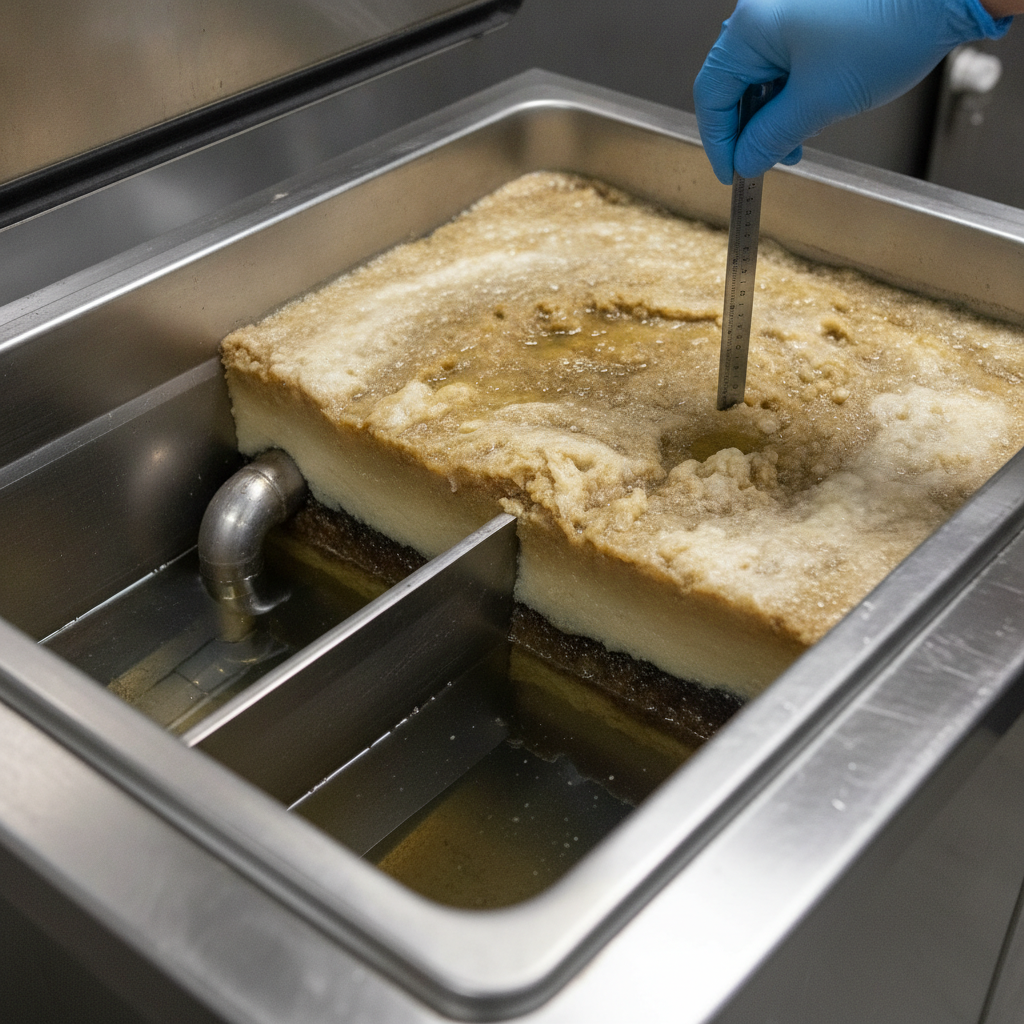
We wrote this as practitioners. When we pop a lid and that warm, sour fryer smell hits, we can tell in seconds if a trap’s been ignored. A waxy gray cap, floating solids, or a missing baffle tells a story—one that ends in a Friday‑night backup if no one fixes root causes.
Before You Start (Prerequisites)
Gather your last three service logs, any backup incidents, and access details (door codes, alarm timing). Decide who will sign manifests and where logs will live. This preparation speeds vendor interviews and avoids on‑site confusion at 2 a.m.
- Pull records: last pump‑out date, grease thickness, any odors or slow drains noted.
- Map access: show the route from back door to trap; note trip hazards and floor drains.
- Assign ownership: who signs the manifest, updates the log, and checks photos after each visit.
- Pick windows: overnight, early a.m., or mid‑afternoon lulls—what truly works for your line?
If you don’t have a log yet, use the template in our grease trap pumping guide. We also help teams set up binders during plumbing compliance support.
What You’re Actually Buying When You Hire a Grease Trap Service
You’re buying compliance, clean plumbing, and continuity of service—not just a pump‑out. Quality service removes FOG, documents the work with photos and manifests, inspects baffles and inlet lines, and aligns cadence with your operation.
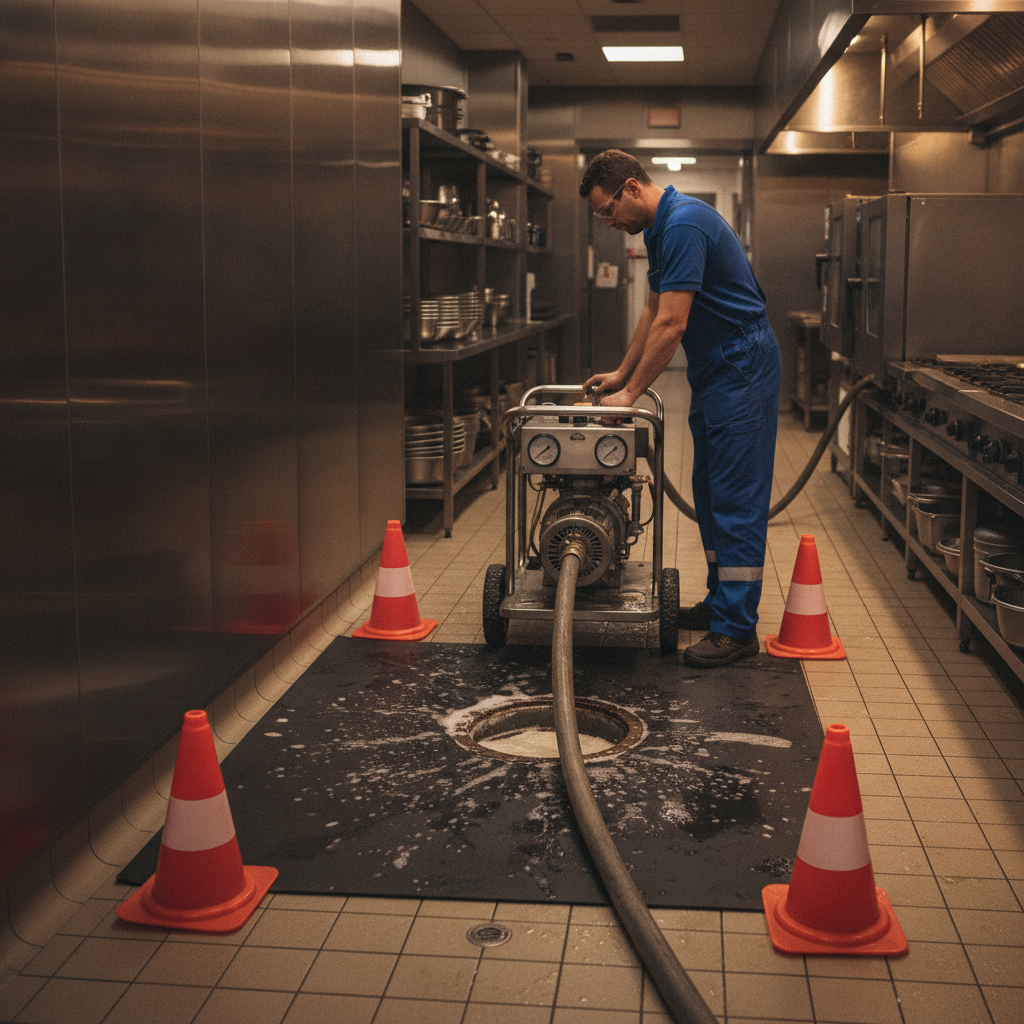
On site, good work looks like this: we stage spill mats, crack the lid, and the hose whines while we skim the waxy FOG cap without splashing. The trap walls rinse clean, baffles seat properly, and the room loses that rancid‑oil odor you’ve been ignoring between rushes.
- Outcome: restored capacity, no surface scum, drains moving, no lingering smell.
- Evidence: time‑stamped before/after photos, signed manifest, and a completed log entry.
- Prevention: notes on baffles, T‑fittings, and upstream flow so backups don’t repeat.
Pairing services keeps kitchens steady. Many clients combine trap service with grease trap cleaning, full grease trap service, and scheduled hood/duct work so the kitchen opens once, paperwork is unified, and prep starts on time.
Step-by-Step: How to Evaluate and Choose a Grease Trap Service Provider
Evaluate providers by confirming FOG bylaw knowledge, matching scope to volume, reviewing documentation samples, inspecting equipment and safety, aligning logistics, verifying insurance/guarantees, and running a trial visit you score against a checklist.
- Confirm compliance expertise. Ask how logs align with local sewer/FOG rules and NFPA 96 cleaning programs for related ventilation work.
- Match scope to volume. QSRs often need 4–6 week pump‑outs; cafés may go 12–16 weeks. Larger 1,500‑gallon interceptors stretch longer than 500‑gallon units.
- Review documentation. Require sample manifests, photo sets, and a blank log you’ll keep on site—every visit gets signed.
- Inspect equipment & safety. Look for sealed hoses, PPE, spill kits, and tidy setup/tear‑down that won’t cross food prep.
- Align logistics. Confirm overnight access, alarm silencing, and a hose route that avoids the cookline.
- Verify insurance. File WSIB and liability certificates in your vendor binder.
- Trial service. Book a non‑peak visit and grade odor control, cleanliness, and reporting quality.
New to the hardware itself? This primer on how grease traps work helps your team spot baffles and tees during walk‑throughs.
Suggested Cadence by Kitchen Type (Field Guide)
Use kitchen type, volume, and interceptor size to set starting intervals, then adjust by measured grease thickness. Track each visit and fine‑tune cadence so you stay under critical FOG levels without over‑servicing.
| Kitchen profile | Typical starting interval | Common interceptor size | Notes |
|---|---|---|---|
| Quick‑service, heavy fryer use | Every 4–6 weeks | 500–1,000 gallons | Grease cap forms fast; monitor thickness each visit. |
| Full‑service restaurant, mixed menu | Every 6–10 weeks | 750–1,250 gallons | Adjust for brunch/fry specials and seasonal swings. |
| Café/bakery, light hot line | Every 12–16 weeks | 250–750 gallons | Watch dairy fats—can build a stubborn, waxy cap. |
| Banquet/institutional, high covers | Every 6–8 weeks | 1,000–1,500 gallons | Large interceptors stretch intervals, but track logs closely. |
Keep it simple: measure grease thickness, log it, and adjust. Our requirements guide and frequency guidelines show how to tune cadence without guesswork.
The Compliance Checkpoint Most Operators Miss
Don’t skip the disposal chain of custody. Keep a signed manifest for every haul, plus a service log that matches local inspection cycles. Without both, you’re exposed even if the trap looks clean.
Paper trails matter. Manifests prove FOG left your site legally; logs prove you maintain the interceptor on schedule. We also record baffle condition and inlet/outlet performance with photos so your team can fix upstream problems before they turn into a lunch‑rush panic. For a refresher on components, review this installation overview.
- Ask for: manifest, log entry, pre/post photos, baffle and inlet notes—every visit.
- Cross‑check: visit dates vs. volume and inspection cadence.
- Retain: keep at least a year of records in a binder near the trap.
7 Red Flags to Reject Before You Sign
Skip vendors who can’t prove work, won’t share manifests, push one‑size schedules, or ignore upstream causes. If insurance is fuzzy or reports are vague, you inherit the risk and the next backup.
- No photo proof: If reports lack before/after photos, you’ll have nothing to show an inspector.
- Missing manifests: No disposal chain means you’re exposed for illegal FOG handling.
- “Pump‑only” scope: Ignoring baffles and inlet lines invites repeat clogs within weeks.
- Rigid cadence: One schedule for all kitchens leads to overflows or wasted service.
- No WSIB/liability certificates: Accidents shift risk to you the moment hoses cross the door.
- Messy setups: Hoses across prep lines, no spill mats, and poor odor control risk contamination.
- Vague logs: If entries lack grease thickness and signatures, inspectors may flag your site.
Upgrading vendors? Compare your last report with the documentation we outline in Ontario grease trap cleaning and our practical arrestor guide.
Troubleshooting: If Backups Keep Returning
Recurring backups point to upstream issues: collapsed baffles, blocked inlet tees, or undersized interceptors. Confirm findings with photos, adjust cadence, and train staff on daily FOG practices.
- Repeat clogs after service: Inspect baffles and inlet tees; ask for photo verification and a repair plan.
- Persistent odors: Trapped scum on walls or standing water—request a full rinse and gasket check.
- Overflow during rush: Increase cadence temporarily and audit fryer oil handling with this FOG habits primer.
If you need a second set of eyes, our team pairs trap service with maintenance inspections and scheduled cleaning to reset baselines.
Advanced Tips (Optional)
Standardize your FOG program: a single binder at the trap, a laminated pre‑service checklist, and unified overnight windows for hood, duct, and trap. This trims downtime and keeps audits smooth.
- Unify windows: Book hood, duct, exhaust fan, and trap service the same night. You’ll open once with all paperwork fresh.
- Pre‑service checklist: Clear paths, silence alarms, uncover lids, and mark cleanout points for faster tear‑downs.
- Staff playbook: Train dish and line staff on FOG scraping, strainers, and proper oil transfer.
Many operators add trap maintenance to the same schedule as grease trap cleaning and ventilation care for a single, clean restart.
Local Service Tip: What to Expect in All Over Ontario
Expect off‑hours scheduling, winter access planning, and FOG log alignment with local inspection cycles. Quality crews arrive with spill kits and finish with signed logs and photo proof.
We coordinate with your team so pump‑outs happen when your line sleeps. Outdoor interceptors can freeze; we pre‑clear paths and pad timing so you’re never stuck at opening. We leave cleaned sites, sealed lids, and a binder your next inspector can review in minutes.
Local considerations for All Over Ontario
- Plan winter access for outdoor interceptors; ice delays lid removal and hose routing.
- Keep a current FOG service log at the trap; routine health inspections often request it.
- Batch hood, duct, and trap service after close to minimize repeat shutdowns.
FAQ: Grease Trap Service Questions Commercial Kitchens Actually Ask
Operators ask about frequency, required paperwork, bundling services, and handling repeat backups. Here are concise answers drawn from daily fieldwork across All Over Ontario.
How often should a commercial kitchen schedule grease trap service?
Start with your kitchen type and monitor grease thickness. QSRs often run 4–6 weeks; cafés may reach 12–16. Track each visit and adjust with your provider so you stay inspection‑ready without over‑servicing.
What documentation should I receive after every pump‑out?
Ask for a signed disposal manifest, time‑stamped before/after photos, and a completed service log entry with grease thickness and notes on baffles/tees. Store these near the trap for quick inspections.
Can I combine hood cleaning and grease trap service?
Yes. Pairing trap service with hood, duct, and exhaust fan cleaning reduces downtime and aligns fire and FOG compliance. Many All Over Ontario kitchens schedule both overnight and reopen with fresh paperwork.
What if my trap keeps backing up after service?
Recurring backups point to upstream issues: damaged baffles, blocked inlet lines, or poor flow control. Ask your provider to document findings with photos, propose fixes, and adjust cadence while you retrain staff on FOG handling.
Key Takeaways
- How to choose grease trap service: verify compliance, documentation, and off‑hours scheduling.
- Insist on manifests, photos, and signed log entries every visit.
- Reject pump‑only scopes; real service includes inspection and prevention.
- Align cadence with kitchen type and keep records ready at the trap.
Conclusion
Choosing the right grease trap service means fewer surprises, faster mornings, and cleaner inspections. Vet for compliance, proof, cadence, and logistics, then bundle services to trim downtime and paperwork.
- Score vendors on manifests, photos, logs, and safety.
- Use kitchen type and thickness logs to set intervals.
- Bundle trap, hood, duct, and exhaust fan work for one smooth restart.
Need a second opinion in All Over Ontario? We offer 24/7 scheduling and coordinated grease trap maintenance, cleaning, and compliance support.
Additional Resources
Help your team see how interceptors function with this clear primer on how grease traps work. For component checks during service planning, review this installation overview. Daily FOG habits make or break programs—share this staff guide to grease handling. Internally, use our pumping guide to standardize logs and intervals.