Grease arrestor cleaning is the professional removal of fats, oils, and grease (FOG) and solids from grease traps and interceptors to prevent clogs, odors, and sewer backups. For restaurants in All Over Ontario, scheduled service protects compliance, keeps kitchens moving, and avoids costly downtime. It’s essential for safe, efficient commercial operations.
By Robinhood Cleaners • Last updated: 2026-06-28
Quick Summary
Grease arrestor cleaning keeps your kitchen legal and running. Service removes FOG and solids, resets flow, and prevents backups. Most busy kitchens need pump-outs every 1–3 months. Documented service supports inspections and minimizes odors, pests, and fire risks linked to unmanaged grease accumulation.
Here’s what you’ll get from this complete guide tailored for food service teams in All Over Ontario:
- Plain-English definitions of grease arrestors (also called grease traps/interceptors)
- How arrestors work, why they fill, and when to service them
- Step-by-step process Robinhood Cleaners follows on every job
- Best practices, checklists, and tools you can use between visits
- Compliance signals inspectors expect to see during walkthroughs
- Practical examples from quick service, full service, and institutional kitchens
Table of contents
- What is grease arrestor cleaning?
- Why grease arrestor cleaning matters
- How grease arrestors work
- Types and methods
- Step-by-step process
- Best practices
- Tools and resources
- Scheduling, documentation, and value
- Case studies and real-world examples
- FAQ
- Conclusion and next steps
What is grease arrestor cleaning?
Grease arrestor cleaning is the scheduled removal of accumulated fats, oils, grease, and settled solids from a grease trap or interceptor. Technicians pump, scrape, and rinse compartments, verify baffles and flow, and restore capacity so drains run freely and kitchens remain compliant.
At its core, grease arrestor cleaning protects your plumbing, wastewater system, and kitchen uptime. A neglected trap allows FOG to enter pipes, creating blockages and foul odors that slow service and attract pests. The fix is routine pump-outs and full cleanouts aligned to your cooking volume and menu mix.
- Alternate names: grease trap, grease interceptor, FOG separator
- Core outcome: restore flow capacity, reduce odors, prevent backups
- Compliance lens: inspectors look for documented service, secure lids, clear access, and proper waste handling
In our experience servicing quick service and full-service kitchens across All Over Ontario, “set-and-forget” is what causes emergencies. Proactive schedules paired with simple on-shift checks keep issues small and predictable.
Why grease arrestor cleaning matters
Regular arrestor cleaning prevents clogs, odors, and sewer backups, supports health inspections, and protects your brand. Kitchens that follow a routine schedule see steadier service, cleaner air, and fewer emergency calls that disrupt operations and staff.
Why does this matter to you and your team?
- Operational continuity: A backed-up trap can stall prep, dish, and service during peak hours. Routine service helps avoid last-minute shutdowns.
- Food safety and air quality: Traps left too long produce odors and aerosolized grease that linger. Keeping arrestors clean improves kitchen conditions.
- Compliance and documentation: Inspectors expect records. Our digital service reports with before/after photos make walkthroughs faster.
- Fire risk reduction: Managing FOG at the source supports your overall fire prevention program across hoods, ducts, and fans.
Teams usually notice early warning signs like slow drains, gurgling, or sulfur smells days before a full blockage. Treat those as signals to schedule a pump-out, not “maybe it will clear.”
How grease arrestors work
Grease arrestors slow kitchen wastewater so grease floats and solids settle. Internal baffles separate layers, and an outlet tee lets clarified water exit while retaining FOG. Over time, grease volume rises, reducing capacity until a full pump-out is required.
Most commercial kitchens use either an under-sink trap or a larger in-ground interceptor connected to dish, prep, and mop sinks. Wastewater enters, velocity drops, and density does the sorting. The floating grease mat thickens; sludge accumulates below. Eventually capacity shrinks and flow suffers.
- Key components: inlet/outlet tees, baffles, air relief, access covers, sample port
- Performance limiters: improper sizing, dish solids, emulsified grease from detergents
- Service trigger: many municipalities follow a “25% rule” — when grease + solids reach about a quarter of volume, it’s time to pump
If your trap repeatedly fills too fast, the root cause is usually a combination of menu type, water temperature, and pre-rinse practices. A short field audit can correct habits that overload an otherwise well-sized unit.
Types and methods
Kitchens use two main arrestor styles: compact under-sink traps and larger in-ground interceptors. Cleaning methods range from full pump-and-scrape service to skim-and-top-off between visits. The right method depends on size, access, and kitchen volume.
Common arrestor types you’ll see
- Under-sink traps (5–50 gallons): Serve a single or small group of fixtures; require frequent checks due to small capacity.
- In-ground interceptors (250–1,500+ gallons): Central units serving multiple fixtures; typically located outdoors with manhole-style covers.
- Hydromechanical units: Compact, often near fixtures; rely on flow control for separation.
- Gravity interceptors: Large volume with longer retention, better for heavy-production kitchens.
Cleaning approaches our techs deploy
- Full pump, scrape, and rinse: Removes grease mat and bottom sludge; resets to near-original capacity.
- Skim-only interim: Tactical skimming of floating grease between full services to prevent odors and backups.
- Vacuum and baffle verification: Ensures tees and baffles are intact; a missing baffle speeds up failure.
- Gasket and cover checks: Stops odor escape and improves staff comfort around prep and dish areas.
When you’re unsure which you have, snap photos of the lid and interior and share them with our team. We’ll identify the style and recommend a service cadence that matches usage.
Step-by-step grease arrestor cleaning process
A professional cleanout includes site safety, opening and inspecting the unit, full pump-out, wall and baffle scraping, inlet/outlet verification, freshwater rinse, odor control, and documented reporting. This resets capacity and creates a clear compliance record.
- Secure the area: Place cones and wet-floor signs; review kitchen schedule to minimize disruption.
- Open access carefully: Remove covers with proper tools; check gaskets and hinges.
- Measure build-up: Note grease mat thickness and sludge depth to fine-tune future schedules.
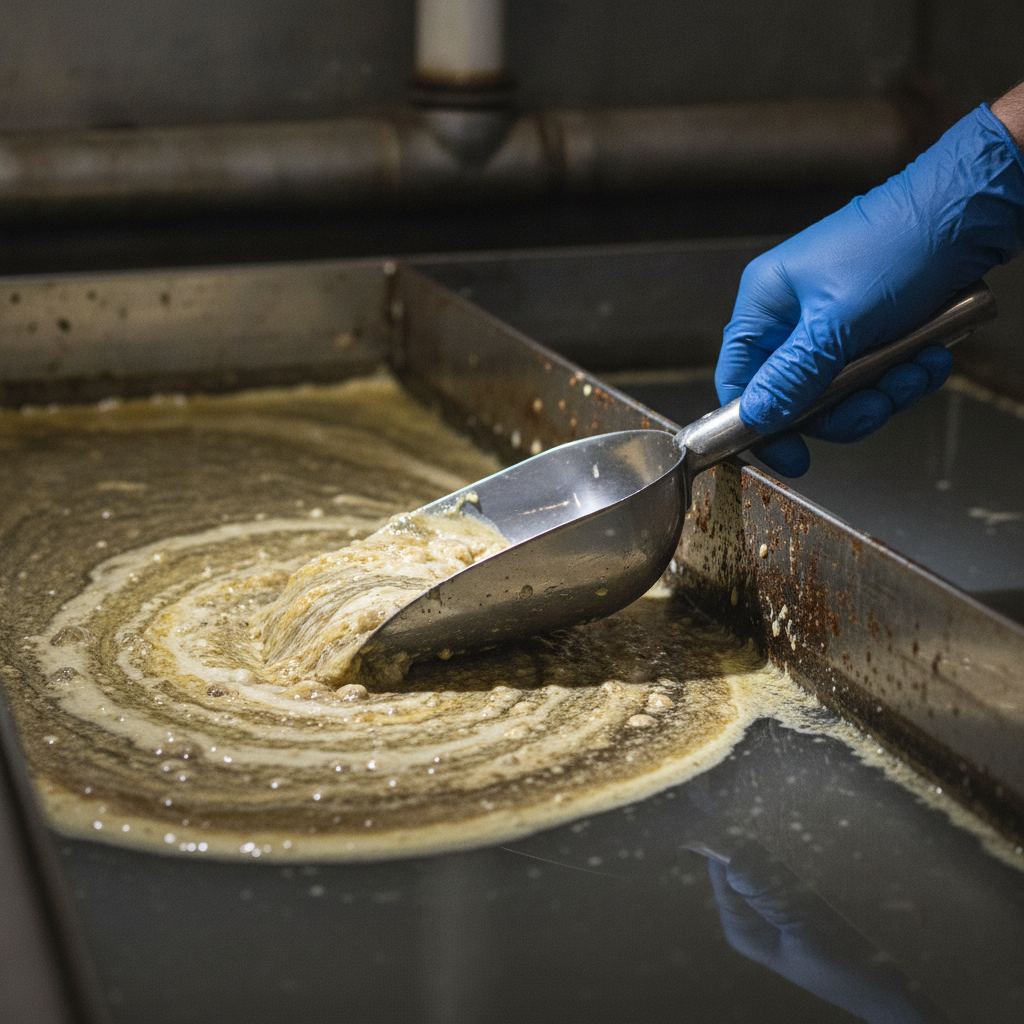
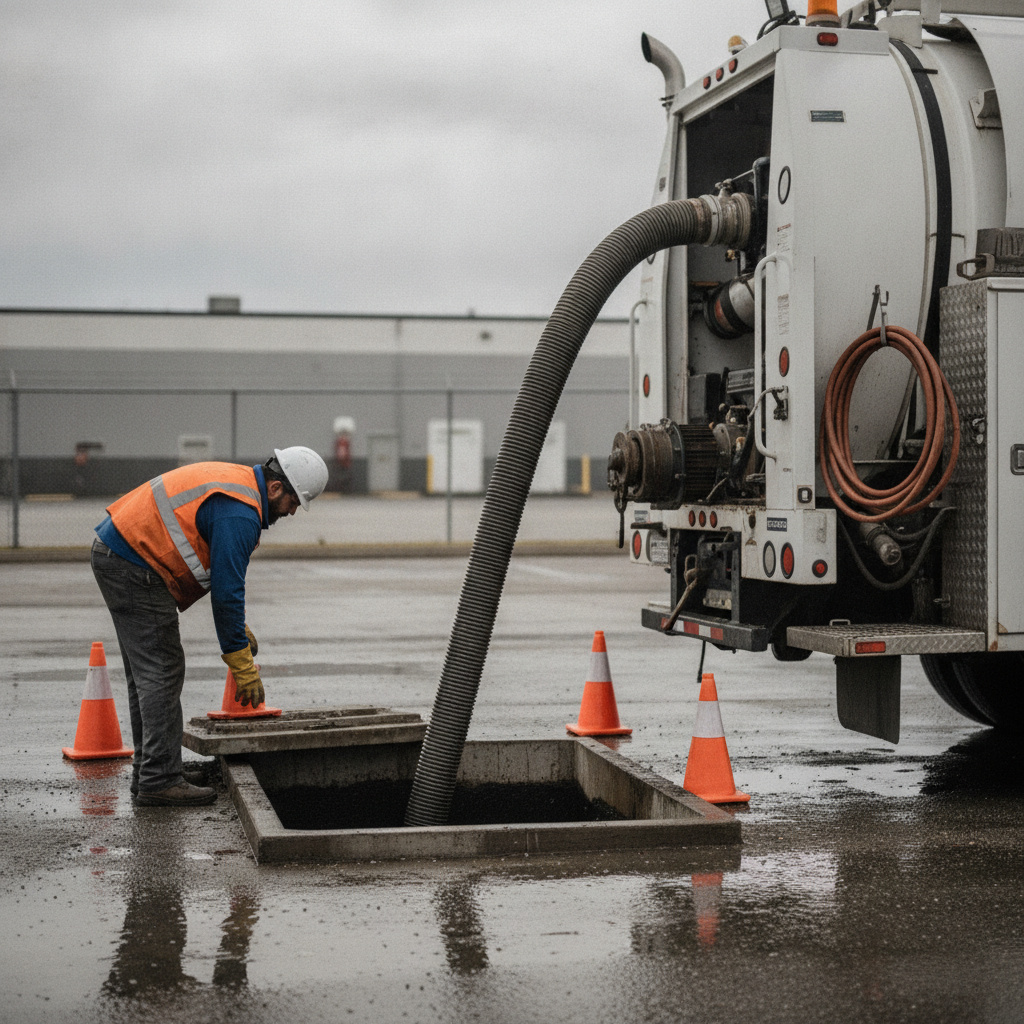
- Pump out FOG and water: Use vacuum hoses; keep inlet/outlet submerged to reduce aerosolized odors.
- Scrape and wash walls/baffles: Loosen adhered grease so capacity is truly restored.
- Verify inlet/outlet tees: Confirm fittings are present, seated, and unobstructed.
- Freshwater rinse and reassemble: Rinse to clear fine solids; reseat covers securely.
- Odor control: Apply food-service-safe deodorizer if needed; never rely on chemicals instead of cleaning.
- Finalize documentation: Record volumes, condition, and photos for your inspection binder.
- Review with manager: Share findings, early-warning signs, and a recommended service interval.
We follow the same disciplined playbook whether it’s a compact under-sink trap or a 1,000-gallon interceptor. Consistency is what makes inspections straightforward and keeps surprises off your line checks.
Best practices for year-round control
Pair scheduled pump-outs with simple, daily behaviors: scrape plates, keep solids out of sinks, avoid emulsifying detergents, and log quick visual checks. These small habits extend time between services and cut odors and backups.
Daily and weekly habits for your team
- Dry-wipe first: Scrape pans and plates into the trash before pre-rinse to limit FOG load.
- Capture solids: Use sink strainers and swap them when clogged; never bypass to “speed up.”
- Watch water temps: Extremely hot water can liquefy grease that later re-solidifies downstream.
- Pick the right soap: Avoid heavy emulsifiers that push FOG past the trap.
- Log quick checks: Add “sniff and glance” near the trap to your opening/closing lists.
- Train new hires: Five minutes on FOG basics saves hours of emergency work later.
Manager-level routines that pay off
- Use a visible schedule: Post the next two pump dates and vendor contact so anyone can confirm status.
- Bundle services: Coordinate arrestor, kitchen cleaning, and facility degreasing to reduce disruption.
- Close the loop with hoods: Align arrestor care with hood and duct fire prevention to manage grease end-to-end.
- Inspect gaskets and lids: A warped cover is a standing odor problem waiting to happen.
- Keep an inspection binder: File service reports with photos; auditors appreciate clear records.
These practices fit any operation, from quick-serve counters to large institutional kitchens. The goal is simple: less grease where it doesn’t belong, and more time cooking.
Tools and resources (what we use and what you can keep on hand)
Technicians rely on vacuum trucks, scrapers, odor-control agents, PPE, and inspection tools. In-house teams should keep strainers, absorbent pads, spill kits, and basic PPE to manage day-to-day FOG before your scheduled service arrives.
Professional service equipment
- Vacuum hose and pump system sized for your interceptor
- Scrapers, scoops, and long-handle brushes for baffle walls
- Flashlights, mirrors, and sample dippers for inspection
- PPE: gloves, eye protection, high-visibility vest, and slip-resistant footwear
- Food-service-safe deodorizer for post-cleanout odor control
Front-of-house/back-of-house supplies worth stocking
- Heavy-duty sink strainers and extra baskets
- Absorbent pads and spill kits near fryers and dish
- Signage reminders near pre-rinse about scraping solids
- Simple log sheets for daily trap checks
Our comprehensive programs often blend arrestor service with grease trap cleaning and equipment degreasing so your kitchen stays inspection-ready between deep services.
Scheduling, documentation, and value (no surprises)
Set a cadence based on volume, menu, and unit size. Many small traps need checks weekly and full service every few weeks; large interceptors often run on monthly or quarterly cycles. Keep digital reports and a visible calendar so everyone knows when service is due.
Grease arrestor cleaning delivers value by protecting uptime and inspections. Frequency varies by kitchen throughput, the presence of dish solids, and whether the unit is under-sink or in-ground. The right schedule pays for itself in steadier service and fewer last-minute headaches.
- Cadence cues: Frequent frying or heavy sauce work? Expect tighter intervals.
- Unit size: Smaller traps fill faster; in-ground units hold more but still need regular pump-outs.
- Documentation: Keep service logs in a binder and digitally for easy sharing during audits.
- Bundled visits: Coordinate with grill degreasing or fire-prevention service to minimize downtime.
Mid-article CTA: Want a quick schedule check? Book a 10-minute assessment and we’ll map your grease arrestor cleaning to kitchen volume and inspection dates.
In-house checks vs. professional service
Do light, frequent checks in-house, but rely on certified pros for full pump-outs, scraping, and documentation. A hybrid approach prevents emergencies while ensuring you meet inspector expectations and environmental handling requirements.
| Area | In-house checks | Professional service |
|---|---|---|
| Frequency | Daily/weekly quick checks | Monthly to quarterly, based on load |
| Tasks | Visual check, odor notes, surface skim (if safe) | Full pump-out, scrape, rinse, baffle verification |
| Compliance | Internal logs only | Formal reports with photos for inspections |
| Risk | Limited—no confined-space or heavy equipment | Managed by trained, WSIB-insured technicians |
If you’re unsure what belongs in which bucket, our team can train your leads on safe, effective checks while we handle the heavy work.
Case studies and real-world examples
Across All Over Ontario, the biggest wins come from pairing a right-sized schedule with small daily habits. Kitchens that post service dates, train staff, and bundle cleaning see fewer odors, faster dish flow, and smoother inspections.
- Quick service burger concept: Frequent frying created a thick grease mat every few weeks. We shifted to a 4-week pump-and-scrape with a 2-week skim. Result: odors dropped and dish backups disappeared.
- Full-service bistro: Sauces and dairy overloaded an under-sink trap. We recommended an in-ground upgrade and aligned service with trap cleaning cycles. Result: longer intervals and cleaner prep area air.
- Institutional cafeteria: Large gravity interceptor was neglected. We implemented quarterly pump-outs with a binder of photo reports. Result: easier audits and predictable scheduling.
- Food court vendor row: Shared infrastructure demanded strict logs. Joint schedule cut emergency calls for all stalls.
We’ve found that when managers see the before/after photos and simple metrics like grease mat thickness, they become champions for the schedule. It’s a fast way to get alignment without lengthy meetings.
Local considerations for All Over Ontario
- Seasonal swings in volume (tourism and events) can shorten intervals; review schedules ahead of peak weeks.
- Cold snaps increase grease congealing; monitor odors and flow, and consider interim skims between full services.
- Coordinate overnight or early-morning windows to limit impact on prep and breakfast service in busy corridors.
Expert insights and standards you should know
Healthy arrestor programs combine sizing, source control, and right-time service. Post visible schedules, use the “25% rule” as a trigger, and align arrestor work with hood and duct cleaning to manage grease from cook line to drain.
Industry explainers offer helpful visuals for teams new to FOG control. For a plain-language overview of how traps separate grease and solids, see this how traps and interceptors work. If you’re weighing unit changes, this guide to installation and replacement basics outlines common considerations. And for day-to-day habits, a refresher on dealing with grease in drains helps train new hires.
Pair those references with on-the-ground experience. When working with clients across All Over Ontario, we map menu, volume, and unit size to a simple rotation. We then align that rotation with our grease trap service and broader commercial kitchen cleaning program.
Frequently Asked Questions
Most kitchens should service arrestors on a fixed schedule tied to cooking volume and the “25% rule.” Small traps may need attention every few weeks; larger interceptors often run monthly to quarterly. Keep logs and photo reports for inspections.
How often should we schedule grease arrestor cleaning?
Frequency depends on volume, menu, and unit size. Many small under-sink traps need service every few weeks, while large in-ground interceptors run well on monthly or quarterly cycles. Track grease mat thickness and odors to fine-tune intervals.
What are warning signs a trap is overdue?
Common signs include slow drains, gurgling near sinks, sulfur or rancid odors, and visible grease at the access cover. In service, we often see missing outlet tees or warped gaskets—both speed up failure and allow odors to escape.
Can staff perform any of the work in-house?
Yes—basic checks like visual inspections, logging odors, and safe surface skimming on small traps can help between visits. Leave full pump-outs, scraping, and waste handling to trained, insured professionals with proper equipment and reporting.
How does grease arrestor cleaning connect to fire safety?
Managing FOG at the drain reduces airflow grease load and complements hood, duct, and exhaust fan cleaning. A clean trap supports better air quality and lowers the chances of grease vapor spreading into the exhaust system.
Conclusion and next steps
Treat grease arrestor cleaning as a recurring kitchen system, not a one-off task. Set a cadence, train staff on small habits, and keep clear records. That’s how you protect service flow, pass inspections, and keep odors and backups out of your day.
- Adopt the “schedule + small habits” model—both matter.
- Bundle arrestor service with hood, duct, and grill care for end-to-end control.
- Keep a visible calendar and a digital binder of reports and photos.
Key takeaways
- Grease arrestor cleaning prevents clogs, odors, and failed inspections.
- Match service intervals to volume, menu, and unit size.
- Small daily habits reduce FOG load and extend time between pump-outs.
- Documentation smooths audits and keeps teams aligned.
Ready to streamline your program? Schedule a service review in All Over Ontario, and we’ll align grease arrestor cleaning with your kitchen’s rhythm—without disrupting service.