Grease fires don’t start big—they start with a small flare-up that finds fuel. If you run a restaurant or any high-output food service operation in Ontario, preventing kitchen grease fires commercial isn’t optional; it’s core to safety, uptime, and compliance. In this complete guide, we translate NFPA 96 into practical, day-to-day actions your team can follow—and show where Robinhood Cleaners fits into a proactive plan with certified Kitchen Exhaust Cleaning, Filter Cleaning & Exchange, Fan Belt Replacement, Hood and Duct Cleaning, and Ventilation System Maintenance.
Above-Fold: Hook + Table of Contents
- Overview
- What Is a Grease Fire Risk?
- Why Prevention Matters
- How Prevention Works (Line to Rooftop)
- Methods and Approaches That Work
- Best Practices: Step-by-Step
- Tools, Resources, and Checklists
- Ontario Case Snapshots
- Preventing kitchen grease fires commercial: What to know
- FAQ
- Conclusion + Key Takeaways
Quick Answer
In All Over Ontario, the fastest way to cut grease fire risk is a routine of NFPA 96–aligned hood, duct, and exhaust fan cleaning—plus daily in-house wipe-downs and proper filter rotation. Robinhood Cleaners provides Kitchen Exhaust Cleaning, Filter Cleaning & Exchange, and Ventilation System Maintenance to keep systems safe and compliant across Southern Ontario.
Local Tips
- Tip 1: Book rooftop exhaust cleanings during off-peak hours to avoid congestion along the 401 and QEW corridors and shared service alleys common around Ontario plazas and food courts.
- Tip 2: Ontario winters bring icy roofs; plan fan cleaning, hinge lubrication, and belt checks before freeze-up so access panels aren’t stuck when you need them most.
- Tip 3: For quick-service rushes in Southern Ontario, rotate baffle filters more often on fry-heavy lines; it reduces flare-ups and keeps airflow stable during dinner peaks.
IMPORTANT: Pair these with certified hood and duct servicing to maintain NFPA 96 alignment and reduce fire hazards.
Overview
- Main idea: Grease accumulates in hoods, ducts, and fans; without removal, a flare-up can ignite it like a fuse into the system.
- Prevention formula: Daily surface degreasing + scheduled professional hood/duct/fan cleaning + trained staff + working suppression.
- Intervals: High-volume fryers and charbroilers often need monthly to quarterly hood and duct cleaning; moderate use, quarterly to semiannual; light use, semiannual to annual.
- Compliance: Align with NFPA 96 and keep records; insurers and inspectors look for proof of service and photos.
- Partner roles: Your team controls daily wipe-downs and filter swaps; Robinhood Cleaners handles deep cleaning, inspections, and documentation across Ontario.
- Further reading: See our commercial kitchen hood cleaning guide for scope and expectations.
What Is a Grease Fire Risk in Commercial Kitchens?
In commercial kitchens, grease isn’t just on the line—it migrates. Aerosolized grease moves into the hood, clings to ducts, and coats fan blades. Add a flare-up or high heat, and that film can ignite.
- Where grease hides:
- Behind baffle filters inside the hood plenum (especially near seams and rails)
- Turns and elbows in horizontal duct runs that slow airflow
- Exhaust fan blades, housings, and rooftop curbs—out of sight but high risk
- Grease trays, catch pans, and poorly pitched sections that pool residue
- Sneaky accelerants:
- Charbroiler carbon deposits that ignite easier than fresh grease
- Clogged baffle filters that reduce airflow and trap heat above the line
- Loose fan belts causing fan slowdown and hot spots at the hood
- Risk indicators:
- Visible streaks in the hood seams or dripping at filter rails
- Grease “mist” on nearby ceilings or makeup air diffusers
- Exhaust fan vibration, noise, or a burnt-oil odor on the rooftop
Want a deeper dive into hazard mechanics? Our post on exhaust duct fire hazard prevention explains how duct geometry and residue thickness influence risk.
Why Prevention Matters
Safety is the headline, but prevention also protects service continuity, air quality, and brand reputation.
- Life safety and liability: Clean systems help suppression work as designed and reduce flashover potential.
- Uptime and revenue: Fires trigger shutdowns; routine cleaning keeps kitchens open and productive.
- Indoor air quality: Efficient exhaust lowers smoke and odors, improving staff comfort and retention.
- Compliance and insurance: Documented NFPA 96–aligned cleaning supports inspections and policies.
- Equipment longevity: Fans, belts, and bearings last longer with balanced airflow and less load.
If you manage inspections, you’ll appreciate this resource on NFPA 96 compliance requirements—it outlines what inspectors and insurers typically want to see.
How Prevention Works (From Line to Rooftop)
Think in layers—what your team does daily, and what certified pros do on schedule.
- Daily line routines:
- Degrease splash zones, hood edges, and filter faces at close.
- Empty grease cups and trays; never let them overflow.
- Verify clear baffle airflow; replace clogged filters immediately.
- Train staff on pan-fire response: lid on, heat off, never water.
- Scheduled pro service:
- Full hood plenum, filter rails, and duct degreasing—clean to bare metal where possible.
- Exhaust fan cleaning, hinge checks, and fan belt replacement when worn.
- Photo documentation and service tags for compliance records.
- Inspection cadence:
- High-grease equipment (fryers, woks, charbroilers) = more frequent hood and duct cleaning.
- Ventilation tests confirm capture and containment during peak loads.
- Grease trap maintenance to prevent odors and secondary fire vectors.
Need help setting a schedule? Our quick explainer on hood cleaning frequency shows how menu mix and volume change the cadence.
Methods and Approaches That Actually Work
- Baffle filter rotation: Keep multiple sets in circulation; hot-swap during rushes and deep clean after service.
- Hood cleaning services: Degrease plenum, rails, and seams; polish to verify clean metal and spot missed residue.
- Duct cleaning: Install or use access panels at turns and long horizontal runs; use rotary brushes and food-safe degreasers.
- Exhaust fan cleaning: Clean blades and housings; rebalance if vibration is present to restore capture efficiency.
- Ventilation system maintenance: Belt tension, motor checks, and bearings; confirm CFM targets and makeup air balance.
- Grease trap cleaning: Routine pumping reduces aerosols and odors that can indicate upstream grease issues.
- Power washing (targeted): Exterior hood canopies and rooftop pads—control runoff to protect roofs and comply with site rules.
- Suppression readiness: Keep nozzles unobstructed and tagged; coordinate with suppression contractors for annuals and after any menu changes.
Best Practices: Step-by-Step Playbook
Use this sequence to lower fire risk fast—without slowing service.
- Map your hood-to-roof system. Identify hood type, duct length, fan model, and access points; keep a one-page diagram in the manager’s binder.
- Set cleaning frequencies by equipment type. Fryers and woks drive higher cadence than ovens or steamers; reassess after seasonal menu shifts.
- Standardize close-down wipes. Make filter face and hood edge degreasing non-negotiable; audit nightly until it’s habit.
- Implement filter exchange. Keep a clean set on standby; swap mid-shift when airflow drops or smoke lingers at the hood.
- Schedule certified deep cleans. Align to NFPA 96 and keep photo reports for inspectors and carriers.
- Check belts and hinges. A slipping belt reduces exhaust capture and raises heat and smoke levels; lubricate hinges for safe fan access.
- Train, drill, and post procedures. Teach the “lid, kill heat, never water” rule; place visible reminders near fry stations.
- Audit monthly. Walk the line, inspect filters, and peek inside access panels for early buildup; adjust cadence if residue returns quickly.
Recommended Cleaning Cadence (Guideline)
| Kitchen profile | Typical equipment | Hood/duct/fan cleaning | Filter rotation |
|---|---|---|---|
| High-volume, fry-forward (QSR, food courts) | Fryers, woks, charbroilers | Monthly to quarterly | Daily to weekly |
| Moderate full-service | Grills, ovens, sauté | Quarterly to semiannual | Weekly to biweekly |
| Low-grease institutional | Combi ovens, steamers | Semiannual to annual | Biweekly to monthly |
Tools, Resources, and Checklists
- Line kit: Food-safe degreaser, microfiber, scraper, nitrile gloves, spare baffle filters.
- Service checklist: Hood plenum, filter rails, duct access panels, fan blades and housings, rooftop curbs, and grease trays.
- Documentation pack: Service tags, before/after photos, and a log of filter rotations and belt changes—keep in a binder and a cloud copy.
- Coordination notes: Align cleaning with suppression service and rooftop access permissions and ensure ladders or roof hatches are unlocked.
Ontario Case Snapshots
- Food court fry line: Mid-shift filter swaps cut flare-ups; monthly hood and duct service restored capture; rooftop fan belt replaced to stop vibration and noise.
- Fine dining grill: Quarterly deep cleans plus weekly filter soaks reduced smoke in dining room; suppression nozzles found partially blocked and cleared.
- Institutional kitchen: Semiannual service adequate; added makeup air balancing to improve comfort and keep odors down—staff reported fewer complaints.
- QSR on a tight footprint: Added a second filter set and stricter close-down wipes; flare-up incidents dropped to near zero within two weeks.
Preventing kitchen grease fires commercial: What to know
- Use the full stack: Filters + hood + ducts + fan + suppression. The weakest link governs risk.
- Clean to verification: Bare metal where possible, then photos. Shine reveals residue you might miss in low light.
- Think airflow first: If smoke lingers at the hood or spills into the line, act now—don’t wait for the smell of burning oil.
- Document everything: Inspectors and insurers rely on tags and photos, not memories.
- Train continuously: New hires need the same quick drills as veterans—especially on night shifts.
On-the-Job Detail
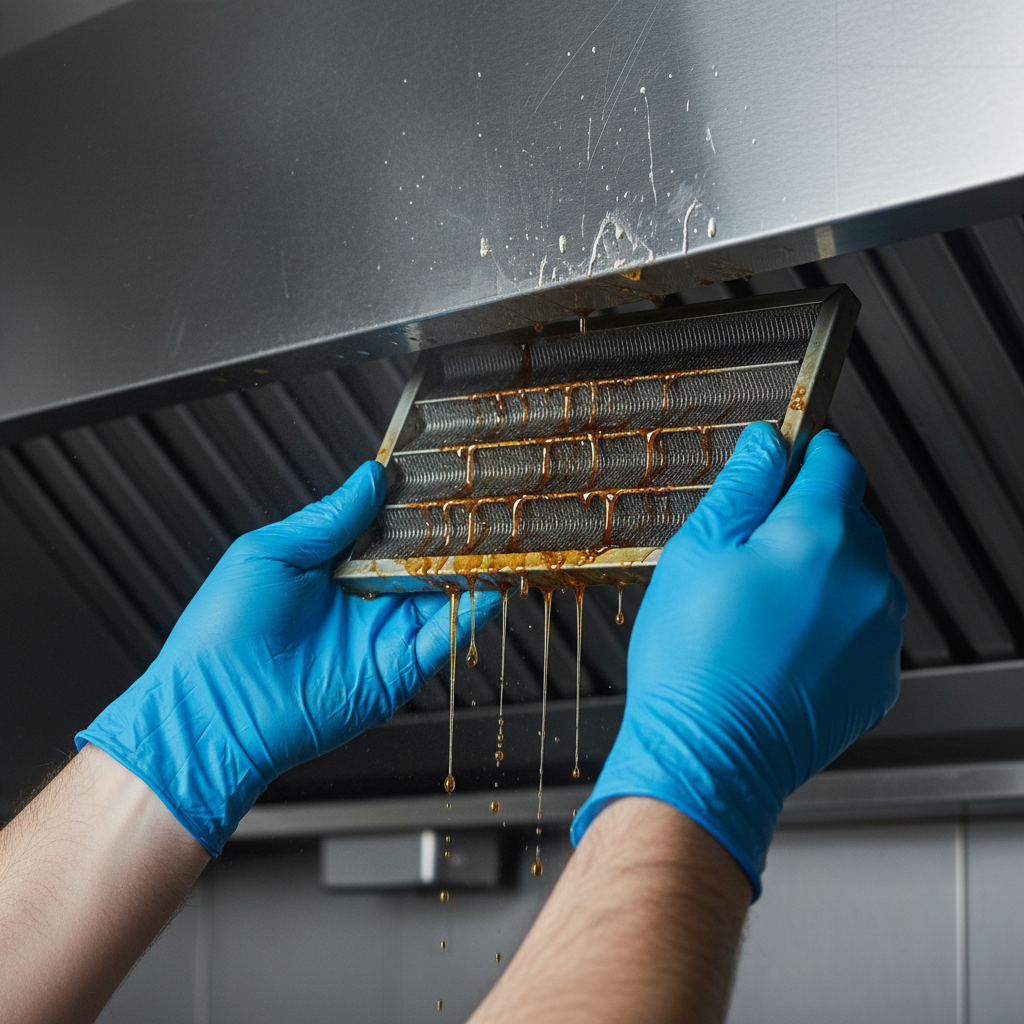
The image below shows the moment that matters: removing a loaded baffle filter before it chokes airflow and becomes a hot surface ignition risk. This single habit—paired with an organized filter exchange—prevents a long list of headaches.
Rooftop Work That Protects the Line
- Hinges and safety: Proper fan hinges protect wiring and roofs, and make cleaning the fan bowl safe and thorough.
- Belts and pulleys: Worn belts slip, reduce capture, and raise heat; replace at signs of glazing or cracking.
- Curbs and grease containment: Use approved rooftop grease containment to avoid roof damage and fire spread.

Mid-Article CTA
Need an NFPA 96–aligned plan for your kitchen? Robinhood Cleaners is WSIB insured, available 24/7, and trusted by restaurants across Ontario. From Kitchen Exhaust Cleaning to Filter Cleaning & Exchange and Fan Belt Replacement, we help you pass inspections and prevent downtime. Let’s build a schedule that fits your rushes.
12 Practical Best Practices (With Examples)
- Post the “no water on grease fires” reminder where staff can’t miss it; use icons for fast recall.
- Set a maximum filter face temperature rule (touch with glove only) to trigger a mid-shift swap when heat soaks the hood edge.
- Color-code filter sets (Monday set, Tuesday set) to standardize rotation and prevent skipped cleaning days.
- Assign a “hood captain” per shift to handle the filter swap and close-down wipe audit.
- Keep a dedicated degreasing cart with labeled bottles and microfiber so it’s as easy to clean as it is to cook.
- Log fan belt inspections weekly; belt dust on the rooftop is an early warning.
- Open one access panel monthly with your cleaner present; seeing inside builds team buy-in.
- Stage a two-minute pan-fire drill at lineup; lid on, heat off, no water, no carry.
- Coordinate hood service with menu changes (e.g., adding a new fryer) to adjust cadence before problems start.
- Use before/after photos as training tools; show new hires what “clean to bare metal” looks like.
- Balance makeup air after seasonal weather shifts; negative pressure can pull smoke into dining areas.
- Review your records quarterly with management; correct gaps before inspection season.
Compliance and Documentation Essentials
- Service tags: Dated, signed tags at the hood and rooftop fan.
- Photo evidence: Before/after images of hood, ducts (via access), and fan.
- Scope notes: Record areas cleaned to bare metal and any inaccessible sections.
- Deficiency list: Belt wear, blocked nozzles, missing access panels, or containment issues.
- Retention: Keep two years of records ready for inspectors and insurers.
For context on what inspectors look for, our overview of kitchen hood fire hazards outlines the common red flags and how to fix them fast.
Tools We Use (and Why They Matter)
- Food-safe degreasers: Effective on polymerized grease without harming stainless finishes.
- Rotary brush systems: Reach deep duct surfaces and elbows to break stubborn buildup.
- Steam and hot-water rinse: Lift residue and speed verification to bare metal.
- Fan hinge kits and containment: Enable safe access and protect roofs from grease runoff.
- Lighting and inspection mirrors: Confirm coverage in low-visibility sections.
How Robinhood Cleaners Reduces Risk End-to-End
- Kitchen Exhaust Cleaning: Hood plenum, rails, ducts, and fan cleaning, aligned with NFPA 96.
- Filter Cleaning & Exchange: Rotations that match your rushes to keep airflow consistent.
- Fan Belt Replacement: Proactive swaps to prevent capture failures at peak times.
- Hood and Duct Cleaning: Access-panel cleaning with before/after documentation for inspectors.
- Ventilation System Maintenance: Bearings, pulleys, and balance checks for long-term reliability.
- Grease Trap Cleaning: Odor control and secondary fire-risk reduction, coordinated with line cleaning.
Risk Scenarios to Plan For
- Surprise menu change: New fryer increases load; update filter rotation and cleaning cadence immediately.
- Staff turnover: Night crew skips close-down wipes; audit and retrain with a checklist.
- Weather impact: Winter winds alter draft; verify capture with a simple smoke test and adjust makeup air.
- Fan failure: Belt snaps mid-service; keep a spare and a fast response plan.
- Suppression blockage: Nozzle caps missing or obstructed; coordinate inspection and correct before service.
Manager’s One-Page Checklist
- Daily: Wipe hood edges and filter faces; empty trays; verify airflow at open.
- Weekly: Soak filters; inspect belts; confirm suppression nozzles are clear.
- Monthly: Walk-through with photos; open one access panel with your cleaner.
- Quarterly: Review records; align service with volume; test capture during peak.
- Semiannual/Annual: Full-system cleaning cadence based on risk profile and inspection history.
FAQ
How often should a commercial kitchen clean hoods and ducts?
It depends on volume and menu. Fryers, woks, and charbroilers usually drive monthly to quarterly cleanings. Moderate full-service kitchens often schedule quarterly to semiannual service. Low-grease institutional setups may work on a semiannual to annual cadence. Track residue return rates and adjust. When in doubt, lean toward more frequent cleaning for safety and compliance.
What’s the fastest way to reduce flare-ups this week?
Rotate baffle filters more often and standardize close-down degreasing. Add a mid-shift swap when smoke lingers at the hood. Empty grease trays daily. If your exhaust fan seems slower or louder than usual, have belts inspected and replaced if worn. These small moves stabilize airflow and cut ignition points almost immediately.
Do I need photos and tags for inspections?
Yes. Inspectors and insurers expect visible tags and dated photo documentation. Keep records for at least two years, including before/after images of the hood plenum, accessible ducts, and exhaust fan. Notes on inaccessible areas and any deficiencies found (like worn belts or blocked nozzles) help prove due diligence.
Is power washing enough to control grease fire risk?
No. Power washing can help with exterior surfaces, but fire risk is driven by grease inside the hood plenum, ducts, and the exhaust fan bowl. Those areas need degreasing to bare metal where possible and verification via access panels and photos. Combine power washing with full-system hood and duct cleaning for real protection.
How does Robinhood Cleaners support NFPA 96 alignment?
Our certified teams service the entire exhaust path—hood plenum, ducts via access panels, and rooftop fans—then document work with service tags and photos. We also handle Filter Cleaning & Exchange and Fan Belt Replacement to maintain airflow and capture. This end-to-end approach helps Ontario kitchens stay inspection-ready year-round.
Conclusion + Key Takeaways
- Grease migrates; clean the whole path. Filters, hood, ducts, and fan all matter for fire prevention.
- Cadence follows risk. Fry-forward kitchens need more frequent cleanings than low-grease operations.
- Training and documentation win inspections. Daily habits plus photo records keep you compliant.
- Small fixes prevent big problems. Belt checks, filter swaps, and tray emptying pay off immediately.
Ready to harden your kitchen against grease fires? Book an NFPA 96–aligned assessment with Robinhood Cleaners. We serve restaurants and food service operations All Over Ontario with 24/7 scheduling that respects your rushes.