Commercial kitchen cleaning is the professional degreasing, sanitizing, and inspection of hoods, ducts, exhaust fans, appliances, and high-touch surfaces to reduce fire risk and protect food safety. In All Over Ontario, Robinhood Cleaners provides NFPA 96–aligned service that keeps restaurants compliant, improves air quality, and supports uninterrupted operations.
By Robinhood Cleaners • Last updated: 2026-06-22
Above the Fold: Hook & Table of Contents
A safe, efficient kitchen depends on a consistent, commercial-grade cleaning program. This guide explains what commercial kitchen cleaning covers, why it matters for compliance and uptime, and how to build a schedule that fits your volume. Use the table of contents below to jump to what you need now.
Hook: Fire safety. Compliance. Air quality. Uptime. That’s the short list. A purpose-built plan turns cleaning from a chore into a measurable advantage.
- What commercial kitchen cleaning includes
- Why cleaning impacts fire safety, food safety, and insurance
- How a professional service runs start-to-finish
- Methods: degreasing, steam, power washing, filter exchange
- Best practices and documentation for audits
- Tools and checklists you can apply today
- Case studies from Ontario operations
- FAQs and next steps
Overview
Commercial kitchen cleaning covers deep degreasing for hood systems, ducts, and exhaust fans, plus sanitation for appliances, filters, and floors. Robinhood Cleaners serves All Over Ontario with certified, WSIB-insured crews available 24/7 to align service windows with rushes and audits.
Here’s what you’ll learn and use right away:
- Scope clarity: What falls to nightly staff versus certified technicians.
- Risk reduction: How grease control cuts fire hazards and unscheduled downtime.
- Scheduling: Frequency by cooking volume and menu mix (monthly to semiannual).
- Documentation: Tags, photos, and reports that make inspections simple.
- Integration: How services like exhaust cleaning connect to grease traps and filter exchange.
Local considerations for All Over Ontario
- Winter ventilation stress: Colder months increase condensation in ductwork. Proactive exhaust and duct cleaning reduces residue that can harden in low temperatures.
- Holiday surges: Quick service and catering volumes spike seasonally. Plan filter exchange and hood degreasing before peak weeks to avoid last-minute shutdowns.
- Rooftop access: Many Southern Ontario sites face windy rooftop conditions. Technicians schedule belt checks and fan service with weather windows for safe access.
What Is Commercial Kitchen Cleaning?
Commercial kitchen cleaning is a coordinated program of deep degreasing and sanitation for hood systems, ducts, fans, appliances, filters, and surfaces. The aim is to meet fire code, food safety, and insurance requirements while extending equipment life and keeping lines open for service.
In practice, it’s two complementary tracks working together:
- Daily operations cleaning (staff): Wipe-downs, line resets, mopping, and basic surface sanitation during and after shifts.
- Scheduled professional cleaning (certified techs): Hood, duct, and exhaust system degreasing, filter exchange, exhaust fan service, grease trap pumping, and documentation.
Robinhood Cleaners specializes in the latter, bringing certified teams, access-compliant methods, and comprehensive service that spans:
- Kitchen Exhaust Cleaning: Hoods, ducts, and exhaust fans degreased to bare metal where required.
- Filter Cleaning & Exchange: Rotation to maintain airflow and capture efficiency.
- Grease Trap Cleaning: Pumping and maintenance to reduce blockages and odors.
- Commercial Appliance Cleaning: Ovens, grills, refrigerators, and more.
- Power Washing: Exterior and back-of-house degreasing and rinse-downs.
- Duct Cleaning & Ventilation Maintenance: Optimized airflow and air quality.
Why define scope so clearly? Because overlap causes confusion. When everyone knows which tasks belong to nightly staff and which require certified technicians, kitchens run smoother, inspections go faster, and safety improves.
Why Commercial Kitchen Cleaning Matters
Grease is fuel for fires, restricts airflow, and shortens equipment life. A structured cleaning program reduces ignition sources, supports food safety, and satisfies insurers and auditors. The outcome is simple: fewer shutdowns, better air, and longer-lasting equipment.
Here’s what consistent, professional cleaning delivers for Ontario restaurants and food service teams:
- Fire hazard reduction: Removing grease from hoods, ducts, and fans limits combustible buildup near heat sources.
- Compliance confidence: Service tags, before/after photos, and reports support audits and insurance reviews.
- Air quality gains: Balanced ventilation and clean filtration improve comfort and reduce lingering odors. See our practical overview on improving kitchen air quality.
- Equipment efficiency: Fans draw better, make less noise, and last longer when belts and blades are clean and aligned.
- Labor efficiency: Nightly cleaning gets easier when heavy grease is controlled at the source.
For quick service lines, consistent hood and duct care means fewer surprise flare-ups and smoother peak rushes. For fine dining, it preserves presentation standards and guest experience. For institutional kitchens, traceable logs support strict audit trails and policy requirements.
If you need a starting point, align your plan with cooking volume: heavy fryers and solid fuels require more frequent service than low-volume baking or steaming menus.
How Commercial Kitchen Cleaning Works
A professional service follows a defined sequence: assess risk, protect equipment, apply degreasers or steam, mechanically agitate, rinse and neutralize, reassemble and polish, then tag and document. Scheduling is based on cooking volume—monthly for heavy use and up to semiannual for low use.
In our experience across All Over Ontario, the highest-performing programs follow a consistent, documented pathway:
- Assessment and planning: Inspect hood, duct, fan, filters, and grease trap conditions; set frequency by menu and volume.
- Prep and containment: Cover appliances, set plastic sheeting, and establish safe drainage paths.
- Chemistry and contact time: Apply food-service-safe degreasers; allow proper dwell for heavy soils.
- Mechanical action: Scraping, brushing, steam, or power washing based on material and accessibility.
- Rinse and neutralize: Restore surfaces to operational state; verify no chemical residue remains.
- Polish, reassemble, and test: Refit baffle filters, confirm airflow, and check fan belts and hinges.
- Documentation: Place service tags, capture before/after photos, and provide a compliance report.
| Component | Typical Frequency | Primary Method | Responsibility |
|---|---|---|---|
| Hood & Plenum | Monthly–Quarterly | Degreaser + Steam/Scrape | Certified Technicians |
| Ductwork | Quarterly–Semiannual | Access Panels + Scrape/Steam | Certified Technicians |
| Exhaust Fan & Belts | Quarterly | Degrease, Inspect, Replace Belts | Certified Technicians |
| Baffle Filters | Weekly–Biweekly | Hot Wash or Exchange | Staff + Technicians |
| Grease Trap | Monthly–Quarterly | Pumping & Maintenance | Licensed Service |
| Appliances | Monthly–Quarterly | Disassemble & Degrease | Technicians |
This structure keeps everyone aligned. Staff handle nightly resets; certified crews tackle the hidden and high-risk zones, then leave a clear paper trail.
Types, Methods, and Approaches
Effective kitchen cleaning combines the right method for the right surface: chemical degreasing and scraping for heavy soils, steam for precision, power washing for large exterior zones, and filter exchange for airflow. Fan belt replacement and grease trap service round out a full program.
Core service categories
Robinhood Cleaners provides an integrated service suite across Ontario so you don’t juggle multiple vendors or schedules.
- Kitchen Exhaust Cleaning: Hoods, ducts, and fans degreased to standards. See our Ontario service overview for scope details.
- Filter Cleaning & Exchange: Maintain capture efficiency and reduce grease migration into ductwork.
- Grease Trap Cleaning: Pumping and maintenance to avoid backups and odors.
- Commercial Appliance Cleaning: Deep clean ovens, grills, refrigerators, and prep equipment.
- Power Washing: Degrease exterior pads, dumpsters, loading zones, and back-of-house corridors—see this power washing and degreasing guide for when to choose high-pressure methods.
- Duct Cleaning & Ventilation Maintenance: Access, clean, and optimize airflow to stabilize kitchen temperatures.
- Fan Belt Replacement: Prevent fan slippage and noise; reduce unexpected exhaust failures.
Method selection guidance
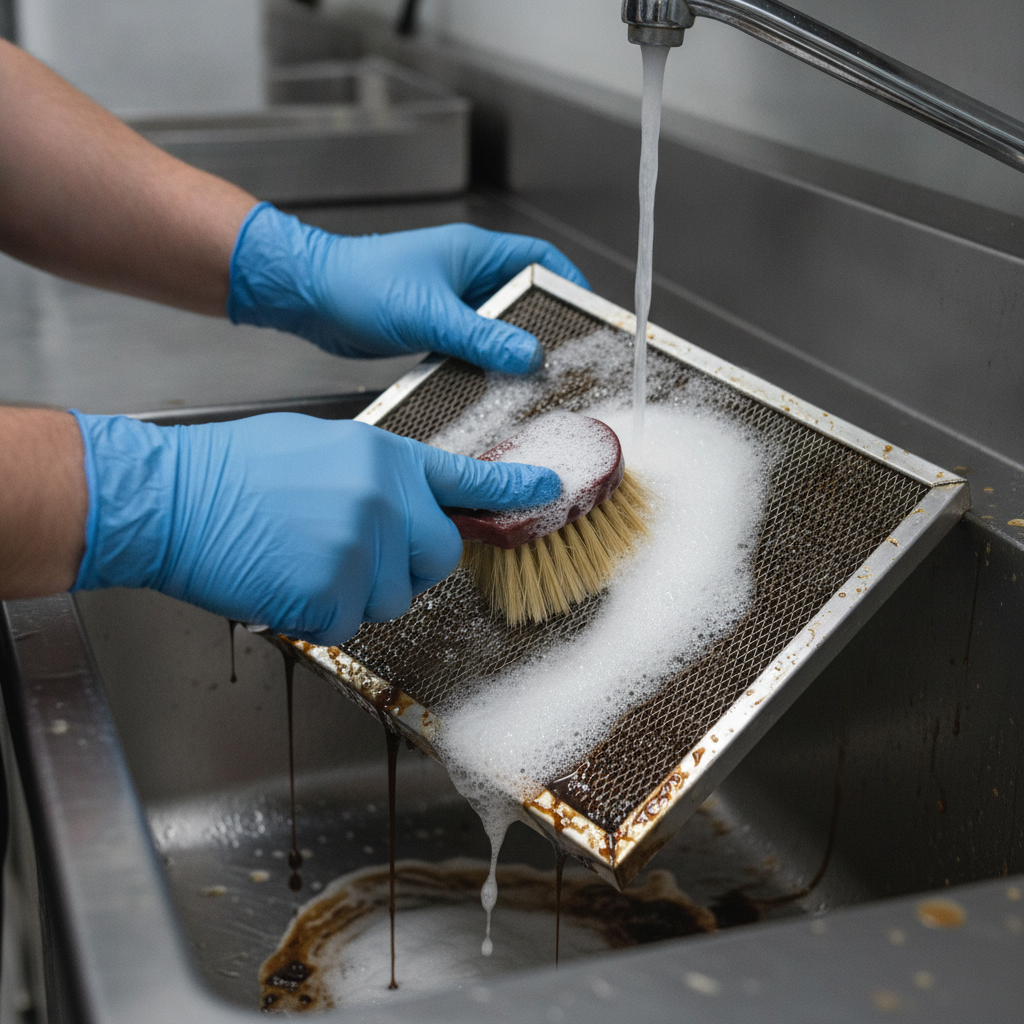
- Chemical degreasing + mechanical action: Best for heavy, polymerized grease; pair dwell time with scraping/brushes.
- Steam cleaning: Ideal where water-sensitive components must remain protected; minimizes chemical residue.
- Power washing: Suited to outdoor pads and high-soil surfaces where splash control is manageable.
- Filter rotation: Weekly to biweekly rotation reduces duct loading and preserves fan performance.
- Fan belt inspection: Replace at signs of glazing, cracking, or noise; quarterly checks catch early wear.
What most teams overlook
- Grease containment on rooftops: Catch pans and pads prevent runoff and protect roofing membranes.
- Hinges on exhaust fans: Hinges prevent strain on wiring and housings during service.
- Access panel spacing: Proper placement enables full duct cleaning rather than partial reach.
- Photo documentation: Before/after images speed audits and insurer requests.
Best Practices for Consistent Compliance
Standardize on clear scopes, volumes-based frequency, access-compliant methods, and thorough documentation. Combine nightly staff resets with certified service for hoods, ducts, fans, filters, and grease traps. The best programs leave no ambiguity about who does what and when.
From quick service to institutional kitchens, these practices reduce risk and keep teams focused on serving guests:
- Write down the scope: Define which zones are staff versus certified tech responsibility.
- Schedule by volume: High-fry lines need monthly to quarterly hoods; low-volume kitchens can go quarterly or semiannual.
- Use access-compliant techniques: Add panels where needed; use hinges and containment on fans.
- Document everything: Tags on-site, photos, and digital reports create proof and trends.
- Integrate related services: Align deep cleaning, filter exchange, and grease trap maintenance with hood cycles.
- Train and refresh: Give staff quick refreshers on filter handling and safe wipe-down chemistry.
Want a reference playbook? Our hood cleaning guide shows how we structure service windows and documentation so inspections run smoothly.
Tools, Products, and Resources
Use food-service-safe degreasers, calibrated steamers, proper brushes and scrapers, and ventilation-safe containment. Add checklists and photo logs for traceability. Partner with certified, WSIB-insured pros who can service overnight with minimal disruption.
Essential categories that pay off in everyday operations:
- Degreasers and foams: Choose products suited to polymerized fats; match dwell times to soil loads.
- Mechanical tools: Non-sparking scrapers, brush kits, and wet-vac systems to control runoff.
- Steam equipment: For targeted soils where water volume must be limited.
- Filter racks and exchanges: Keep a rotation of clean baffles ready; damaged baffles reduce capture rate.
- Containment and protection: Plastic sheeting, drain control, and rooftop catch pans.
- Digital documentation: Photo logs and tags that live beyond a single audit.
Looking to benchmark options for exterior degreasing? Review this practical overview on restaurant cleaning services in Ontario for a look at integrated approaches to protecting your facility.

Free compliance check: Want a quick-read assessment of your hood, ducts, and exhaust fan? Our certified team can review photos and your current schedule, then recommend a right-sized plan for All Over Ontario operations.
Request your assessment and align your cleaning plan to cooking volume and inspection cycles.
Case Studies and Real-World Examples
The fastest wins come from matching frequency to volume and tightening documentation. In Ontario, we routinely see fewer shutdowns and smoother audits when hoods, ducts, fans, filters, and grease traps run on a single, integrated schedule.
Quick service line with heavy frying
A multi-station quick service kitchen struggled with smoky rushes and recurring fan noise. We aligned monthly hood degreasing with quarterly fan belt checks and weekly filter exchange. Within one cycle, smoke reduced noticeably and line resets took less time.
- Pain points: Smoke during peaks, fan squeal, sticky floors.
- Actions: Monthly hood cleaning, quarterly fan service, filter rotation twice weekly.
- Outcome: Smoother peak periods and less strain on staff.
Institutional kitchen with audit requirements
An institutional operation required defensible logs and photos. We introduced digital reports for each service: tagged by zone with before/after images and filter rotation notes. Audit response time dropped because everything was documented in one place.
- Pain points: Disparate records and slow audit responses.
- Actions: Photo logs, service tags, and standardized reports.
- Outcome: Faster audits and clear maintenance history.
Fine dining kitchen focusing on experience
A fine dining team wanted pristine presentation and quiet ventilation. We paired quarterly hood cleaning with targeted appliance detailing and a belt replacement plan. Guests enjoyed quieter dining rooms, and the pass stayed clean throughout service.
- Pain points: Visible residue near the pass and humming fans.
- Actions: Quarterly hood care, appliance detailing, and proactive belt plan.
- Outcome: Cleaner lines, quieter ventilation, and consistent presentation.
Frequently Asked Questions
Most kitchens benefit from monthly to quarterly hood service depending on volume, with filters rotated weekly to biweekly. Professional service documents work with tags and photos, while staff handle nightly reset and surface sanitation to keep kitchens audit-ready.
How often should our hoods and ducts be cleaned?
Match frequency to volume. Heavy frying or solid fuel cooking calls for monthly to quarterly hood and duct service. Moderate operations often succeed with quarterly schedules, while low-volume kitchens may run semiannual cycles. Filters should rotate weekly to biweekly to maintain capture efficiency.
What’s the difference between staff cleaning and professional service?
Staff handle nightly wipe-downs, mopping, and surface sanitation. Certified technicians service hood systems, ducts, exhaust fans, filters, and grease traps with access-compliant methods and documentation. Both are essential—nightly resets keep service moving, while professional cleaning reduces fire risk and satisfies audits.
Can cleaning be done overnight to avoid downtime?
Yes. Robinhood Cleaners offers 24/7 scheduling across All Over Ontario. Overnight service windows reduce disruption, and kitchens return to operation with clean tags, photo logs, and a checklist that aligns with your opening procedures.
What documentation should we expect after service?
You’ll receive service tags, before/after photos, and a summary noting zones serviced, methods used, and any repairs recommended (like belt replacement or added access panels). These records make inspector and insurer requests faster to answer.
Do you also clean grease traps and appliances?
Yes. Our comprehensive programs include grease trap pumping and maintenance, plus commercial appliance cleaning for ovens, grills, refrigerators, and more. Coordinating these alongside hood service reduces surprises and keeps operations consistent.
Conclusion: Next Steps and Key Takeaways
Build a cleaning plan around volume and verify results with photos and tags. Pair nightly resets with certified hood, duct, fan, filter, and grease trap service. In All Over Ontario, Robinhood Cleaners delivers 24/7 support, WSIB-insured crews, and NFPA 96–aligned methods to keep you audit-ready.
Here’s how to put this guide to work today:
- Map your zones: Separate nightly staff tasks from certified service tasks.
- Right-size frequency: Monthly to quarterly for high heat and frying; quarterly to semiannual for low volume.
- Verify access: Ensure panels and fan hinges allow full cleaning, not partial reach.
- Document: Keep tags, photo logs, and reports for fast audits and insurance reviews.
- Align services: Coordinate traps, filters, and fans with hood cycles.
Key Takeaways
- Commercial kitchen cleaning reduces fire risk and supports compliance.
- Frequency follows volume—don’t under- or over-service.
- Documentation is your inspection fast pass.
- Integrated services prevent surprises and downtime.
Ready to stabilize your schedule and simplify inspections? Explore our restaurant kitchen cleaning services and our comprehensive exhaust cleaning programs for All Over Ontario.