To prevent kitchen grease fires, control heat, manage oils, clean hoods and filters on schedule, and keep fire suppression and Class K extinguishers ready. Train staff to smother flames, never use water, and shut off fuel. Consistent exhaust and duct cleaning removes ignition fuel, making flare-ups far less likely.
Quick Answer
In All Over Ontario at All Over Ontario, the fastest way to prevent kitchen grease fires is to pair daily line checks with NFPA 96–compliant hood, duct, and exhaust fan cleaning. Robinhood Cleaners’ certified crews handle after-hours service across Southern Ontario so your team cooks safely without downtime.
Quick Summary
Prevent grease fires by attacking the three biggest risks: heat control, oil management, and grease accumulation. Use thermostats and timers, filter and replace frying oils, and stick to NFPA 96 cleaning intervals for hoods, ducts, and fans. Keep Class K extinguishers accessible, train staff quarterly, and document every safety task.
- Primary goal: Eliminate ignition sources and remove grease fuel from hoods, ducts, fans, and surfaces.
- Daily actions: Control heat, monitor oil quality, wipe splash zones, empty grease-trap strainers, test gas shut-offs.
- Weekly: Deep-clean baffle filters; inspect fan belts; verify capture at the hood.
- NFPA 96 cadence: High-volume: about quarterly; moderate: semiannual; low-volume/seasonal: annual (minimum).
- Readiness: Class K at every hot line, staff drills, fire suppression tags up-to-date.
- Documentation: Log cleanings, inspections, and staff training for insurance and compliance.
Before You Start (Prerequisites)
Set your kitchen up for fire prevention by equipping the line, training people, and scheduling maintenance. Place Class K extinguishers by fryers, confirm suppression tags, and assign daily and weekly cleaning. Stock PPE and degreasers, post shut-off procedures, and verify your NFPA 96 hood and duct cleaning dates.
What should be in place before service to prevent grease fires? You need the right gear and a clear routine. Place Class K extinguishers within 30 feet of cooking stations. Confirm automatic suppression inspections are current. Create a simple duties chart: daily wipe-downs and splash-zone checks; weekly filter soaks; monthly hood interior checks; and NFPA 96–aligned hood, duct, and exhaust fan cleaning. Keep PPE, degreasers, and noncombustible absorbents stocked. Finally, rehearse shut-off and smothering steps at pre-shift huddles to ensure fast, calm response.
- Equip the line
- Class K extinguisher within reach (don’t substitute ABC for cooking oils).
- Wet-chemical hood suppression serviced and tagged per code.
- Metal lids or sheet pans sized to cover fryers and sauté pans.
- Train the team
- Smother, don’t splash: lid on, fuel off, never water on hot oil.
- Identify hot spots: fryer banks, grill splash zones, charbroilers, salamanders.
- Quarterly 10-minute drills during lineup; log attendance.
- Schedule maintenance
- Hood and duct cleaning cadence by volume (NFPA 96): high-volume about quarterly; moderate semiannual; low-volume annual minimum.
- Weekly baffle filter soak-and-swap routine; maintain spares.
- Fan belt inspections; document replacements to prevent airflow loss.
- Stock supplies
- Alkaline degreaser, food-safe surface cleaner, noncombustible absorbent granules.
- PPE: gloves, eye protection, aprons; warning signs for wet floors.
- Grease-trap strainers and skimming tools; labeled waste containers.
For a code-aligned setup, review our NFPA 96 compliance checklist and pair it with your operations manual. In our experience across Southern Ontario, kitchens that front-load training reduce flare-up incidents during busy hours.
How to Prevent Kitchen Grease Fires: Step-by-Step Process
Stop grease fires by managing heat, oil, and ventilation. Control cooking temperatures, filter or replace oils on schedule, and keep hoods, ducts, and fans clean for strong capture. Clear splash zones, empty strainers, and verify Class K access. Document each task so issues surface before service.
What’s the most reliable, repeatable process to prevent grease fires in a commercial kitchen? Sequence tasks by risk. Start with heat: set thermostats and preheat timers, then verify gas shut-offs. Move to oils: filter when quality shifts and replace before polymerization darkens the oil. Address ventilation: clean baffle filters weekly, confirm fan belts and rotation, and book NFPA 96 cleanings for hoods, ducts, and fans. Finish with readiness checks: Class K within reach, suppression pins set, and lids staged. This flow reduces ignition chances and limits spread if a flare-up occurs.
- Control heat at the source
- Set fryer thermostats and use timers to avoid overheating oil.
- Verify all staff know emergency gas/electric shut-off locations.
- Keep pan handles and flare-prone items away from open flames.
- Manage frying oils
- Filter oils during shifts; replace when dark, foamy, or smoking.
- Use metal lids or sheet pans to smother any pan flare-up.
- Cool oils before moving; store waste oil in closed metal containers.
- Optimize ventilation and capture
- Confirm hood capture by holding a paper test at the edge of the hood.
- Listen for fan bearing noise; check make-up air is functioning.
- Inspect and replace worn fan belts; poor airflow lets grease settle.
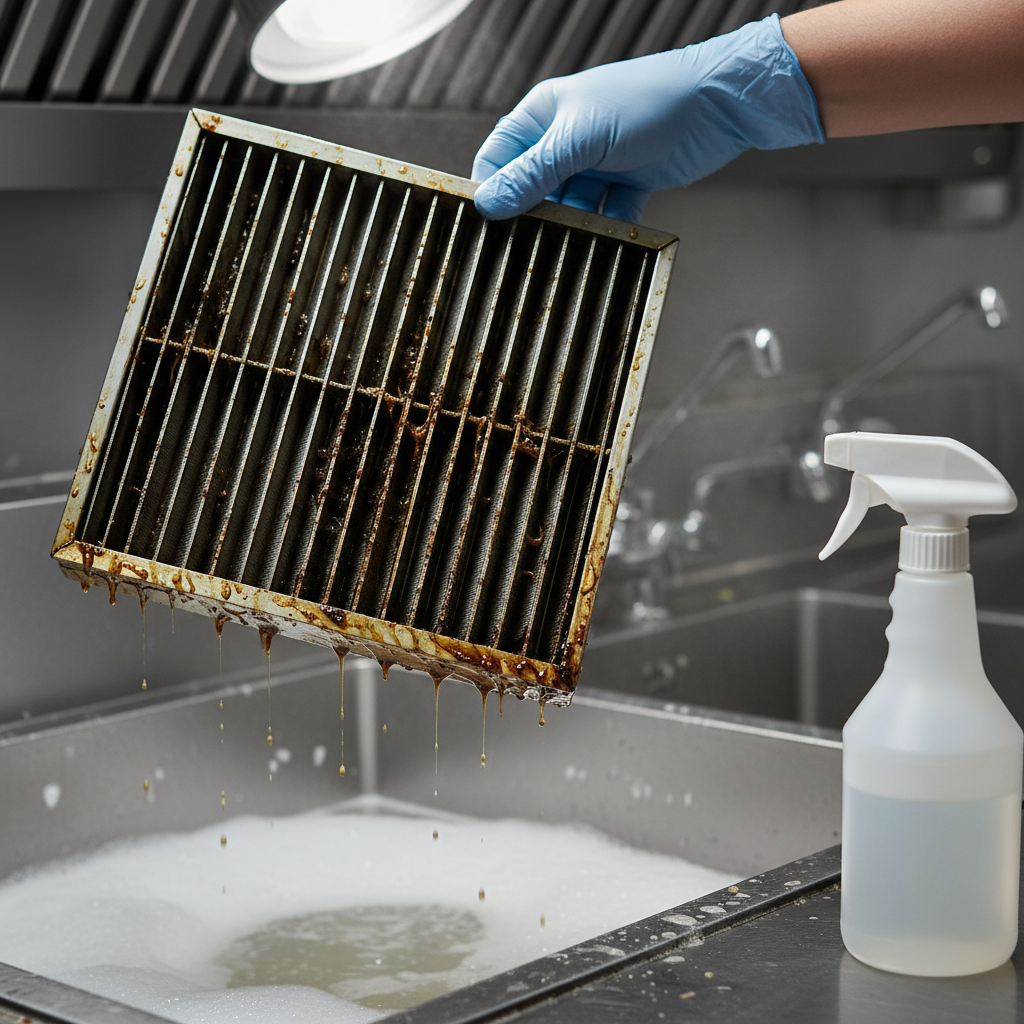
- Clean baffle filters weekly
- Soak and degrease, then hot-rinse and dry before reinstalling.
- Rotate spares through a filter cleaning & exchange cycle to stay consistent.
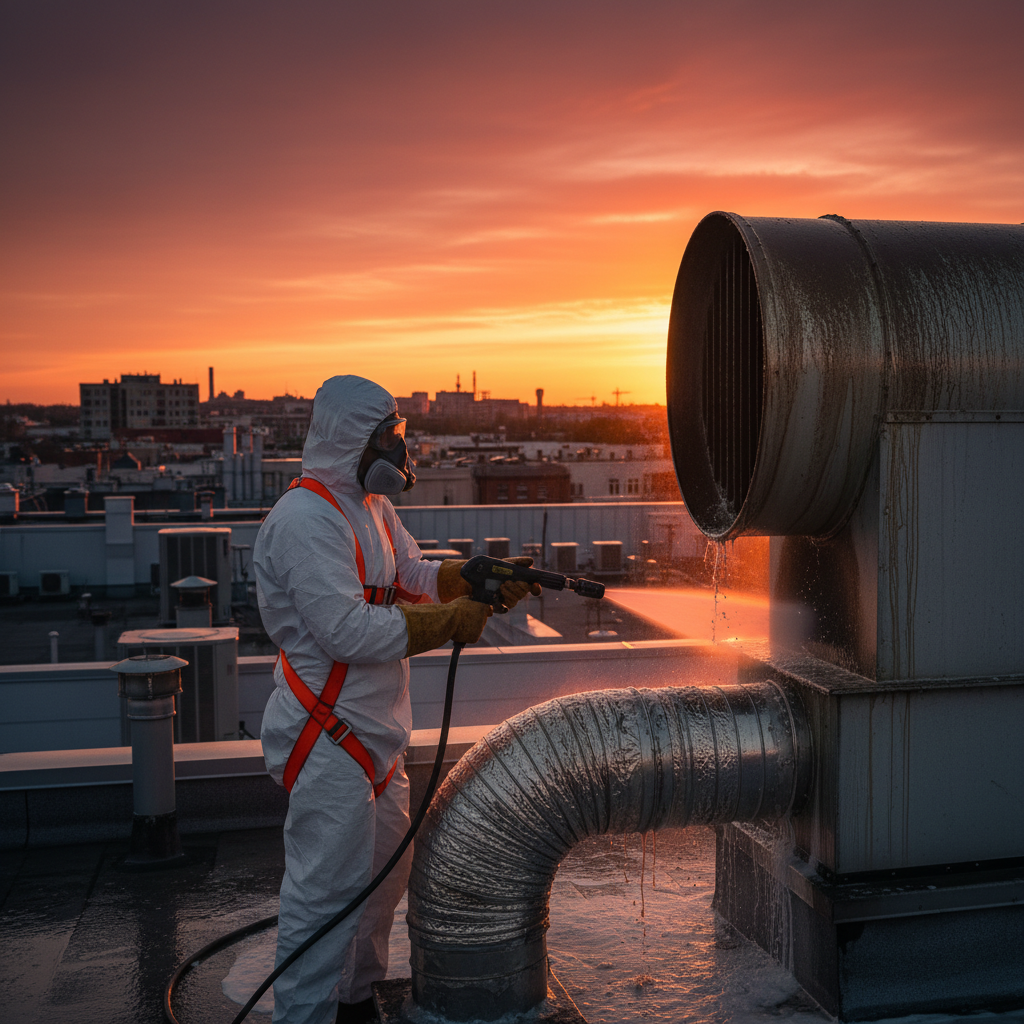
- Escalate to professional exhaust and duct cleaning on schedule.
- Wipe splash zones after each rush
- Fronts of fryers, grill shelves, sidewalls, and the floor around the line.
- Use food-safe degreaser and noncombustible absorbent for spills.
- Grease on floors spreads fire and creates slip hazards.
- Maintain suppression and Class K access
- Confirm nozzle caps are in place; pin and tamper seals intact.
- Keep aisles clear; extinguisher signage unobstructed.
- Drill: shout “fire,” smother, kill fuel, pull Class K if needed.
- Document and verify
- Use a one-page checklist: daily, weekly, monthly, and scheduled services.
- Attach service tags and reports to your safety binder for inspections.
- Spot trends: if oil breaks down early, check heat calibration and training.
| Cooking Volume/Type | Hood & Duct Cleaning | Filter Cleaning | Fan & Belt Check |
|---|---|---|---|
| High-volume fry/grill (QSR, food courts) | About quarterly | Weekly (soak/rotate) | Weekly visual; monthly detailed |
| Moderate (casual/fine dining) | Semiannual | Weekly or biweekly | Monthly |
| Low-volume/seasonal | Annual minimum | Biweekly | Monthly |
When high heat, degraded oil, and poor ventilation stack up, flare-ups follow. Our grease buildup overview shows why capture plus cleaning is your best defense.
Need a 15-minute safety review?
Book a no-disruption, after-hours walk-through with Robinhood Cleaners. We’ll map risks on your line, confirm NFPA 96 intervals, and align a filter exchange routine so you can focus on service.
WSIB insured • NFPA 96 certified • 24/7 across Southern Ontario
Troubleshooting: If You See Smoke, Smell Rancid Oil, or Hear a Loud Fan
Act fast when warning signs appear. Smoking oils, stale odors, or noisy fans mean heat, oil quality, or ventilation is off. Smother any flare-up, shut fuel, and swap degraded oil. Clean or replace filters and schedule hood and duct service to remove grease in the airstream.
How should a kitchen respond to early warning signs of a grease fire? Use the STOP-SCAN-FIX approach. STOP the process: lid on, fuel off if a flare appears. SCAN root causes: oil too hot, oil past its life, or poor capture at the hood. FIX immediately: swap oil, reduce heat, and clean or replace baffle filters. If capture is weak or the fan screams, inspect belts and schedule hood, duct, and exhaust fan cleaning. Log the event and debrief during lineup to prevent repeat issues.
- Signs oil is failing
- Dark color, foam, or smoking at normal temperature.
- Lingering rancid odor on the line and in the dining room.
- Food texture breaks down faster than usual.
- Signs capture/ventilation is weak
- Smoke drifts into the room; paper test at hood edge barely pulls.
- Fan squeal or belt dust; make-up air cold drafts across the line.
- Grease streaks at hood seams or along duct access panels.
- Immediate fixes
- Lower heat, swap oil, and deep-clean baffle filters.
- Verify suppression nozzles are clear; replace missing caps.
- Schedule professional hood and duct service if symptoms persist.
Use a simple event log. Date, station, symptom, action taken, and follow-up. Over dozens of Ontario kitchens, we’ve found logs speed root-cause fixes more than any single tool.
Advanced Tips to Go Beyond Compliance
Raise your safety ceiling with proactive upgrades. Rotate spare baffle filters, add capture monitors, and align grease trap service to reduce vaporized fat. Balance make-up air, replace fan belts preventively, and schedule seasonal deep cleans before peak traffic. These moves cut risk and improve air quality.
What strategies push a kitchen past basic compliance into best-in-class fire prevention? Build a layered plan: pair a filter exchange program with quarterly hood and duct service; install airflow monitors to alert you when capture drops; and sync grease trap maintenance with hood cleaning so airborne and drain grease are controlled together. Add pre-shift micro-drills, standardize shutdown checklists, and do seasonal deep cleans ahead of summer heat and winter inversions. The result is steadier capture, cleaner air, and fewer emergency calls.
- Filter rotation program
- Keep a full spare set; soak one set weekly while the other is in use.
- Our filter cleaning & exchange service keeps this hands-off for managers.
- Airflow and capture monitoring
- Simple hood-edge sensors can alert managers when capture drifts.
- Balance make-up air to prevent cross-drafts that push smoke out.
- Sync services for impact
- Align grease trap cleaning with hood service to reduce vaporized fats.
- Pair exhaust fan cleaning with fan belt replacement to restore CFM.
- Seasonal deep cleans
- Before summer heat and patio season, schedule full-system degreasing.
- Prior to winter, inspect belts and bearings; cold can stress components.
For policy alignment, see Ontario-focused standards in our guide to restaurant fire safety standards. For ignition science and hood risks, review our hood hazard explainer.
Local Tips
- Tip 1: Along the Highway 401/QEW corridor, book after-hours service to avoid rush traffic and ensure your hood is clean before breakfast prep.
- Tip 2: In summer heat waves and during patio season, oil breaks down faster; tighten filter rotations and check fan belts before weekend peaks.
- Tip 3: For Southern Ontario winter storms, confirm make-up air and hinges are in good shape; cold air imbalances can reduce capture at the hood.
IMPORTANT: These tips reflect Robinhood Cleaners’ 24/7 scheduling and NFPA 96–certified focus supporting restaurants across All Over Ontario.
FAQ
These brief answers cover daily prevention, extinguisher choice, cleaning intervals, small-flare response, and signs you need professional help. Use them in pre-shift huddles and print for your safety binder to keep teams aligned.
- How do I prevent grease fires day to day?
Control heat, filter or replace oils on schedule, and keep splash zones clean. Verify hood capture with a simple paper test. Keep Class K extinguishers at the line and rehearse smother-shutoff steps weekly. Document tasks on one checklist so gaps are obvious before the dinner rush.
- What extinguisher should I use on cooking oils?
Use a Class K extinguisher. It’s designed for high-temperature cooking oils and fats. Never spray water on hot oil; it flashes to steam and spreads burning grease. Keep ABC units for electrical/ordinary combustibles but don’t substitute them for Class K at the fry line.
- How often should hoods and ducts be cleaned?
Follow NFPA 96 by volume: high-volume about quarterly, moderate semiannual, and low-volume annual at minimum. Many fry-heavy kitchens benefit from more frequent filter exchanges and periodic exhaust fan cleaning to sustain airflow and reduce grease film in ducts.
- Is baking soda or salt okay for a small pan flare?
Yes—if it’s a small flare and a lid isn’t handy, a generous shake of baking soda or salt can help smother. Prioritize a lid first, turn off heat, and keep your face and arms protected. If in doubt, use the Class K and alert the manager.
- What signs say I need professional cleaning now?
Smoke escaping the hood, greasy streaks on seams, fan squeal, poor capture, or rancid odors. If filters need constant cleaning just to keep up, it’s time for hood, duct, and exhaust fan service to remove grease in the airstream and restore airflow.
Additional Resources
Bookmark these references to keep your team aligned: NFPA 96 intervals, hood hazard basics, and Ontario-focused standards. Pair them with your in-house checklist so audits and insurance reviews go smoothly.
- Exhaust duct fire hazard prevention for capture and cleaning strategy.
- NFPA 96 compliance requirements simplified for managers.
- Preventing kitchen grease fires overview for training.
Conclusion
Grease fire prevention is a system: control heat, manage oil life, and keep ventilation strong. Add weekly filter care, scheduled hood and duct cleaning, and Class K readiness. With Robinhood Cleaners handling NFPA 96 service after-hours, your kitchen stays compliant and your team stays safe.
- Key Takeaways
- Heat, oil, and ventilation control most fire risk.
- Weekly filter soaks and NFPA 96 cleaning remove fuel before it ignites.
- Class K access and quick drills turn panic into calm response.
- Logs, tags, and checklists keep compliance simple for inspections.
- Next Steps
- Adopt the daily/weekly/monthly checklist from this guide.
- Schedule hood, duct, and exhaust fan service on an NFPA 96 cadence.
- Set a 10-minute pre-shift drill on the first Monday of each month.
Ready to lock in a safer line?
Book a discovery session in All Over Ontario. Our NFPA 96–certified, WSIB-insured team will tailor a cleaning cadence and filter exchange routine to your volume and menu.