Degreasing a kitchen hood is the systematic removal of grease from the hood canopy, baffle filters, ducts, and exhaust fan to reduce fire risk and keep airflow strong. To effectively degrease kitchen hood systems in All Over Ontario, combine safe chemistry, the right tools, and a consistent schedule that aligns with your cooking volume.
By Robinhood Cleaners • Last updated: 2026-06-29
Quick Summary
To degrease a kitchen hood efficiently, remove and soak baffle filters, scrub the hood canopy, rinse ducts and fan where accessible, and verify airflow. Pair alkaline degreasers with hot water, wear PPE, and document results. Restaurants in All Over Ontario benefit from monthly to semiannual intervals based on volume.
This complete guide combines practical how-to steps with pro insights from Robinhood Cleaners. You’ll learn what kitchen hood degreasing is, why it matters, how the system works, DIY vs. professional methods, a preparation checklist, step-by-step processes, troubleshooting, tools, maintenance timelines, and real-world examples.
What Is Kitchen Hood Degreasing?
Kitchen hood degreasing is the targeted removal of grease from the hood canopy, baffle filters, ductwork, and exhaust fan to reduce fire hazards and restore ventilation performance. It supports health inspections, protects staff, and keeps cooking areas safer and cleaner.
In plain terms, hood degreasing clears the sticky, flammable residue left by fryers, grills, and sauté stations. That residue collects on filters first, then migrates into ducts and the rooftop fan. When unmanaged, it restricts airflow, traps odors, and elevates fire risk. Clearing it restores draw, reduces smoke, and improves comfort.
For All Over Ontario kitchens, Robinhood Cleaners delivers NFPA 96–aligned service using high-performance degreasers, hot water rinsing, and detailed documentation. For foundational context, see our complete kitchen exhaust cleaning guide and our service overview for hood cleaning services.
Why Degreasing Matters for Safety and Compliance
Degreasing lowers fire risk, improves air movement, and supports inspection readiness. Clean filters and ducts remove fuel sources, stabilize capture at the cookline, and help teams pass audits. It also reduces odors and protects HVAC from grease-laden air.
Grease is combustible. Left to build, it can ignite from flare-ups or high-heat events. Clean hoods capture vapor at the source, cutting the spread of particles to ceilings and walls. Many insurers and local fire authorities expect a documented program. We provide before/after photos, service tags, and clear reports to help your team demonstrate diligence.
If you need a refresher on fundamentals, review our focused page on kitchen exhaust hood cleaning and the role of exhaust duct cleaning benefits in overall safety.
How a Kitchen Hood System Works
A hood system captures grease-laden vapor at the cookline, separates particles through baffle filters, and exhausts air through ducts to a rooftop fan. Proper capture relies on clean filters, balanced airflow, and tight duct connections.
At the cookline, rising plumes meet the hood’s capture zone. The baffle filters create directional changes that separate grease droplets from air. Collected grease drains to troughs, while cleaned air moves into the ducts. The rooftop fan then discharges air outside. Any restriction—dirty filters, blocked ducts, worn fan belts—reduces draw and allows smoke to spill back into the kitchen.
For a deeper dive into each stage and the maintenance touchpoints, check our exhaust fan cleaning resource and our guide on the hood degreasing process.
Methods to Degrease a Kitchen Hood (DIY vs. Professional)
DIY methods can handle light, frequent filter cleaning. Professional service is best for canopy interiors, ducts, and fans where access, documentation, and fire code alignment are essential. Most restaurants combine both: daily wipe-downs and scheduled pro cleanings.
DIY focuses on removable filters and visible surfaces. It maintains day-to-day cleanliness but doesn’t replace full-system cleaning. Professional teams are trained for access panel removal, rooftop fan service, and chemical handling. They also provide compliance records and signage.
| Approach | Best For | Pros | Limitations |
|---|---|---|---|
| DIY (In-House) | Frequent filter rinses, nightly canopy wipe-downs | Fast touch-ups; low disruption; keeps surfaces tidy | No duct/fan access; limited documentation; variable results |
| Professional Cleaning | Code-aligned full-system degreasing (hood, ducts, fan) | Comprehensive; photographic reporting; airflow restored | Requires scheduling; temporary cookline downtime |
If you’re weighing options, our restaurant hood cleaning guide outlines the touchpoints and expected outcomes from a pro visit.
Prerequisites and Preparation Checklist
Before degreasing, lock out cooking equipment, protect surfaces, and stage PPE, degreasers, and tools. Confirm access to the roof and water supply, and brief staff on timing to avoid service conflicts and ensure safety.
Preparation saves time and avoids mess. The right plan minimizes disruption and helps your team get back online faster. Use this checklist as your baseline for All Over Ontario kitchens that run long hours:
- Communicate the schedule to managers and chefs; select low-traffic hours.
- Shut off gas and electrical to the cookline; let surfaces cool fully.
- Lay absorbent mats and plastic sheeting to protect floors and appliances.
- Stage PPE: gloves, goggles/face shield, non-slip footwear, aprons.
- Mix degreaser following label directions; prepare hot water source.
- Verify safe roof access and weather conditions for fan work.
- Position wet/dry vac, scrapers, brushes, and filter soak tank or deep sink.
Local considerations for All Over Ontario
- Schedule pro cleanings during shoulder seasons when All Over Ontario dining traffic is steadier and kitchen downtime is easier to plan.
- Account for winter rooftop conditions; icy access and wind can slow fan service—plan extra time and safety checks.
- Coordinate late-night windows; our 24/7 availability helps restaurants avoid peak hours and keep service on track.
Step-by-Step: Degrease Hood Filters Without the Fuss
Remove filters, soak in hot alkaline solution, agitate and rinse, then dry completely. Wipe canopy interiors with degreaser, rinse, and polish stainless. Verify capture by testing airflow at the cookline and inspecting troughs and panels before reassembly.
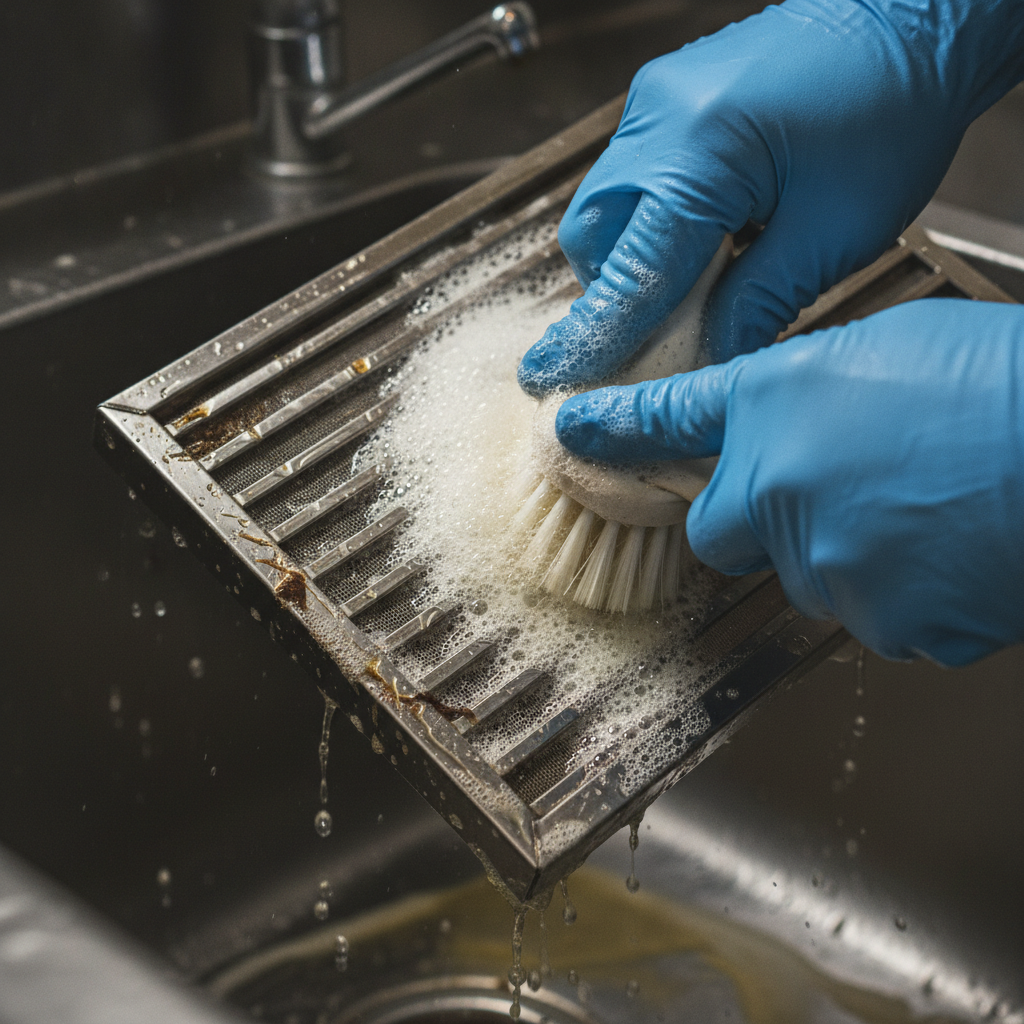
Filters: remove, soak, scrub, rinse
- Remove baffle filters carefully to avoid bending frames.
- Soak in 140–160°F hot water with an alkaline hood-safe degreaser.
- Agitate with a stiff brush; focus on baffle channels and drain holes.
- Rinse thoroughly with hot water; neutralize if required by product label.
- Dry fully to prevent streaks and premature residue buildup.
Hood canopy: spray, dwell, wipe
- Mask adjacent equipment; spray hood-safe degreaser on interior surfaces.
- Allow 3–5 minutes dwell time; keep surfaces wet for consistent action.
- Wipe with non-scratch pads; follow with hot-water rinse and microfiber polish.
Duct access panels: inspect and clean (where accessible)
- Open approved access panels; capture runoff with mats and wet/dry vac.
- Apply degreaser to exposed duct surfaces; gently scrape heavy deposits.
- Rinse and vacuum residues; re-secure panels and check gasketing.
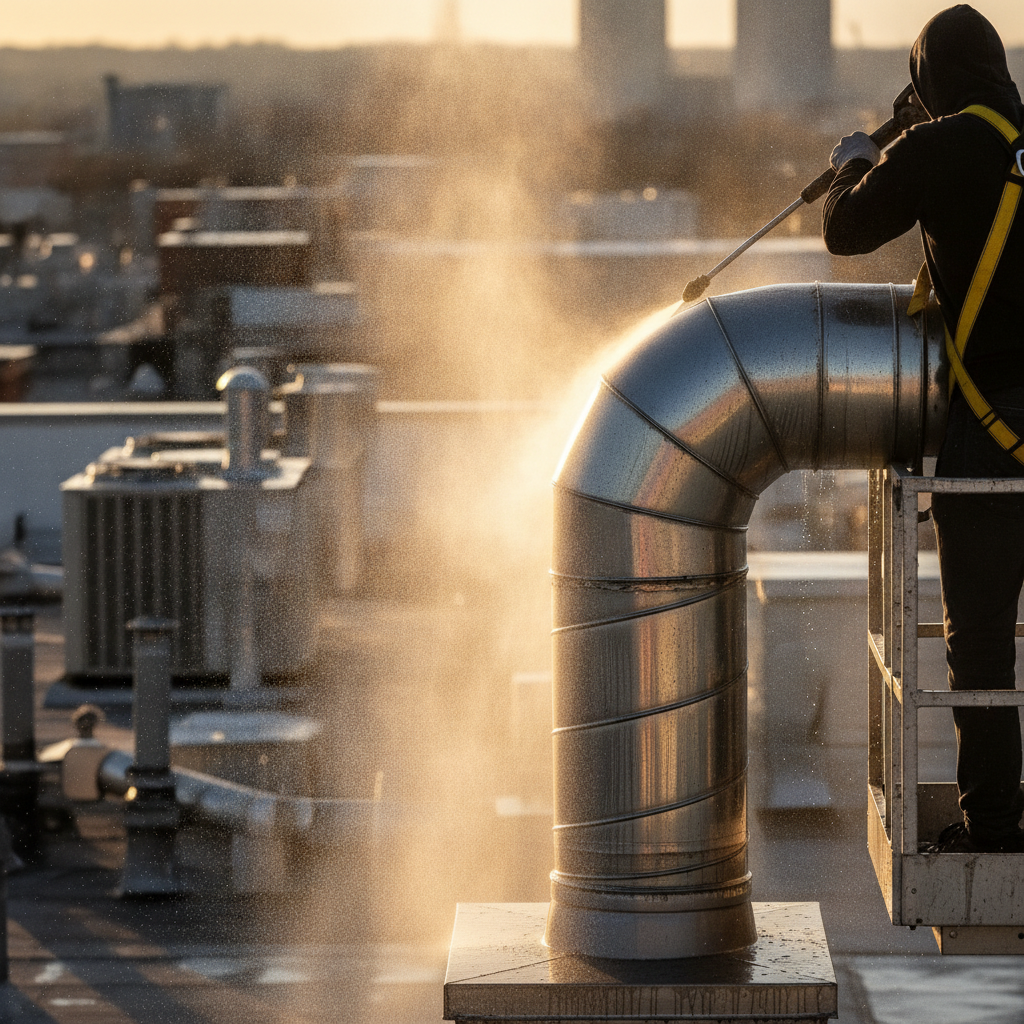
Rooftop exhaust fan: safe service
- Verify weather and fall protection; use proper hinges for safe access.
- Clean fan blades, housing, and curb; remove pooled grease and replace pads.
- Check fan belt tension and wear; replace if frayed to restore airflow.
For a fuller walkthrough with photos, see our practical hood degreasing process explainer and the focused guide on why clean hood filters matter.
Troubleshooting: Stubborn Grease, Odors, and Overspray
Escalate chemistry, heat, and dwell time for stubborn films; switch to non-scratch pads for tight corners; and manage runoff with containment. Persistent smoke or odor often signals clogged filters, restricted ducts, or a worn fan belt.
- Brown varnish won’t budge: Increase temperature (within safe limits) and dwell; use gel degreaser for verticals.
- Streaking on stainless: Rinse more thoroughly; neutralize residue; dry with microfiber to prevent spotting.
- Lingering odor/smoke: Re-check filter dryness and orientation; inspect ducts and fan for remaining deposits.
- Overspray concerns: Mask better, reduce spray pattern, and switch to foaming applicators for control.
- Water intrusion: Tighten panel seals; use wet/dry vac to capture rinse water before reassembly.
Tools, Supplies, and Safer Chemistries
Use hood-rated alkaline degreasers, hot water, non-scratch pads, scrapers, wet/dry vacs, and PPE. For roof work, add hinges, grease containment, and fall protection. Always follow product labels and ventilation safety guidance.
Core tools
- Hood-safe alkaline degreaser; foam sprayer or pump-up sprayer
- Stiff-bristle and non-scratch pads; scrapers for heavy deposits
- Hot-water source; wet/dry vacuum; microfiber towels
- Access panel tools; flashlight; plastic sheeting and absorbent mats
PPE essentials
- Chemical-resistant gloves; goggles or face shield; apron
- Non-slip, closed-toe footwear; cut-resistant gloves for filter edges
- Hearing protection if using pressure washers or loud equipment
Chemistry tips
- Match concentration to soil load; avoid over-concentration which can etch metals.
- Use gel or foam on vertical surfaces to extend dwell time without runoff.
- Rinse thoroughly; residual alkalinity attracts new soil and causes streaking.
Maintenance Schedule: How Often Should You Degrease?
Match frequency to volume: high-friction fry/grill lines monthly; moderate operations every 3 months; low-volume or seasonal kitchens semiannually. Filters need more frequent attention between full-system cleanings.
Usage patterns drive timelines. A small café sauté station won’t load grease like a bustling quick-service fryer bank. Track visible loading on filters and canopy edges; when they soil faster than usual, it’s a sign to tighten the schedule. In our experience across All Over Ontario, quarterly full-system service fits many mixed-menu restaurants, while filter rinses between visits keep capture strong.
Explore our hood cleaning guide for more context on pairing daily, weekly, and scheduled professional care.
Best Practices That Keep Hoods Cleaner, Longer
Control splatter at the source, rotate clean filters, and finish with thorough rinsing and drying. Keep a simple log, photograph results, and check fan belts to ensure the system’s capture stays consistent between deep cleans.
- Rotate filters: Maintain a spare set via a filter cleaning & exchange routine.
- Trim heat and pan height: Better capture happens when plume and hood overlap properly.
- Rinse and dry: Residues attract new soil; a final hot rinse and wipe delays re-soiling.
- Log checks: A two-minute daily glance at troughs, edges, and make-up air keeps surprises away.
- Inspect the fan belt: A slipping belt reduces draw and leaves smoke hanging at the line.
Case Examples from All Over Ontario Kitchens
Real kitchens show the impact: stronger capture, less smoke, and cleaner stainless. With documented, NFPA 96–aligned service schedules, teams reduce surprise shutdowns and pass inspections with confidence.
- Quick-service grill line: Monthly filter exchanges and quarterly full-system degreasing cut smoke complaints and stabilized airflow on busy weekend rushes.
- Hotel banquet kitchen: Semiannual system cleaning, plus weekly filter soaks, kept multiple lines compliant during peak event seasons without overtime disruption.
- Food court vendor: Tight overnight window solved by our 24/7 team; focused duct access cleaning and fan belt replacement restored capture before breakfast service.
For a broader look at how we stage work and protect your space, see our commercial hood cleaning guide.
Compliance, Credentials, and Documentation
Professional hood cleaning includes photos, service tags, and reports. Robinhood Cleaners provides NFPA 96–aligned procedures, WSIB-insured crews, and 24/7 scheduling so you can prove due diligence to insurers and inspectors.
Beyond shiny stainless, documentation matters. We tag systems, store before/after images, and track intervals so your team always knows what’s next. Our NFPA 96–aligned process is described in this overview of certified hood cleaning, while this explainer on restaurant hood cleaning certification details common expectations.
Tools and Resources
Keep a lightweight kit for daily care, and stage pro-grade tools for scheduled deep cleans. Pair checklists with photo logs so managers can verify results quickly and train new staff faster.
- Daily kit: microfiber towels, non-scratch pads, light-duty degreaser, spare filters
- Scheduled kit: alkaline degreaser, foam sprayer, wet/dry vac, mats, access tools
- Documentation: service log, timestamped photos, and task checklists
For deeper background on grease risks in exhaust systems, review this primer on exhaust system grease buildup.
Free Assessment: Have Us Do the Heavy Lifting
If your hood system needs more than a light filter rinse, book a pro assessment. We’ll inspect filters, ducts, and fan performance, then recommend a schedule that fits your hours and volume.
Soft CTA: Want a quick read on your system’s condition? Request a no-obligation assessment from our certified team covering All Over Ontario. We’ll align cleaning intervals with your cooking profile and help streamline compliance.
Frequently Asked Questions
These quick answers address the most common questions about kitchen hood degreasing—timing, chemistry, access, and how DIY fits alongside professional care. Use them to calibrate your program and train staff.
How often should I degrease my kitchen hood?
Match frequency to cooking volume. Heavy fry and grill lines usually need monthly filter service and quarterly full-system cleaning. Lower-volume operations can extend to semiannual professional service with light DIY wipe-downs between visits.
What degreaser is safe for stainless steel hoods?
Use hood-rated alkaline degreasers formulated for food-service stainless. Follow label directions, avoid over-concentration, and always rinse thoroughly. For vertical surfaces, foam or gel helps extend dwell time and reduce runoff.
Can my staff do the filter cleaning in-house?
Yes—many teams soak and rinse filters in hot degreaser weekly. It keeps capture strong between professional visits. Ensure proper PPE, hot water (around 140–160°F), and complete drying before reinstalling filters.
Do you provide documentation for inspections?
We provide before/after photos, service tags, and interval reminders. Our NFPA 96–aligned process and WSIB-insured crews help you demonstrate due diligence to landlords, insurers, and local inspectors.
Key Takeaways and Next Steps
Degrease kitchen hood systems with a blend of daily filter care and scheduled professional service. Focus on safe chemistry, good rinse and dry, and documented intervals to keep capture strong and inspections smooth.
- Filters need frequent attention; ducts and fans need pro access and documentation.
- Rinse and dry thoroughly—residue accelerates re-soiling and streaking.
- Keep a log with photos; it speeds training and inspection prep.
- Book a professional assessment in All Over Ontario to calibrate your schedule.
For related topics, browse our resources on restaurant kitchen exhaust cleaning and exhaust fan cleaning.