Deep cleaning the kitchen is a structured top-to-bottom process that removes grease, biofilm, and hidden soil from hoods, ducts, appliances, drains, and floors. In All Over Ontario, restaurants rely on Robinhood Cleaners for compliance-level results that protect staff, guests, and operations. Done correctly, a quarterly deep clean restores airflow, reduces odors, and lowers fire risk.
By Robinhood Cleaners • Last updated: 2026-06-17
Start here: your kitchen deep clean plan
Use a zone-by-zone plan that sequences degreasing and sanitation from ceiling to floor, finishing dry-to-wet. Tackle hoods and ducts first, then appliances, surfaces, and floors. Schedule grease trap service and ventilation checks in the same window to cut downtime and keep airflow, fire safety, and hygiene aligned.
This above-the-fold section gives you a fast orientation and a clickable plan to move through the guide in minutes.
- What deep cleaning the kitchen actually covers (and what it doesn’t)
- How to structure a quarterly, monthly, and nightly program
- Compliance signals: NFPA 96, inspection readiness, hygiene logs
- Step-by-step checklists for hoods, ducts, fans, appliances, floors
- Prerequisites and troubleshooting when results fall short
- Local notes for All Over Ontario commercial kitchens
At a glance
- Time window: 4–8 hours for a small kitchen; 8–14 hours for high-volume operations with multiple hoods.
- Team size: 2–6 people, depending on layout and soil load.
- Sequence: Dry prep → Heavy degrease → Rinse → Sanitize → Reassemble → Ventilate → Verify.
- What is deep cleaning the kitchen?
- Why it matters for safety, airflow, and inspections
- How the process works (step-by-step)
- Methods, tools, and approaches
- Prerequisites before you start
- Best practices that save time
- Troubleshooting stubborn grease and odors
- Tools and resources (downloadable checklist)
- Examples and mini case insights
- FAQ
- Wrap-up and next steps
What is deep cleaning the kitchen?
Deep cleaning the kitchen is a scheduled, top-to-bottom removal of grease, carbon, scale, and microbial film across ventilation, appliances, surfaces, drains, and floors. It restores safe airflow, reduces fire hazards, and supports food safety. Commercial kitchens pair this with documented inspections to prove compliance and protect uptime.
In our experience, a true deep clean reaches beyond “look clean” to “perform clean.” That means restoring capture efficiency at the hood, static pressure in ducts, and turnover at the exhaust fan. It also means pulling and soaking baffle filters, treating heavy soil behind cooklines, and resetting floor safety with non-slip rinse and vacuum recovery.
For restaurants and institutional kitchens, deep cleaning the kitchen complements nightly wipe-downs. The difference is scope and measurement: you verify airflow, fan belt tension, and grease trap capacity—not just visible shine. Kitchens that follow a quarterly cadence typically see steadier hood capture and fewer odor complaints.
To go deeper on vents and hoods specifically, see our internal primer on exhaust hood & vent cleaning and the broader restaurant kitchen cleaning services overview.
Why deep cleaning the kitchen matters
It reduces fire risk, stabilizes airflow, and improves hygiene. Grease-laden vapors fuel ignition, while clogged filters and ducts cut capture efficiency. A measured deep clean lowers incident risk, removes odors, and keeps inspectors satisfied, protecting margins and reputation during peak service periods.
Here’s the thing: performance problems often hide in plain sight. A dull hood face may still have 1–2 mm of polymerized grease inside the plenum that undermines exhaust velocity. Filters that look clear can still restrict flow if fins are loaded mid-channel. A 5–10% capture loss at the hood can redirect smoke into the line within an hour of rush.
- Fire hazard reduction: Removing grease from hoods, ducts, and fans disrupts the fuel source for flash fires.
- Air quality and comfort: Restored CFM at the exhaust fan stabilizes kitchen temperature and reduces smoke drift to the dining area.
- Inspection readiness: Documented service, photos, and tags simplify health and fire inspections.
- Equipment longevity: Clean heat-exchange surfaces run cooler and last longer; belts and bearings see less strain.
When we coordinate deep cleaning the kitchen with grease trap service and filter exchange in the same overnight window, we routinely see kitchens reopen with steadier line temps and faster morning prep times.
For a broader service breakdown, our restaurant deep cleaning page outlines the signals inspectors look for and the documentation we provide.
How deep cleaning the kitchen works (step-by-step)
Work dry-to-wet and high-to-low: protect equipment, disassemble capture points, apply degreaser with dwell time, agitate, rinse, sanitize, reassemble, and verify airflow. Bundle grease trap maintenance and filter exchange in the same window to lock in airflow gains and reduce future soil load.
Step-by-step sequence
- Prep (30–45 min): Power down lines, drape plastics, protect electricals, pull and stage baffle filters.
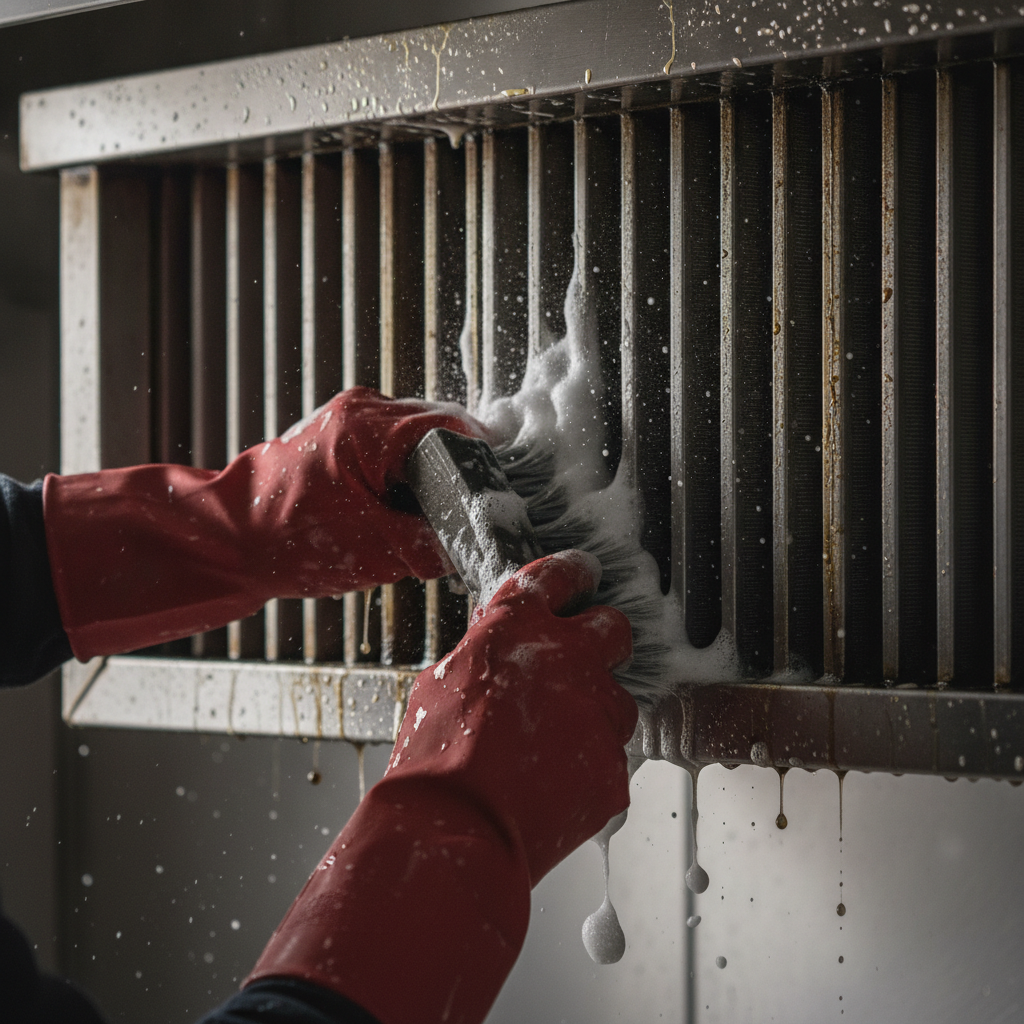
- Hood & plenum (45–90 min): Apply hot alkaline degreaser, 8–12 minute dwell, brush agitation, controlled rinse.
- Ductwork (60–120 min): Mechanical scraping, foam, and heated rinse; vacuum recovery to contain wastewater.
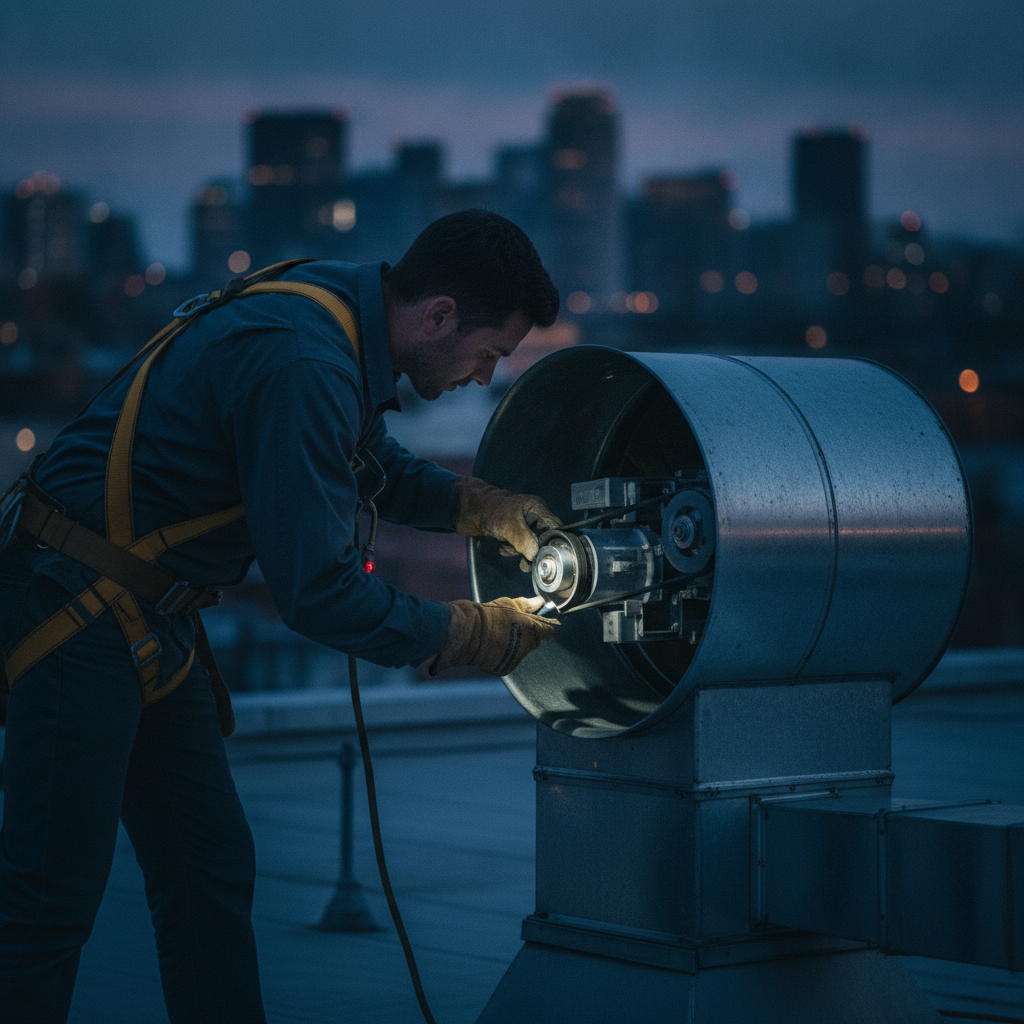
- Exhaust fan & housing (30–60 min): Degrease blades, check set screws, inspect bearings, confirm rotation direction.
- Fan belt check (10–15 min): Verify tension/deflection (about 1/64 inch per inch of span), inspect glazing or cracks.
- Filter cleaning & exchange (20–40 min): Soak in hot solution, rinse to neutral, or swap for pre-cleaned set.
- Appliances (60–180 min): Pull and clean sides/backs; ovens, fryers, grills, refrigeration gaskets and coils.
- Floors & drains (30–60 min): Degrease, hot rinse, wet-vac; treat edges and thresholds to restore traction.
- Grease trap service (30–60 min): Pumping, scraping, and reset baffles to maintain flow and odor control.
- Verification (20–30 min): Photos, tags, airflow and noise check, re-light lines, remove containments.
Process table: what happens and when
| Zone | Daily | Weekly | Monthly | Quarterly | Primary Owner |
|---|---|---|---|---|---|
| Hood & Filters | Wipe faces | Rinse filters | Soak filters | Full degrease | Pro + Staff |
| Ducts & Fan | Visual check | — | — | Full degrease | Pro |
| Appliances | Wipe/empty | Pull/edge clean | Coils, gaskets | Deep clean | Staff + Pro |
| Floors & Drains | Degrease/rinse | Scrub grout | — | Power-wash | Staff + Pro |
| Grease Trap | Skim solids | — | Inspect baffles | Service/pump | Pro |
For a full checklist you can hand to your team, download our in-house framework on the equipment deep cleaning checklist and the broader kitchen deep clean guide.
Types, methods, and approaches
Combine mechanical scraping, hot-alkaline foam, and controlled rinse for hoods/ducts; soak or swap filters; power-wash floors; and detail-clean appliances. Choose food-safe chemistries, verify dwell times, and stage containment to keep wastewater out of drains and guests out of harm’s way.
There’s no single approach that fits every line. For polymerized deposits in vertical ducts, agitation plus heated foam shortens dwell by 20–30% versus cold solutions. In contrast, for stainless faces and appliances, reduced alkalinity avoids whitening or streaking. Power washing floors and thresholds improves traction when followed by a vacuum recovery pass.
- Mechanical + chemical blend: Scrapers and pads remove mass, foam finishes crevices.
- Filter exchange loops: Keep a clean set on-site to avoid downtime during soaks.
- Appliance detailing: Coils and gaskets regain efficiency when dust and grease are removed.
- Ventilation balancing: After cleaning, listen for whine, check vibration, and confirm rotation.
Our service teams in Southern Ontario often stage filter exchanges with vent cleaning on the same night so kitchens reopen with restored capture and less morning odor.
Prerequisites before you start
Confirm access, power, water temperature, and ventilation downtime before any deep clean. Stage containment, PPE, lockout/tagout for appliances, and roof access for fans. Pre-check filters, belts, and grease trap capacity so you don’t discover showstoppers after crews arrive.
- Site access: Keys, codes, and roof access arranged; verify elevator/service corridor timing.
- Utilities: Hot water (120–140°F) and drain access with proper interceptors.
- Safety: PPE on hand; spill kits; lockout/tagout plan for ranges and fryers.
- Equipment: Spare filters available; confirm fan housing clearance and hinge kits.
- Scheduling: Bundle grease trap service and filter exchange during the same window.
When any prerequisite is missed—like a locked roof hatch—the crew can lose 45–60 minutes. That delay cascades into prep and sanitation. Good news: a 10-minute pre-call the day before prevents most of these hiccups.
Best practices that save time and protect compliance
Sequence high-to-low, dry-to-wet, and front-to-back. Use measured dwell times, neutralize after alkaline degrease, verify airflow and belt tension, and document before/after photos. Pair deep cleaning the kitchen with filter exchange and grease trap service to extend the clean window.
- Stick to dwell times: 8–12 minutes for heavy hood soils; extend to 15–18 for polymerized sections.
- Neutralize and rinse: After alkaline degreasing, rinse to neutral pH to protect finishes.
- Verify belts: Aim for about 1/64 inch deflection per inch of span; replace if glazed or cracked.
- Photo documentation: Before/after shots at hood, duct access, and fan speed plate.
- Log tags: Date and crew identifiers help inspectors validate cadence.
Want a one-page playbook your managers can post on the wall? Our kitchen cleaning services overview distills what inspectors want to see and how we organize overnight windows across Southern Ontario.
Troubleshooting: when results fall short
If odors linger, smoke escapes, or fans rattle after cleaning, re-check belt tension and rotation, verify filter orientation, and inspect duct access panels. Persistent issues often trace to missed plenum film, undersized filters, or grease trap overcapacity sending vapors back to the line.
- Lingering odor: Revisit plenum corners and upper duct elbows; verify trap baffles are seated.
- Poor capture/smoke: Check for reversed filters, loaded mid-channels, or fan rotating the wrong way.
- Vibration/noise: Inspect set screws and bearings; confirm belt alignment and tension.
- Slippery floors: Confirm rinse to neutral pH; perform a vacuum recovery pass.
- Rapid re-soil: Increase nightly wipe-down frequency and swap filters more often.
If you need a deeper dive on Ontario-specific service windows and inspector expectations, see this concise Ontario hood cleaning overview and our short read on restaurant kitchen protection.
Tools and resources (with checklist)
Standardize your kit: alkaline and neutral cleaners, foaming sprayers, pads and scrapers, wet-vacs, PPE, hinge kits, access brushes, and belt gauges. Pair with a one-page checklist for scope control, dwell timing, and photo documentation so each clean is repeatable across locations.
- Core chemistries: Food-safe alkaline degreaser plus neutral cleaner for finishes.
- Application: Foaming sprayers improve cling and visual coverage.
- Agitation: Nylon pads, scrapers, bottle brushes for tight geometries.
- Recovery: Wet-vac or squeegee to prevent slip hazards and keep interceptors happy.
- Verification: Belt tension gauge, airflow/noise check, dated tags, before/after photos.
We maintain route-ready kits across Southern Ontario so multi-site brands can schedule same-week deep cleans and know crews arrive with identical standards.
Examples and mini case insights
Pair filter exchange, duct cleaning, and grease trap service in a single overnight window to reclaim airflow and odor control by morning prep. Kitchens that bundle services see fewer call-backs and steadier capture during peak rush compared to piecemeal cleaning.
- QSR line with heavy fry load: Filters swapped every 2 weeks; quarterly duct and fan clean. Result: steadier capture and fewer odor complaints during lunch rush.
- Institutional kitchen: Two hoods on one fan. Staggered filter change plus semi-annual deep clean stabilized line temps during high-volume events.
- Fine dining grill: Polymerized carbon behind cookline removed with heated foam and agitation; hood capture improved the same night.
- Food court prep bay: Coordinated deep clean and grease trap service eliminated morning sulfur odor.
- Catering commissary: Bundle with whole-kitchen deep cleaning to reopen with verified airflow and photo logs.
Summary
A measured, high-to-low process restores airflow, reduces fire risk, and improves hygiene. Combine hood, duct, fan, filter, appliance, floor, and grease trap service in one window. Document the work with photos and tags to satisfy inspectors and keep teams focused on service.
When deep cleaning the kitchen is scheduled on a steady quarterly rhythm—and staff handle nightly wipe-downs and weekly filter rinses—capture stays stable, odors fade, and inspections become routine paperwork instead of last-minute surprises.
Local considerations for All Over Ontario
- Plan deep cleans around winter and summer rushes; bundle services before peak tourism weekends to reduce downtime.
- Cold snaps can lower rinse water temperature—verify 120–140°F access to keep dwell times predictable overnight.
- Multi-tenant locations often have shared roof access; confirm timing with property management to avoid delays.
Want a zero-stress night? Our certified teams coordinate hoods, ducts, filters, fans, appliances, and grease traps in one window—across Southern Ontario and beyond. Let us align cleaning with your slowest shift and reopen with verified airflow.
Frequently Asked Questions
Restaurants should deep clean quarterly at minimum, with higher-frequency schedules for heavy frying or solid-fuel cooking. Filters need weekly rinses, and ventilation should be professionally serviced before peak seasons. Document every service with photos and tags to speed inspections.
How often should a commercial kitchen be deep cleaned?
Quarterly is typical for standard-volume restaurants. High-volume frying or solid-fuel lines benefit from monthly or bi-monthly ventilation service. Nightly wipe-downs, weekly filter rinses, and monthly appliance detailing keep the line stable between pro visits.
What areas get missed most during deep cleaning the kitchen?
Plenum corners, upper duct elbows, and the back sides of appliances are common misses. Also check fan belt tension and filter orientation. If odors linger or smoke escapes after service, revisit these points and confirm grease trap baffles are correctly seated.
How do I know if my exhaust fan belt needs replacement?
Look for glazing, cracks, or frayed edges. If deflection exceeds roughly 1/64 inch per inch of span, it’s too loose. Squeal or vibration after startup also points to belt or bearing issues. Inspect during every quarterly deep clean.
Can we deep clean during business hours?
It’s possible for limited zones, but full ventilation and appliance work should occur off-hours for safety and containment. We coordinate overnight windows so you reopen with verified airflow and a sanitized line before prep starts.
Wrap-up and next steps
Build a quarterly rhythm, align staff tasks between pro visits, and document everything. When hood, duct, filters, and traps are serviced together, kitchens reopen cleaner, safer, and calmer. Schedule ahead of rush periods so your team can focus on guests—not smoke or slips.
- Adopt the process table above for your nightly, weekly, monthly, and quarterly cadence.
- Bundle ventilation, filter exchange, and grease trap service in one window.
- Keep photo logs and tags to simplify inspections.
- Use our restaurant deep cleaning framework to plan the next quarter.
Key takeaways
- High-to-low, dry-to-wet sequencing reduces rework and slip hazards.
- Filters, ducts, and fans control capture; treat them as one system.
- Photo documentation and tags speed inspector sign-off.
- Quarterly deep cleaning the kitchen keeps airflow steady and odors down.
Ready to coordinate a clean that sticks? Explore our streamlined approach in this short read: are you at risk guide. Then line up your next window with our service overview.