You run a busy line. Grease is flying, tickets are stacking, and air needs to move—fast. When exhaust filters clog, everything slows down and risk goes up. If you’re searching for commercial kitchen exhaust filter replacement Ontario guidance, this complete guide breaks down what to inspect, when to replace, and how to stay NFPA 96–aligned across Ontario without disrupting service.
Above the Fold: Why This Guide + Table of Contents
Here’s the quick value of reading on—and how to find your answers fast.
- Problem solved: Stop grease migration and airflow loss by timing replacements right.
- Ontario-specific: Tips for kitchens along the 401 corridor, downtown cores, and seasonal venues.
- Certified perspective: Built from Robinhood Cleaners’ NFPA 96–certified fieldwork across Southern Ontario and beyond.
- Actionable format: Checklists, decision tables, and examples you can copy into your ops log today.
- At a Glance
- Commercial Kitchen Exhaust Filter Replacement Ontario: The Essentials
- What Is a Commercial Hood Filter?
- Why Timely Replacement Matters
- How the System Works (Kitchen to Rooftop)
- Filter Types, Sizes, and Ratings
- Best Practices for Ontario Operations
- Tools, Supplies, and Printables
- 12 Ontario Examples (What Works)
- Replace vs. Keep Cleaning: Decision Flow
- Connected Maintenance (Whole-System View)
- FAQs
- Key Takeaways + Next Steps
At a Glance
- First line of defense: Baffle filters capture grease mist before it fuels ducts and fans.
- When to replace: Filters that stay tacky after degreasing, sit crooked, or show warping, broken welds, or rattling frames.
- Rotation wins: Keep at least one labeled spare set per hood; two for heavy lines to sustain airflow.
- Compliance support: Log every change. Pair swaps with hood, duct, and fan service records to align with NFPA 96.
- Local reality: High-volume fryers and charbroilers in Ontario can saturate filters in days—plan for frequent exchanges.
- Partner help: Robinhood Cleaners runs Filter Cleaning & Exchange 24/7 All Over Ontario, with quick response in the south.
Quick Answer
For commercial kitchen exhaust filter replacement Ontario kitchens should replace filters when they remain greasy after cleaning, are warped, or won’t seat flush. Robinhood Cleaners serves All Over Ontario (fast in Southern Ontario) with NFPA 96–aligned Filter Cleaning & Exchange—24/7, so you stay compliant and fire-safe.
Commercial Kitchen Exhaust Filter Replacement Ontario: The Essentials
- Objective: Keep grease out of ducts/fans, maintain capture velocity, and document maintenance.
- Scope: Restaurants, hotels, caterers, food halls, institutional kitchens—any commercial setup with Type I hoods.
- Cadence: Daily rinse checks, weekly degreasing, and frequent rotations based on volume and menu.
- Trigger to replace: When cleaning no longer restores performance or physical integrity is compromised.
- Proof for inspectors: Photos + log entries + service certificates for hood/duct/fan work.
What Is a Commercial Hood Filter?
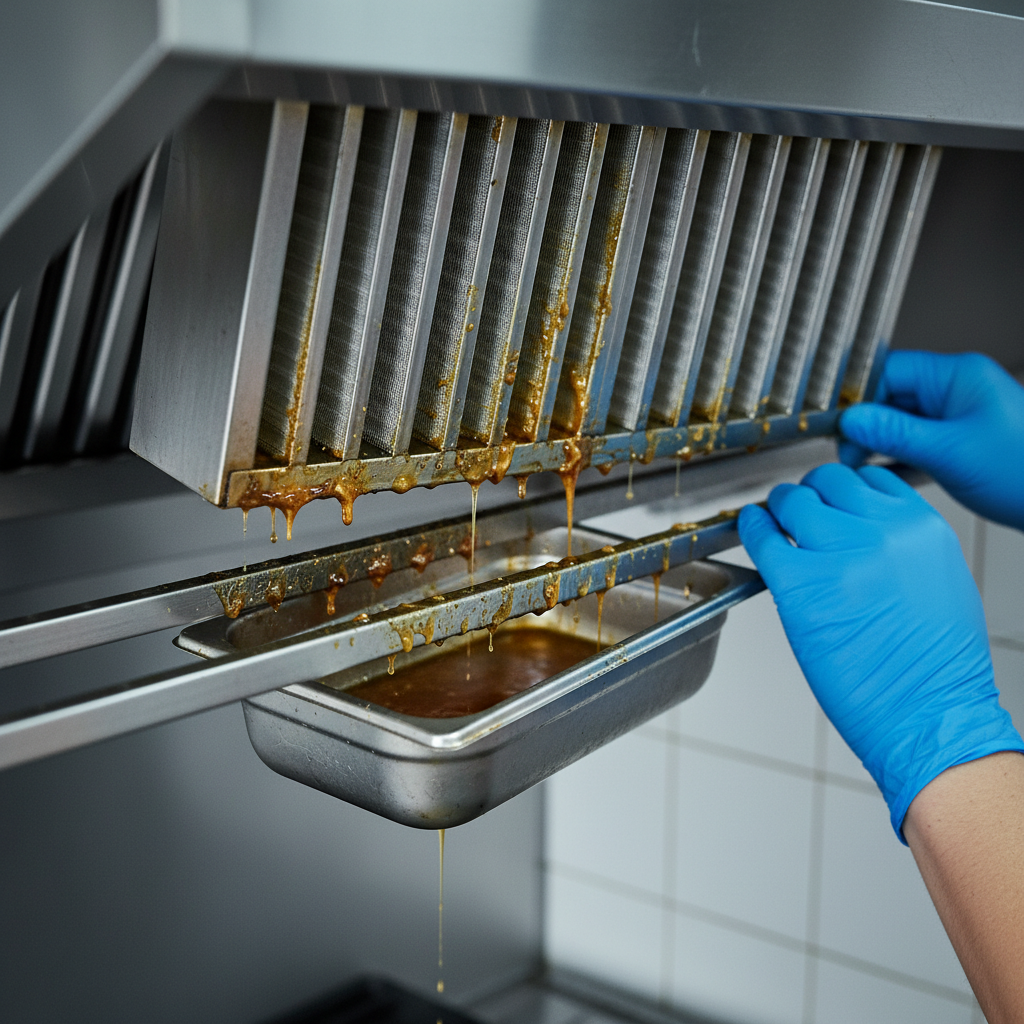
Exhaust filters are grease gatekeepers that live inside your hood canopy—right above the cookline where heat and smoke rise.
- Primary job: Separate grease droplets from hot airstreams before they reach ducts and the rooftop fan.
- Typical design: Stainless-steel baffle filters with interlocking fins that force air to change direction, causing grease to impact metal and drain to trays.
- Placement: Mounted in hood rails; most kitchens use multiple baffles across each bay length.
- Not HVAC: Kitchen baffles manage grease and heat; they’re not the same as return-air or HEPA filters.
- Lifecycle: Clean, rotate, inspect, and replace end-of-life units to keep airflow consistent and safe.
Why Timely Replacement Matters (Safety, Airflow, Compliance)
Here’s the thing—filters are small parts with outsized impact. Skipping timely replacements can snowball into bigger risks.
- Fire hazard reduction: Damaged or saturated filters let grease travel, loading ducts and fans with fuel.
- Air quality and comfort: Restricted draw traps heat and smoke on the line, stressing staff and equipment.
- Equipment protection: Weak airflow pushes exhaust fans harder, which can accelerate fan belt wear and increase noise.
- Inspection readiness: Clean, intact filters support positive outcomes during health and fire safety reviews.
- Compliance posture: Staying aligned with NFPA 96 expectations is easier when every swap is logged and photographed.
- WSIB and safety culture: Using a WSIB-insured, NFPA 96–certified partner like Robinhood Cleaners strengthens your documentation and safety processes.
You might be asking, “Clean more often or replace sooner?” If degreasing can’t restore shine, or the baffle won’t seat flush, it’s replacement time.
How the System Works: From Cookline to Rooftop
Once you see how heat and grease move, your maintenance timing makes a lot more sense.
- Capture zone (hood canopy): Hot smoke/vaporized grease rises into the canopy, where filters wait.
- Baffle stage: Fins change the airstream direction sharply; grease impacts metal and flows to troughs.
- Grease trays and rails: Catch separated oils; overflows signal saturation or misalignment.
- Duct risers and horizontals: Carry air outside. Any bypassed grease adds fire load.
- Exhaust fan assembly: Creates draw; blades and housings gunk up when upstream capture fails.
- Discharge/roof: Air exits; roof protection prevents surface damage from stray grease.
Where Replacement Fits
- Daily/shift: Hot-water rinse on removable baffles; empty trays; quick visual checks.
- Weekly: Degreasing of stubborn fins; rotate a clean spare set to keep capture strong.
- Per volume: Tie swaps to your hood cleaning cadence; see our note on hood cleaning frequency.
Filter Types, Sizes, and Ratings
Not every filter handles grease the same way. Choose based on menu, heat load, and inspection history.
Common Filter Types
- Stainless-steel baffle filters (standard):
- Best for: Fryers, griddles, charbroilers, wok ranges—heavy grease output.
- Pros: Durable, spark arresting, easy to clean, non-combustible.
- Replace when: Warped fins, bent frames, loose rivets/welds, or persistent residue.
- Aluminum baffle filters:
- Best for: Lighter-duty setups where weight matters.
- Cons: Softer metal; reacts with aggressive caustics; deforms sooner.
- Wire/mesh filters:
- Best for: Light-duty capture only.
- Cons: Load quickly and are harder to fully degrease; often replaced more often.
- High-efficiency baffles / spark arrestors:
- Best for: Solid-fuel and heavy charbroil programs with embers/sparks.
- Pros: Improved spark capture; heavy-duty frames.
Sizes and Fit
- Measure accurately: Width × height × thickness of the current baffles and hood bay openings.
- Seat must be flush: Gaps create bypass routes; rattling indicates wrong size or warping.
- Label by bay: Return each unit to the same track after cleaning to maintain balanced draw.
Quality and Ratings
- Material: 430 or 304 stainless-steel baffles hold up well in busy commercial use.
- Construction: Secure rivets/welds; smooth edges to reduce injury risk during swaps.
- Performance checks: The “shine test” after degreasing, and a simple tilt/drain check to confirm clear flow paths.
Best Practices for Ontario Operations
These habits come from our NFPA 96–certified field teams serving All Over Ontario with rapid response in the south.
Cadence That Works
- Match to volume: Multi-fryer programs often need daily rinses, weekly degreasing, and frequent swaps.
- Anchor to menu: Solid-fuel and heavy charbroil saturate faster; stage extra spares per hood length.
- Sync with inspections: Align swaps with your fire safety standards calendar and certify hood/duct/fan services.
Rotation Program (Two- or Three-Set)
- Label clearly: Color dots or etchings for each bay keep airflow balanced and maintenance organized.
- Swap during lulls: Mid-afternoon changes reduce disruption; keep step stools and gloves handy.
- Quarantine damaged units: Any warp, wobble, or loose hardware—pull it and replace. Don’t force fit.
Cleaning That Actually Degreases
- Hot water only: Cooler rinses smear grease into the fins rather than remove it.
- Right chemistry: Commercial degreasers; choose aluminum-safe options if you run aluminum units.
- Rinse direction: Spray against typical airflow to flush trapped grease outward.
- Full dry: Reinstall only when drip-dry; wet baffles cause streaking and tray overflow.
Safety + Documentation
- PPE: Cut-resistant gloves, sleeves, and eye protection—edges are sharp and grease is hot.
- Slip control: Mats and wet-floor markers before pulling baffles.
- Logbook: Date, initials, bays changed, defects found, and photos. Simple but powerful.
- Proof stack: Pair filter logs with hood cleaning frequency records and ventilation optimization notes.
Need zero-downtime Filter Cleaning & Exchange overnight? Robinhood Cleaners is NFPA 96–certified, WSIB insured, and operates 24/7 All Over Ontario—with quick service in Southern Ontario. We also handle full hood, duct, fan, and grease trap programs.
Explore our internal resources on keeping staff safe during filter replacement and clean vs. replace decisions.
Tools, Supplies, and Printables
Stage these items to keep your filter program tight and audit-ready.
- Spare baffle sets: At least one full extra set per hood; two if you run heavy volume.
- PPE: Nitrile or cut-resistant gloves, sleeves, goggles.
- Degreaser + sprayer: Commercial-grade; verify aluminum compatibility if needed.
- Soft-bristle brush: Agitates fins without gouging or bending.
- Wash bay/sink: Drain-safe setup; align with your grease trap service schedule.
- Drying racks/mats: Speed drip-dry and contain runoff.
- Logbook or CMMS: Track swaps, photos, defects, and linked hood/duct/fan certificates.
Printable: Simple Filter Change Checklist
- Cool the station or work on the cooler side; post a wet-floor sign.
- Glove and goggle up; stage clean filters, brush, and bins for dirty units.
- Slide baffles toward the track lip; support weight as they lower.
- Inspect rails and trays; clear drains and wipe grease.
- Reinstall clean baffles: fins vertical, arrows (if present) pointing up, seated fully flush.
- Confirm no rattles, no gaps; reset trays; log the change with a quick photo.
12 Ontario Examples (Composite, Anonymized)
We serve independents and multi-unit brands All Over Ontario. These real-world composites show what works.
- GTA wing concept, triple-fryer line:
- Issue: Mid-shift tray overflows and hot line.
- Fix: Added a third spare set; daily rinses; twice-weekly degreasing; replaced 25% warped baffles.
- Outcome: Cooler line, steady draw, fewer smoke alarms.
- Niagara hotel banquet kitchen:
- Issue: Intermittent events led to inconsistent cleaning; inspection flagged greasy baffles/ducts.
- Fix: Labeled bay rotation; tied swaps to the fire safety standards calendar.
- Outcome: Clean re-inspection and normalized airflow.
- Kitchener campus food court:
- Issue: Shared exhaust overloaded; mismatched filters; missing units.
- Fix: Standardized stainless baffles; bay labels; quarterly ventilation optimization.
- Outcome: Balanced draw and smoother inspections.
- London quick-serve grill:
- Issue: “Clean” filters still sticky; long scrubbing times.
- Fix: Identified end-of-life units; replaced 40%; trained staff on rinse direction and full dry.
- Outcome: Faster turns, quieter fans, better capture.
- Hamilton steakhouse (solid-fuel adjunct):
- Issue: Occasional sparks and rooftop staining.
- Fix: Upgraded to high-efficiency spark-arresting baffles; increased rotation frequency.
- Outcome: Cleaner rooftop, improved spark control.
- Mississauga multi-brand food hall:
- Issue: Mixed menus; uneven capture across stalls.
- Fix: Bay-by-bay labeling; synchronized swaps; shared logbook.
- Outcome: Consistent airflow and better vendor compliance.
- Ottawa hotel brunch line:
- Issue: Early-morning haze despite “clean” filters.
- Fix: Moved swaps to night shift; replaced bent frames; checked fan belt tension.
- Outcome: Clear mornings and steadier makeup air balance.
- Windsor burger drive-thru:
- Issue: Grease trays overflowing on weekends.
- Fix: Weekend prep swap-in; staff reminders via CMMS; added spare set.
- Outcome: No overflows; shorter clean-up windows.
- Barrie pizza + wings hybrid:
- Issue: Aluminum baffles deforming in the wash.
- Fix: Switched to stainless; aluminum-safe chemistry where needed.
- Outcome: Longer filter life and lower replacement churn.
- Kingston campus pub:
- Issue: Loud fan squeal; weak draw.
- Fix: Replaced warped baffles; scheduled fan cleaning; inspected belt.
- Outcome: Quieter fan, restored capture velocity.
- Waterloo ramen line:
- Issue: Steam/grease mix condensing in rails.
- Fix: More frequent mid-shift tray checks; added drying racks to speed turns.
- Outcome: Fewer streaks and cleaner rails.
- Guelph family diner:
- Issue: Inconsistent swaps during staff changes.
- Fix: Laminated checklist by the hood; photo log requirement.
- Outcome: Consistent compliance through schedule transitions.
Local Tips
- Tip 1: Along Highway 401 or downtown cores, plan swaps mid-afternoon to avoid delivery rushes and curbside congestion.
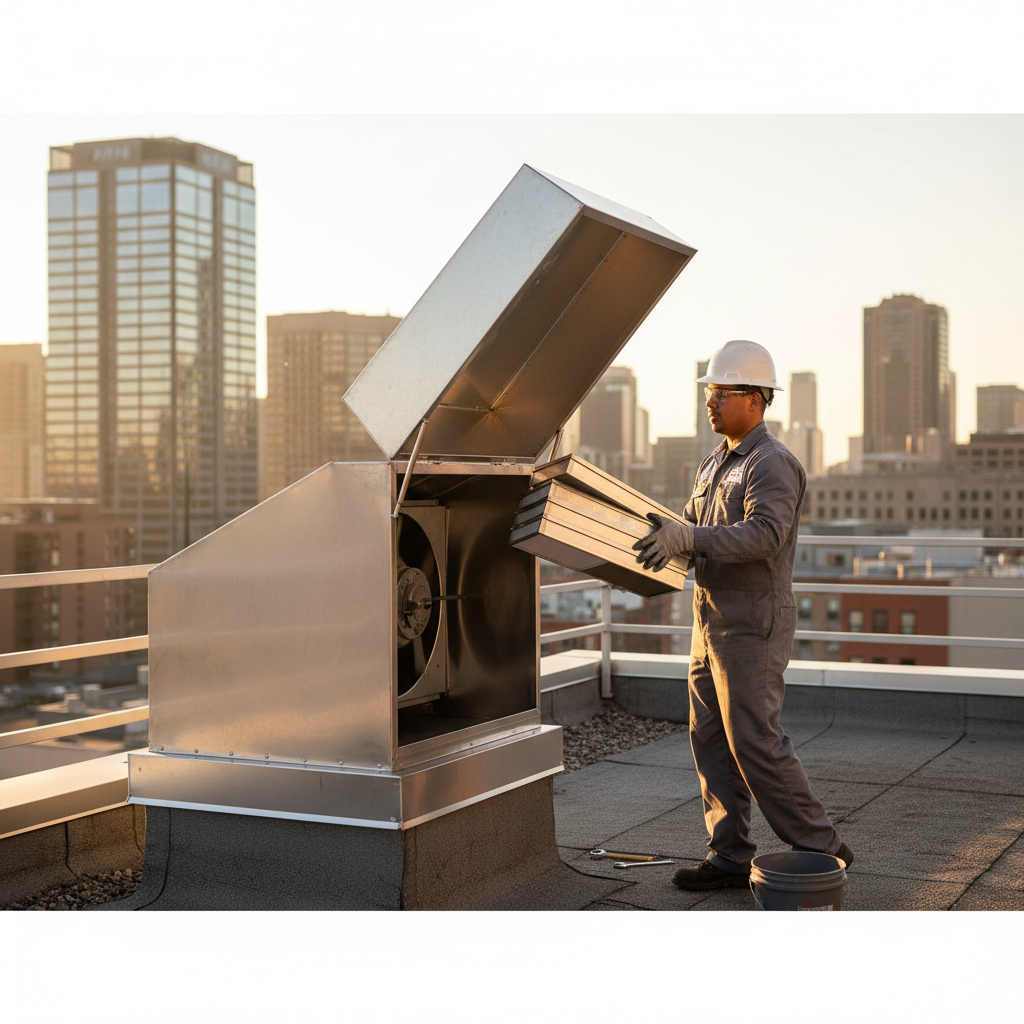
- Tip 2: Ontario winters mean icy rooftops—schedule rooftop checks in daylight, and use fall-arrest where required.
- Tip 3: Late-service venues in Southern Ontario should keep extra labeled baffles on-site; Robinhood Cleaners can exchange overnight to keep you ready for brunch.
IMPORTANT: These reflect local traffic, weather, and operating rhythms across All Over Ontario and our quick-response coverage in the south.
Replace vs. Keep Cleaning: Decision Flow
- Keep cleaning if: filters rinse bright with hot water + degreaser, seat perfectly flush, and trays don’t overflow between services.
- Replace now if: fins are bent, welds/rivets loosen, frames wobble, or residue stays tacky after thorough degreasing.
- Investigate system-wide if: airflow feels weaker or line heats up faster—check fans, belts, ducts, and makeup air.
Process Table: Simple Replacement Steps
| Step | What to Do | Why It Matters |
|---|---|---|
| 1. Stage | Lay mats, set wet-floor signs, stage clean filters and gloves | Controls slips and speeds the swap |
| 2. Remove | Slide baffles from rails, supporting weight as they drop | Prevents dents and injuries |
| 3. Inspect | Check for warps, cracks, loose rivets, and residue | Identifies units due for replacement |
| 4. Clean/Replace | Degrease salvageable units; replace those at end-of-life | Restores airflow and safety |
| 5. Reinstall | Seat flush, confirm no gaps; reset trays | Prevents bypass and spills |
| 6. Log | Record date, bays, initials, and any defects | Supports NFPA 96 alignment and audits |
Connected Maintenance (Whole-System View)
Filters are one node in a chain. Tie replacements to related services for best results.
- Hood and duct cleaning: Schedule per cooking volume and keep proof handy; see our note on hood cleaning frequency.
- Exhaust fan cleaning: Clean blades and housings to keep airflow efficient; watch belt wear.
- Fan belt checks: Heat and grease shorten belt life; symptoms include squealing and weak draw.
- Grease trap service: Coordinate with kitchen cleaning windows to prevent backups and odors.
- Ventilation optimization: Balance makeup air and capture velocity; see ventilation optimization.
FAQ: Commercial Exhaust Filter Replacement in Ontario
- How often should we replace filters?
Replace when structural damage appears or grease won’t rinse clean. Many Ontario kitchens replace a portion annually while cleaning and rotating weekly. - Can we just run filters through the dishwasher?
Dishwashers can help, but hot-water sinks plus the right degreaser and technique usually work better. Never run aluminum with aggressive caustics. - What size filters do we need?
Measure hood bay openings and current baffles (width × height × thickness). Filters must seat flush—loose fits cause dangerous bypass. - Do new filters improve airflow?
If old units are saturated or warped, new stainless baffles often restore airflow and reduce heat at the line. Verify ducts and fans are clean too. - What documentation should we keep?
Maintain a log of cleaning and replacements with dates, bays, and photos. Pair this with hood, duct, and fan service certificates.
Key Takeaways + Next Steps
- Don’t gamble on saturated filters: Replace when cleaning no longer restores function or when seating fails.
- Rotation is leverage: One to two spare sets per hood keep capture strong during rushes and inspections.
- Document religiously: Logs and photos turn inspections into quick sign-offs.
- Think system-wide: Tie filters to hood, duct, fan, belt, and grease trap schedules for compounding gains.
Want an NFPA 96–certified, WSIB-insured partner to implement Filter Cleaning & Exchange without downtime? Robinhood Cleaners serves All Over Ontario and moves fast in Southern Ontario. See our internal resources on hood cleaning frequency, fire safety standards, and ventilation optimization to round out your program.
Related Articles
- Airflow troubleshooting: filters, fans, and makeup air
- What inspectors look for inside hoods and ducts
- Seasonal maintenance for Ontario rooftops and fan housings
- How to plan a rotation schedule that fits your menu and hours